What Mykolaiv’s waterfront used to look like: historical photos
- Alina Kvitko
-
•
-
19:22, 07 April, 2026
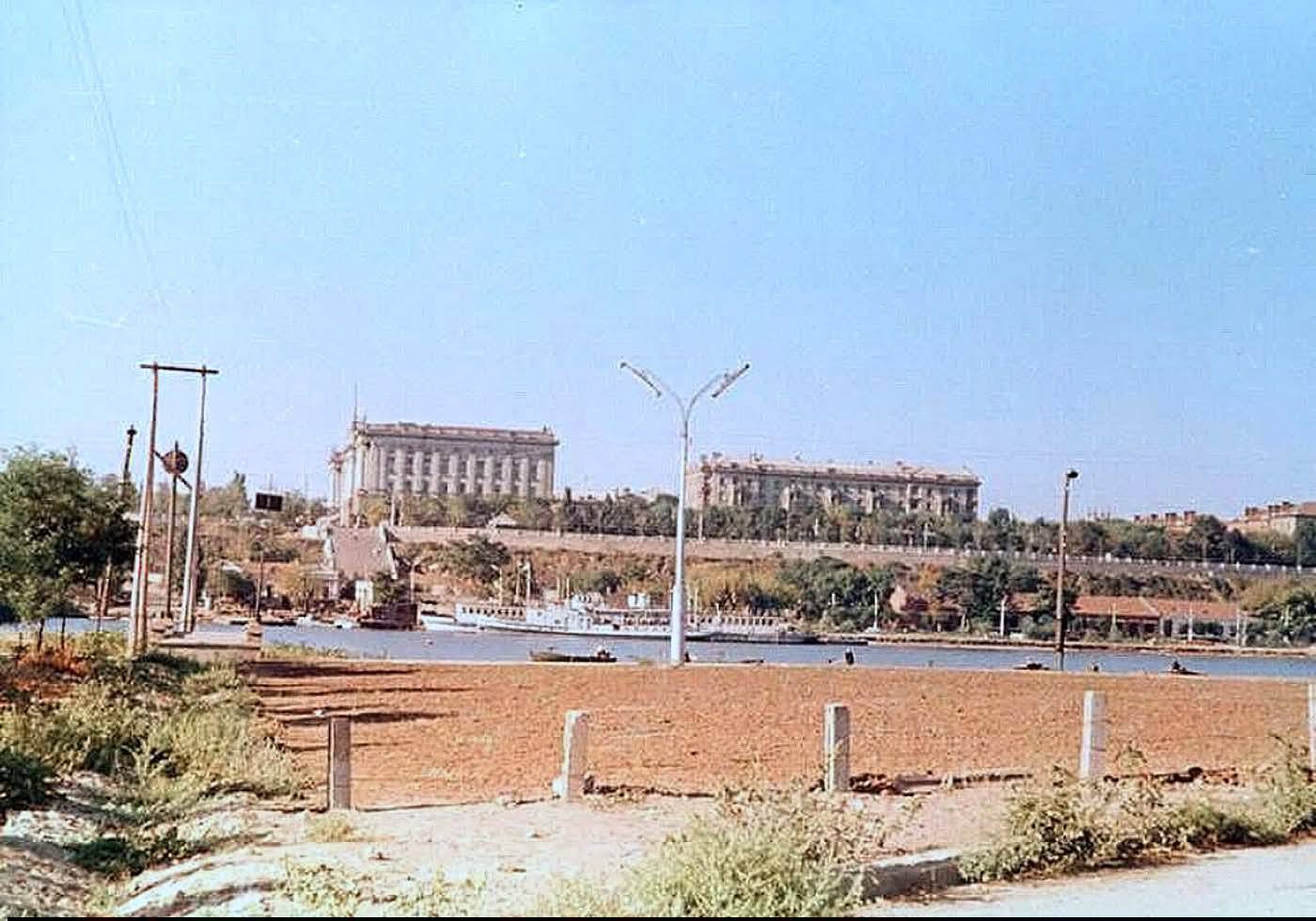 The upper and lower embankments in Mykolaiv. Photo: Valentin Semenovich\Southern Ukraine Through the Ages
A series of unique archive photographs has been published on social media, showing what the Mykolaiv embankment and the riverside area along the Ingul River looked like in different decades.
The photos were shared on the Facebook group «Southern Ukraine Through the Age».
The images show how one of the city’s oldest streets — Naberezhna — has changed. It was the first street running parallel to the river and stretched from the Wild Garden to the shipyard. It was given the name «Naberezhna» as early as 1822, although the name was not officially adopted until 1935.
As reported by the publication «Mykolaivskyi Bazar», until 1826, the site of the modern boulevard was a large municipal rubbish tip. Everything changed on the orders of Admiral Alexei Greig: the area was cleared and Inhulskyi Boulevard was laid out. It was modelled on Prymorskyi Boulevard in Odessa — with terraces and a view of the shipyard. Due to its fine view of the river quay, it later came to be known as Morskyi.
The photographs show the old jetties, the banks of the Inhul and the city council building. Also visible in the early 20th-century photographs are Mrs Nikolaiienko’s famous bathing houses. These were wooden structures with changing rooms and footbridges right on the water, as simply bathing in the river was considered indecent at the time.
«At the beginning of the 20th century, Mrs Nikolaiienko’s public bathing houses were located there. They were equipped with changing rooms, the bathing area was panelled with wood, and there were jetties and ladders. The women’s bathing area was equipped with a wooden cage-lift with comfortable seats. The women would descend into the lift from the changing room. They would settle comfortably inside the lift. Workers would lower the cage into the water and the ladies would splash about right there, as if in an improvised pool. Once the bathing session was over, the lift was raised out of the water and the women would step out to rest or go straight into the changing room. The layout of the baths was described to me by the landlady’s grandson, Oleksii Nikolaiienko,» wrote Kostiantyn Ulianov in a caption accompanying the photo.
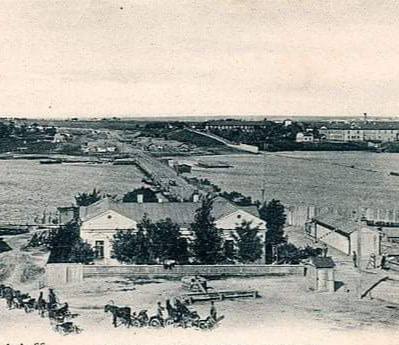 At the beginning of the 20th century, there were public baths on the embankment. Photo: Southern Ukraine Through the Ages
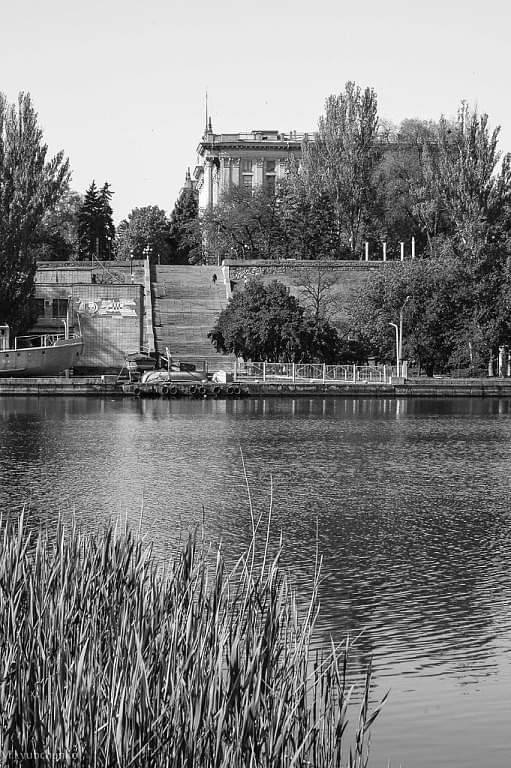 The same view; in the late 1960s, a new building for the children’s sailing school was constructed. Photo: Southern Ukraine Through the Ages
A military port used to stand on this very spot. Along the narrow strip of shore stood port shops, boathouses and jetties. They weren’t made of concrete, as they are now, but that didn’t prevent them from handling important cargo and mooring ships.
The military port was decommissioned after the Second World War, and in the 1960s the concrete promenade we are familiar with today was built.
In 1975, the boulevard underwent a major renovation, after which it was renamed Flotskyi.
It is worth noting that last year in Mykolaiv, part of the Upper Embankment’s surface, which had not been repaired for many years, was brought up to standard.