The Mishkovo-Pohorilove community has approved the coats of arms and flags of seven settlements
- Alina Kvitko
-
•
-
13:07, 05 November, 2026
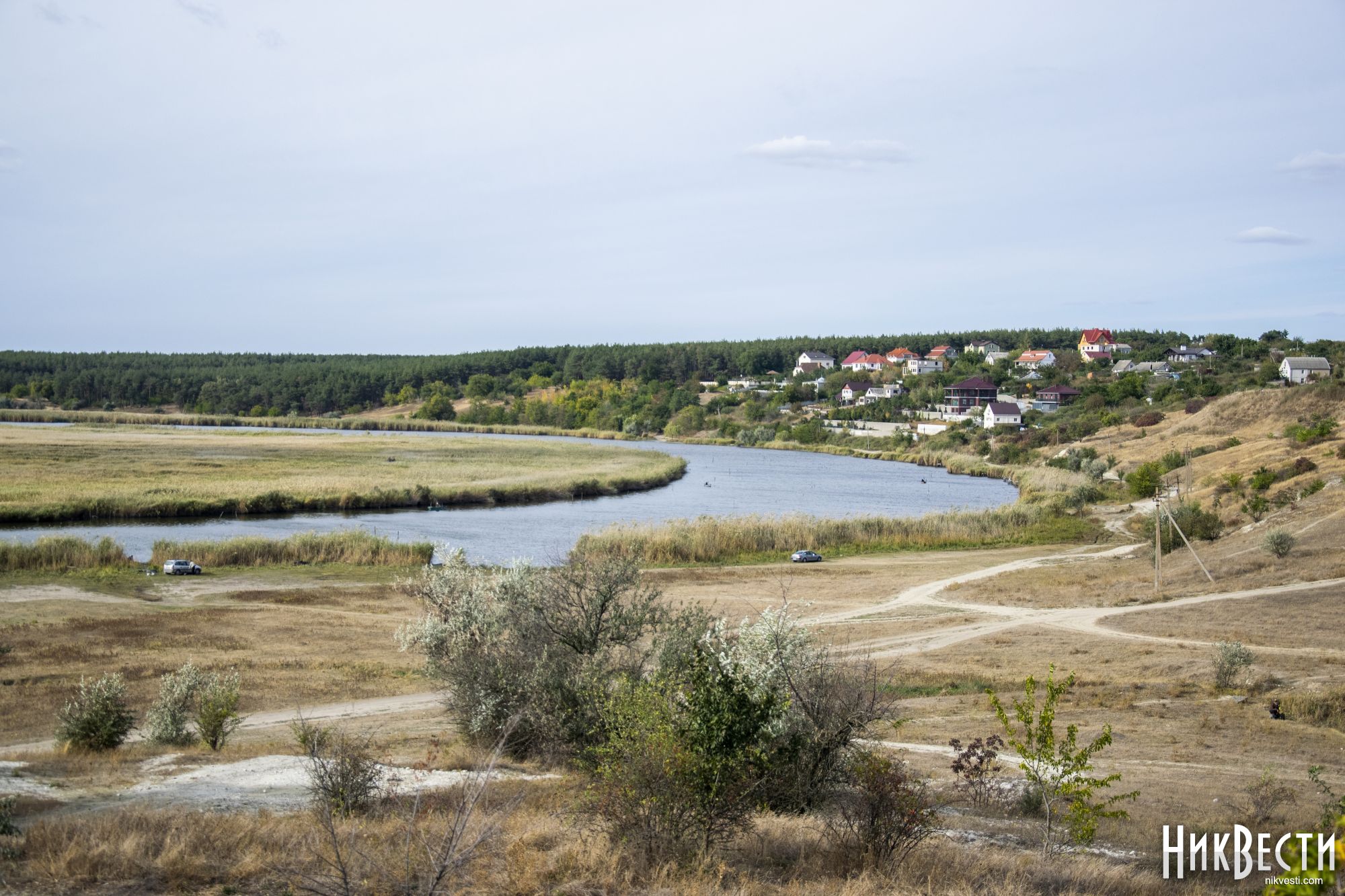 Mishkovo-Pogorilivska ATC. Archive photo NikVesti
The Mishkovo-Pogorilivska community has approved coats of arms and flags for seven settlements. These feature symbols of local history, agriculture, crafts and Bulgarian heritage.
This is stated in the village council’s decisions of 28 October 2026, according to NikVesti.
Distinctive symbols have been approved for Mishkovo-Pohorilove, Dobra Nadiia, Zaichivske, Sviatomykolaivka, Karavelove, Kapustyne and Yasna Poliana. The resolutions took into account the results of the public consultation held on 16 October and letters from the Ukrainian Heraldic Society regarding the expert review of the designs.
Mishkovo-Pohorilove
The coat of arms of Mishkovo-Pohorilove depicts a peasant kneeling beside a harvested crop. He symbolises the local residents’ labour on the land and their care for future generations.
The blue ribbon alludes to the Inhul River, while the millstones recall the stone quarrying and mills that once operated within the settlement. Two crossed Cossack spears link the village’s Cossack past to the modern-day defenders of Ukraine.
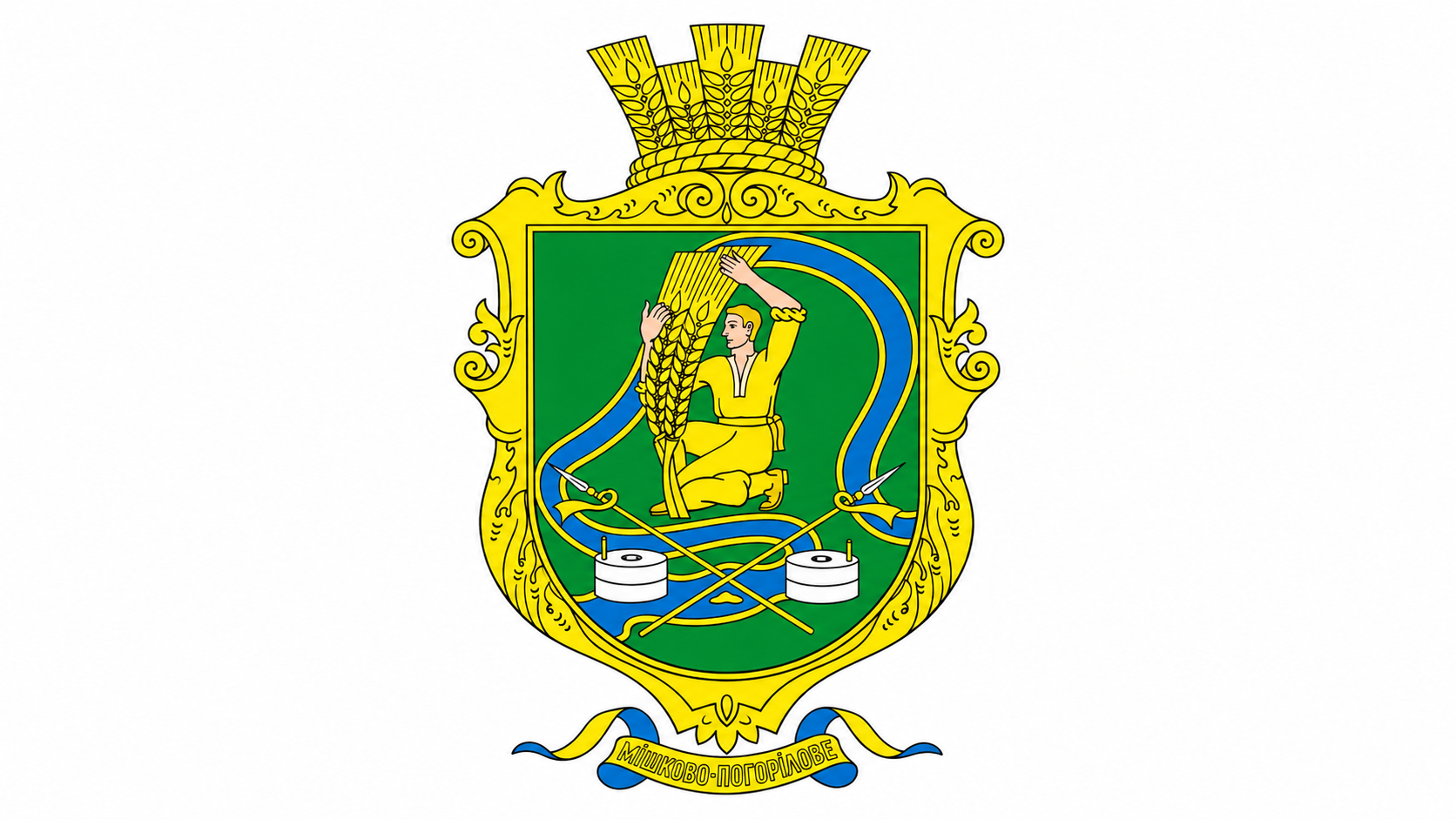 The coat of arms of Mishkovo-Pohorilove with a peasant, millstones and Cossack spears. Photo: attachment to the decision of the Mishkovo-Pohorilove village council
Dobra Nadiia
The coat of arms of Dobra Nadiia features a ripe fruit, a fish and seven primrose flowers. The peach or apricot symbolises local fruit-growing, whilst the crucian carp represents fishing on the Ingul River.
The primrose flowers, which appear in early spring, are linked to the village’s name and the hope for its development and prosperity.
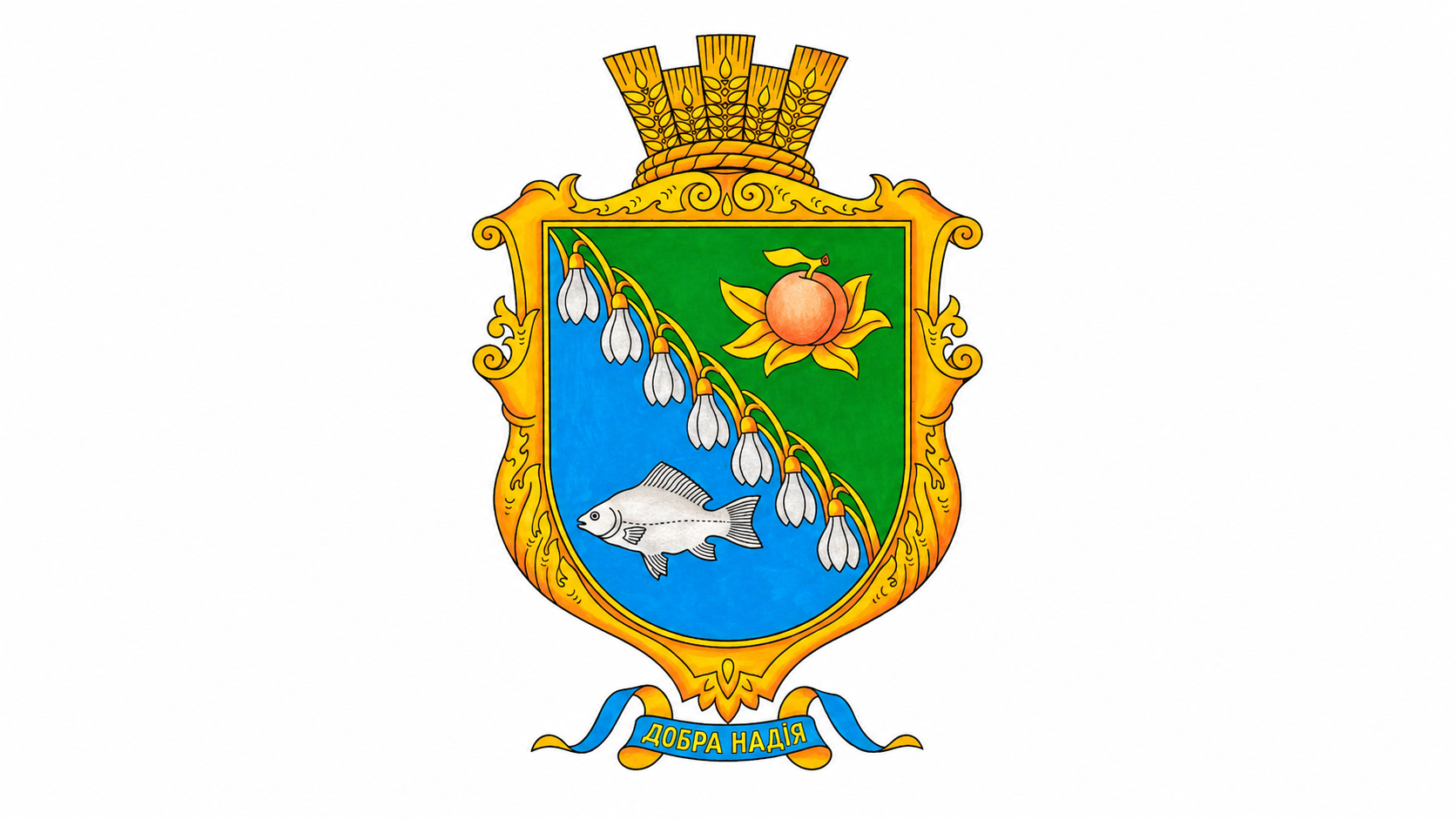 The coat of arms of the village of Dobra Nadiya featuring a fruit from a fruit tree, a crucian carp and primroses. Photo: appendix to the decision of the Mishkovo-Pohorilove Village Council
Zaichivske
The coat of arms of Zaichivske is divided into blue and green sections. It depicts an ornate window with a heraldic lily, a stone with a saw, and three ripe fruits.
The window is a reference to the architectural style of houses in the southern settlements of the Mykolaiv region in the 19th century, whilst the lily symbolises the Zaitsevsky family, who owned the local lands. The stone with a saw symbolises the extraction of building materials, whilst the fruits symbolise the cultivation of orchards.
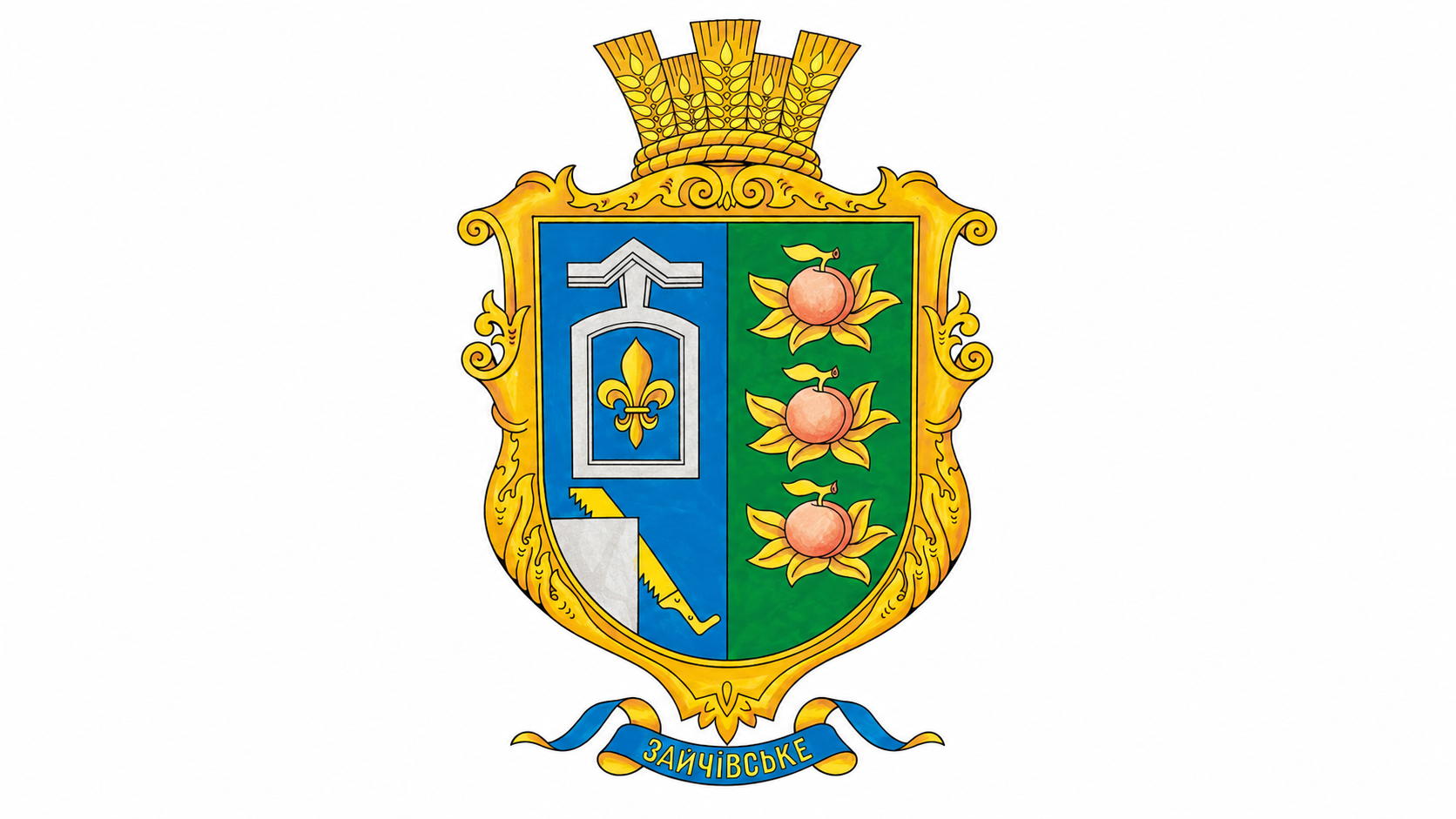 arms of the village of Zaychivske, featuring symbols of local architecture, stonemasonry and horticulture. Photo: appendix to the decision of the Mishkovo-Pohorilove Village Council
Sviatomykolaivka
The coat of arms of Sviatomykolaivka depicts Saint Nicholas holding the Gospel. This image explains the village’s name and symbolises kindness, mercy and love for one’s neighbour.
A grapevine is depicted around him, recalling the traditions of grape growing and winemaking. The pine branches with cones are associated with the local pine forest and the «Pischany Peninsula» nature reserve.
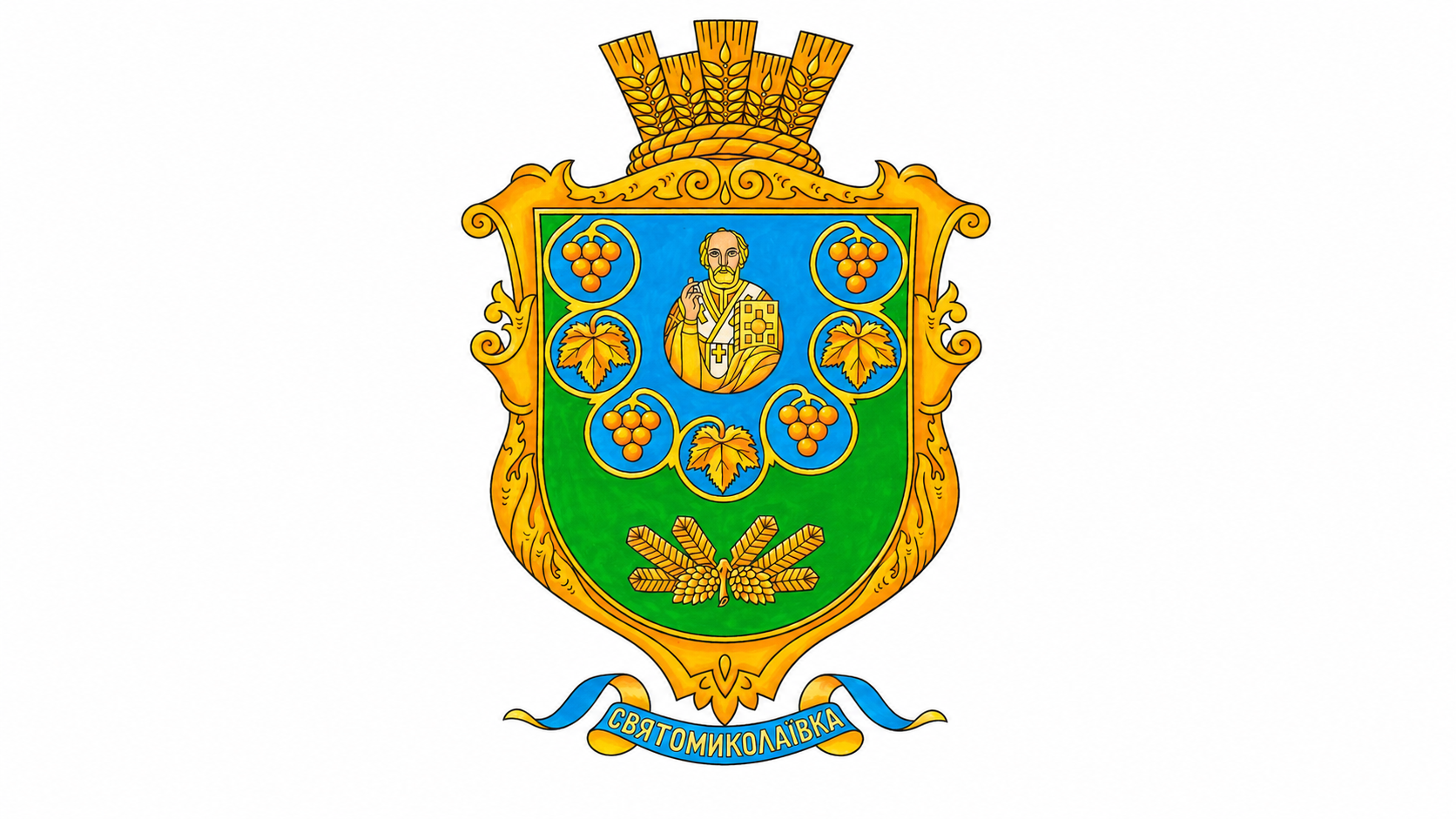 The coat of arms of the settlement Mykolaivka with Saint Nicholas, a vine and pine branches. Photo: attachment to the decision of the Mishkovo-Pohorilove village council
Karavelove
The coat of arms of Karavelove depicts a golden lion holding a scroll and a goose quill. It commemorates the Bulgarian writer and revolutionary Liuben Karavelov, after whom the settlement is named.
The stone fence with an open entrance symbolises the dwellings of the first settlers — ethnic Bulgarians who used local stone and preserved their own building traditions. The grapevines signify fertility and prosperity, whilst the fish represent fishing and the settlement’s location on the banks of the Ingul.
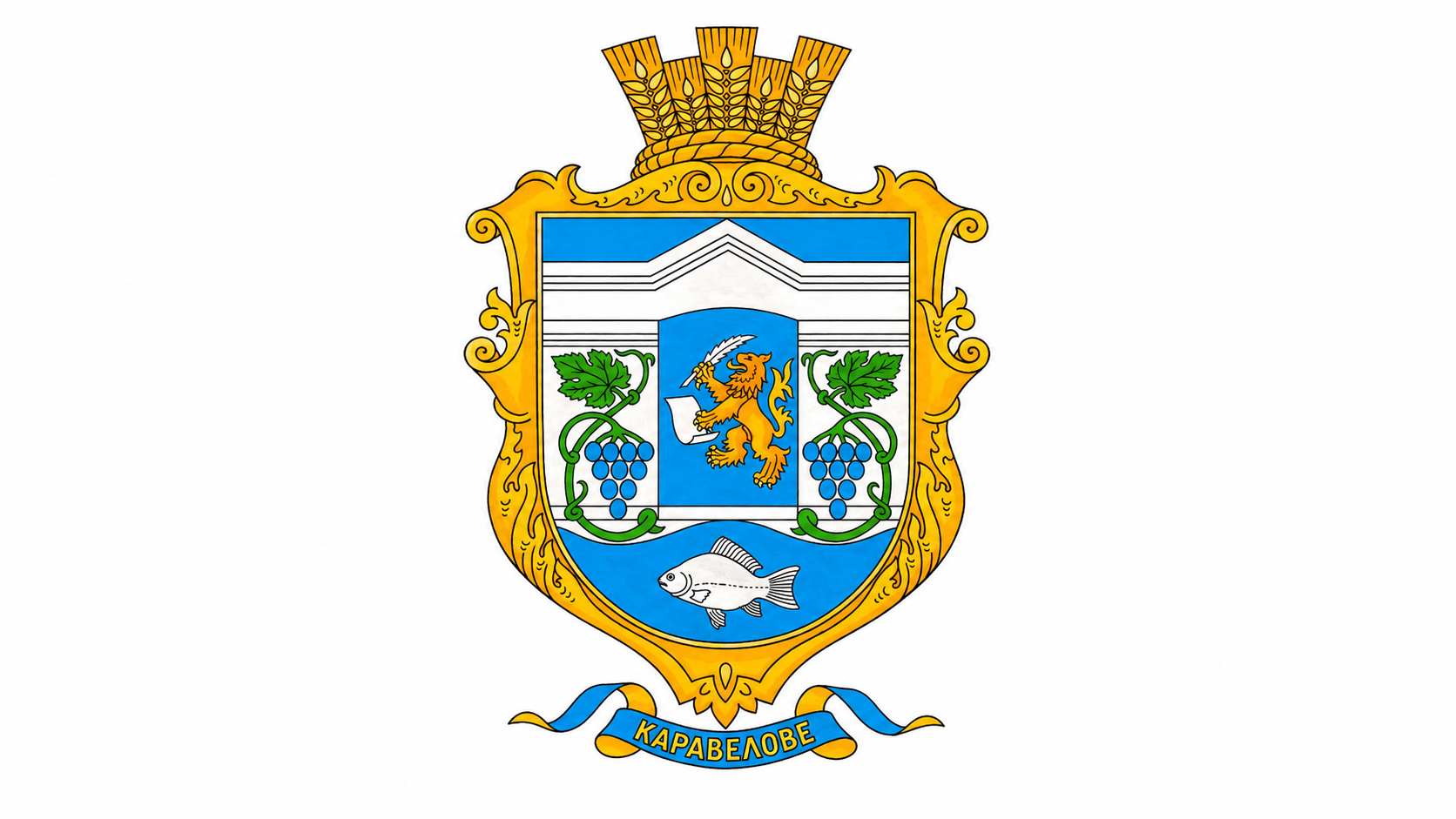 The coat of arms of the village of Karavelove featuring a lion, a stone fence, grapes and a fish. Photo: appendix to the decision of the Mishkovo-Pohorilove Village Council
Kapustyne
The coat of arms of Kapustyne consists of three parts, depicting a stork, a head of cabbage and an ornate jug.
The cabbage explains the village’s name and serves as a reminder of the vegetable farming practised by local residents. The stork symbolises hope, happiness and rebirth. The jug is associated with archaeological finds in the vicinity of the settlement, in particular the remains of ancient pottery.
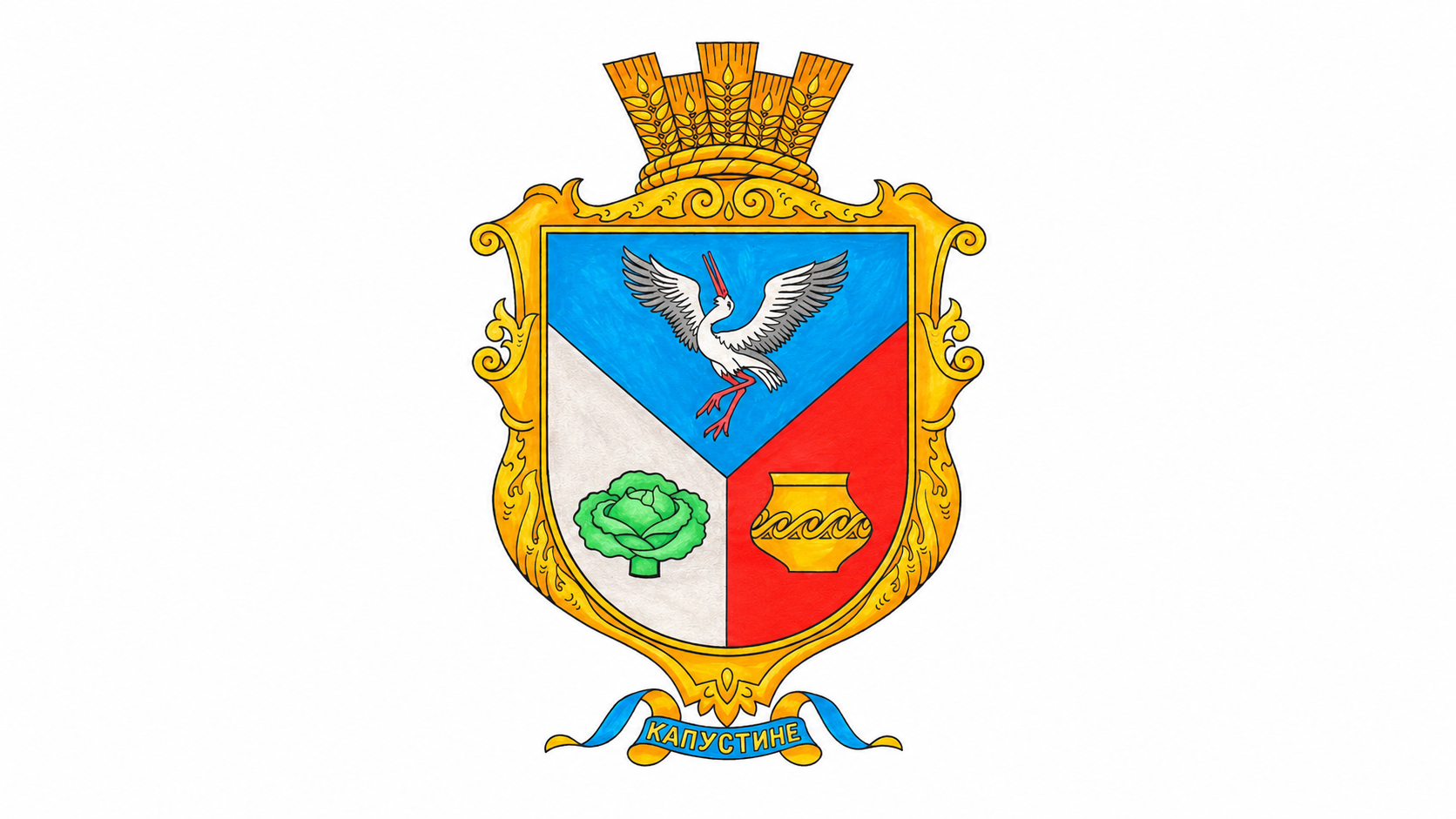 The coat of arms of the village of Kapustyne featuring a stork, a head of cabbage and a jug. Photo: appendix to the decision of the Mishkovo-Pohorilove Village Council
Yasna Poliana
In the centre of the Yasna Poliana coat of arms is a vegetable plant with leaves, flowers, roots and fruits. It serves as a reminder of the cultivation of vegetables on local land.
The silver figures with jagged edges symbolise the quarrying and cutting of limestone for construction. The golden «pafta» buckle at the top of the coat of arms commemorates the Bulgarian founders of the settlement.
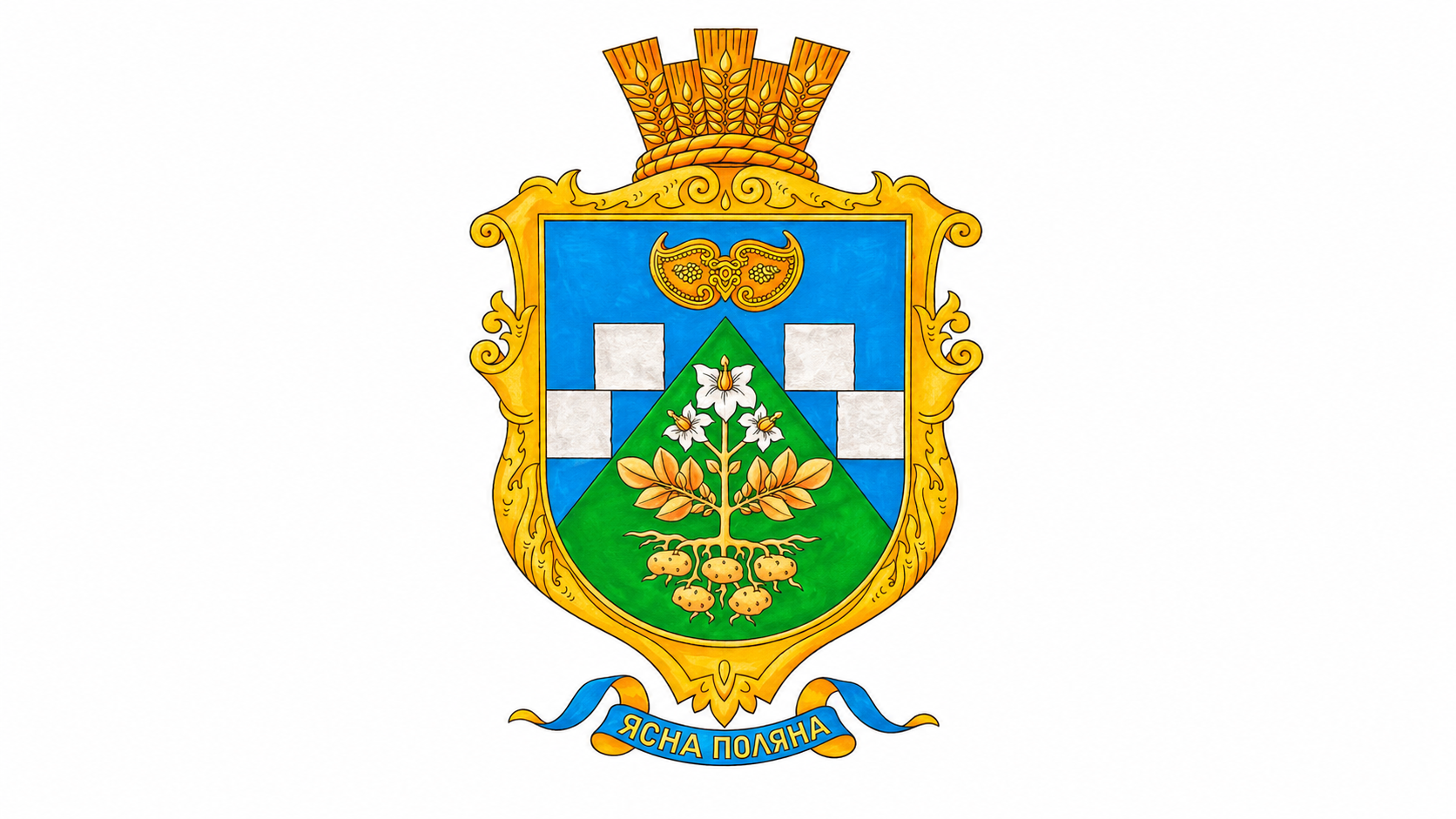 The coat of arms of the village of Yasna Polyana featuring symbols of vegetable growing, limestone quarrying and a Bulgarian «pafta» buckle. Photo: appendix to the decision of the Mishkovo-Pogorilivska Village Council
Along with the coats of arms and flags, the council approved rules governing their use. The symbols may be displayed on buildings, entrance signs, certificates and souvenirs, and used during official events. The images must correspond exactly to the approved designs.
To use the symbols in cases requiring authorisation, residents and businesses must submit an application to the village council. This will be considered within 30 calendar days. Municipal institutions may use the coats of arms and flags during public events without separate authorisation.
A fee has been set for commercial use, although the amount is not specified in these documents. The regulations also mention fines for using the symbols without the necessary permission, but no specific amounts are given.
How coats of arms and flags are being updated in the Mykolaiv region
As a reminder, the Mykolaiv Regional Council has begun reviewing the symbols of the region’s towns and villages to bring them into line with the law. Denys Andreiev, First Deputy Chair of the Regional Council, reported on the preparation of guidelines for local authorities and the creation of a regional register of local symbols. Final decisions on the approval of coats of arms and flags are taken by local councils.
Prior to this, the region had changed its own coat of arms. The regional council explained the need for this update by pointing out that certain elements of the previous symbols — the bishop’s mitre and golden croziers — were linked to Russian imperial tradition. The chairman of the regional council, Anton Tabunshchyk, stated the need to move away from these images and to reflect Ukrainian identity and the region’s history in the symbols.
Three designs for the new coat of arms were put forward for public consultation: one featuring Saint Nicholas, one featuring symbols of ancient Olbia, and one featuring a silver stag, an amphora and an anchor. The design featuring Saint Mykolaiv was supported by 46 out of 52 communities; a further four chose the coat of arms with the stag, whilst two did not support any of the options.
On 16 April 2026, members of the regional council selected the coat of arms featuring Saint Mykolaiv — 41 councillors voted in favour of it. During the discussion, Kateryna Stokolias proposed refining the sketch and combining various historical images, whilst Ruslan Peresunko supported the option linked to the region’s Scythian and ancient heritage. An alternative coat of arms featuring Olbia received seven votes.