Councillors have approved a ₴300 million development programme for Mykolaiv’s bus transport system
- Yuliia Boichenko
-
•
-
14:09, 26 November, 2026
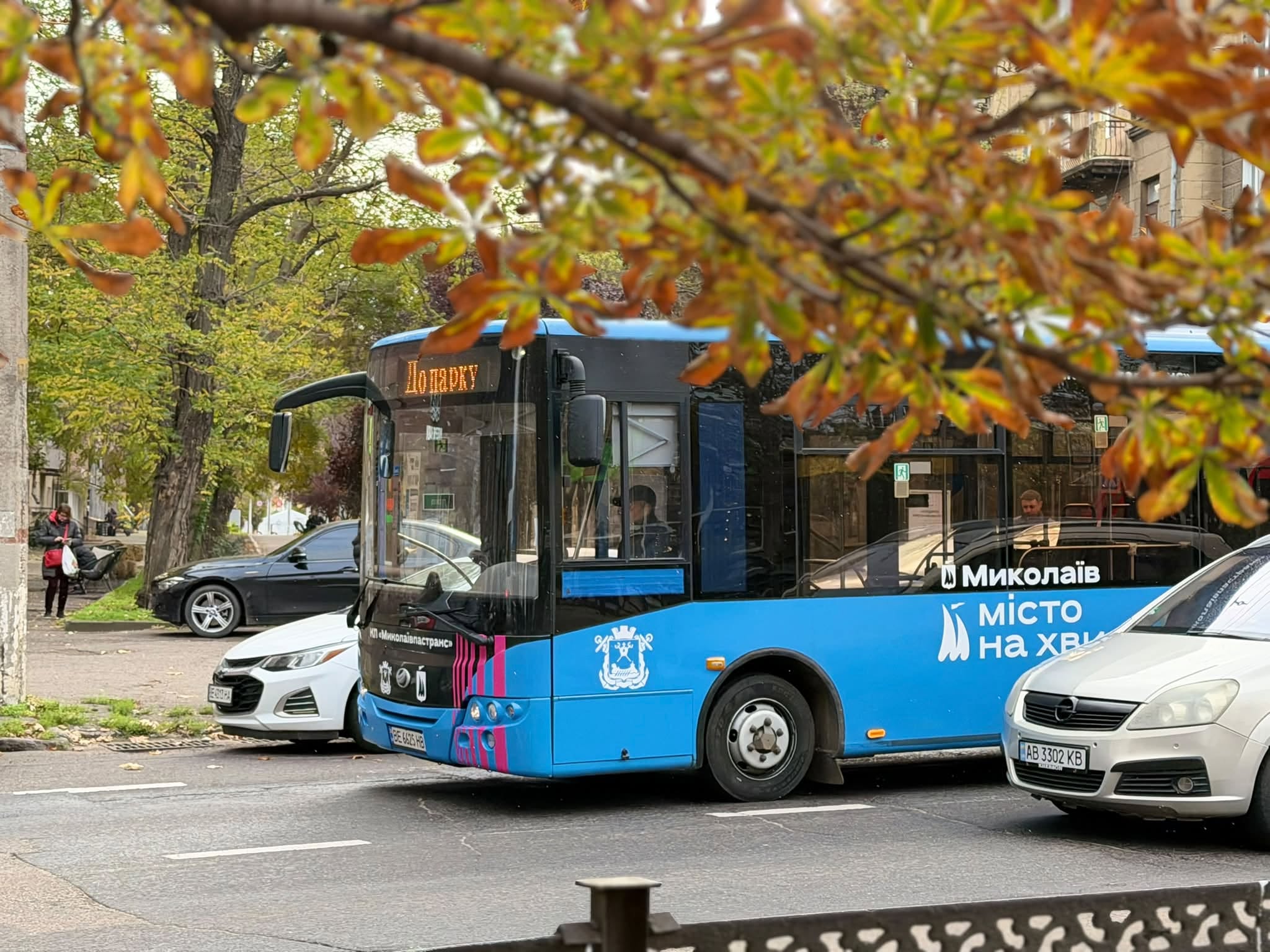 A bus on the streets of Mykolaiv. Photo: «Mykolaivpastrans» municipal enterprise
Councillors on Mykolaiv City Council have approved a programme for the development of the municipal bus transport system for 2027–2029, with a total cost of 297.6 million hryvnias.
This decision was supported by 80 per cent of the councillors present at the city council session on 26 November, according to NikVesti. Twenty-eight councillors voted in favour, none against, and a further seven abstained.
The programme was presented by Oleh Kuksa, deputy head of the city council’s transport department. During the budget committee meeting the previous day, he had already stated that the company’s top priorities included the purchase of two minibuses, three passenger cars and the construction of its own petrol station.
«The plan is to purchase two minibuses; that is the top priority. Then there are three cars for the company’s operations. And, essentially, the construction of a petrol station,» said Oleh Kuksa.
It is worth noting that during the presentation of the city’s bus transport development programme at the budget committee meeting, Oleh Kuksa first highlighted the operational needs of the «Mykolaivpastrans» municipal enterprise, in particular the purchase of service vehicles. At the same time, according to the regulations governing the transport department, its remit includes, amongst other things, the development of the city’s transport system, the optimisation of the route network, the preparation of decisions on fare rates and the organisation of passenger transport.
What are they planning to spend nearly 300 million hryvnias on?
NikVesti analysed the draft programme for the development of municipal bus transport. Over three years, 240.6 million hryvnias from the city budget and 57 million hryvnias from the company’s funds are earmarked for its implementation.
The programme envisages three main areas of funding:
- 240.6 million hryvnias — the purchase of buses and vehicles for the company’s operations;
- 37.2 million hryvnias — modernisation of the bus depot;
- 19.8 million hryvnias — for the introduction of electronic fare collection systems.
In total, the plan is to purchase 59 vehicles by the end of 2029: six in 2027, 19 in 2028 and 34 in 2029. However, the document does not specify how many of these will be passenger buses and how many will be vehicles for the company’s own use.
There are also plans to purchase 99 electronic fare collection systems in 2028, at an estimated cost of 200,000 hryvnias each.
What is the current state of Mykolaiv’s bus fleet?
According to the draft programme, «Mykolaivpastrans» currently has 87 buses on its books. More than half of these — 49 vehicles — have been in service for longer than the standard eight-year period set out in the programme. Furthermore, 30 buses have been in service for over 15 years.
As the programme’s developers point out, the wear and tear on the vehicles leads to frequent breakdowns, increased repair costs and a deterioration in the quality of passenger transport services.
Other problems include a shortage of large low-floor buses to serve outlying areas of the city, the lack of a unified transport monitoring system, and the absence of an automated fare collection system.
As of 2026, there are 42 bus routes operating in Mykolaiv. Of these, only eight are operated by the municipal enterprise «Mykolaivpastrans», whilst the remaining 34 are run by private operators.
The final decision on the approval of the programme is to be taken by the city council at a session.
It should be noted that more than eight buses, which Mykolaiv received as part of humanitarian aid and grant programmes, are no longer in service. According to Oleh Kuksa, deputy head of the city council’s transport department, it is difficult to find spare parts for repairs, whilst the remaining buses may last another year or two.