«Mykolaiv faces a budget shutdown at the end of the year», says City Council Secretary Falko
- Alina Kvitko
-
•
-
17:20, 14 August, 2026
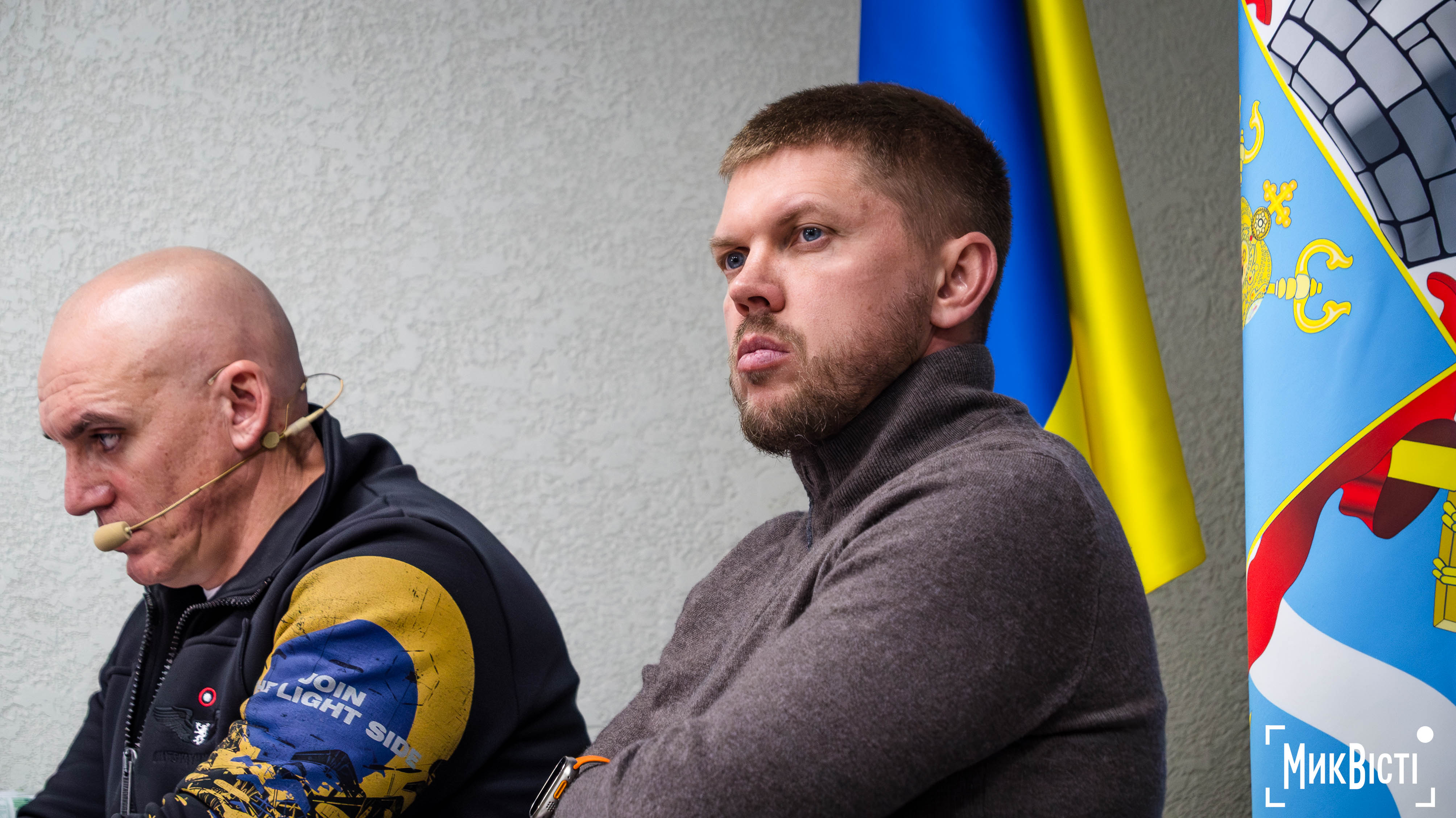 Dmytro Falko has warned that, without additional funding, Mykolaiv could face a ‘budget shutdown’ at the end of the year. Photo: NikVesti archive
Mykolaiv may run out of funds for some of its priority expenditure as early as November–December if the city does not receive additional funding from the state budget.
Dmytro Falko, secretary of the Mykolaiv City Council, spoke about this in an interview with the «MART» TV channel, comparing the budgetary situation to a «shutdown» in the US.
A ‘shutdown’ in the US is a situation where, due to a lack of approved funding, the work of some government agencies is suspended or restricted. Dmytro Falko used this term to draw a comparison with a possible scenario in Mykolaiv should the city budget be left without additional revenue.
According to him, the current problem with the city’s funding is primarily linked to a reduction in local budget revenue. One of the main sources of revenue was personal income tax (PIT). Until 2023, a significant proportion of this tax was paid into the city budget by military personnel and law enforcement officers. Following legislative changes, these revenues began to be channelled into the state budget.
Furthermore, some of Mykolaiv’s large enterprises, which previously provided substantial tax revenue, are either not operating or are operating at less than full capacity due to the war.
In an appeal to the Cabinet of Ministers and the Verkhovna Rada, which the Mykolaiv City Council endorsed on 6 August, it was noted that due to the removal of personal income tax from the salaries of military personnel and law enforcement officers, the city would lose 2.7 billion hryvnias in 2025, whilst the expected shortfall for 2026 amounts to approximately 3 billion hryvnias. The City Council estimated the budget deficit at 1.178 billion hryvnias and asked the state to provide the city with an additional grant.
In particular, according to the city authorities’ calculations, Mykolaiv is short of 169.9 million hryvnias for public sector staff salaries, 133.5 million for utilities and energy supplies, and 65.8 million for school meals in nurseries and schools.
The largest sum — 784.5 million hryvnias — is needed to resolve drinking water issues and ensure the uninterrupted operation of the heating system.
«We have, in fact, only funded, shall we say, the most urgent needs for 10 months – that is, effectively up to the end of October,» said Dmytro Falko.
He noted that even with such a «tight» budget, additional expenses arise throughout the year. These include providing meals for children and preparing the city for the heating season.
If no additional funding is forthcoming, according to Dmytro Falko, November and December could prove to be the most problematic months.
«If nothing changes, then in November and December we could face a situation similar to the shutdown in America. I’ve never faced anything like this and I don’t know of anyone in local government in Ukraine who has dealt with such matters, but effectively, for two months, nothing will be funded,» said the city council secretary.
At the same time, he said, the city is already experiencing funding problems. In particular, Dmytro Falko cited street cleaning as an example, the frequency of which has had to be reduced.
«We can see, for example, that the frequency of street cleaning is decreasing month by month; in other words, it now takes place once a week, rather than twice a week as it used to,» he explained.
At the same time, the city authorities emphasise that the request for additional funds does not relate to new infrastructure projects or the city’s development.
«These aren’t just some whims; this doesn’t relate to the development budget as such. It relates exclusively to what are, as they say, urgent and priority expenditure. In particular, this includes preparations for the heating season, specifically ensuring water supply and the functioning of local government bodies,» explained Dmytro Falko.
Why, then, is the city not spending part of its planned funds?
The city authorities have been discussing the budget deficit since the start of the year.
Back in January, Mykolaiv’s mayor, Oleksandr Sienkevych, stated that the city needed to receive around 1.1 billion hryvnias from the state budget. In May, the city council again appealed to the Cabinet of Ministers for an additional grant.
On 6 August, councillors once again backed the request — this time for 1.18 billion hryvnias.
Oleksandr Sienkevych explained at the time that the repeat request was linked, in particular, to the lack of a response from the Ministry of Finance and the Cabinet of Ministers.
«We reached this decision as a result of the lack of feedback from the Ministry of Finance and the Cabinet of Ministers. It was also due to changes in the composition of the Cabinet and the appointment of a new Prime Minister. We are raising this issue once again regarding a situation that has not changed in any way since December 2025, when we were planning the budget with you. We are appealing to them once more and, as they say, we now have more representatives from the Mykolaiv region in this government. We very much hope that they will help us secure this grant, if not in full, then at least in part. However, it would be preferable for all matters relating to the grant to be funded,» said the mayor.
Meanwhile, on 6 August, Mykolaiv City Council found nearly 45 million hryvnias to co-fund the installation of modular boiler houses. These funds became available thanks to the budget’s revenue exceeding the target for January–July. According to the Department of Finance, revenue performance over the seven-month period stood at 110.6 per cent.
However, these 44.95 million hryvnias do not resolve the overall deficit problem.
The money will be allocated as a 10 per cent co-funding contribution to the state programme for the installation of modular boiler houses in Mykolaiv. The total cost of the project is around 450 million hryvnias, of which around 400 million is to be provided by the state. The boiler houses are intended to serve as a backup heat source in the event of disruptions to the centralised heat supply.
Why, in this context, is the city not spending part of the planned funds?
Against the backdrop of a municipal budget deficit, certain departments of the city council are simultaneously showing low budget execution rates. In particular, as of 1 August, the Capital Construction Department had spent 22 million hryvnias out of the 234.6 million hryvnias allocated for the year. This represents just 9.5 per cent of the department’s budget — the lowest figure among the city council’s departments.
On 4 August, Oleksandr Sienkevych asked the deputy mayor, Serhii Korenev, who coordinates the work of the Capital Construction Department, to report on the implementation of infrastructure projects.
The mayor himself attributed the low budget execution rate to the fact that the city is delaying payment for completed capital works due to a lack of funds. According to him, work on individual sites is approximately 40 per cent complete, but the city has not yet made the corresponding payments.