The Mykolaiv Regional Council has yet to approve the climate change adaptation plan presented over a year ago
- Alona Kokhanchuk
-
•
-
17:51, 10 February, 2026
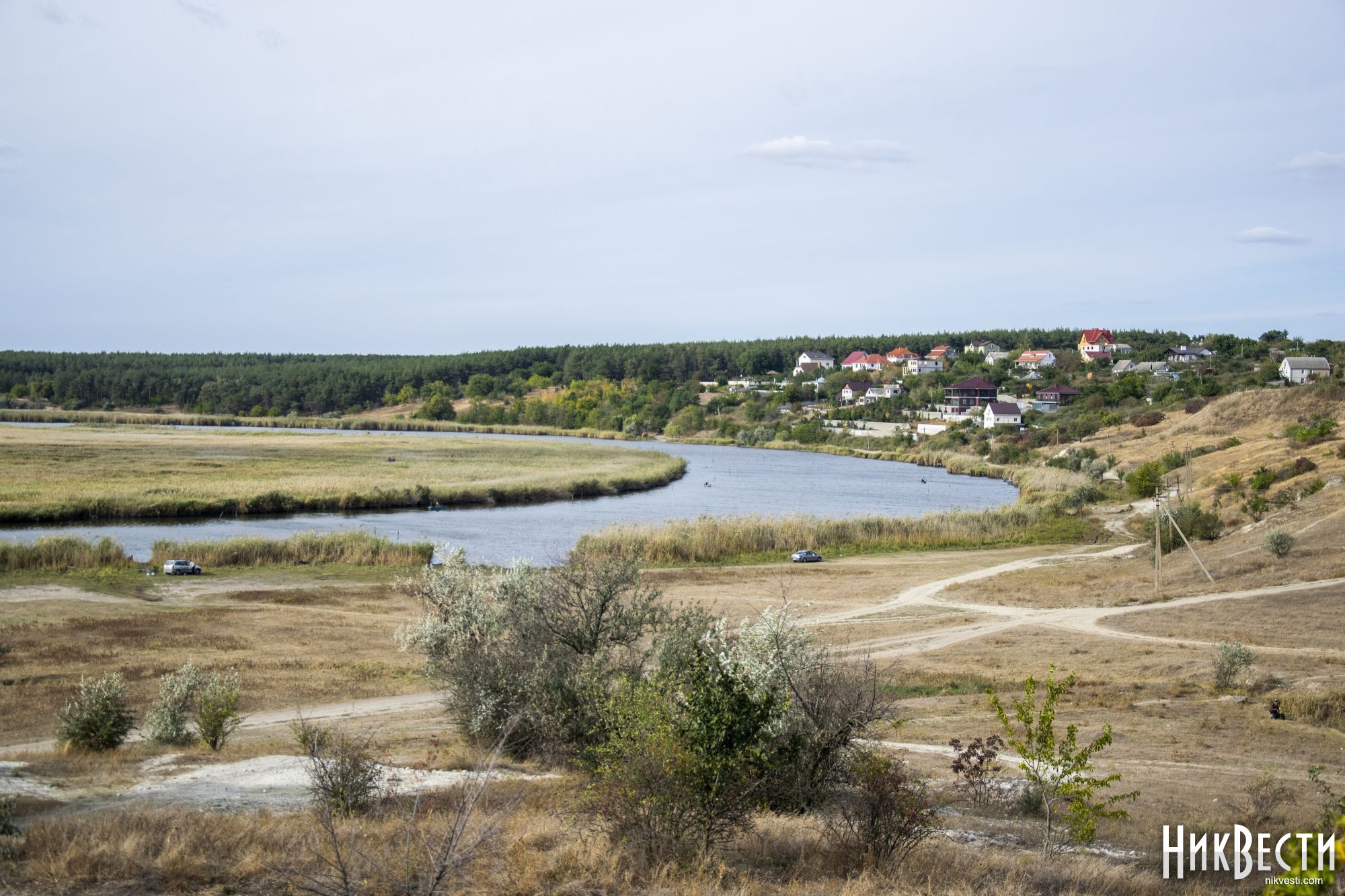 Mishkovo-Pogorilivska territorial community, archive photo NikVesti
The Mykolaiv Regional Council has not yet approved the action plan for the implementation of the Climate Change Adaptation Strategy for the Mykolaiv Region in 2026–2028, which was developed in 2024.
This is stated in the response of the Mykolaiv Regional Military Administration to a request from NikVesti.
The Regional Military Administration reminded that the Mykolaiv region is one of three pilot regions where the Climate Change Adaptation Strategy and its implementation plan were developed as part of the EU's APENA 3 international technical assistance project. The finalised draft documents were submitted by the Ministry of Environmental Protection and Natural Resources to the Mykolaiv Regional Military Administration.
As part of the work of a special working group, a draft Operational Plan of Measures for the Implementation of the Strategy for 2026-2028 within the period up to 2033 was also prepared. However, the Strategy and the plan for its implementation must be approved by a decision of the Mykolaiv Regional Council.
«These documents are currently being prepared for approval,» the Regional State Administration said.
Due to the fact that the Regional Council has not yet approved these documents, no funds have been allocated for the implementation of the Strategy and plans.
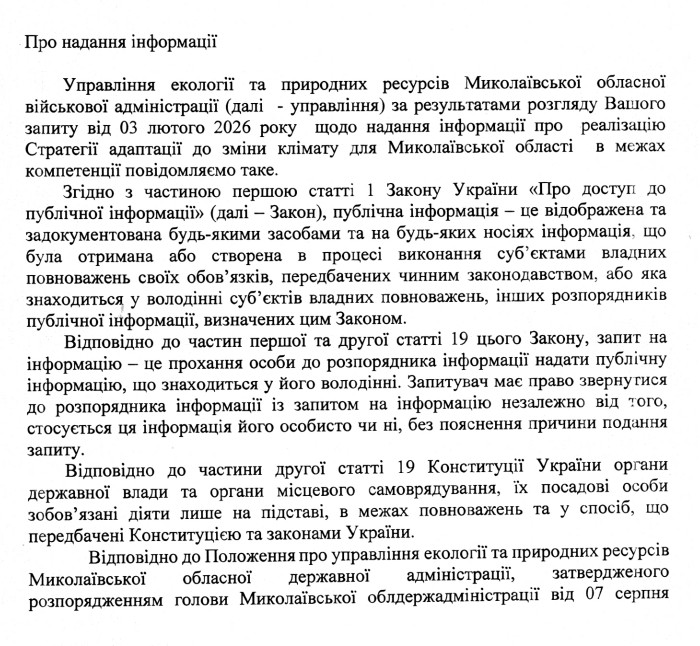 Screenshot of the response to the request from NikVesti
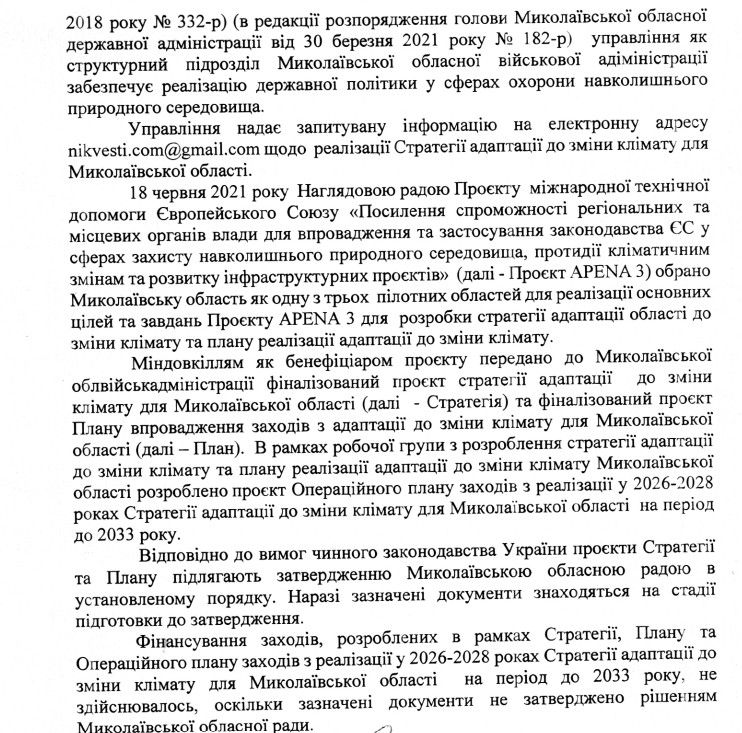 Screenshot of the response to the request from NikVesti
Earlier, the Mykolaiv Regional State Administration reported that in order to adapt the region to climate change, 171 measures with an estimated cost of 155 million euros need to be implemented over seven years. These include the development of an early warning system for dangerous weather phenomena, monitoring of climate change, support for scientific institutions, and the creation of specialised structures. The regional authorities plan to attract donor and grant funds for this purpose.
According to experts, Mykolaiv is one of the regions of Ukraine most affected by climate change — droughts, rising temperatures and extreme weather events, the risks of which have been exacerbated by the full-scale war.