Despite the cold weather and blackouts, the number of students in Pervomaisk schools is increasing: «We are switching to three shifts»
- Alina Kvitko
-
•
-
15:56, 13 February, 2026
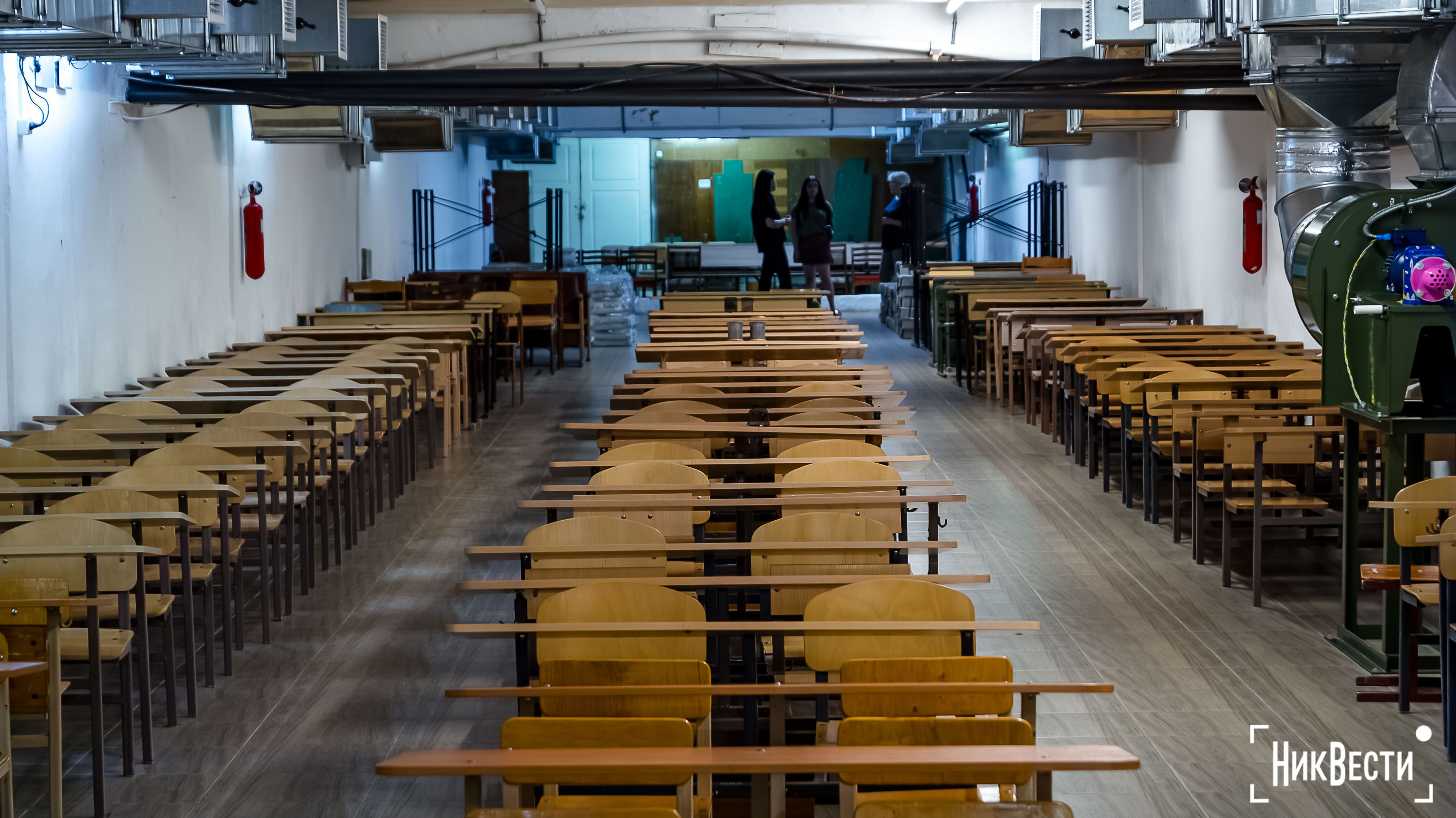 Despite the cold classrooms and shortened lessons, students continue to attend schools in Pervomaisk. Photo illustration, archive NikVesti
In Pervomaisk, there is no demand for schools to switch to distance learning despite the cold weather, power outages, and other difficulties of the winter period. On the contrary, after the change in the format of schools and the transition of some institutions to three shifts, attendance has increased.
This was reported by Svitlana Tkachuk, head of the city council's education department, in a comment to NikVesti.
Earlier, nikvesti reported on numerous complaints from parents and teachers about the conditions of education in Pervomaisk. Social media was flooded with posts about low temperatures in classrooms and kindergartens, which sometimes drop to +6...+11°C, with children studying in their outer clothing and lessons shortened to 30 minutes. There were also reports of generators in schools that were either not working or not connected.
Svitlana Tkachuk said that before the start of the year, about 50-55% of children were attending school in person, but after the changes were introduced, the number of students in schools increased.
According to her, the administration collects attendance statistics daily. In particular, on the 5th, 3,496 children attended school, on the 6th — 3,347, on the 9th — 4,057, and on the 10th — 3,792. In total, more than 60% of the community's children attend school in person.
«In some institutions, we switched to three shifts, because previously children studied in two. Lessons lasting 30 minutes do not allow for distance learning, so we made a schedule so that all children could attend classes. Thanks to this, the number of children has even increased: parents and children want to learn. You see, parents and children want to gain knowledge... Therefore, I can say that, on the contrary, the number of children has increased,» said Svitlana Tkachuk.
The official explained that some institutions had switched to working in three shifts due to the reduction of lessons to 30 minutes and the impossibility of distance learning during power outages.
«We had electricity for an hour, an hour and a half, two hours. Distance learning is simply unrealistic. Therefore, the commission decided that we would work for 30 minutes in a reduced mode. Five lessons is a little more than 3 hours, but at least we can work through the material with the children. Parents work, and children still need to be taken care of. We organise meals and provide education. We see that we have more electricity and the temperature is rising. We hope that the worst is behind us,» explained Svitlana Tkachuk.
According to her, the school schedules have been reformatted so that all students can attend classes in person, taking into account shelter restrictions. Some schools that previously operated in two shifts have switched to three shifts.
«We have drawn up a schedule so that all children can go outside for these 30 minutes in three shifts... because it is impossible to conduct distance learning,» she said.
According to Svitlana Tkachuk, there were no meals in schools last week, which was also a decision of the commission. Due to power outages, some institutions could only prepare breakfast, but meals have now been fully restored.
Kindergartens in the community are also operating, but in different modes depending on the temperature in the rooms.
«It cannot be said that the temperature is the same everywhere. Somewhere it is 18-20°, somewhere 10-15°. Where the temperature allows, 5-7 groups are working, where it is lower, additional groups are opened. But all kindergartens accept children,» she said.
Earlier, the education department explained that the facilities are heated using gas, electric, pellet and solid fuel boilers. The gas boilers are connected to 6-8 kW generators, which are supplied with fuel within the funds allocated by the city council.