From surgical procedures to blood banks: hospitals in the Mykolaiv region are being monitored using digital data
- Alina Kvitko
-
•
-
17:42, 11 August, 2026
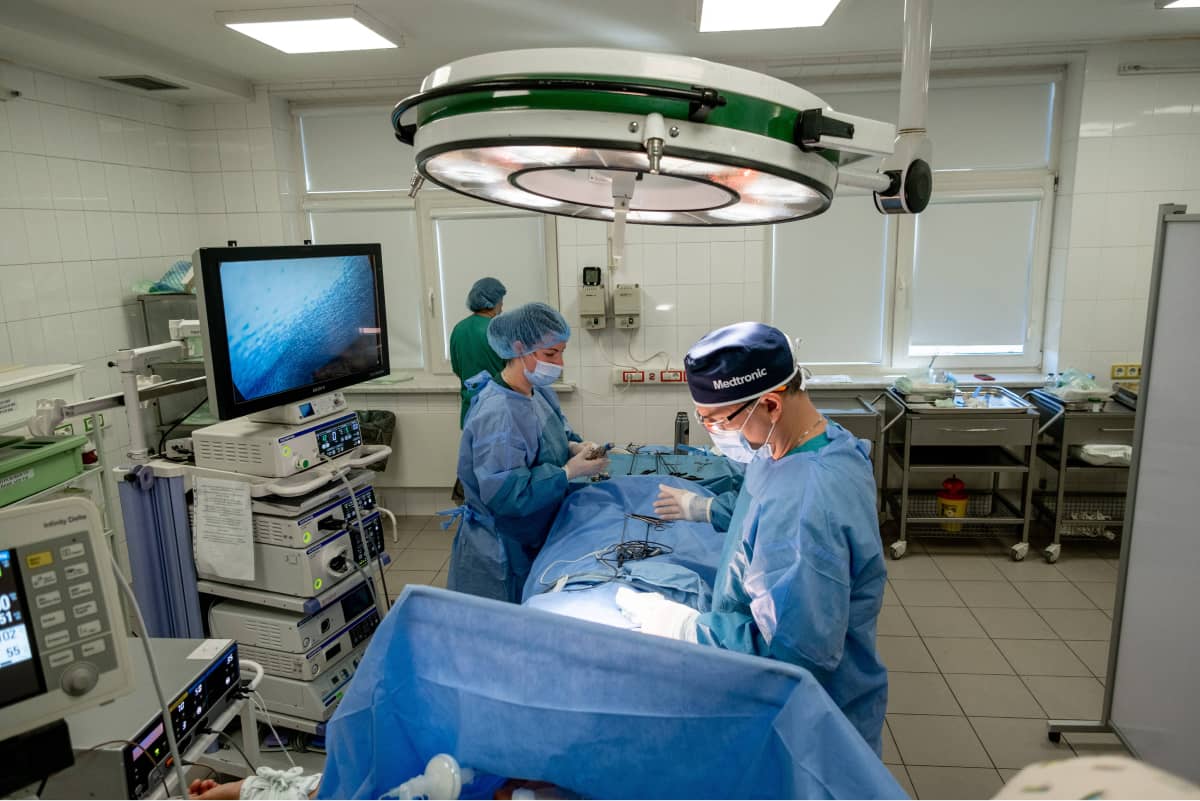 Surgeries, births, the blood bank and the ‘Affordable Medicines’ programme: what the Regional State Administration now knows about hospitals in the Mykolaiv region. Photo: for illustrative purposes only
The Mykolaiv Regional State Administration’s Health Department can now check how many operations a hospital actually performs, how many patients it treats, what prescriptions it issues and whether it has a blood bank. This information is used, in particular, to verify whether healthcare facilities live up to their stated capabilities.
This was revealed by Iryna Tkachenko, head of the Mykolaiv Regional State Administration’s Health Department, during a discussion of the region’s capacity-building network project at the regional commission on medical affairs, according to NikVesti.
Previously, healthcare facilities filled in special forms detailing their staffing levels and available equipment. Now, this data can be cross-checked against information held in digital systems.
«We can actually check whether this equipment is present or not,» said Iryna Tkachenko.
According to Iryna Tkachenko, the department also analyses the actual performance of each healthcare facility. In particular, they look at the number of operations and births carried out, the number of stroke patients, prescriptions issued under the «Affordable Medicines» programme, screenings carried out and other medical services provided.
«We’ve compiled figures on the number of operations, the number of orders processed via Ukrposhta, the number of «Screening Plus» tests, how many prescriptions were issued for «Affordable Medicines», how many patients are in the system, and how many received which service,» noted Iryna Tkachenko.
These figures are presented to hospital managers during meetings so that they can see the overall picture of their institution’s performance and understand which areas require improvement.
Separately, information on the availability of blood banks in healthcare facilities has been entered into the digital system. Iryna Tkachenko explained that this is one of the key indicators for assessing a hospital’s capabilities, particularly with regard to the provision of surgical care.
«If we clearly understand that a healthcare facility does not have its own blood bank and relies on a centralised supply, we realise that it is unable to provide surgical care,» said Iryna Tkachenko.
The hospital’s role within a capable network depends on this. These digital indicators are also used when assessing the capacity of healthcare facilities as part of the process of establishing the network of hospitals in the Mykolaiv region.
According to Iryna Tkachenko, the authorities can see how many operations a hospital has performed, how many births it has attended, how many patients it has treated, how many people have received care for a stroke, as well as exactly what types of operations were carried out and how complex they were.
In this context, it is not only the number of operations that is taken into account, but also their complexity.
«Performing surgery on the skin and performing surgery on the diaphragm are two different things. The strain on the surgeon and the anaesthetist, as well as the level of skill required, are different,» explained Iryna Tkachenko.
These indicators are used to determine the extent to which a healthcare facility meets the requirements for a particular level of the capable network.
If a hospital meets the necessary conditions, the health authority may submit a proposal to the Ministry of Health to amend the capacity network.
Mykolaiv Oblast has currently put a draft of the capacity network out for consultation. According to the draft, the following are proposed to be included among Mykolaiv Oblast’s super-cluster facilities:
- Mykolaiv Regional Children’s Clinical Hospital;
- Mykolaiv Regional Clinical Hospital;
- Mykolaiv Regional Oncology Centre;
- Mykolaiv Regional Tuberculosis and Pulmonology Dispensary;
- the Mykolaiv Regional Centre for Mental Health.
The network is also set to include the Mykolaiv Regional Centre for Emergency Medical Care and 36 primary healthcare facilities.