
The only one in Mykolaiv region: how a driving school for people with disabilities works and why passing a theory test in Mykolaiv is still a problem
-

- Anna HakmanCorrespondent
-
 20000 +
Incredible! This content has reached a new level — 20,000+ views!
20000 +
Incredible! This content has reached a new level — 20,000+ views!
-
 Prefer on Google
-
20K
Incredible! This content has reached a new level — 20,000+ views!
-
Prefer on Google
A driving licence for a person with a disability is not about comfort, but about the right to independence, mobility and equal access to public services. For the second year running, Mykolaiv has been home to the only driving school in the region that teaches people with disabilities to drive: 31 people, including war veterans and civilians, have taken the wheel here. However, after completing their training, many face a barrier that negates all their efforts: in Mykolaiv itself, it is impossible for people who use wheelchairs to take the theory test, as the Ministry of Internal Affairs service centre remains inaccessible.
As a result, people do not have equal access, but rather a «detour» — trips to other communities at their own expense, even if the training was paid for from the budget. And this applies not only to taking the test: difficulties also arise at the stage of obtaining a driving licence.
It is impossible to take the theory test in Mykolaiv. Why?
Despite adapted training, people in wheelchairs cannot take the theory test in Mykolaiv. The reason is the lack of barrier-free access to the second floor of the MIA service centre, where testing is conducted on computers.
«Our students are forced to travel to Voznesensk or Novyi Buh, where accessible premises are available», — explains Nina Kuzmych, deputy director for academic affairs at the Prestige driving school.
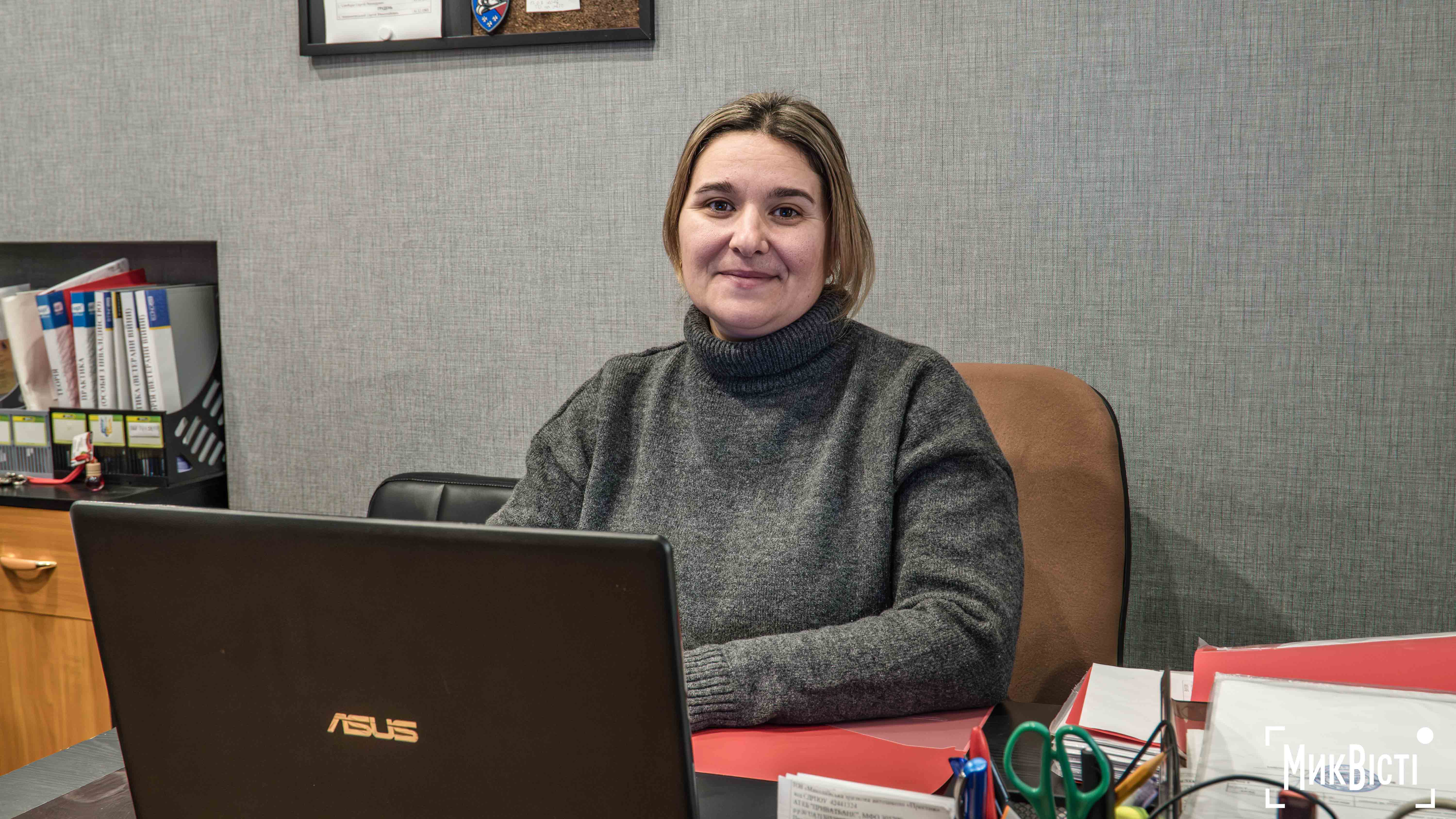 Deputy Director for Academic Affairs at the Prestige Driving School, Photo : NikVesti
Ombudsman: no accessibility, responsibility is unclear
Spartak Hukasian, representative of the Ukrainian Parliament Commissioner in the Mykolaiv region, confirms that the problem exists, but cannot be solved at this time.
«We have even had meetings and working sessions on this issue. Unfortunately, the main building of the service centre in Mykolaiv currently has no access for people with reduced mobility. The offices for submitting documents and taking the theory test on a computer are located on the second floor, but there is no lift or barrier-free access to this floor», — Spartak Hukasyan explained in a comment to NikVesti.
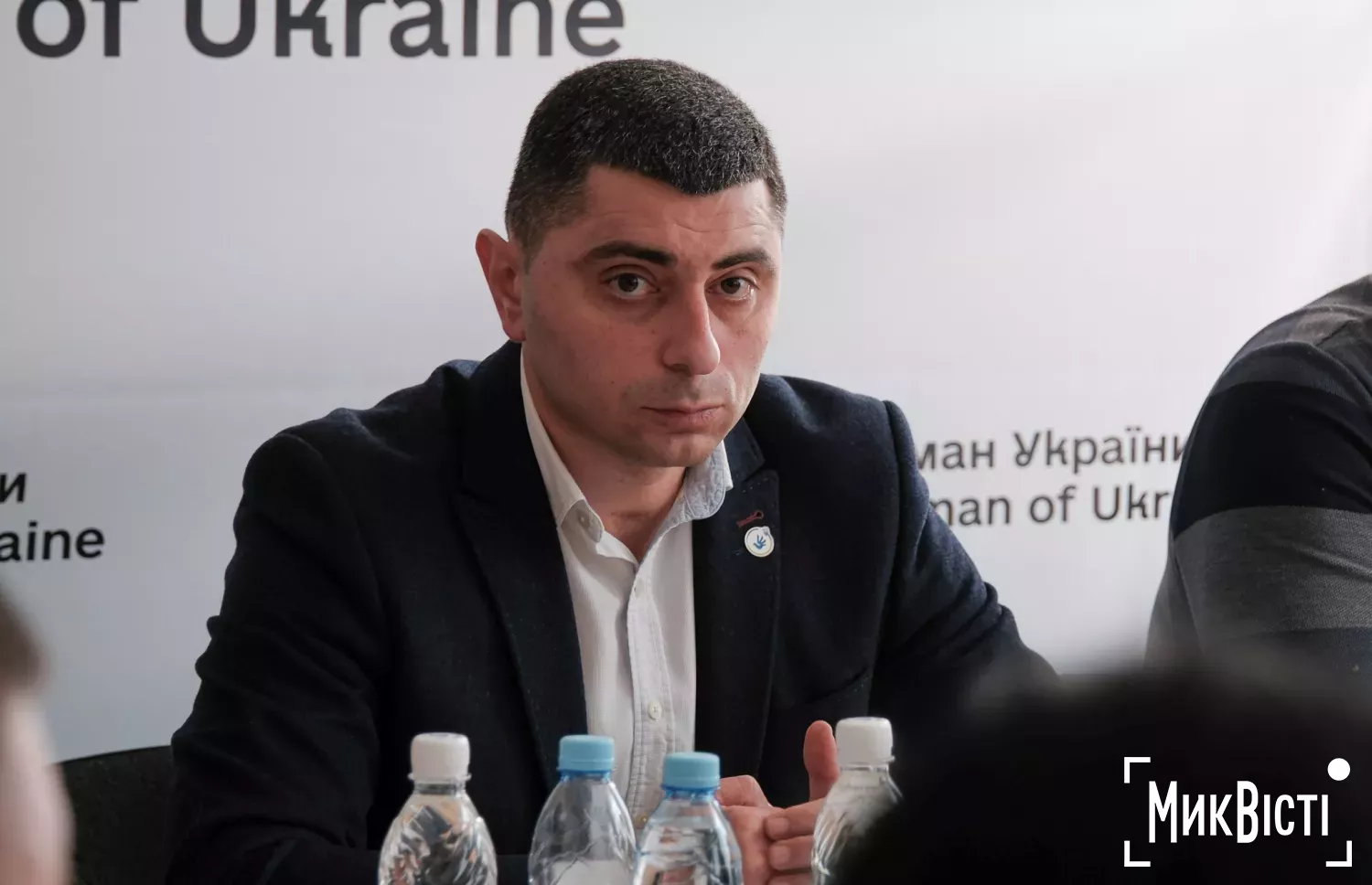 Spartak Hukasyan, representative of the Ombudsman in the Mykolaiv region. Photo: NikVesti
According to him, the service centre explains that the building belongs to the Mykolaiv City Council, so any alterations to the building must be agreed with the city council.
«When we met, myself, as a representative of the ombudsman, and representatives of the public with the head of the service centre, they explained that the building does not belong to them, but to the Mykolaiv City Council. Therefore, any refurbishment or changes that could make the processes more accessible to people with reduced mobility must be agreed with the city council and funding sought. Unfortunately, the state and city authorities do not have a budget for this item of expenditure, so the issue remains unresolved for now, unfortunately», — explains Spartak Hukasyan.
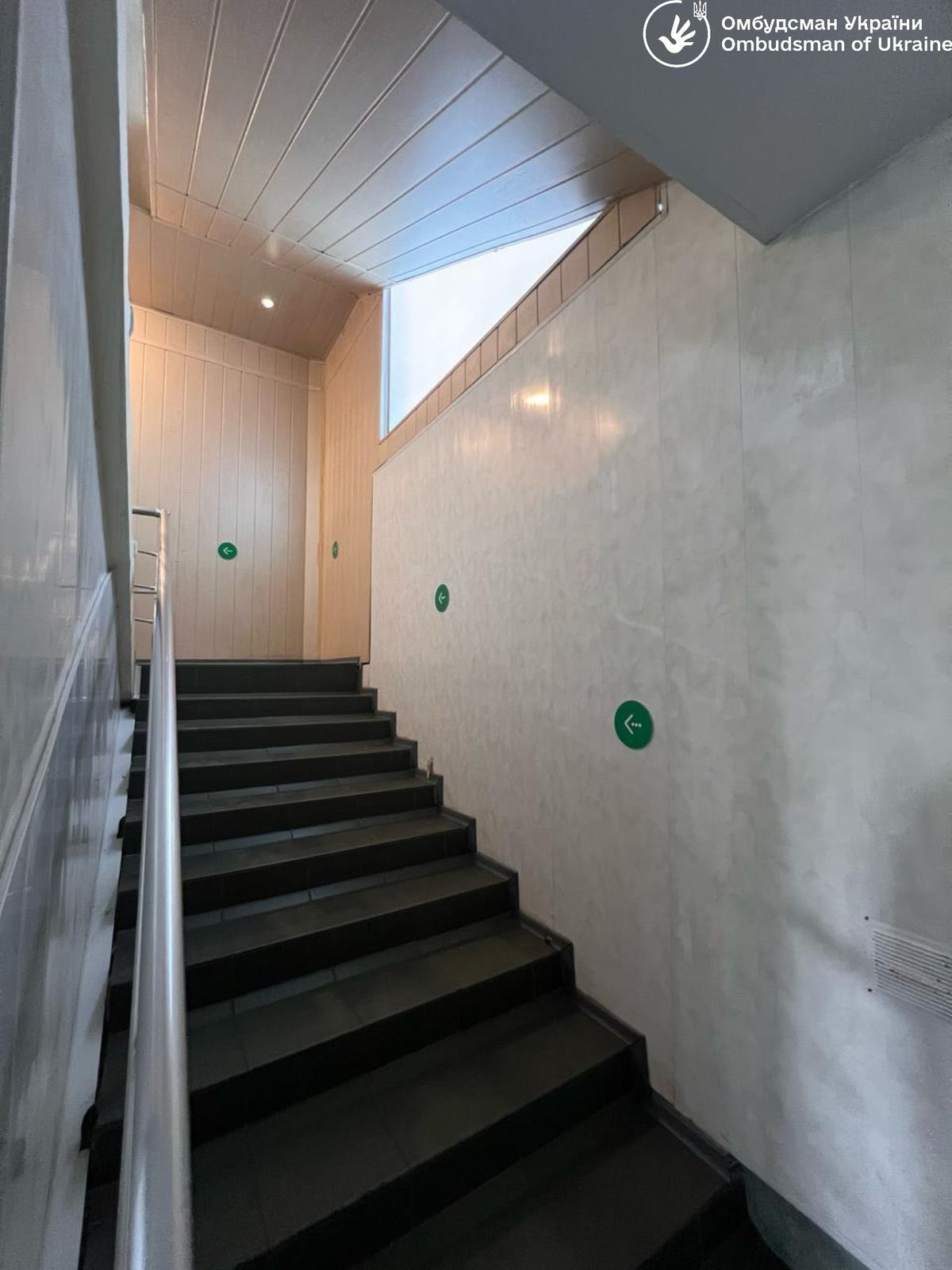 The building of the MIA service centre in Mykolaiv, photo: Ombudsman of Ukraine
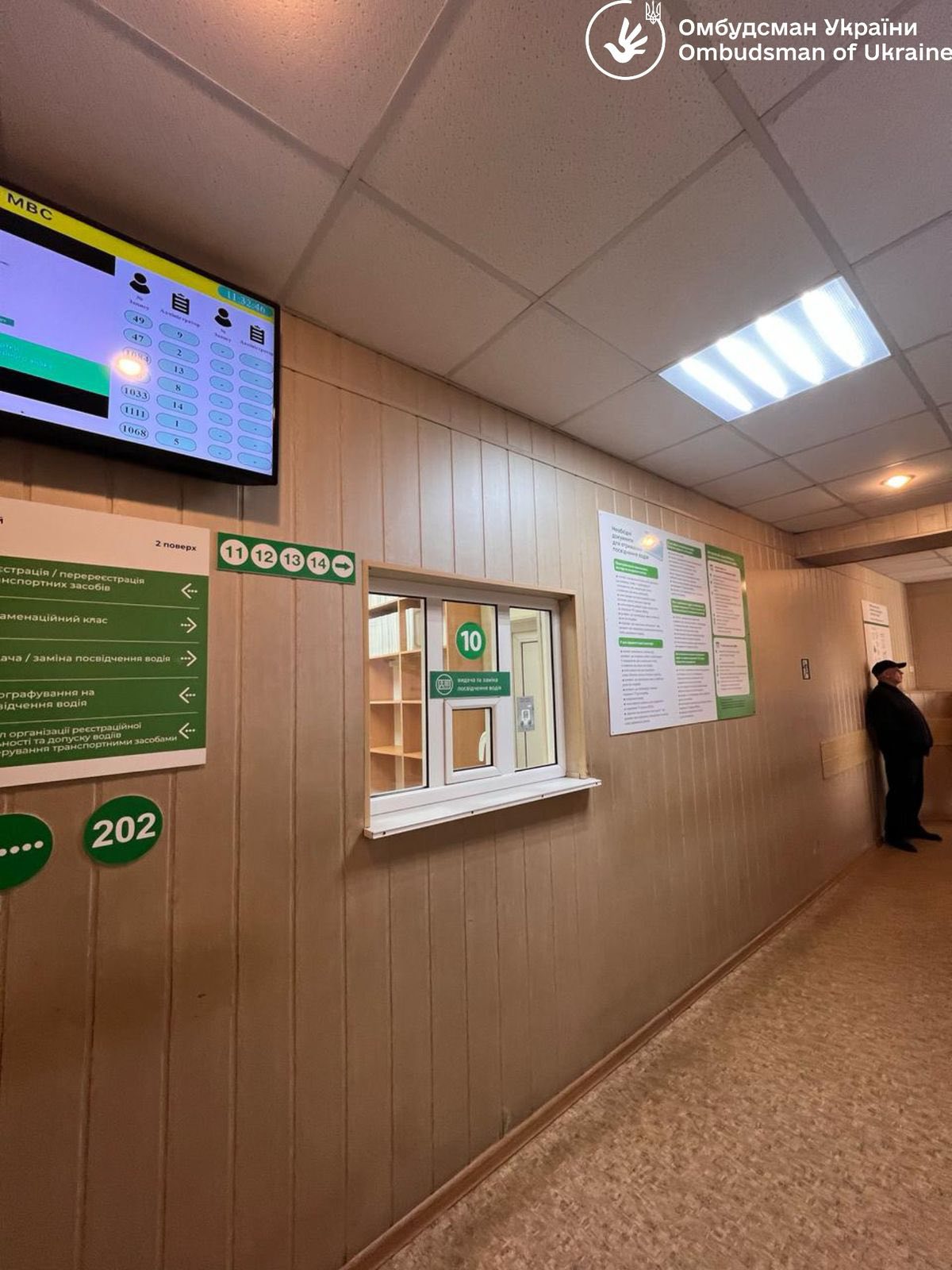 The building of the Ministry of Internal Affairs service centre in Mykolaiv, photo: Ombudsman of Ukraine
However, he adds that the service centre staff always try to help.
«When a person with limited mobility approaches them, specialists from the second or third floor come down to the first floor, accept the documents, carry them up themselves and provide the necessary assistance. However, it is impossible to move the theoretical exam, which takes place on the upper floors, to the first floor so that people with limited mobility can take it without additional difficulties», — Spartak Hukasian concluded.
Hello! I am Anna Hakman, the author of this article.
Thank you for your attention to our texts — it means a lot to the NikVesti team.
We regularly publish in-depth materials for those who want to understand the topic and get to the heart of the matter.
We have dozens of examples when our journalism, together with our readers, has influenced situations and changed them.
Join the NikVesti Readers’ Club — support independent journalism that matters.
Support us by joining the NikVesti Club
What is the response of the MIA service centre?
The regional service centre of the Ministry of Internal Affairs notes that people with disabilities can take exams at any service centre in Ukraine, including in Novyi Buh, which is fully adapted to barrier-free requirements.
The agency also acknowledges that the high service windows in Mykolaiv make communication difficult, but emphasises that
-
there is a button to call staff;
-
out-of-turn registration is available;
-
services are provided on the first floor.
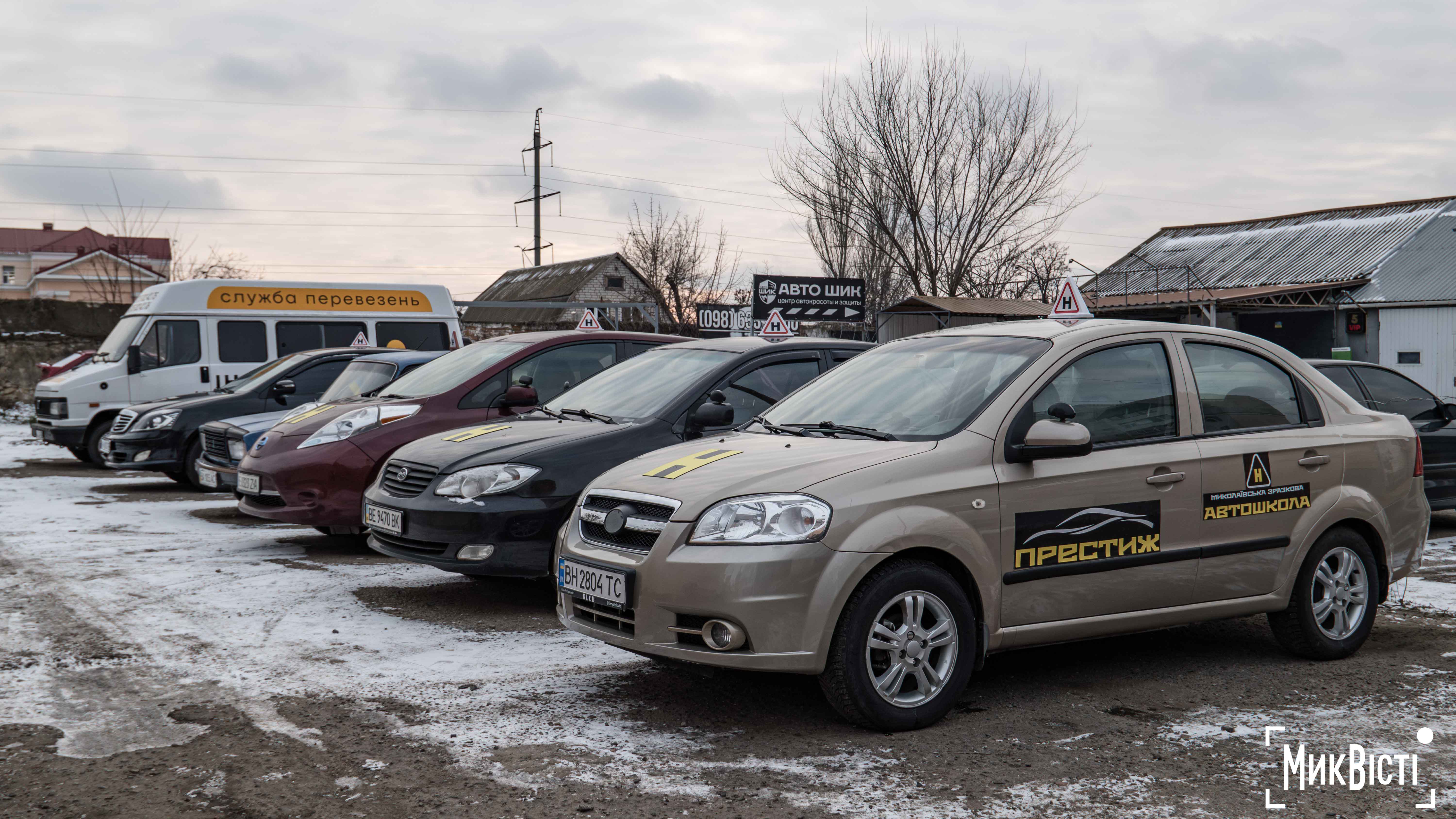 Training car. Photo: NikVesti
Nina Khmelevska, chief specialist of the communications sector of the Regional Service Centre of the Ministry of Internal Affairs in Odesa, Mykolaiv and Kherson regions, explained that the territorial service centre of the Ministry of Internal Affairs in Mykolaiv is located in a building that has been in operation for over 50 years.
«Even before the full-scale invasion began, we started preparing for the reconstruction of the premises, but we were unable to implement it due to objective reasons related to the security situation in the country», — Nina Khmelevska told us.
Nina Khmelevska added that they tried to find funding to adapt the building. They also sought help from city council member Tetiana Dombrovska and regional ombudsman representative Spartak Hukasian.
«Given the need to adapt the building to accessibility requirements, attempts have been made repeatedly in recent years to raise funds for reconstruction and the creation of a barrier-free space. Considering that a significant portion of the visitors to the MIA service centre are residents of Mykolaiv, and that MIA service centres make contributions to the local budget for each service provided, the management has repeatedly approached local authorities with relevant proposals», — she explained.
According to the service centre, in 2025, 12 people with disabilities took the theory test in Mykolaiv. It is worth noting that none of them used a wheelchair.
Who teaches people with disabilities to drive in Mykolaiv and how
Teaching people with disabilities requires separate certification, adapted classrooms, and specially equipped cars. In Mykolaiv, these requirements were taken on by the Prestige driving school. It received a certificate to teach people with disabilities in November 2024 and began operating in December. In total, 278 drivers were trained at the driving school in 2025, 67 of whom were trained at the expense of the state.
«This training is carried out in accordance with Cabinet of Ministers Resolution No. 432. It concerns the professional adaptation of veterans with disabilities, discharged military personnel, members of their families and families of deceased defenders. The state fully covers both the theory and practice for them», — explains Nina Kuzmych, deputy director for educational work at the driving school.
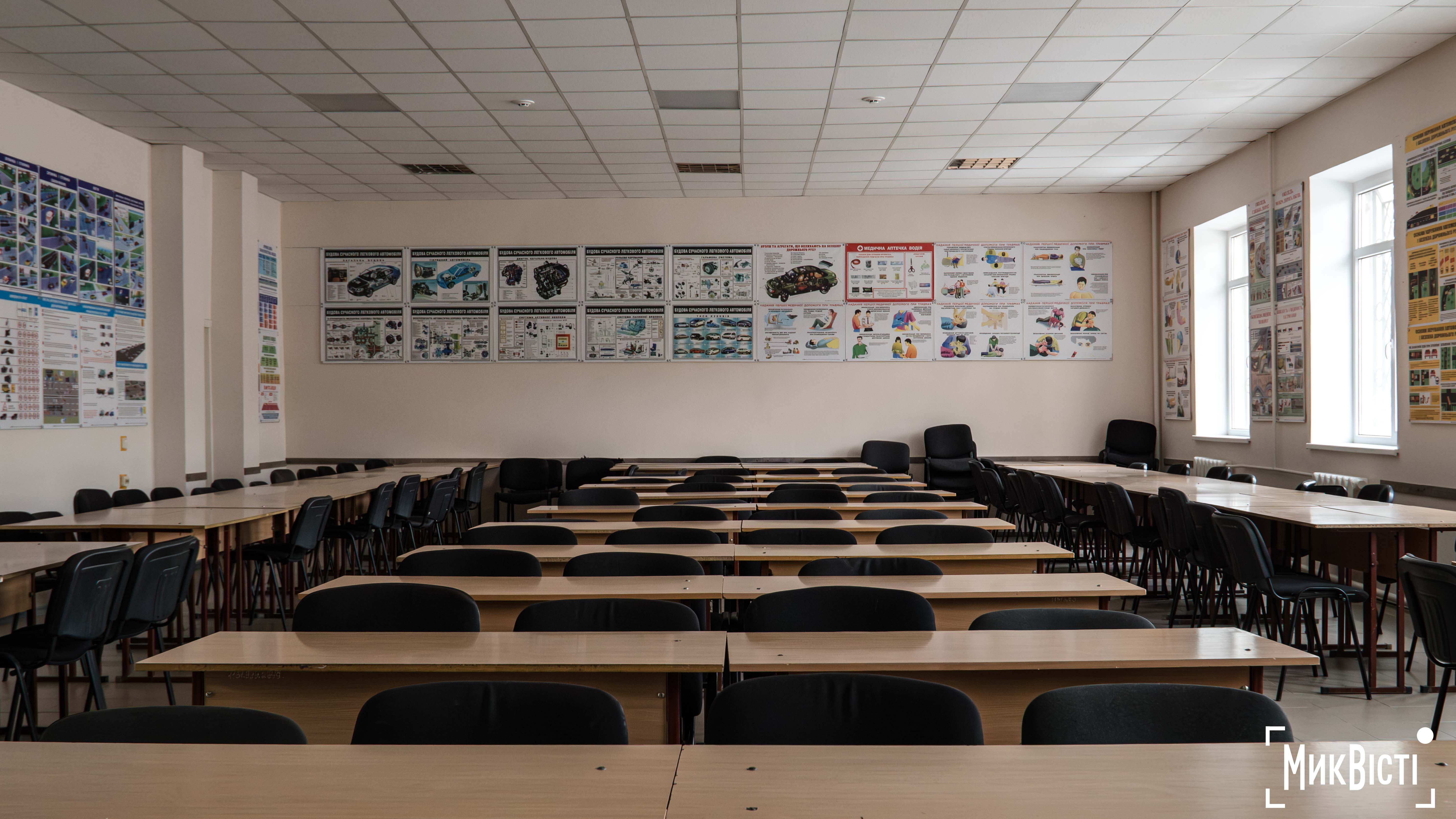 Training class. Photo: NikVesti
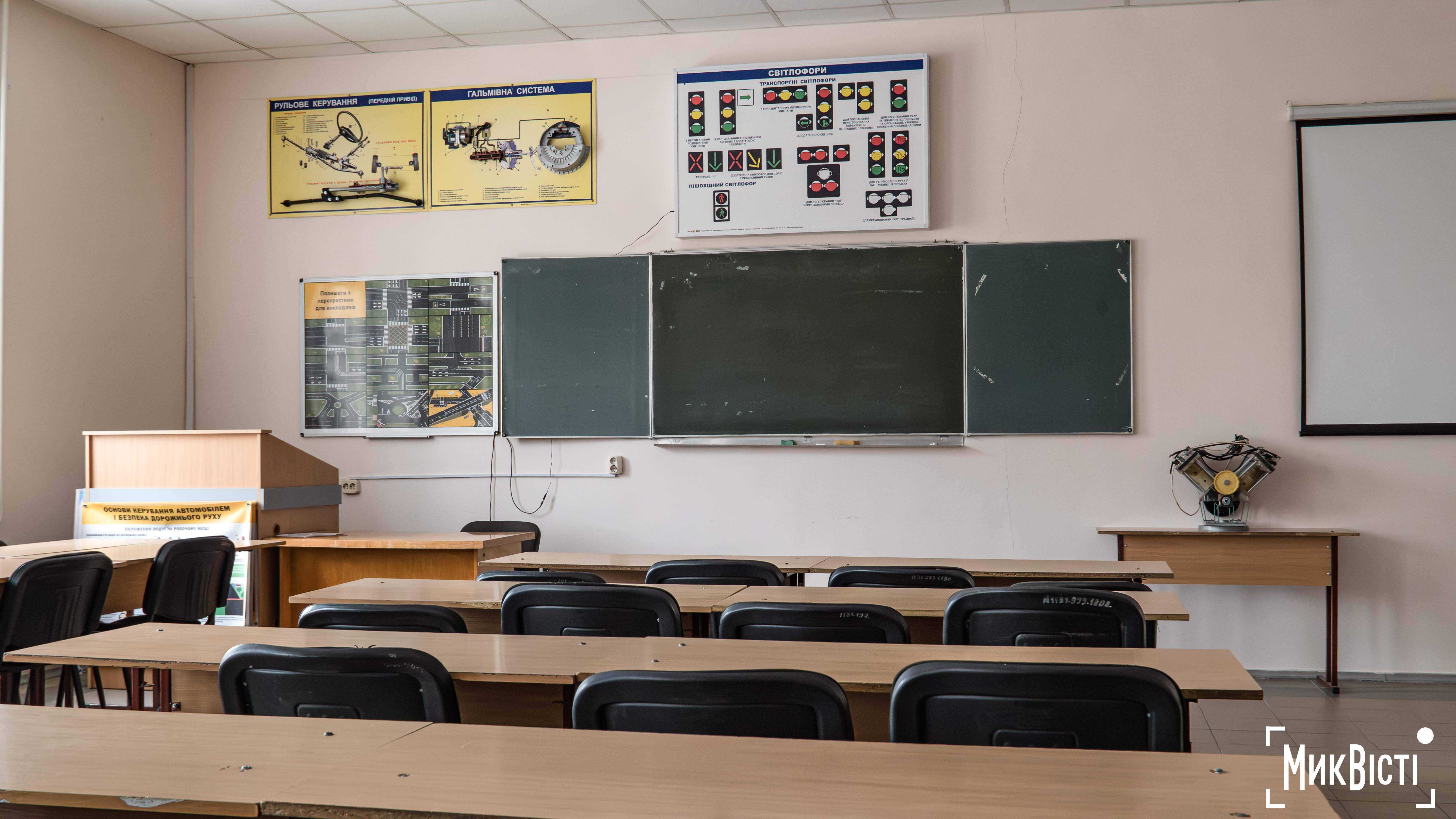 Classroom. Photo: NikVesti
According to her, in 2025, 31 people with disabilities studied at the driving school:
-
17 veterans with disabilities — under the budget programme;
-
14 civilians with disabilities — at their own expense.
For civilians, this opportunity is much more difficult, as there is no separate budget programme for them. In 2025, the full cost of training for civilians was 26,000 hryvnias, while for budget programmes it was 22,000 hryvnias, which was paid by the state.
Training is longer but adapted
The theoretical course for people with disabilities is no different from the standard one — 15 working days of daily classes. However, the practical training has a different format.
«For people with disabilities, the practical training lasts 40 working days, while for regular students it lasts 26. This is done deliberately so that people have time to adapt and get used to the car and driving», — says Nina Kuzmych.
The driving school has three specially equipped cars with manual controls:
-
two with manual transmission;
-
one with an automatic transmission.
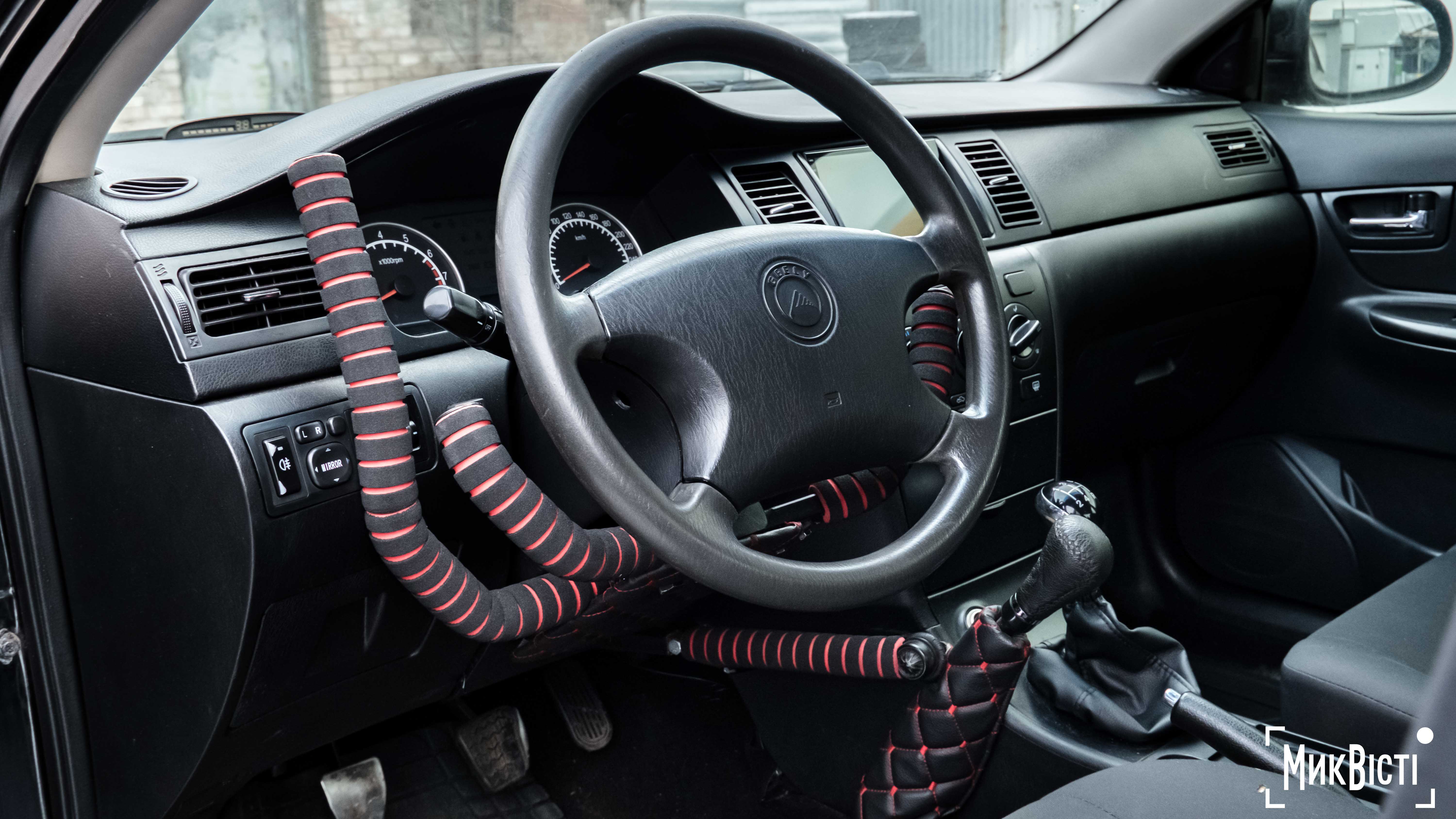 Converted cars with manual controls. Photo: NikVesti
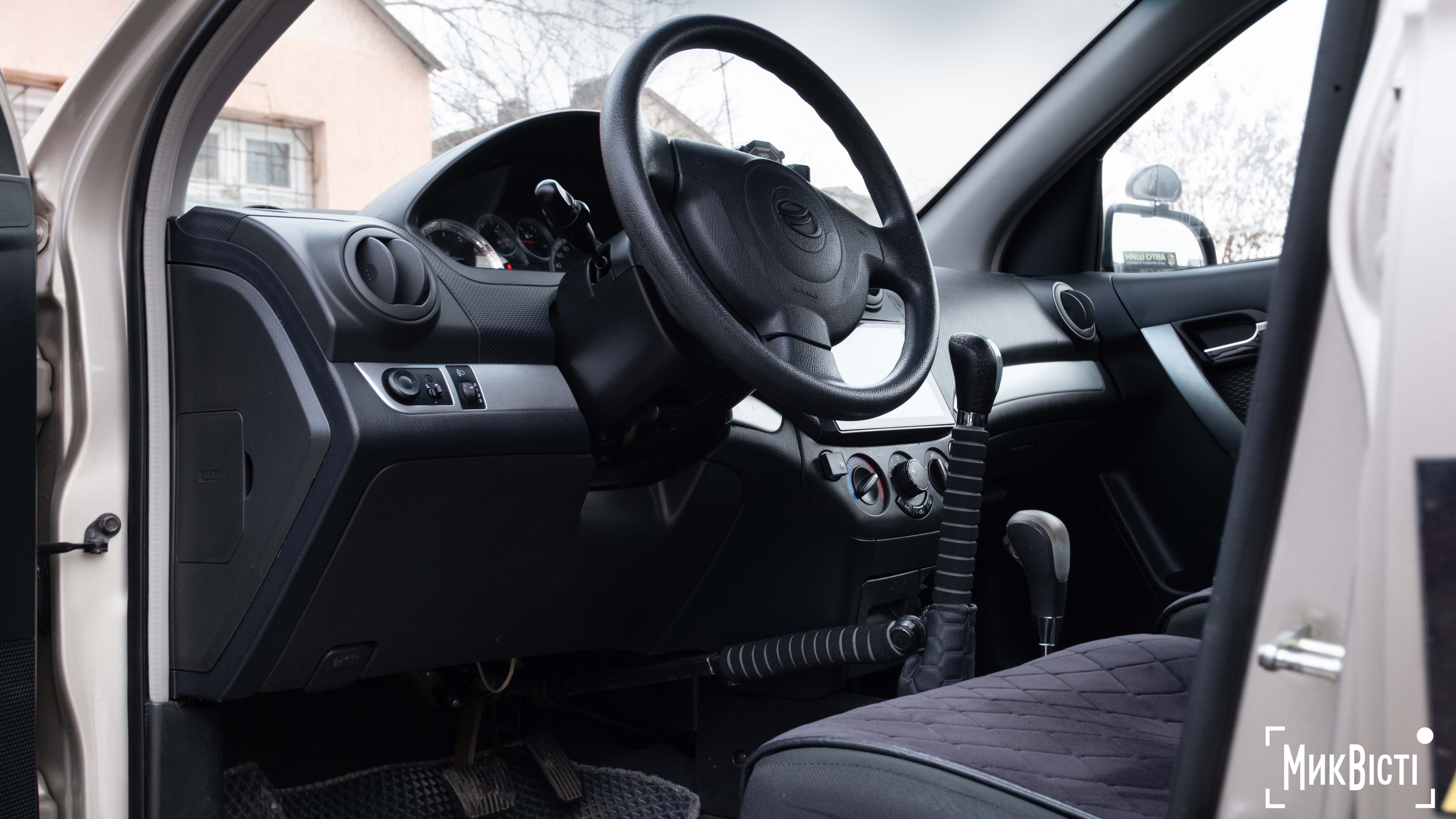 Converted cars with manual controls. Photo: NikVesti
The school purchased and converted all the cars itself. The training classroom was set up at the Petro Mohyla Black Sea National University, which already has a fully inclusive infrastructure. The driving range is located in the Zhovtnevyi district of Mykolaiv, near the Ocean factory.
«For driving school students, the standard is 2.4 square metres per person, and for people with disabilities who use wheelchairs, it is 3.6 square metres. Therefore, we needed a classroom with a larger area. We found such a space in Mykolaiv's Mohylianka (Petro Mohyla Black Sea National University), and we are very grateful to the university management and the rector for the inclusive conditions. There is full accessibility, from ramps and the entrance to the building to the bathrooms», — Vasyl Valenkov, director of the Prestige driving school, told us in a comment.
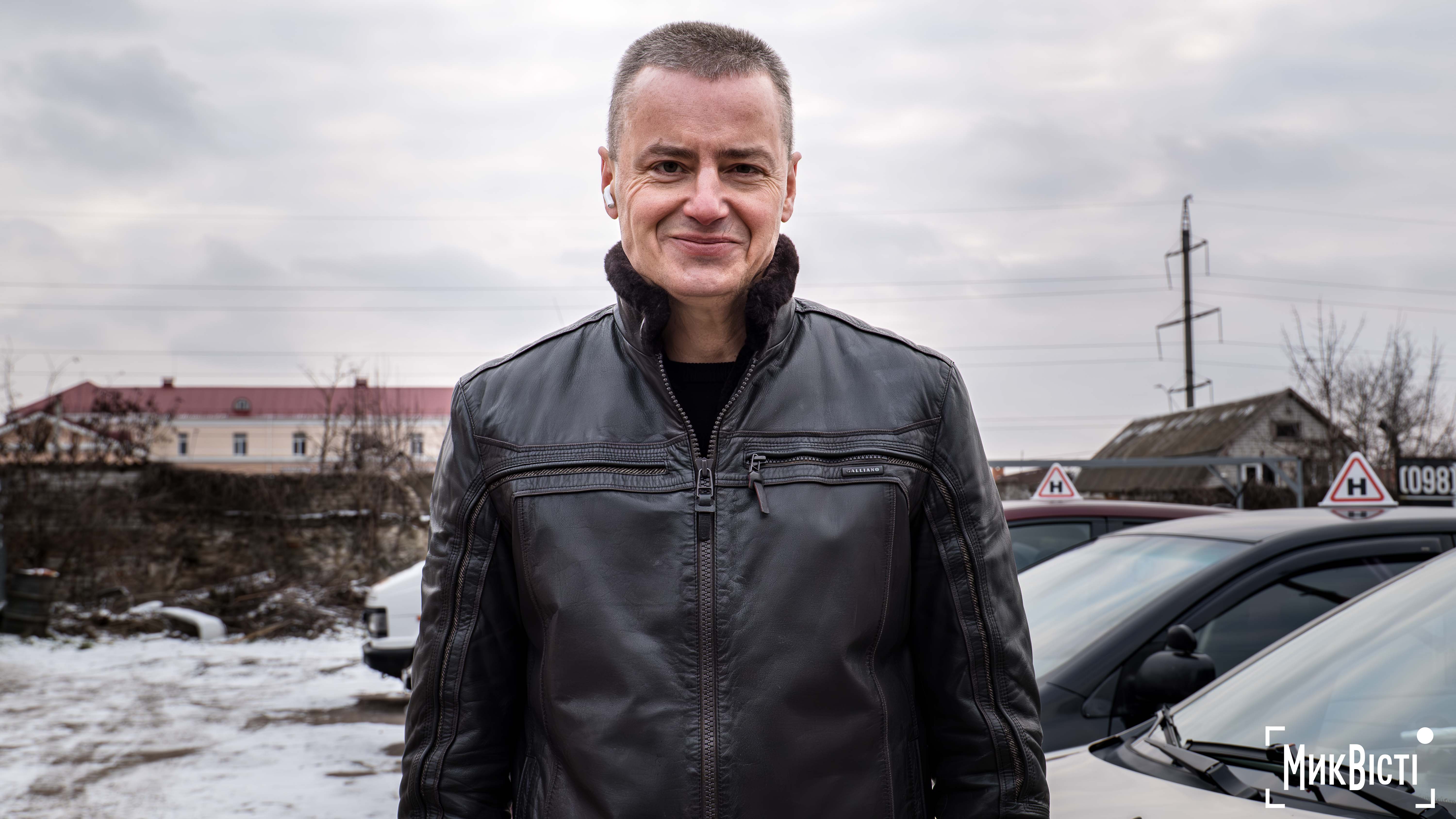 Vasyl Valenkov, director of the Prestige driving school. Photo: NikVesti
«It's a different life»: what the students say
We spoke with two people who have completed driving school training: Ivan Ryzhykov from Mykolaiv, who studied at Prestige Driving School, and Yurii Stepanets, a member of the Mykolaiv City Council, who took a course in Odesa.
Ivan Ryzhykov says that the main thing for him was to regain mobility and independence.
«Given my broken back, in my case, a car is like my legs. Without a car, I can't go anywhere. I live outside the city, the nearest shop is in a neighbouring village, there are no roads, and I can't get on a minibus with a wheelchair. I live with my grandmother, and she had a stroke, so she can't take me anywhere. That's why a driving licence is an absolute necessity. I'll be able to get anywhere without any problems, without having to look for a car or hire someone. I'll just get in and go wherever I need to go, to rehabilitation or anywhere else», — says Ivan.
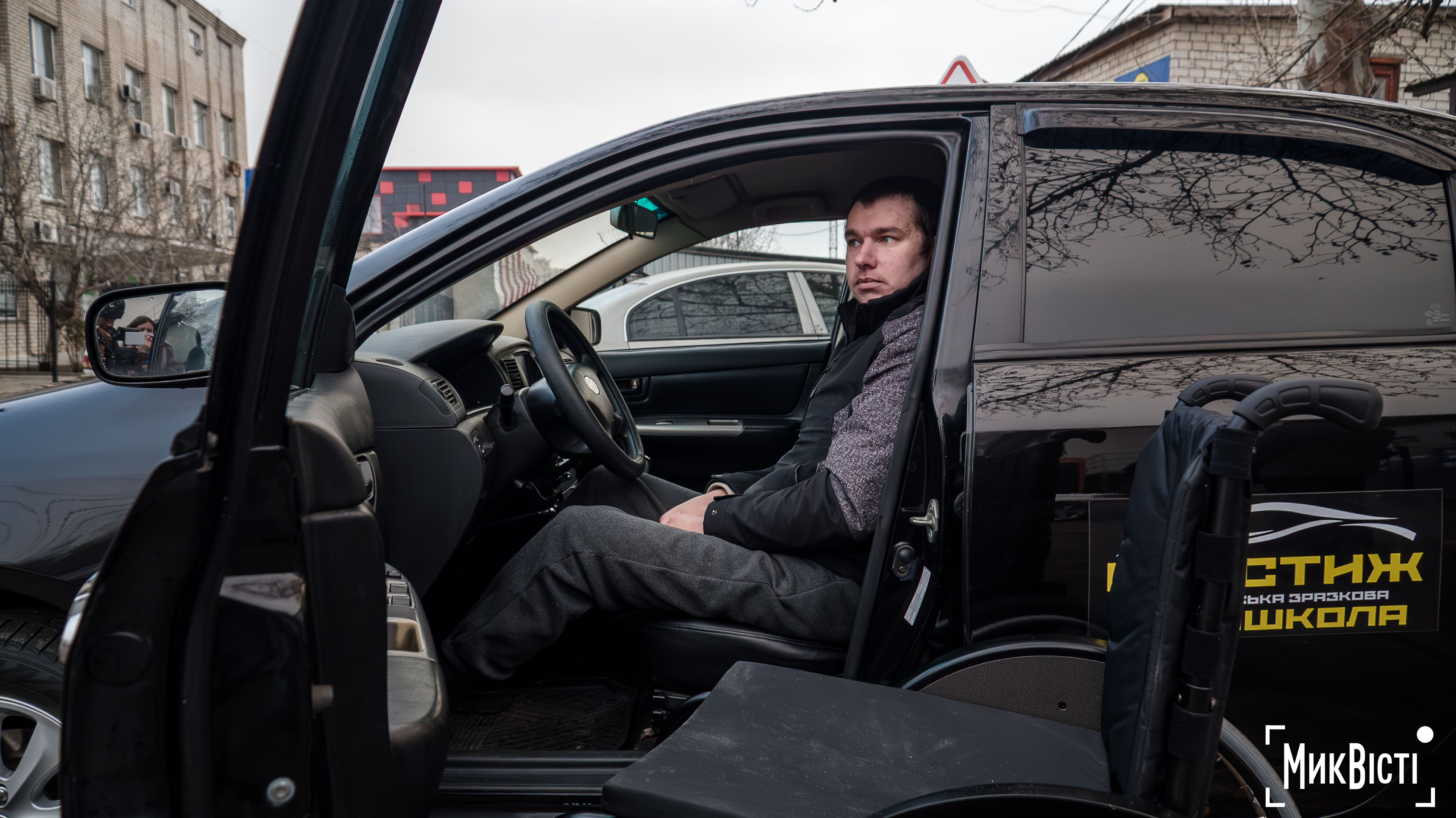 Ivan Ryzhykov. Photo: NikVesti
According to him, learning at the driving school was not difficult.
«Everything was easy, both the theory and the practice. The theory was online, and as for the practical training, my neighbour drove me to the city, where I got into a training car and drove. I studied on a paid basis because there was no funding that year. The instructor explains everything well, every nuance and detail, how to best correct things», — says Ivan.
He took his theory test in Novyi Buh, as it is not possible to do so in Mykolaiv.
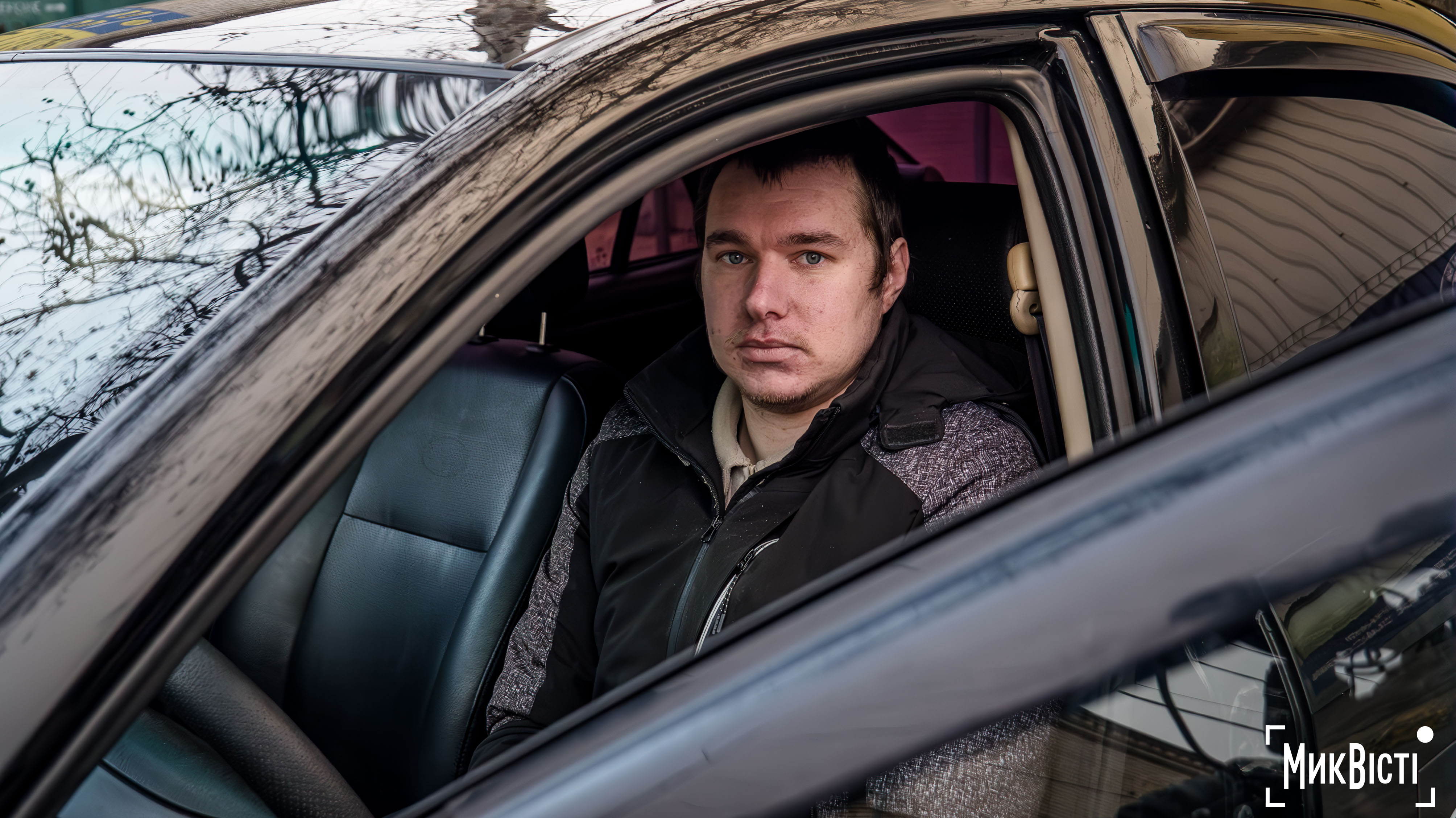 Ivan Ryzhykov. Photo: NikVesti
Yurii Stepanets said that he hesitated for a long time before signing up for training.
«This idea was reinforced by the extremely low level of accessibility of car transport (taxis, public transport, intercity transport). All this discriminatory 'car fleet' leaves no choice but to learn and build your own barrier-free route», — says Yurii Stepanets.
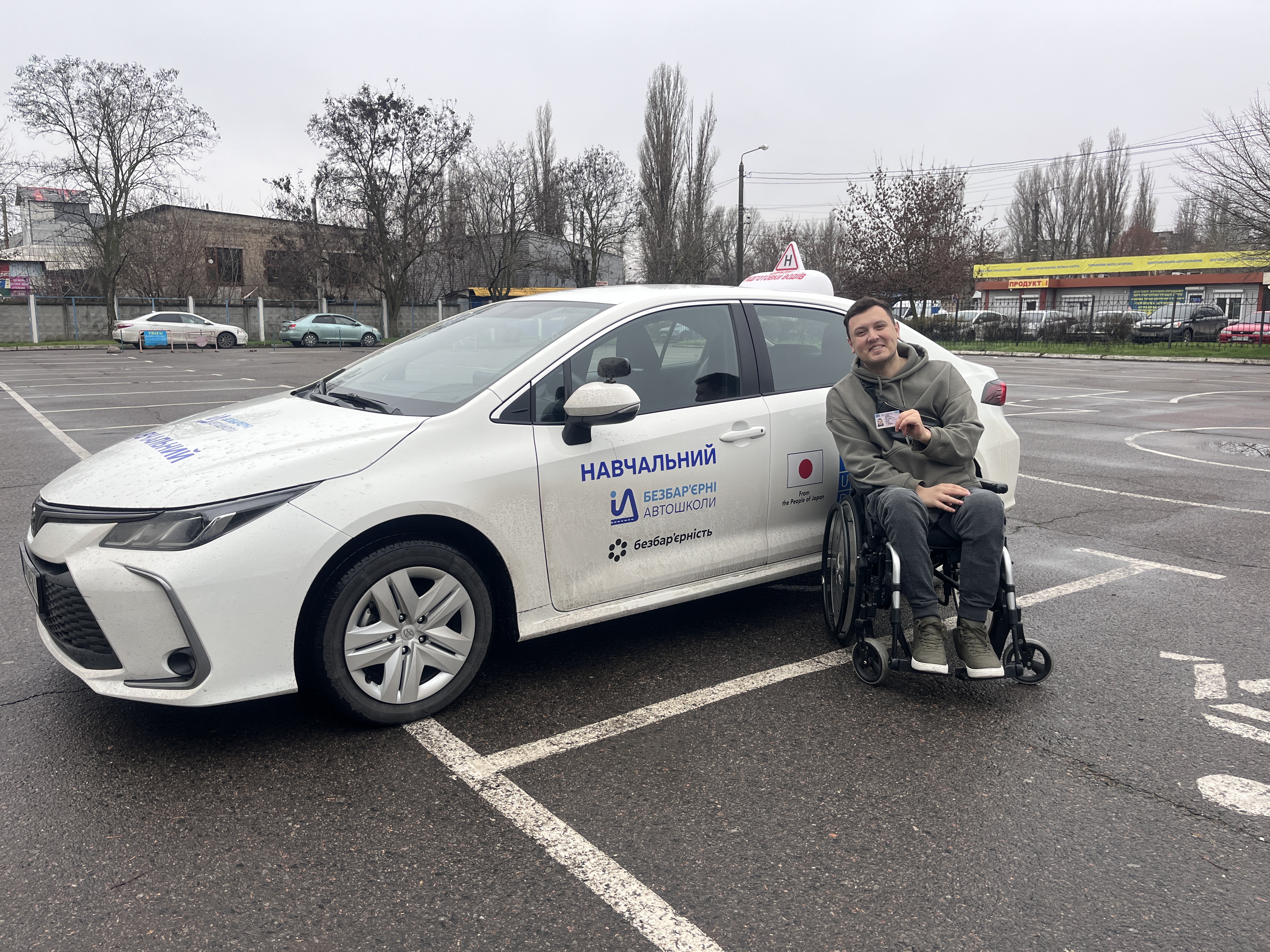 Yurii Stepanets, member of the Mykolaiv City Council
He adds that the training took place in comfortable conditions, but «the path to it was difficult»:
«A series of barriers only strengthened my desire to see the process through to obtaining a driver's licence in accordance with the law. For me, this whole uncomfortable situation gave me inner strength through struggle and the opportunity to correct and break down barriers — not only for myself, but also for others. The most uncomfortable thing was that there are very few driving schools with equipped cars, and there are also very few instructors who work with people with disabilities», — added Yurii Stepanets.
In addition, according to him, the state project «Barrier-free Driving Schools» should not be «one in the south, one in the west, east or north of the country».
«When they say 'driving school for people with disabilities', I want it to correspond to reality. In Mykolaiv, there is a driving school called Prestige, where people with musculoskeletal disorders can undergo practical training. And it is important to say that. But that is not enough. I want other private driving schools to get involved, not stand on the sidelines: to fill their fleets with adapted cars, train instructors, and take responsibility. So that this is not just the story of one school «for the whole city», — concluded Yurii Stepanets.
Barrier-free access as a duty, not an «option»: what needs to change
The driving school says that they are most proud of veterans who return to active life after serious injuries.
«Young men without arms or legs, but with tremendous faith and motivation. This commands deep respect», — says Nina Kuzmych.
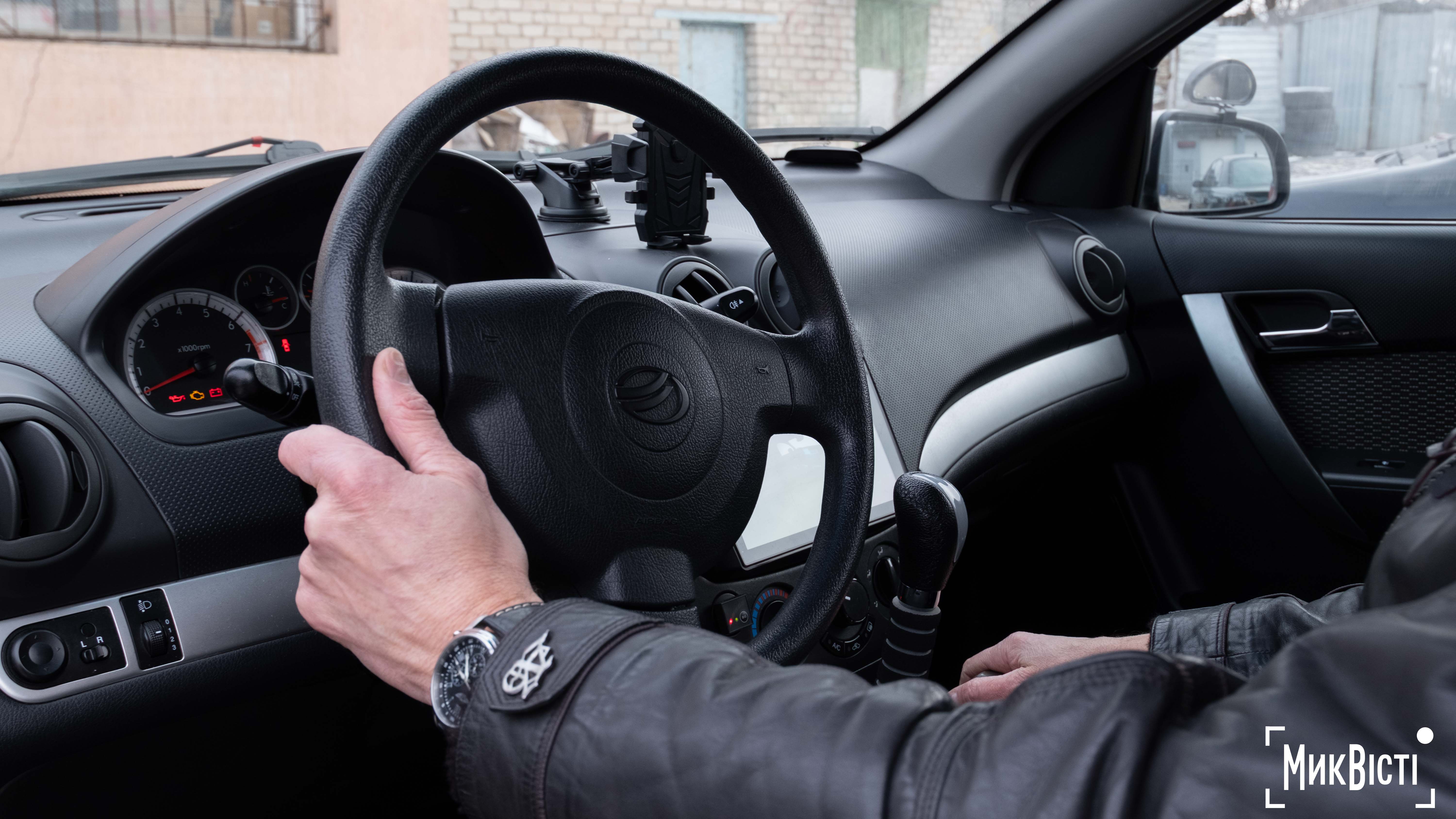 Training car. Photo: NikVesti
According to her, about 60% of students pass their practical exams on the first try, and the main difficulty is not in driving skills, but in complying with formal requirements during the exam. Vasyl Valenkov, director of the Prestige driving school, adds that the first year of operation was difficult, but the institution is now «firmly on its feet.»
«People already know us, they trust us, and we have positive reviews. But accessibility cannot end at the door of the driving school. A person has to go through the entire process — from training to obtaining a driver's licence», — he emphasises.
Barriers continue after the exam: obtaining a licence is also inaccessible
On Saturday, 17 January, Ivan Ryzhykov was supposed to pick up his driver's licence at the Ministry of Internal Affairs service centre in Mykolaiv. But to get a photo for the document, he had to go up to the second floor, and Ivan cannot do this in a wheelchair. He was refused and told to go to Novyi Buh.
A journalist from Nikvesti immediately contacted Nina Khmelevska, chief specialist of the communications sector of the regional service centre, and they began to resolve the situation.
«It didn't work out because he didn't bring his wheelchair. We talked to him and his father and explained that it was impossible to do this today without a wheelchair. We agreed that he would get his licence next week: he will be in a wheelchair. The receipt is valid, there are no problems. No one has ever received a driver's licence in a wheelchair before — this is the first case. We approach such situations individually. Everything will be resolved. We are human beings too and are ready to help», — she said.
The issuance of the driver's licence was postponed until Friday, 23 January, and Ivan has now received his driver's licence. According to Spartak Hukasian, these circumstances may indicate a violation of the Constitution of Ukraine, legislation on social protection of persons with disabilities, the UN Convention on the Rights of Persons with Disabilities, and the National Strategy for Creating a Barrier-Free Environment.
Driving skills and a driving licence change people's lives: they bring freedom of movement, independence and the opportunity to be active in society. But accessibility must cover the entire process of public services — from training to testing and obtaining a licence. Otherwise, equal access remains a formality rather than a reality.
