
In Mykolaiv, the first heating points, funded by Denmark, are scheduled to be installed before the next heating season
-

- Yuliia BoichenkoReporter

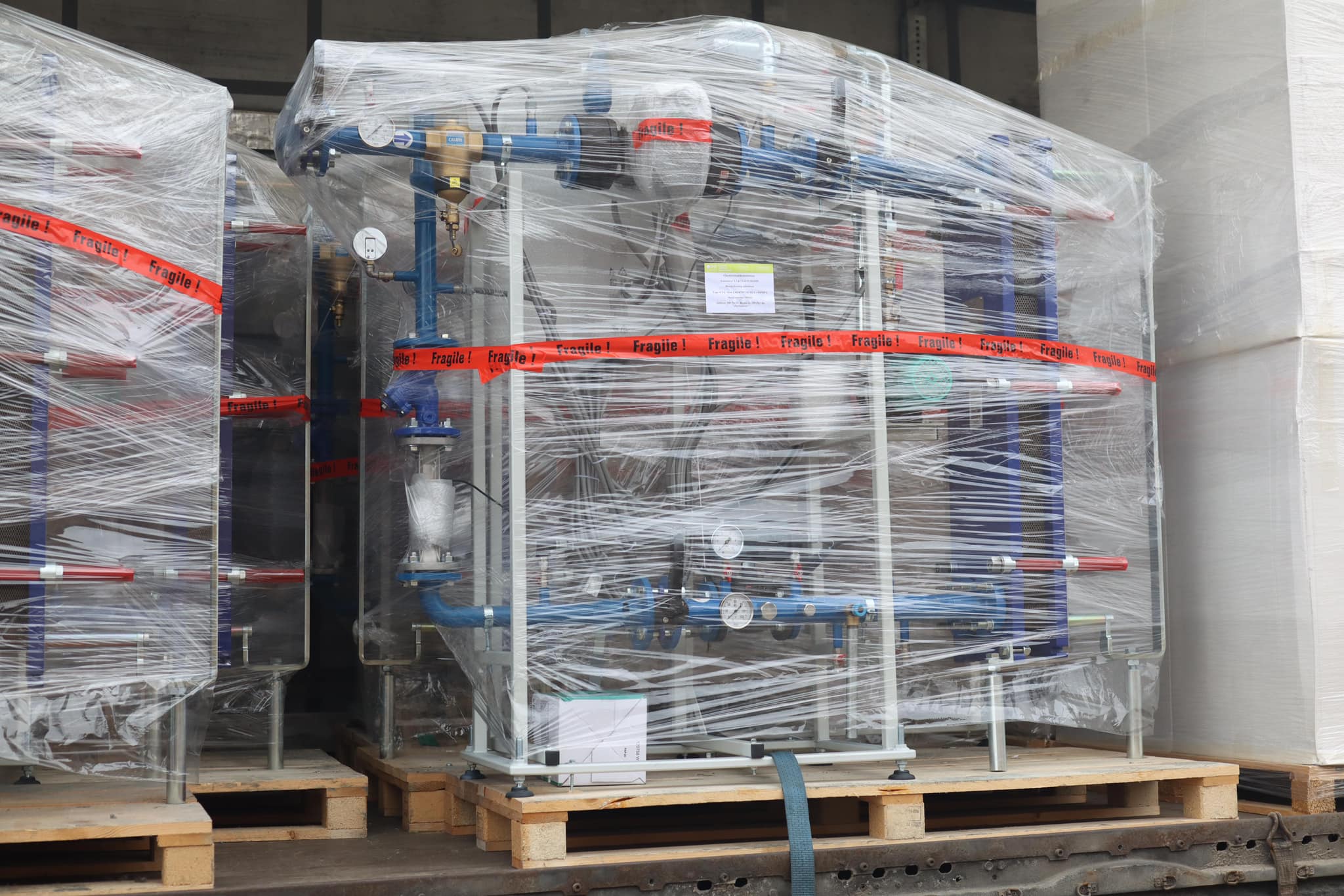 New individual heating units in Chernivtsi. Photo: «Shpalta»
In Mykolaiv, the first individual heating points (IHPs) in the Korabelnyi district and on Namyv are expected to be installed between April and October 2027 — in time for the start of the next heating season. The project is funded by the Danish government through the Nordic Environment Finance Corporation (NEFCO).
Mykola Lohvinov, director of the regional utility company «Mykolaivoblteploenergo», spoke about this in a comment to NikVesti.
According to him, the tender process to select contractors is currently underway. The procurement has been divided into three lots:
- installation of individual heat distribution points in the boiler house area at 71 Bila Street;
- installation of individual heating points in the boiler house area at 42 Samoilovych Street;
- the reconstruction of part of the heating networks in these two heating districts.
Once the contracts have been signed, the design work is due to begin, followed by the installation of the equipment.
«Work on installing the individual heating units is carried out only during the off-heating season. We hope that some of them, perhaps even the majority, will be installed between April and October next year,» said Mykola Lohvinov.
However, the company’s director did not specify exactly how many individual heating points are planned to be installed during 2027. The timetable for the work will depend, in particular, on the completion of tender procedures and the preparation of project documentation, he added.
As a reminder, Denmark has provided 7.2 million euros for individual heating points (IHPs) for Mykolaiv. The first of these will begin to be installed in 2026, according to Mykola Lohvinov, director of «Mykolaivoblteploenergo».
Read also the NikVesti article «URC-2025: Was Ukraine’s largest conference on reconstruction beneficial for the Mykolaiv region?», which discusses, among other things, the signing of a €7.2 million agreement with the international financial organisation the Nordic Environment Finance Corporation (NEFCO).
What is an IHP?
An individual heating point (IHP) is an automated device installed in a building that controls the supply of heat. It can:
- regulate the temperature depending on the weather (based on an external temperature profile),
- ensure a more even heat distribution,
- save energy,
- provide hot water via a heat exchanger,
- have a built-in heat meter.
How does an individual heating point work?
An individual heating point receives heat from the district heating network, but «decides» for itself how much heat to supply to the building. It is equipped with temperature sensors, pressure regulators and pumps. This ensures that heat is supplied evenly, and residents do not suffer from overheating or the cold.
Why does an individual heat distribution point help save money?
An individual heat distribution point allows you to consume only as much heat as you actually need. If it gets warmer outside, the system automatically reduces the heat supply. This helps to avoid overspending and reduces bills by 15–30 per cent, depending on the season.


