“We hope it will be even more than 1,500” — interview with General Usov about the large-scale prisoner exchange agreed in Abu Dhabi
- Alisa Melikadamian
-
•
-
21:19, 25 November, 2026
The prisoner exchange agreed between Ukraine and Russia in Abu Dhabi could be the largest since the start of the full-scale war: the Coordination Headquarters expects to repatriate over 1,500 people. The Russian side has already approved some of the names on the list, whilst work continues on the rest.
This was reported to «NikVesti» by Brigadier General Dmytro Usov, secretary of the Coordination Headquarters for the Treatment of Prisoners of War. He travelled to Mykolaiv for a meeting with the families of prisoners of war and defenders missing in action, and spent over three hours answering their questions.
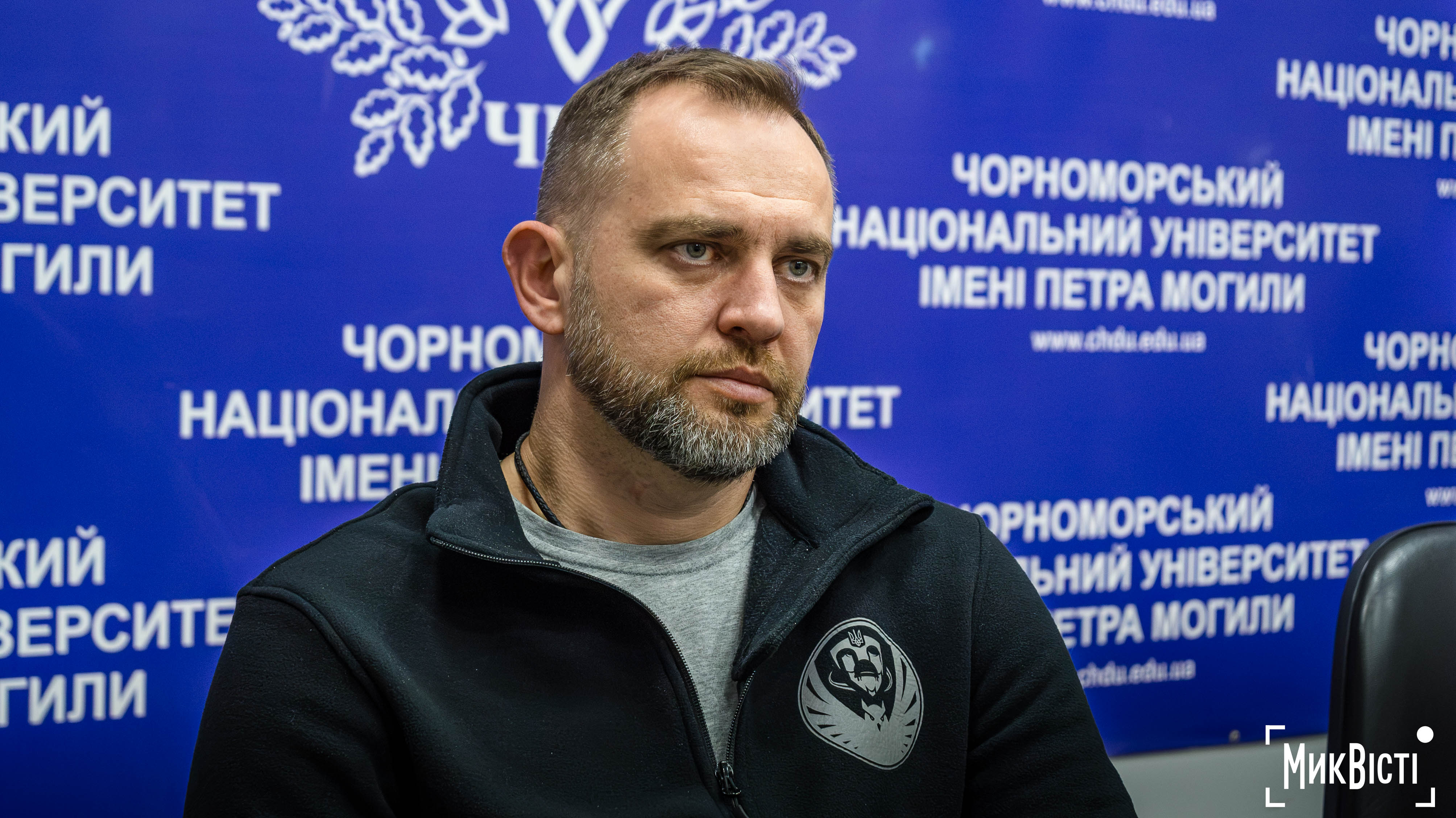 Dmytro Usov, Secretary of the Coordination Headquarters for the Treatment of Prisoners of War, in Mykolaiv. Photo: «NikVesti»
The meeting took place at the Petro Mohyla Chornomorsk National University. MP Ihor Kopytin spoke with the families alongside Dmytro Usov.
In November 2022, Ukraine’s first regional office of the Coordination Headquarters — the Southern Region Advisory Centre — was opened in Mykolaiv. Its specialists work with the families of prisoners of war and defenders missing in action, advise on the search for servicemen and explain the process of returning from Russian captivity.
«Over 1,500 people»: what is known about the major prisoner exchange
— A large-scale exchange is being prepared, which was agreed in Abu Dhabi. Dmytro Lubinets cites various figures — ranging from a thousand to one and a half thousand people who may be exchanged. Do you have any idea how many people there will actually be? And are you aware of the complexities involved, given that this is the first time we’ve exchanged such a large number of people?
— This question comes up every time we speak to the families; I hear it either first or last: when will the exchange take place? What can you tell us? Will our loved one be included in this exchange? It’s a logical question from every one of our families.
The exchange, which took place thanks to our negotiating team and the delegation in Abu Dhabi, has now been finalised. Why do I say «finalised»? Because we – that is, the Coordination Headquarters team – had been working on this exchange long before that. It was finalised whilst we were in Abu Dhabi. But we had started working on it two months before that. And our figures show that this exchange involves more than 1,500 people. We hope to carry out an exchange involving more than 1,500 people. Various figures are being mentioned, but it is also being said that this will be the largest exchange since the full-scale war began. So far, the exchange following the Istanbul talks is considered our largest to date. Anything exceeding 1,200 will be the largest exchange yet. But we hope it will be even more than 1,500.
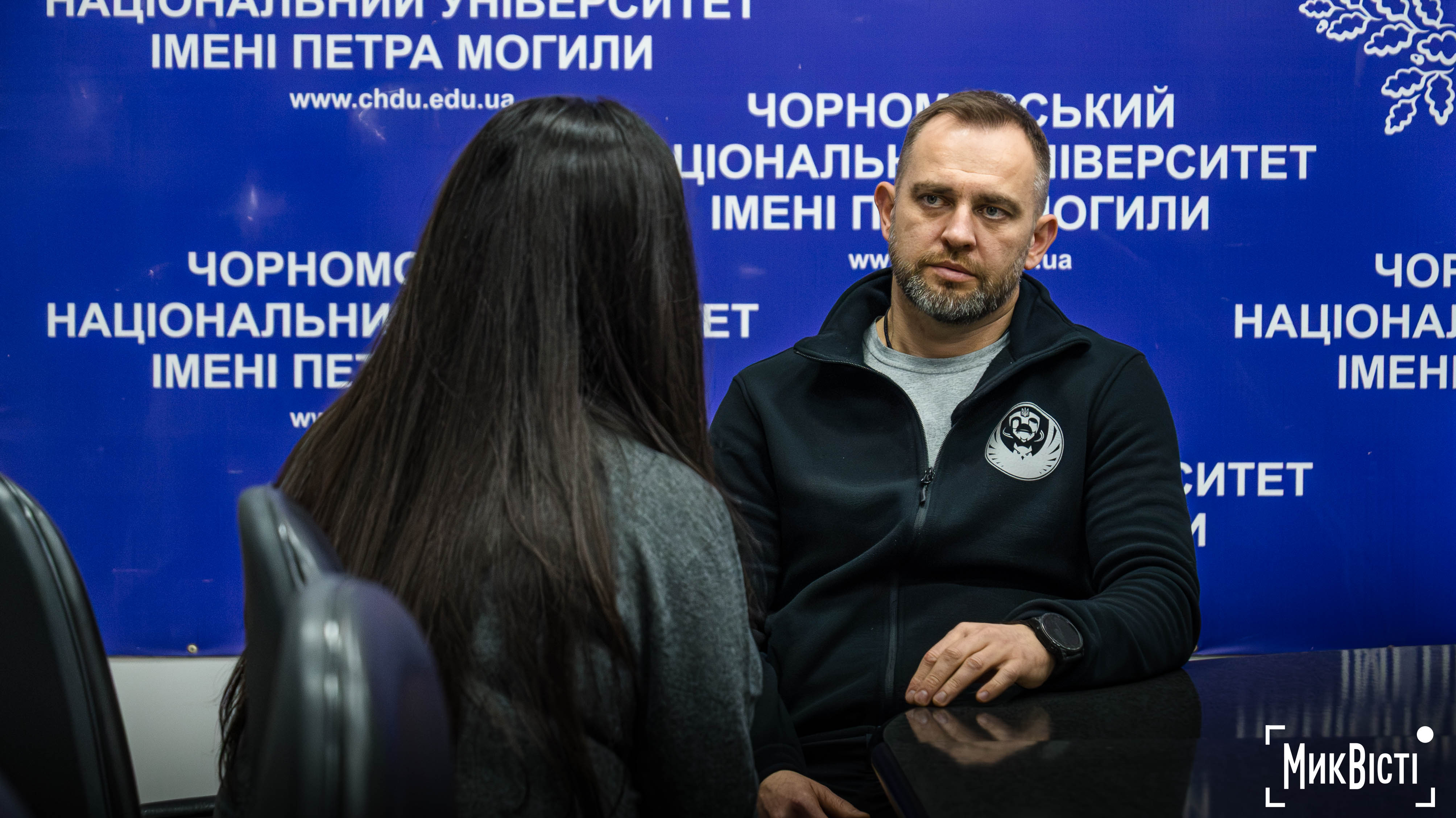 Dmytro Usov, Secretary of the Coordination Headquarters, in Mykolaiv. Photo: «NikVesti»
Why is the Coordination Headquarters visiting families in the regions?
— What is the purpose of your visit to Mykolaiv today? Who did you meet and what did you discuss?
— Our aim is to talk to the families. We try to communicate as much as possible and share as much of the information we have with them as we can. This is because they are very concerned about what the state is doing to secure the release of their loved ones from captivity. Or what the state is doing to ascertain the fate of relatives who are classified as missing, to locate them, reclassify them as prisoners of war, or to find out any information about them. These questions constantly arise among the families.
We try to communicate with them not only at the regional reception centres we have. For example, in Mykolaiv — this is the very first regional reception centre in the Southern Region, established by the Coordination Headquarters. And one of the reasons we have come here is to congratulate them on the establishment of the Coordination Headquarters’ regional branch.
We have started travelling to the regions to hold on-site meetings with our families. This is because they have a need: they cannot travel to Kyiv, to the central reception centre, and want to speak directly with the leadership of the Coordination Headquarters — the chair, deputy chair or secretary, which is my role. Sometimes they have questions after speaking to our advisers or certain organisations, where they cannot get a full answer. Consequently, they wish to speak to those officials who have more information. That is why today in Mykolaiv I was answering questions. We spoke for three hours today. Although that’s not a record; it has been longer on occasion.
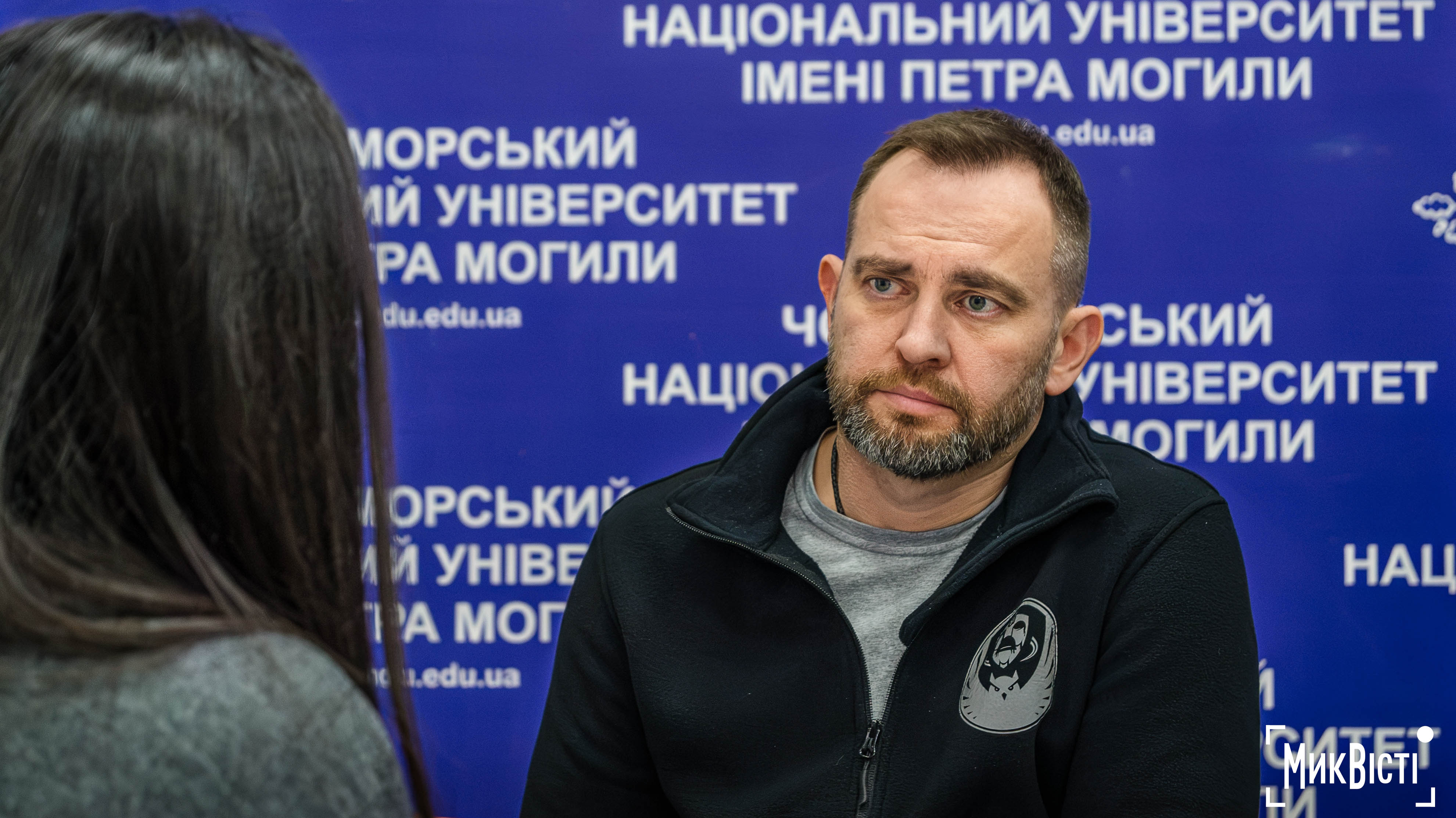 Dmytro Usov at the Petro Mohyla Chornomorsk National University. Photo: «NikVesti»
«Why hasn’t my loved one been returned?»
— What pressing issues did you hear from the families today? Do they coincide with the issues generally raised by the families of prisoners of war?
— Today we had a meeting with several associations. They represented the marines, «Azov» – if we’re talking about the National Guard – and other mechanised brigades. We wanted everyone to be present at this event so that they could ask questions and listen to one another. Because, as a rule, everyone has the same question: why hasn’t my loved one been returned? Or why were there so few from this or that brigade in this exchange? Or why aren’t those who have been held captive since 2022 being returned? Relatives, of course, want the exchanges to include their own loved ones or representatives of the unit for which they have come together as a community. And when we meet at such events, when everyone comes and we give them the chance to have their say, they realise that their questions are, in fact, all the same. Only the names of the units and sub-units change, but the questions remain the same. When we meet with a single group that, for example, consists solely of marines, they think this is their own separate struggle. But when they are together with representatives of the National Guard or other organisations, they realise they are facing the very same struggle. And we want to show them at such events that the Coordination Headquarters understands everyone’s pain. But it is obliged to work objectively, to carry out its work in such a way that it meets the needs of all families and all groups. Today, I believe, we have succeeded in doing just that.
Civilians are being returned through exchanges because that is what Russia demands
— Are there any categories of people whom Russia, for example, excludes from this exchange? How does the process of including particular prisoners of war actually work? And are we talking only about prisoners of war? After all, sometimes civilians are also returned during exchanges.
— As for civilians, unfortunately, at present we are forced, when it comes to the return of civilians, to do so through an exchange. Why? Because civilians are not exchanged at all. They are returned; they are handed over. And it is incorrect to use the term «exchange» in their case. But we do so because the Russian side forces us to. Therefore, if we wish to return a civilian prisoner or a civilian hostage, we are compelled to return them through an exchange.
As a rule, this involves either exchanging them for another civilian or swapping them for a military personnel. Such cases do exist; you have seen them. We even have certain statistics on the return of civilians through exchange. But we place greater emphasis on military personnel.
As everyone is now aware, Dmytro Valeriyovych Lubinets has announced the establishment of the Centre for the Return of Ukrainian Civilians. Consequently, matters concerning civilians will now be dealt with directly by this centre. However, we will continue to work on the issue of civilians. This is because there is a working group on civilians within the Coordination Headquarters.
And it is precisely this working group that is headed by a representative of Mr Lubinets. Our cooperation will therefore continue. It will not be the case that one body deals exclusively with civilians whilst another operates alongside it. No, this will be a joint process for the return of our civilians.
As for military personnel, which category is being excluded or not included? Are you referring to this specific exchange or in general?
— No, specifically this exchange that is due to take place.
— I cannot say (which categories are being excluded — ed.) regarding this exchange that is due to take place, because the process of agreeing on specific names is currently underway. In other words, requests have been submitted. And work is currently underway on each of these requests, on every name.
What we already have, what the Russian side has sent us, is part of our finalised list, which we started working on in advance, as I said, and finalised in Abu Dhabi. We can see that they are adhering to what we discussed there and what was finalised in Abu Dhabi. In other words, they have already agreed to an exchange for some of the names, and so we will continue to await confirmation of all the others.
Convicts: why the August exchange was delayed until 23 October
— Let me clarify. You mentioned the prisoners. Russia is quite actively handing down sentences to our defenders in the occupied territories and in the Russian Federation. Are there any legal or procedural grounds, to which the Russians refer in accordance with their own legislation, when they do not include or exclude a person from the exchange lists?
— There is no such argument. If one of our servicemen is convicted, the procedure applicable to him is governed exclusively by the legislation of the Russian Federation — namely, the procedure for a pardon. Or there may be an amnesty. And in any case, this is decided at a political level. This is because a pardon is signed by a single person in the aggressor state. And in this case, I wouldn’t say that it is harder to bring them back, but the process is more complicated. After all, when one of our servicemen is prosecuted on trumped-up charges, and there is a conviction carrying a long sentence, the procedure for agreeing to his exchange becomes more difficult. It is not enough simply to agree that he should be exchanged. We also need to ensure that they carry out this bureaucratic, legal procedure. And that can take anywhere from two weeks to several months. Take, for example, the exchange that took place recently, on 23 October. That was the very last exchange. We had actually planned to carry out a single exchange on 24 August. However, because this exchange involved convicted prisoners, and even our own servicemen who had been taken prisoner and sentenced before the full-scale invasion – and we have not forgotten them – difficulties arose. In the exchange we are currently planning, we also want this category to be included. And so, we were forced to split the exchange we had planned for 24 August into three stages: to carry out the first stage on 19 August, the second on 24 August, and the third and final stage on 23 October. This was precisely because, from August to October, procedures were underway relating to the pardoning of our servicemen who had been convicted.
During the exchange on 19 August, 103 Ukrainian servicemen returned from captivity, and on 23 October, 270 people returned: 261 servicemen and nine civilians, according to the Ministry of Defence. Most of those released in October had been held captive since 2022.
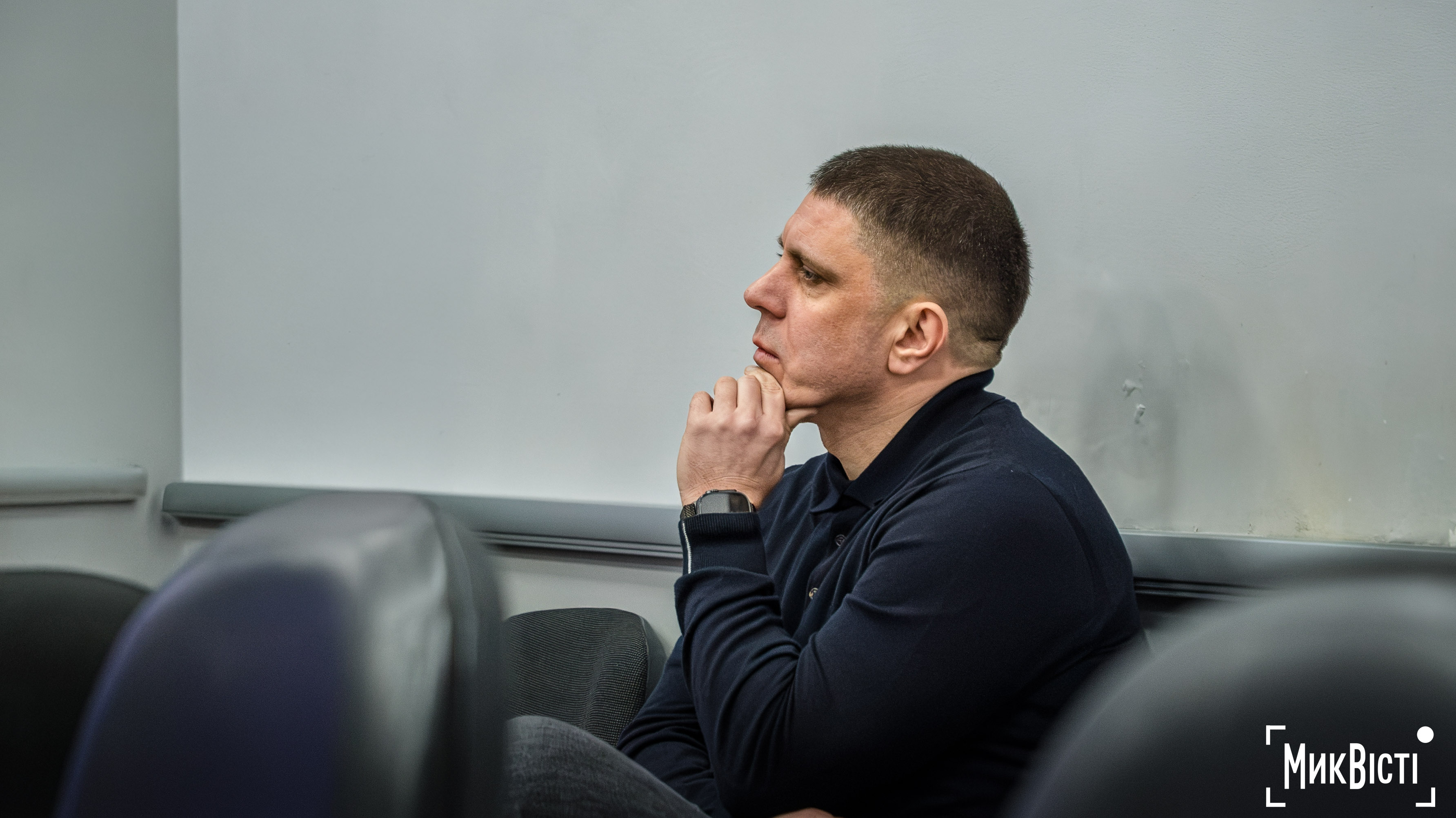 MP Ihor Kopytin at a meeting with the families of prisoners of war in Mykolaiv. Photo: «NikVesti»
How many prisoners of war are from the Mykolaiv region?
— Do you have any idea of the number of prisoners of war linked to the Mykolaiv region? It may be difficult to give a specific figure for those born in the region, but we are also talking about military personnel who were stationed or served here. Is there a figure?
— I cannot give you that figure at the moment. But thanks to the Coordination Headquarters’ information system, this enquiry can be carried out quickly using key parameters. In other words, in literally a few minutes, I’ll have a list of everyone who is either a native of the Mykolaiv region, has served in the Mykolaiv region, or is registered in the Mykolaiv region. A selection is made, and it’s done quickly thanks to the information system. The figures may be known, and we can disclose them.
— Can we disclose them publicly?
— We do not disclose the figures publicly, because we take these figures directly into account in our work. And we pay attention to this. Just as we carry out a weekly analysis of how many people from a particular region, such as Mykolaiv region, have been taken prisoner. How many people from the Mykolaiv region are missing. Why do we carry out this analysis? To draw the attention of our counsellors and social services to a particular region if we see a certain trend in the number of people taken prisoner or the number of missing persons.
When a «missing person» returns from an exchange
— Have there been cases where people who were considered missing in action returned during prisoner exchanges? Yet Russia had not confirmed that they were alive or that they were being held captive. Their families were unaware of this, but they returned during the exchange. Do you know exactly who is returning?
— We know their surnames. If we’re talking about the information system, the personal account, then «search for a person» may be listed for their relatives. Let me explain why. Relatives also raise this question. They ask us: how can you publish certain statistics after an exchange regarding the return of missing persons if you knew who you were bringing back? The answer is that when we make enquiries to the other side regarding missing persons, the Russian side sometimes confirms that someone is being held captive. But we have absolutely no information to suggest that this serviceman is being held captive. There is no information whatsoever, not even from fellow soldiers who have returned or were with him, nor from his relatives. And so the next question to the Russian side is: can we exchange him? As soon as this is agreed, we include him and draw up a list for the exchange. But in our system and for his family, his status remains «person missing». This is because we cannot disclose this information in advance, nor can we change the status in the personal account, as there may be a match in surname, first name or patronymic. There might even be a match in the date of birth. But in one case it is a marine, in another — a National Guard serviceman. And since the Russians have only confirmed that the person is being held captive, but have provided neither photos nor videos, nor any information about which prison he is in or his state of health, we are not yet certain exactly who it is. We can only confirm this directly during the exchange, when we carry out verification. Once we have verified a person during the exchange, we know for certain that this is a specific serviceman. Next, once in government-controlled territory, we update their status and notify their families. Only then is their status updated. After that, we announce that we have returned a certain number of people who were previously listed as missing in action.
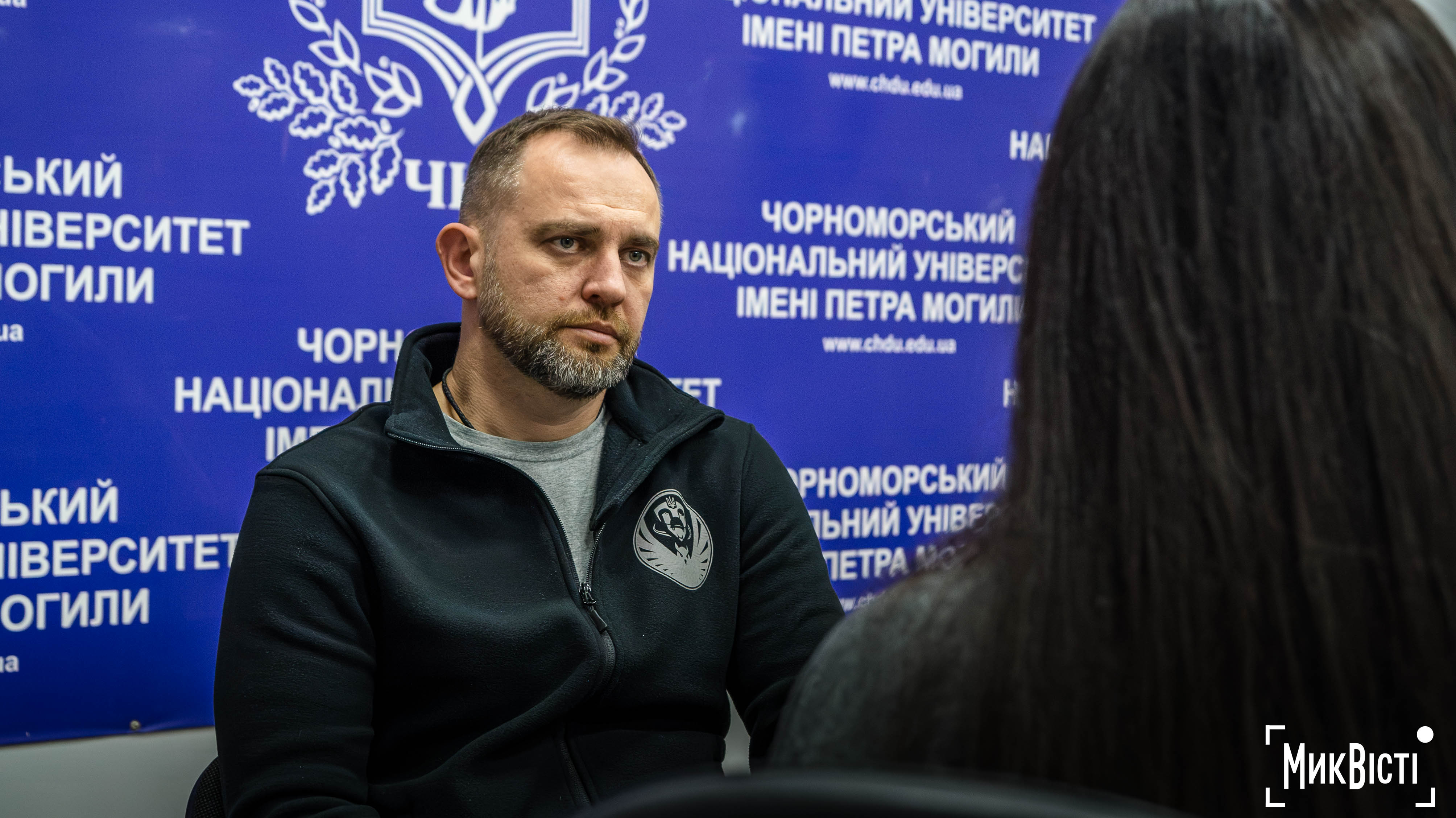 Dmytro Usov answers a question. Photo: «NikVesti»
The Red Cross, which the prisoners do not see
— Does the Red Cross play any part in this process? Does it help or coordinate any matters?
— The Red Cross is helping with verification. There is currently a category in the information system labelled «Prisoner of War (other sources)» and another labelled «Prisoner of War (ICRC)». It is precisely through the Red Cross that we are currently trying to do this, and they are cooperating with us: when we send information regarding everyone with the status «Prisoner of war (other sources)», they confirm with the Russian side that these people are indeed being held captive. This provides additional confirmation, and following this, they are assigned the status «prisoners of war (ICRC)».
— Are they denied access to prisons and detention centres?
— Unfortunately, not everywhere. We even know that many of our people who are in captivity, or hostages, are confirmed by the ICRC based on information from the Russian side. They do not see them, they do not communicate with them, but they confirm their status based on information from the Russian side. And this can be confirmed by our defenders who have returned from captivity, even those who have been there since 2022. They can say that, whilst held as prisoners of war recognised by the ICRC, they never once saw any ICRC representatives. This is something we are currently trying to address, so that the ICRC can, after all, fulfil its mandate on Russian territory.
A UN Special Rapporteur also spoke about what a soldier from the Mykolaiv region endured whilst in captivity: electric shocks, beatings and humiliation.
«You can trust us»
— What words of support can you offer to the families of prisoners of war, for whom the main question is: «When will my loved one be exchanged? When will I see my loved one?» What, apart from the formal tracing mechanisms and other procedures, can you tell them?
— All we want to say to our loved ones is to convey to them that we can be trusted. They may not be looking for an answer, but rather to see – to actually see through actions – that a particular organisation can be trusted. We try not to make any empty promises. We try not to give any standard, formulaic replies. We try, through our actions and our communication, to show them that, whilst we may not be working exactly as you’d like right now – not specifically on your case, but on everyone’s – thanks to the systematic work we’re doing, we’ll be able to get your loved one out too. And we’re trying to demonstrate this trust to their families. So that they can place their trust in us, allowing us to do our work whilst they carry on with their lives and wait for their loved one to return from captivity. Why? Because as soon as their loved one returns from captivity, there will still be a great deal of work to be done. And that work will fall to the families. And if they are already exhausted from visiting all the relevant bodies, from constantly appealing to everyone who is supposedly dealing with – or not dealing with – these issues, then when their loved one returns, they will no longer have the strength to look after their rehabilitation and support them. So this is how we want to divide the roles: you wait, but you trust us, whilst we work to bring him home.
— Are you succeeding?
— Well, it sort of works out. Everyone left happy today.
This text was machine-translated and has not yet been reviewed by our editors. The original is in Ukrainian. Learn more