City councillors were unable to vote on amendments to the charter of «Mykolaivelektrotrans» and the composition of the supervisory board
- Darina Melnychuk
-
•
-
13:37, 05 October, 2026
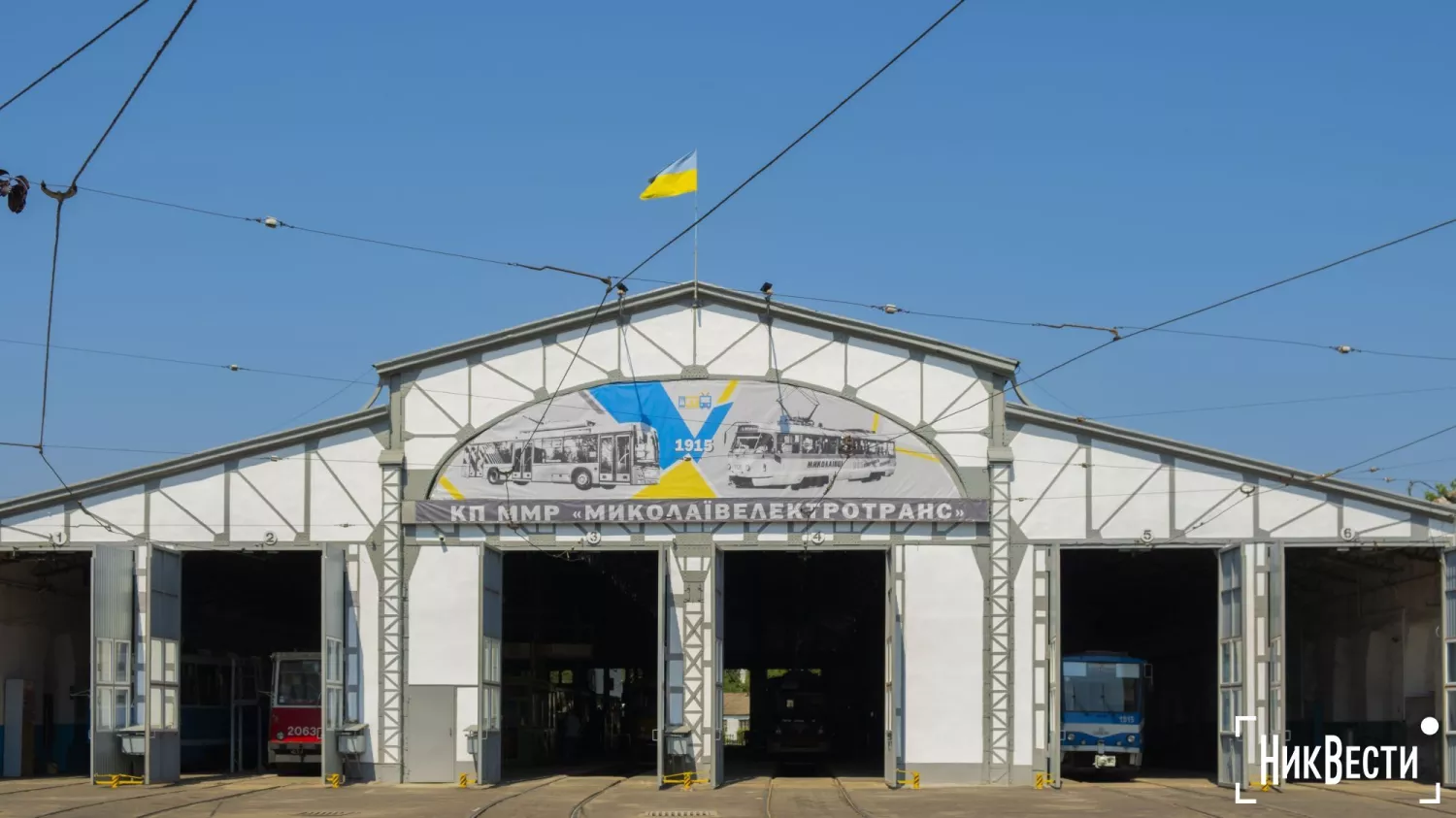 City councillors were unable to vote on amendments to the articles of association of the municipal enterprise «Mykolaivelektrotrans». Photo: archive NikVesti
Members of the Mykolaiv City Council were unable to adopt amendments to the articles of association of the municipal enterprise «Mykolaivelektrotrans» and the related decision on the composition of the supervisory board. During the discussion of the issue, councillors proposed various options for amendments to the provisions concerning the supervisory board, but none of them received the required number of votes.
The matter was considered on 2 October during a session of the Mykolaiv City Council, according to NikVesti.
The matter concerned the approval of the revised articles of association of the municipal enterprise «Mykolaivelektrotrans». According to the mayor, Oleksandr Sienkevych, the draft had been reviewed and approved twice by the City Council’s standing committee on housing and communal services.
Oleksandr Sienkevych explained that the amendments to the charter relate, in particular, to the work of the company’s supervisory board. He recalled that the board’s composition was determined following a competition organised with the support of the European Anti-Corruption Initiative. According to the mayor, during the intersessional period, Nadiya Vasylieva submitted a request asking to be removed from the supervisory board. Following this, the selection committee must conduct an additional selection process to appoint a new board member.
«A minor issue arose, and during the intersessional period I received a letter from Nadiya Vasilyeva requesting that she be removed from the supervisory board of «Mykolaivelektrotrans» on the basis of her statement declining to serve as a member of the supervisory board,» said Oleksandr Sienkevych.
At the same time, whilst considering the draft, councillors drew attention to the provisions of the articles of association that set out restrictions on who may serve on the supervisory board.
Councillor Oleksandr Bereza proposed reducing the period during which city councillors and city council staff are barred from serving on the supervisory board after leaving office from five years to one year.
He explained that Ukrainian legislation provides for a so-called «cooling-off period» lasting one year, and therefore proposed bringing the provisions of the charter into line with the law.
«The proposed version of the charter includes a five-year restriction for members of the Mykolaiv City Council and employees of the Mykolaiv City Council. My proposal is to bring this provision into line with national legislation and change the period from five years to one year,» said Oleksandr Bereza.
In contrast, Councillor Olena Kiseliova proposed removing these provisions from the charter altogether and first finalising the relevant provision concerning the supervisory board. According to her, if the restrictions are now amended only in the charter, whilst the old provisions are retained in another local document, a contradiction will arise between the documents.
«It would be better to remove these clauses from the articles of association altogether, as they do not belong there, and allow five days to finalise the articles of association. Then we can revise the regulations and amend the provisions Bereza referred to by means of a vote, so that there is no conflict at present between the Articles of Association and our regulations,» said Olena Kiselova.
Oleksandr Bereza added that he plans to prepare proposals for amendments not only to the regulations on supervisory boards but also to the articles of association of the «Mykolaivvodokanal» municipal enterprise.
The mayor put both proposals to the vote separately. First, the councillors considered Oleksandr Bereza’s proposal to reduce the restriction from five years to one year. Twenty-four councillors voted in favour, whilst two abstained. The proposal was not adopted.
After that, Olena Kiseliova’s proposal to remove the relevant provisions from the articles of association and send the document back for further revision was put to the vote. Twenty-three councillors voted in favour, whilst four abstained. The motion was also not passed.
The councillors then attempted to vote on the draft charter without amendments. Twenty-one councillors voted in favour, whilst six abstained. The motion was not passed. Consequently, Oleksandr Sienkevych proposed not to consider the separate draft resolution concerning the composition of the supervisory board, but to refer both matters back for further revision.
However, the councillors were unable to immediately pass a resolution to remove this draft from the agenda. During one of the votes, 26 councillors voted «in favour», two abstained — the resolution was not passed.
After this, the councillors returned once more to the draft resolution concerning the supervisory board. Twenty-two councillors voted in favour, one was against, and seven abstained. The resolution was again not adopted.
Consequently, both related issues – the approval of the revised articles of association of «Mykolaivelektrotrans» and changes to the composition of its supervisory board – remained unresolved. Following the meeting, they are to be finalised and resubmitted to the councillors for consideration.
During the subsequent meeting, councillors also discussed the voting situation and the fact that some councillors were not taking part in decision-making. One councillor proposed that, after each vote, the results of a roll-call vote be made available so that the pattern of councillors’ participation in the session could be monitored.
In response, the mayor, Oleksandr Sienkevych, stated that, in his view, some councillors were deliberately obstructing the work of the session.
«We now realise that there are five people there who are deliberately obstructing the session’s work. This has been going on for a very long time, and we find ourselves in a hostage situation. City residents should know who their heroes are, and they should be given information about who is working and who is obstructing the council’s work,» said Oleksandr Sienkevych.
What is known about the creation of the supervisory board
As a reminder, the city council passed a resolution to establish a supervisory board at «Mykolaivelektrotrans» back in November 2024.
In March 2026, the competitive selection process for independent members began. Participants went through two stages: first, the selection committee assessed the submitted documents, after which it conducted interviews with the ten candidates who scored the highest.
In August, the city council announced the conclusion of the competition. The successful candidates were Viktoria Ohryza, Mariana Yashna and Nadiia Vasilieva. They were recommended to the councillors for further approval. The mayor was to appoint a further two board members as representatives of the owner.
At the end of August, councillors also considered a new version of the electric transport company’s articles of association. The changes are necessary, in particular, to delineate the powers of the city council as the company’s owner, the future supervisory board and the management of the municipal enterprise.
At the time, Oleh Kuksa, deputy head of the Department of Transport, Communications and Telecommunications, explained that the supervisory board would, in particular, scrutinise the company’s procurement and provide advice.
However, during a meeting of the relevant parliamentary committee, the proposal to establish a supervisory board sparked debate. Councillor Yevhen Prudnyk spoke out against such a body, questioning the need for additional expenditure to maintain it. The committee chair, Dmytro Ivanov, however, noted that supervisory boards are necessary for large municipal enterprises.
Furthermore, it was reported that members of the future supervisory board of the «Mykolaivelektrotrans» municipal enterprise are set to be paid 34,500 hryvnias per month. The chair of the board will receive 39,500 hryvnias. The board is to consist of five people.