Asbestos and ammunition under the rubble: UNDP explains why it is important to quickly dismantle destroyed buildings in Mykolaiv region
- Alina Kvitko
-
•
-
19:25, 05 March, 2026
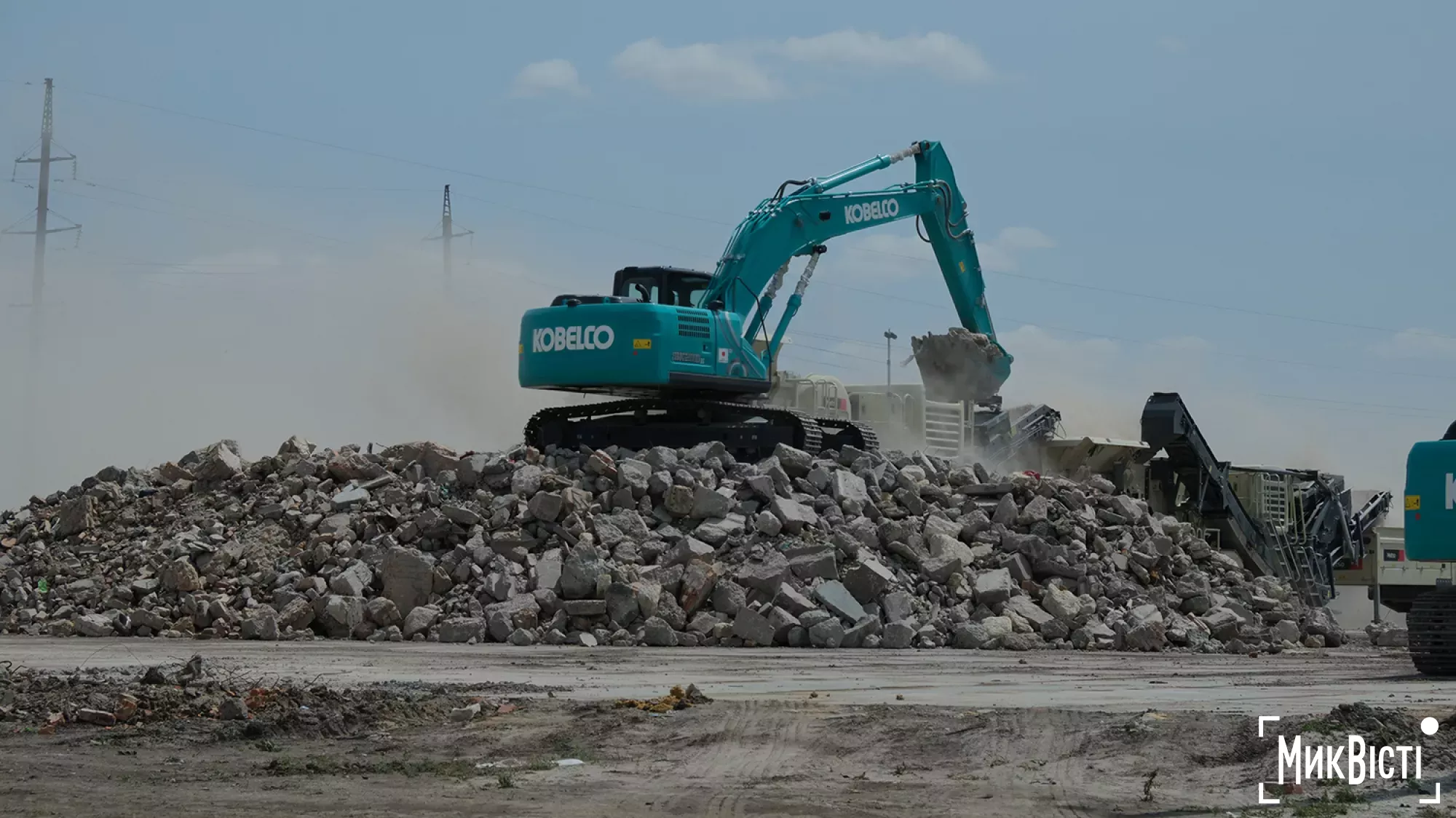 Waste processing plant in Mykolaiv, photo by NikVesti
Buildings destroyed by shelling may contain hazardous materials, including asbestos, which poses a risk to human health if its fibres are released into the air. It is therefore important to dismantle damaged structures as quickly as possible.
This was reported by the United Nations Development Programme (UNDP) in a comment to NikVesti.
The organisation explains that after the destruction of buildings, construction materials containing asbestos, such as slate, can split. Asbestos fibres are released at the break points, which people can inhale along with dust.
According to the International Agency for Research on Cancer, all forms of asbestos are classified as carcinogenic to humans. Inhaling its fibres can cause serious diseases, including mesothelioma (cancer of the pleura and peritoneum), as well as lung, larynx and ovarian cancer.
The UNDP notes that as long as slate remains on the roof as a roofing material and is not damaged, the risk is relatively low because the asbestos fibres are bound by cement. However, after buildings are destroyed, the debris can pose a danger to residents and workers who are clearing the rubble.
In addition, damaged structures may be unstable and collapse at any moment, posing a threat to people nearby. Explosive objects may also be found under or near the rubble.
We would like to remind you that work is continuing in Mykolaiv and the surrounding region to dismantle buildings destroyed by the war. In 2025, as part of the UNDP's waste management project, 25 buildings were dismantled and 10 public spaces were cleared.
Demolition waste in the Mykolaiv region
At the end of 2023, the Mykolaiv region was among the six regions of Ukraine with the highest levels of debris pollution, covering more than half a million square metres of territory. Some of the debris is stored in landfills, while some remains at the sites of destruction, polluting the air, water and soil.
As of the end of November 2023, 57 hectares of the region's territory were littered with construction debris. During the year, five temporary storage sites for debris were identified.
The construction waste processing plant in Mykolaiv began operating in the spring of 2025. The project was implemented with the support of the Japan International Cooperation Agency (JICA), which provided specialised equipment, while the site for the plant was equipped with funds from the city budget.
The equipment has the capacity to process about 12,000 tonnes of such waste per month, and the resulting material will be used for road repairs.
By the end of 2024, about 120,000 tonnes of construction waste had accumulated in Mykolaiv. As of January 2025, the plant had processed 4,500 tonnes of demolition waste into building materials.
In a comment to NikVesti, Deputy Mayor Serhii Korenev said that the construction waste processing plant in Mykolaiv is planned to be used for the needs of two more regions: Kherson and part of Kirovohrad.
At the same time, communities that want to use the services of the construction waste processing plant after the destruction are offered two options for cooperation. In the first, they can transfer all waste for processing at a lower price, and in the second, they can receive the processed material back, but this option will be more expensive.
As of February 2026, 4.6 million tonnes of debris had already accumulated in the Mykolaiv region.
Read also the article by NikVesti: «Three months for a five-storey building: how destroyed houses are demolished in Mykolaiv».