An inclusive space for people with visual impairments has been opened at the Mykolaiv library
- Julia Lukyanenko
-
•
-
11:43, 15 May, 2026
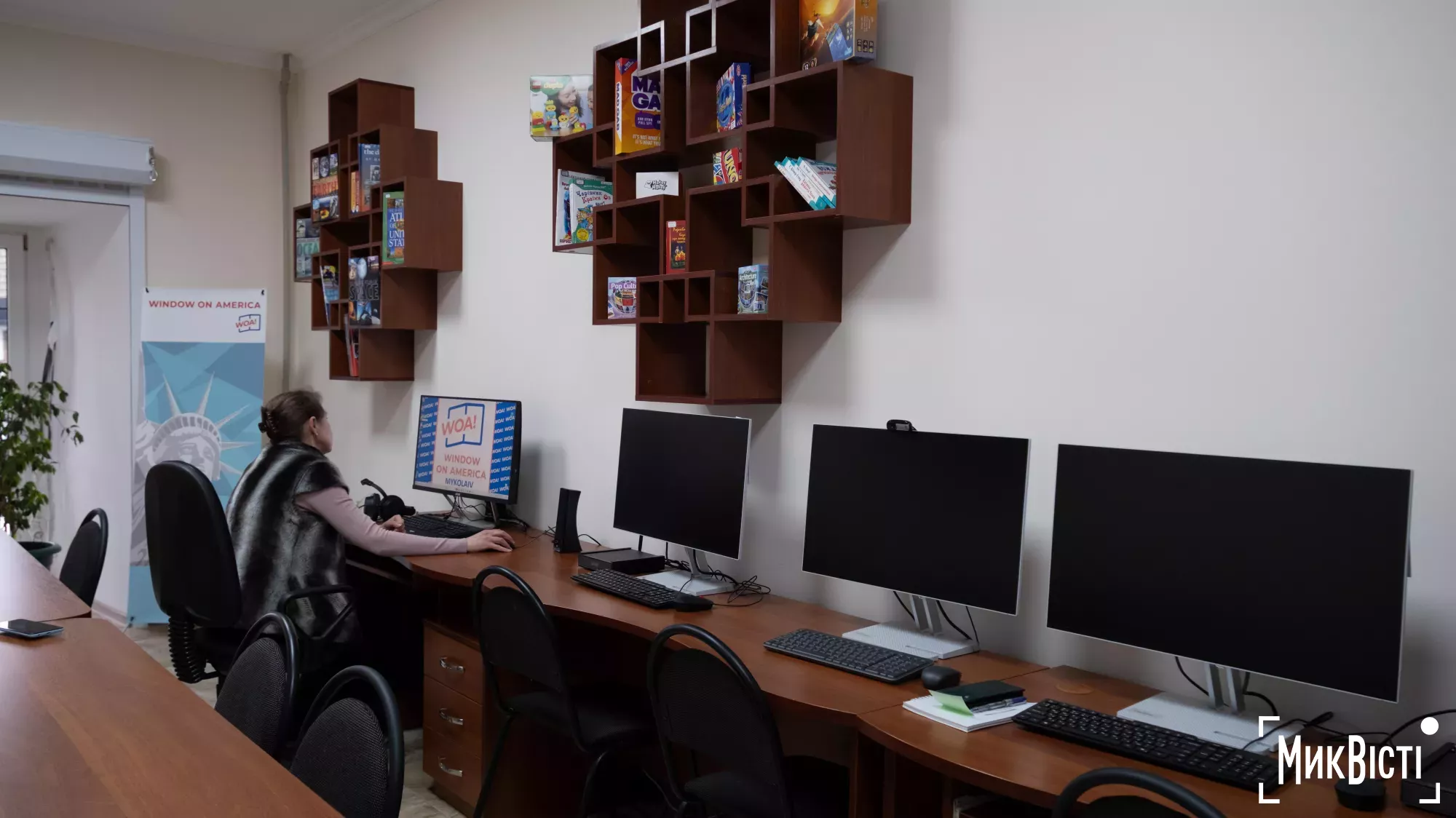 The Mykolaiv Universal Library has opened a space for people with visual impairments. Photo: NikVesti
An inclusive space — the «Dotyk» centre for adapted access to information — has opened at the Mykolaiv Regional Universal Scientific Library. People with visual impairments can use the typhlo-complex, which helps them listen to information, read it by enlarging the text on the screen, and print it in Braille.
Viktoriia Melnyk, head of the user registration and library statistics section at the regional universal library, told NikVesti about this.
The centre for adapted access to information in the library was opened with the support of the US Embassy. The typhlo-complex was purchased using grant funds under the free access to information project.
«We have the «Window to America» centre, the International Diaspora Centre, supported by the US Embassy. This centre offers courses in the English language, culture and traditions of the United States of America. Furthermore, they give us the opportunity to participate in grant projects,» said Viktoriia Melnyk.
The library received the typhlological kit at the beginning of May. It includes an all-in-one computer and a headset. The keyboard is standard. As Viktoriia Melnyk explained, using the touch-typing method, one can type text and receive audio prompts. A person with a visual impairment can use two programmes — NVDA and ZoomText. Both provide audio prompts: they read out everything that is happening on the screen. In addition, you can make a recording on the voice recorder, enable text enlargement, adjust the colour scheme and other settings.
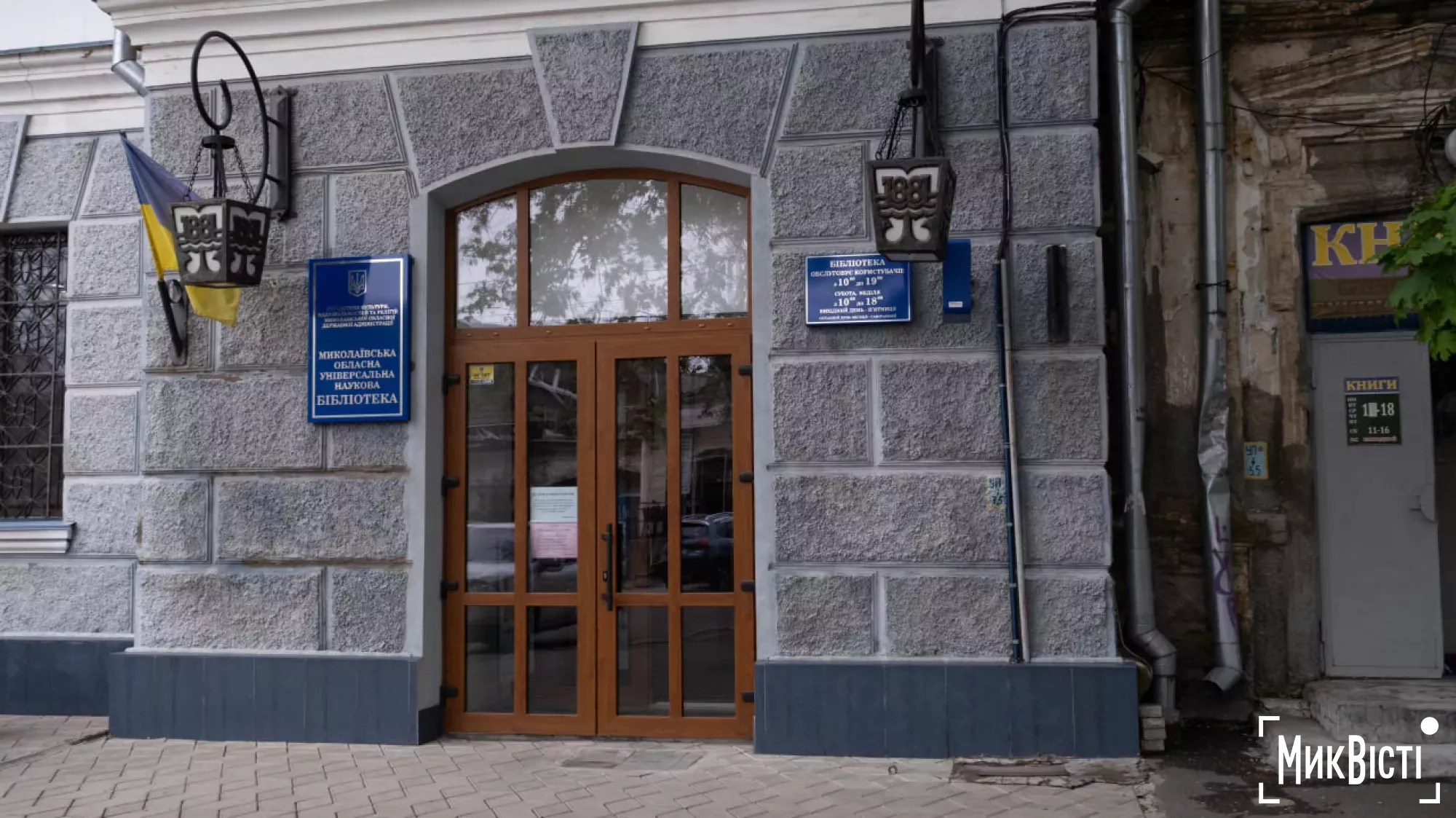 Mykolaiv Regional Universal Scientific Library. Photo: NikVesti
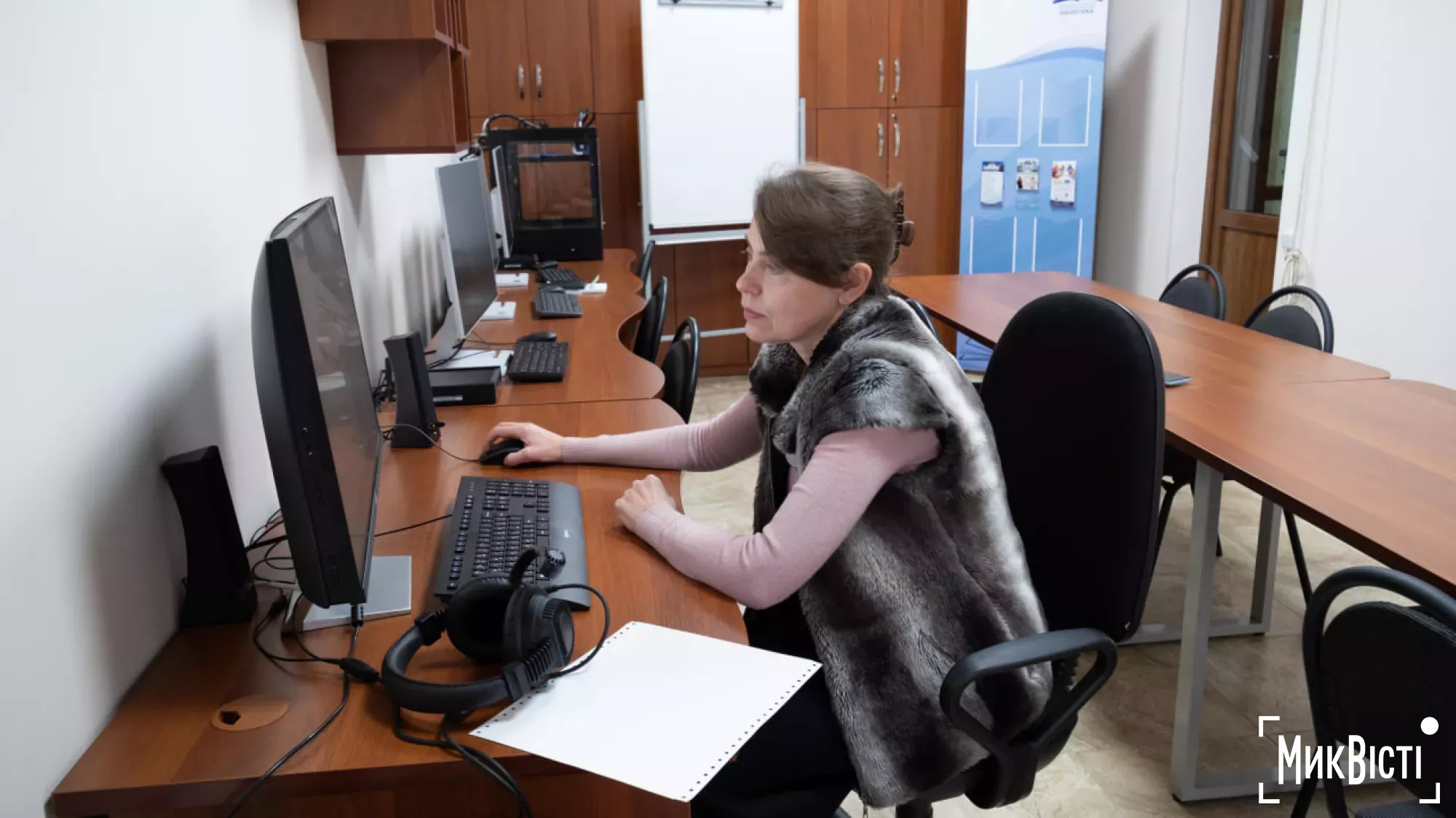 Viktoria Melnyk, Head of the User Registration and Library Statistics Section at the Regional Universal Library. Photo: NikVesti
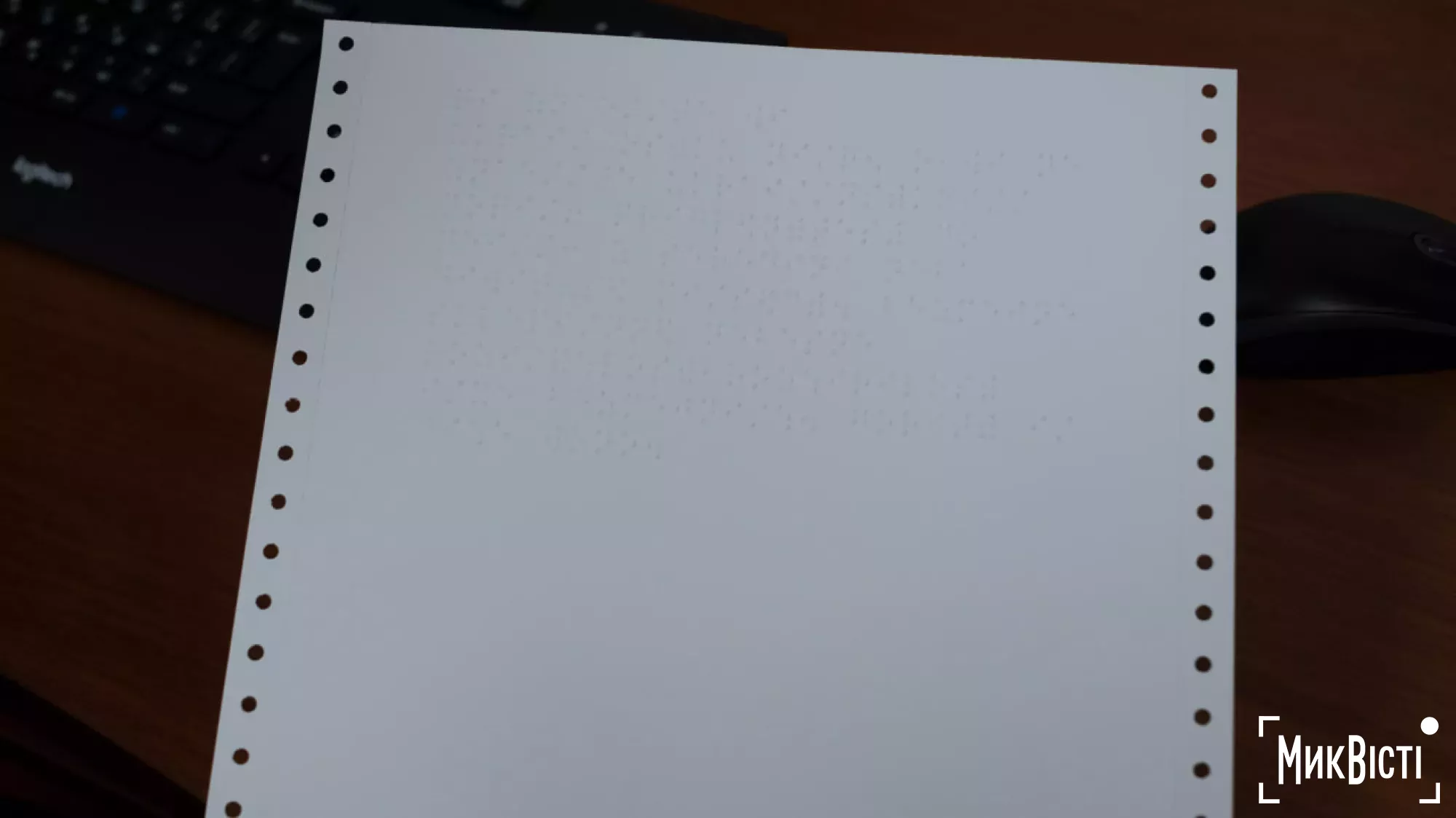 Text printed in Braille. Photo: NikVesti
The Typhlo-complex also helps convert text in standard font into Braille and then print it out. If necessary, library staff will assist.
«So, people with visual impairments can come and listen to the information. They can use our service to print out the information they need. Perhaps someone needs to find some information, for example, to make an extract from a document,» noted Viktoriia Melnyk.
She also explained that registration at the library is free for people with visual impairments, as they are entitled to a concession.
«Accordingly , they simply fill in a form stating that they are library users, receive a library card and can visit at any time during the library’s opening hours and work here in this room. Printing is also free of charge,» noted Viktoriia Melnyk.
The library has also ordered Braille signs so that people with visual impairments can find their way around the space independently. These will be installed in all rooms and used as directional signs.
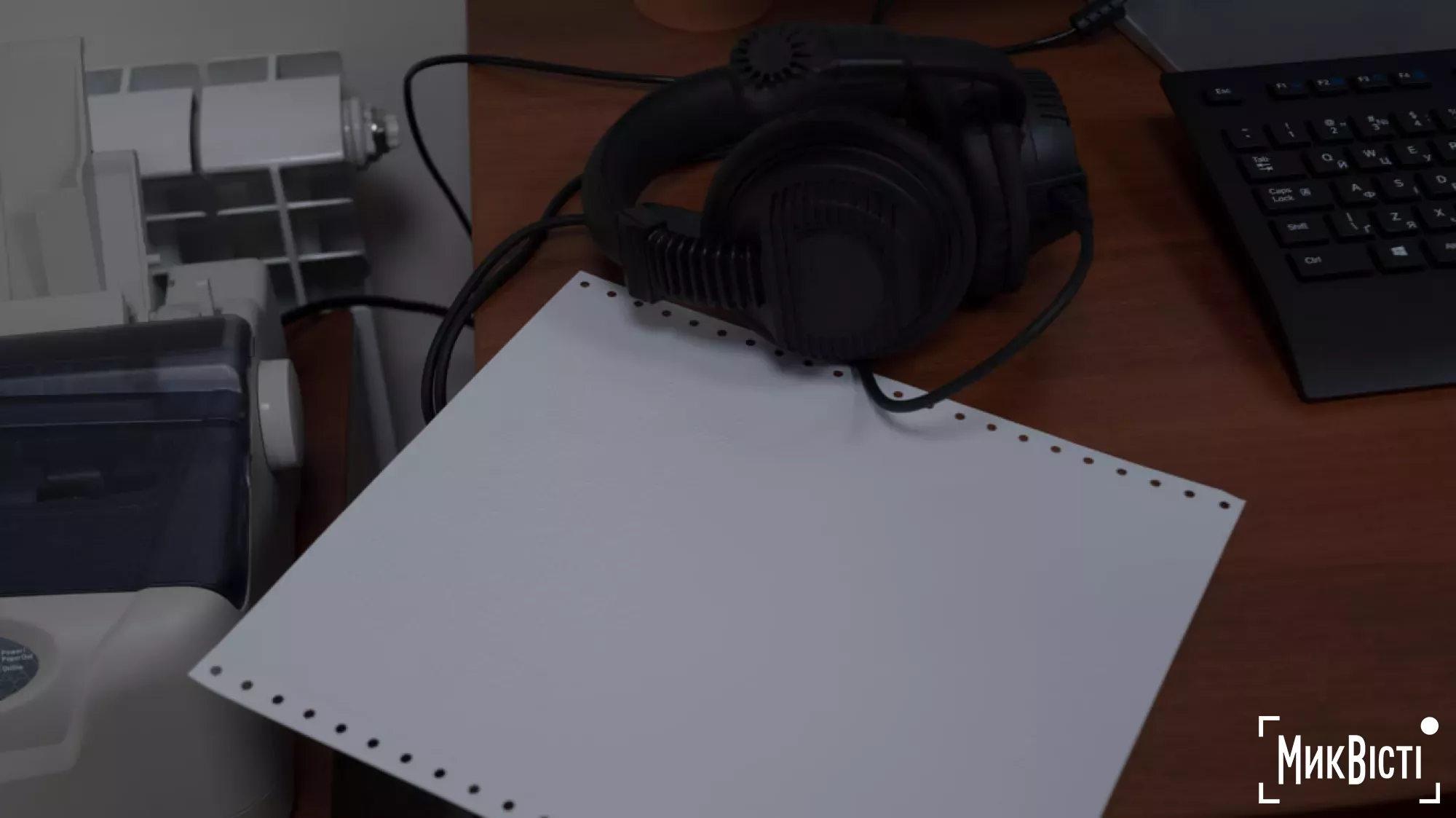 Headphones for listening to audio prompts. Photo: NikVesti
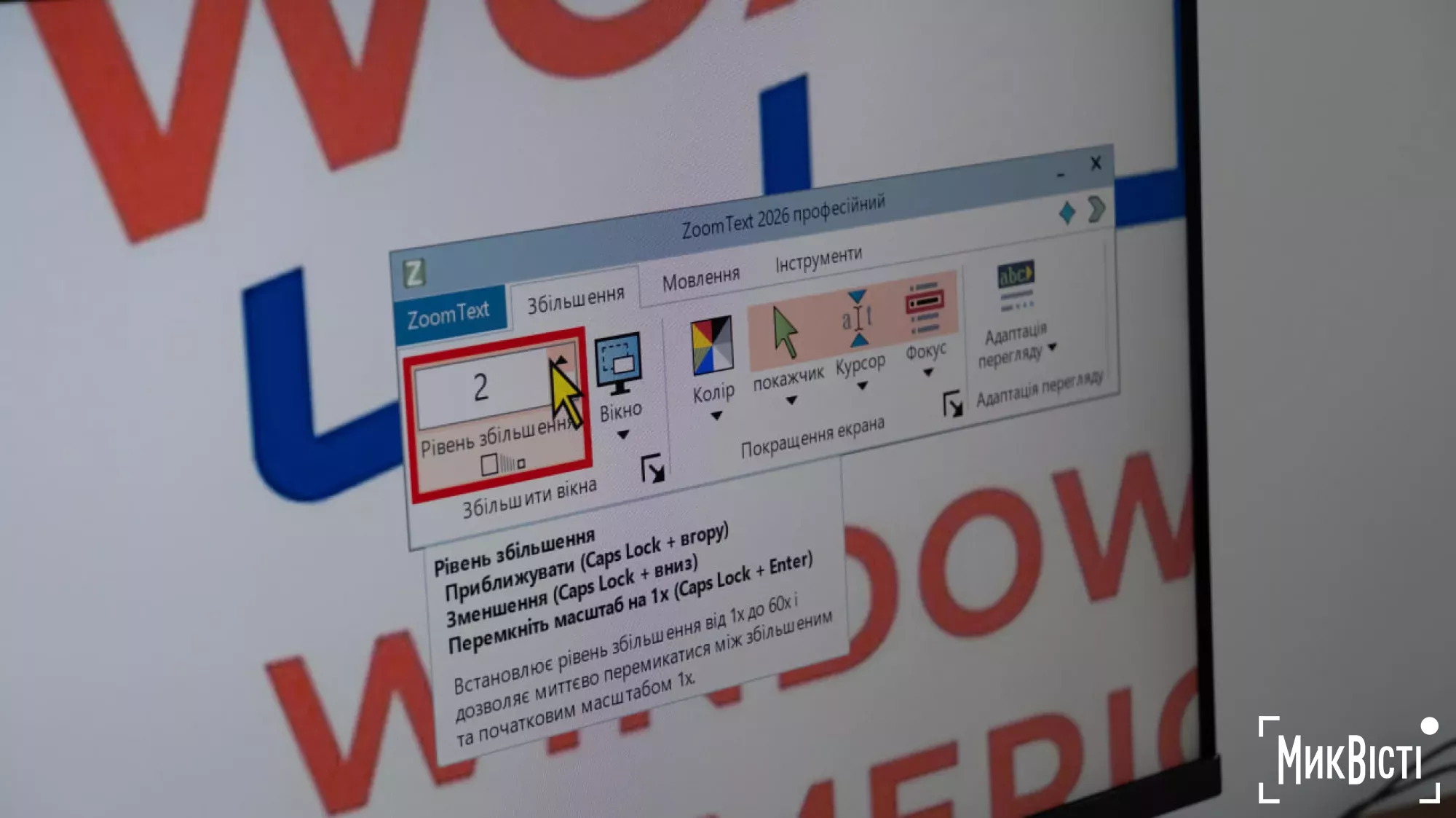 One of the programmes helps to enlarge text for people with visual impairments. Photo: NikVesti
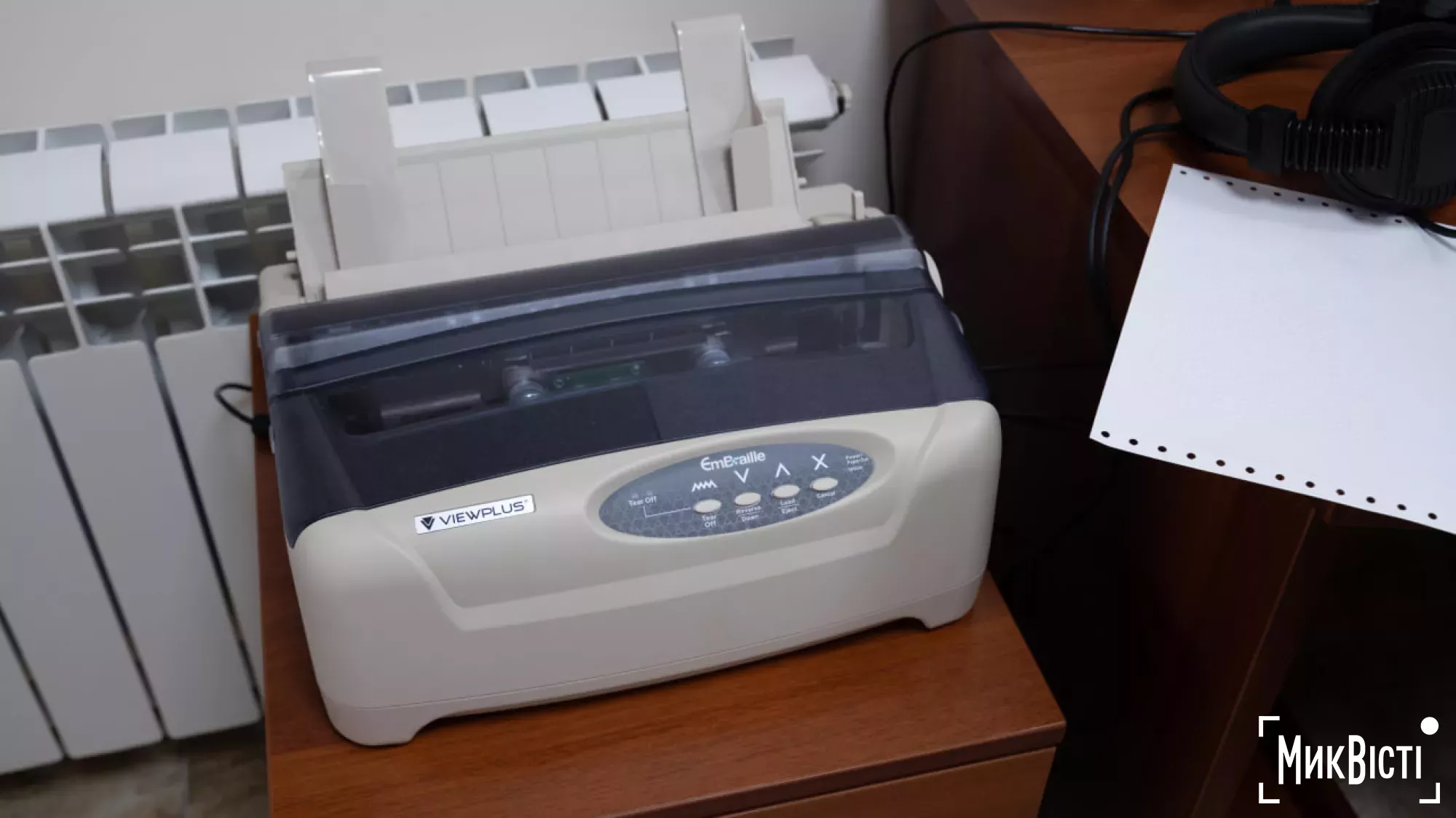 Text printed in Braille. Photo: NikVesti
The library also has books printed in Braille. Viktoriia Melnyk noted that there aren’t that many of them compared to the library’s entire collection, but people do ask for them.
«If you take into account the availability of such books in other libraries, there is actually a fairly significant number of books in Braille. Most of them are children’s literature, but there are some works of fiction and periodicals. People have asked to use these books. Not in huge numbers, of course, but they do ask. We even had parents bring a child of about seven years old. The boy has a visual impairment. And the parents asked for books specifically in Ukrainian so they could teach their child to read Braille,» said the head of the section.
Viktoriia Melnyk explained that books printed in Braille are expensive and voluminous, so purchasing them is problematic. For example, two words in standard print become several lines in Braille.
«These are mainly shorter stories, novellas, and the like. Because it’s impossible to fit longer works into Braille; the book would be enormous. And besides, due to the cost of paper, they are very expensive, and funding, unfortunately, is currently limited,» noted Viktoriia Melnyk.
Another accessibility project — even before the war, the library began implementing the Sounded Book project. This involves recording audio excerpts from books. The library’s YouTube channel features a section called «Books Without Barriers».
«Excerpts from works by Mykolaiv authors are narrated whilst respecting copyright. Some fragments — if they are poems, then in full; if they are longer works, then excerpts are narrated — and the library collaborates with UTOOS, the Ukrainian Society of the Blind. When a new audio recording is released, the information is sent to them, and they pass it on to those who need it. It is publicly available on the YouTube channel,» said the head of the department.
The books are narrated by library staff. They have undergone training in voice production.
«As part of one of our creative projects, we purchased equipment — a music studio. We have a microphone and a camera, and a staff member from the regional training centre records and edits these videos; then another staff member reads the text, the recordings are edited and made publicly available,» noted Viktoriia Melnyk.
It is worth recalling that in Mykolaiv, a project for an inclusive beach was conceived even before the war. It was not implemented, but there are now proposals to revisit the issue. It could be set up on Strilka Beach, though funding is required.