At the parents’ request, the State Service for Food Safety and Consumer Protection inspected the quality of meals at School №50 in Mykolaiv
- Darina Melnychuk
-
•
-
15:30, 05 October, 2026
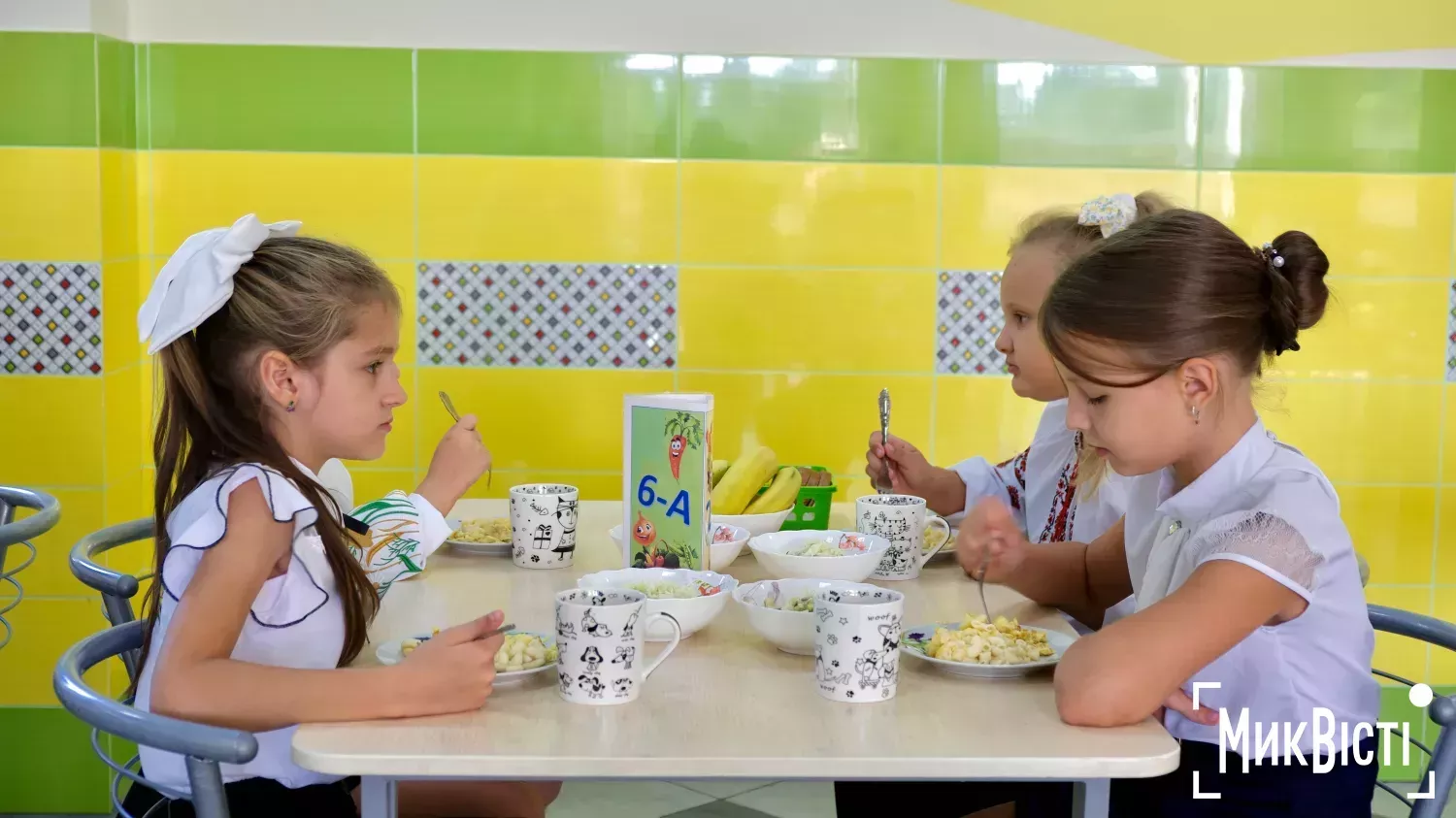 The State Food and Consumer Service inspected the school meals at School No. 50 in Mykolaiv following complaints from parents. Photo: NikVesti
Parents of pupils at School №50 in Mykolaiv complained to the State Food and Consumer Service about the quality and quantity of the food their children were receiving in the canteen. Following an inspection, a number of breaches were identified at the school.
This was reported by Alona Buha, the mother of one of the pupils, in a comment to NikVesti.
Back on 18 September, parents of Year 2 pupils lodged a complaint with the Main Directorate of the State Food and Consumer Service in the Mykolaiv region. They requested an unscheduled inspection of the catering arrangements at School №50, as well as a check on the quality of the prepared meals and whether the food served complied with the approved menu.
Separately, parents complained that the actual portions received by pupils may differ from the dishes and quantities of food stipulated by the established standards and the menu.
According to Alona Buha, one day a photo of a sample meal at «Khvylka» showed a whole boiled egg weighing 40 grams, whilst the children were only given half an egg each.
«We show the children: «Here, look, this is the reference dish. Did you have this today?» And the children say no. The reference dish contained a whole egg — 40 grams. The children said there was an egg, but it had been cut up and they were each given half,» said Alona Buha.
According to her, parents noticed a similar discrepancy on another day, when «Khvylka» published a photo of chicken in ginger sauce with pasta. She claims that the children were given less pasta than was shown on the reference portion.
As for the chicken, she said that the reference dish for secondary school pupils contained three pieces weighing a total of around 120 grams, whilst the children told their parents they had been given two pieces each.
«The children were supposed to be given portions with three pieces of chicken, but were given only one piece each — both younger and older pupils. Furthermore, the drink was different too. «Khvylka» showed a photo of juice, but the children were given a pale yellow, unsweetened liquid. In other words, in our view, they are not only reducing portion sizes but also substituting dishes and drinks,» said Alona Buha.
On 23–24 September, the State Service for Food Safety and Consumer Protection carried out an unscheduled inspection of school catering in Mykolaiv, specifically at School №50, as confirmed by the agency in response to an information request from NikVesti.
Experts checked compliance with health and safety legislation, specifically the condition of the kitchen facilities, the organisation of catering, record-keeping, food waste, adherence to menus and nutritional standards, food storage, and staff medical examinations.
Following the inspection, representatives of the State Service for Food Safety and Consumer Protection identified breaches of health and safety regulations relating to the organisation and documentation of catering services.
In particular, the school was found to have breached regulations regarding the inspection of prepared meals and the keeping of logs, insufficient monitoring of medical examinations for canteen staff, as well as failure to adhere to the approved menu and rules for substituting dishes.
«During the inspection, it was established that the actual diet did not correspond to the approved menu: on 10 September 2026, instead of the dishes specified in the menu, other dishes were served, which had been included in the previous day’s menu. This substitution was not properly justified and was not recorded in the accounting records,» the response to the enquiry states.
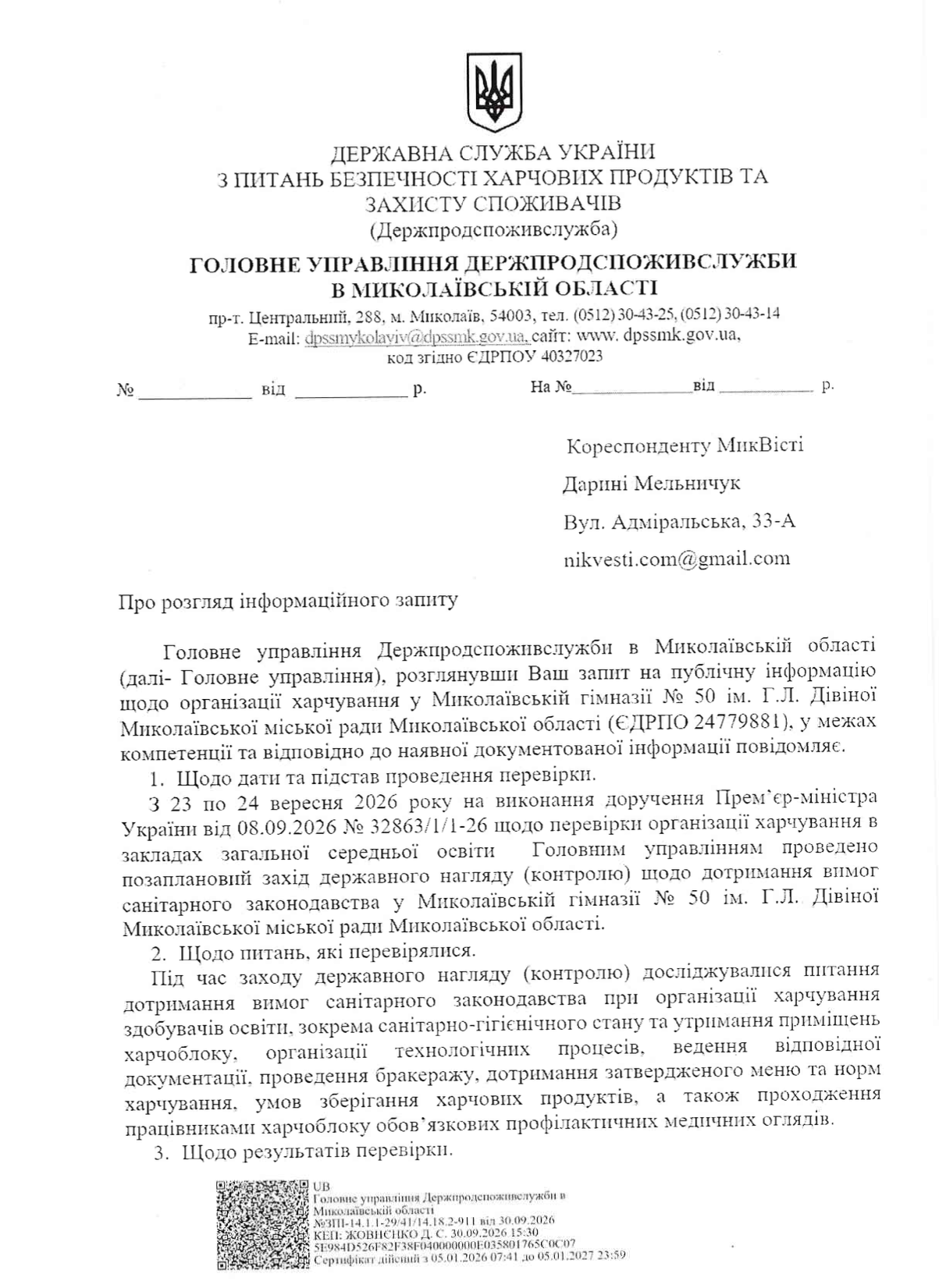 Response from the State Food and Consumer Service. Screenshot of the document
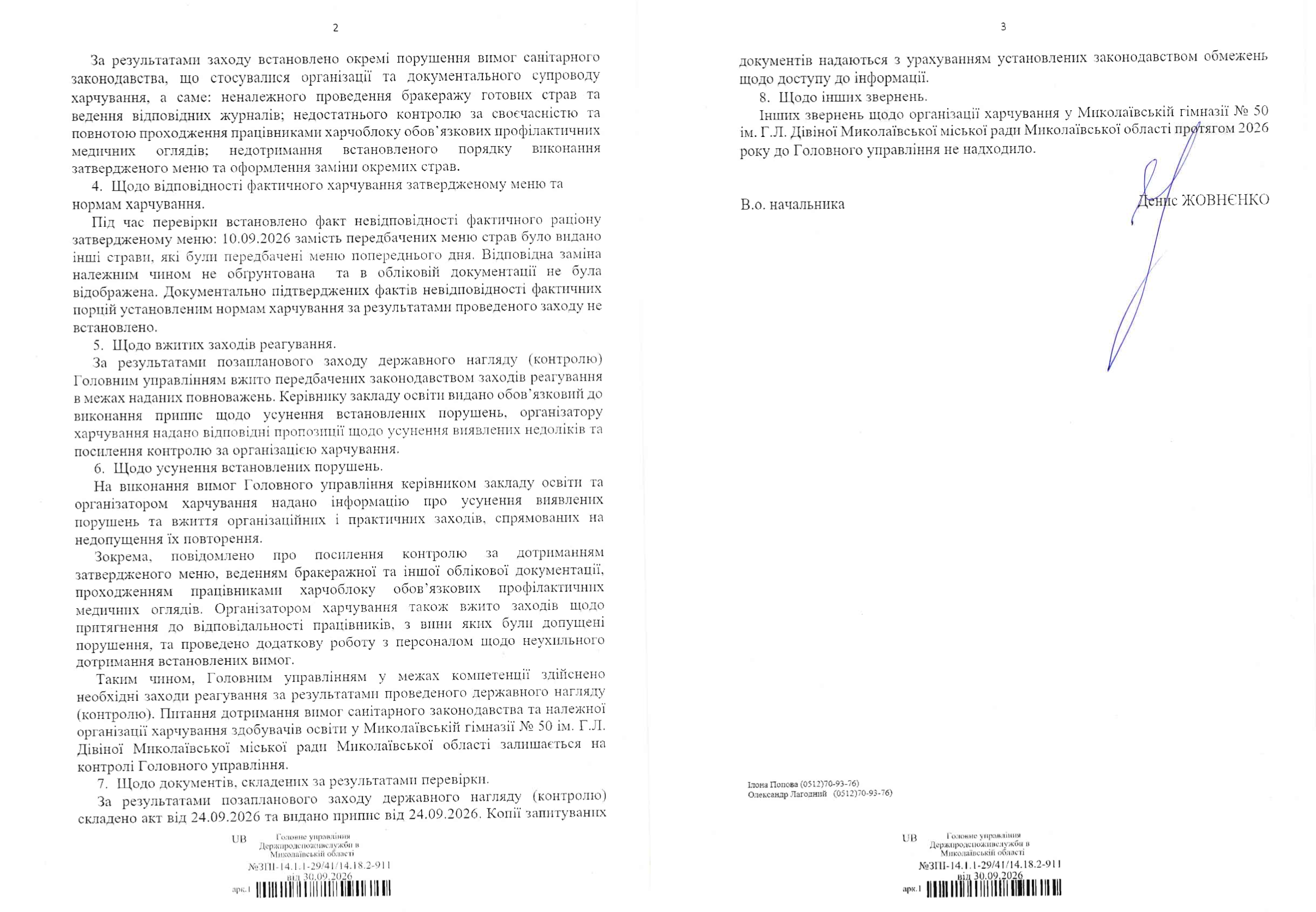 Response from the State Food and Consumer Service. Screenshot of the document
Following the results of an unscheduled inspection, the State Food and Consumer Service issued the school headteacher with a binding order to rectify the identified breaches. The catering provider was also given relevant recommendations on how to address the identified shortcomings and strengthen control over the organisation of school meals.
It should be noted that earlier, the head of the education department, Hanna Lychko, reported that in Mykolaiv, the State Food and Consumer Service was inspecting the organisation of school meals. Experts are to inspect all general secondary education establishments operating in both face-to-face and blended formats.
School meals in Mykolaiv
As is known, in Mykolaiv, over 3,000 schoolchildren do not take advantage of free school meals, although the city provides this opportunity for all pupils.
It should be recalled that a tender was announced in Mykolaiv for the provision of meals to pupils in 55 schools across the city, with an estimated cost of 135.5 million hryvnias. Earlier in June, the Education Department of Mykolaiv City Council announced a tender for the organisation of meals in 44 of the city’s nurseries. The expected cost of the procurement was 69.1 million hryvnias, and the services were scheduled to be provided until the end of October.
At the time, the city council reported that there were insufficient funds to provide meals for children until the end of the year. According to Deputy Mayor Vitalii Lukov, the money for the nurseries was found by making savings from the funds earmarked for school meals.
At the same time, the city council was counting on additional state support to ensure meals for children until the end of the year. According to estimates by the Department of Education, the city will need a further nearly 150 million hryvnias by the end of the year: over 109 million hryvnias for nurseries, over 33 million hryvnias to co-fund school meals, and a further 7 million hryvnias for special schools and vocational education institutions.