Getting some fresh air and spending time at home: a journalist showed how Kherson lived during the Oleshky ceasefire
- Alisa Melikadamian
-
•
-
10:30, 31 October, 2026
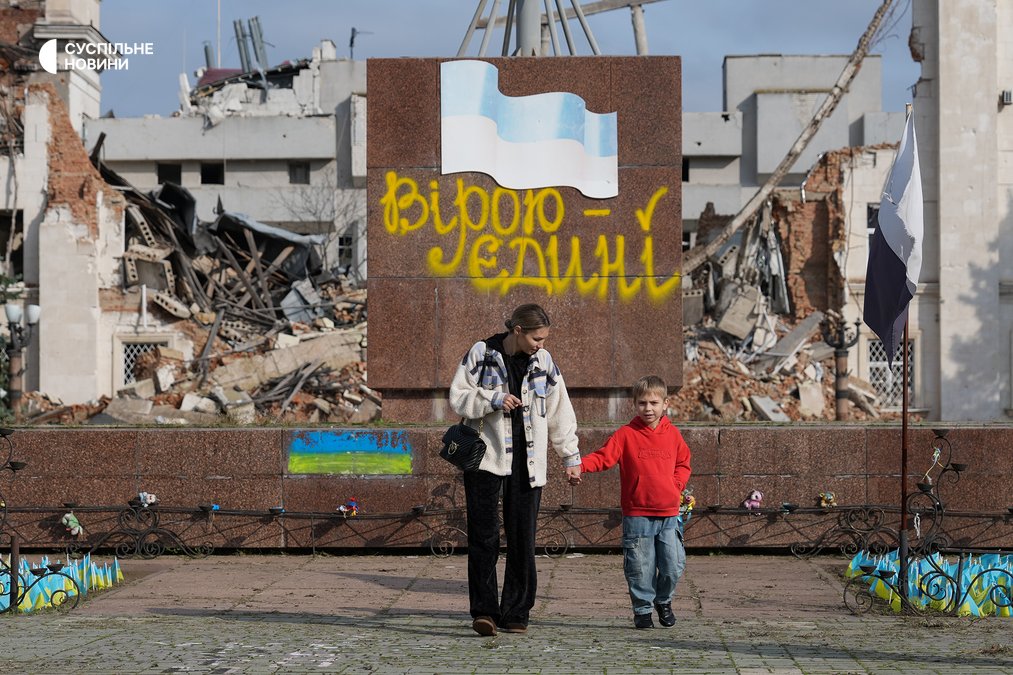
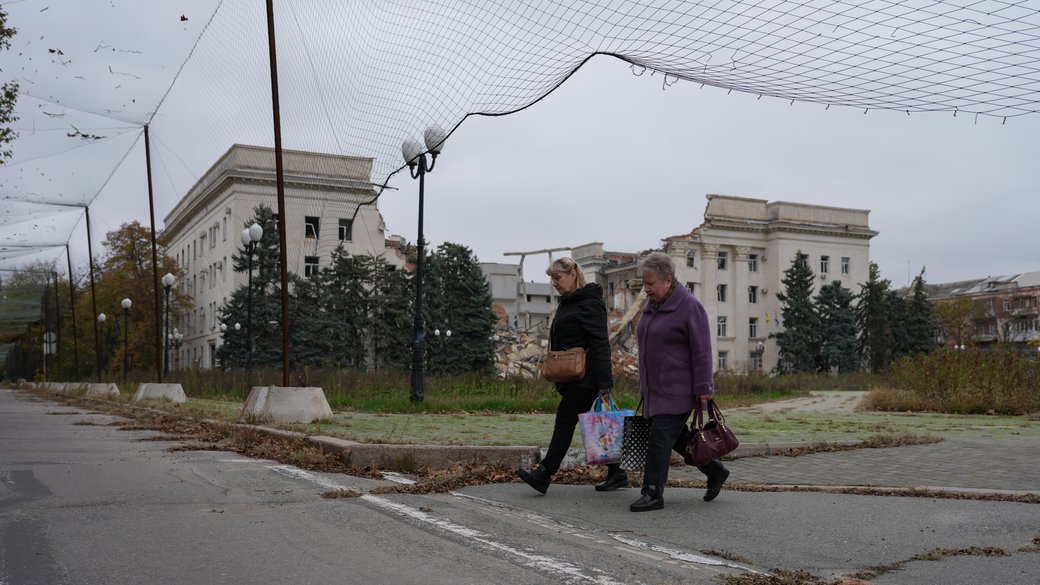 Women walk across Freedom Square past the Kherson Regional Administration building, destroyed by aerial bombs, on the first day of the ceasefire in the Kherson region to facilitate a humanitarian operation in the occupied town of Oleshky, 27 October 2026. Photo: Ivan Antypenko
During the local ceasefire in the Kherson region, which was introduced on 27 October to allow a humanitarian mission to take place in occupied Oleshky and the surrounding villages, Kherson is unusually quiet. Street cleaners were tidying the streets, residents were out for walks, and families who had fled due to the war were returning to their homes to collect their belongings and spend some time there.
Journalist Ivan Antypenko described how the city experienced these few days of ceasefire in a report for «Suspilne».
Officially, the ceasefire in the Kherson region began on 27 October. It was declared to allow a humanitarian mission to take place on the occupied left bank of the Dnipro: clearing roads of mines, delivering food and medicines, and evacuating those wishing to leave Oleshky and neighbouring settlements.
Over the past few days in Kherson, municipal workers have taken advantage of the lull to clean the streets and tidy up the flower beds. In particular, on Freedom Square, workers from the municipal enterprise «Kherson Parks» pruned the roses near the ruined regional administration building.
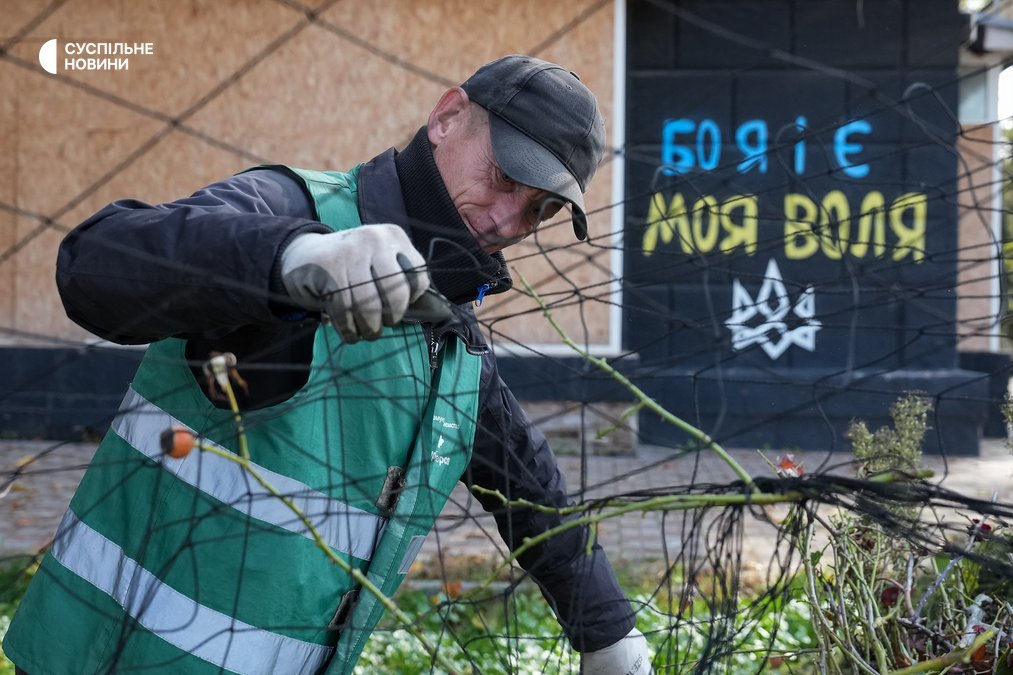 Oleksiy, an employee of «Kherson Parks», trims roses on Freedom Square in the city centre, 28 October 2026. Photo: Ivan Antypenko
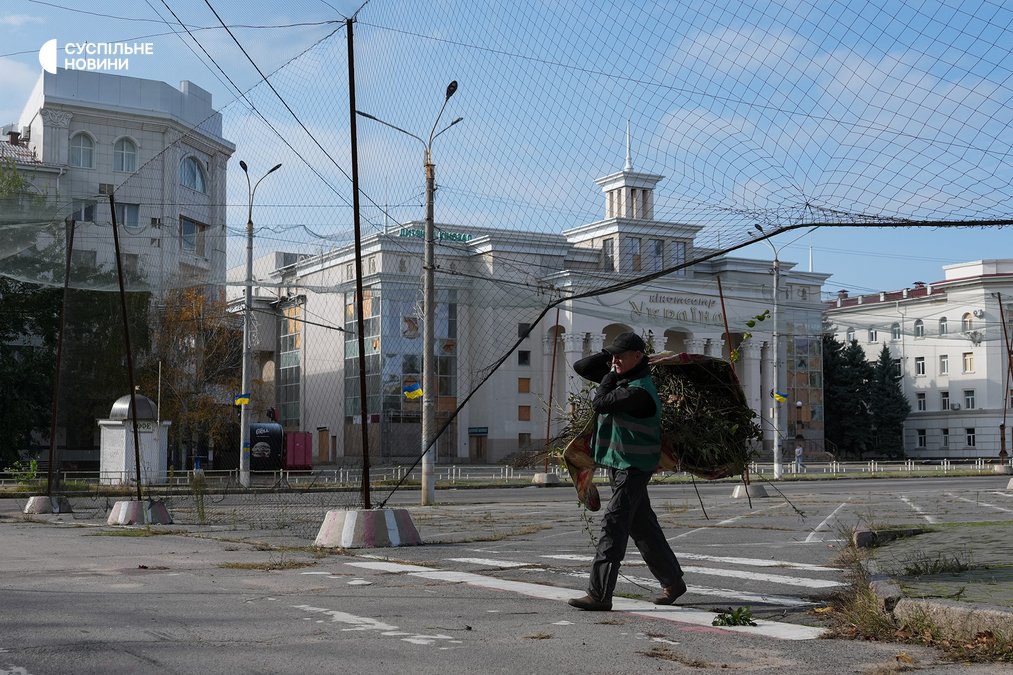 Oleksiy, an employee of «Kherson Parks», trims roses on Freedom Square in the city centre on 28 October 2026. Photo: Ivan Antypenko
Although Oleksii, an employee of the municipal enterprise, told a journalist that they continued to work even under the threat of Russian drones, and that mobile units provided cover for them whilst they were working.
«War or no war, we can’t let the city fall into disrepair,» the man said.
At the same time, the calmer streets allowed the people of Kherson to leave their homes more often. People strolled through the city, visited markets and travelled to areas that had previously been too dangerous to reach due to Russian shelling and drone attacks.
Serhii and Olena, residents of Kherson, having heard that the ceasefire was indeed in force, travelled with their daughter from Lviv to the city they had left back in April 2022 during the Russian occupation.
Their flat was burnt out after being hit by a Russian drone in the spring of 2025. Looters had since ransacked the place. Despite this, the family hoped to find some of the belongings they’d managed to salvage.
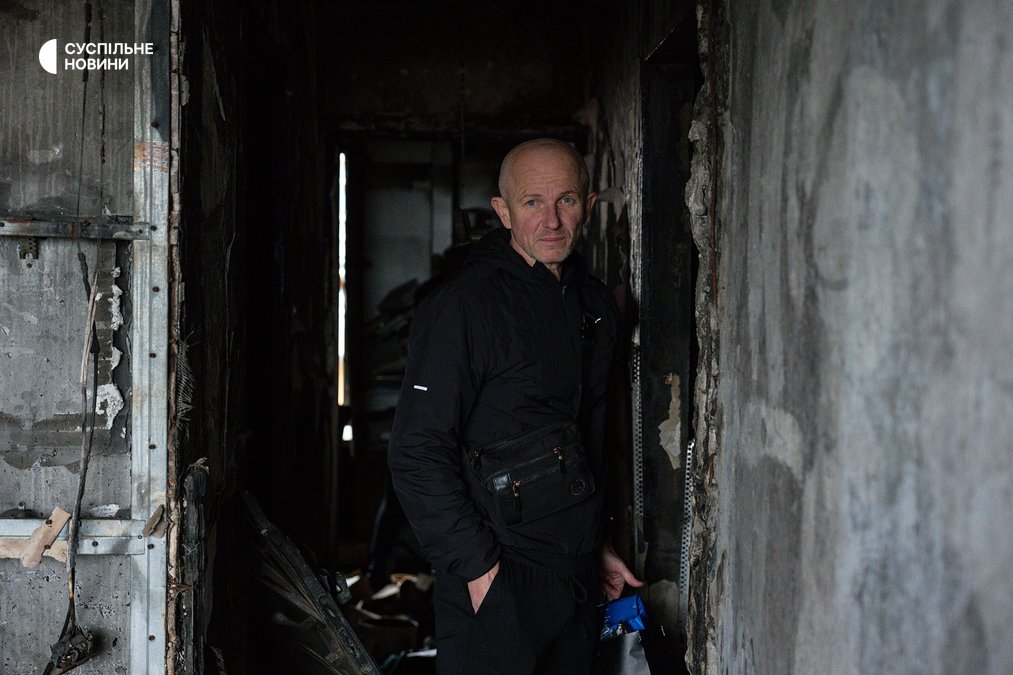 The couple left in 2022. Their flat was burnt down in 2025 by a drone strike. Photo: Ivan Antypenko
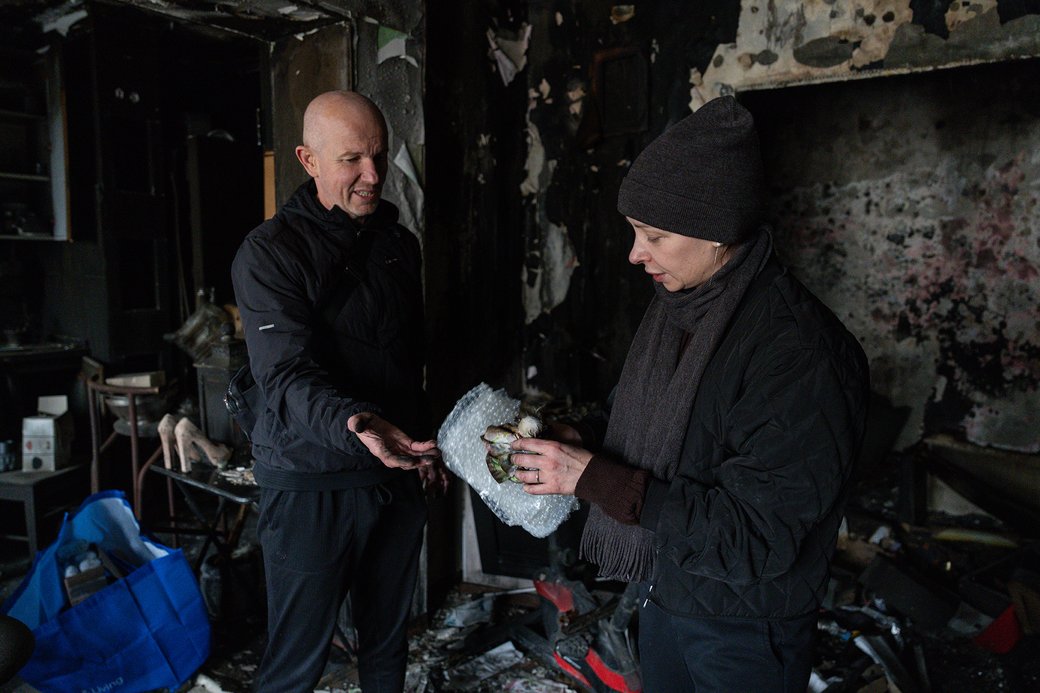 The couple left in 2022. Their flat was burnt down in 2025 by a drone strike. Photo: Ivan Antypenko
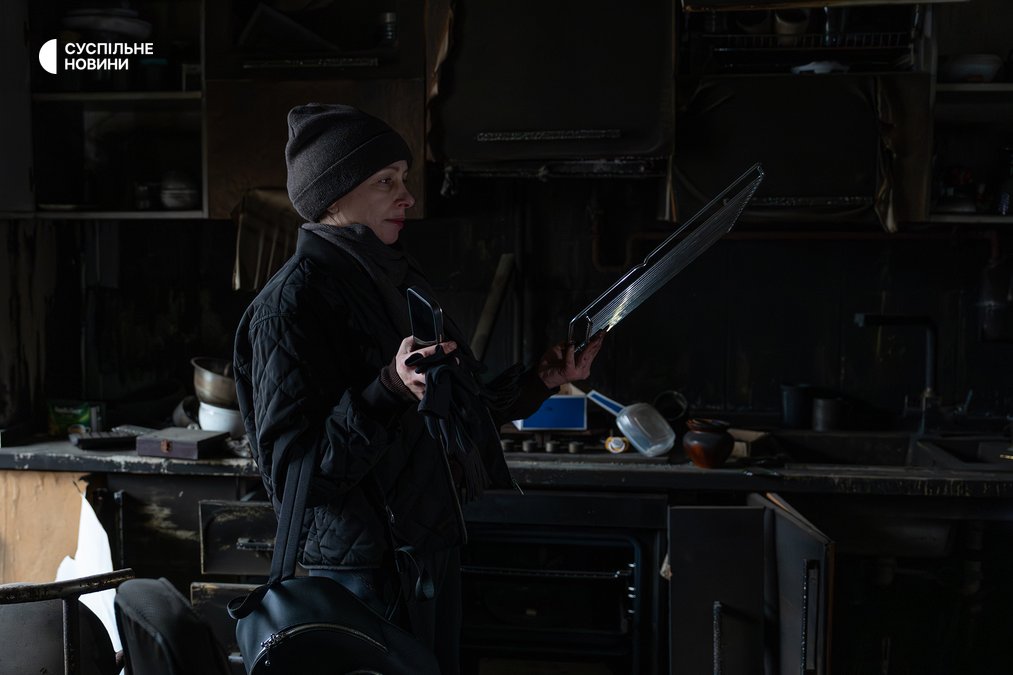 The couple left in 2022. Their flat was destroyed by a drone strike in 2025. Photo: Ivan Antypenko
Among them, Olena recognised a motanka doll, which she had once made with her daughter a few days before the full-scale invasion began.
«To be honest, we didn’t come here so much for our belongings as to breathe in the warm air of Kherson and simply be at home. I think this is the last time,» said the man.
However, even during the ceasefire, the danger in the city had not gone away. In particular, anti-personnel mines, which are difficult to spot, remained amongst the fallen leaves on the streets. On the first day of the ceasefire, whilst speaking to journalists in the centre of Kherson, Volodymyr Obertas, press officer of the 34th Separate Marine Brigade, was killed when a mine detonated.
Similarly, fears remained that, once the ceasefire ended, Russian troops would resume shelling with renewed vigour. The journalist also spoke to Iryna, who travels to the Kherson market from neighbouring Bilozerka, where she grows flowers. According to her, the village continues to suffer from attacks by drones, artillery and guided aerial bombs, and local residents find it difficult to get about due to the constant threat.
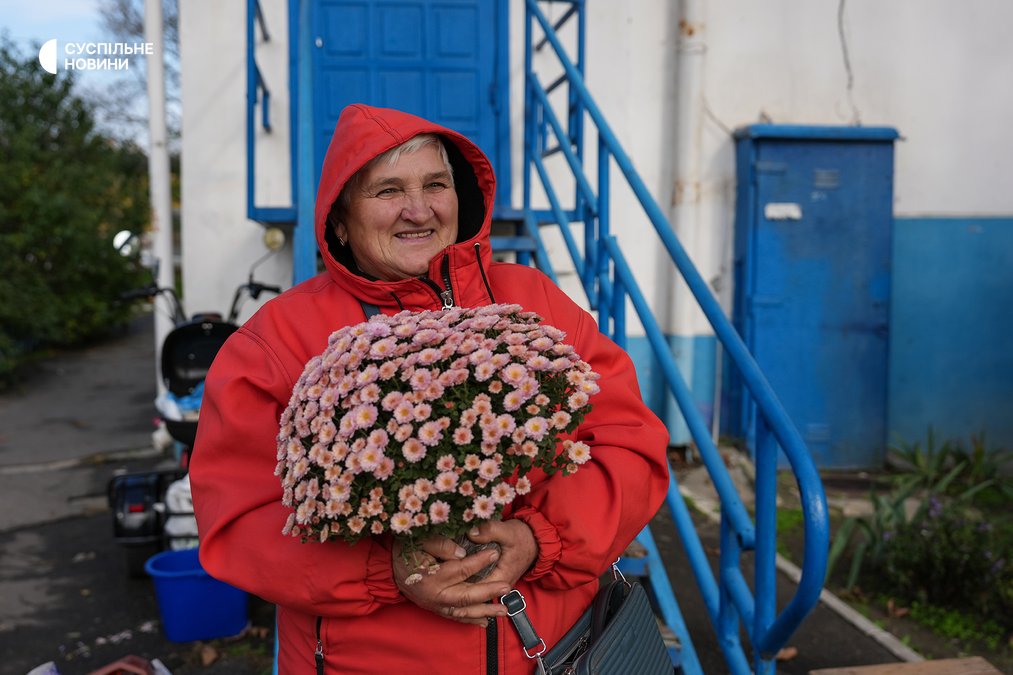 Iryna brings flowers to sell at the market in the Shumenskyi microdistrict from neighbouring Bilozerka; she grows them herself. Kherson, 28 October 2026. Photo: Ivan Antypenko
Despite her damaged home, the woman has no plans to leave the Kherson region.
«There’s a sense of a ceasefire at the moment, but I think things will get even worse later on. Well, we’ll see. My husband and I won’t be leaving, even though our house is already in ruins. The Kherson region feels like home, so we’ll stay here,» said Iryna.
Currently, according to the Ukrainian military, the Russians have been rotating units, building up their forces, clearing roads of mines and attempting to set up crossings over the Dnipro during the ceasefire in the Kherson region.
According to official figures, Ukraine and Russia continue to abide by the agreements to cease hostilities in this area. The local ceasefire is due to end on 1 November.
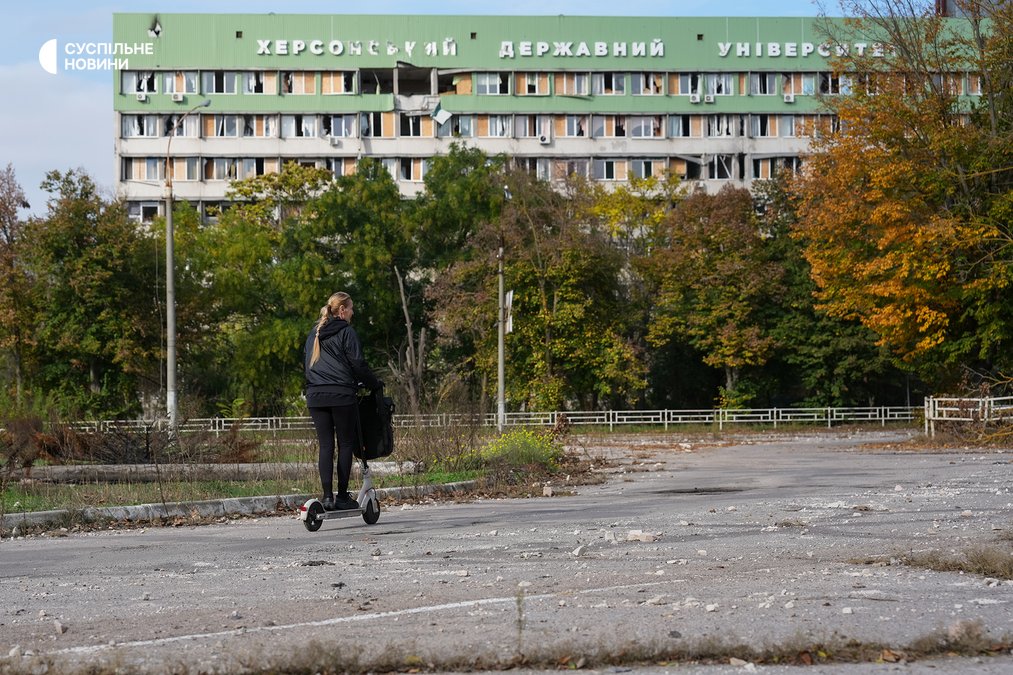 Kherson during the ceasefire in Oleshky. Photo: Ivan Antypenko
 Kherson during the ceasefire in Oleshky. Photo: Ivan Antypenko
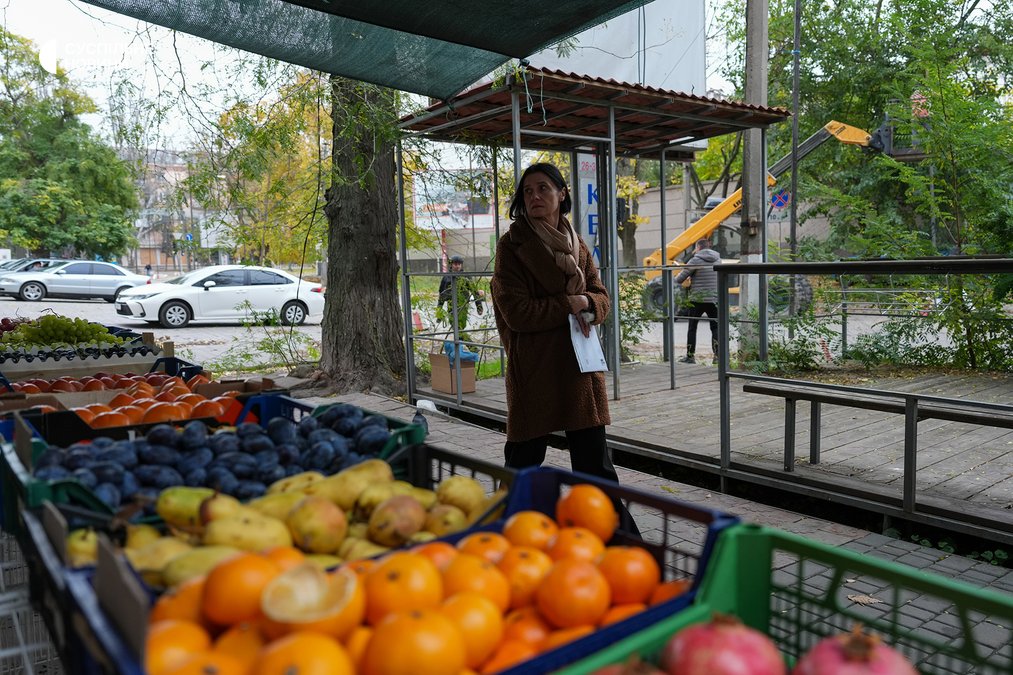 Kherson during the ceasefire in Oleshky. Photo: Ivan Antypenko
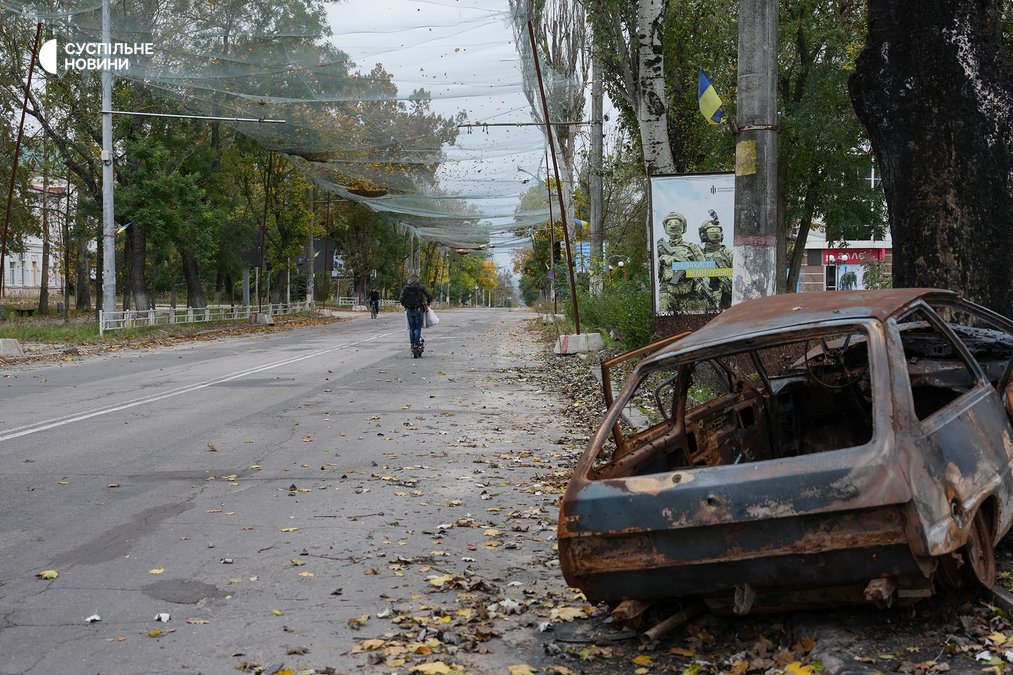 Kherson during the ceasefire in Oleshky. Photo: Ivan Antypenko
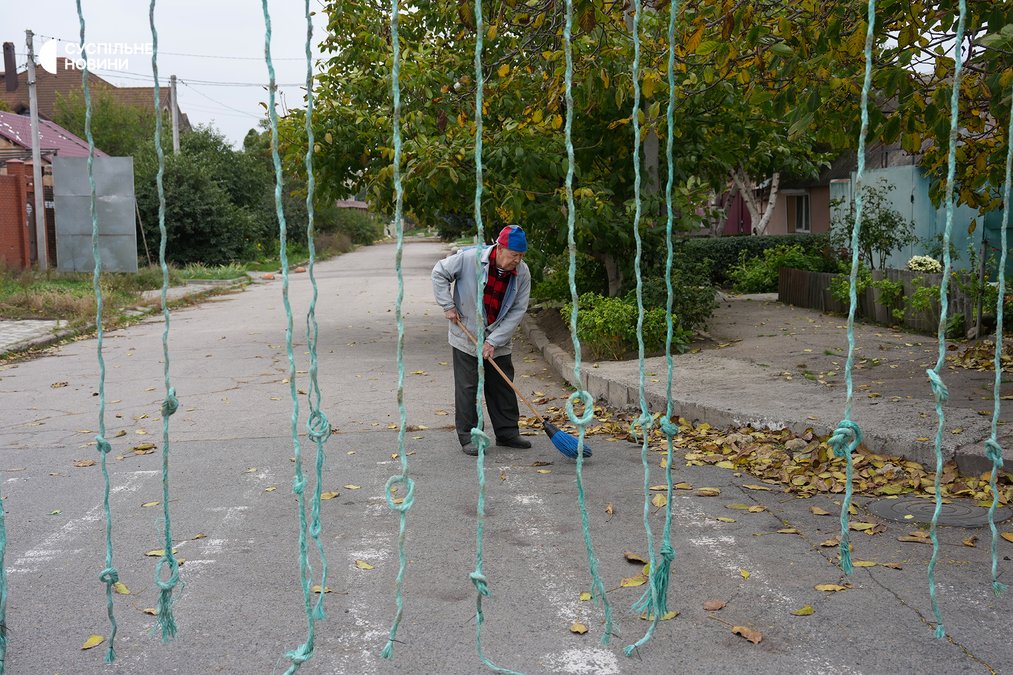 Kherson during the ceasefire in Oleshky. Photo: Ivan Antypenko
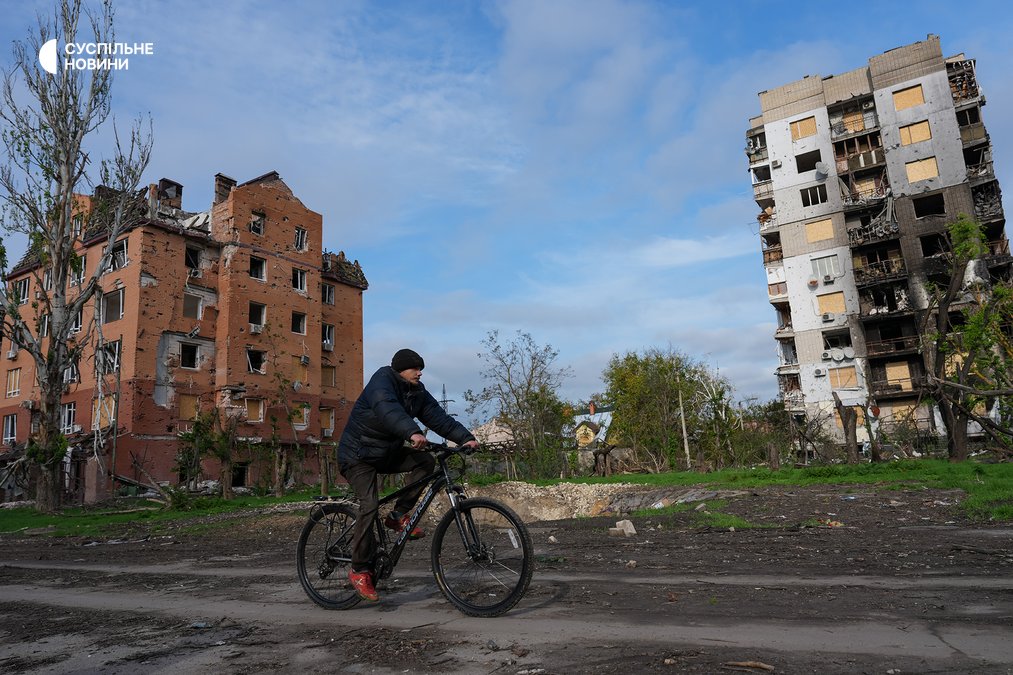 Kherson during the ceasefire in Oleshky. Photo: Ivan Antypenko
On the evening of 30 October, residents of the temporarily occupied town of Oleshky who wished to travel to territory controlled by Ukraine were able to leave the town. Buses were organised for the evacuation, whilst those who chose to stay were supplied with food, water, medicines and hospital equipment. The evacuees are currently on their way.
How the humanitarian mission in Oleshky was prepared
It should be recalled that the temporarily occupied town of Oleshky, on the left bank of the Kherson region, has been facing a difficult humanitarian situation for some time. Due to the fighting and damage to infrastructure, local residents have limited access to food, drinking water and medicines. According to Ukrainian estimates, around two thousand people remained in the town.
NikVesti previously reported that the Ukrainian military had delivered nearly four tonnes of humanitarian aid to the occupied town of Oleshky using drones. The consignment included food, medicines and other essential items.
On 23 October, it emerged that Ukraine and Russia, with the mediation of US First Lady Melania Trump, had agreed to carry out a humanitarian mission in Oleshky. The agreement provided for a temporary ceasefire, the delivery of humanitarian aid and the possibility of evacuating civilians.
At 03:00 on 27 October, a ceasefire came into effect in the Oleshky area. Under the terms of the agreement, it was to last until the end of 1 November to ensure the safe passage of humanitarian convoys and the safe evacuation of people.
On 28 October, Dmytro Lubinets announced that residents of Oleshky would be able to choose for themselves where to go — to territory controlled by Ukraine or to Russia. Those who decided to stay were promised that humanitarian aid would be delivered to them.
On 29 October, the Ombudsman announced that the clearance of designated routes along which the humanitarian convoy was to travel had been completed.
On the morning of 30 October, it emerged that 25 buses with a total capacity of 750 seats and ambulances had been prepared. Particular attention was paid to people with disabilities, elderly residents and those unable to move about independently.
Subsequently, a Ukrainian delegation led by Dmytro Lubinets arrived in Oleshky. At that time, the Ombudsman reported that the ceasefire had now lasted 80 hours without any violations. Residents who had chosen to evacuate to Ukraine would be returning via Russia and Belarus.