
The wind is blowing dust from the sludge fields of an alumina plant near Mykolaiv: environmentalists warn of the danger
-

- Alona KokhanchukReporter
-
 3000 +
Wow! Over 3,000 visitors have viewed this content!
3000 +
Wow! Over 3,000 visitors have viewed this content!
-
 Prefer on Google
-
3K
Wow! Over 3,000 visitors have viewed this content!
-
Prefer on Google
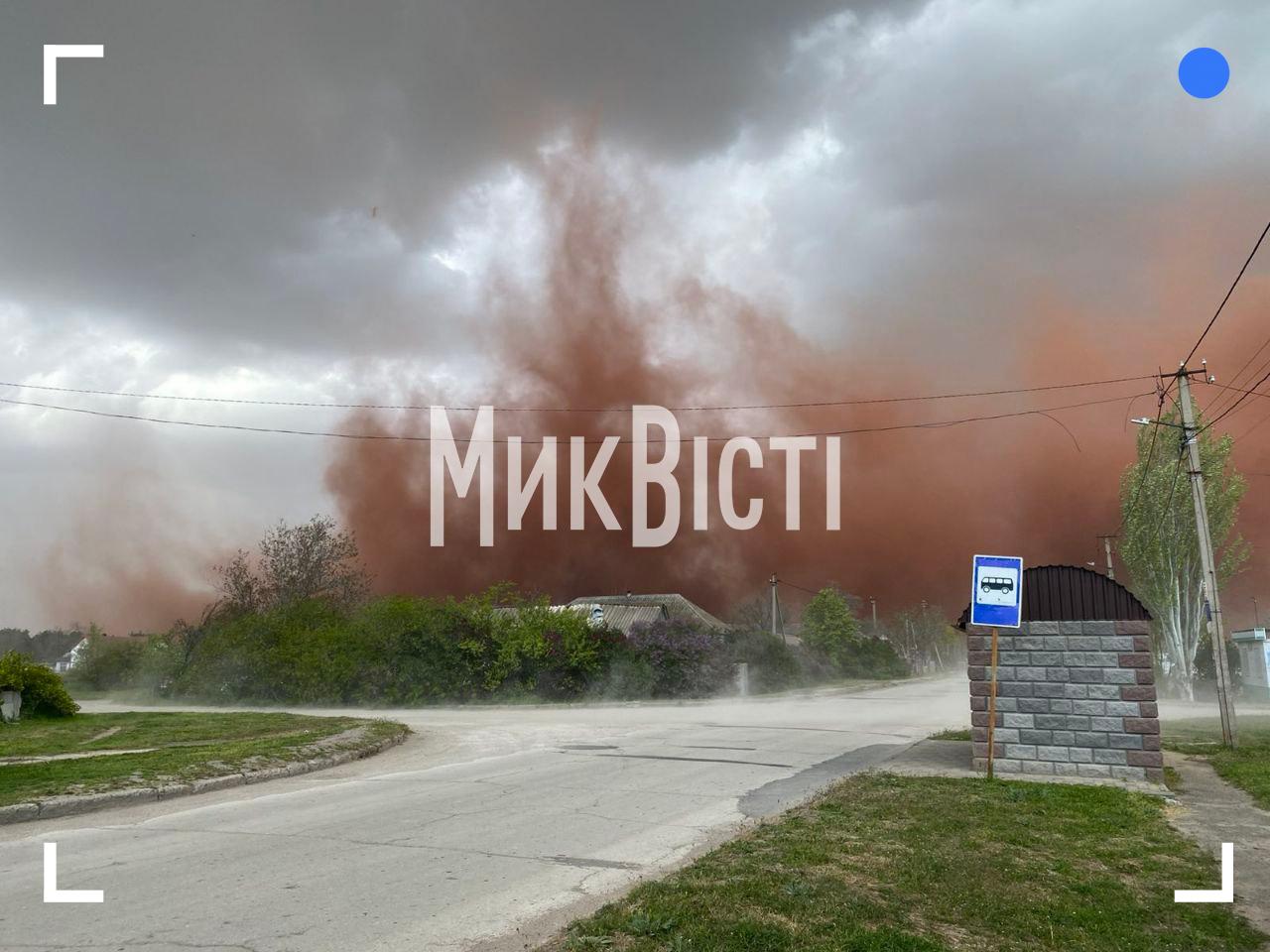 The wind is scattering sludge stored in the sludge ponds of the Mykolaiv Alumina Plant. The photos were sent to the editorial office by readers of NikVesti
Near Mykolaiv, stormy winds are scattering dangerous sludge, stored in the sludge ponds of the «Mykolaiv Alumina Plant», across the surrounding area.
Readers of NikVesti sent the editorial team a video showing clouds of red dust covering the areas surrounding the villages near the sludge fields.
On Sunday, 26 April, wind gusts in the Mykolaiv region reached 15–20 m/s. As a result, dust from the sludge fields of the «Mykolaiv Alumina Plant» began to be carried across the surrounding areas. Red sludge is the waste left over after processing bauxite into alumina. It is reddish dust that easily blows away in dry weather.
In a comment to NikVesti, Nataliia Mahas, Associate Professor at the Department of Ecology and Environmental Protection Technologies at the National University of Shipbuilding, notes that the dust can enter the lungs, the eyes and the skin, so she advises residents of the region who see red dust from the sludge fields outside their windows not to go outside and to close their windows.
«It’s better to close the windows and not walk in the street. The main thing is to prevent it from getting inside. You need to protect your respiratory system,» says the expert.
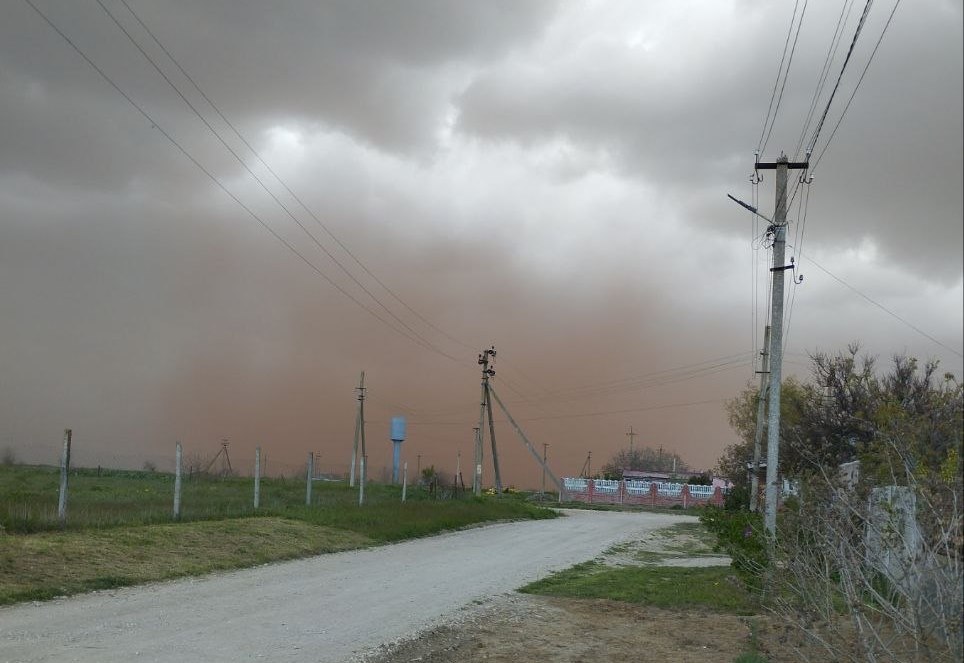 The wind is carrying sludge stored in the sludge ponds of the Mykolaiv Alumina Plant. The photos were sent to the editorial office by readers of NikVesti
In turn, Inna Tymchenko, Associate Professor at the Department of Landscape Architecture and Ecology at Luhansk Taras Shevchenko National University, noted that the dust can cause coughing, a sore throat, stinging eyes or an unpleasant sensation on the skin.
«The sludge affects not only the respiratory tract — it irritates the mucous membranes and the skin. Once the bad weather has passed, exposed surfaces should be washed with water, but try to minimise contact with the dust. It is difficult to protect yourself completely, as it gets into both the soil and the water. According to experts, the sludge contains many different substances, including oxides of aluminium, iron, sodium, titanium, calcium and silicon. It has alkaline properties, so it can cause irritation to the skin and mucous membranes,» said the environmentalist.
To stay safe, experts advise:
- stay indoors if possible during strong winds
- keep windows and doors closed
- if you do go out, cover your nose and mouth with a mask or a cloth
- wash your hands and face upon returning
It was previously reported that the Mykolaiv Alumina Plant, which the state confiscated from Russian oligarch Oleh Derypaska, is unable to ensure the continuous processing of two sludge storage facilities near Mykolaiv due to the loss of its status as a critical infrastructure facility.
Following this, the head of the Mykolaiv Regional Military Administration, Vitalii Kim, announced that he was working to resolve the issue of transferring special machinery required to maintain the two sludge storage facilities to the state-owned alumina plant (MAP).
NikVesti has repeatedly reported on the potential environmental disaster that could arise due to the risks of sludge dust and the leakage of slurry water into the Bug Estuary.
It should be noted that, two years after the nationalisation of the Mykolaiv Alumina Plant, the State Property Fund has done nothing to resolve the environmental issue regarding the sludge.
For more details on the situation at the Mykolaiv Alumina Plant, read the article «Trapped in stagnation: what are the prospects for the Mykolaiv Alumina Plant after nationalisation?».
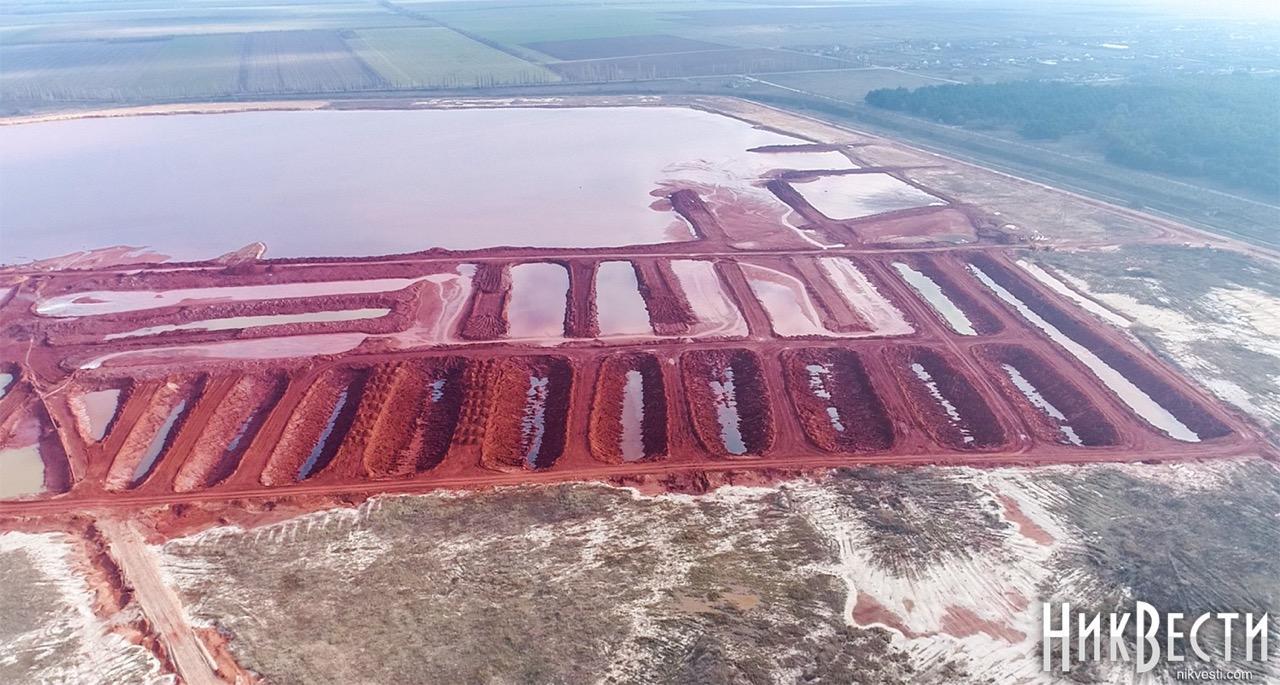 Mykolaiv Alumina Plant, archive photo NikVesti
The Mykolaiv Alumina Plant — a slow-burning environmental «time bomb»
Having been out of operation for five years now, the plant has become far more dangerous to the environment than it was when operating at full capacity. This view was expressed by the head of the State Environmental Inspectorate, Ihor Zubovych, in response to an information request from NikVesti regarding the situation at the Mykolaiv Alumina Plant since the start of the full-scale war.
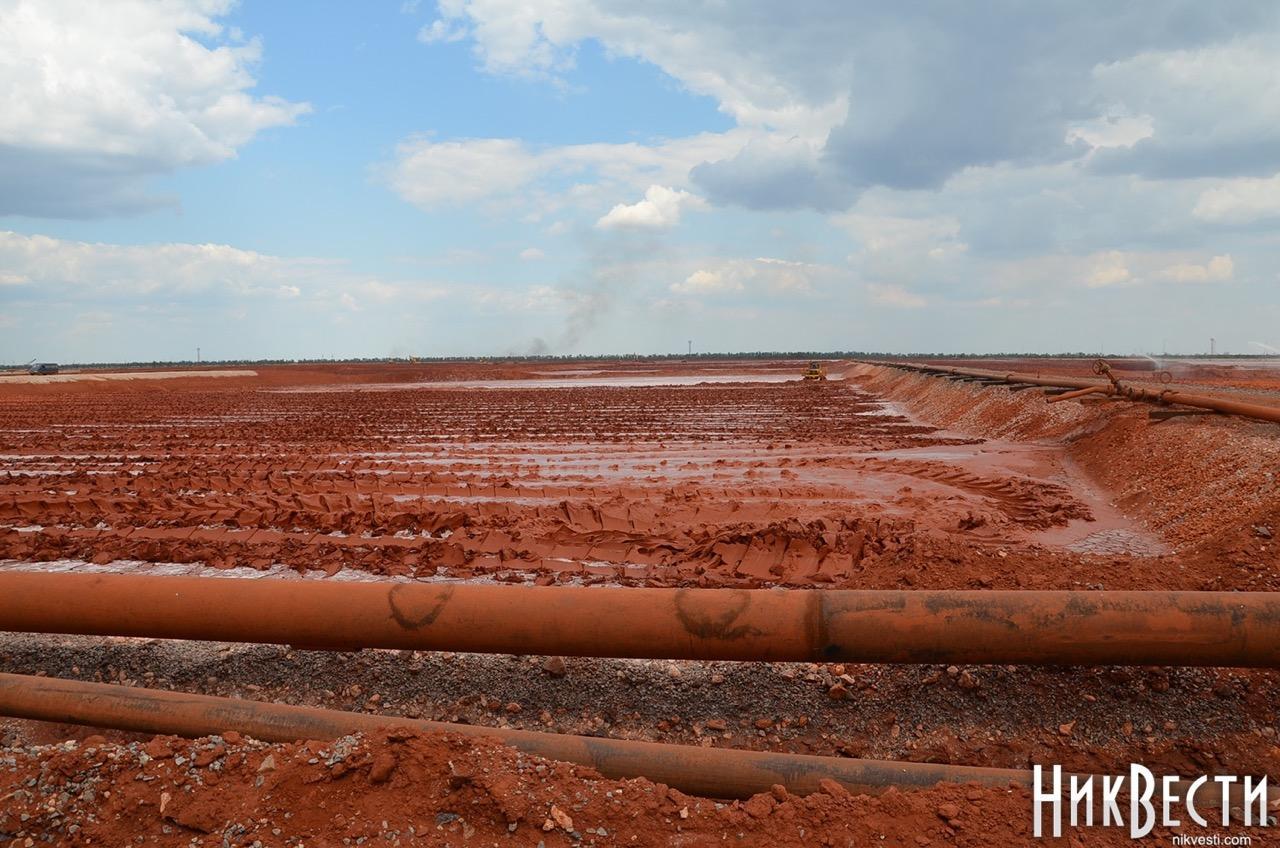 Sludge ponds must be constantly moistened and the water beneath the sludge pumped out to avoid an environmental disaster, archive photo by NikVesti
According to a report that NikVesti received from the State Environmental Inspectorate, on 19 July 2022, the Mykolaiv Alumina Plant reported that, due to shelling in the vicinity of sludge storage facility №2, the processing of the surface of the deposited red sludge in the facility’s basins had been hampered, giving rise to risks of red sludge dust formation.
Consequently, the plant is only treating a third of the area of sludge storage facility №2: «hostilities in the vicinity of sludge storage facility №2 and damage to the dust suppression system’s lines, making their repair difficult; the inability to maintain the dust suppression system due to the freezing of the plant’s accounts. At the same time, maintenance of sludge storage facility №1 is being carried out in full by wetting the area using the company’s own resources».
Twice in August 2022, once in September 2022 and once in January 2023, the Mykolaiv Alumina Plant (MAP) reported that, due to increased wind speeds, uncontrolled dust emissions were observed from one of the slurry ponds, which could have caused contamination of land plots outside their sanitary protection zone. The company then activated the dust suppression system at sludge storage facility №2.
However, due to a shortage of staff, the company was unable to carry out dust suppression work on the slopes of sludge storage facility №1.
Uncontrolled dusting of sludge from the company’s sludge fields continued to occur throughout 2023: in May, July, August (twice) and September (four times).
Until July 2022, maintenance work on the dust suppression systems at sludge storage facility №2, including the restoration of the system following shelling, was carried out by a contractor, which ceased providing services because MAP had not paid them for their work for almost six months.
In the spring of 2023, operations at the company’s sludge storage facilities became critical:
- the level of slurry water in the working basin of sludge storage facility №1 exceeded the permissible limit, posing a risk of pollution to the waters of the Bug Estuary, located 300 metres from the sludge field.
- The accumulation of sludge at sludge storage facility №2 has reached a critical level, with a higher alkalinity than at sludge storage facility №1. Overflowing of this storage facility will lead to the contamination of the agricultural land adjacent to it.
- The problem of significant dusting from the sludge in Field №2 persists, which may cause air pollution. This is due to the fact that a «dry» storage method is used there, which requires constant monitoring and moistening of the surface.
- The sprinkler system for dust suppression (necessary for moistening the sludge), which was in operation at the plant, was damaged and rendered inoperable during the hostilities.
In July 2025, the State Environmental Inspectorate of the South-Western District informed the Minister of Economy and Environment that the waste situation at the Mykolaiv Alumina Plant was deteriorating. Environmentalists warned of the risk of a sludge reservoir breach and pollution of the Bug Estuary.
The State Property Fund plans to put the Mykolaiv Alumina Plant, confiscated from Russian oligarch Oleh Derypaska, up for sale by July 2026. Dmytro Natalukha, head of the State Property Fund, noted that an external investor needs to be sought for the Mykolaiv Alumina Plant who can «afford not to pay too much heed to war risks» and «can guarantee the asset’s security through their flag and citizenship». The head of the State Property Fund named the US and India as potential investors.
The Mykolaiv Alumina Plant (MAP) will be put up for sale together with the company’s slurry ponds, where alumina production waste is stored.


The NGO “Mykolaiv Media Hub” (online media outlet NikVesti) wishes to acknowledge the financial assistance of the European Union through its project “Frontline and Investigative Reporting Media in Ukraine” (FAIR Media Ukraine), implemented by Internews International in partnership with the Media Development Foundation (MDF). The NGO “Mykolaiv Media Hub” (online media outlet NikVesti) retains full editorial independence, and the information presented here does not necessarily reflect the views of the European Union, Internews International, or MDF.