Some residents of Oleshky were unable to leave during the evacuation due to a lack of communication
-

- Mariia KhamitsevychCorrespondent

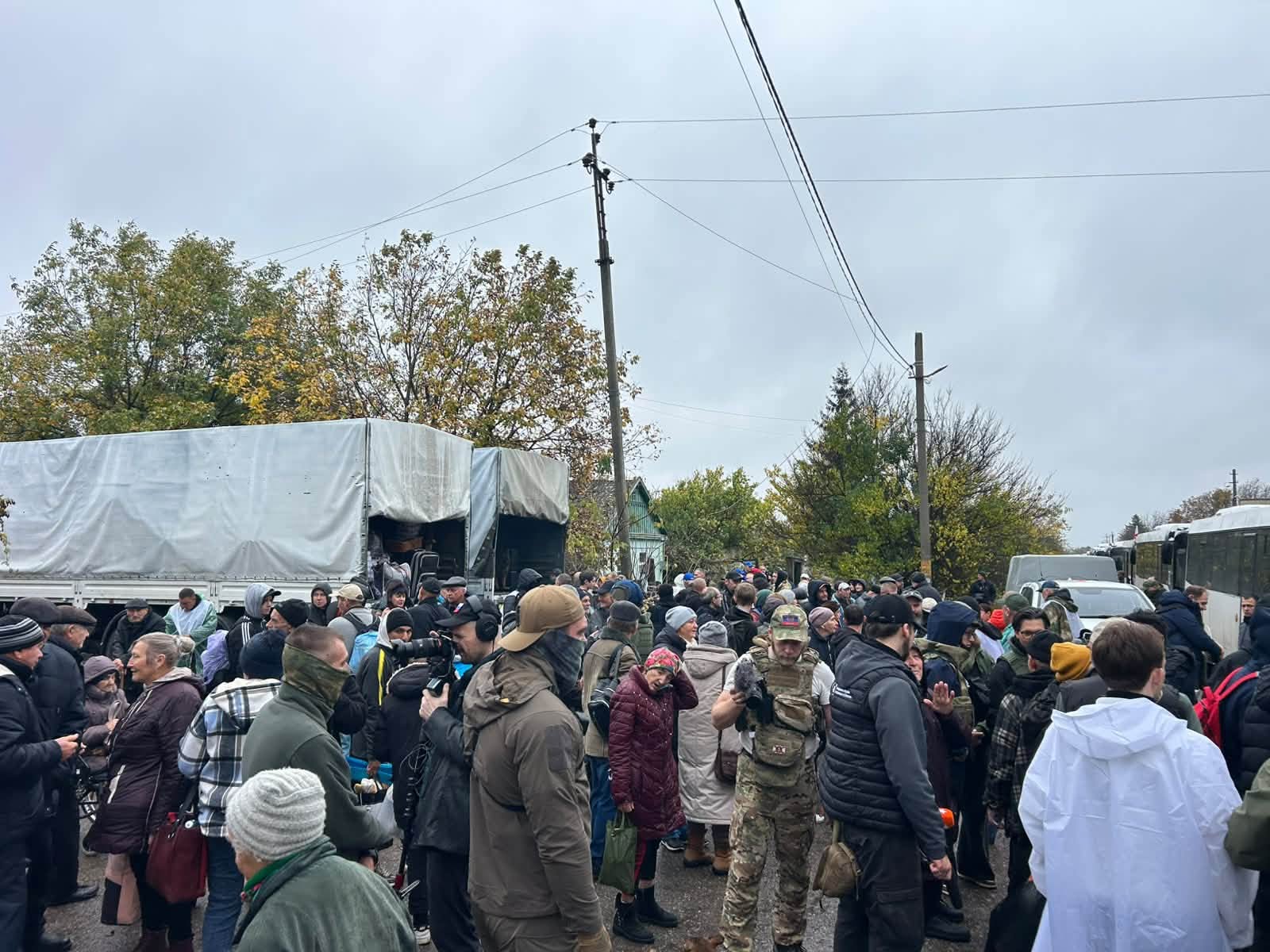 Evacuation from Oleshky on 30 October 2026. Photo: Kirill Budanov
Not all residents of the temporarily occupied town of Oleshky were able to leave during the humanitarian mission. Some were unaware of the evacuation due to a lack of communication, whilst others feared Russian «filtration» or did not believe that the cessation of shelling would allow them to leave the town safely.
Tetiana Hasanenko, head of the Oleshky City Military Administration, spoke about this in an interview with «Ukrinform».
According to her, some people were hiding in basements at the time and had no way of finding out about the evacuation arrangements. Others did not trust the information regarding the temporary ceasefire and were not confident that they would be able to reach territory controlled by Ukraine safely.
«I also know that there are people who, for various reasons, were unable to take advantage of the opportunity to evacuate. We are receiving reports from them. There are those who say they didn’t even know about the evacuation. After all, they were, for example, in basements, cut off from communication. Although there was a ceasefire, people in the community are in such a state that they find it hard to believe anything. It is difficult to assess what is happening around them. After all, there was a long period without any shooting — people could not come to the conclusion that an evacuation was taking place,» said Tetiana Hasanenko.
According to her, some residents were also afraid of going through Russian screening. At the same time, remaining under occupation was dangerous for them, so they decided to leave after all, even though they realised the journey might be a one-way trip.
There were also those who were waiting for evacuation transport at the designated assembly point. In particular, according to Tetyana Hasanenko, people with reduced mobility were unable to reach the assembly point on their own, and the Russian military did not transport them there.
«There are people with limited mobility who were not taken to the assembly point during this evacuation. The assembly point was near the hospital, and people were waiting for the Russians to bring them there,» she noted.
Several women were also waiting by the roadside for the convoy of buses, but left before it arrived, thinking that the transport had already passed by.
Tetyana Gasanenko said that she felt relieved once the evacuation was over, but right up until the last moment she wasn’t sure whether people would be able to leave alive and avoid being subjected to screening. According to her, there are still people in Oleshky who need to be evacuated.
How residents of occupied Oleshky were evacuated
During the humanitarian operation, the Defence Forces evacuated 167 people from the right bank of the Kherson region. According to the General Staff, people were transported via mined and damaged roads.
The last plane carrying residents of occupied Oleshky arrived in Belarus on 31 October. From there, those who decided to return to Ukraine travelled to government-controlled territory and crossed the border in the Chernihiv region.
The oldest person evacuated was 94 years old, and the youngest was just over a year old. People also took their pets with them, including dogs, cats, a parrot and a raccoon.
In addition, a ceasefire lasting more than five days made it possible to repatriate the bodies of those killed in Oleshky. Among them were Ukrainian military personnel and civilians.
