Sienkevych in an interview with Politiken: Danish funds go to Mykolaiv via the UN, which takes up to 25 per cent — this is how the city avoids the risk of corruption
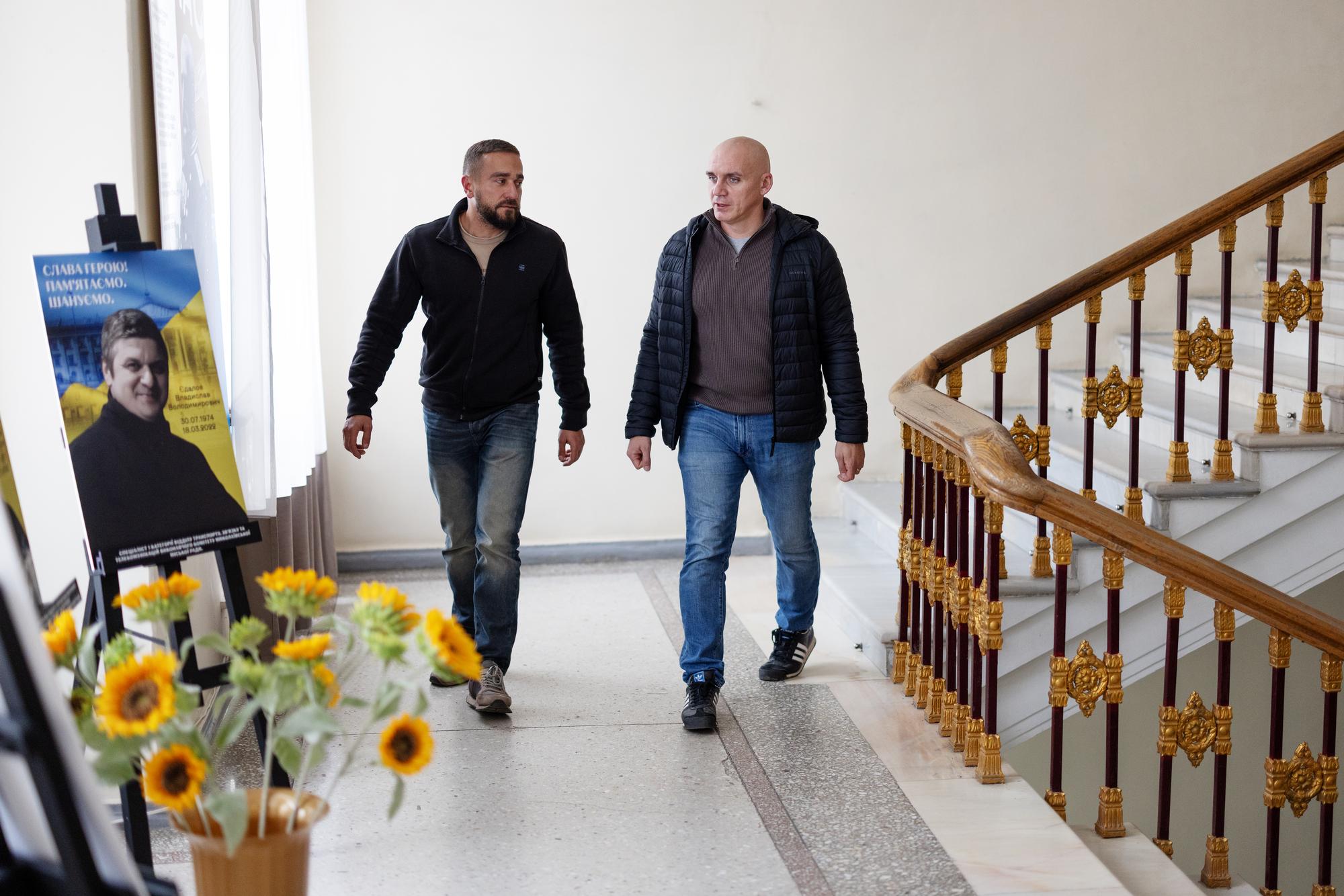 Mykolaiv Mayor Oleksandr Sienkevych (right) and his deputy Serhiy Korenev at the city council. Photo: Thomas Borberg / Politiken
Mykolaiv Mayor Oleksandr Sienkevych says that of the more than 2 billion Danish kroner that Denmark has allocated to Mykolaiv and the region since 2022, not a single one has passed through the city council. According to him, this is how the city protects its partners from the risks of corruption, although part of the funds does go towards administration within UN organisations.
«NikVesti» learnt of this from an article in the Danish newspaper Politiken, written by journalist Jens Bostrup.
According to the publication, the city has a say in which projects the Danish funds will go towards: the priorities are set by the steering committee of the «Mykolaiv–Denmark» partnership. It comprises representatives of the Ukrainian and Danish governments, as well as the region and the city. The committee’s most recent meeting took place on 6 October 2026 in Mykolaiv. However, the funds themselves are channelled through UN organisations, notably the UNDP and UNOPS, as well as through civil society organisations such as the Danish Refugee Council. It is these organisations that carry out the construction and procurement.
| Who | Position |
|---|---|
| Elisabeth Søndergaard Krone | State Secretary for Foreign Policy at the Danish Ministry of Foreign Affairs |
| Anne Kal | Head of the European Neighbourhood Department at the Danish Ministry of Foreign Affairs |
| Ida-Marie Ulbek | First Secretary of the Danish Embassy in Ukraine |
| Viktor Jørgen Blikfelt | Head of the Danish Embassy’s Office in Mykolaiv |
| Signe Røn Langeland Nielsen | Special Adviser to EUNABO |
| Serhiy Derkach | First Deputy Minister for Recovery, Infrastructure and Transport of Ukraine |
| Artem Gusak | Deputy Minister for Communities, Territories and Internally Displaced Persons of Ukraine, responsible for European integration |
| Georgy Reshetilov | Acting Head of the Mykolaiv Regional Military Administration |
| Anton Tabunshchyk | Chairman of the Mykolaiv Regional Council |
| Oleksandr Sienkevych | Mayor of Mykolaiv |
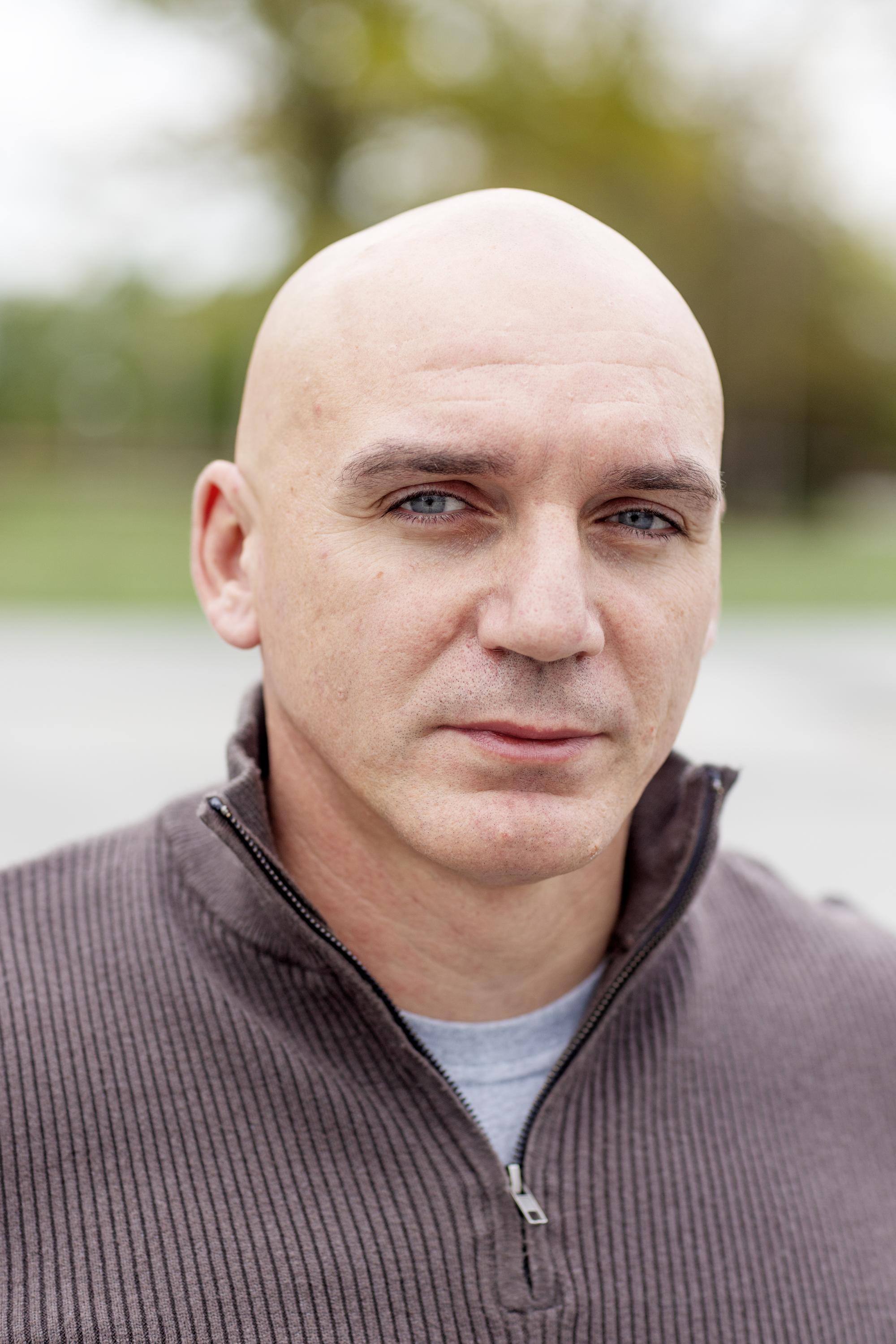 Oleksandr Sienkevych, Mayor of Mykolaiv. Photo: Thomas Borberg / Politiken
«We know that Denmark is a country with zero tolerance for corruption. We don’t want any scandals,» said Oleksandr Sienkevych.
He referred to a TikTok video in which the daughter of the head of a municipal enterprise drove around the city in a Mercedes on her birthday, throwing dollar notes out of the car. According to the mayor, the notes were merely souvenirs, but the video went viral, particularly in Denmark, and raised questions about whether Danish money was being misused.
«That is why we do not want to manage your money; we do not even want to touch it,» said Oleksandr Sienkevych.
At the same time, the mayor acknowledges that this arrangement costs Denmark money. According to a widely cited estimate in Ukraine, as reported by Politiken, between 10 and 15 per cent of funds in public procurement may end up illegally in the pockets of officials or contractors. To avoid this risk, the Danish funds are channelled through the UN. But UN organisations, according to Sienkevych, «usually take a 25 per cent administrative fee», and this money is guaranteed to be spent.
How much does the UN actually take?
The rates that UN organisations retain for their own administration are approved by their executive boards. In July 2026, the UNDP, UNFPA, UNICEF and UN Women published a joint report on how these rates are applied. According to the report, the standard fee deducted from donor contributions for specific programmes is 8 per cent, for thematic funds it is 7 per cent, and when a programme is co-funded by the government of the country where it operates, the fee ranges from 3 per cent.
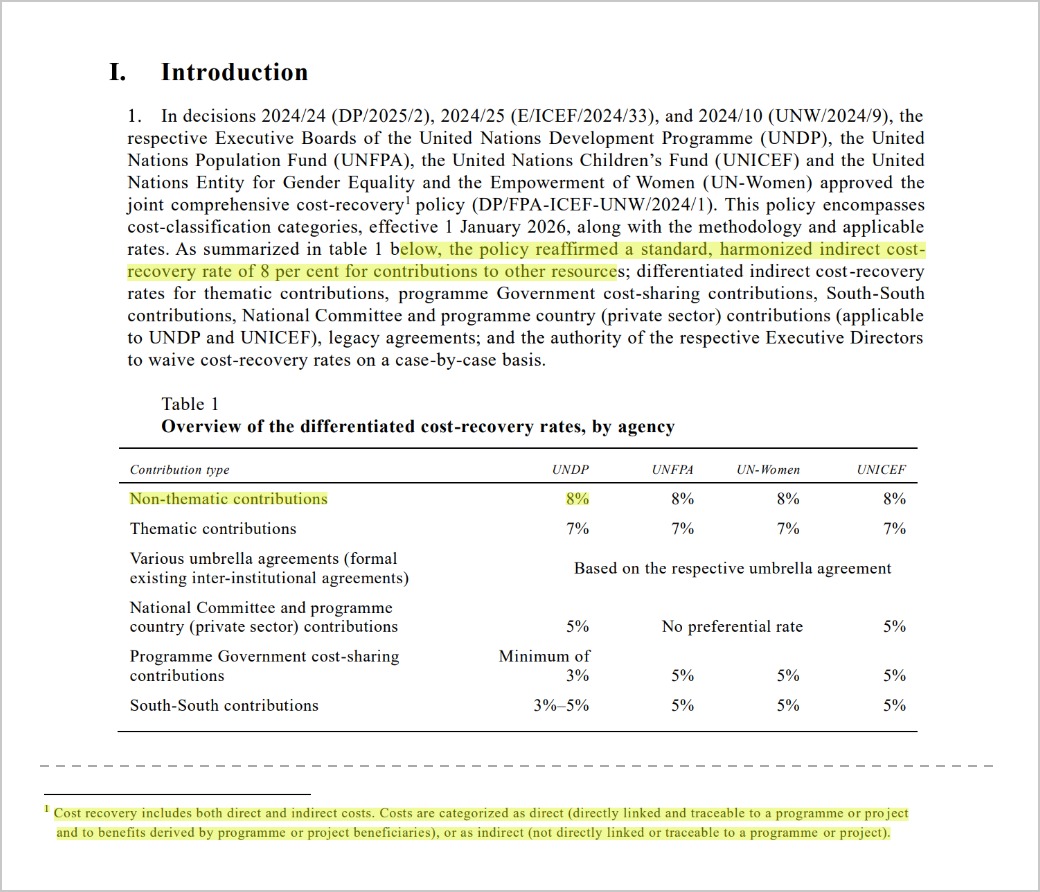 Excerpt from the joint report by UNDP, UNFPA, UNICEF and UN Women on cost recovery, July 2026. Highlighting by «NikVesti»
However, a footnote to the same document explains that costs are divided into direct and indirect costs. The percentage mentioned above covers only indirect costs, i.e. the running costs of the organisation itself.
Direct costs associated with a specific project — such as project team salaries, Inzhenerne supervision, and the preparation and conduct of tenders — are included separately in the project budget. Therefore, the proportion of funds that does not go directly towards construction or procurement may be significantly higher than 8 per cent. The Politiken article does not specify exactly what the mayor meant by 25 per cent.
In practice, the UNDP’s indirect fee is actually even lower than 8 per cent. Due to preferential rates and exemptions, it ranged from 6.23 per cent to 6.48 per cent between 2022 and 2025, averaging 6.37 per cent.
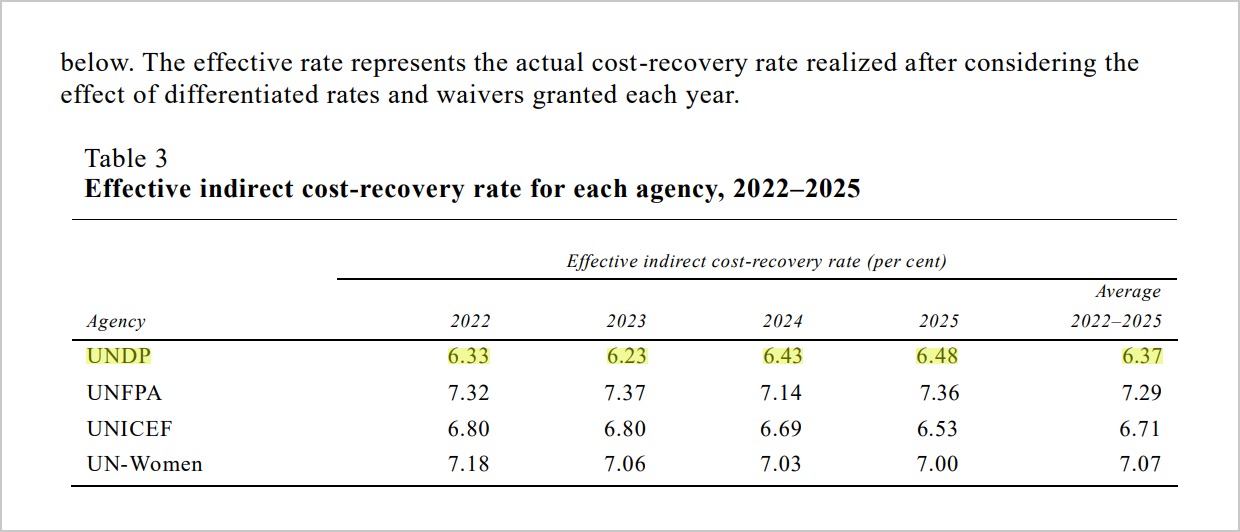 The actual rate of reimbursement for the UNDP’s indirect costs in 2022–2025. Extract from a joint report by UN agencies, July 2026. Highlighting by «NikVesti»
«NikVesti» looked into how the international tenders through which Danish projects are implemented work, and what the average resident might see in them, back in March. Jakob Hansen said at the time: «We never hand over money directly to the Ukrainian side.»
Viktor Jørgen Blikfelt, head of the Danish Ministry of Foreign Affairs’ office in Mykolaiv, declined to comment on the amount of the UN levy. According to him, the main priority for Denmark is to know exactly where the money is going and to track every krone. He also said that, in the long term, Denmark wants to work through local authorities to avoid creating parallel institutions, although it is difficult to estimate how long this will take.
Sienkevych also told the publication about the supervisory board, which limits his powers. He explained that, for example, he can no longer appoint a friend or relative as director of the water utility: the board ensures that such posts are filled through an open competition.
What Denmark is funding in Mykolaiv
Denmark is the largest international donor to the Mykolaiv region. Here are a few projects it is funding in Mykolaiv itself through UN organisations and other partners:
- the reconstruction of the Mykolaiv Arkas Lyceum, which was destroyed by a Russian missile in 2022: the work is being carried out by the United Nations Office for Project Services (UNOPS); the restoration of the façade, roof and windows alone cost around 41 million hryvnias, with completion planned for 2027;
- the replacement of around 20 kilometres of worn-out water pipes and the reconstruction of the water main on Soborna Street — via the Danish Refugee Council (DRC);
- the underground shelter at Gymnasium No. 61, which is being built by UNOPS;
- the refurbishment of the rehabilitation ward at City Hospital No. 3, carried out by UNOPS;
- a 9.9 MW solar power station for the city’s municipal facilities — via the Nordic Environment Finance Corporation (NEFCO);
- the design of 208 social housing flats in the Pivnichnyi neighbourhood, funded by the Kingdom of Denmark’s Ukraine Reconstruction Fund.
It should be recalled that at a staff meeting on 9 November, Deputy Mayor Serhiy Korenev reported that over the past four years, Mykolaiv had attracted 146.5 million euros in international aid, or around 7.5 billion hryvnias. Sienkevych then instructed that a list of foreign partners be compiled to demonstrate which projects had been successfully implemented using these funds.
This text was machine-translated and has not yet been reviewed by our editors. The original is in Ukrainian. Learn more

You read this text for free. To keep it that way, the newsroom's work is supported by members of the NikVesti Club.
Cancel any time