Mykolaiv built the shortfall in culture workers’ salaries into its 2026 budget from the start
- Kateryna Sereda
-
•
-
21:23, 23 November, 2026
Iryna Bondarenko, former head of the cultural heritage department at the Mykolaiv City Council’s culture department, believes that the current shortage of funds for cultural workers’ salaries is a consequence of how the city authorities approved the 2026 budget. Statements by the mayor and city council documents compiled by «NikVesti» show that the city council was aware as early as December 2025 that there would not be enough money for protected expenditure items, including salaries.
Iryna Bondarenko wrote about this in a comment under a «NikVesti» post on Facebook regarding the mayor’s meeting with cultural workers.
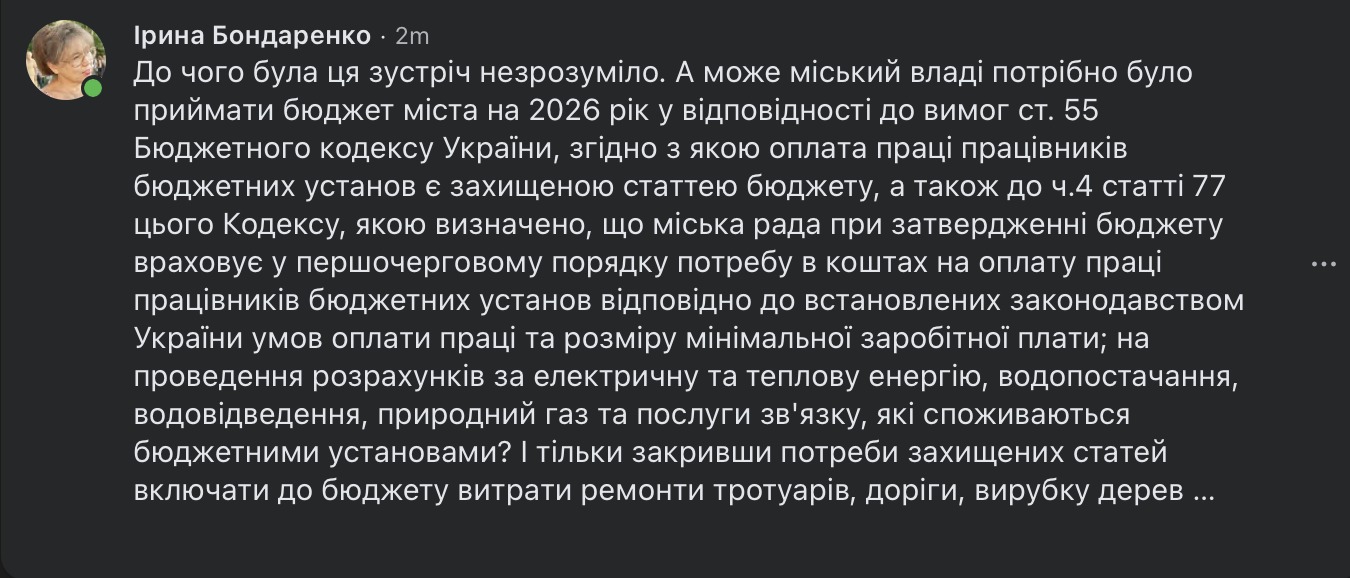 Iryna Bondarenko’s comment under the «NikVesti» post. Screenshot from Facebook
On 23 November, Oleksandr Sienkevych announced that, of the more than 20 million hryvnias needed to pay cultural workers’ salaries by the end of the year, the city had managed to secure only 5 million. On the same day, he stated that he had appealed to President Volodymyr Zelenskyy, as the problem «cannot be resolved at the level at which it arose».
Iryna Bondarenko disagrees with this explanation and points out that the Budget Code requires the city council to act.
— It is unclear what the point of this meeting was. Or perhaps the city authorities should have adopted the city budget for 2026 in accordance with the requirements of Article 55 of the Budget Code of Ukraine, under which the remuneration of employees of budgetary institutions is a protected budget item, as well as Part 4 of Article 77 of this Code […]? And only after covering the needs of these protected budget items should expenditure on repairs to pavements, roads, tree felling, etc., be included in the budget,» wrote Iryna Bondarenko.
What the Budget Code requires
Article 55 of the Budget Code classifies the remuneration of employees of budgetary institutions and related contributions as protected expenditure under the general fund. The amount allocated for these items cannot be altered when approved budgetary allocations are reduced.
Part Four of Article 77 obliges city councils, when approving the budget, to give priority to the funding required for the remuneration of staff at public sector institutions — in accordance with the established terms of remuneration and the minimum wage. The same article requires the local budget to be approved by 25 December. The Mykolaiv City Council adopted the budget for 2026 on 30 December 2025.
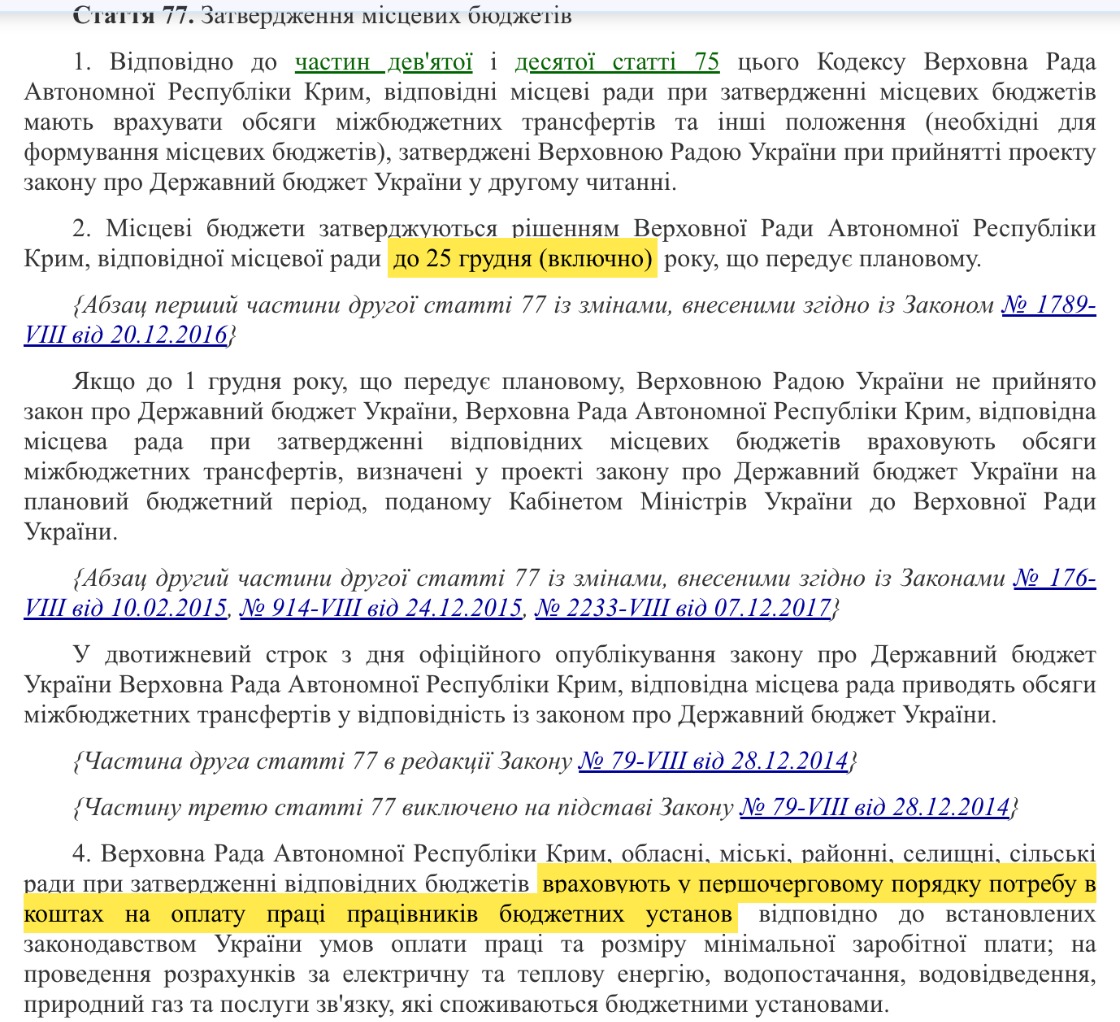 Article 77 of the Budget Code of Ukraine. Screenshot from the Verkhovna Rada website
The mayor knew there would not be enough money
On 29 December 2025, the day before the budget was adopted, Oleksandr Sienkevych stated at a meeting of the standing committee that the projected revenue would not be sufficient to fund 21.5 per cent of protected and priority expenditure.
«In other words, the amount currently proposed for consideration by the budget committee actually covers 78.5 per cent of protected and priority expenditure for next year,» said Oleksandr Sienkevych.
The following day, ahead of the session at which the budget was approved, the mayor said that the allocated funds would be sufficient for approximately three quarters plus a little more.
— We will reduce our consumption of utility services and save on budget funds. But even under these conditions, this money will last for about three quarters plus a bit of next year, — stated Oleksandr Sienkevych.
In the city council’s appeal to the government, which was read out that same day, it is stated that expenditure on public sector wages was calculated based on the actual salaries paid in 2025, without indexation, and did not take into account the increase in the minimum wage from 1 January 2026.
At the same time, the supporting documents for the draft budget resolution for 2026, published on the city council’s website, it is stated that expenditure on wages and related payments is provided for «in full», taking into account a minimum wage of 8,647 hryvnias.
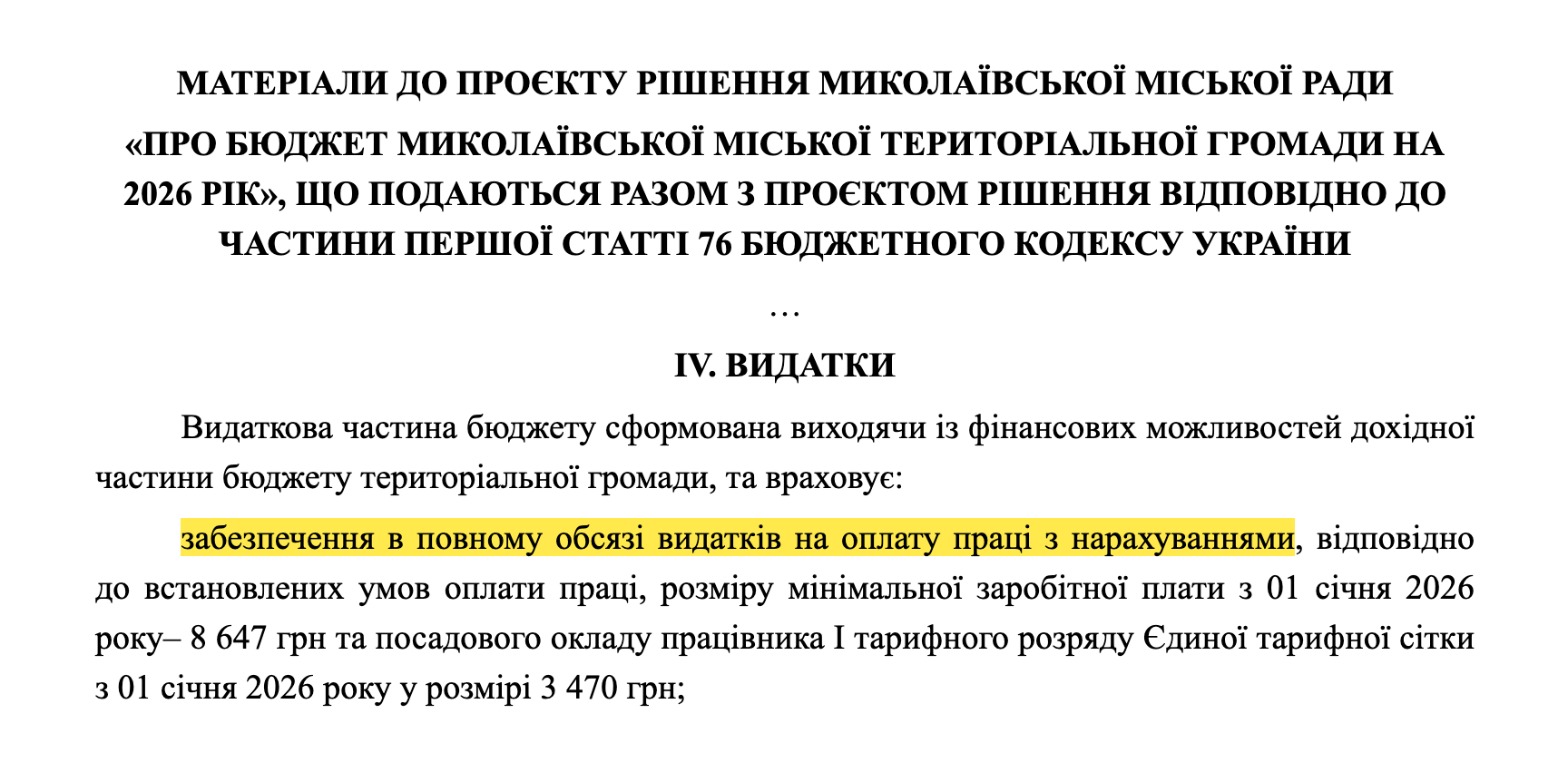 Excerpt from the supporting documents for the draft budget resolution for Mykolaiv for 2026
However, the Culture Department’s budget request for 2026–2028, published on the department’s website, shows that less money has been allocated to the sector for 2026 than last year, including from the general fund, which is used to pay salaries. Meanwhile, the minimum wage has risen from 8,000 to 8,647 hryvnias with effect from 1 January 2026.
| Item | 2025 (approved), million UAH | 2026 (target), million UAH | Change |
|---|---|---|---|
| Total for administration | 231.4 | 200.0 | −13.6% |
| General fund (from which salaries are paid) | 222.0 | 190.9 | −14.0% |
| Libraries, general collection | 42.4 | 35.0 | −17.3% |
| Cultural centres and halls, general fund | 40.3 | 33.8 | −16.1% |
| Art schools, general fund | 69.0 | 56.6 | −18.0% |
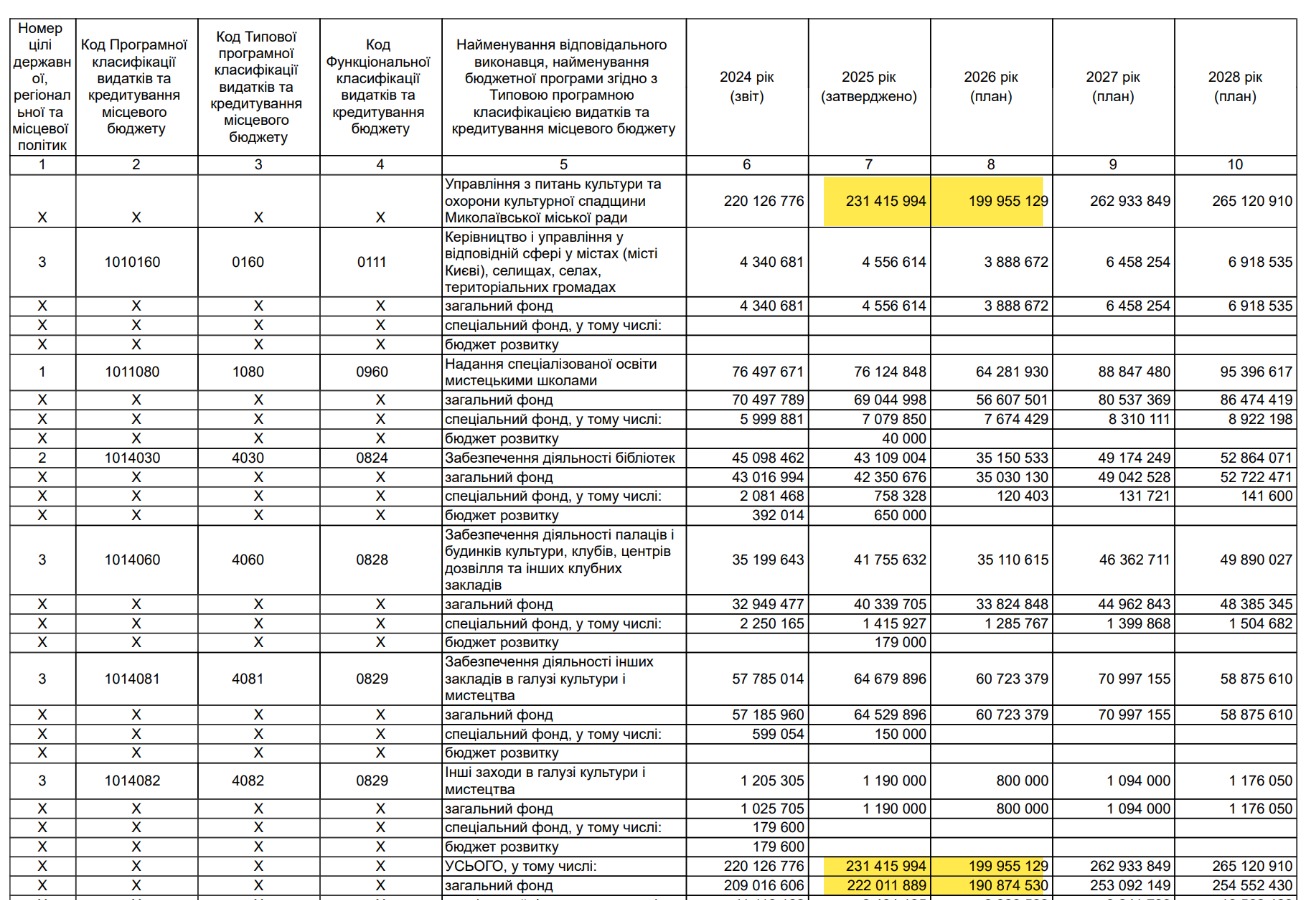 Expenditure by the Department of Culture in 2025 and 2026. Screenshot of the budget request from the Department’s website
Funding for culture lasted until autumn
There had been talk of a funding shortfall in the sector throughout the year. In April, Yurii Liubarov, head of the Department of Culture, reported that the sector’s budget for 2026 was almost a third smaller than last year’s, and that cultural institutions were short of around 20 million hryvnias for salaries by the end of the year.
In July, Volodymyr Topchiy, director of the Mykolaiv Zoo, warned at a meeting of the budget committee that, from 1 September, there would be «absolutely nothing» allocated for salaries in cultural institutions. In October, Yurii Liubarov estimated the shortfall for salaries and utility bills at 26 million hryvnias.
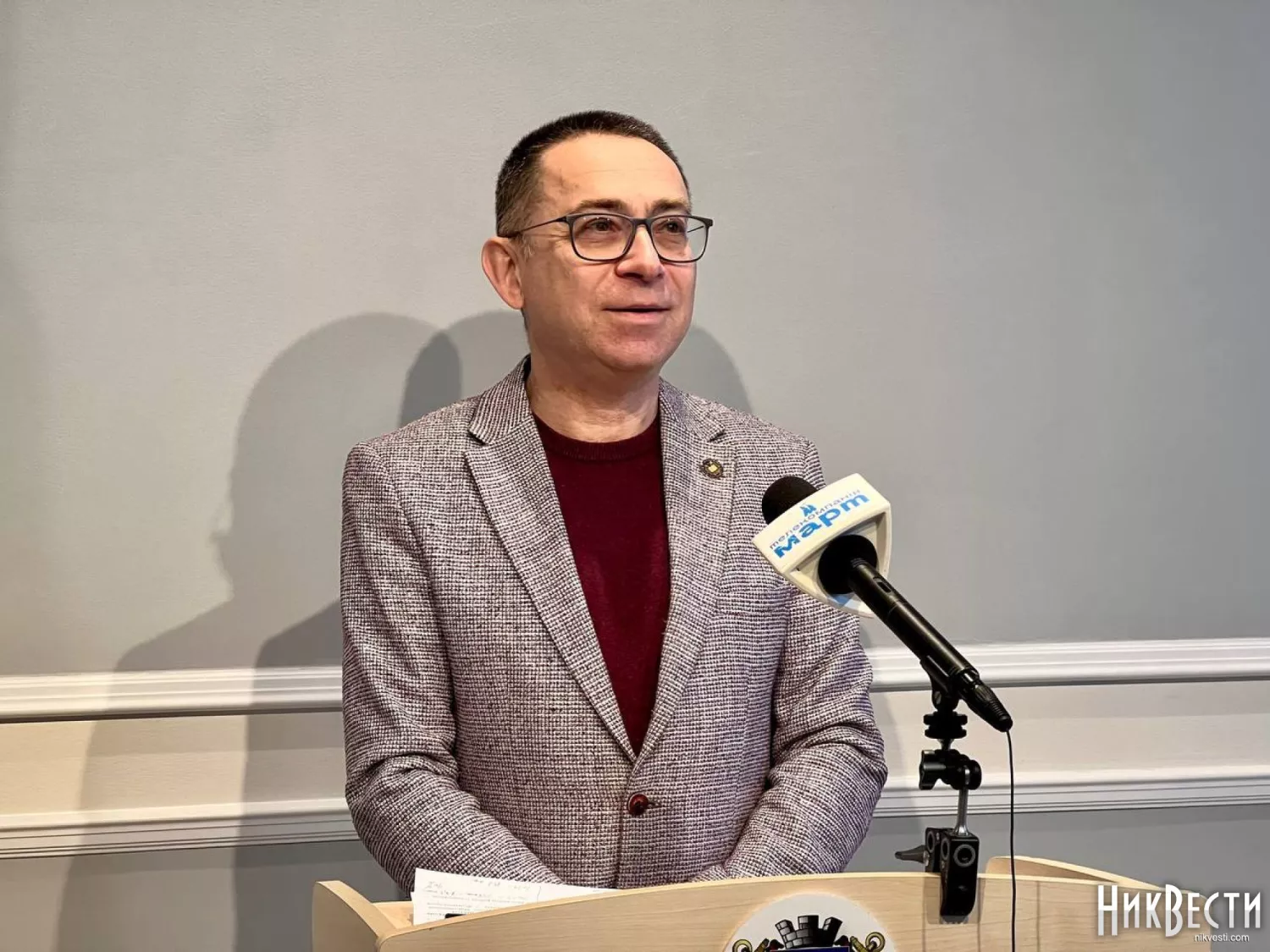 Yurii Liubarov, Head of the Culture Department at Mykolaiv City Council. Photo: NikVesti
 Volodymyr Topchiy, Director of the Mykolaiv Zoo. Photo: Mykolaiv City Council
On 23 November, the mayor clarified that 9 million 73 thousand hryvnias were needed for November’s salaries, and a further 12 million or so for December. In other words, there is currently a shortfall specifically for the last two months of the year.
Money was found for pavements
A similar situation arose in 2025. Back then, in early November, budget managers were instructed to suspend all payments, except for protected items, as there was not enough money for salaries and utility bills until the end of the year. Fedir Panchenko, Chair of the Planning and Budget Committee, explained that the requirement for salaries is calculated for 12 months, whilst the budget allocation is set at a lower level.
At the same time, in December 2025, the Housing and Communal Services Department transferred 11.28 million hryvnias to a contractor building a pavement along Heroes of Ukraine Avenue in Fedir Panchenko’s constituency. Four of the seven payments were made on 24 December. The total cost of this pavement is over 18 million hryvnias.
According to a letter from the city council to the government, the 2026 budget allocates around 300 million hryvnias for capital expenditure. And on 20 November, whilst the city was seeking funds to pay the salaries of cultural workers, the Central District Administration selected a contractor to repair the pavement on Odesa Highway for 1.78 million hryvnias.
The city council attributes the budget deficit primarily to the transfer of personal income tax (PIT) from military personnel’s pay to the state budget, which has caused the city to lose around a quarter of its revenue from this tax. However, these changes were introduced long before the 2026 budget was adopted. The restrictions imposed by the Treasury, which had been withholding part of local authorities’ payments since September, did not apply to salaries and related deductions.
«NikVesti» sent an enquiry to the Mykolaiv City Council and its finance department. The editorial team asked how much funding had been allocated in the 2026 budget for the salaries of staff at cultural institutions and for how many months this would be sufficient, why the budget documents state that expenditure on salaries is fully covered, how much funding was allocated to capital expenditure, and how the city council complied with the requirements of Part 4 of Article 77 of the Budget Code. We will publish the response once we have received it.
This text was machine-translated and has not yet been reviewed by our editors. The original is in Ukrainian. Learn more