What Soborna Street in Mykolaiv used to look like: historical photos
- Yuliia Boichenko
-
•
-
11:07, 11 April, 2026
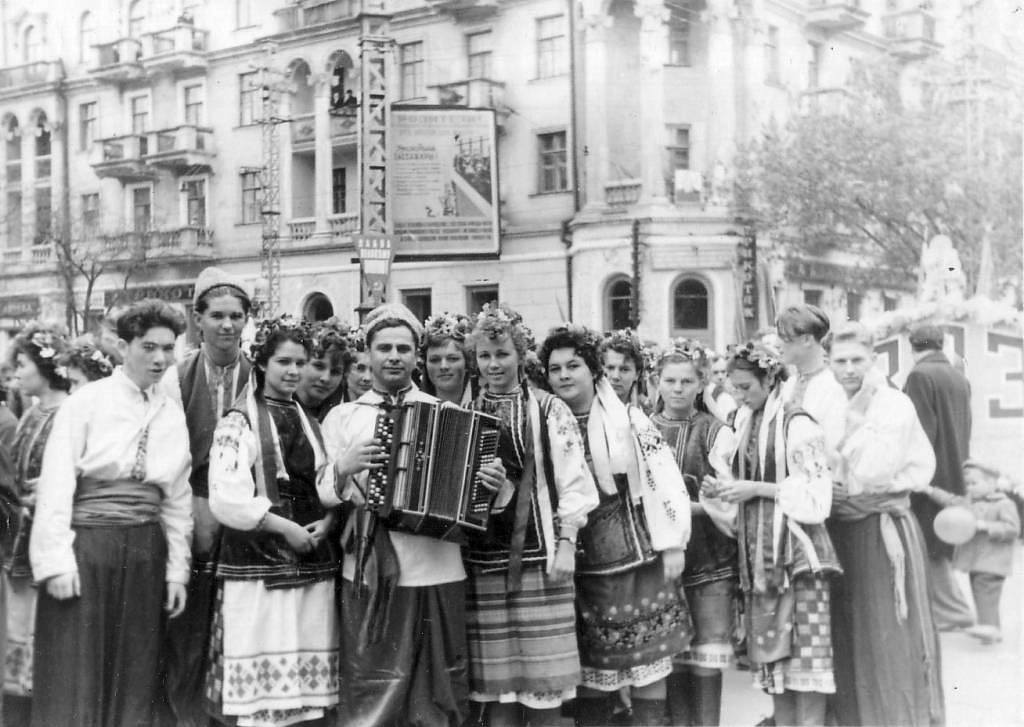 The Mykolaiv Youth Festival on Soborna Street (then known as Sovetskaya Street), with the building at 64a Shevchenko Street in the background, 1957. Photo: Southern Ukraine Through the Ages
A series of unique archive photographs depicting campaign events held over the decades on Mykolaiv’s central pedestrian street, Soborna, has been published on social media.
The photos were shared on the Facebook group «Southern Ukraine Through the Ages».
The length of Ukraine’s longest pedestrian street is 1.5 kilometres. However, until the mid-20th century, it was used by public transport, historian Ihor Nikolaiev told Suspilne.
Horse-drawn transport — «konkas» — ran along the street, followed by trams, until the mid-20th century.
«The decision to remove the tram tracks was taken in 1954. And these tracks were moved to Potemkinska Street (now Mark Kropyvnytskyi Street, — note),» said the historian.
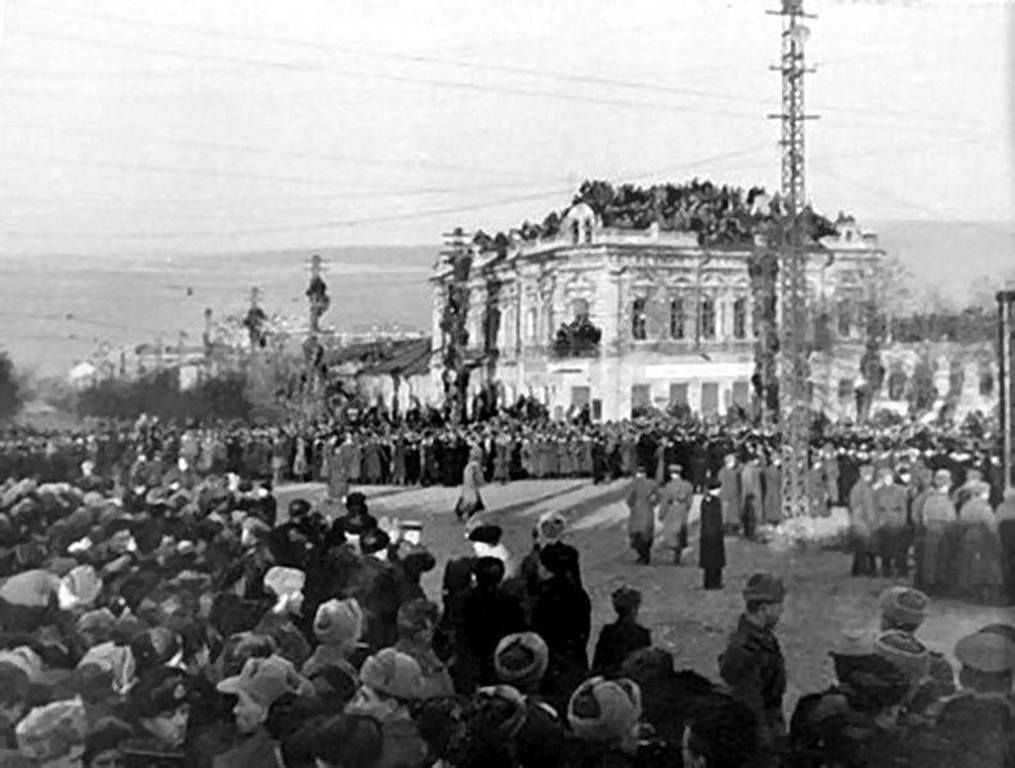
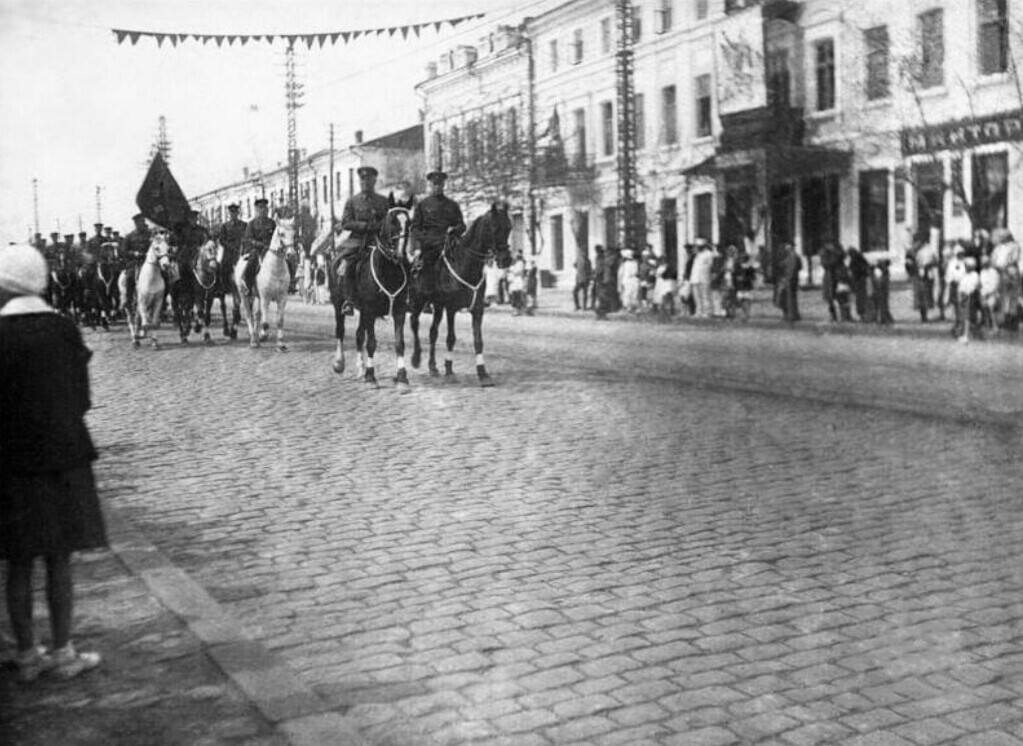 A military parade on Soborna Street (then Soviet Street), near the walls of the Central Hotel. Photo: Southern Ukraine Through the Ages
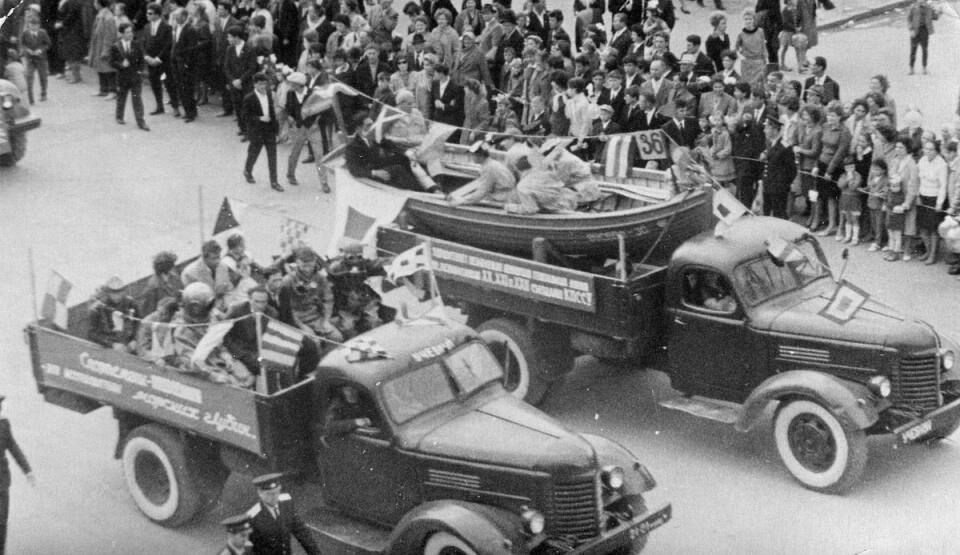 The Mykolaiv Maritime School at the parade on 7 November 1964. Photo: Southern Ukraine Through the Ages
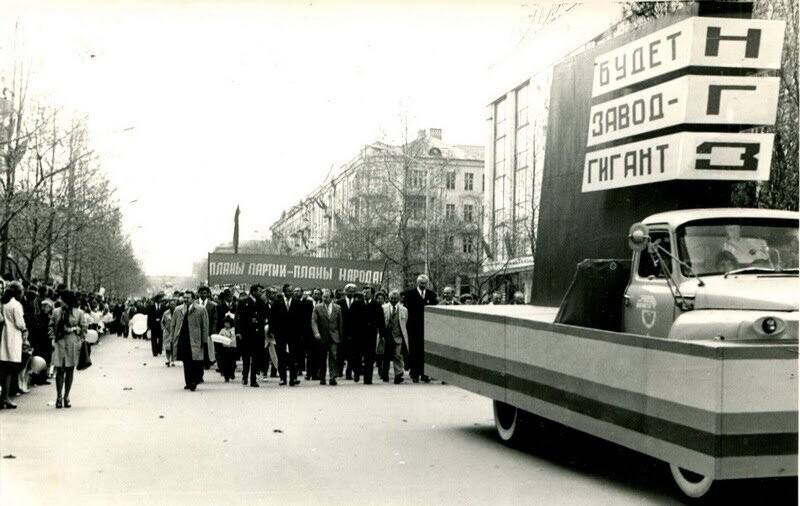 A column of builders from the Mykolaiv Alumina Plant. Photo: Southern Ukraine Through the Ages
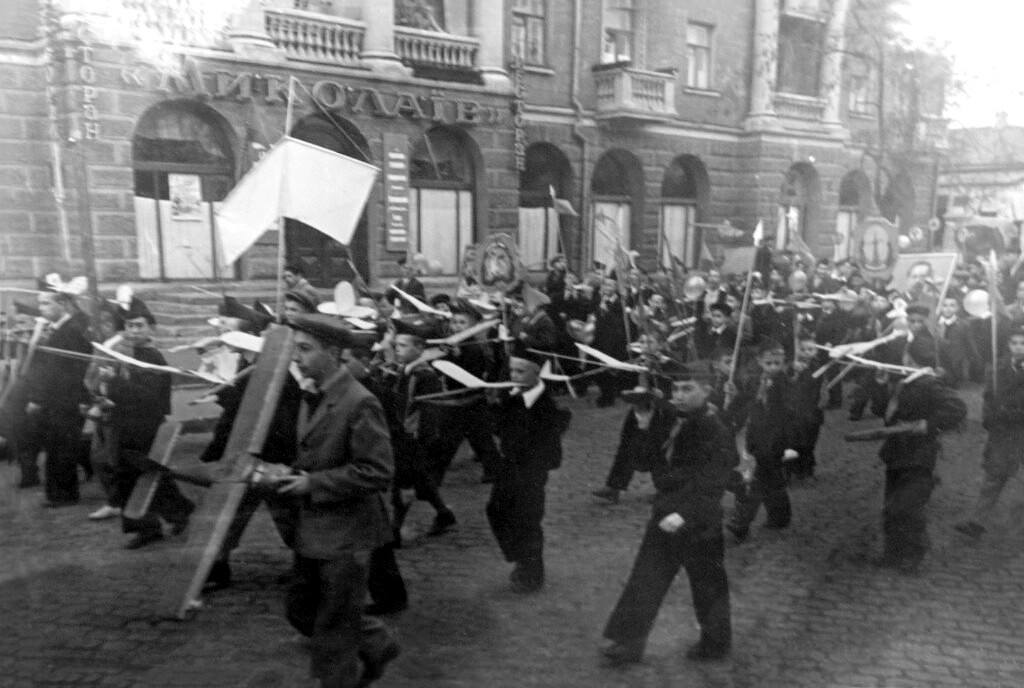 A column of young technicians marching from Velyka Morska Street onto Soborna Street. Photo: Southern Ukraine Through the Ages
Carts and horses were also banned from using it. Thus, by the end of 1954, Soborna Street had become entirely pedestrianised, explained Kateryna Barbaianova, senior research fellow at the regional local history museum.
«We have not yet found any official documented reasons as to why this was the case. Like many other researchers, I believe it was a general trend,» says Kateryna Barbaianova.
It was the post-war period — after the Second World War: all cities were being rebuilt and new ones constructed, notes the museum employee.
«As a rule, central streets were often made pedestrianised,» she noted.
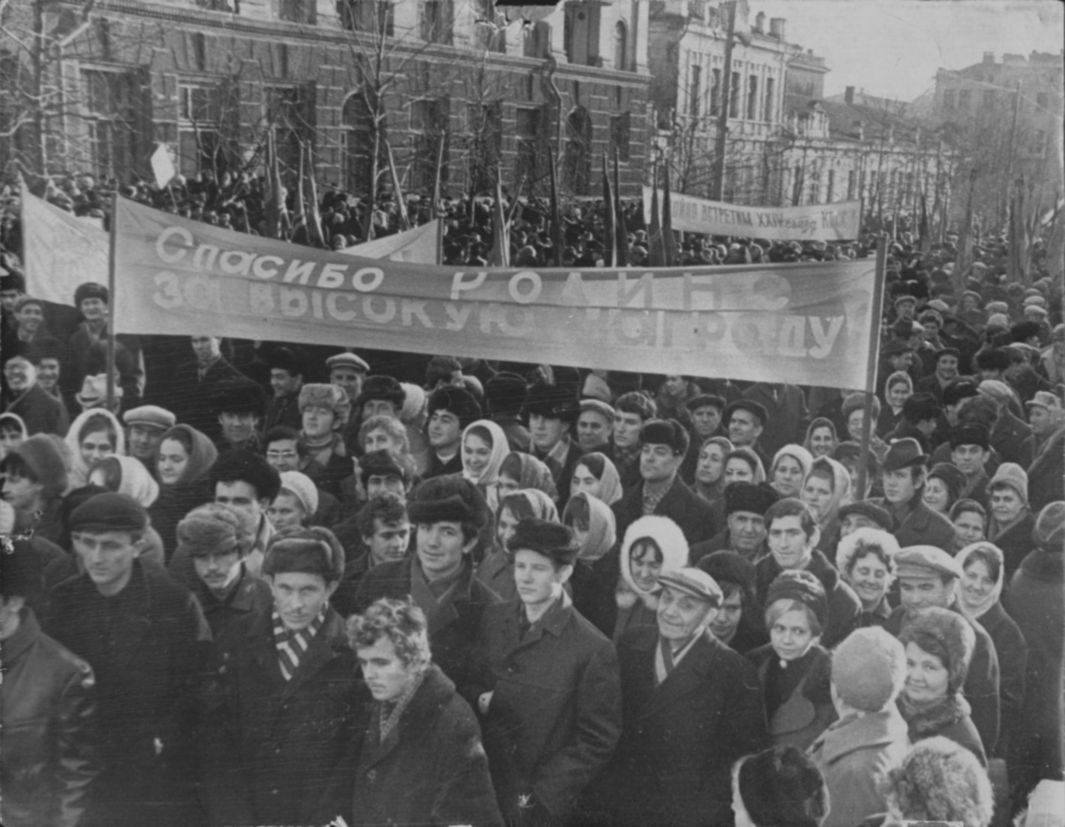 A column at the finish line before the exit onto the square, photo: Southern Ukraine Through the Ages
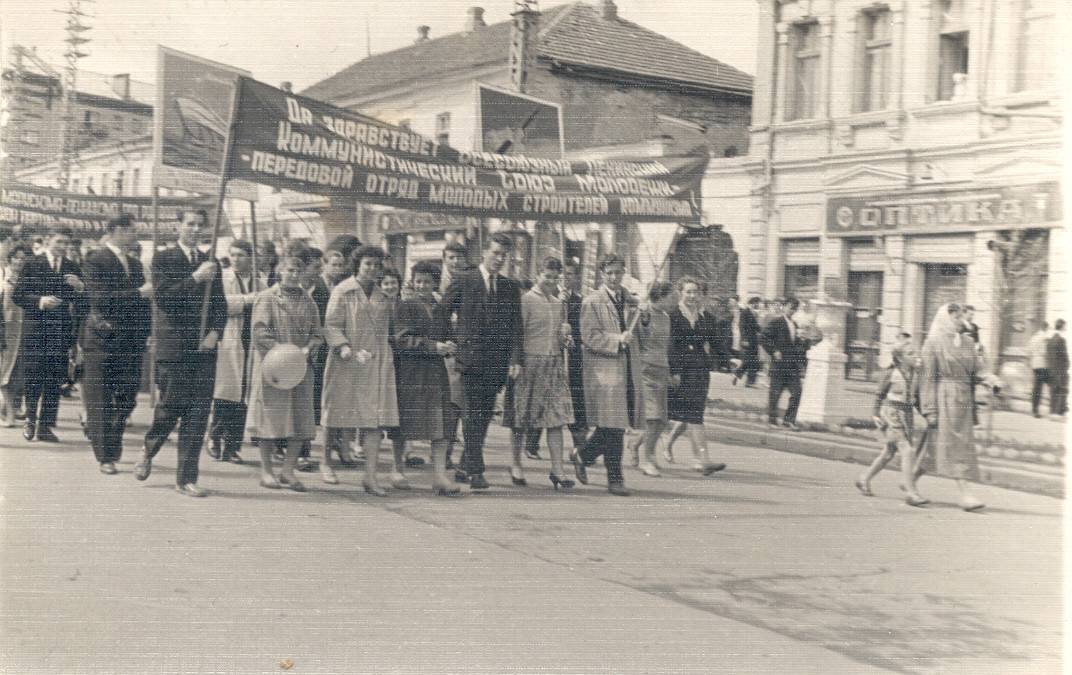 Near the Central Hotel, 1962. Photo: Southern Ukraine Through the Ages
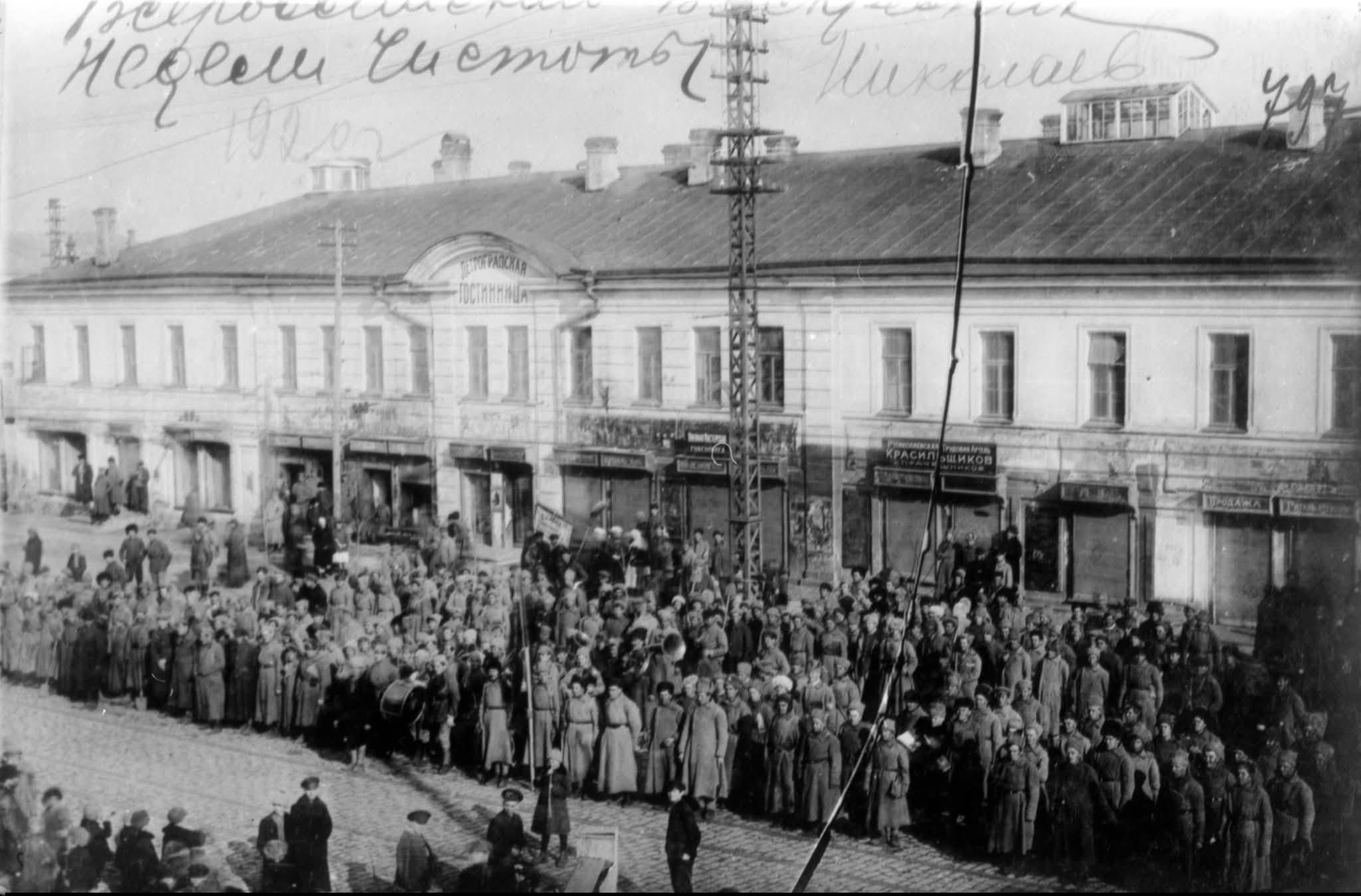 Demonstration on Soborna Street (then Oleksandrivska), 1920, near the façade of the Petrogradsky Hotel. Photo: Southern Ukraine Through the Ages
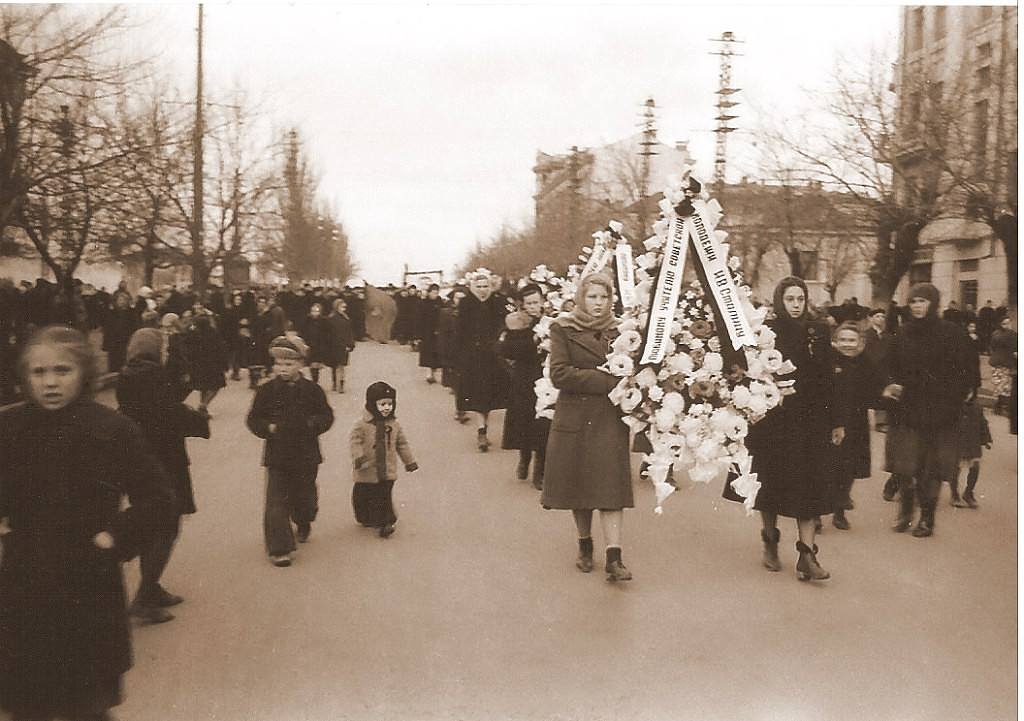 Mourning rally following Stalin’s death, the procession heading towards Theatre Square, behind the old Philharmonic building, 1953. Photo: Southern Ukraine Through the Ages
Today, Soborna is Ukraine’s longest pedestrian street, stretching for 1.5 kilometres, added historian Ihor Nikolaiev.
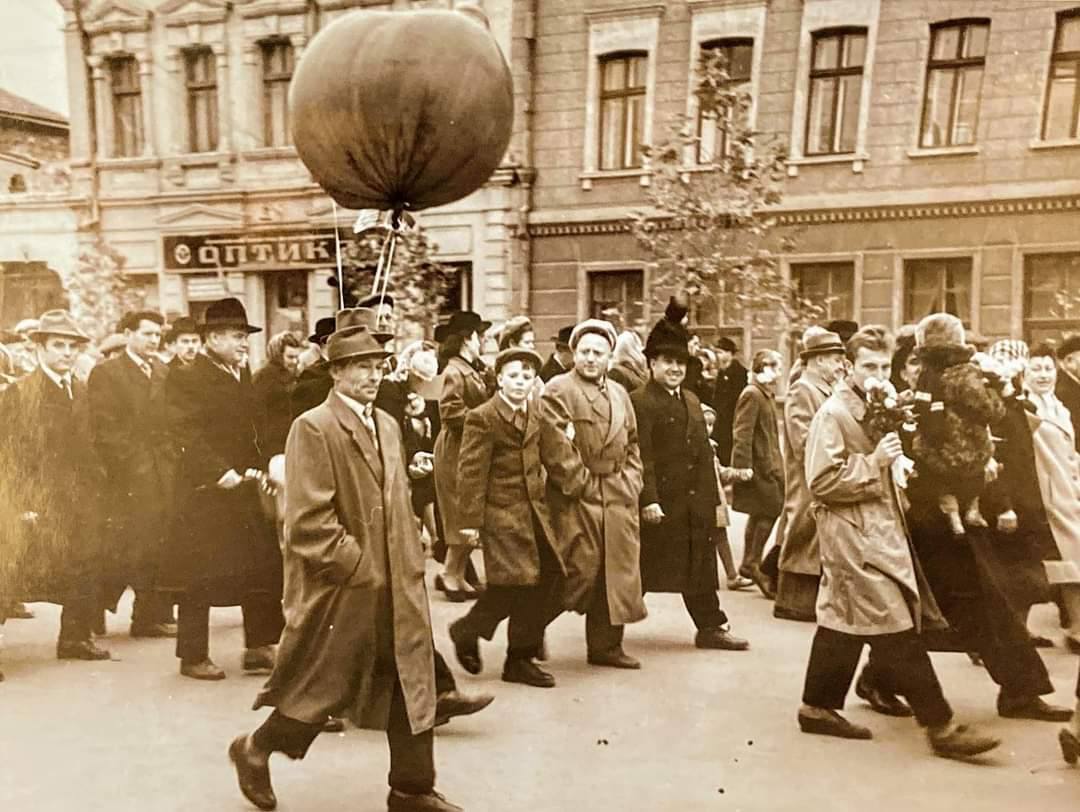 The Central Hotel, 1962. Photo: Southern Ukraine Through the Ages
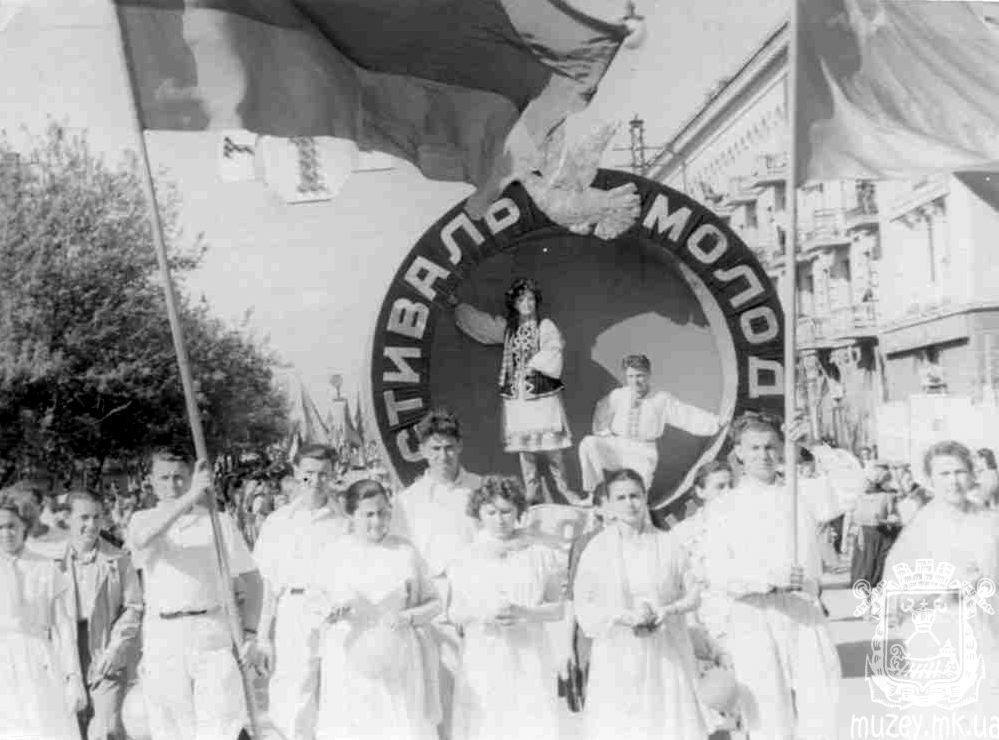 Mykolaiv Youth Festival on Soborna Street (then known as ‘Soviet Street’), 1957. Photo: Southern Ukraine Through the Ages
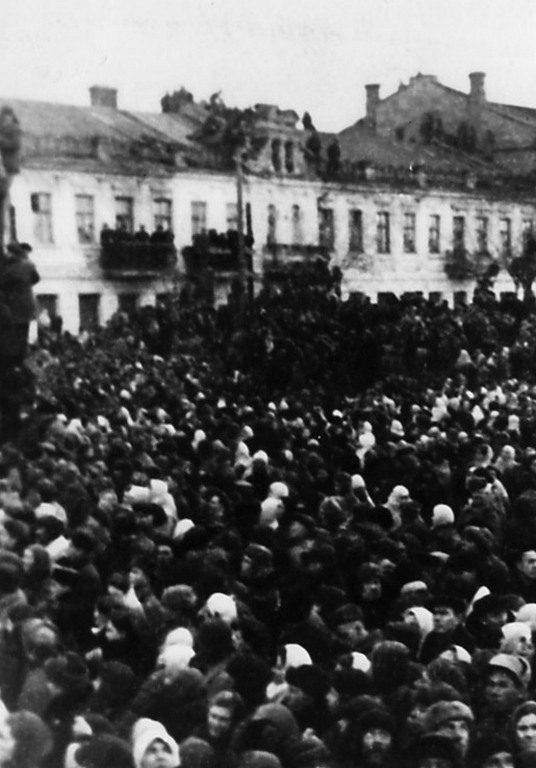 People’s assembly in the square, execution of war criminals, 1946. Photo: Southern Ukraine Through the Ages
As a reminder, a series of unique archive photographs has been published on social media, showing what the Mykolaiv waterfront and the riverside area along the Inhul River looked like in different decades.
Read also the article «Mykolaiv – 232 years. How the city has changed since independence», in which NikVesti compared historical photographs of the city with its modern appearance.