The prosecutor has requested the recusal of Judge Aleinikov in the case involving a former employee of the Mykolaiv Medical and Social Expertise Commission; the judge described the request as absurd
- Alisa Melikadamian
-
•
-
16:15, 09 April, 2026
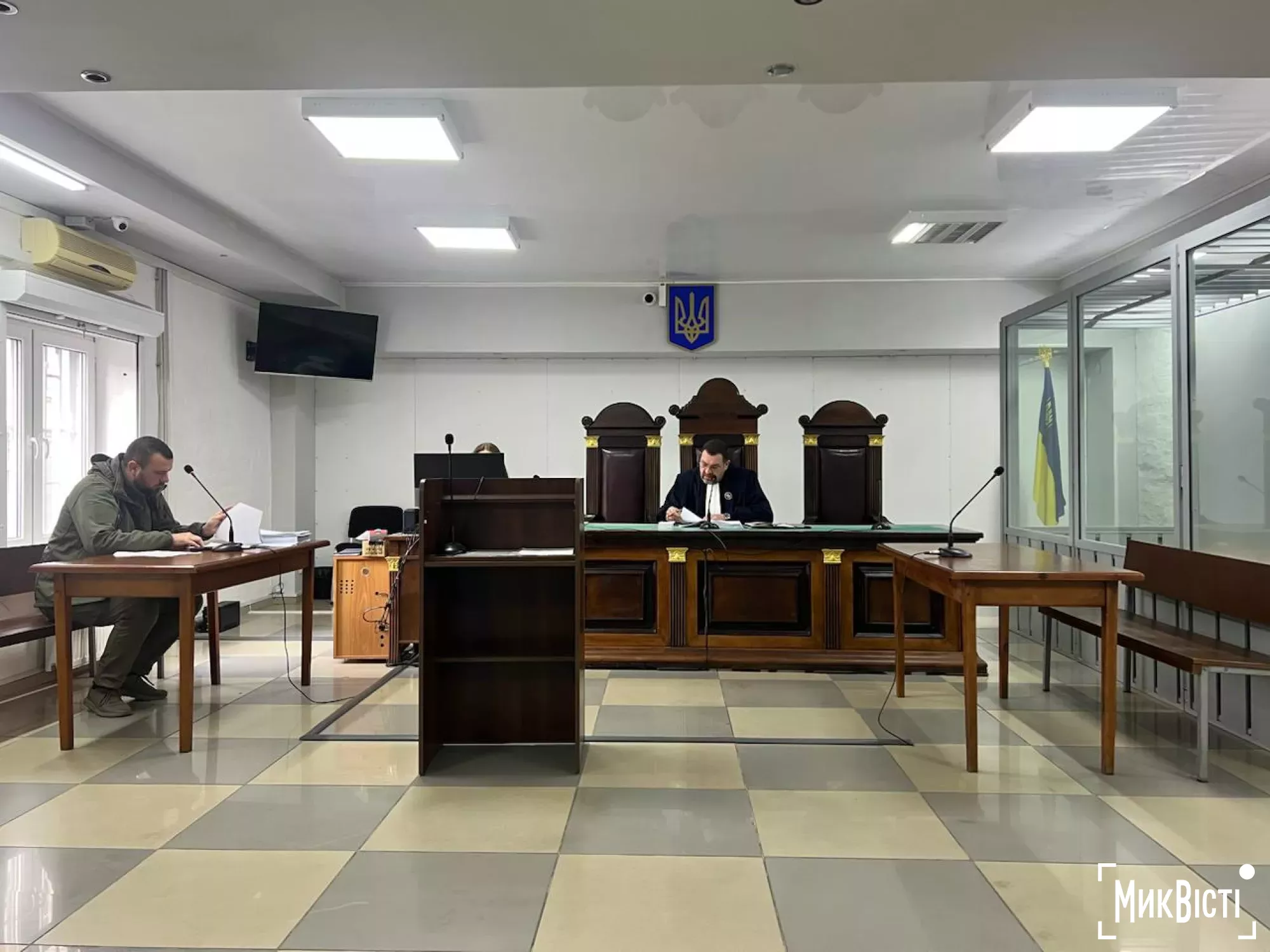 Prosecutor requests the recusal of a judge in the case involving a former employee of the Mykolaiv Medical and Social Examination Commission. Photo: NikVesti
Mykhailo Lais, a prosecutor with the Specialised Prosecutor’s Office for Defence in the Southern Region, has requested the recusal of Judge Volodymyr Aleinikov in the case against the former head of the Mykolaiv Medical and Social Examination Commission, Vira Beliakova.
The recusal request was heard by Judge Serhii Mediuk today, 9 April, according to a correspondent from NikVesti.
Only the prosecution appeared at the hearing; Vira Beliakova and her defence counsel were absent. The judge gave the floor to Mykhailo Lais to present the arguments he had outlined in the document. The prosecutor justified the challenge on the grounds that, in his opinion, Judge Aleinikov had exceeded his powers, and his actions cast doubt on his impartiality.
In his speech, the prosecution also emphasised that the judge had not proceeded to consider the plea agreement itself for a long time, but had instead been examining written evidence and questioning the defendant. Aleinikov only moved on to considering the agreement after the prosecutor’s remarks, he noted.
«I ask the court, when deliberating in chambers, to consider, firstly, that after the plea agreement was submitted to Judge Aleinikov for consideration, we did not in fact proceed to consider the agreement in question. The presiding judge in the case issued an order to read out the indictment, as it had not been read out during the court proceedings. And in fact, the prosecution proposed to proceed to the consideration of the agreement itself on its merits. The presiding judge did not halt the announcement of the agreement to record the proceedings, limiting himself solely to reading out the indictment. He then proceeded, formally and without establishing the order of proceedings, to the examination of the defendant, followed by the examination of written evidence. At the same time, he noted during the court hearing that it was pointless to consider the issue of the voluntary nature of the agreement. And he issued a ruling, which I also consider unlawful, specifically stating that upon returning from the deliberation room, he must verify the voluntary nature of the agreement,» said Mykhailo Lais.
Mykhailo Lais also drew Serhii Mediuk’s attention to the fact that Judge Volodymyr Aleinikov had emphasised the need to examine the materials of the pre-trial investigation, which goes beyond the scope of the court proceedings, the prosecutor noted.
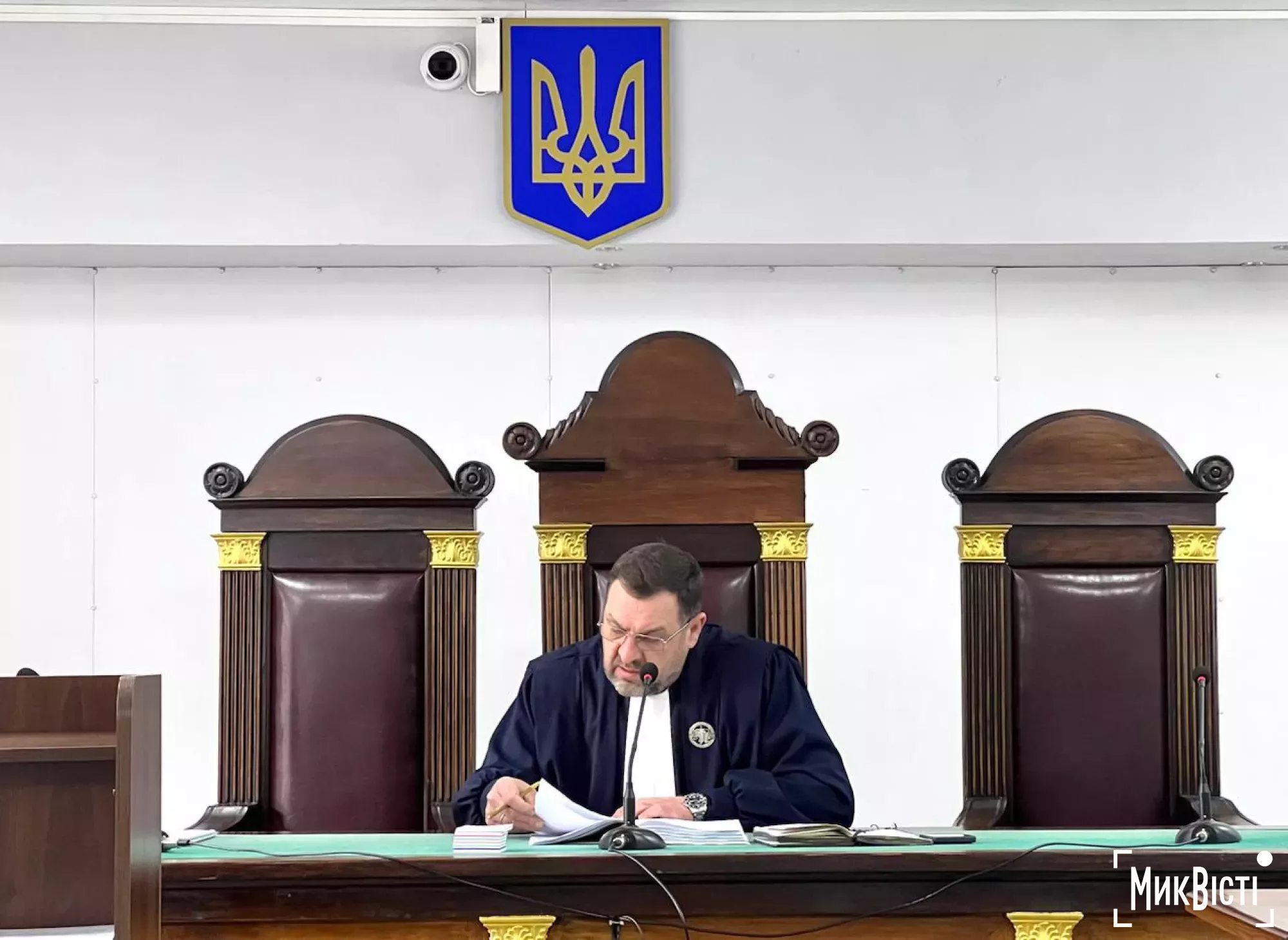 Judge Serhiy Medyuk is hearing the recusal application. Photo: NikVesti
In turn, Judge Serhii Mediuk stated that the court had received a written explanation from Volodymyr Aleinikov himself. In it, he claims that the prosecutor’s motion is a danger to society and described the arguments set out therein as absurd.
«I consider the very fact of its submission to be socially dangerous to such an extent that it cannot be left unanswered. It is impossible not to note that the arguments set out in the prosecutor’s recusal application are absurd,» the judge paused here, explaining to the prosecutor that he was reading out exactly what Volodymyr Aleinikov had written. «At the same time, the European Court of Human Rights, in its case law, interprets partiality as irrevocability, that is, allegiance to the actions of one party. The prosecutor claims that the interests of all parties in these criminal proceedings coincide. Given the circumstances of these criminal proceedings, the claim that I am allegedly biased towards one party and prejudicial to the others is completely at odds with common sense. At the same time, it is impossible not to note that some of the information in this statement is untrue. For instance, the prosecutor’s assertion that the court allegedly suspended procedural actions and did not proceed to consider the plea agreement, but instead, on its own initiative, effectively announced the commencement of the trial, is untrue».
He also added that before approving the agreement, the court is obliged to verify a number of circumstances: whether it complies with the requirements of the law, whether the defendant’s actions have been correctly classified, and whether this classification is too lenient or, conversely, more severe than provided for. The court must also ensure that the terms of the agreement do not infringe upon the rights of the parties or other persons, and that it was entered into voluntarily and without coercion. Furthermore, it must be verified whether the obligations undertaken under the agreement can be fulfilled and whether there are factual grounds for a guilty verdict. In doing so, he emphasised that the law does not restrict the court in the methods of such verification.
Furthermore, Volodymyr Aleinikov states in his explanation that he considers precisely such actions by the prosecutor to be a delaying tactic and describes them as a ‘struggle for a favourable composition of the court’.
Instead of administering justice, the court is merely resolving a matter of the interests of certain individuals, which, in my view, is unacceptable. This is entirely capable of undermining public confidence in the judiciary.
In response to the judge’s statement, the prosecutor said that he saw no valid grounds for Aleinikov’s position, and that the parties’ interest in the plea bargain was standard practice, as this is its very essence: both the prosecution and the defence have an interest in its conclusion.
To reach a decision, Judge Serhii Mediuk retired to the deliberation room.
The case of Vira Beliakova
In October 2024, it emerged that searches had been carried out at the premises of the head of the Medical and Social Expertise Commission (MSEC) in the Mykolaiv region. At the time, law enforcement officials stated that over 450,000 dollars had been found in the possession of the acting chief medical officer of the institution, Vira Beliakova. Furthermore, a Russian Federation passport was found in her son’s possession. Later, NikVesti discovered that, in the proceedings regarding the searches at the head of the Mykolaiv MSEC’s premises, law enforcement had not yet detained anyone or announced any charges. The prosecution had only requested that the court seize the property confiscated from Beliakova’s home.
Meanwhile, the Office of the Prosecutor General told journalists from «Slovo i Dilo» that the searches at Beliakova’s home were not conducted in connection with a corruption offence, but on the grounds of obstructing the lawful activities of the Armed Forces of Ukraine (Article 114-1 of the Criminal Code of Ukraine).
It should be noted that in March 2024, law enforcement officers in Mykolaiv uncovered a scheme involving the trade in fake certificates of unfitness for military service on health grounds. Among the five people detained at the time was Svitlana Biletska, deputy to Vira Belyakova at the Mykolaiv Regional Centre for Medical and Social Expertise (MSEC).
In May 2025, the Central District Court remanded the official in custody.
Following the situation involving searches and abuses by officials from various state bodies regarding the granting of disability status, President Volodymyr Zelenskyy convened a meeting of the National Security and Defence Council and signed a law abolishing the medical and social expert commissions.