The Mykolaiv City Council was unable to challenge the decision regarding the unlawful election of the leadership of the parliamentary committees before the Supreme Court
- Alisa Melikadamian
-
•
-
10:30, 01 October, 2026
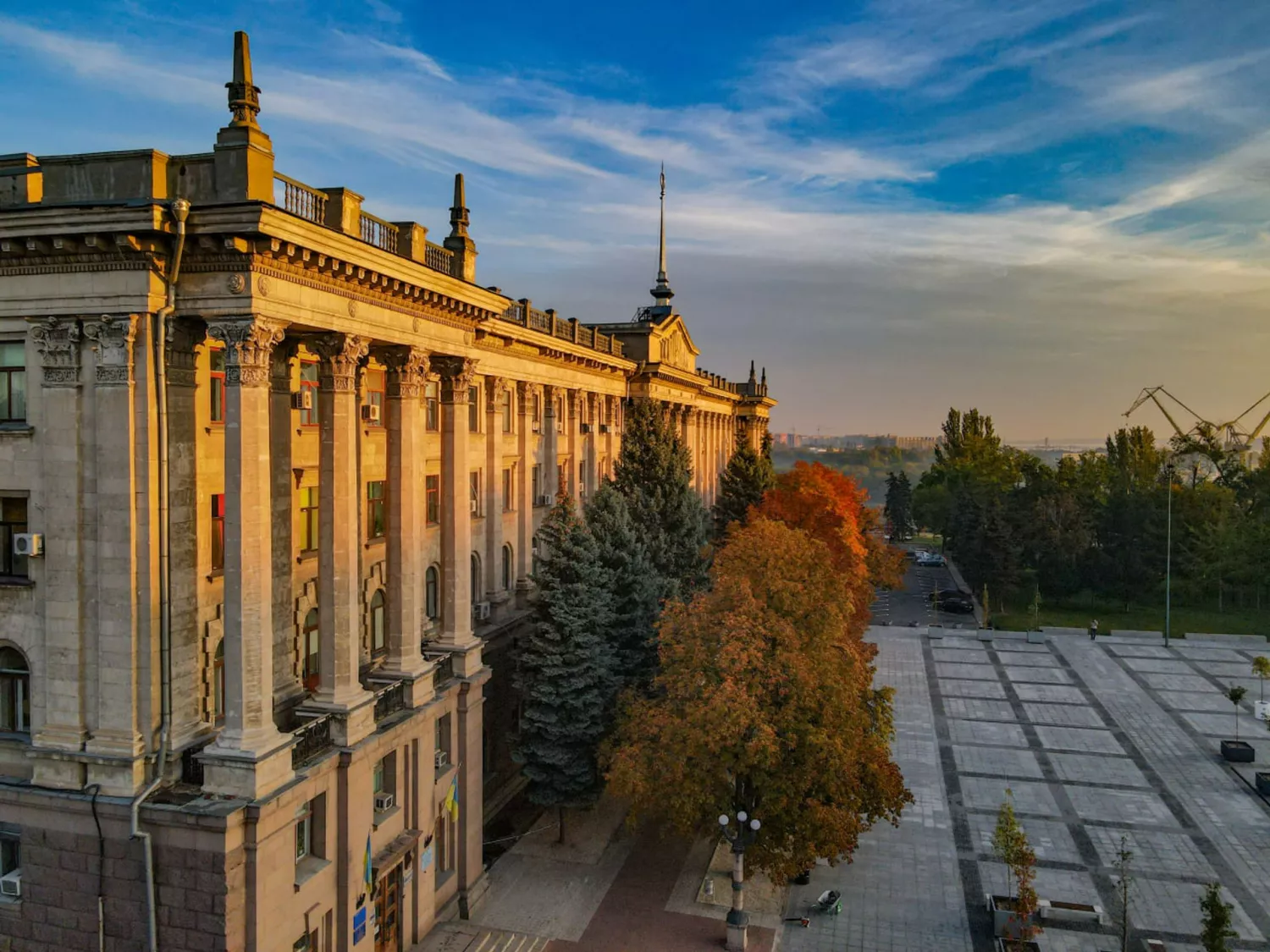 Mykolaiv City Council. Photo: Vladyslav Kazmin
The Supreme Court has refused to grant the Mykolaiv City Council’s request to open cassation proceedings against the appeal court’s ruling in the case concerning the declaration of the election of deputy chairs and secretaries of standing parliamentary committees as unlawful, following a claim by city councillor Vladyslav Chaika.
This is stated in the court’s ruling of 8 September, according to NikVesti.
It should be noted that on 30 July 2026, the Fifth Administrative Court of Appeal ruled that the decision was unlawful and quashed it insofar as it concerned the election of deputy chairs and secretaries of standing committees.
Following this, the city council lodged a cassation appeal with the Supreme Court. In it, it requested that the appeal court’s ruling be quashed and that the decision of the Mykolaiv District Administrative Court of 23 April 2026, which dismissed Vladyslav Chaika’s claim, be upheld.
The city council, in particular, argued that the case was of significant public interest and of exceptional importance to it. The appeal states that, following the overturning of the 2020 ruling, the work of the standing committee on housing and communal services, municipal property, urban development, industry, transport, energy saving, communications, information technology and digitalisation had effectively been blocked.
In the City Council’s view, this could affect the conduct of the session and the ability to adopt decisions on matters falling within the remit of this committee. The City Council also raised concerns about legal uncertainty regarding the validity of the committee’s conclusions and recommendations that had already been adopted.
However, the Supreme Court did not consider these arguments to be sufficient. In the court’s view, the local authorities had not put forward arguments demonstrating a significant public interest in this particular case. Furthermore, the council’s assertions regarding the consequences of overturning the decision were not supported by adequate evidence.
Furthermore, the Supreme Court noted that the assertions regarding the «exceptional significance» of the case for the city council were of a general nature and could apply to any similar case. The Mykolaiv City Council also failed to prove that the disputed legal relationship is so exceptional that, without a cassation review, it could lead to irreversible consequences.
The Supreme Court also rejected the city council’s argument that the court of first instance had erroneously opted for simplified proceedings.
«The Supreme Court draws the appellant’s attention to the fact that the court of first instance did not classify this case as one of minor complexity, but decided to hear the case under the rules of simplified proceedings without holding a court hearing or summoning (notifying) the parties to the case. The panel of judges emphasises that the subject matter of the dispute in this case does not contain any features that would preclude it from being heard under the rules of simplified proceedings; therefore, the complainant’s reference to sub-paragraph «г» of paragraph 2 of Part Five of Article 328 of the Code of Administrative Procedure of Ukraine is rejected by the Court as unfounded», — the court’s ruling states.
Furthermore, the court considers that the city council’s arguments amount to a re-evaluation of the evidence and a disagreement with the conclusions of the courts of first instance and appeal.
«The Supreme Court acts as a court of law, hearing cases of the utmost (most fundamental) importance to society and the state, and is not a court of fact, and therefore cannot re-evaluate evidence that has been duly examined by the courts of first instance and appeal, and/or re-assess it», as stated in the document.
Consequently, the court refused to open cassation proceedings.
The legal case has been ongoing since 2021
Vladyslav Chaika brought the case before the court back in February 2021. At that time, he challenged both the provision of the city council’s rules of procedure, which allowed the council to elect deputy chairs and secretaries of committees, and the decision adopted on that basis.
Subsequently, the claims were split into two separate cases. As early as 22 October 2021, the Mykolaiv District Administrative Court ruled that the relevant provision of the rules of procedure was unlawful and invalid. In January 2022, the Court of Appeal upheld this ruling.
However, the case concerning City Council Decision №2/36 itself was stayed and only resumed in 2026.
In April this year, the court of first instance dismissed Chaika’s claim. In particular, the court held that the resolution concerned specific individuals and did not directly infringe the rights of the councillor himself.
The appeal court disagreed with this. The court noted that standing committees are bodies of the council through which councillors exercise their powers, and therefore any breach of the procedure for appointing their leadership directly affects the councillors’ activities.
The disputed provision was adopted by councillors back in December 2020
The question of who should elect the deputy chairs and secretaries of the committees was discussed by councillors whilst the new composition of the city council was being formed following the 2020 local elections.
On 10 December, councillors established a temporary committee chaired by Serhiy Kantor, which drafted new rules of procedure and regulations governing the standing committees.
During this work, councillors decided to provide for the possibility of the council session electing not only committee chairs but also deputy chairs and secretaries.
At the same time, the political groups were negotiating the distribution of the committees themselves. NikVesti reported on 15 December that leadership positions were being discussed not at meetings of the temporary committee, but at separate meetings of the political group leaders.
On 18 December, the city council approved the regulations on standing committees and then, by 37 votes, approved their membership and chairpersons.
On 24 December, during the consideration of the rules of procedure, Olena Kiseliova, Stanislav Martyrosov and Serhii Tanasov opposed the provision under which the city council could elect a deputy chair or secretary if the committee itself had not done so.
Only seven councillors supported the proposal to remove this paragraph, whilst 28 voted in favour of the rules of procedure containing the disputed provision. On the same day, the city council adopted Decision №2/36, which put this provision into practice.
Almost six years later, the Court of Appeal ruled that the relevant part of this resolution was unlawful.
However, the court did not overturn the establishment of the standing committees themselves, their membership or the election of their chairs. The issue specifically concerns the city council’s election of deputy chairs and secretaries of the committees.
The current composition of the Mykolaiv City Council was elected in 2020. The council’s five-year term has already expired; however, due to martial law, local elections are not being held in Ukraine, so the councillors of the eighth convocation continue to exercise their powers until a new council is elected.