Heating tariffs for businesses and public sector organisations in Mykolaiv are to be reviewed: will residents’ bills change?
- Yuliia Boichenko
-
•
-
16:00, 15 October, 2026
 A high-rise block in Mykolaiv, illustrative photo from the archive NikVesti
In Mykolaiv, plans are in place to set new heating tariffs for the regional heating company for the next 12 months. The changes will apply to businesses and public sector organisations. Meanwhile, the cost of heating for residents will remain unchanged.
The relevant draft resolution has been published on the City Council’s website. Mykola Lohvinov, director of «Mykolaivoblteploenergo», explained the details in a comment to NikVesti.
The document proposes introducing a two-part tariff system for thermal energy and its supply. This system comprises two components: a charge for heat actually consumed and a fixed component related to the maintenance of the heating supply system.
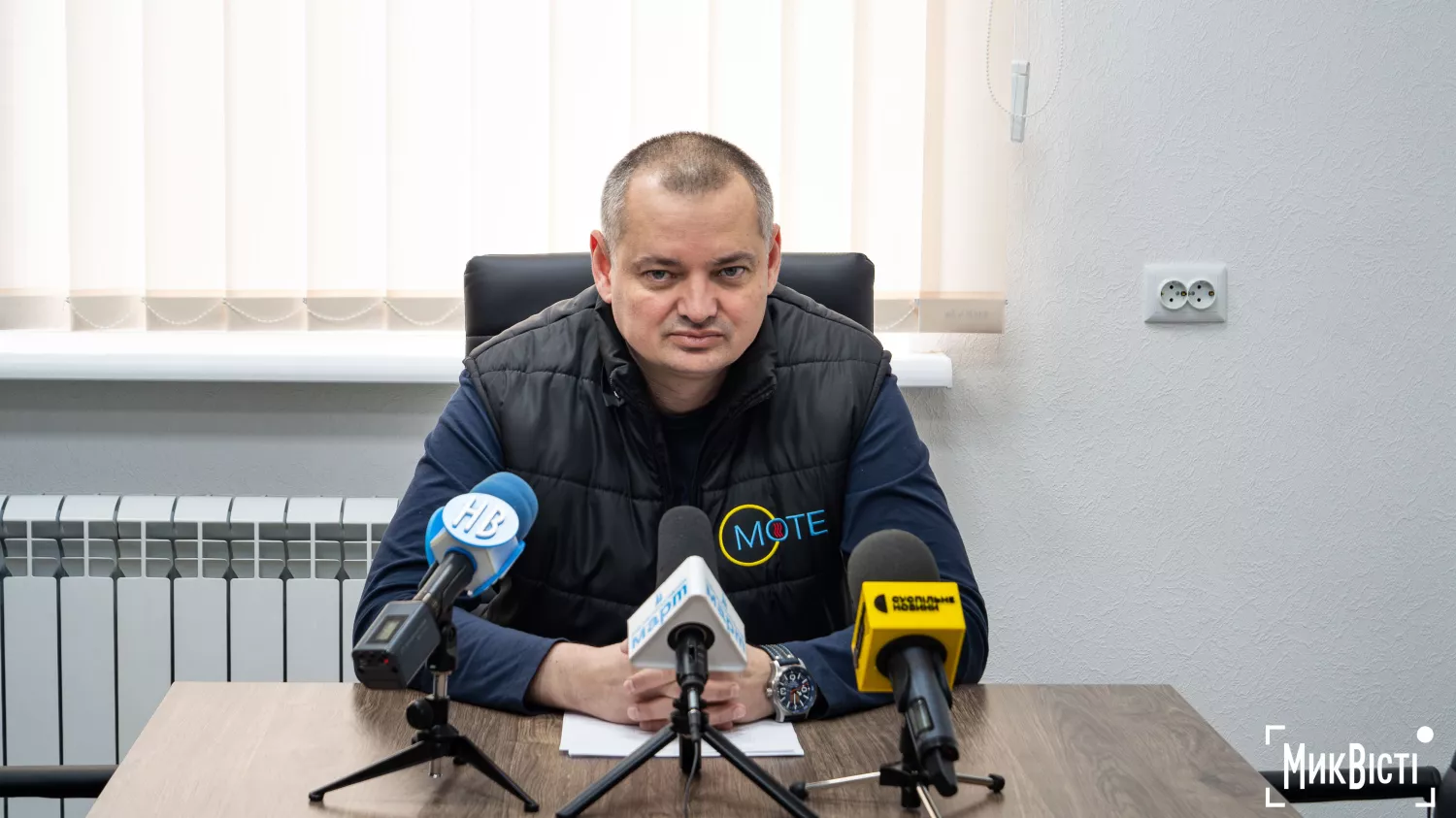 Mykola Lohvinov, director of «Mykolaivoblteploenergo», photo: NikVesti
According to Mykola Lohvinov, the company has been operating under a two-part tariff for three years now, and the rates are reviewed annually.
«We’ve had a two-part tariff for three years running now. We approve these tariffs every year. However, we do not apply the tariffs for the general public, as there is a moratorium on changing them. The tariff will only change for businesses and public sector organisations; it remains unchanged for the general public,» he explained.
What tariffs are being proposed?
According to the draft decision, in the basic scenario—without additional costs for the maintenance of central and individual heating substations—the calculated cost of the heat supply service will be:
- for households — 4,945.14 hryvnias per gigacalorie;
- for state-funded organisations — 6,450.82 hryvnias;
- for other consumers — 7,559.34 hryvnias;
- for religious organisations — 6,453.71 hryvnias.
These figures are expressed as a single-rate equivalent, inclusive of VAT. As the tariff is a two-part tariff, the actual charges consist of two parts. Different rates apply to premises where there are costs associated with the maintenance of heating substations.
Why has a new tariff been set for the general public, yet they will not have to pay more?
Although the company has calculated an economically justified cost of heat, current legislation does not permit this to be applied to the general public.
Therefore, the draft decision specifically states that, during martial law and for six months following the month in which it ends, the tariff in force on 24 February 2022 will apply to payments by the public.
Its flat-rate equivalent is 1,999.08 hryvnias per gigacalorie, including VAT. Consequently, the figure of 4,945 hryvnias stated in the document does not mean that residents will be billed at that exact price.
By how much will heating costs rise for businesses and public sector organisations?
The director of «Mykolaivoblteploenergo» did not specify the exact percentage of the increase during the conversation. According to his preliminary estimate, the rise could be around 15 per cent.
«To be honest, I don’t recall, as I haven’t carried out that analysis. Legal entities and public sector organisations account for 20 per cent of our total turnover. Even if the tariff there increases by 15 per cent, it won’t be a major issue. The tariff for alternative fuel will rise by 16 per cent due to the cost of pellets. Therefore, I think the increase will not be critical for the budget either,» said Mykola Lohvinov.
At the same time, the director noted that the main financial problem facing the company remains the loss-making tariff for domestic customers. According to him, this category accounts for around 80 per cent of consumers.
In addition to heat supply tariffs, the draft resolution provides for setting the cost of transporting thermal energy from the Mykolaiv Thermal Power Station via the «Mykolaivoblteploenergo» networks.
The new tariffs are proposed to be set for 12 months, starting from 1 November 2026. To this end, the draft resolution still needs to be approved by the city council’s executive committee.
Read also the article at NikVesti: «Winter on backup power. Will Mykolaiv have enough heat and water during power cuts?».
As a reminder, preparations for the heating season are nearing completion in Mykolaiv. Heat supply companies plan to be ready to switch on the heating after 20 October, although heating in the city is expected to begin around 1 November.