Winter on backup power. Will Mykolaiv have enough heat and water during the power cuts?
-

- Yuliia BoichenkoReporter
-
 5000 +
Impressive! This content has been viewed by more than 5,000 visitors!
5000 +
Impressive! This content has been viewed by more than 5,000 visitors!
-
 Prefer on Google
-
5K
Impressive! This content has been viewed by more than 5,000 visitors!
-
Prefer on Google
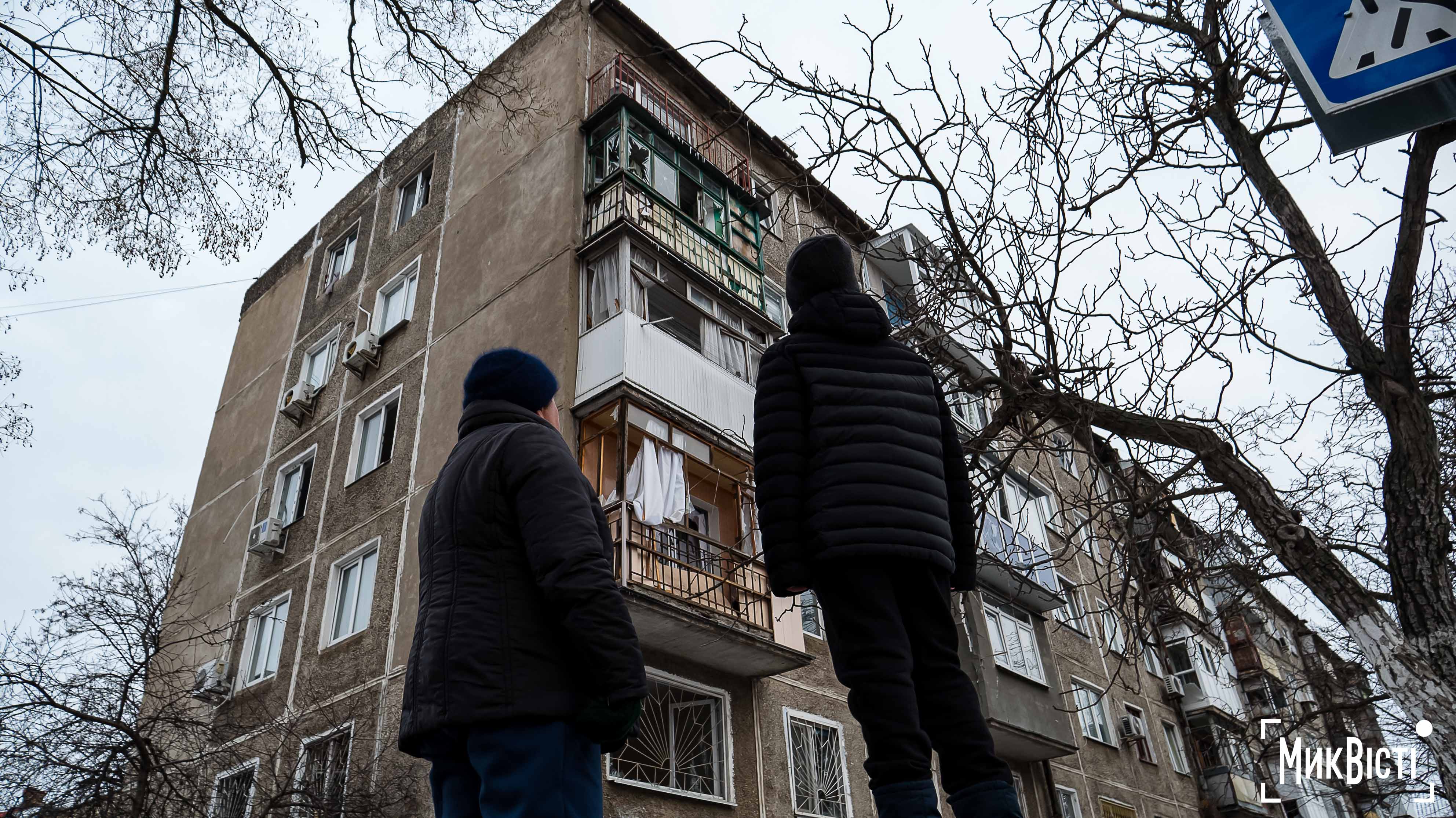 Residents of Mykolaiv stand in front of a building that survived enemy shelling, 16 February 2025. Photo: Serhii Ovcharishyn, «NikVesti»
The boiler room can run on a generator, but whether the building stays warm will depend on whether there is enough fuel. The water utility may be able to supply water to the city, but it will not reach the upper floors. With these limitations, Mykolaiv is preparing for the winter of 2026–2027 — the fifth heating season since the start of the full-scale invasion.
The utility companies have backup equipment and experience from previous blackouts. But when asked how many hours there will be without power this winter and whether they will be able to maintain heating and water supplies throughout this time, there is no clear answer.
NikVesti spoke to the regional heating and power company, the water utility and the regional electricity supplier to find out what the city can count on, and where the risks lie.
Hello! I am Yuliia Boichenko, the author of this article.
Thank you for your attention to our texts — it means a lot to the NikVesti team.
We regularly publish in-depth materials for those who want to understand the topic and get to the heart of the matter.
We have dozens of examples when our journalism, together with our readers, has influenced situations and changed them.
Join the NikVesti Readers’ Club — support independent journalism that matters.
Support us by joining the NikVesti Club
How long the power cuts will last remains unknown
Mykolaiv already has experience that other cities have had to gain later on. This was emphasised by Serhii Sukhomlyn, head of the State Agency for Recovery. He believes that this winter should not be any more difficult for the city than the previous one.
«If we take, for example, Mykolaiv, Zaporizhzhia and Kharkiv, I don’t think it will be any more difficult than last winter. These are frontline regions; they have been in this situation for many years. They have prepared for this much more thoroughly,» said Serhii Sukhomlyn.
However, the experience of previous winters does not allow us to predict the consequences of future attacks. Mykola Lohvinov, director of the regional heating company, is reluctant to say that Mykolaiv is better prepared than other cities.
«I wouldn’t want to say right now, before the start of the heating season, that we’re better prepared. We should talk about that once the season is over. I can say: yes, we’ve done everything we possibly could. But winter will come and reveal where we have gaps,» he said in a comment to NikVesti.
Energy experts explain that it is currently impossible to reliably predict either the number of power cut rotas or their duration. Everything will depend on the state of Ukraine’s power grid, consumption levels, the available capacity of power stations and the consequences of any potential Russian attacks.
«At present, it is impossible to reliably predict how many rolling blackouts will be required this winter or for how long they will last,» the representative «Mykolaivoblenergo» said in a comment to NikVesti.
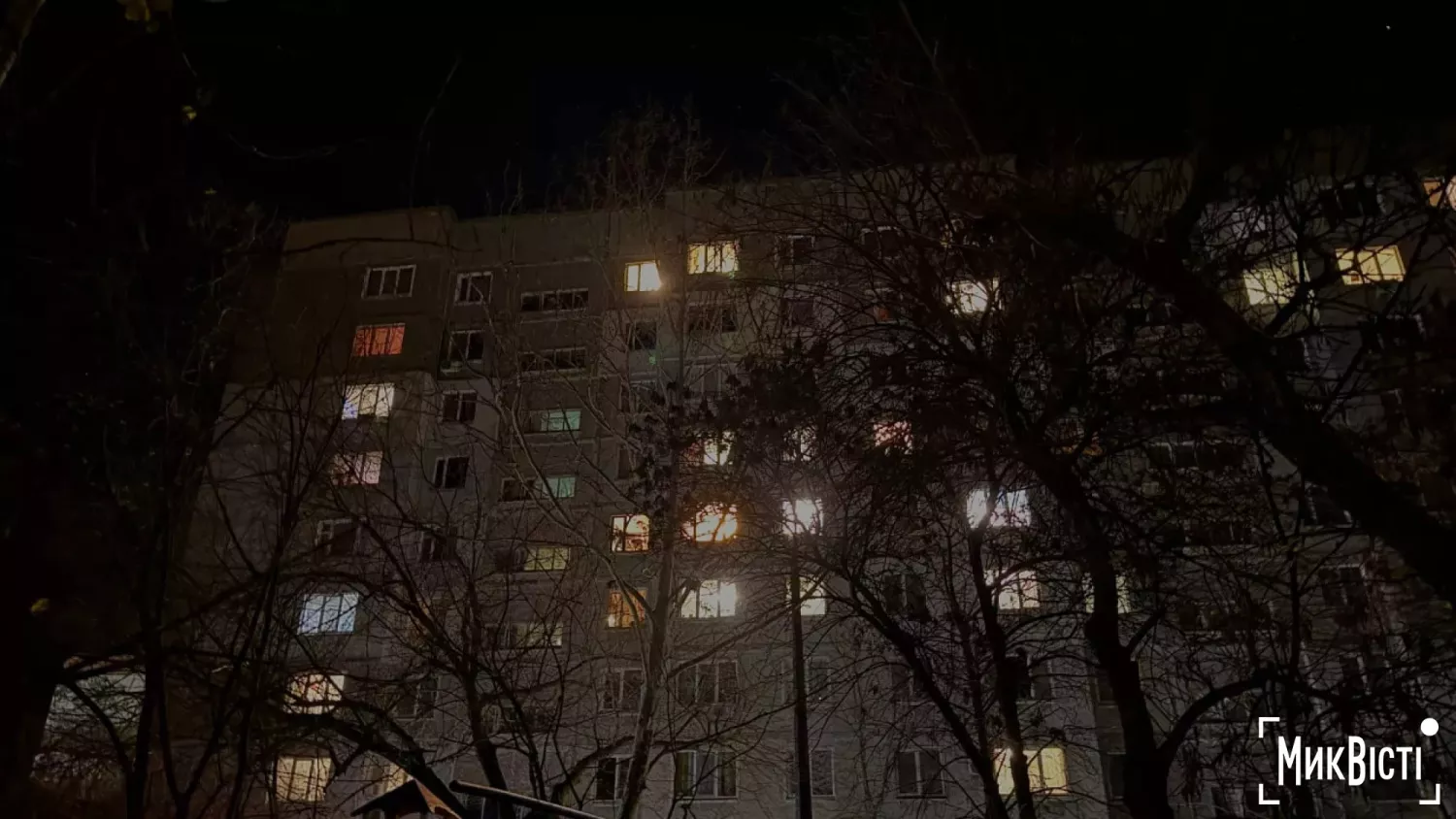 Lights on in flats in one of Mykolaiv’s residential blocks, photo: «NikVesti»
If there is a shortage of electricity, restrictions will be imposed on the instructions of «Ukrenergo», they added. Information on hourly power cuts will be posted on the «Mykolaivoblenergo» website and social media channels.
However, the company noted that emergency and special emergency power cuts may be implemented separately. These cannot be predicted in advance: they are necessary when, due to damage or another emergency situation, the power system must be stabilised urgently.
«We remember last winter — back then, up to five rounds of hourly power cuts were implemented simultaneously, meaning up to 20 hours a day without electricity. But that was the only way we managed to keep the power system from collapsing at the time,» said the regional power company.
What does the «energy island» offer?
An «energy island» has been created to support critical infrastructure during blackouts. It has already been activated twice, when shelling threatened to cut off heating across the whole of Mykolaiv, the Regional Military Administration reported.
«We have already tested this system, activating it twice — when shelling threatened to cut off heating across the whole of Mykolaiv. It now enables us to provide 65 per cent of the city’s critical infrastructure with power during blackouts,» they added.
This is an important backup for the city’s systems. However, it does not follow from this statement that 65 per cent of flats will have electricity, or that the city already has a fully autonomous power supply. The focus is on critical infrastructure and its operation under emergency conditions. For residents of high-rise blocks, a separate question remains: will the service be able to reach their building and flat from a functioning utility facility?
Heating during a blackout depends on fuel
«Mykolaivoblteploenergo» carries out repairs to its networks and equipment throughout the year, says the company’s director, Mykola Lohvinov.
He says that 90 per cent of the company’s boiler houses have their own power sources installed. The main ones, particularly large boiler houses, are equipped with connected generators. Most generators can start automatically once the centralised power supply is lost.
However, not every boiler house has the same capabilities. There are old basement facilities where, as Mykola Lohvinov explains, it is impossible to install a generator permanently. The plan is to bring in a mobile generator for these: it is intended to keep the boiler house running, heat the building and then move on to the next site. This is how the company operated last season as well.
Therefore, the figure of 90 per cent does not mean that the remaining boiler houses will be left without power at all. At the same time, a mobile generator serving several sites in turn cannot ensure continuous operation for all of them simultaneously.
When asked how long the company would be able to operate during a total blackout, Mykola Logvinov does not specify a particular number of hours or days. He cites fuel as the decisive factor: large generators require diesel, whilst smaller ones require petrol.
«If we have a fuel supply, we’ll operate round the clock. Yes, that means high fuel consumption, and it costs a lot of money,» says the director.
He assures us that the company has reserves and is building them up. However, he does not specify in the conversation exactly how many days of continuous operation of all the generators these reserves would last. Therefore, the assertion that it is possible to operate round the clock comes with a key condition: fuel must continue to be supplied.
 A generator on Soborna Street in Mykolaiv, photo: «NikVesti»
If there is a shortage, the boiler houses may have to operate intermittently. Mykola Logvinov cites the example of last season, when some boiler houses operated on a rota of four hours on and four hours off.
«If we have enough fuel, we can operate round the clock. If we have too little fuel, we will operate as some boiler houses did last year: four hours on, four hours off,» he explains.
This is a possible scenario in the event of a fuel shortage, not an approved heating schedule for the whole of Mykolaiv. Even with sufficient stocks, other tasks remain: the generators need to be refuelled, serviced and kept in good working order.
However, «Mykolaivoblteploenergo» does not cover the whole city. Another major supplier is the Mykolaiv Thermal Power Station. According to figures released by Mayor Oleksandr Sienkevych in November 2024, the CHP plant served 760 residential buildings, whilst «Mykolaivobltelpoenergo» served 1,234. Our calculation based on these figures: approximately 38 per cent and 62 per cent, respectively, of the buildings served by the two companies.
For the CHP’s customers, problems with heating are a thing of the past. The most notable delay in the start of the heating season occurred in autumn 2023: the season began on 14 November, but due to faults in the networks, connections were not completed until early December.
At the same time, the networks are being repaired, reported Dmytro Myroshnychenko, director of the CHP plant. With the help of donors and the city, he said, almost 40 per cent of the heating networks have been replaced.
Hospitals are the priority. But what about homes, schools and nurseries?
Mykola Lohvinov, director of the regional heating company in Mykolaiv, says that hospitals will be given priority. However, it is not always possible to draw a clear line between them and other consumers. According to him, most of the company’s boiler houses simultaneously supply heat to various facilities: healthcare institutions, schools, nurseries and residential buildings.
«In any case, hospitals will be the priority. But we will endeavour to ensure there is a single system and that it works seamlessly,» says the director.
 A hospital in Mykolaiv, illustrative photo from the archive of «NikVesti»
Some hospitals have boiler rooms fuelled by alternative fuels, says Mykola Lohvinov. At the time of the interview, the company was expecting to take over the management of a further five boiler rooms at regional healthcare facilities, so that these too could be prepared for the heating season.
There are over 560 generators in the social sector
In response to an enquiry from NikVesti, the Department of Municipal Services (Housing and Communal Services Department) of the Mykolaiv City Council reported that preparations by «Mykolaivobltheploenergo», the Mykolaiv Thermal Power Plant and the housing stock for the 2026–2027 heating season are proceeding according to the approved schedules. They state that the level of readiness is on a par with that of the same period in previous years.
The city’s social sector institutions are equipped with 562 generators. The largest number are in educational institutions — 305. A further 121 generators are held by healthcare institutions, 44 by social welfare institutions, 54 by cultural institutions, and 38 by physical education and sports institutions. Stocks of petrol and diesel fuel have also been built up for these institutions.
In particular, there are approximately 38,800 litres of petrol and 14,600 litres of diesel in stock for the education sector. For healthcare facilities, there are approximately 3,900 litres of petrol and 20,500 litres of diesel. However, the response does not specify how many hours or days of autonomous operation these reserves are intended to cover.
Six municipal healthcare facilities with inpatient wards are equipped with autonomous heating systems. In the event of a heating failure, people receiving home-based social care are to be evacuated to hospitals if necessary. This concerns 1,327 people, including 112 people with disabilities.
The city has also set up 25 resilience centres with an estimated capacity of 1,400 people. Should the situation deteriorate, plans are in place to deploy temporary accommodation centres for the population.
The department did not provide further details regarding the operation of critical infrastructure during prolonged power cuts. They explained that such data is restricted and, in wartime, could be used to plan attacks on critical infrastructure.
The water utility will continue to operate, but water may not reach all homes
In the water supply sector, the gap between the company’s preparedness and the actual availability of water in homes is particularly noticeable. Water and sewerage pumping stations rely on electricity. In the event of power cuts, «Mykolaivvodokanal» has a backup power supply, says chief engineer Vitalii Tkachenko.
However, this only covers the main facilities. The booster pumps, which help supply water to the upper floors, do not have such a backup, he says.
«Water cannot be supplied to the eighth or ninth floors, as the booster pumps are not equipped with a backup power supply — only the main facilities are. Water supply will be limited to around the fourth floor,» explains Vitalii Tkachenko.
This is not just a matter of a prolonged power cut. When asked whether the problem would arise after several days without power, the chief engineer replied that residents on the upper floors would experience a water shortage immediately after the power goes out.
The fourth floor mentioned in his reply is a rough guide, not a precise forecast for every high-rise block. However, the main limitation is already clear: the fact that the main pumps are running on generators does not mean that water will be available on every floor.
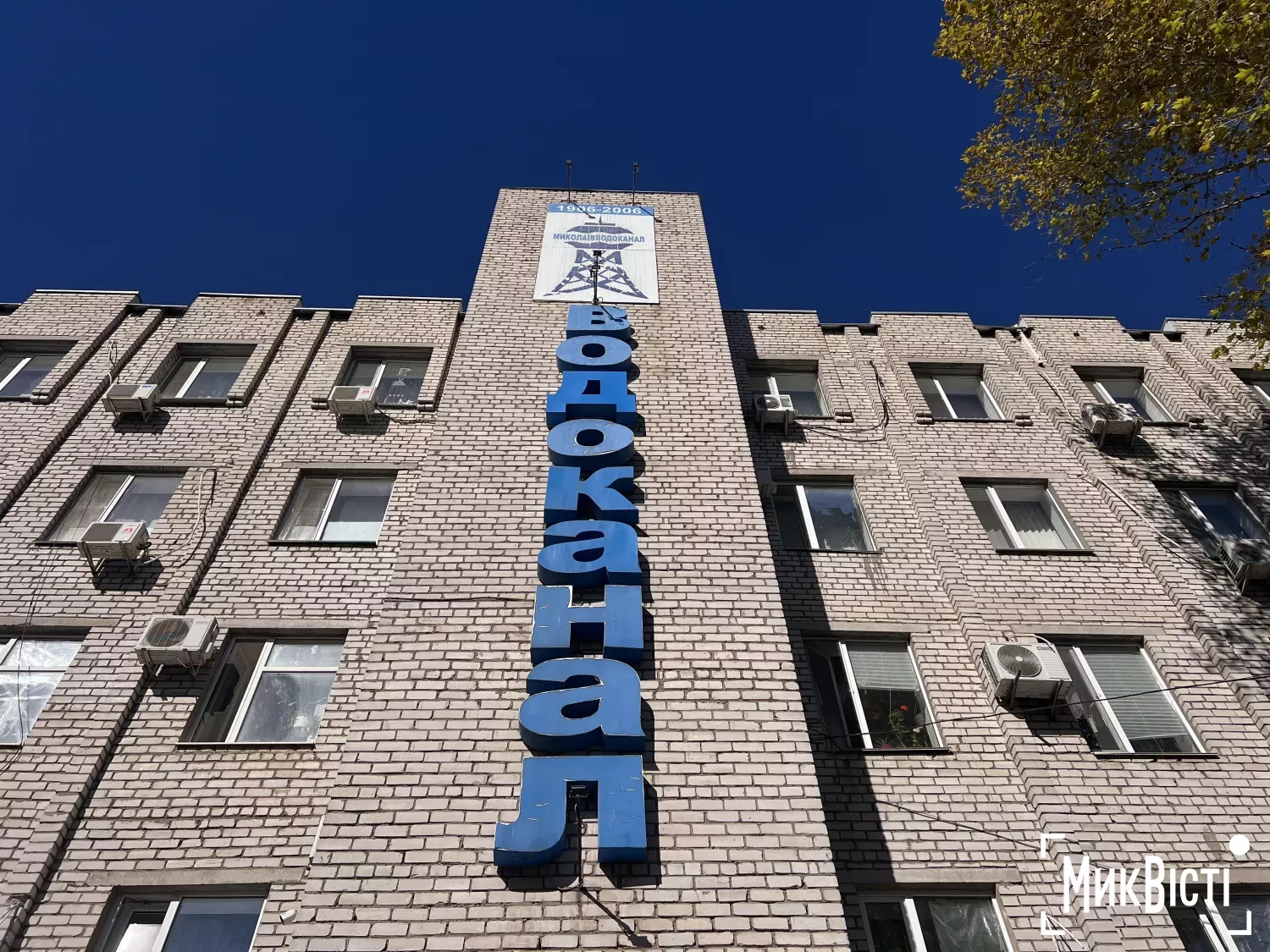 The water utility building in Mykolaiv, September 2026, photo: «NikVesti»
The water utility assures us that it is preparing for winter and has fuel for emergency power supply. At the same time, the company is counting on further assistance from the city and the region.
«We have sufficient fuel for emergency power supply, so we are prepared. But we realise that we will need more. We will be asking the city and the region for help,» he says.
This refers to the supply of fuel for the generators themselves. The chief engineer did not specify a precise timeframe during which the water utility could operate solely on existing reserves. Therefore, here too, preparedness for power cuts depends on whether reserves can be replenished.
Provisions have also been made for the sewerage system to operate without the mains electricity supply. Some of the stations have generators. Where there are none, sewage will be stored, after which a vehicle will pump it out and transport it to sewage pumping stations operating on backup power, explains Vitalii Tkachenko. Consequently, this scenario also depends on the equipment functioning properly and the timely removal of sewage.
The chief engineer also does not rule out a complete cut-off of the water supply in certain areas or across the whole city. He attributes this risk primarily to Russian shelling.
In the event of problems with the city’s centralised water supply, alternative water distribution points have also been arranged. The Department of Municipal Services reported that the «Pilot» municipal enterprise has 114 distribution points for treated water, 43 of which are equipped with generators. A further 79 distribution points are operated by «Mykolaivoblteploenergo»: all are fitted with uninterruptible power supplies with batteries, and 36 are additionally equipped with generators. In addition, 66 sites have had containers installed for drinking water, which is to be delivered by «Mykolaivvodokanal».
Residents are advised to keep a supply of water at home sufficient for about a week, the amount of which should be determined according to their own needs. This is particularly important for residents on the upper floors, given the reported problem with the booster pumps.
«Everyone has their own idea of what a week’s supply means. For some, it’s one bottle a week to boil water for tea. For others, it means carrying three or four bottles several times a day,» added Vitalii Tkachenko.
Donors are helping with the equipment. The rest requires funding
Mykola Lohvinov, director of the regional heating company, identifies funding as the weakest link in the preparations for the heating supply. Donor aid provides the company with equipment and pipes, but these still need to be installed. Design, construction and installation require separate funding.
«We can obtain plenty of equipment and pipes. But design work and construction cost money,» explains the director.
According to him, the company’s current tariff covers approximately half the cost price of the service. He estimates the state’s debt to the company for compensating the difference in tariffs at 1.4 billion hryvnias. This figure, as quoted by the company’s director, does not in itself mean that the heating supply will be cut off. However, the lack of funds limits the company’s ability to purchase fuel, pay for works and replace equipment promptly.
Mykola Lohvinov says the company is constantly approaching the city for funding. It receives some of the funds, but, in his estimation, they are insufficient for all the planned projects.
Funds are also needed to cover damage caused by attacks. The director explains that the company is working on contingency plans and already has experience in restoring boiler houses and equipment following strikes. But not everything can be repaired in-house: some parts will have to be purchased. Another essential requirement is having people capable of carrying out this work.
Thus, the system’s resilience is determined not only by the number of generators. It also depends on whether there will be the funds and specialists to keep the equipment running or to repair it after damage.
When should the radiators start to get warm?
The start of the heating season is determined by the weather, rather than by a single calendar date applicable to the whole country. The decision is taken by local authorities, as approved by Cabinet of Ministers Resolution №830. The heating season must begin no later than when the average daily air temperature over a three-day period reaches +8°C or below.
For the past two years, the heating season in Mykolaiv has started in November. In 2024, the season began on 1 November, and in 2025, on 7 November. However, for healthcare, educational and socio-cultural institutions, the season began earlier in 2025 — on 30 October.
These dates show how the city entered previous winters, but do not determine the start of the 2026–2027 season. Similarly, the decision to start the season does not mean that all radiators will become warm instantly: for example, in 2025, it took up to ten days to connect consumers.
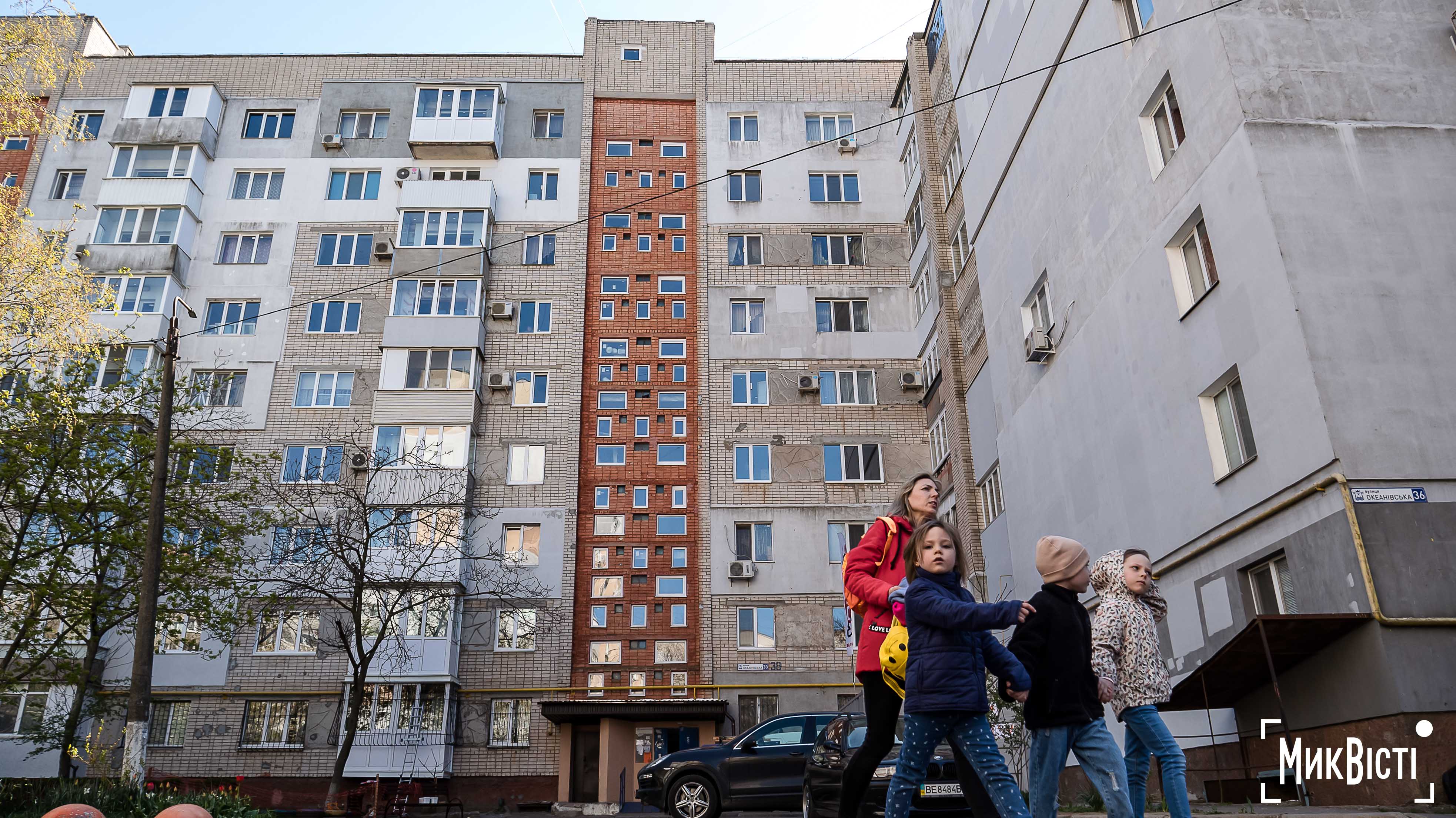 Renovated windows and balconies in one of the residential blocks in the Korabelny district, April 2025, photo: «NikVesti»
What to prepare for this winter
Mykolaiv has built up a track record: backup power supplies for key utility facilities, new batteries at most of the regional heating network’s heat distribution points, and experience of operating during blackouts. At the same time, the responses from the utilities reveal the limits of these capabilities. Boiler houses will require a constant supply of fuel; some facilities will be served by mobile generators; and, in the absence of power to the booster pumps, water may not reach the upper floors.
There is therefore no basis for promising a winter without disruptions. However, this data does not allow us to conclude that heating and water will inevitably be cut off for a prolonged period. Much will depend on the scale of the attacks, the duration of the outages, and whether companies are able to replenish stocks and repair damage in good time.
For city residents, there are already two practical guidelines: keep an eye on the latest updates from the energy suppliers, bearing in mind the possibility of emergency power cuts, and keep a supply of water to hand. As for assessing the city’s preparedness, there remain questions that require specific answers: how long will fuel supplies last, how will future deliveries be ensured, and when will work be completed at the facilities that are still being prepared for commissioning? It is precisely on this that it depends whether the utility companies’ reserve capacity will translate into heat and water in people’s homes.
Yuliia Boichenko, NikVesti
