The director of the water utility stated that water in Mykolaiv is chlorinated in accordance with summer standards
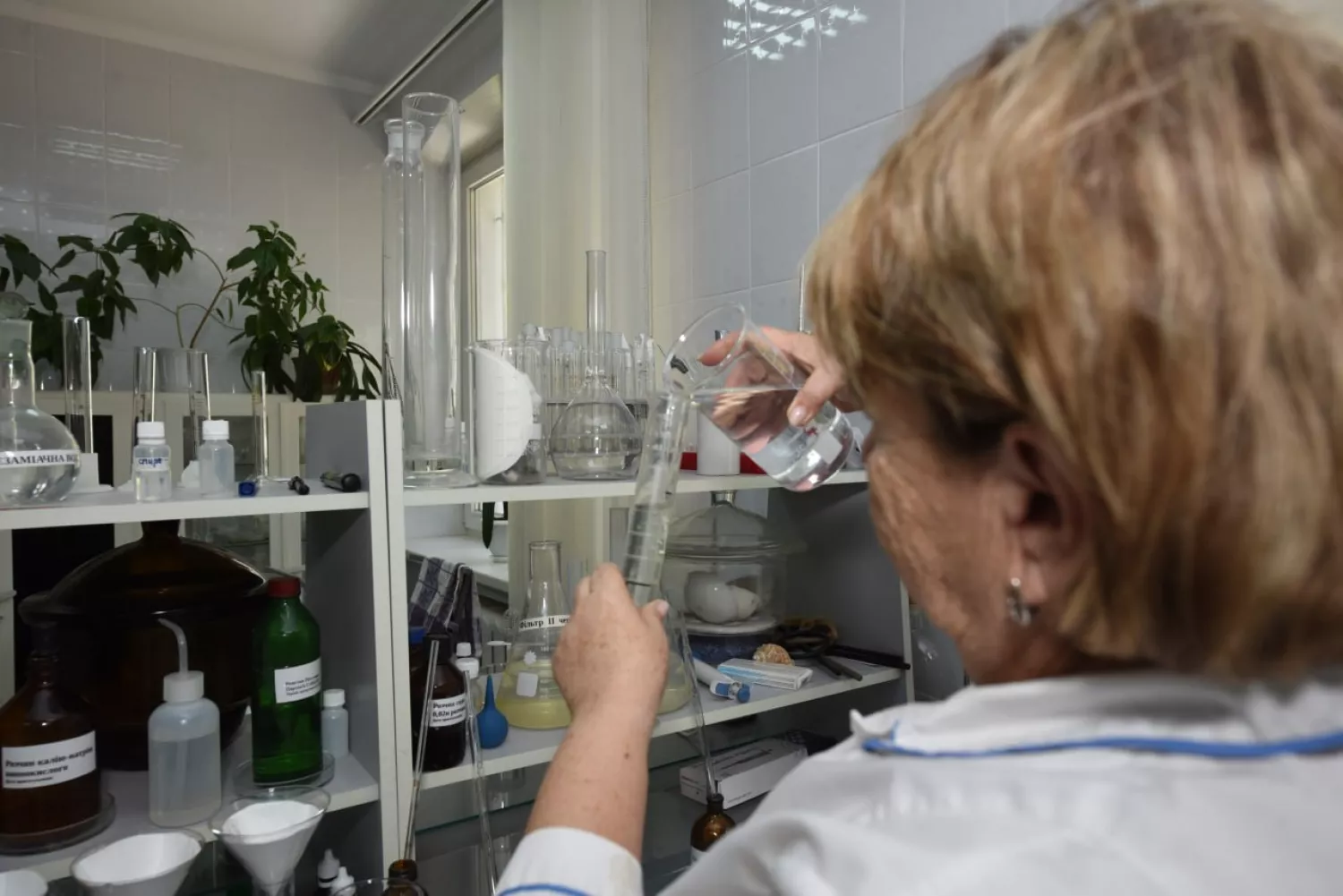 In two districts of Mykolaiv, there are still deviations from the standards in dead-end areas. Illustrative photo: Mykolaivvodokanal
In two districts of Mykolaiv, there are still dead-end areas where water tests show traces of microbiological contamination. The water networks in these areas are being flushed additionally. Overall, the city is carrying out chlorination in line with summer, rather than winter, standards.
This came to light during a staff meeting at Mykolaiv City Council on 9 November, according to NikVesti.
Mayor Oleksandr Sienkevych noted that since the start of the week he had not seen any information from the water utility regarding changes in water quality.
«I have not seen any information since the start of the week regarding changes in water quality or laboratory monitoring,» said Oleksandr Sienkevych.
Hennadii Iziumov, director of the «Mykolaivvodokanal» municipal enterprise, noted that, according to test results, the water leaving the treatment plants is safe to drink. Chlorination is carried out in accordance with DSanPiN — the state sanitary rules and standards.
«At the treatment works and pumping stations, the residual chlorine level is 0.5 mg/dm³, which complies with DSanPiN. At monitoring points, the residual chlorine level is 0.1 mg/dm³. Water quality at monitoring points is checked five times a week. Ten to eleven samples are taken every day,» said the head of the water utility.
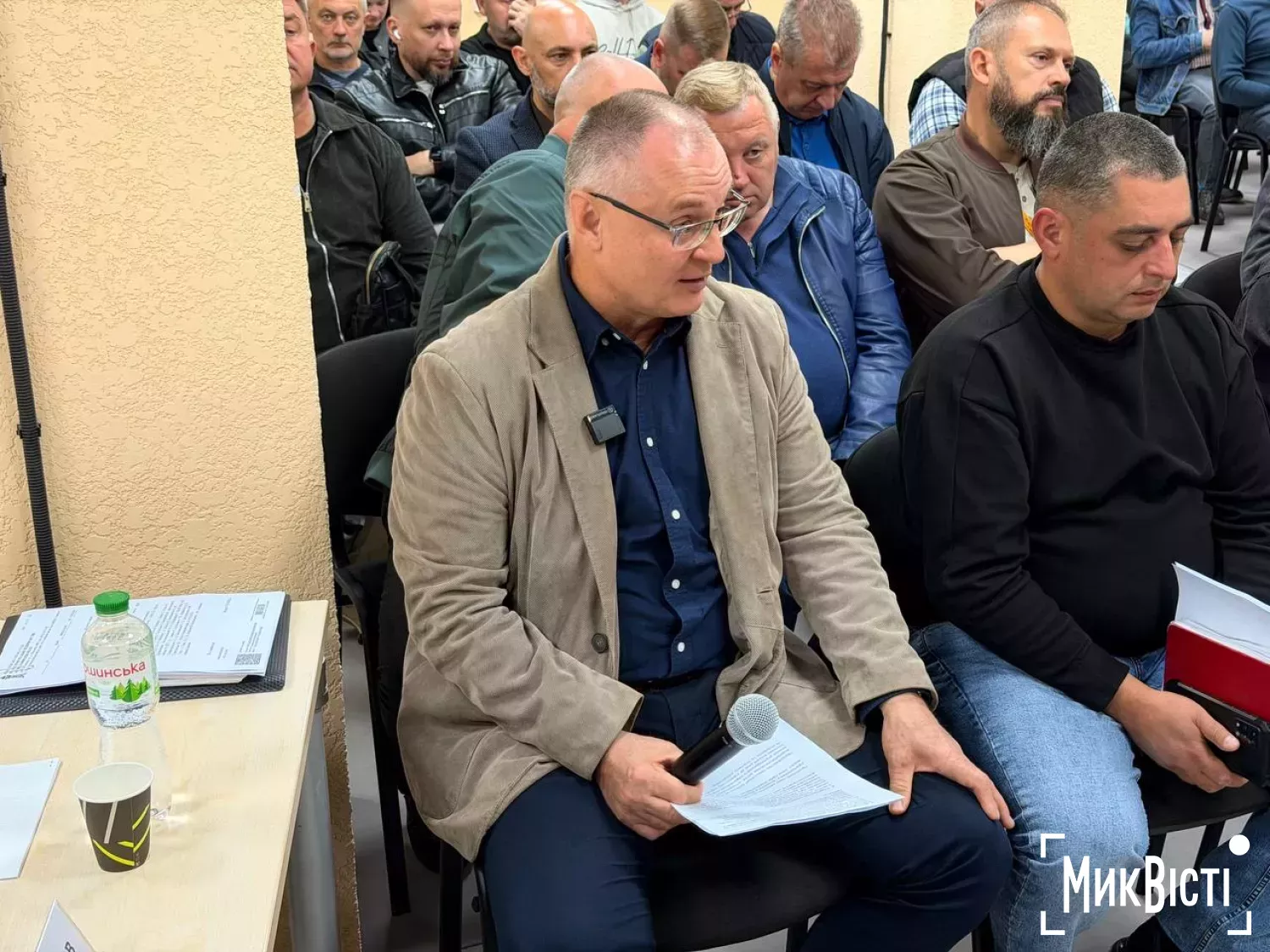 Hennadii Iziumov, director of the water utility, stated that the networks are being chlorinated in accordance with summer standards. Photo: NikVesti archive
He identified dead-end areas in the Zavodskyi and Inhulskyi districts as problem areas, where the networks are being flushed additionally.
«There are currently problem areas in the city — dead-end areas where water tests show traces of microbiological contamination. These are the Zavodskyi district, Bila and Ozerna streets, and the Inhulskyi district, Kazarskyi Street. «In these areas, we are carrying out additional flushing of the network under constant laboratory supervision,» said Hennadii Iziumov.
According to him, the residual chlorine concentration of 0.5 mg/dm³ currently present at the outlet of the pumping stations is more typical of the summer months.
«We do not see anything critical at the moment… This figure is more typical during the summer, when the quality of the raw water deteriorates. At present, we can say that the raw water is of good quality. And in essence, we are carrying out chlorination within the usual summer parameters. That is to say, during the winter period, the residual chlorine at the outlet should be around 0.2–0.3 mg/dm³. We are maintaining a level of 0.5 mg/dm³ and, in principle, I believe that in those areas where there is still a slight increase, we will rectify this fairly soon,» said the director of the water utility.
According to Hennadii Iziumov, chlorination will be completed once stable test results are obtained.
It should be noted that in its response to an information request from NikVesti, the Mykolaivvodokanal Municipal Utility Company stated that microbiological indicators had stabilised due to the cold snap, and that they were therefore operating as normal without hyperchlorination.
Undrinkable tap water
It should be noted that the new water supply system for Mykolaiv was commissioned on 7 October 2025 — it was connected to the water utility’s networks. In November, the head of the Mykolaiv Regional Military Administration, Vitalii Kim, stated that drinking water could be available from Mykolaiv residents’ taps within half a month to a month. According to him, this was the time required to complete all work at the treatment plants and receive official laboratory reports.
At the end of May 2026, during a briefing, the director of the water utility, Hennadii Iziumov, explained that the water did not meet one specific standard — oxidisability.
On 18 June, Oleksii Kuleba, Ukraine’s Minister for Community and Territorial Development, reported on the completion of one of the stages in restoring the water supply to Mykolaiv, namely the preliminary water treatment plant with a capacity of 120,000 cubic metres per day. According to the minister, Mykolaiv is now receiving high-quality drinking water.
«We have created a modern, sustainable system that will serve the people and meet European standards, and we can say: Mykolaiv once again has high-quality drinking water,» said Oleksii Kuleba.
On 24 June, Mayor Oleksandr Sienkevych stated that, despite the improvement in water quality following the launch of the new water treatment plant and water pipeline, it is not advisable to drink tap water. According to him, the water leaving the treatment works already meets basic sanitary standards; however, due to the city’s ageing distribution networks, its quality may deteriorate by the time it reaches homes. Among the parameters that fall short of the norm, the mayor cited oxidisability.
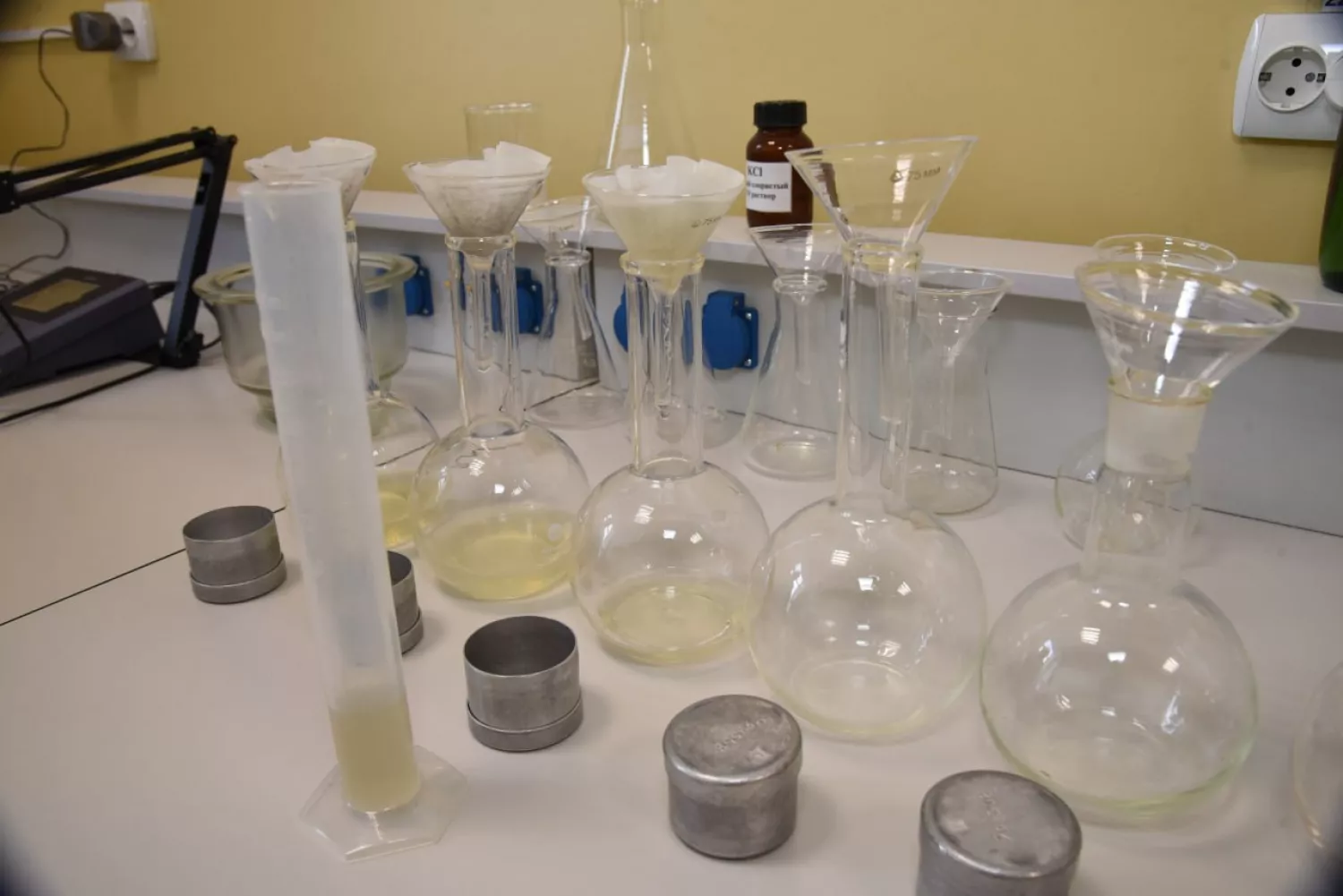 water in Mykolaiv following a decision by the Commission on Emergency Situations and Civil Protection. Illustrative photo: water utility
On 2 October, Heorhii Reshetilov, acting head of the Mykolaiv Regional Military Administration, announced plans to carry out chlorination and hyperchlorination of the water supply system for approximately three months.
On 5 October, at a staff meeting at Mykolaiv City Council, the mayor reiterated that the water quality deteriorates on its way to consumers.
«As it leaves the water utility’s treatment works, the water’s quality improves and meets drinking water standards. However, at monitoring points located in various districts, the water does not always reach end consumers with the same quality as when it leaves the water utility. To be more precise, in 46 per cent of tests, its quality deteriorates. Certain bacteriological indicators are detected there,» said Oleksandr Sienkevych.
«Mykolaivvodokanal» announced the start of additional chlorination of the water networks from 2 November. For the time being, it is forbidden to drink tap water or use it for food preparation.
Dmytro Makarov, Chief State Sanitary Doctor of the Mykolaiv region, told NikVesti which water quality indicators failed to meet standards and what the risks of chlorination are.
In addition, the State Service for Food Safety and Consumer Protection stated that, as the water is not safe to drink, they are not carrying out state supervision of water quality in Mykolaiv’s water supply system. However, monitoring is being carried out.

You read this text for free. To keep it that way, the newsroom's work is supported by members of the NikVesti Club.
Cancel any time