Water quality in Mykolaiv is deteriorating in 46 per cent of samples taken from the water supply networks
-

- Alina KvitkoReporter

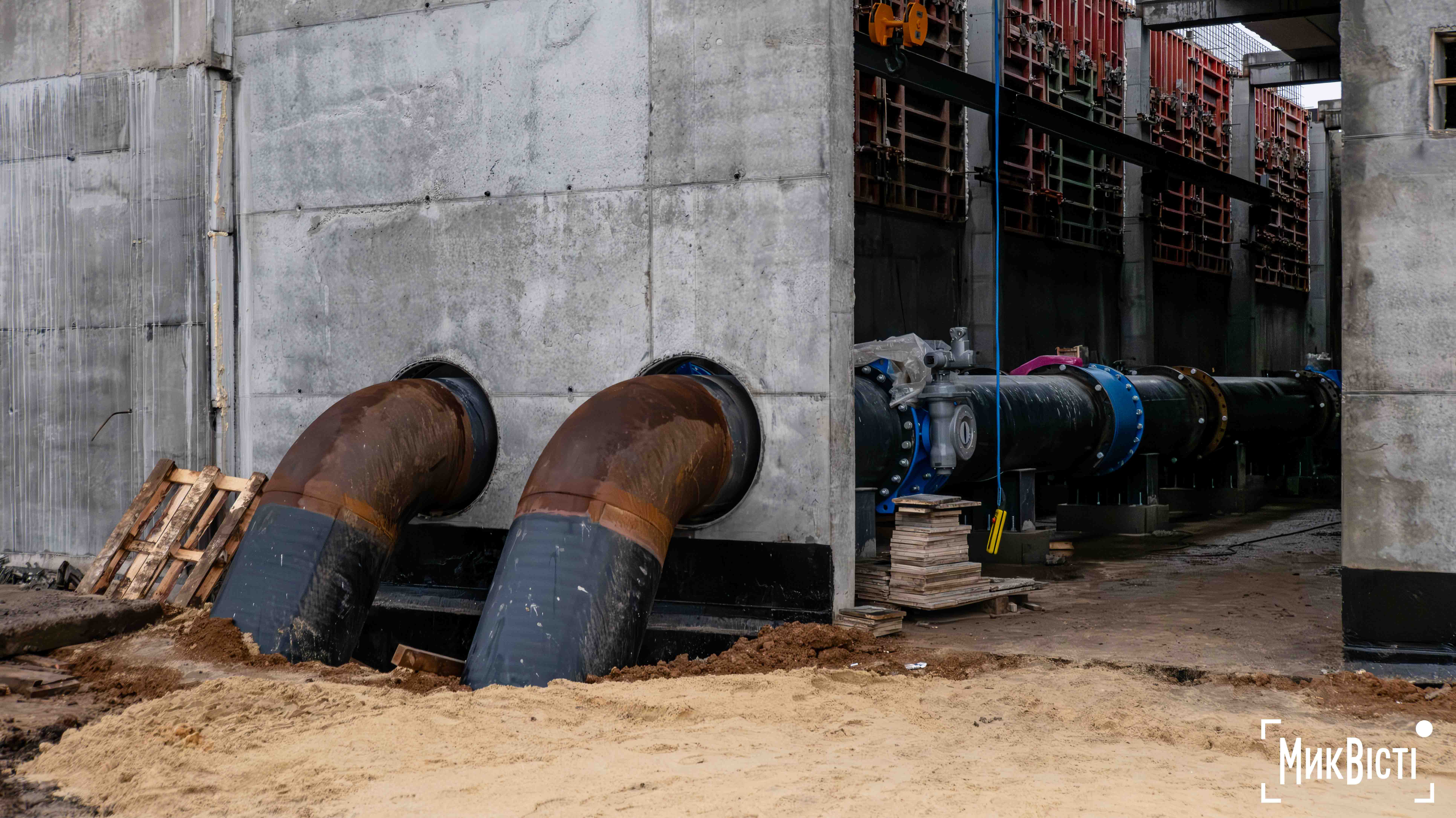 In Mykolaiv, water quality deteriorates in 46 per cent of samples by the time it reaches consumers from the water utility. Photo: archive NikVesti
In Mykolaiv, water meets drinking water standards after passing through the treatment works; however, in 46 per cent of tests carried out at monitoring points across the city, its quality deteriorates on its way to consumers. As a result, the water supply networks are planning to carry out additional chlorination and flushing over the next three months.
This was discussed during a staff meeting at Mykolaiv City Council, according to NikVesti.
Mayor Oleksandr Sienkevych explained that the water quality had been tested by several laboratories. The tests were carried out by specialists from the water utility and state institutions, as well as by laboratories in Odesa and Chornomorsk, commissioned by the Mykolaiv Regional Military Administration.
According to him, the results showed that the water is of drinking quality after passing through the water utility’s treatment works. However, after passing through the city’s distribution networks, its quality deteriorates in some samples.
«Upon leaving the water utility’s treatment works, the water’s quality improves and it meets drinking water standards. But at monitoring points located in various districts, the water does not always reach end users in the same quality as when it leaves the water utility. To be more precise, in 46 per cent of tests, its quality deteriorates. Certain bacteriological indicators appear there,» said Oleksandr Sienkevych.
The mayor suggested that the cause might lie in the condition of the water pipes.
«We can conclude that somewhere we have pipes that haven’t been flushed, or pipes that have become blocked, or there are some other issues there,» he added.
Hennadii Iziumov, director of «Mykolaivvodokanal», reported that laboratory tests at the outlets of the second, third and fourth pumping stations also confirm that the water meets drinking water standards. The only exception is the oxidisability indicator.
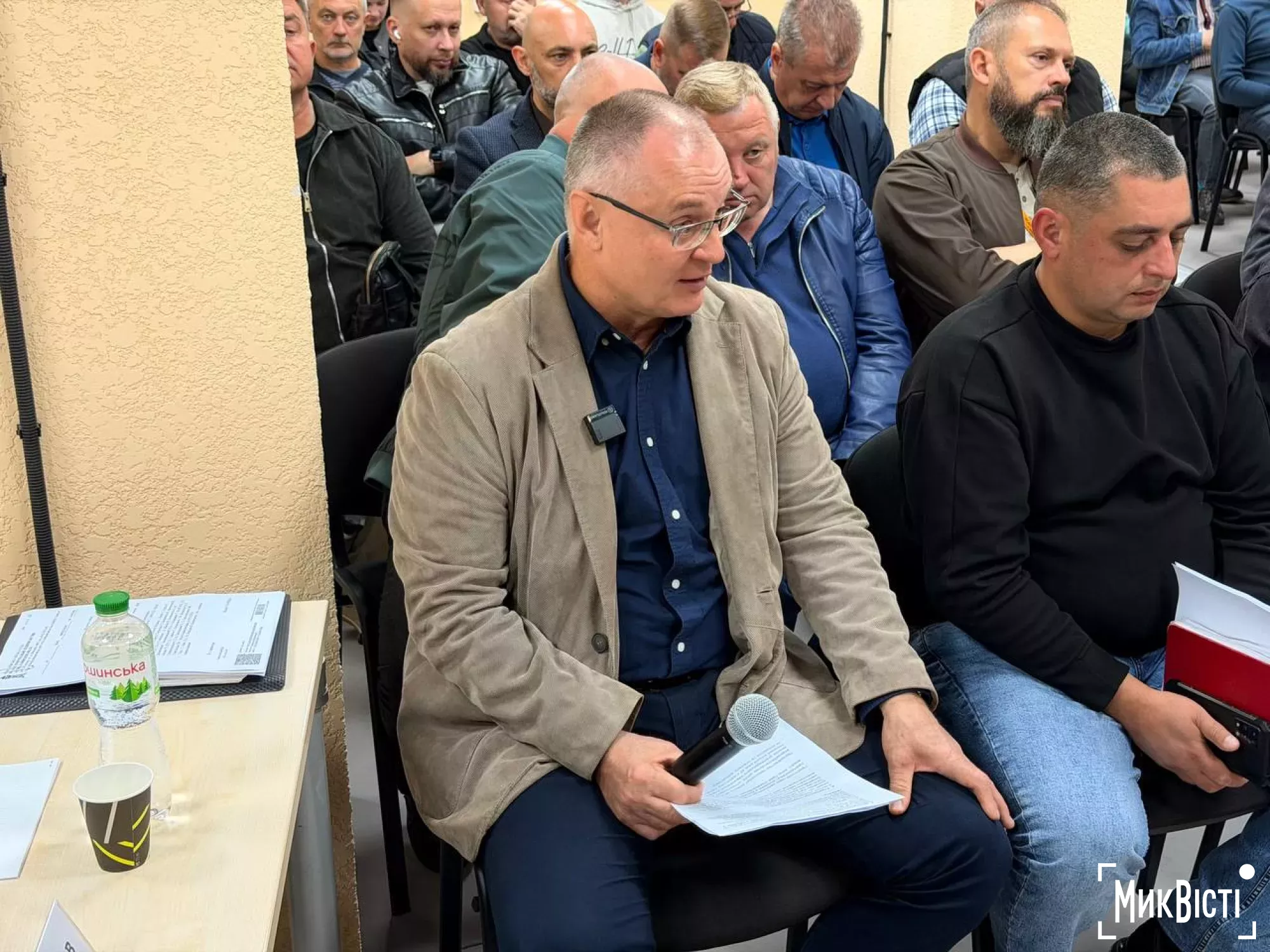 Hennadii Iziumov, Director of «Mykolaivvodokanal». Photo: NikVesti
«At present, the water quality at the outlet of the second, third and fourth pumping stations meets drinking water standards, with the exception of the oxidisability index. The standard is five; it fluctuates between 5.2 and 5.4,» said Hennadii Iziumov.
Due to the deterioration in water quality in the city’s networks, the regional commission on technical and environmental safety and emergency situations has decided to carry out additional chlorination and hyperchlorination for a period of three months.
To this end, «Mykolaivvodokanal» requires an additional 28 tonnes of chlorine, costing approximately 1.6 million hryvnias.
«To implement this safety measure, «Mykolaivvodokanal» requires an additional nearly 28 tonnes of chlorine, totalling nearly 1.6 million hryvnias. We will be announcing an additional tender today,» said Hennadii Iziumov.
According to him, during the flushing of the water supply networks, chlorine usage will increase almost threefold compared to normal operations.
Oleksandr Sienkevych explained that the additional chlorination is specifically required to clean the city’s pipes. He said that chlorine gradually evaporates from the water; however, there are certain risks associated with the procedure, about which residents need to be warned.
«In fact, chlorine is a substance which, when it enters the water and then, so to speak, from the water into a cup or kettle, evaporates — that is, it disappears. But there are risks. For example, if a person runs a bath in a room where the extractor fan is not working and spends a long time in the steam, this chlorine could affect their health,» said Oleksandr Sienkevych.
At the same time, the mayor noted that the concentration of chlorine is unlikely to be high enough to cause harm to health. However, the city authorities still plan to warn residents in advance.
«It is clear that this amount of chlorine will not be enough to cause harm to health, but in any case we want to play it safe. Please let the people of Mykolaiv know that we are planning to do this,» he added.
During the meeting, Oleksandr Sienkevych also asked whether the water utility could start flushing the system earlier, using the chlorine stocks the company already has until the end of the year, whilst simultaneously making additional purchases.
Hennadiy Izyumov explained that if chlorine usage were to increase almost threefold, the current stocks could run out as early as November. The company therefore plans to hold a tender first and secure confirmation of the supply of additional quantities.
Following the discussion, 2 November was identified as the provisional start date for flushing the networks.
Earlier, the Mykolaiv Regional Military Administration reported that the city’s water supply networks are to be treated by chlorination and hyperchlorination over a three-month period. During this time, tap water will not be suitable for drinking or cooking.
The water supply for Mykolaiv: a brief history
It has been more than three years since Russian troops damaged the water pipeline that supplied Mykolaiv with water. Since then, the city, with a population of nearly half a million, has been left without a centralised supply of high-quality water.
Throughout this time, the residents of Mykolaiv have been receiving water from a backup source, which raises many questions about the quality of this water and its salt content. The salt water has damaged 1,200 kilometres of the city’s water supply network. Borys Dudenko, director of «Mykolaivvodokanal», stated that it is impossible to replace the entire length of the network that was damaged by the influx of salt water.
For a long time, representatives of the state and local authorities sought ways to restore the drinking water supply in Mykolaiv. A final decision was reached in 2024: a new water pipeline will be laid from Nova Odesa, with funding allocated from the state budget.
The regional reconstruction service even selected contractors who would work on a «design-build» basis. These were three companies, each responsible for one of the three sections of the works: «Ukrtransmist», «Rostdorstroi» and «Avtostrada». However, both the client and the construction contractor were subsequently changed. The client for the construction of the new water main became the Infrastructure Restoration and Development Service in the Dnipropetrovsk region, and the contractor was the «Autostrada» group of companies.
The new water pipeline for Mykolaiv was commissioned on 7 October 2025 — it was connected to the water utility’s networks.
As early as November, the head of the Mykolaiv Regional Military Administration, Vitalii Kim, stated that drinking water could be flowing from Mykolaiv residents’ taps within half a month to a month. That is precisely how long it will take to complete all work on the treatment plants and receive the official laboratory reports.
