Sienkevych replied to Kopytin, explaining how he plans to save on Mykolaiv’s budget: cut bonuses for the best teachers, and leave «Mykolaiv Parks» expenditure untouched
In response to a query from MP Ihor Kopytin regarding cost-saving measures, Mykolaiv City Council outlined cuts solely in the education sector: ranging from the refurbishment of schools and nurseries to a proposal to cut bonuses for the best teachers by 235,800 hryvnias and school meals by 11.1 million hryvnias. At the same time, they refused to cut expenditure on urban improvements, which funds the municipal enterprise «Mykolaiv Parks», even though an additional 16.6 million hryvnias had been allocated for this purpose this year.
This is stated in a letter from the mayor, Oleksandr Sienkevych, dated 26 October, a copy of which was provided to NikVesti by Ihor Kopytin.
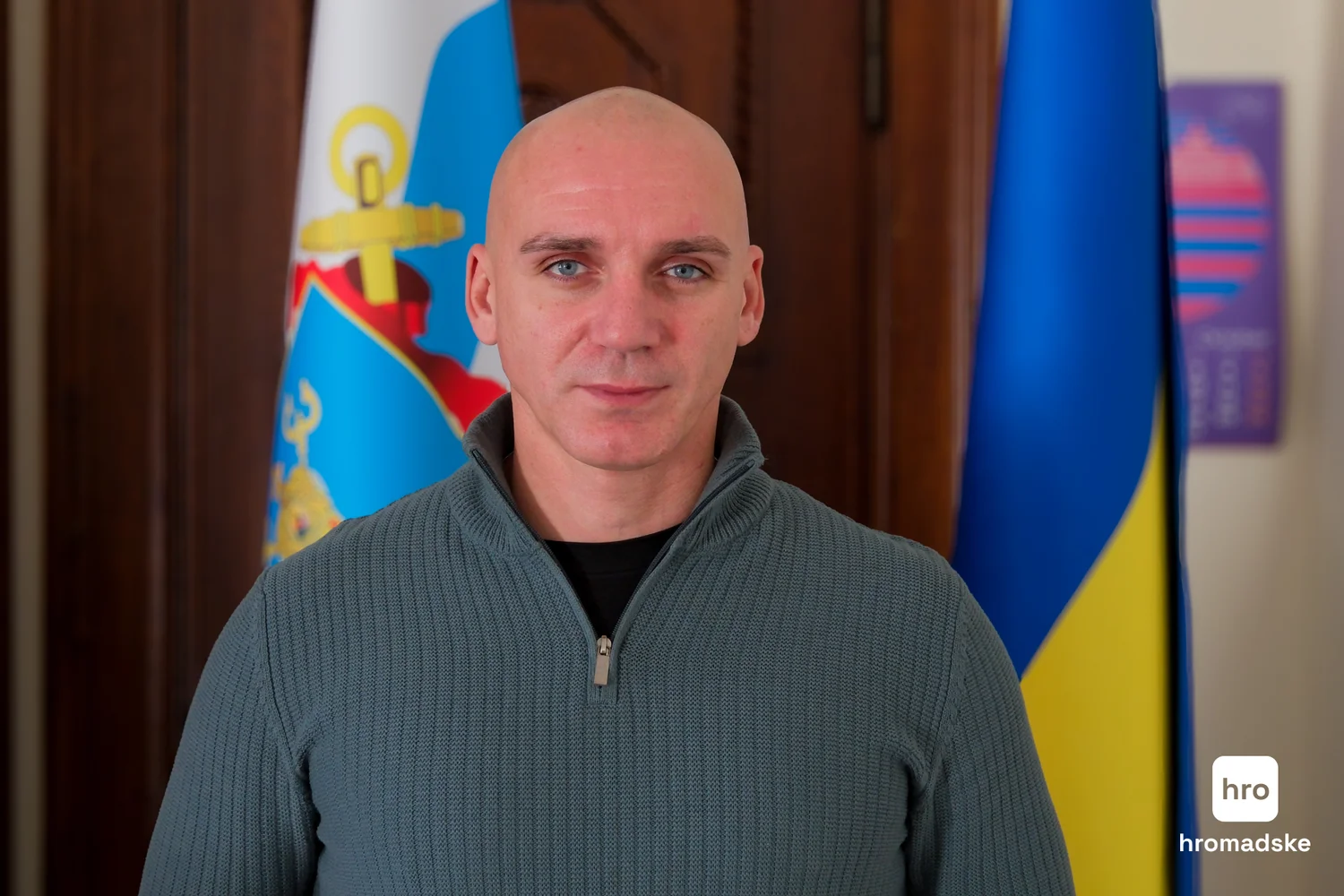 Oleksandr Sienkevych, Mayor of Mykolaiv. Photo: hromadske
Ihor Kopytin approached the city council on 6 October and asked them to specify which non-priority expenditure the city had cut: on new construction, renovations, major repairs, parks and public gardens. A month later, on 23 November, Oleksandr Sienkevych expressed his outrage at a meeting with cultural workers that, instead of offering support, the MP had sent a request for cost-cutting measures. At the same time, during that very meeting, the mayor stated that the city was ready for audits.
«We are giving permission for our budget to be scrutinised, for them to look into it and tell us: please, tell us where we should make cuts so that things improve,» said Oleksandr Sienkevych.
Cuts to education had already been made before the request
In its letter, the city council states that 14 executive bodies carried out a review, but non-priority expenditure was cut only in the education sector. Other spending authorities, notably the Capital Construction Department, the Department of Municipal Services and all four district administrations, found no expenditure to cut.
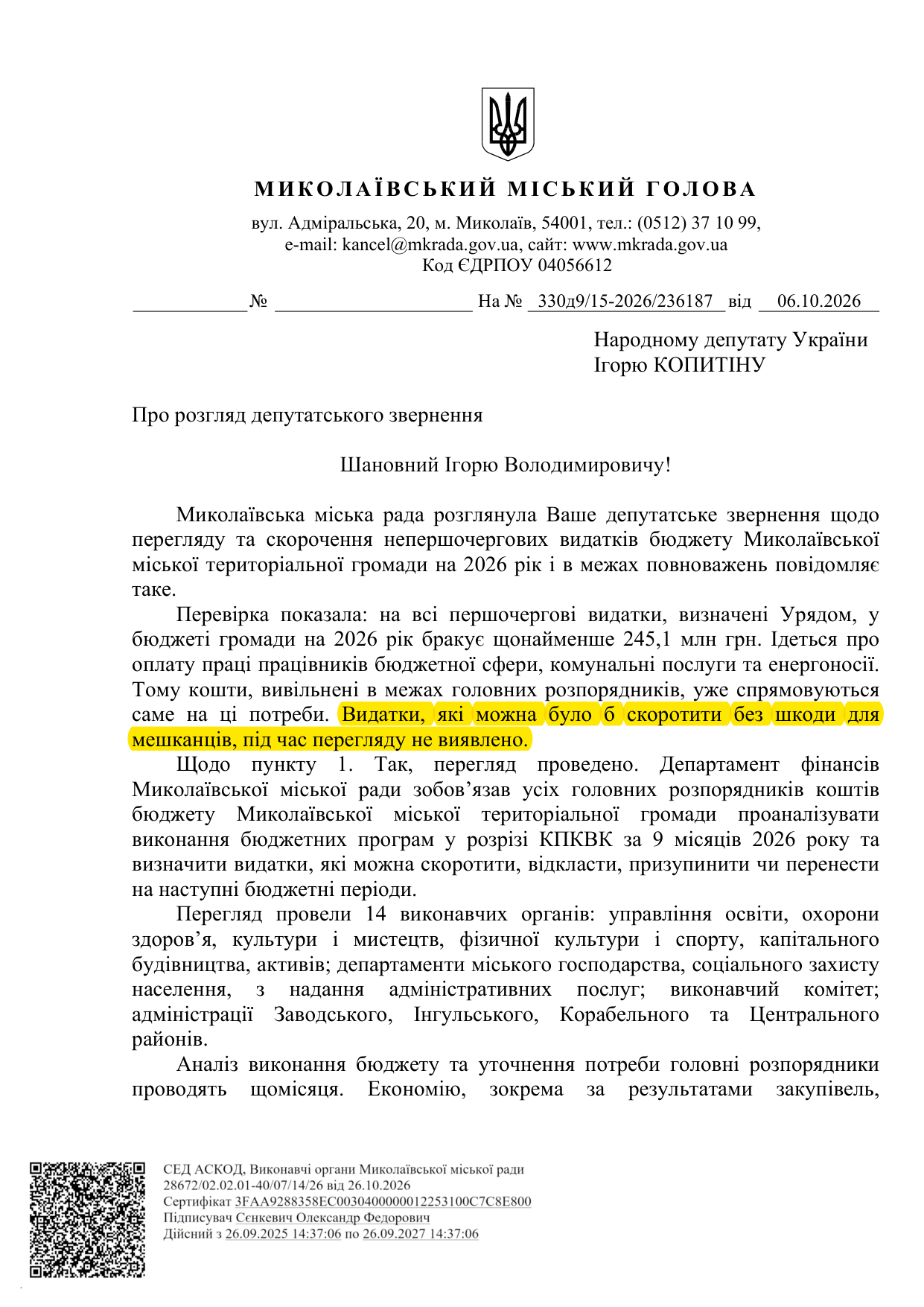 Excerpt from Oleksandr Sienkevych’s response to Ihor Kopytin’s enquiry
The cuts in education cited in the letter are as at 1 October, i.e. before Ihor Kopytin sent his enquiry. Specifically, the following were reduced:
- −12.1 million hryvnias from investment projects: 5.6 million for upgrading schools’ facilities, 2.76 million for nurseries, 70,000 for extracurricular activities, whilst 3.69 million was transferred to the co-funding budget line for school buses
- −4.54 million hryvnias from scholarships and one-off payments
- −3.73 million hryvnias from electricity bills; this money was redirected to water supply
- −1.26 million hryvnias from salaries in the education department
Furthermore, the Department of Education proposes to reduce expenditure on school meals by 11.1 million hryvnias and bonuses for the best teachers by 235,800 hryvnias. Ihor Kopytin himself, in a comment to NikVesti, emphasised that it is precisely non-essential expenditure that should be cut, rather than funding for education or payments to teachers.
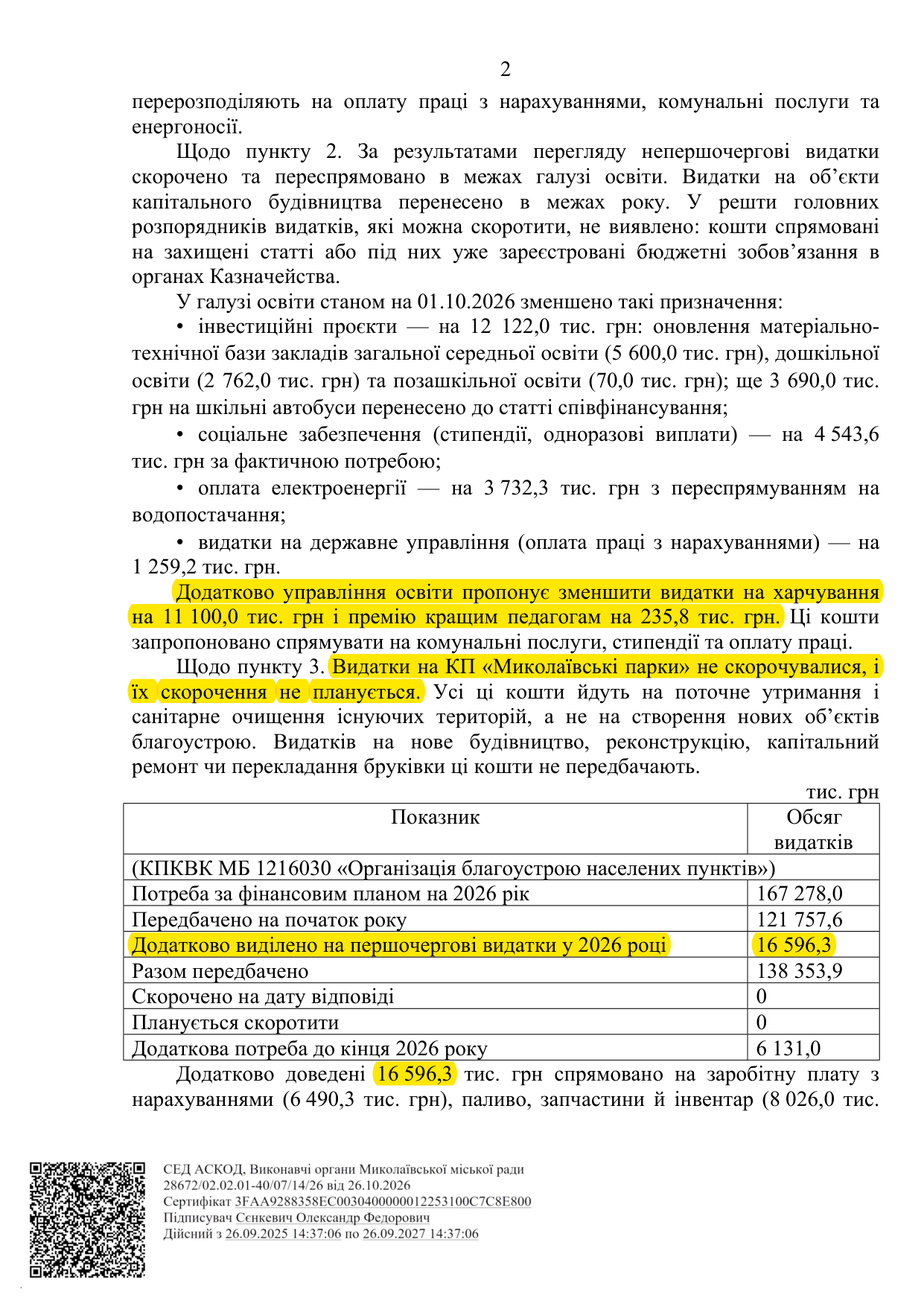 A fragment of Oleksandr Sienkevych's response to Ihor Kopytin's appeal
No cuts to parks or capital works
Expenditure on the «Mykolaiv Parks» municipal enterprise has not been cut and is not planned to be cut. Under the urban improvement programme, which funds the enterprise, 138.4 million hryvnias have been allocated for 2026, of which 16.6 million hryvnias have already been allocated during the year: 8 million hryvnias for fuel, spare parts and equipment, 6.5 million hryvnias for salaries, and 1.9 million hryvnias for utilities. According to the city council, a further 6.1 million hryvnias is still needed by the end of the year. By way of comparison, the city was short of 9.07 million hryvnias for November’s salaries for cultural workers.
«Expenditure on the «Mykolaiv Parks» municipal enterprise is not being cut, as this does not constitute «urban improvement» in the sense intended by the Government (new parks, fountains, paving),» the response states.
The city council explains that this money goes towards cleaning parks and public gardens, rubbish collection, snow clearance, the removal of hazardous trees and the repair of damage caused by shelling. Ihor Kopytin, however, in a comment to the editorial team, referred to the government’s recommendation to review expenditure on parks and public gardens specifically.
The Capital Construction Department has been allocated 248.7 million hryvnias for 2026. Of this, 128.6 million hryvnias are earmarked grants from the state budget, which cannot be spent on anything else, whilst 120.1 million hryvnias come from the city budget. As stated in the letter, 0 hryvnias have been cut. The city council explains this by citing contracts that must be fulfilled by the end of the year, and the fact that the projects include shelters in schools and hospitals, post-shelling repairs and energy resilience. A further 11.8 million hryvnias have been carried over from September–October to November–December: this money has not been saved, but will be spent at a later date.
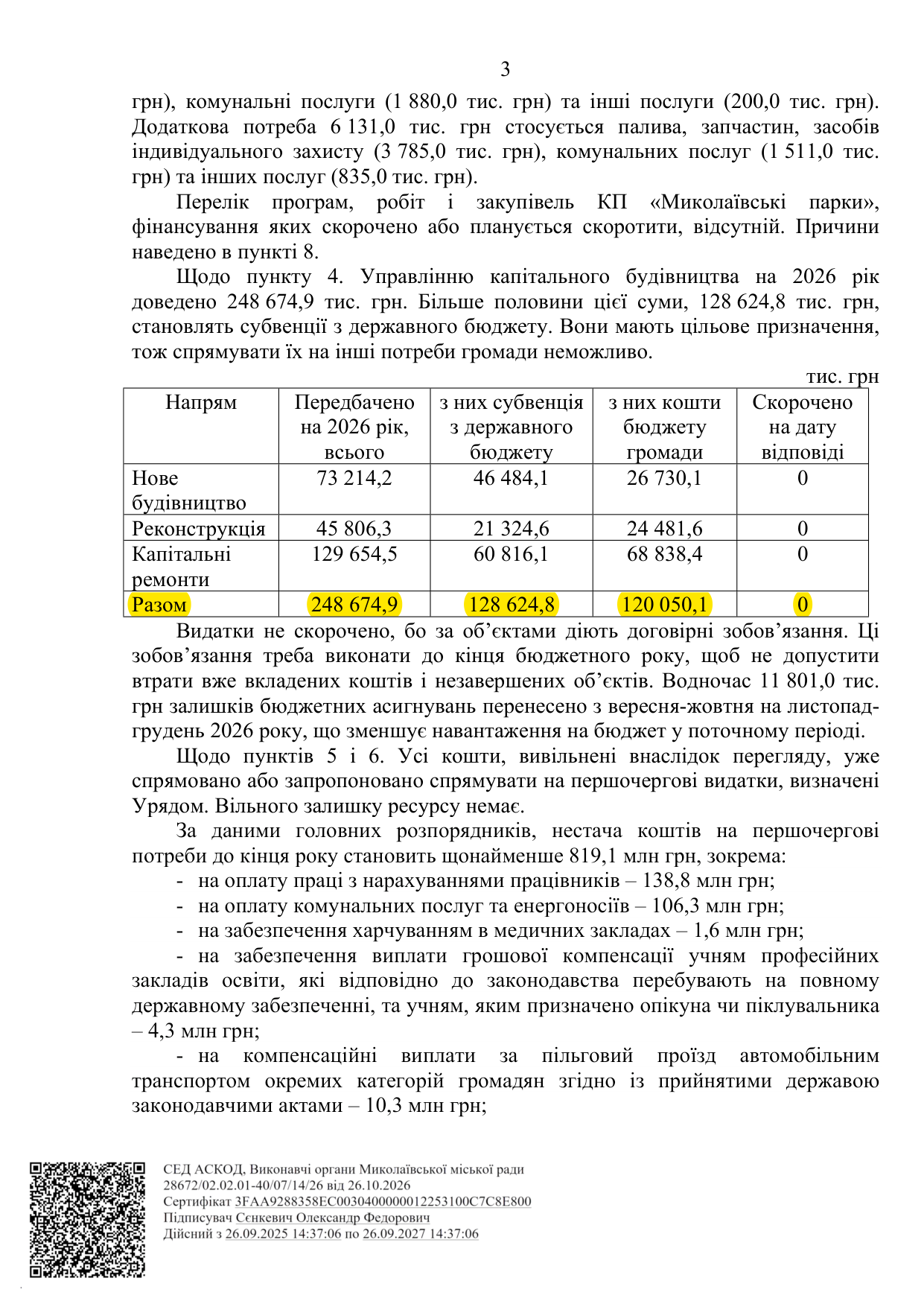 A fragment of Oleksiy Sienkevych's response to Igor Kopytin's appeal
Meanwhile, following the letter, on 20 November, the Central District Administration appointed a contractor to repair the pavement on Odesa Highway for 1.78 million hryvnias. NikVesti had previously discovered that the shortfall in funds for salaries in the cultural sector had been factored in during the drafting of the 2026 budget.
Varying figures for the deficit
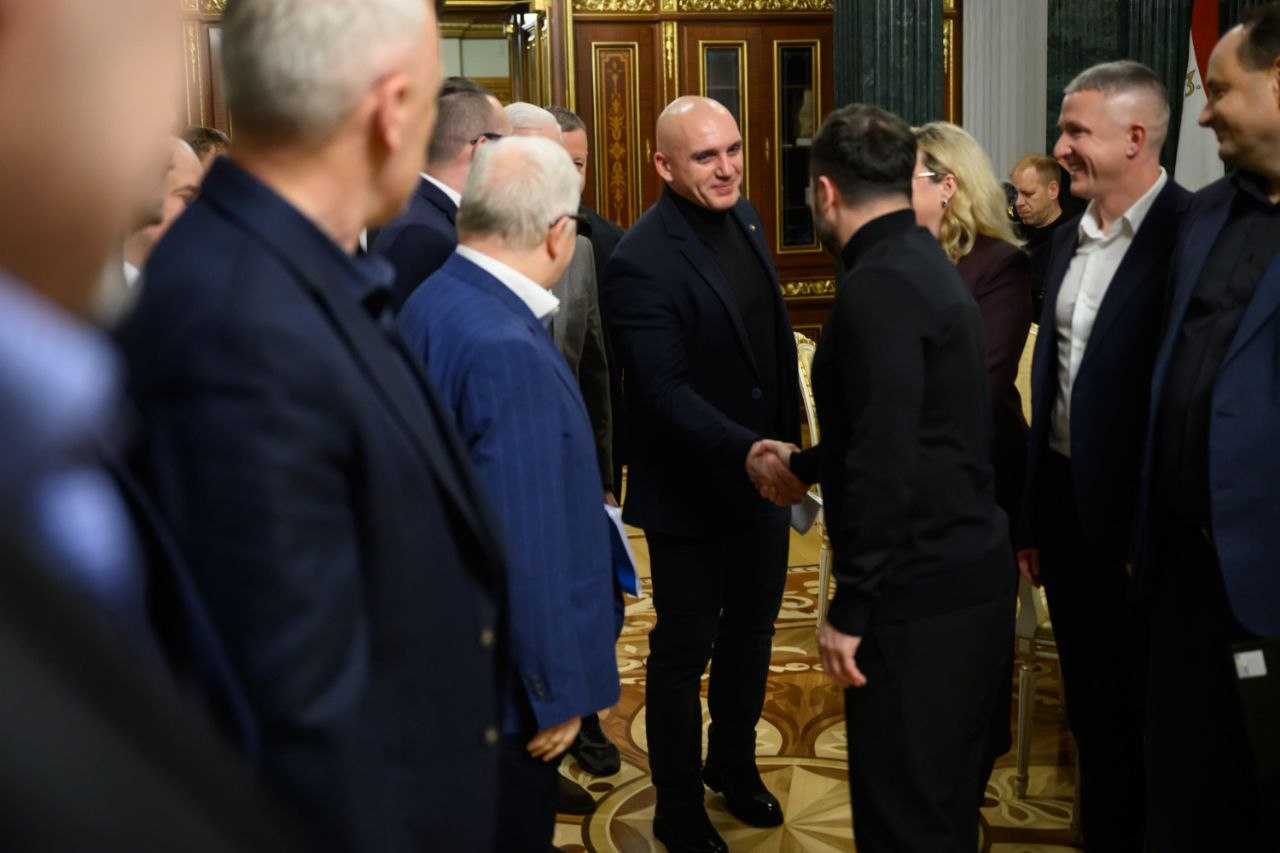 Oleksandr Sienkevych raised the issue of Mykolaiv’s budget deficit at a meeting with President Volodymyr Zelenskyy on 13 November 2026. Photo from Oleksandr Sienkevych’s Telegram channel
At the start of the letter, the city council states that there is a shortfall of at least 245.1 million hryvnias for priority expenditure as defined by the government: salaries for public sector workers and utility bills. Further on in the same letter, the total shortfall for priority needs until the end of the year is stated as at least 819.1 million hryvnias, of which 412.7 million hryvnias is for water and heating supplies and 96.7 million hryvnias for electric transport. On 23 November, the mayor cited a different figure — 750 million hryvnias.
City Hall assures that it will continue to review budget implementation on a monthly basis, and that all savings will be channelled towards salaries, social benefits and heating for public sector institutions. According to City Hall, a draft amendment to the 2026 budget is currently being prepared. It should be noted that Fedir Panchenko, chair of the Planning and Budget Committee, stated during a meeting held on 24 November that the committee had not received any proposals from the city hall’s finance department regarding the reallocation of the city’s budget expenditure.
How Mykolaiv ran out of money for salaries in the cultural sector
Employees of cultural institutions in Mykolaiv have appealed to the Cabinet of Ministers, the Minister of Culture Tetiana Berezhna and the mayor, as over a thousand people may be left without their November and December salaries. Deputy Mayor Anatolii Petrov acknowledged that there is no money in the city budget for these salaries, whilst the head of the culture department, Yurii Liubarov, warned that staff could be sent on unpaid leave or placed on furlough. In response, Yuliia Zakharova, director of the «Molodizhnyi» Palace of Culture, stated that she would not be making staff redundancies at her institution, and called on the authorities to speak openly about the possible closure of cultural institutions, rather than referring to it as «optimisation». Other heads of cultural institutions also spoke out against further redundancies at a meeting with the mayor. And on 24 November, at a meeting of the relevant city council committee, Yurii Liubarov stated that the sector had nowhere left to cut: since the start of the full-scale invasion, the number of staff in the culture department had fallen from 1,370 to 1,058, and the problem of funding salaries could carry over into 2027.
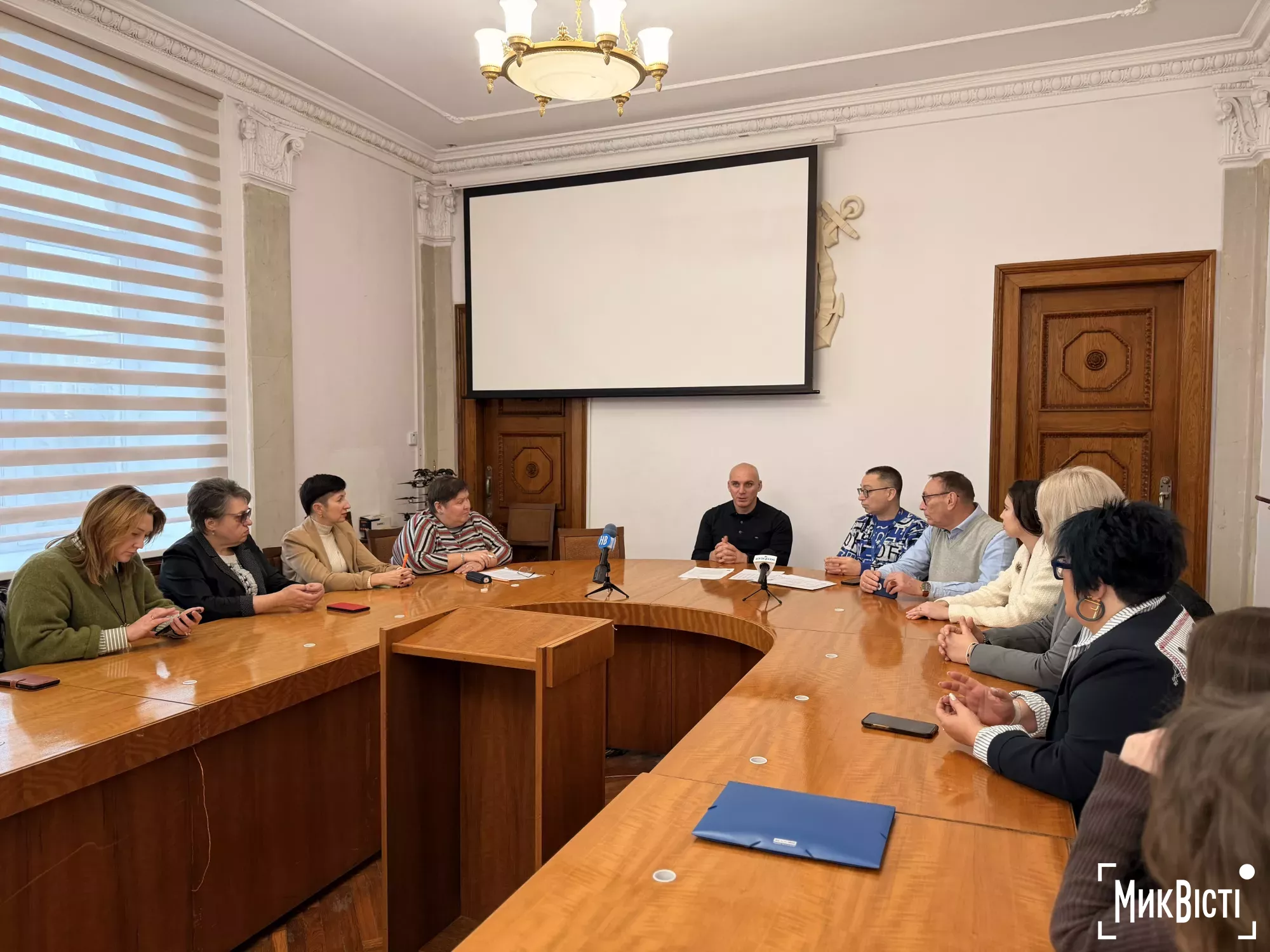 On 23 November, during a meeting between the mayor, Oleksandr Sienkevych, and representatives of the cultural sector. Photo: NikVesti
The sector had warned in advance that there would not be enough money. Volodymyr Topchyi, director of the Mykolaiv Zoo, stated back in the summer that there was no money in the budget for salaries at cultural institutions from 1 September, whilst in October Yurii Liubarov estimated the shortfall for salaries and utility bills at 26 million hryvnias. As NikVesti has discovered, the shortfall in funding for salaries in the cultural sector was already factored in when Mykolaiv’s 2026 budget was drawn up.
At the same time, salaries in the sector are already low: according to Yurii Liubarov, employees of libraries, cultural centres, art schools and the zoo receive an average of 8,200 hryvnias «take-home pay». The Mykolaiv Regional Museum of Local History reported that such salaries make it impossible to retain young professionals. Back in December 2025, city councillors asked the government and parliament to increase salaries for cultural workers, but the government raised only the basic post-grade salary — to 3,470 hryvnias.
Resolution №951, to which the Ministry of Culture refers, provides for a pay rise from 1 January 2027. However, local budgets must find the funds for this by reviewing the network of institutions and staff numbers. This is precisely what the ministry is now proposing to Mykolaiv.
The city authorities have been discussing the issue of the budget deficit since the start of the year.
Back in January, Mykolaiv’s mayor, Oleksandr Sienkevych, stated that the city needed to receive around 1.1 billion hryvnias from the state budget. In May, the city council again appealed to the Cabinet of Ministers for an additional grant. On 6 August, councillors once more backed the appeal — this time for 1.18 billion hryvnias. Currently, the shortfall is estimated at 750 million hryvnias by the end of the year.
 NikVesti
· post about this story
Sienkevych replied to Kopytin, explaining how he plans to save on Mykolaiv’s budget: cut bonuses for the best teachers, and leave «Mykolaiv Parks» expenditure untouched.
In response to an enquiry from MP Ihor Kopytin,…

You read this text for free. To keep it that way, the newsroom's work is supported by members of the NikVesti Club.
Cancel any time