Mykolaiv cultural institution heads oppose staff cuts
Heads of cultural institutions in Mykolaiv have spoken out against further staff cuts in the sector, emphasising that due to the war, low wages and the departure of specialists, the city has already lost some of its creative groups and areas of arts education. Further cuts could lead to the loss of specialists who will be difficult to replace in the future.
This was discussed on 23 November during a meeting between the mayor, Oleksandr Sienkevych, and representatives of the cultural sector, according to NikVesti.
In particular, Yuliia Zakharova, director of the «Molodizhnyi» Palace of Culture, emphasised that it is the staff of cultural institutions who are responsible for nurturing future artists, despite the fact that the state is currently not paying sufficient attention to supporting these specialists.
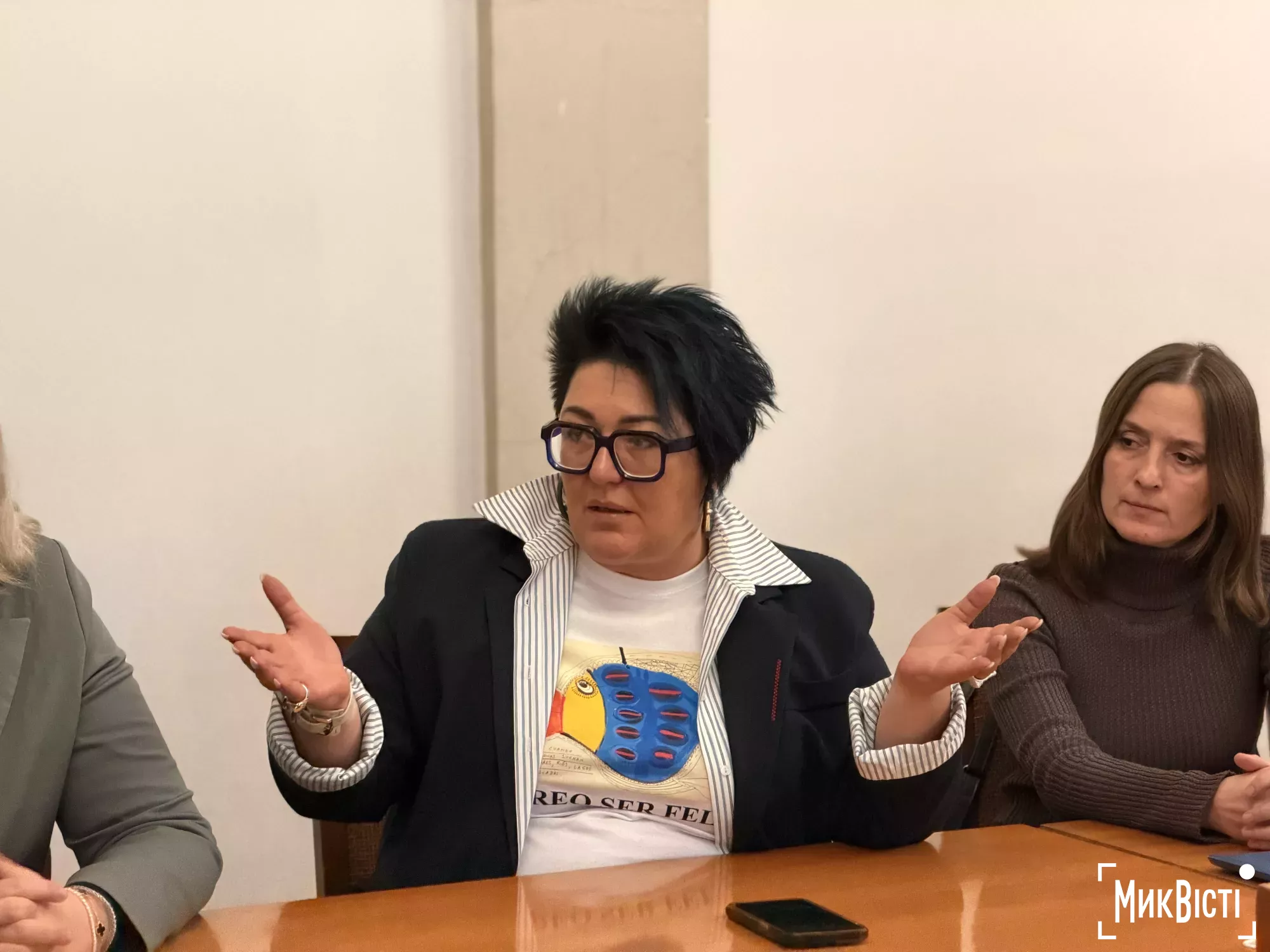 Yuliia Zakharova, director of the «Molodizhnyi» Palace of Culture. Photo: NikVesti
«We understand that it is not the city that is unwilling to pay our salaries, but, in my view, the Ministry of Culture ought to do something. Because folk ensembles are precisely what everyone is clamouring about at the moment: «Oh, we are nurturing culture». Nobody is fostering anything. It’s all on our shoulders, on the shoulders of those leaders who are actually doing the work. Telethons aren’t culture. Culture is teaching those little ones who’ve come to us to love their country, to sing these songs, to dance these dances. And it’s us who do this, it’s the cultural institutions. For some reason, in schools it’s the teachers who get the credit, whilst we’re treated like beggars. Well, that’s not quite right. I think the Ministry needs to do something about this. At the very least, they should keep the folk ensembles going, at the very least,» said Yuliia Zakharova.
Currently, around 100 children attend her centre. At the same time, it’s becoming harder to find new specialists to work with them.
«Because of this situation, we’ll change careers tomorrow and leave. We’ll become classroom managers; we’ll be hired. But when the time comes and they say, «Oh, we’ve got the money», we won’t have any specialists left. That’s the problem right now. There are no directors; they’re simply not there. There are no event organisers, no club leaders,» she emphasised.
Separately, the director called for additional funding for the sector to be secured from the Ministry of Culture.
«We need to demand that this ministry provide a grant, a subsidy—call it what you like. Are we some sort of beggars? Are we just a bunch of nobodies? We’ve been studying since childhood to enter this profession. We studied for 17 years to become teachers. And we’re brilliant teachers. Then where do all these pop stars come from? Where do they come from? From a telethon? We’re the ones who bring them up,» said Yuliia Zakharova.
The head of the Children’s Creative Centre in the Zavodskyi district also spoke about the loss of specialists and entire areas of arts education. According to her, there is practically no scope left for further staff cuts. In particular, the number of teaching posts at her centre has fallen from 48 to 25.
«There really is nowhere left for us to make further cuts. We’ve already lost a great deal, even compared to last year. Speaking for my own school: whereas I used to have 48 teaching posts, today there are only 25 left. We have lost certain areas of focus; we have lost creative groups,» she said.
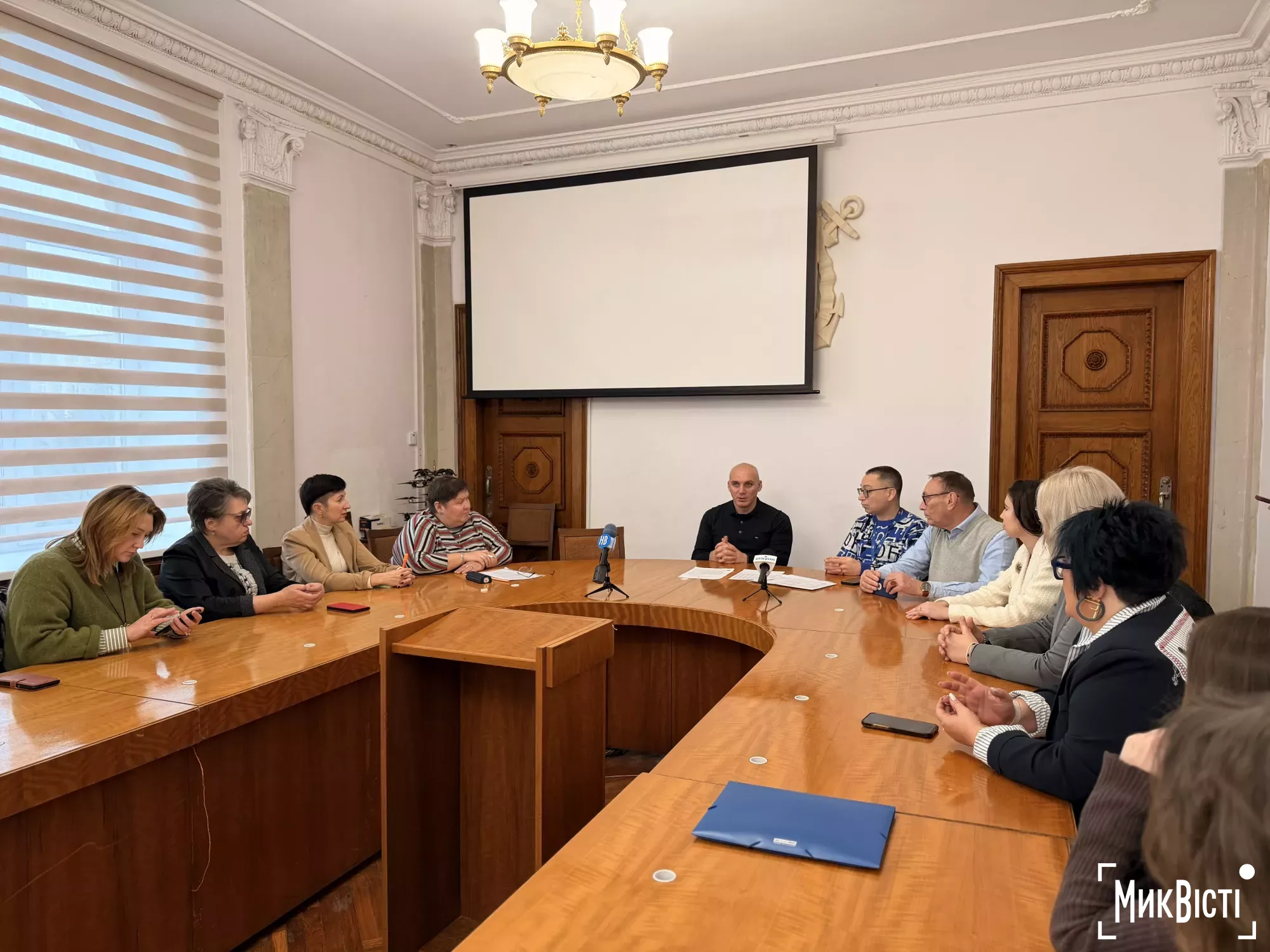 A working meeting with representatives from the cultural sector on 23 November. Photo: NikVesti
As an example, she cited the bandura class, which used to be the largest at the school. That programme has now effectively ceased to exist.
«I used to have the largest bandura class at the school. But now there isn’t a single child left. The teachers have left, and there’s no workload. I can’t even revive this course because there’s no workload. I can find a specialist, but there’s no way I can pay them a salary,» she explained.
The headteacher also emphasised that the school works specifically with the children of internally displaced persons and fallen Ukrainian servicemen.
«They are our future; they are our townspeople. And those internally displaced children who come to us are the children of our fallen defenders. If, for example, our school in the Zavodskyi district were to close now, they would have nowhere to go,» said the headteacher.
Another head of an arts institution mentioned to the mayor the Fominykh Female Academic Choir, which once operated in Mykolaiv. According to her, the struggle to keep the choir going had been ongoing since 2017, but the coronavirus pandemic and the full-scale war had ultimately made its survival even more difficult.
«We all performed at a world-class level, on a par with professional ensembles and national ensembles, and shared the stage on numerous occasions. And so it happened that I’d been fighting for this ensemble since 2017; then Covid-19, then the war — and that was that. I faced a dilemma: which is more important — the choir, which is truly a gem, and fighting for it, or fighting for the arts schools, because these are children. I decided that we must fight for the arts schools, because they are the future. I realise that we won’t be able to revive the choir now,’ she said.
In her view, even with sufficient funding, it could take decades to restore choral art to that level.
«It will take another 30 years to revive this culture, this high-calibre artistic choral culture. But as long as there are still children studying at art schools, we have hope for a revival; we have hope that other ensembles will emerge which will become the jewels of Ukraine,» emphasised the headteacher.
She also noted that tuition at art schools in Mykolaiv is now fee-paying, and that the cost within the city is considered one of the highest in Ukraine.
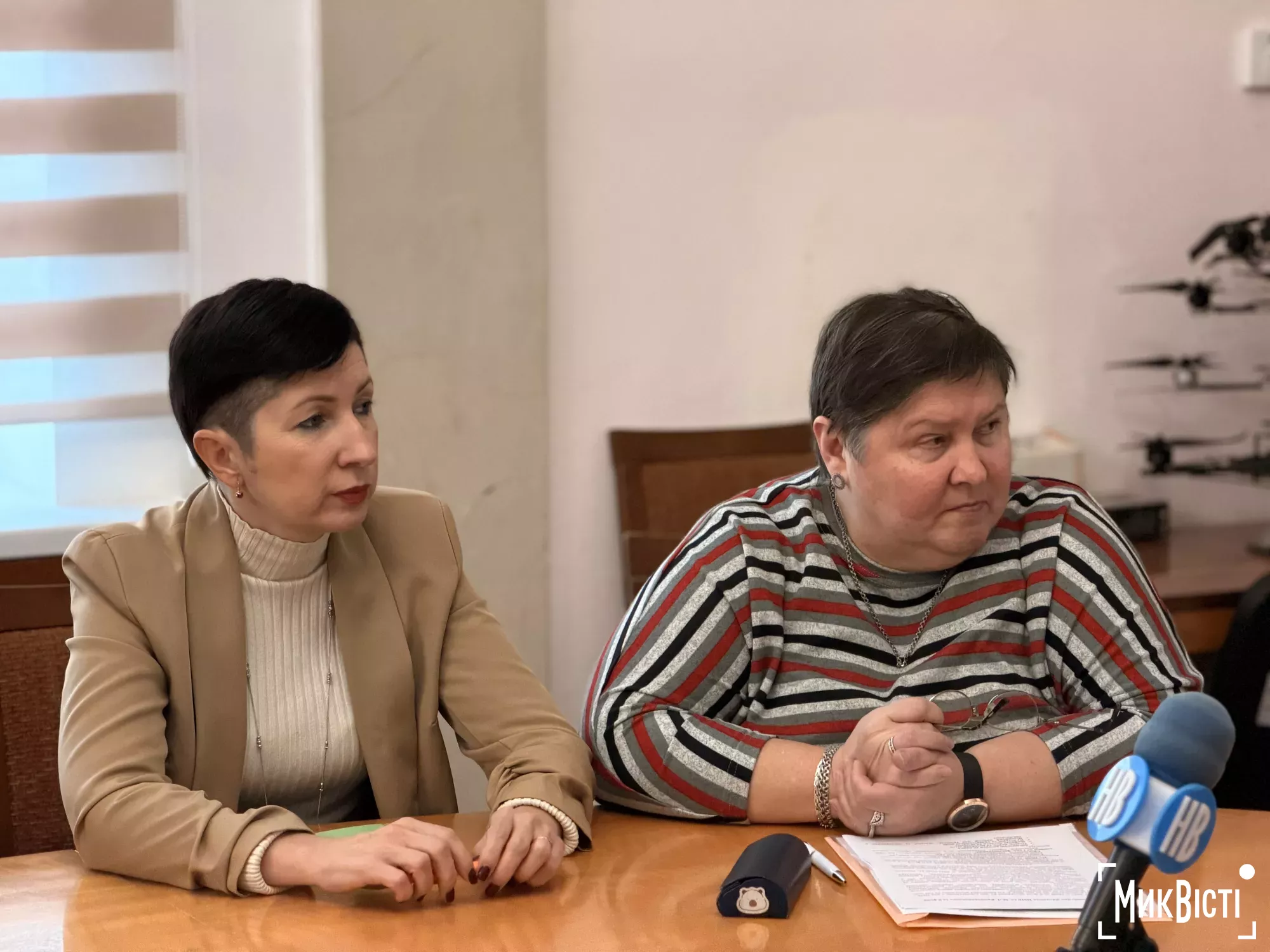 Taisiia Belibova, director of the City Library for Children, and Inga Savitska, director of the M. L. Kropyvnytskyi City Library. Photo: NikVesti
Also present at the meeting was Inha Savytska, director of the Kropyvnytskyi Central City Library. She emphasised in particular that the work of cultural institutions is not limited to educating children or organising artistic events. City libraries also serve as digital education hubs, provide free services to residents and operate as «Resilience Centres».
She also explained that libraries have already lost some of their staff due to people moving abroad and low wages.
«Last year, our libraries provided free services worth 174 million hryvnias to the city’s residents. The social return on every budget hryvnia invested in a library is 6 hryvnias 30 kopiikas. None of us can afford to lose a single person today. Because the war has taken a certain number of people from us — those who went abroad and did not return. Low wages throughout this entire period have also taken away our specialists,» she said.
Volodymyr Topchyi, director of the Mykolaiv Zoo, called for workforces to be retained, despite the lack of funds to pay wages. He noted that the zoo’s staff continue to work in difficult conditions and without receiving their wages solely because, for many of them, working with animals is their life’s work.
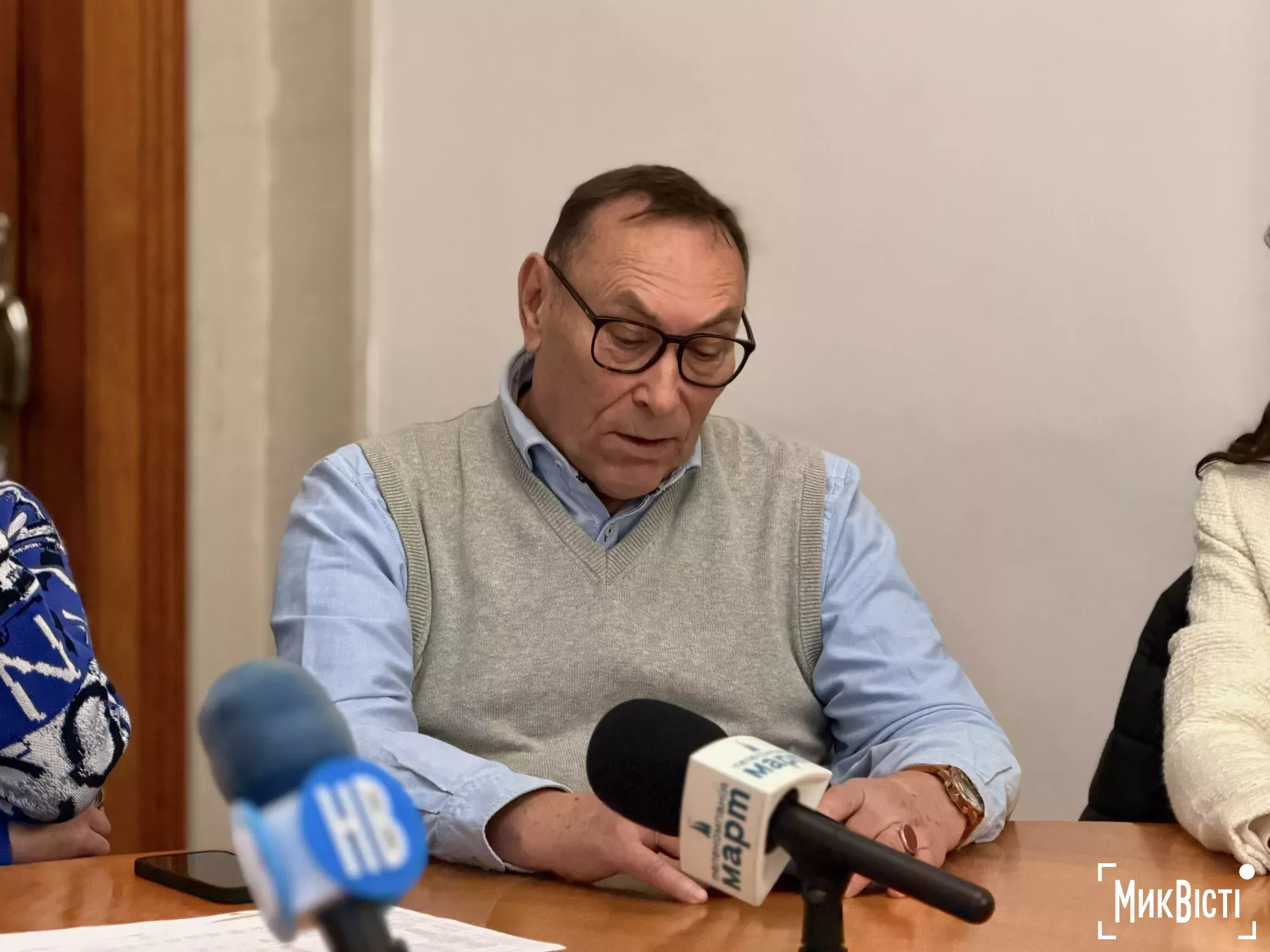 Volodymyr Topchyi, director of the Mykolaiv Zoo. Photo: NikVesti
«It has never been easy for us. No matter how difficult things are for us right now, we are keeping our teams together. That is the most important thing we have. If we don’t have people, we have nothing. And now, when people simply won’t be getting their wages, we need to find the right words to keep these people on. Those who have stayed are the ones for whom this is their life. For whom nothing else exists. We’ll have to grit our teeth and get on with it. We need to keep our teams together, our people,» said Volodymyr Topchyi.
As is well known, staff at cultural institutions in Mykolaiv have been posting en masse on social media about the lack of funds to pay salaries and energy bills until the end of 2026. Currently, over a thousand people may be left without their November and December wages. This was highlighted in a joint letter to the Prime Minister of Ukraine, Serhii Koretskyi, the Minister of Culture, Tetiana Berezhna, and the Mayor of Mykolaiv, Oleksandr Sienkevych.
In particular, Yurii Liubarov, head of the Department of Culture, stated that if Mykolaiv is unable to find the funds to pay cultural workers’ salaries, the heads of cultural institutions may have to send staff on unpaid leave or place them on furlough.
Currently, according to Deputy Mayor Anatolii Petrov, there are no funds in Mykolaiv’s budget to pay the salaries of cultural workers.
In response, Yuliia Zakharova, director of Mykolaiv’s «Molodizhnyi» Palace of Culture, stated that she has no intention of making staff redundancies at her institution due to a lack of funding. She called on the authorities either to ensure proper remuneration or to speak openly about the possible closure of cultural institutions, without euphemising it as «optimisation».
Back in December 2025, city councillors appealed to the government and parliament, demanding a pay rise for cultural workers. They noted that in 2025 the minimum wage stood at 8,000 hryvnias, yet the basic salaries of many cultural workers remained below this level.
The government subsequently raised the basic salary for cultural workers to 3,470 hryvnias. The Mykolaiv authorities say they will seek funds in the budget to pay the allowances.
In July 2026, the Ukrainian Ministry of Culture announced that, under a new Cabinet of Ministers resolution, salaries for cultural workers were to be increased from 1 January 2027. However, the full text of the resolution revealed that the funds for the pay rise must be found in local budgets, following a review of the network of institutions and staffing levels.
The Mykolaiv Regional Museum of Local History reported that it is unable to retain young staff due to low salaries.
Meanwhile, the director of the Mykolaiv Zoo, Volodymyr Topchyi, stated that the Mykolaiv budget currently lacks the funds to pay the salaries of cultural sector staff from 1 September. He emphasised that the issue of funding needs to be resolved immediately.

You read this text for free. To keep it that way, the newsroom's work is supported by members of the NikVesti Club.
Cancel any time
