Kim is looking for specialised vehicles to maintain the sludge fields at the Mykolaiv Alumina Plant
- Kateryna Sereda
-
•
-
11:11, 20 March, 2026
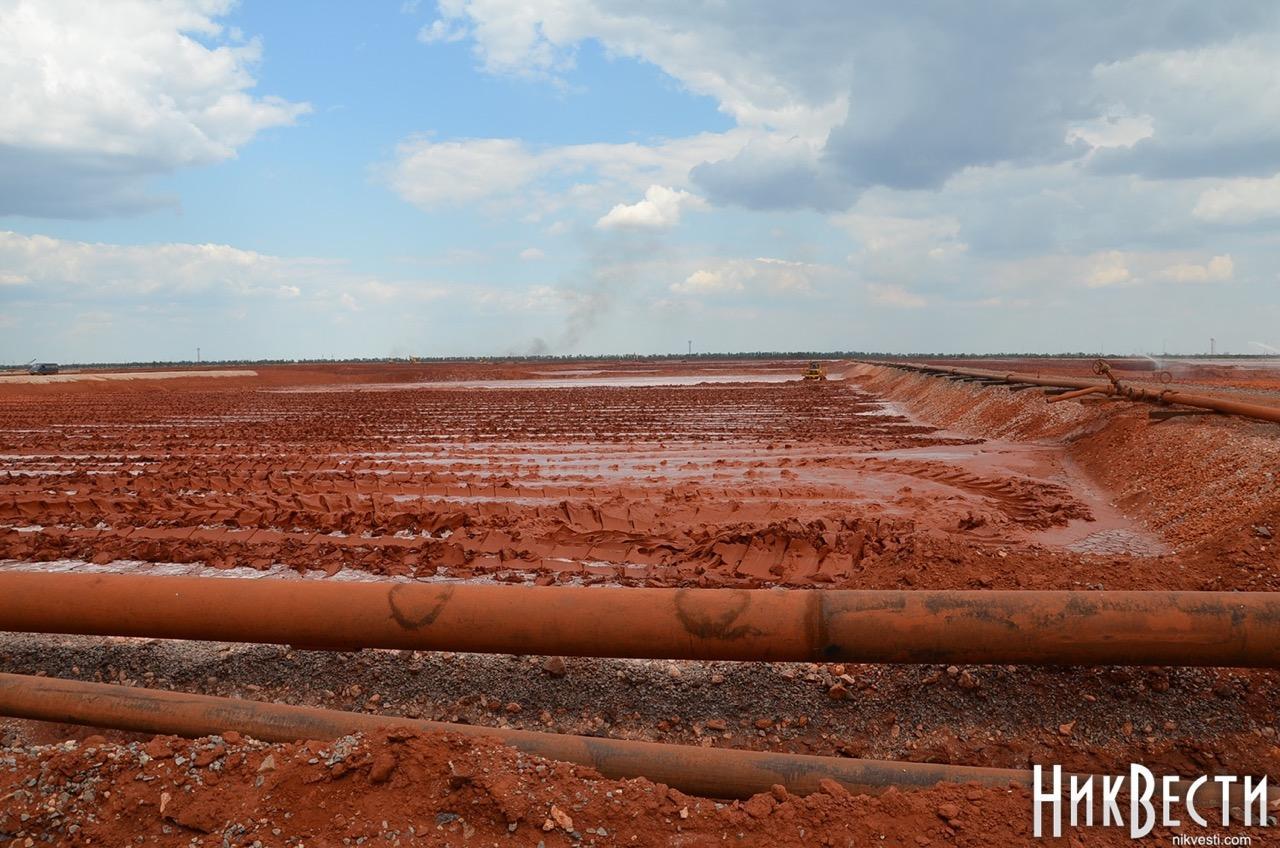 Sludge ponds must be kept constantly moist and the sludge water pumped out to avoid an environmental disaster, archive photo NikVesti
Vitalii Kim, Head of the Mykolaiv Regional Military Administration, has stated that he is working to resolve the issue of transferring special machinery required to maintain two sludge storage facilities to the alumina plant (MGZ), which has been confiscated and transferred to state ownership.
Vitaliy Kim said this in an interview with Ukrinform.
It was previously reported that the Mykolaiv Alumina Plant, which the state confiscated from Russian oligarch Oleh Derypaska, cannot ensure the continuous operation of two sludge storage facilities near Mykolaiv due to the loss of its status as a critical infrastructure facility.
In a comment to NikVesti, the State Property Fund, which owns the enterprise, reported that plant workers maintain two sludge storage facilities, where over 48 million tonnes of sludge are stored, using wheeled vehicles and a stationary dust suppression system.
«When the air temperature is above 0°C, a stationary sprinkler dust suppression system is used, and the plant’s own equipment is also deployed — a tractor with a RANS-100 tank and a water tanker based on a KAMAZ vehicle. When temperatures drop below zero, a snow cannon is used,» the State Property Fund explained.
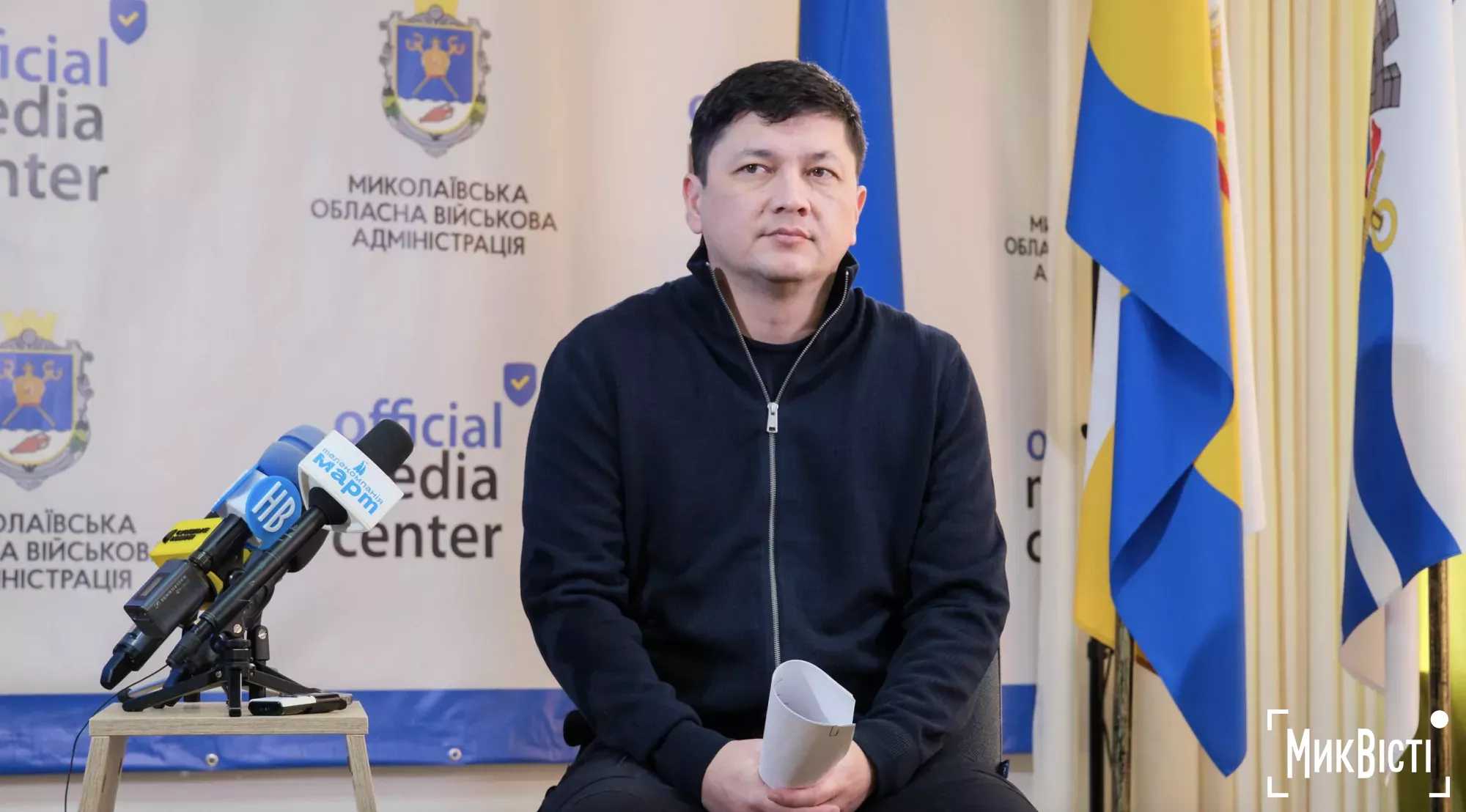 Head of the Mykolaiv Regional Military Administration Vitalii Kim, archive photo NikVesti
Commenting on this issue, Vitalii Kim stated that additional equipment would be provided to the plant.
«Although the State Property Fund is the responsible body, we understand the issues facing this plant, as it is located on our territory and the dust from the sludge ponds is harming local residents; we are all breathing it in. “That is why the issue of providing the plant with specialised machinery to maintain these fields is being resolved, in order to prevent the spread of dust,» said Vitalii Kim.
NikVesti has repeatedly reported on the potential environmental disaster that could arise due to the risks of sludge dust, as well as the leakage of slurry water into the Bug Estuary.
It should be noted that two years after the confiscation of the Mykolaiv Alumina Plant, the State Property Fund has done nothing to resolve the environmental issue regarding the sludge.
For more details on the situation at the Mykolaiv Alumina Plant, read the article «Trapped in stagnation: what are the prospects for the Mykolaiv Alumina Plant after nationalisation?».
The Mykolaiv Alumina Plant — a slow-burning environmental «time bomb»
Having been out of operation for five years now, the plant has become far more dangerous to the environment than it was when operating at full capacity. This view was expressed by the head of the State Environmental Inspectorate, Ihor Zubovych, in response to an information request from NikVesti regarding the situation at the Mykolaiv Alumina Plant since the start of the full-scale war.
According to the information that NikVesti received from the State Environmental Inspectorate, on 19 July 2022, the Mykolaiv Alumina Plant reported that, due to shelling in the vicinity of sludge storage facility №2, the processing of the surface of the deposited red sludge in the facility’s basins had been hampered, giving rise to risks of red sludge dusting.
Consequently, the plant is only treating a third of the area of sludge storage facility №2: «hostilities in the vicinity of sludge storage facility №2 and damage to the dust suppression system’s lines, making their repair difficult; the inability to maintain the dust suppression system due to the freezing of the plant’s accounts. At the same time, maintenance of sludge storage facility №1 is being carried out in full by wetting the area using the company’s own resources».
Twice in August 2022, once in September 2022 and once in January 2023, MGZ reported that, due to increased wind speeds, uncontrolled dust emissions were observed from one of the slurry ponds, which could have caused contamination of land plots outside their sanitary protection zone. The company then activated the dust suppression system at sludge storage facility №2.
However, due to a shortage of staff, the company was unable to carry out dust suppression work on the slopes of sludge storage facility №1.
Uncontrolled dusting of sludge from the company’s sludge fields continued to occur throughout 2023: in May, July, August (twice) and September (four times).
Until July 2022, maintenance work on the dust suppression systems at sludge storage facility №2, including the restoration of the system following shelling, was carried out by a contractor, which ceased providing services because MGZ had not paid them for their work for almost six months.
In the spring of 2023, operations at the company’s sludge storage facilities became critical:
- the level of slurry water in the working basin of sludge storage facility №1 exceeded the permissible limit, posing a risk of pollution to the waters of the Bug Estuary, located 300 metres from the sludge field.
- The accumulation of sludge at sludge storage facility №2 has reached a critical level, with a higher alkalinity than at sludge storage facility №1. Overflowing of this storage facility will lead to the contamination of the agricultural land adjacent to it.
- The problem of significant dusting from the sludge in Field №2 persists, which may cause air pollution. This is due to the fact that a «dry» storage method is used there, which requires constant monitoring and moistening of the surface.
- The sprinkler system for dust suppression (necessary for moistening the sludge), which was in operation at the plant, was damaged and rendered inoperable during the hostilities.
In July 2025, the State Environmental Inspectorate of the South-Western District informed the Minister of Economy and Environment that the waste situation at the Mykolaiv Alumina Plant was deteriorating. Environmentalists warned of the risk of a sludge reservoir breach and pollution of the Bug Estuary.
The State Property Fund plans to put the Mykolaiv Alumina Plant, confiscated from Russian oligarch Oleh Derypaska, up for sale by July 2026. Dmytro Natalukha, head of the State Property Fund, noted that an external investor needs to be sought for the Mykolaiv Alumina Plant who can ‘afford not to pay too much heed to war risks’ and ‘can guarantee the asset’s security through their flag and citizenship’. The head of the State Property Fund named the US and India as potential investors.
The Mykolaiv Alumina Plant (MGZ) will be put up for sale together with the company’s slurry ponds, where alumina production waste is stored.