
From Door-to-Door Talks to Rebuilding: Mykolaiv’s European-Funded Project in Action
-

- Yuliia BoichenkoReporter
-
 30000 +
Now it’s global! Over 30,000 visitors have chosen this content!
30000 +
Now it’s global! Over 30,000 visitors have chosen this content!
-
 Prefer on Google
-
30K
Now it’s global! Over 30,000 visitors have chosen this content!
-
Prefer on Google
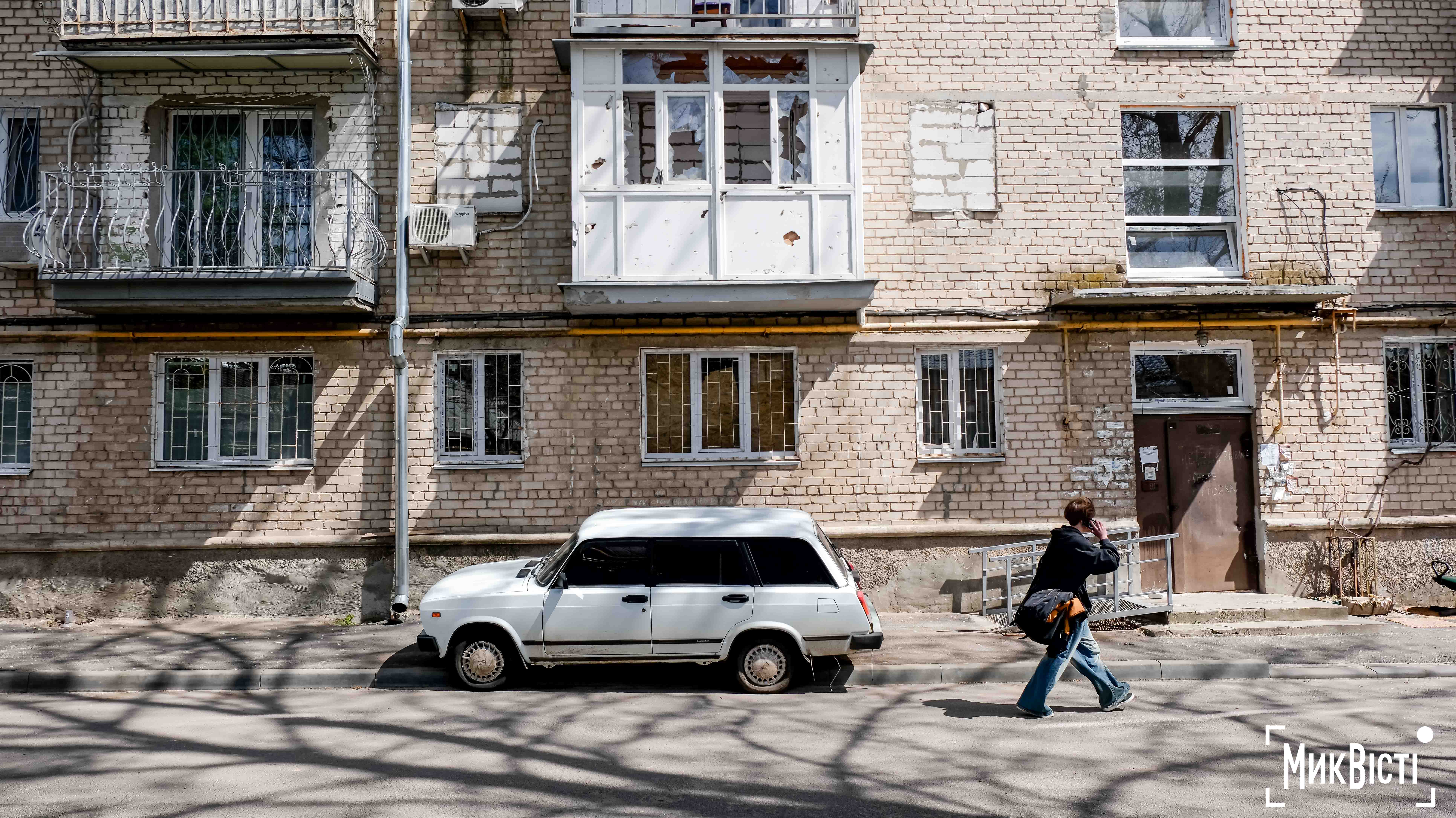 A building on the waterfront in Mykolaiv, which has joined the international FELICITY II programme. Photo: NikVesti
In Mykolaiv, residents are taking the initiative to «launch» the restoration of their building following shelling. This is how it works: they go round the flats, collect signatures and effectively demonstrate their building’s readiness to participate in the international FELICITY II programme. Without this, there will be no projects, modernisation or funding.
NikVesti investigated what participation in the European project promises people and whether residents’ lives will change — in terms of costs, living conditions and building management.
How the residents «got themselves» into the programme
The building on Naberezhna in the very centre of Mykolaiv is one of those included in the European programme.
«This building has already survived three shelling incidents. The most devastating was when the Admiralty was hit. There were casualties, including myself. Five ambulances arrived then,» recalls Oksana, a proactive resident of the building.
After the strikes, the building’s roof was damaged, windows were shattered, and balconies and doors were destroyed. But part of it has already been restored with the support of international partners, she says.
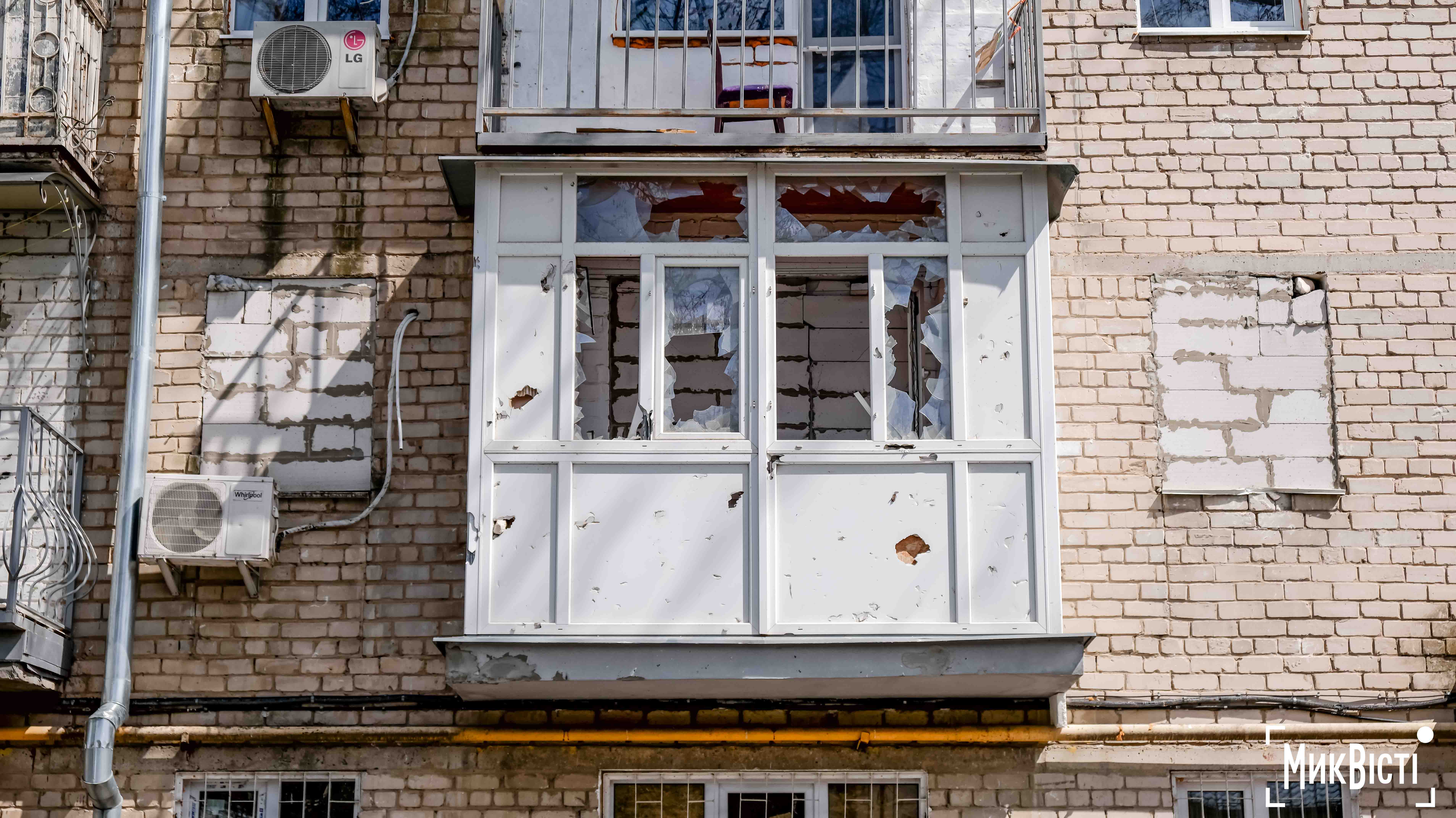 A building on Naberezhna Street in Mykolaiv, which is participating in the international FELICITY II programme. Photo: NikVesti
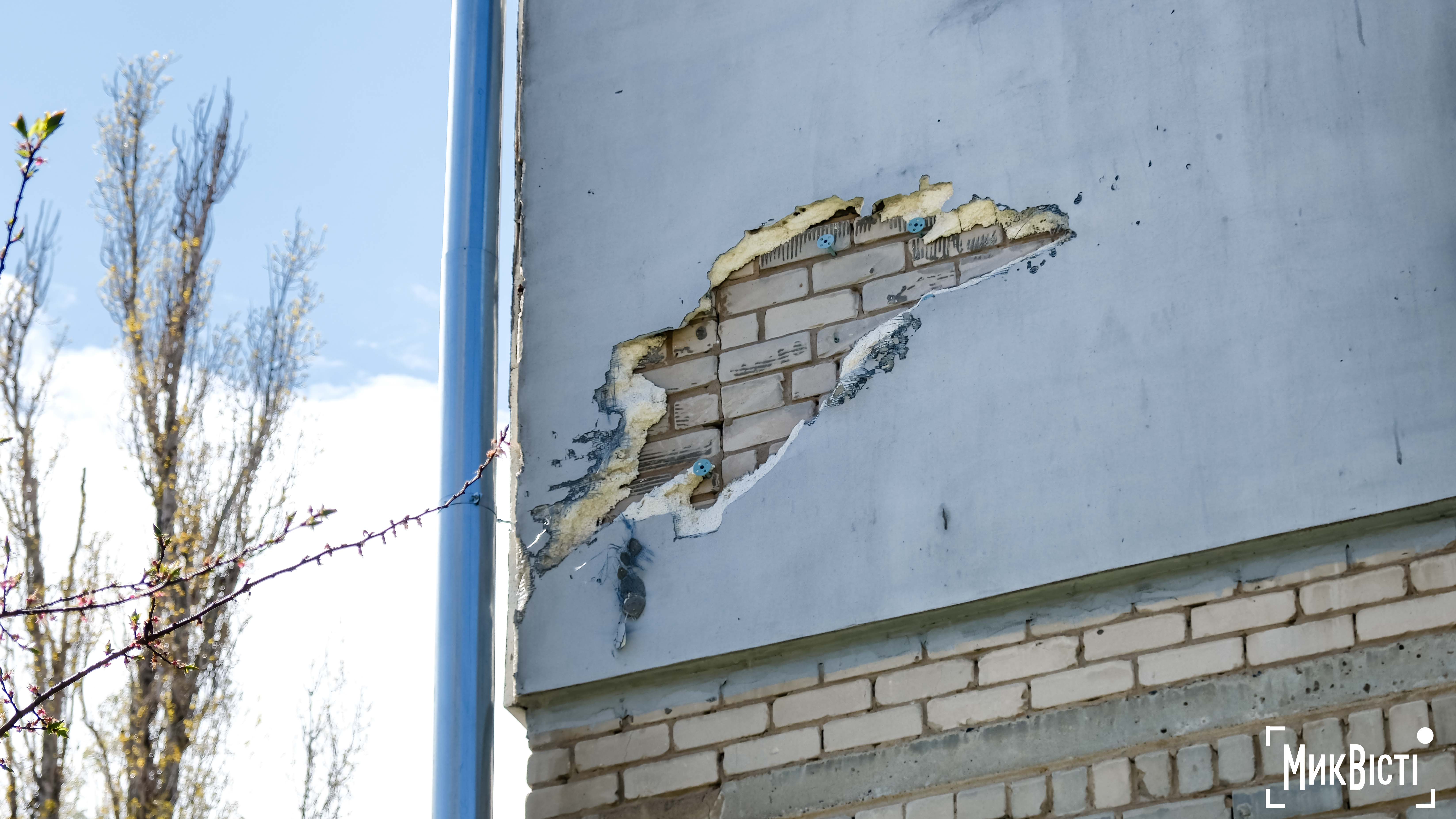 A building on Naberezhna Street in Mykolaiv, which is taking part in the international FELICITY II programme. Photo: NikVesti
Now the residents are preparing for the next stage — energy modernisation.
FELICITY II helps cities prepare large-scale renovation projects so that international banks will provide funding for them. The programme is supported by the European Investment Bank and the German government. It is implemented by the German state organisation GIZ.
To join the programme, they had to secure «50% plus 1 square metre» of the building’s floor area, Oksana explained. In other words, they needed to obtain the consent of flat owners whose total floor area accounted for just over half of the entire building.
«We had to go round to every flat and ask: «Do you agree?» If so, people had to sign. Then we asked what the size of their flat was. Because everyone’s is different: 40 square metres, 36 square metres,» explained Oksana.
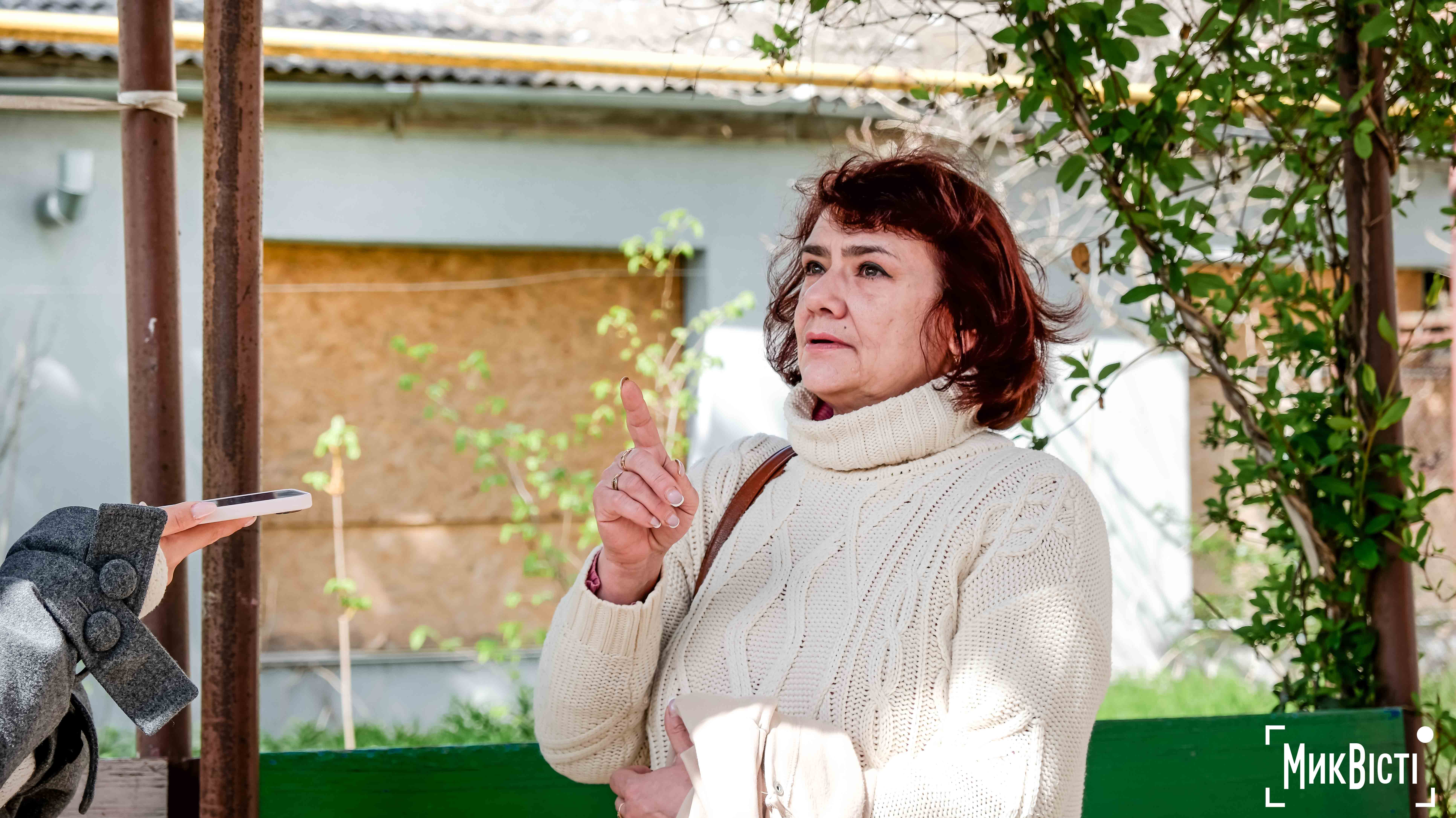 Oksana is a proactive resident of a building on Naberezhna Street in Mykolaiv. Photo: NikVesti
The signatures were collected by an initiative group. Even those who had left the city got involved — they sent documents remotely. In fact, the residents themselves organised the process, which usually requires a separate management body.
«We really rallied together back then,» she says.
How were the buildings selected to take part?
Residents of nine other buildings collected signatures using the same method. In total, 10 buildings were included in the European programme, the city’s Department of Housing and Communal Services told NikVesti.
49/1 General Almazov Street; 27 Naberezhna Street; 55, 57, 59 Vokzalna Street; 43 Znamenska Street; 3 and 3-A Kurortna Street; 3 Obraztsova Street; 55 Raiduzhna Street.
The list includes only those with Category II damage — this is one of the conditions for participation. Such buildings may be temporarily unfit for habitation, but their restoration is considered technically and economically viable.
In total, there are 93 buildings in the city with this type of damage. FELICITY II covers almost 11% of them, the department reported.
«Another part is already involved in other programmes and projects: HOPE, «VidnovyDim» and other initiatives,» they added.
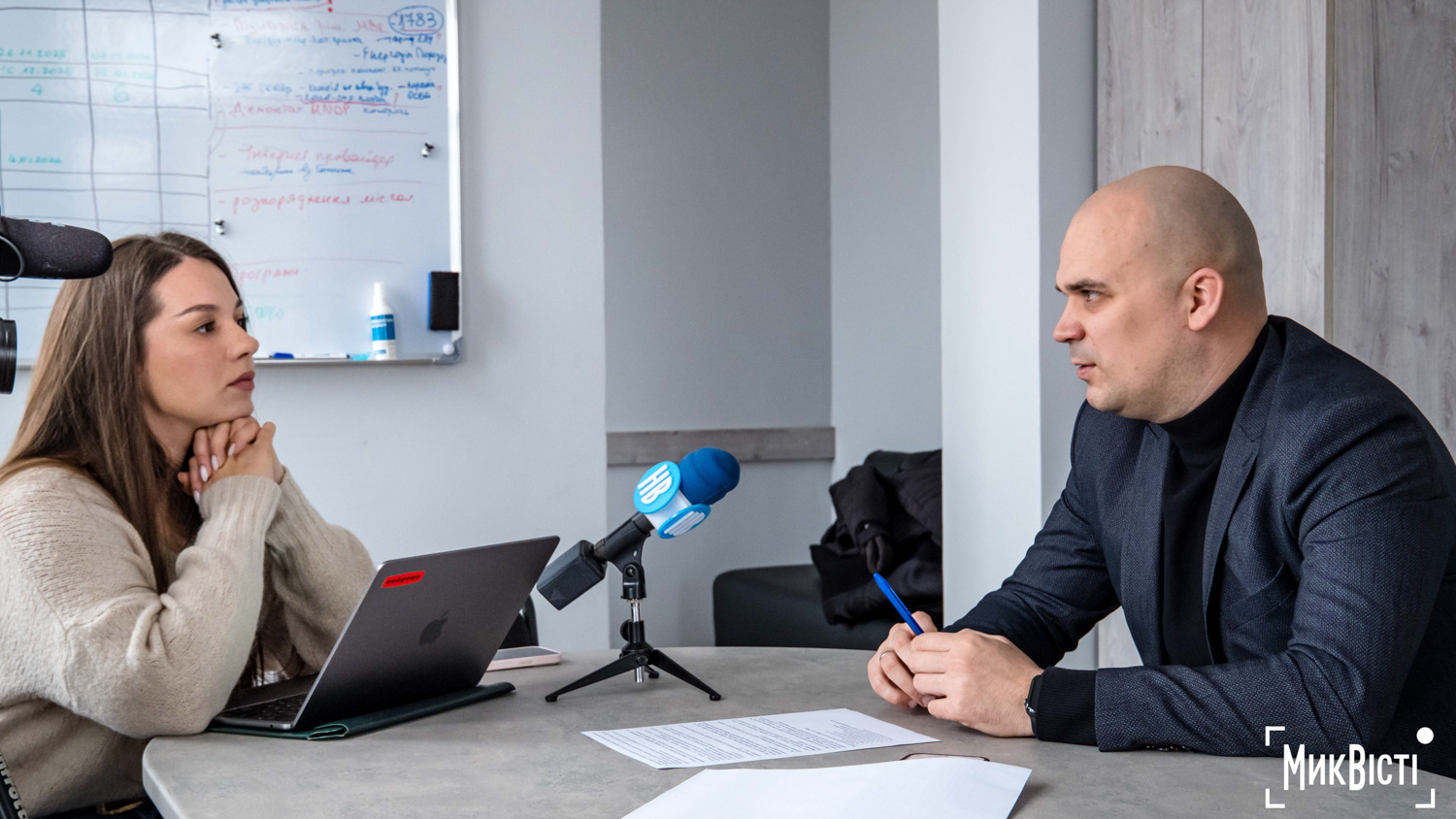 First Deputy Director of the Housing and Utilities Department Ihor Nabatov speaking to a journalist. Archive photo by NikVesti
The buildings were selected manually for participation in the European programme, the department says. Initially, the city drew up a list of 26 potential candidates that met the basic requirements. These were then inspected by representatives of the international programme — they visited the sites and selected the pilot buildings from this list.
But the fact of damage was not the only condition. Residents had to get involved in the process themselves — not only to collect signatures, but also to be prepared to set up a co-owners’ association for the block of flats in the future.
«We’ve been advised to set up a homeowners’ association. I realise myself that after the renovation, our building will be more suitable for this,» says Oksana.
In Ukraine, this is the way in which residents take responsibility for their own building: they decide what to repair, where to spend the money and how to maintain it. Many funding programmes work specifically with HOAs, as these are already established communities of owners that can apply for grants, sign agreements and oversee the work. Therefore, for damaged buildings, setting up such an association often means not only a new management model but also access to real funds for restoration.
So, to summarise? Criteria for selecting buildings: the technical condition of the building (Category II damage, potential for restoration and modernisation); residents’ willingness to participate in the programme: to support the formation of a homeowners’ association and go through all the approval stages.
What does the programme actually fund?
Last year, at the end of December, a general meeting was held with the participation of residents of the building on Naberezhna Street and representatives of the Department of Housing and Communal Services, as Oksana, an active resident, told us. People came with their flat documents, discussed the terms and asked questions.
«It was just before New Year’s Eve. Practically everyone came. Even the elderly, who can no longer walk very well, were brought by their grandchildren,» recalls the resident.
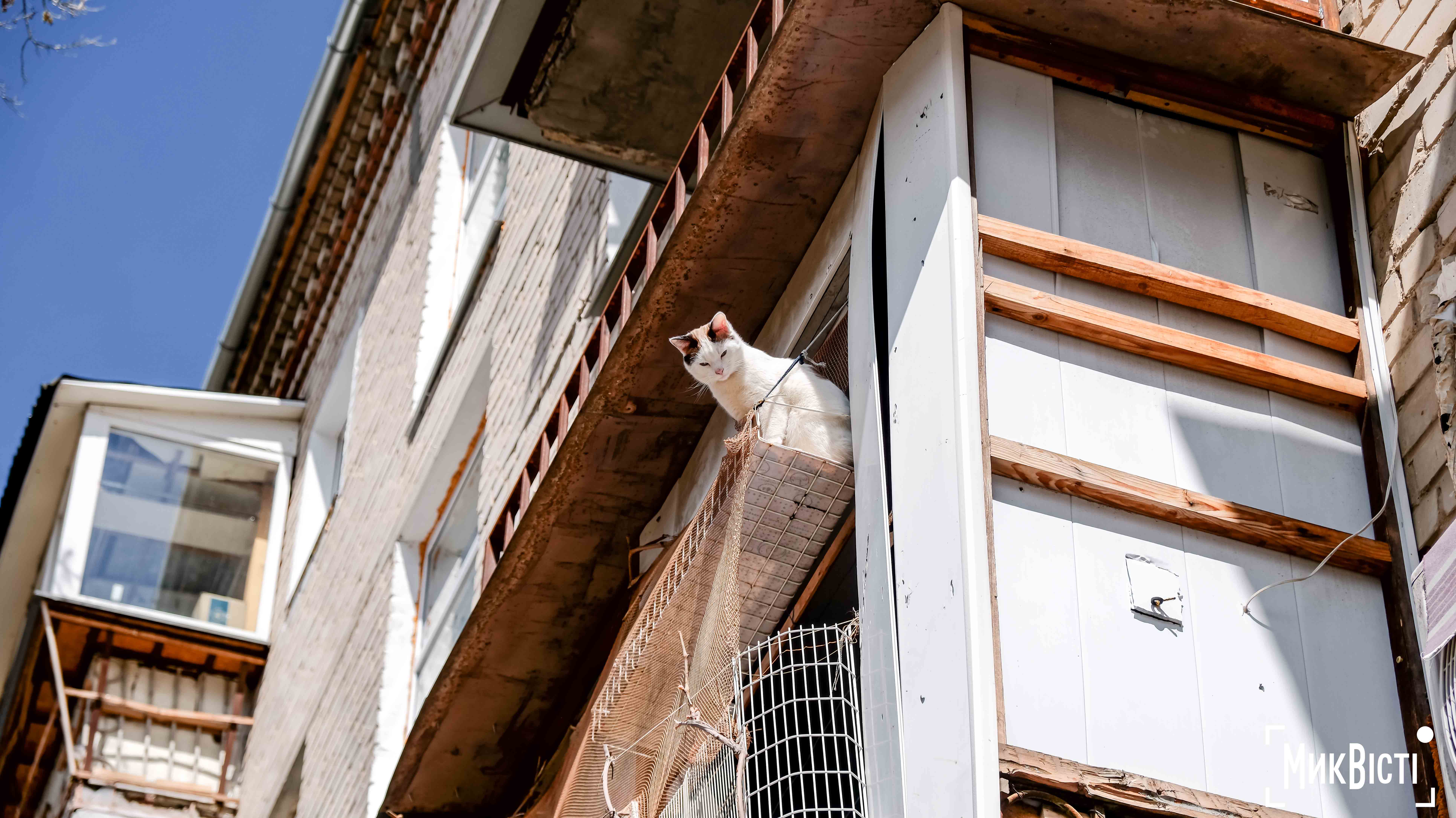 A building on Naberezhna Street in Mykolaiv, which took part in the international FELICITY II programme. Photo: NikVesti
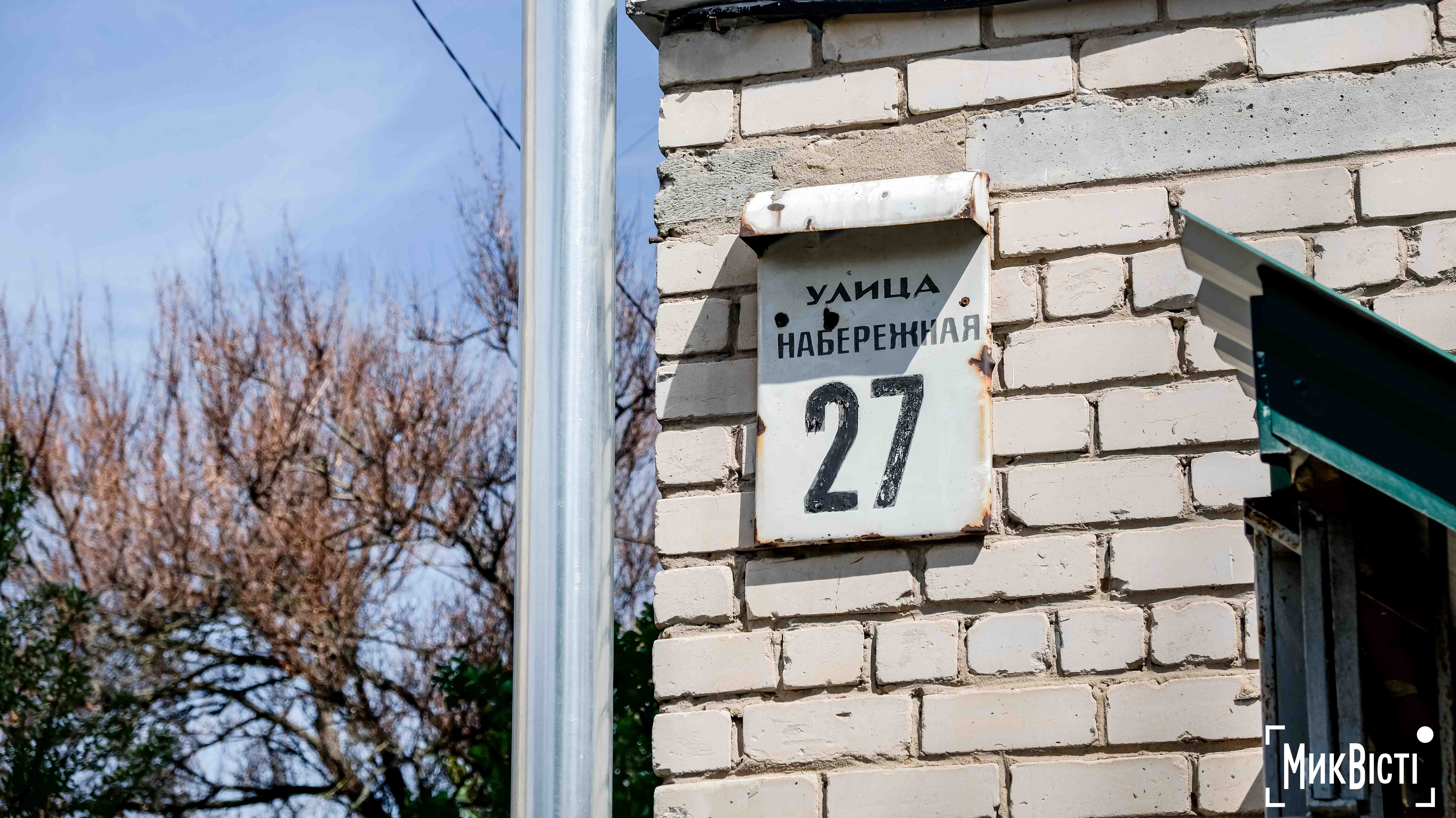 A building on Naberezhna Street in Mykolaiv, which took part in the international FELICITY II programme. Photo: NikVesti
It was then that the residents were told exactly how they planned to modernise the building: full insulation of the façade using modern materials, installation of an individual heating substation, work on the roof, and replacement of the risers.
«And also — all the balconies must be in the same style. They said that if there are enough funds, they will also landscape the area around the building,» shared Ms Oksana.
But the involvement of the buildings is only the start of the process. The Housing and Utilities Department says: FELICITY II funds only the development of technical documentation: conducting surveys, producing energy certificates and design and cost estimate documentation. All this «paperwork» is free for Mykolaiv — the money is provided by the German government.
Initially, two technical solutions from the European programme were proposed, with a significant difference in cost: 60 million hryvnias and 5 million hryvnias, according to data from the DREAM digital system. As the more expensive solution was ultimately chosen, we asked the department why. We expect a response in about a week. As of 24 April, the Department of Housing and Communal Services had not provided a response.
But what lies in store for the buildings once the projects have been drawn up? The department says they plan to renovate them with support from the European Investment Bank.
«The mechanism is currently at the stage of approval by the Ministry of Community and Territorial Development of Ukraine and the Ministry of Finance of Ukraine,» they clarified.
If this option does not work out, «VidnovyDim» is being considered as an alternative. This is a grant programme run by the Energy Efficiency Fund, which provides funding only to housing associations.
However, the development of the building modernisation projects themselves will take at least another year — until July 2027, according to the Department of Housing and Communal Services. This process has already begun.
«The selection of the project organisation was carried out by the team implementing the project in cooperation with GIZ. The German Energy Agency (DENA) was also brought in as European-level experts,» said the Mykolaiv Department of Housing and Communal Services.
Halved utility bills? Just a forecast
What residents are promised in the long term is not a cosmetic refurbishment or a «facade refresh». We are talking about comprehensive thermal modernisation — an approach whereby a building begins to consume significantly less energy and «behaves» differently in winter.
Old high-rise blocks, built back in Soviet times, lose heat in several places at once: through the walls, the roof and an inefficient heating system. The project is aimed at solving these problems.
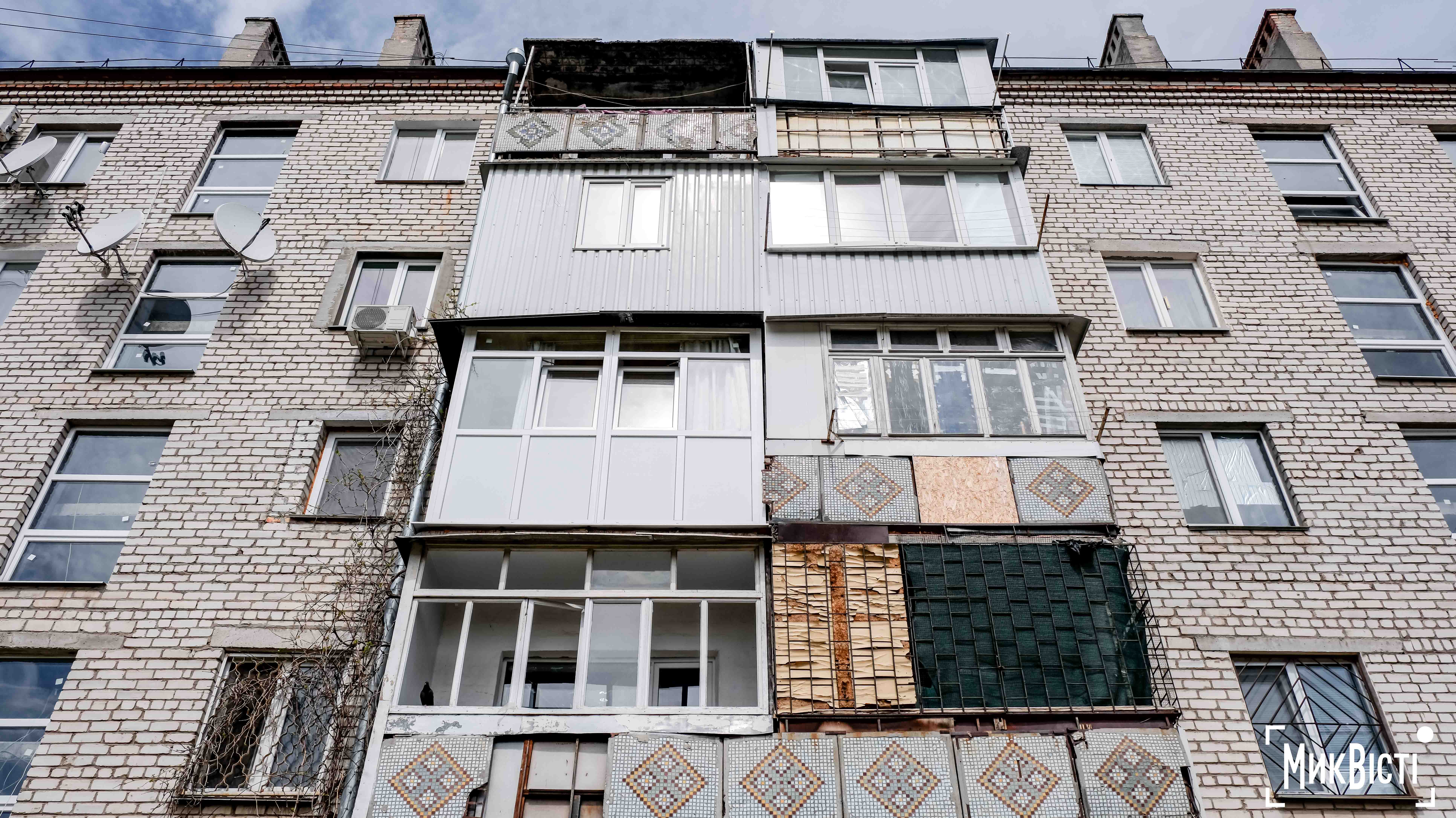 A building on Naberezhna Street in Mykolaiv, which has joined the international FELICITY II programme. Photo: NikVesti
First and foremost — insulation. The building’s façade is set to be fully insulated with modern materials, and the roof will be upgraded. This means that the heat, which previously literally «escaped outside», will remain inside. In such buildings, the temperature remains more stable: they cool down more slowly and are less affected by changes in the weather.
Next — the installation of an individual heating substation (IHS). This is a system that automatically regulates the heat supply to the building depending on the outside temperature. Put simply, the building stops being «overheated». If it gets warmer outside, the system reduces the heat supply. If it gets colder, it increases it.
Separately, there is the internal heating system: the replacement of risers and radiators. This is necessary not only to reduce heat loss but also to distribute it evenly. In a typical old building, some flats are overheated, whilst others do not receive enough heat. After modernisation, the system operates in a more balanced manner.
All these solutions change the very principle of how the building operates. Whereas previously it constantly lost heat and required more energy, after modernisation it begins to retain it.
If the idea can be fully implemented — not just developing plans but also carrying out the construction work — residents will see the difference in their bills.
«A reduction in utility costs — approximately 30–50%,» say officials at the Department of Housing and Communal Services.
For residents, this means very practical benefits: a stable temperature in the flat, less dependence on the quality of the heating season, and potentially lower bills. But the final effect will depend not only on the insulation itself, but also on how well all stages are implemented — from materials to system configuration.
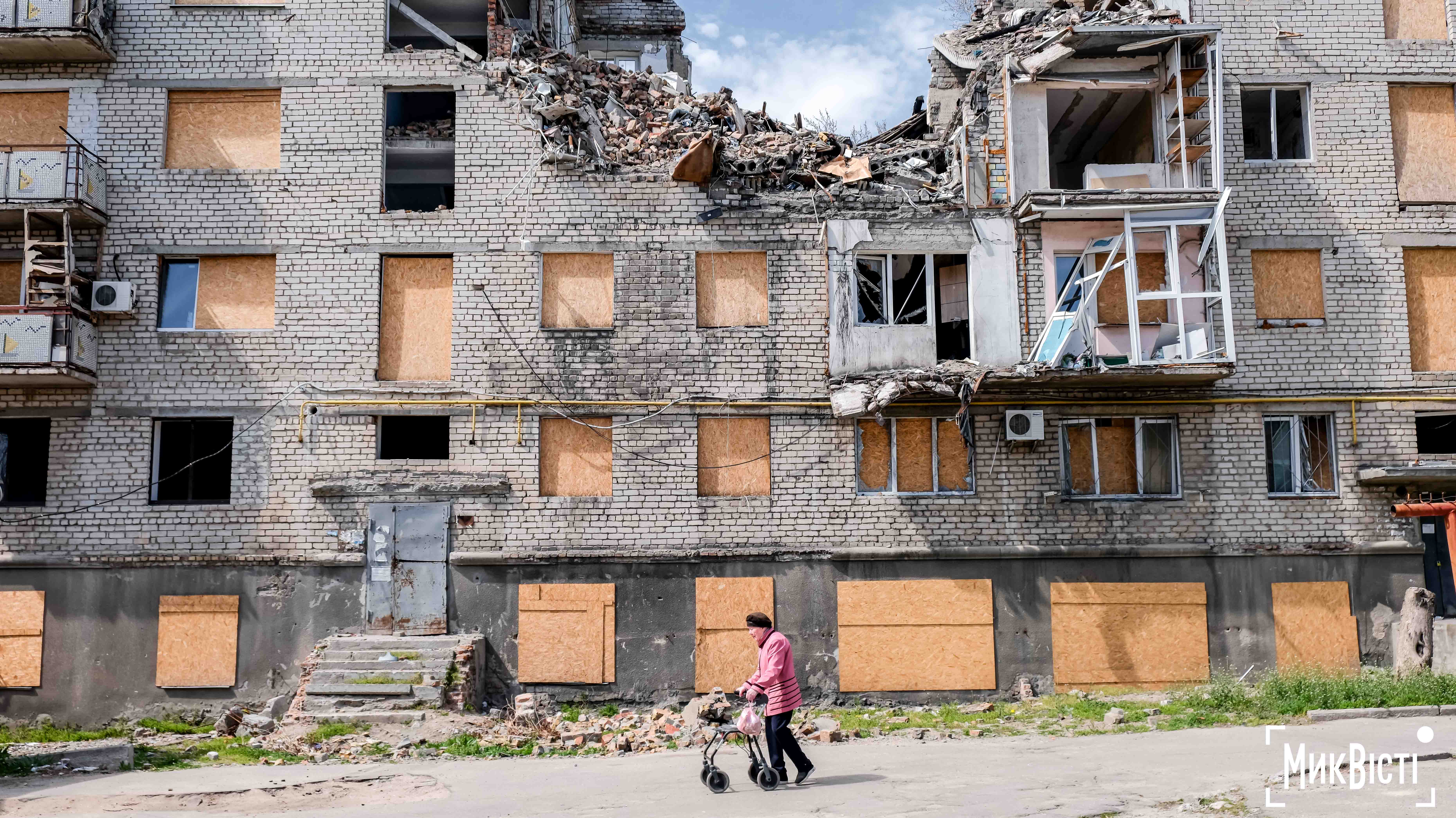 A building on Obraztsova Street in Mykolaiv, next to the one participating in the international FELICITY II programme. Photo: NikVesti
The residents of this building have already done their part: they went round the flats, collected signatures, agreed to the changes and got involved in the process.
FELICITY II provides guidance on how to renovate buildings. But it offers no guarantee as to when this will happen or how it will be funded.
So the main question for these people right now is simple: will the project actually lead to real repairs?
Yuliia Boichenko, NikVesti


This publication was prepared by the editorial team within the project “Supporting Local Media for Transparent Reconstruction Reporting”, implemented by the Institute for Regional Media and Information (IRMI) with the support of the European Union programme together with Denmark, Germany, France and Lithuania “EU4Reconstruction”. The content of the publication is the sole responsibility of the editorial team and does not necessarily reflect the position of the European Union, IRMI or other partners of the initiative.
