
Sewage discharges into the lake and a climate change indicator in Mykolaiv: what is the state of the Lisky park?
-

- Julia LukyanenkoReporter
-
 5000 +
Impressive! This content has been viewed by more than 5,000 visitors!
5000 +
Impressive! This content has been viewed by more than 5,000 visitors!
-
 Prefer on Google
-
5K
Impressive! This content has been viewed by more than 5,000 visitors!
-
Prefer on Google
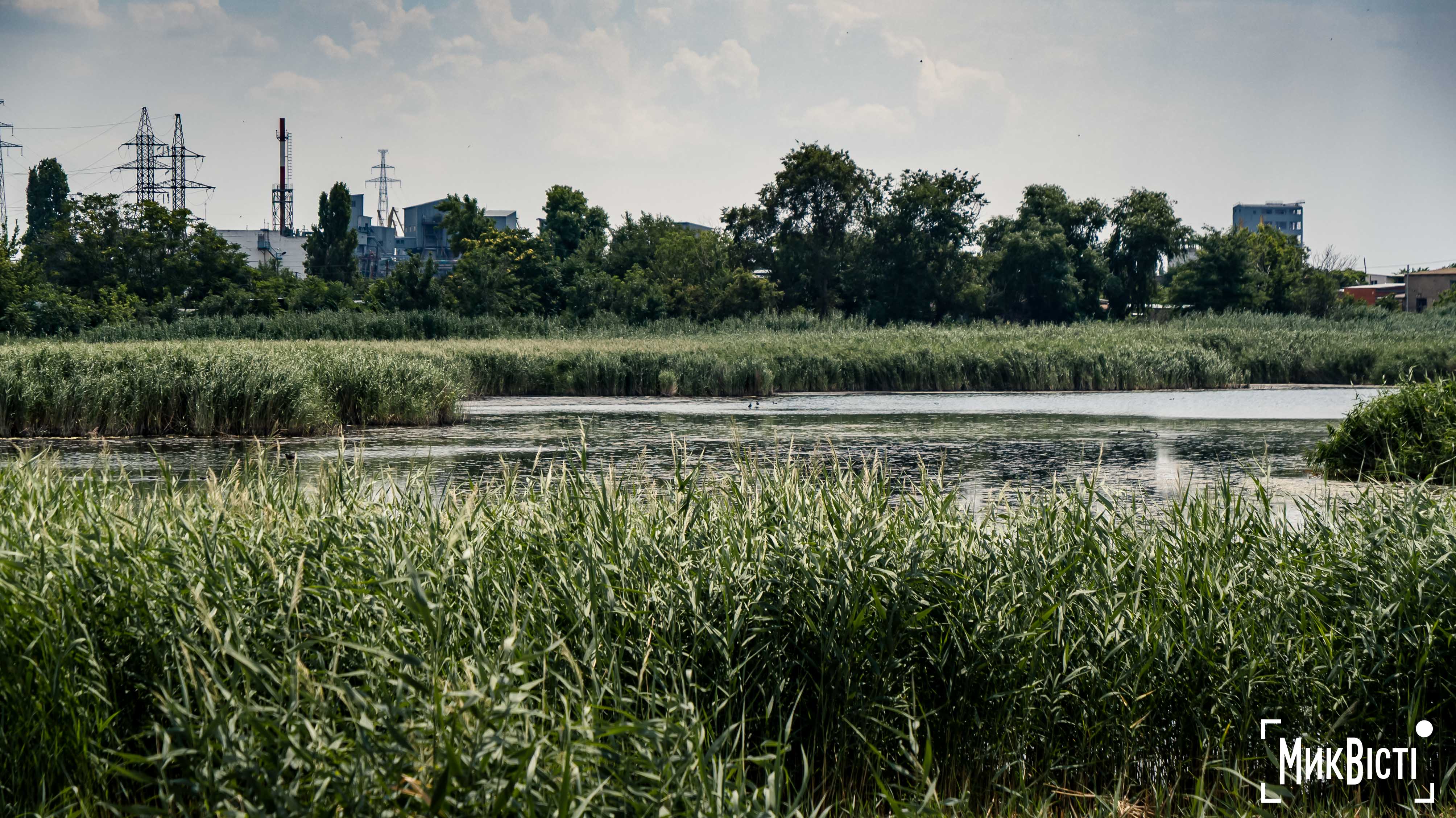 Sewage discharges into the lake and a climate change indicator in Mykolaiv: the current state of Lisky Park. Photo: NikVesti
Mykolaiv is a city bordered by two rivers. It also has a lake in Lisky Park, which covers 33 hectares of nature reserve land and is situated not far from the city centre. In the spring, a sewage leak into the lake was detected.
NikVesti investigated how the lake pollution situation was resolved, what threats climate change poses to the lake, and what the overall situation is in Lisky Park.
Sewage leaks
The entity responsible for Liski Park is the municipal enterprise «Mykolaiv Parks». However, it was not representatives of the enterprise who raised the alarm about the sewage leak into the lake.
In response to a freedom of information request, Mykolaiv Parks stated that the plot of land from which the sewage was leaking is situated between the park grounds and the «Zolnyi» garage co-operative.
It should be noted that this area is immediately adjacent to the park. This raises questions as to why the managers of Lisky Park did not notice the sewage entering the lake in good time and did not report it to the relevant authorities.
The first reports of sewage leaking from the sewer appeared in early April on the social media accounts of Oleh Liventsov’s parliamentary assistant.
Alla Riazhskykh, Chair of the Environmental Committee of the Mykolaiv Regional Council, who raised the issue at committee level and with the Regional Council’s Committee on Biodiversity Conservation, noted that «Mykolaiv Parks» had been asked whether they had reported the leaks into the lake to any authorities.
«There is a director in charge of the ‘Mykolaiv Parks’ municipal enterprise. We invited them and asked whether they were aware of the situation. They were aware. And what did they do? They did nothing, because I had asked them to send letters to the water utility and «ELU Avtodorig» before we (the committee, — note) had met and before representatives of the working group were present there. In other words, no one had raised this issue before then. That is wrong, in my view. There is a facility here, and it needs to be looked after,» the councillor pointed out.
The State Environmental Inspectorate of the South-Western District officially reported the water leak. On 20 April, the inspection was already attended by representatives of the Department of Housing and Communal Services, the «ELU Avtodorig» municipal enterprise, the Zavodskyi District Administration, the Main Directorate of the State Geocadastre in Mykolaiv region, the water utility, «Mykolaiv Parks» and civil society organisations.
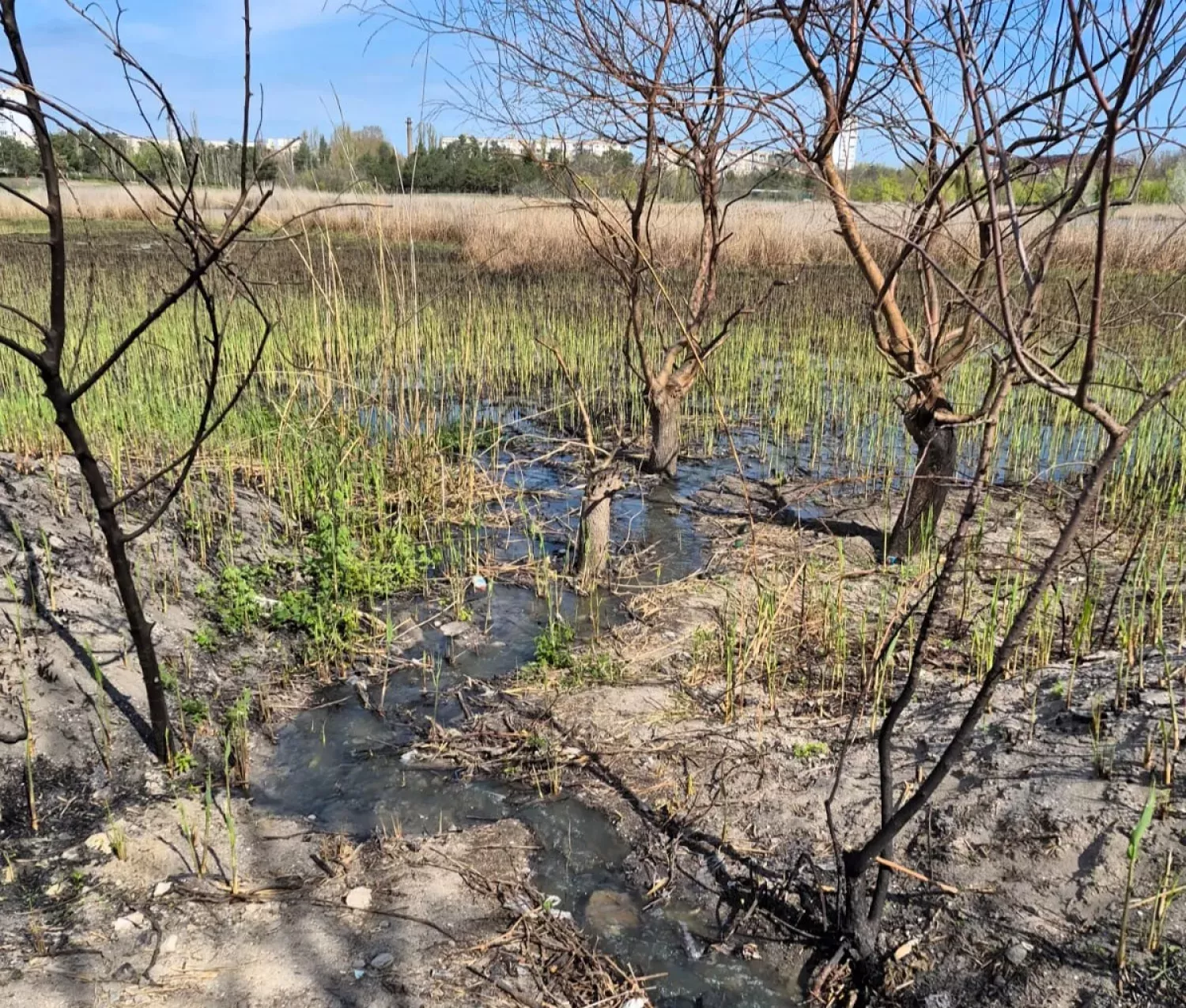 Sewage leaks into the lake. Photo: State Environmental Inspectorate of the South-Western District
As the Environmental Inspectorate told NikVesti in a comment, at that time the owners of the well from which the effluent was leaking had not been identified. However, analysis showed that sewage was entering the lake. Levels of suspended solids, dissolved oxygen, ammonium nitrogen, nitrates and phosphates were found to exceed the permitted limits.
As the sewer well did not belong to any municipal utility company, efforts were made to locate its owner. This matter was subsequently investigated by the regional council’s environmental committee. It should be noted that the city council has a committee with ‘environment’ in its name; however, its meetings primarily deal with land-related issues. Consequently, the issue of lake pollution was overlooked by the city councillors.
Subsequently, the discussion was transferred to the Council on Biodiversity Conservation, Environmental Protection and Natural Resource Management. This council operates under the Mykolaiv Regional Council. And at the committee’s off-site meeting on 11 June, as reported by the environmental inspectorate, it was recommended that the water utility and «Mykolaiv parks» complete urgent restoration work and improvements to avoid future environmental risks, and the Zavodskyi District Administration was advised to step up monitoring of compliance with landscaping regulations and ensure proper sanitary conditions in the areas adjacent to Lisky Park.
Where was the sewage coming from?
Alla Riazhskykh, chair of the Mykolaiv Regional Council’s environmental committee, proposed a quick fix: plugging the manhole. That would have quickly identified the owners. But not everyone was in favour of this approach.
 Alla Ryazhskikh, Chair of the Environmental Committee of the Mykolaiv Regional Council. Photo: NikVesti
Alla Riazhskykh also noted that all the relevant authorities had warned that significant fines would be imposed for leaks into the lake. However, these fines would not go into Mykolaiv’s budget. Therefore, the councillor believes it would have been better to set a deadline for resolving the problem rather than impose fines that would only result in losses for the city budget.
«We have clearly explained to all interested parties that the nature reserve zone is subject to different penalties than those imposed by the State Environmental Inspectorate… A portion definitely goes to the state budget. And, as far as I recall, a considerable portion. So take preventive action and get in touch if you need help,» remarked the councillor.
It is not known exactly how long the sewage had been leaking into the lake before the issue was first raised. On 12 June, following the council’s field meeting on biodiversity, the water utility reported that the «incident» had been resolved.
«At present, there are no leaks in this private sewerage network. In recent days, our staff, together with the network’s owners, have repaired the damaged manhole and sealed it with a thick layer of soil to prevent further leaks in the future,» reads a post on the water utility’s page dated 12 June.
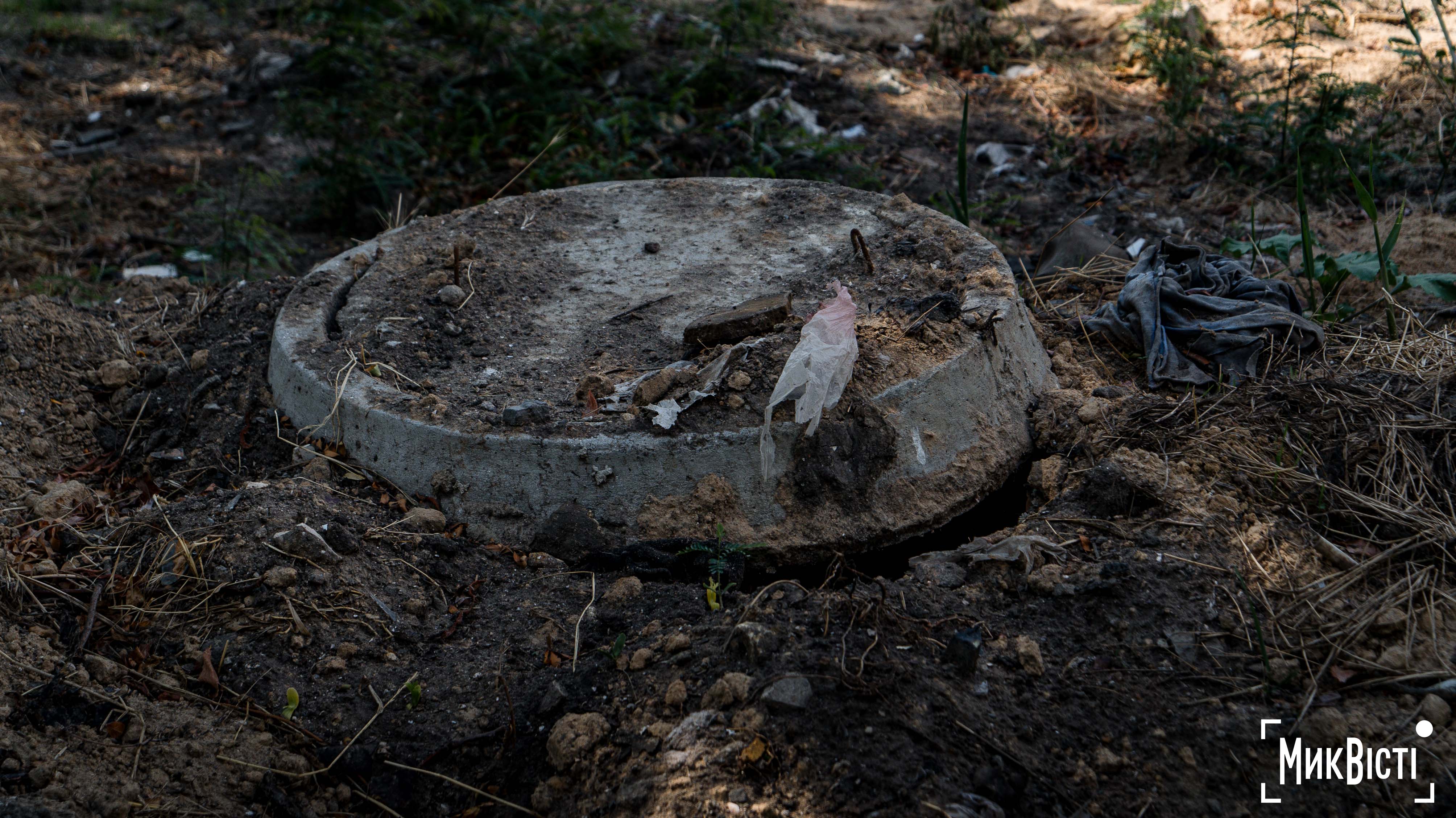 The condition of the area near the new manhole a month later. Photo: NikVesti
In response to an information request from NikVesti, the water utility stated that the entity responsible for the gravity-fed sewerage network on Industrialna Street, from which effluent was leaking into the lake, is Eraagro LLC.
«The discharge of wastewater from the private sewerage network of Eraagro LLC into the centralised sewerage network of the Mykolaivvodokanal Municipal Utility Company is carried out on the basis of an agreement concluded between the parties,» the water utility also replied.
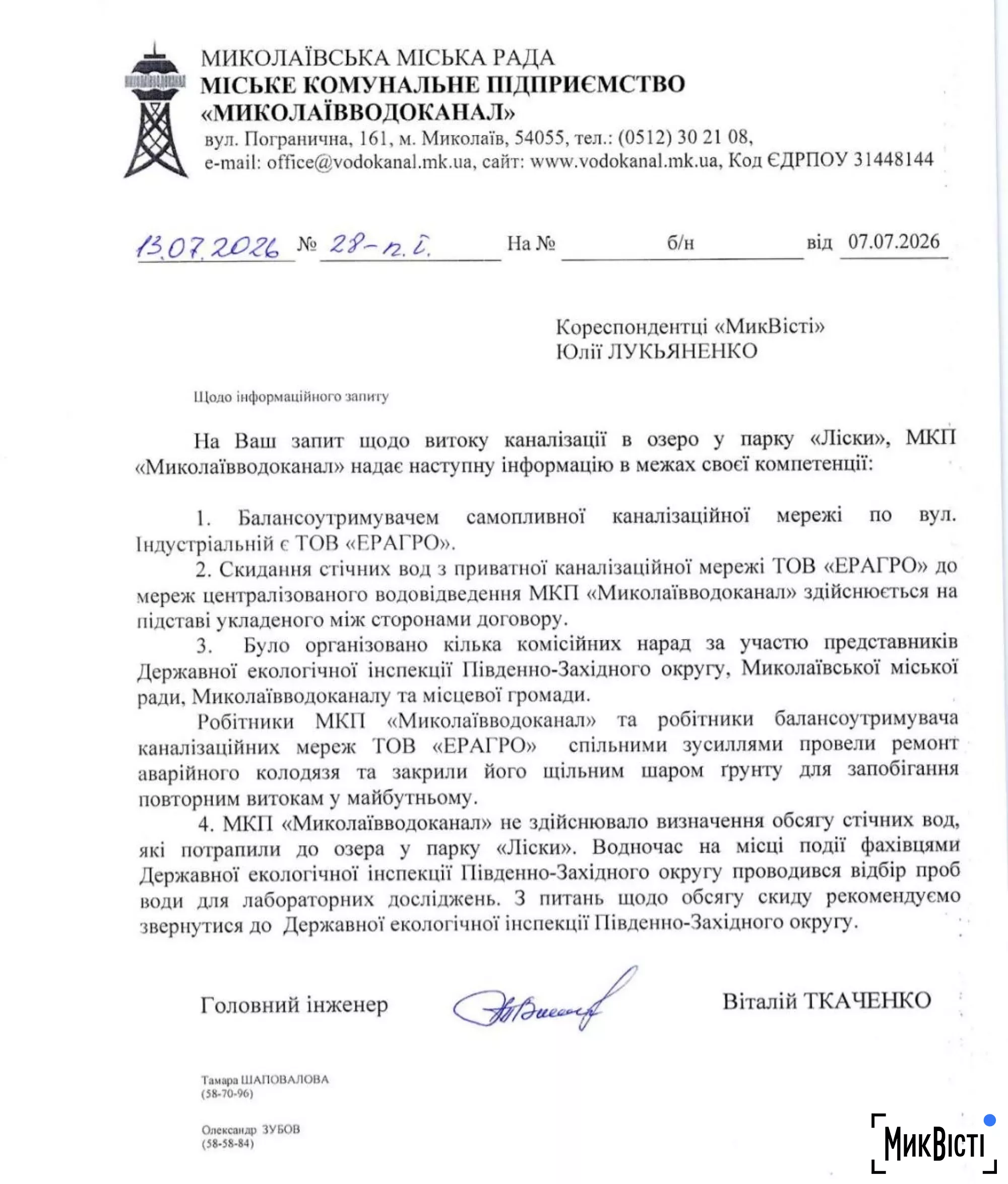 The water utility’s response to NikVesti’s enquiry regarding the pollution of the lake and the owners of the well
However, neither the water utility nor the environmental inspectorate measured how much wastewater had entered the lake. The environmental inspectorate also noted that it had not imposed any fines on the network operator.
«Whilst martial law is in force, the inspectorate has the right to carry out unscheduled inspections of businesses only with the ministry’s approval, should such a business be identified. Following an unscheduled inspection, those responsible are held administratively liable,» the environmental inspectorate stated.
The current situation
As mentioned above, the water utility, together with the network owners, built a well and covered it with soil.
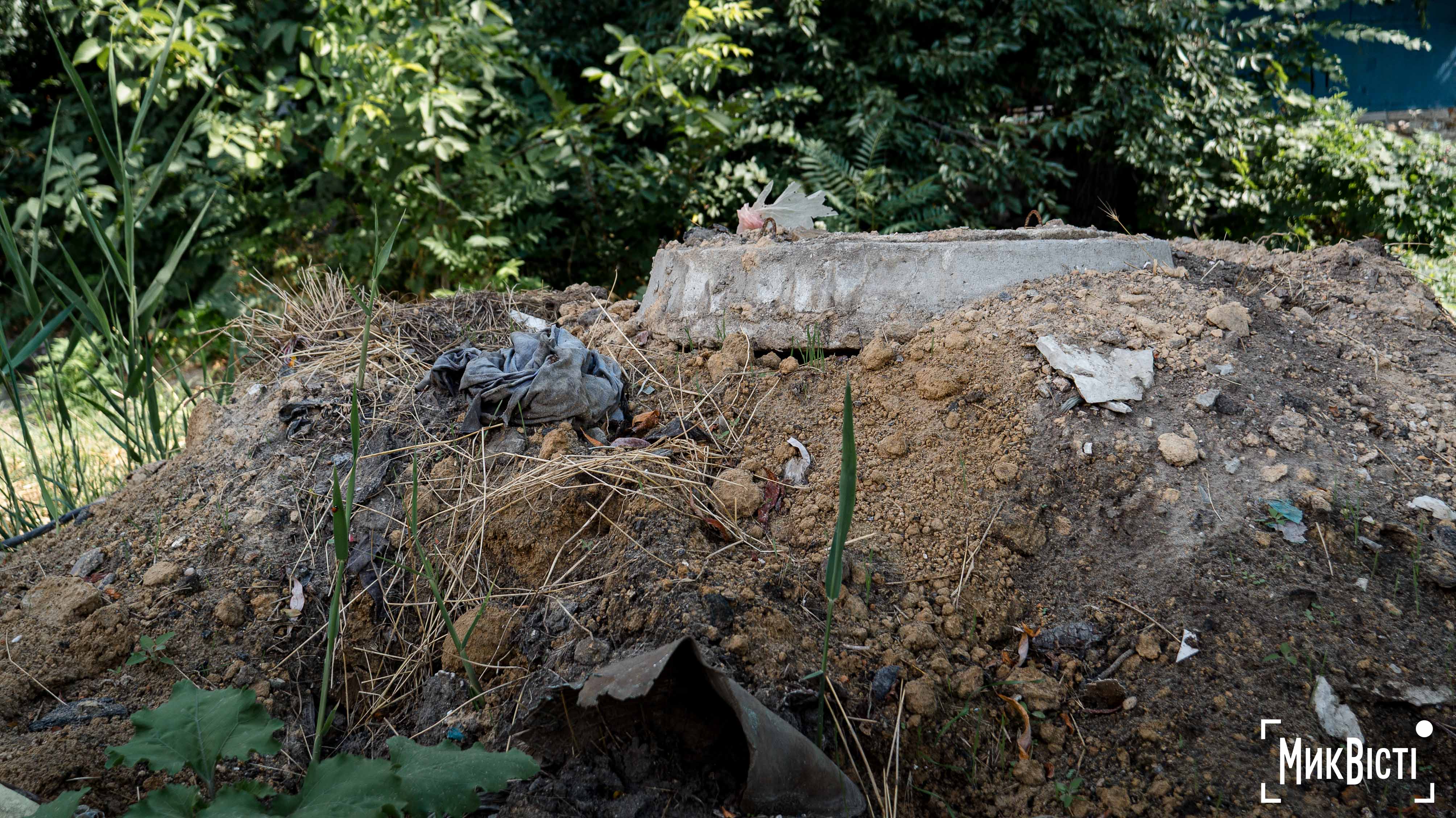 The new manhole in Lisky Park. Photo: NikVesti
In response to an information request, «Mykolaiv Parks» reported that, following the recommendations of the Mykolaiv Regional Military Administration, they had constructed an earthen embankment 0.5 metres high and approximately 6 metres long around the sewer manhole, to «prevent sewage from entering the park grounds».
«Daily monitoring of the current situation around the park has been introduced, carried out twice a day, to check for any hazards,» the response to the request states.
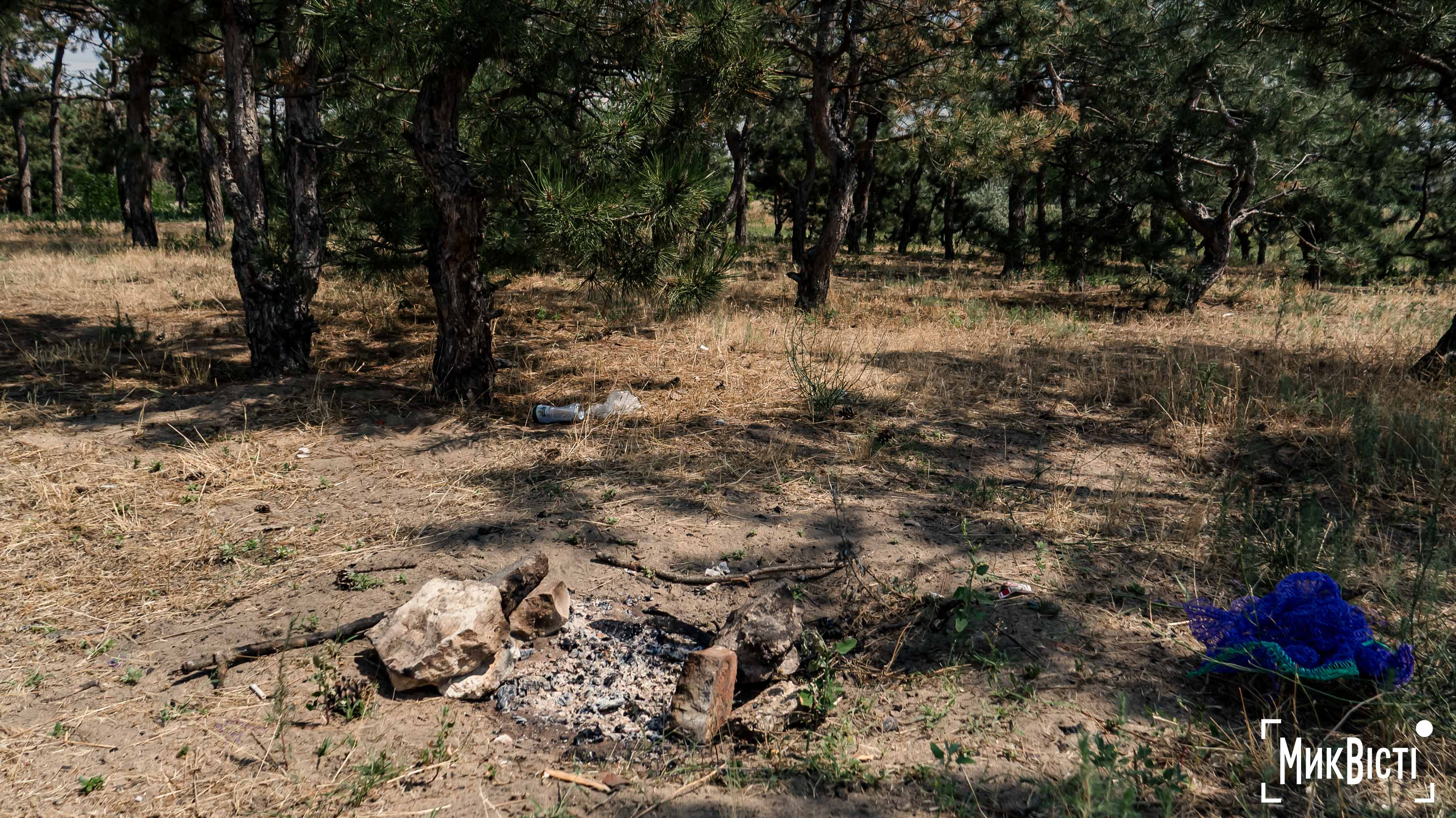
As of 17 July, the new sewer manhole and the area around it looked untidy. The soil used to fill the manhole and build the embankment was mixed with rubbish, including plastic. Clothes were lying nearby, which appeared to have been there for quite some time.
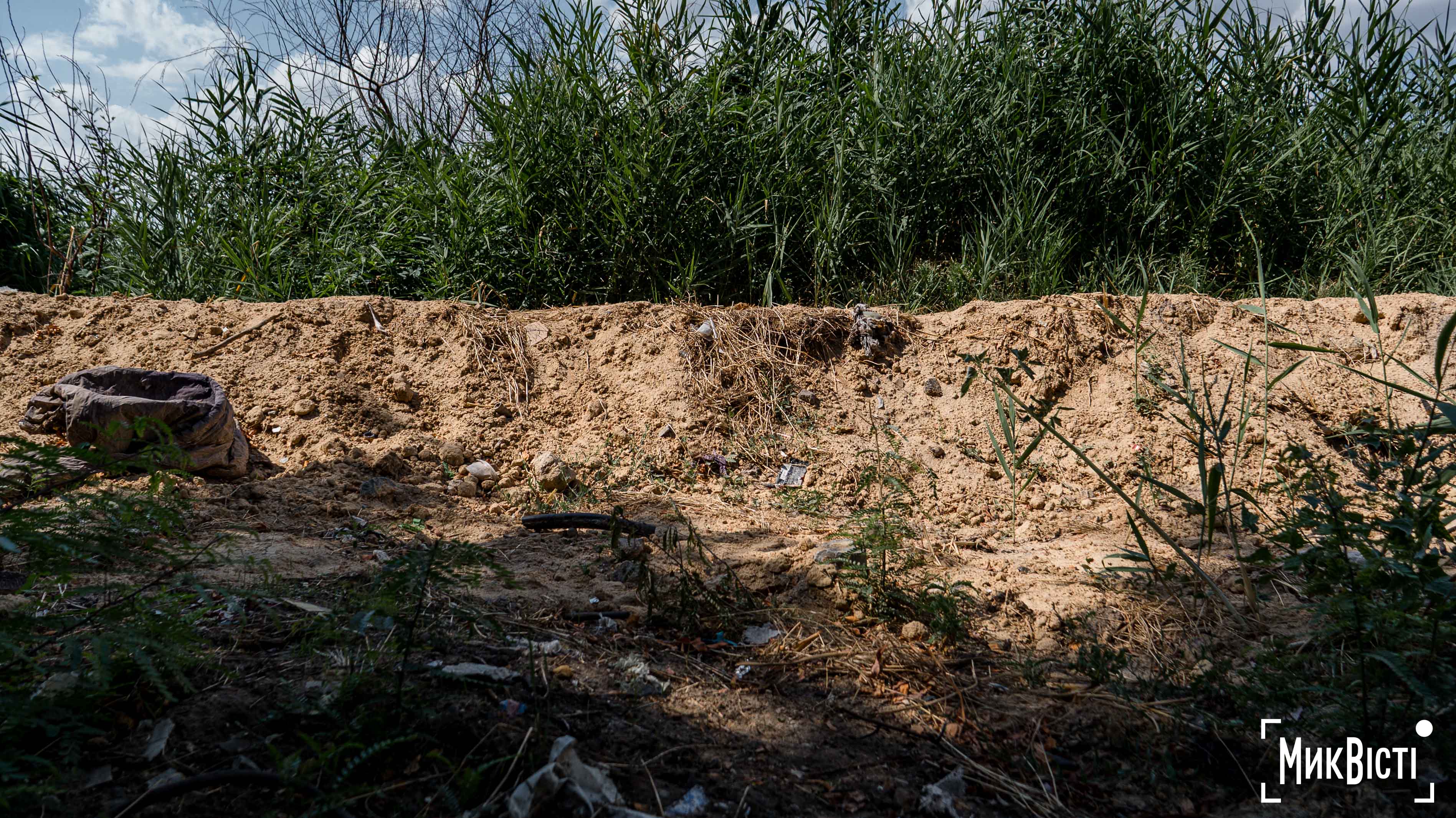 The new manhole in Lisky Park. Photo: NikVesti
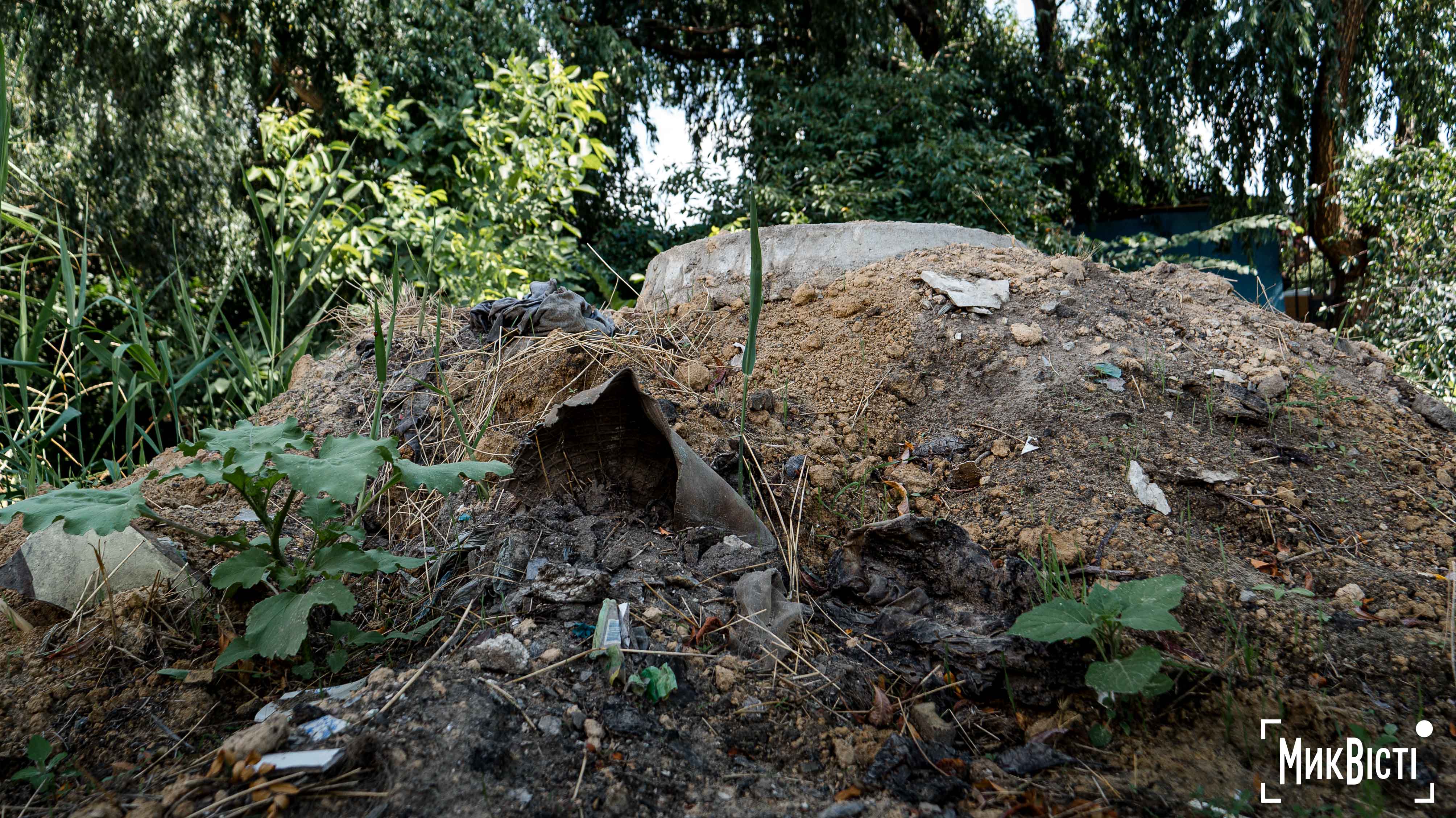 The new manhole in Lisky Park. Photo: NikVesti
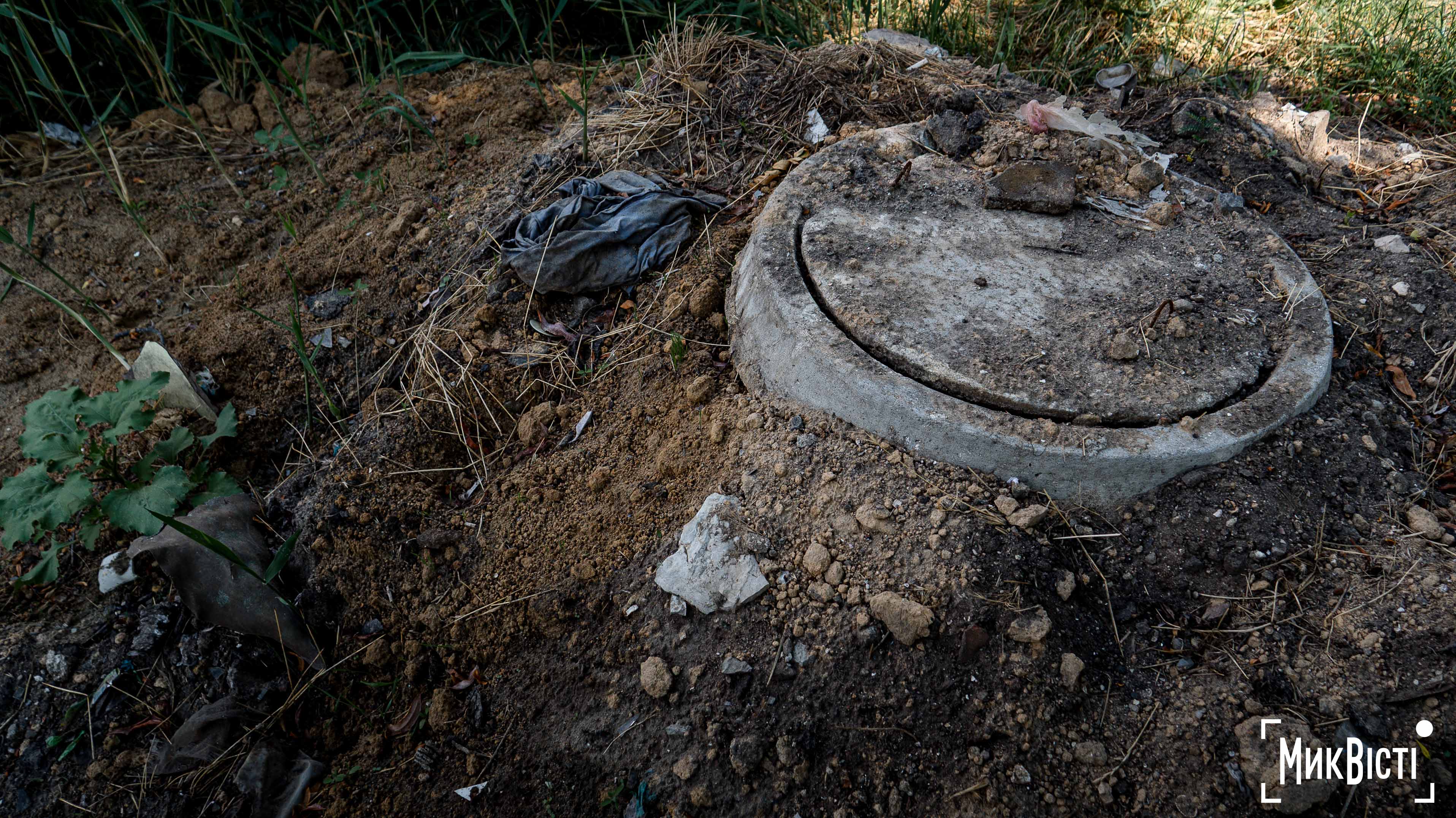 The new well in Lisky Park. Photo: NikVesti
What environmentalists are saying
Environmentalist Inna Tymchenko commented that the lake in the park is vulnerable, partly due to climate change. Sewage has also had a negative impact.
«It is a closed ecosystem that is completely vulnerable. Any factor, any pollution, will affect it. And such significant pollution, as from the sewage collector, is, of course, a blow to the lake,» commented the environmentalist.
Last year, the people of Mykolaiv experienced first-hand what a dry summer can be like. But the consequences were also evident in nature. The lake in Lisky Park dried up.
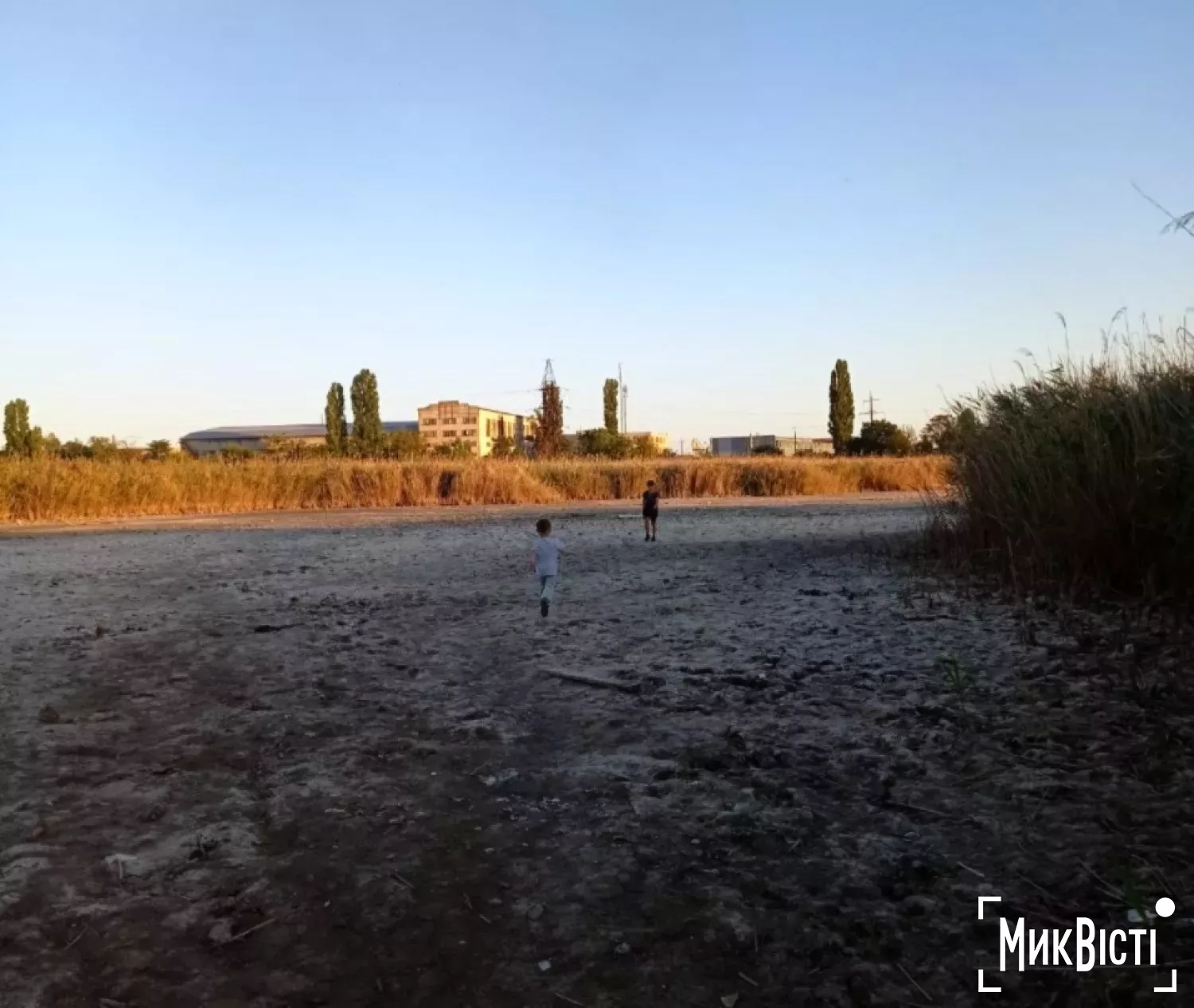 Following the heatwave in 2025, the lake in the park dried up. Photo: NikVesti
Inna Tymchenko noted that she had been monitoring the lake in previous years, but it had never dried up to such an extent.
«Of course, it recovered afterwards, but this already suggests that it simply does not have enough groundwater to replenish itself, and it is entirely dependent on rainfall. No rainfall means no replenishment of the lake. This year there’s been more rainfall, so we can see an improvement in the situation. Nevertheless, these trends tell us a great deal,» the environmentalist noted.
She pointed out that Lisky Park is a sort of mini-Kinburn.
«Natural complexes such as those found in Lisky Park are, in terms of their characteristics, a mini-Kinburn. Firstly, there is sandy soil and a lake, and species grew there that were found on Kinburn and, indeed, are characteristic of the Ukrainian steppe as well. Gradually, all these factors — development, noise from dive bars — human impact has transformed a place as unique to Mykolaiv as Lisky Park,» said Inna Tymchenko.
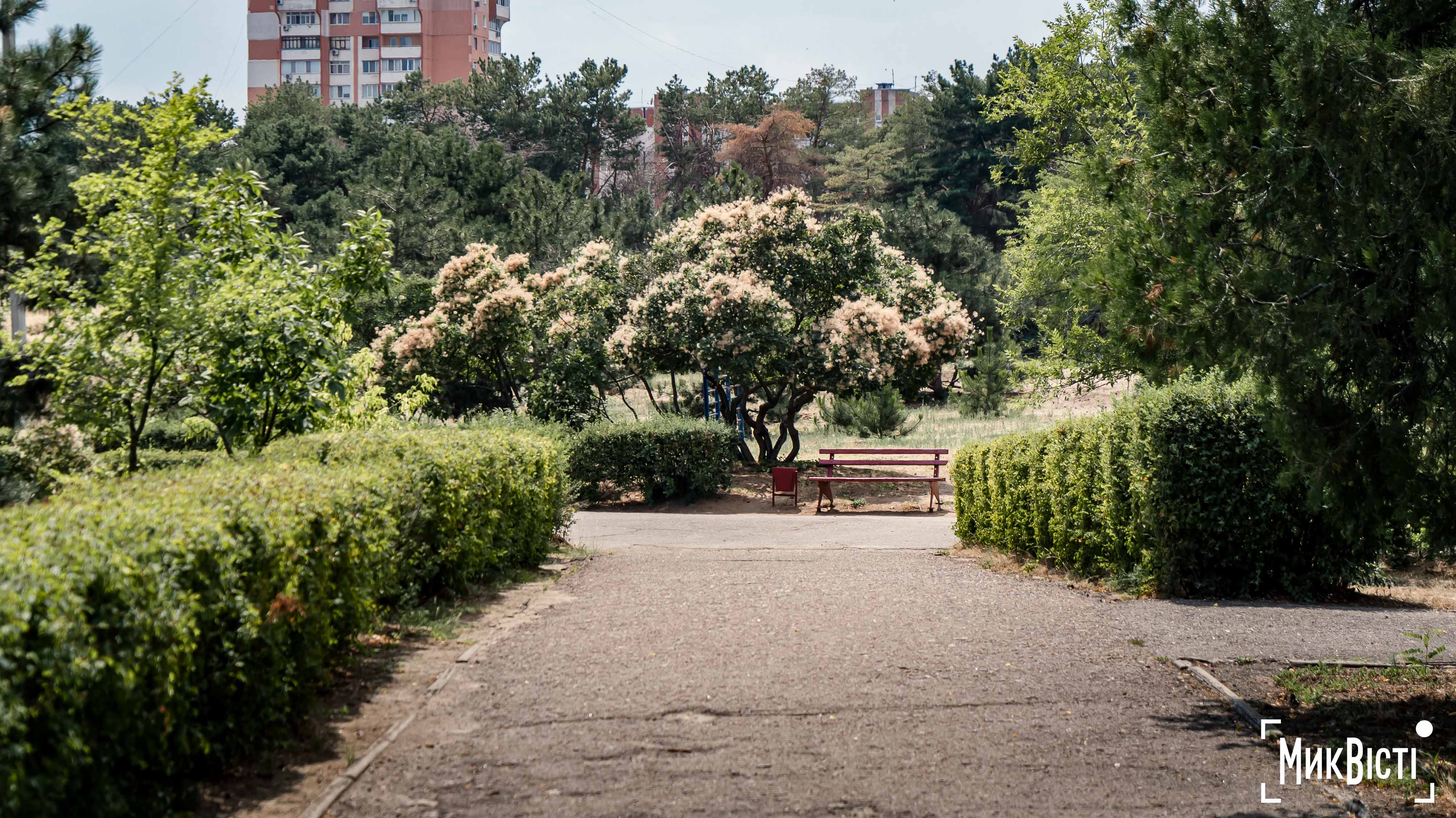 Lisky Park. Photo: NikVesti
 Lisky Park. Photo: NikVesti
All these factors, including climate change, have affected both the park as a whole and the lake. The ecologist noted that it is turning into a wetland, which raises the question of how to preserve it.
«The lake itself is not fed by groundwater. It will eventually transform, and it already has marshy areas. It is not a typical lake. And yet, sooner or later, the time will come when it dries up. Can anything be done to help it? Most likely, it would have to be done artificially,» said Inna Tymchenko.
 The lake in Lisky Park. Photo: NikVesti
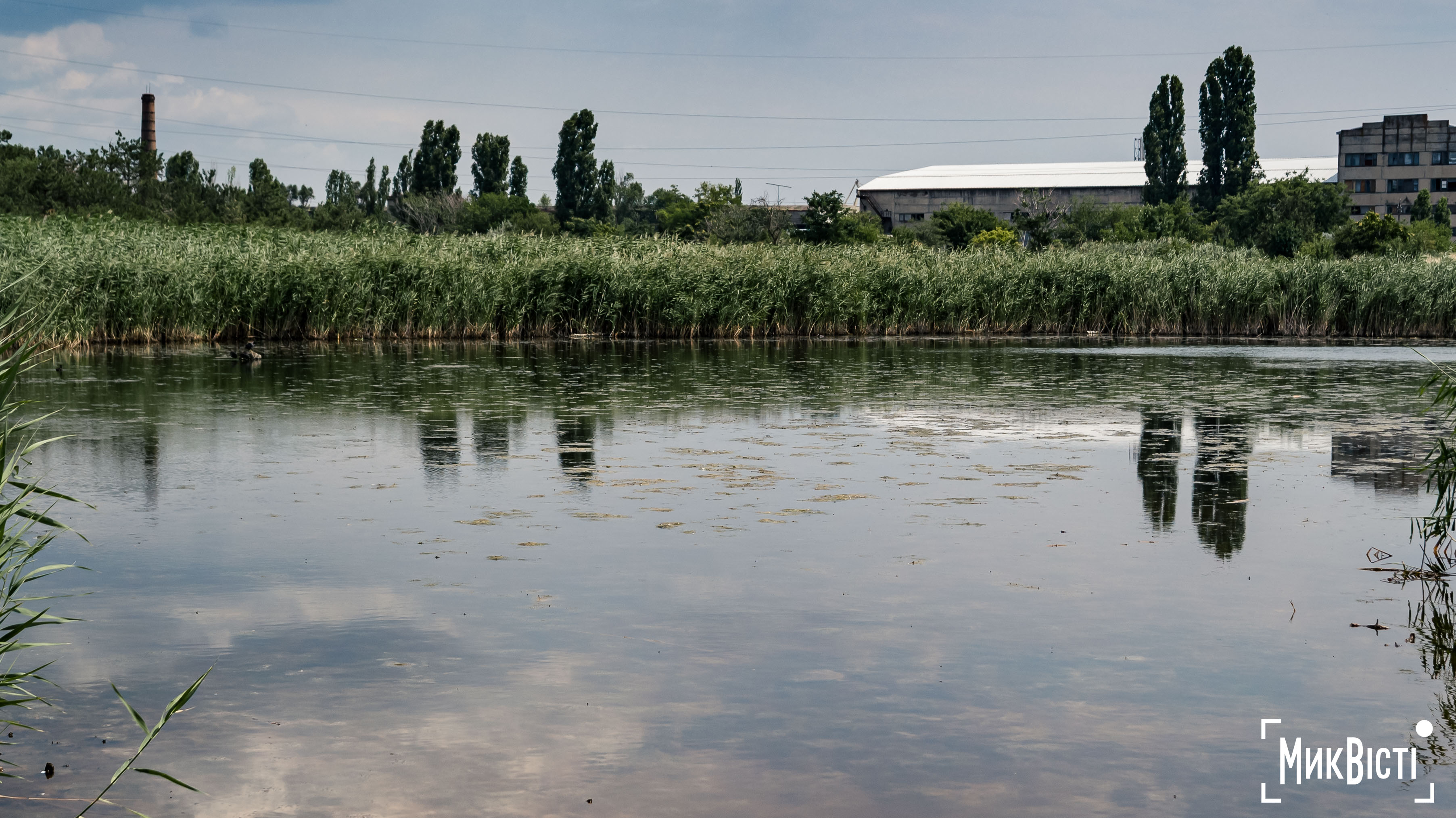 The lake in Lisky Park. Photo: NikVesti
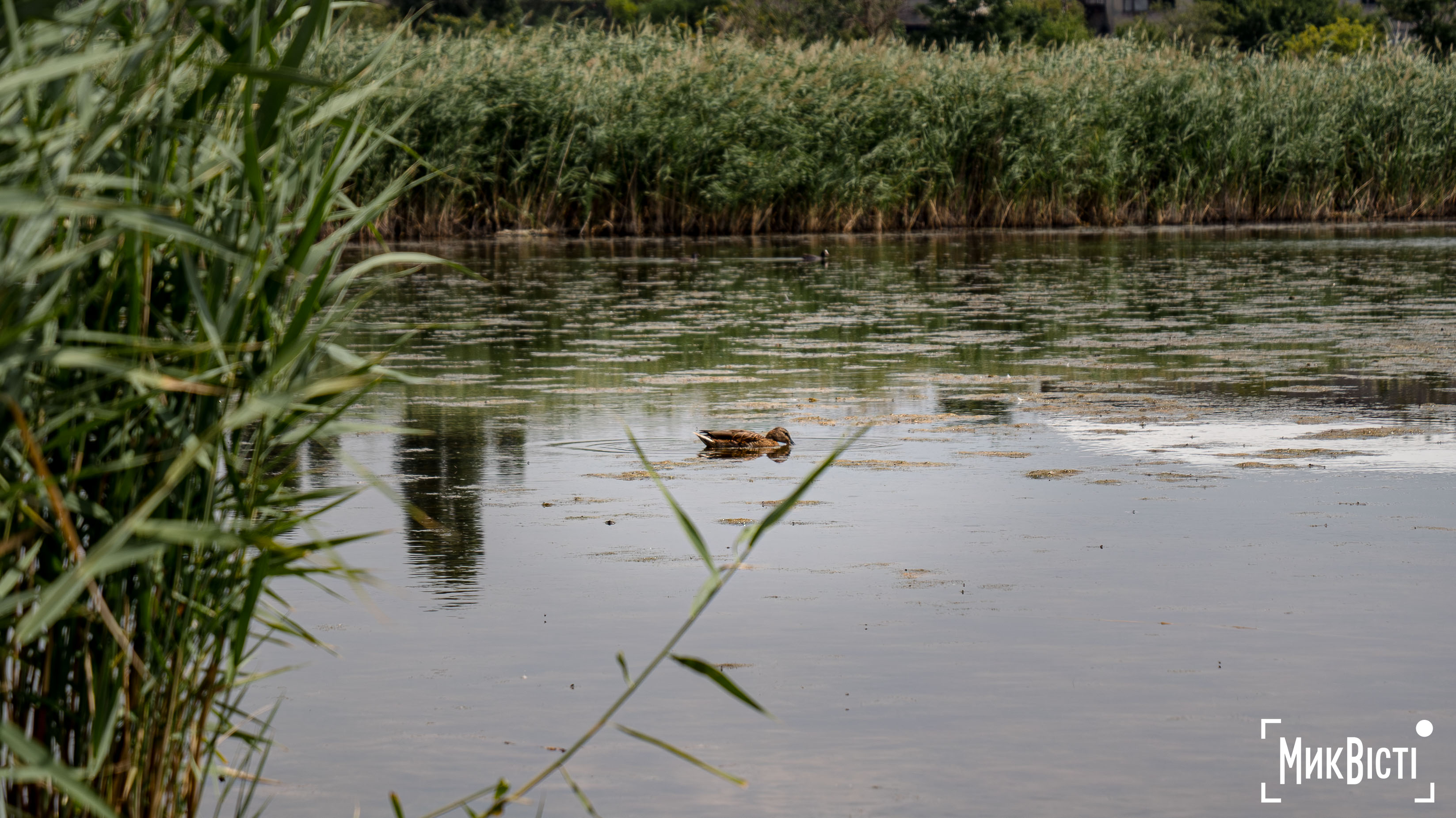 The lake in Lisky Park. Photo: NikVesti
She pointed out that the lake, which is fed by groundwater, serves as an indicator of the state of the groundwater. And this issue needs to be investigated.
«If we take the lake as an indicator of the state of the city’s groundwater, we can conclude that all is not well with the groundwater. We can see this from the lake and the trees in the city, when mature trees become dry by the following season. In other words, there used to be a tree here — a large, mature one that should already be able to sustain itself — a year has passed and we can see that it has withered. We know nothing about what is happening with our groundwater. If I were personally to make a request on behalf of our city, I would phrase it as follows: to get to the bottom of the groundwater issue. We have experts in Ukraine, but they need comprehensive information. We have the Institute of Geological Sciences, which has specialists who can investigate the state of groundwater and underground water in general. But for their modelling, they need information on the number of boreholes in the city and the volumes being consumed,» commented the environmentalist.
Lisky Park
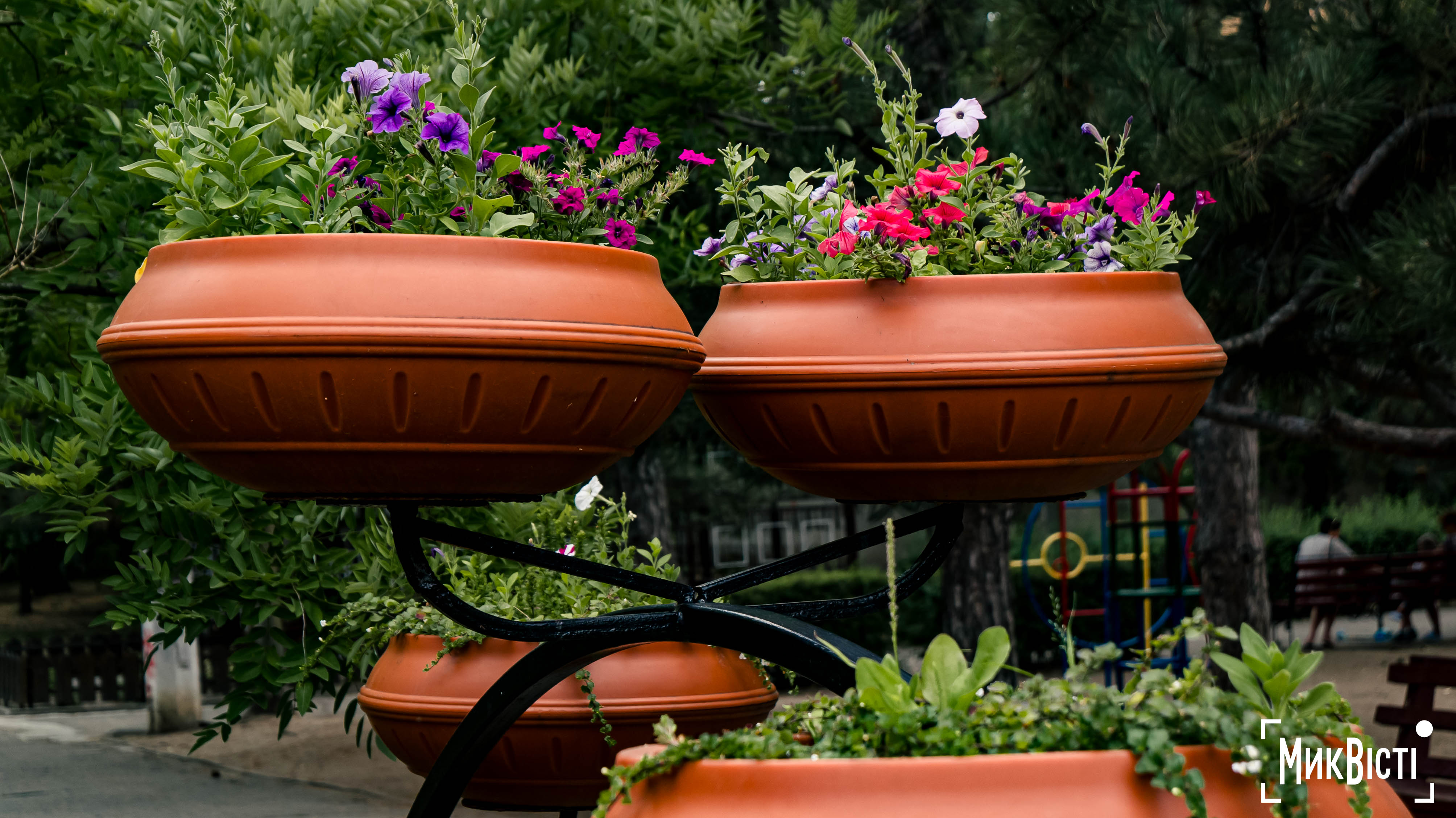
The park’s area is undoubtedly large. According to the State Geocadastre, it covers 33 hectares. The park features a lake, children’s play areas and sports grounds, a chess pavilion, pedestrian zones, and a small area with trampolines and a maze.
 Lisky Park. Photo: NikVesti
 Lisky Park. Photo: NikVesti
 Lisky Park. Photo: NikVesti
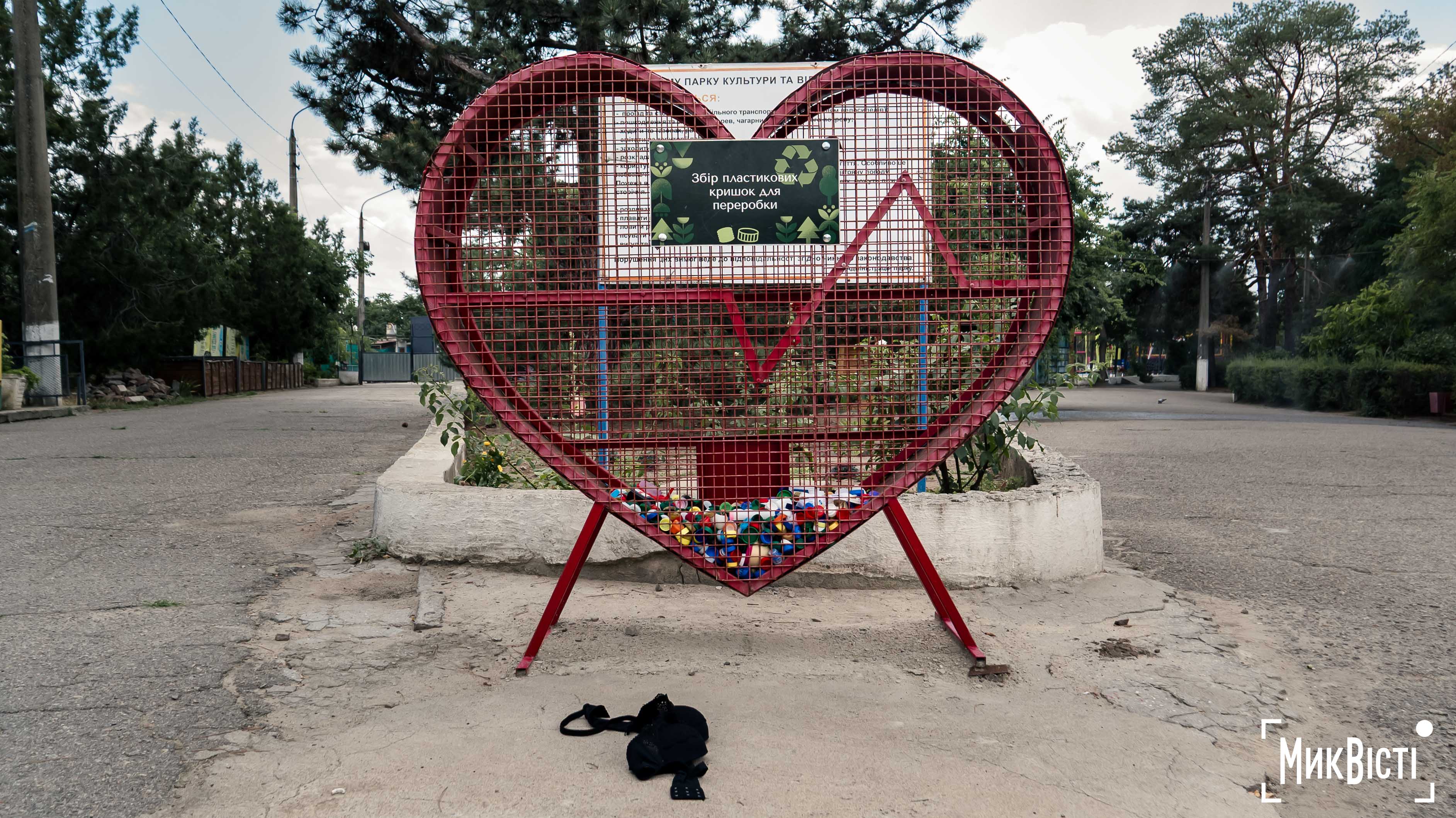
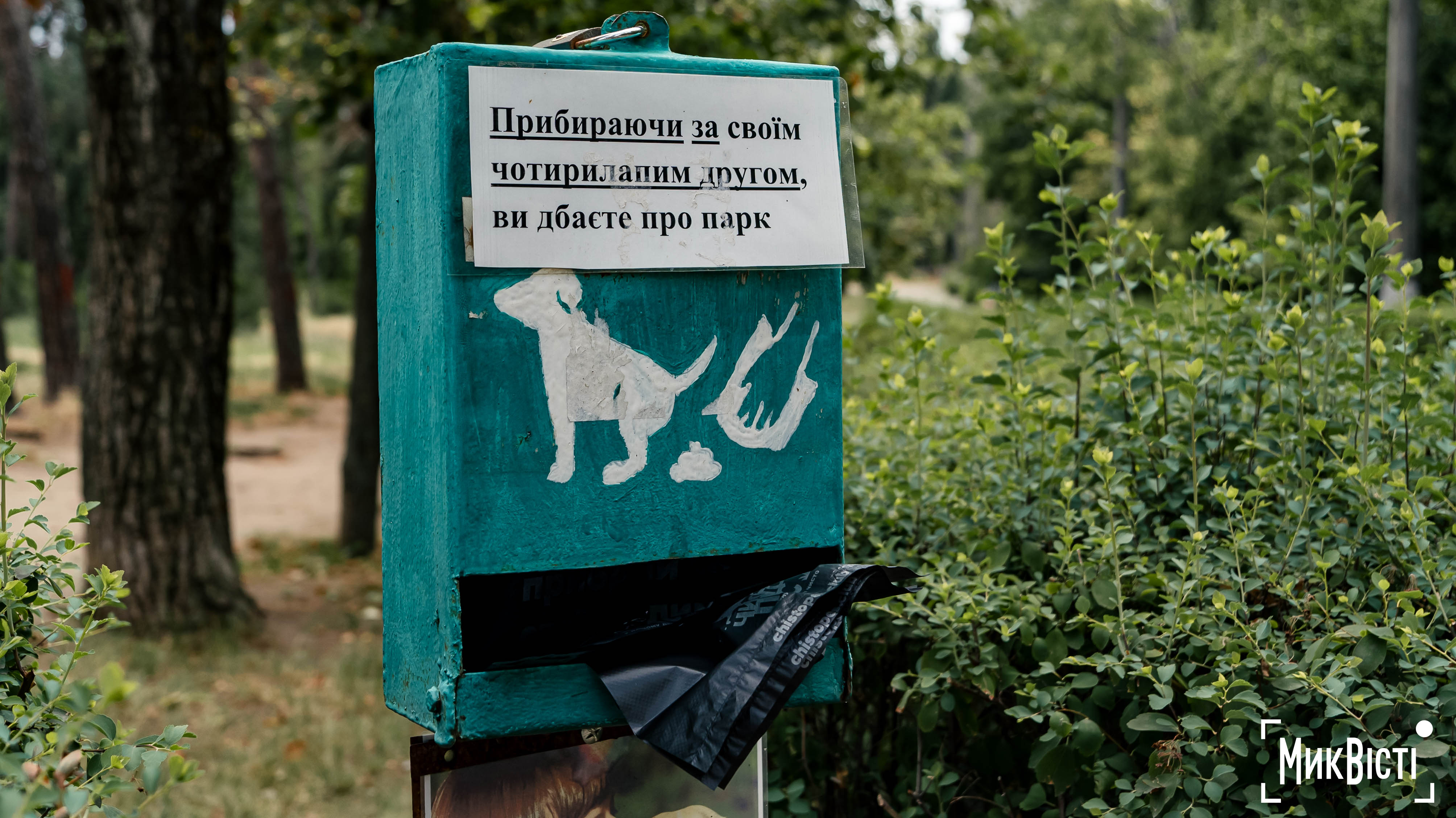
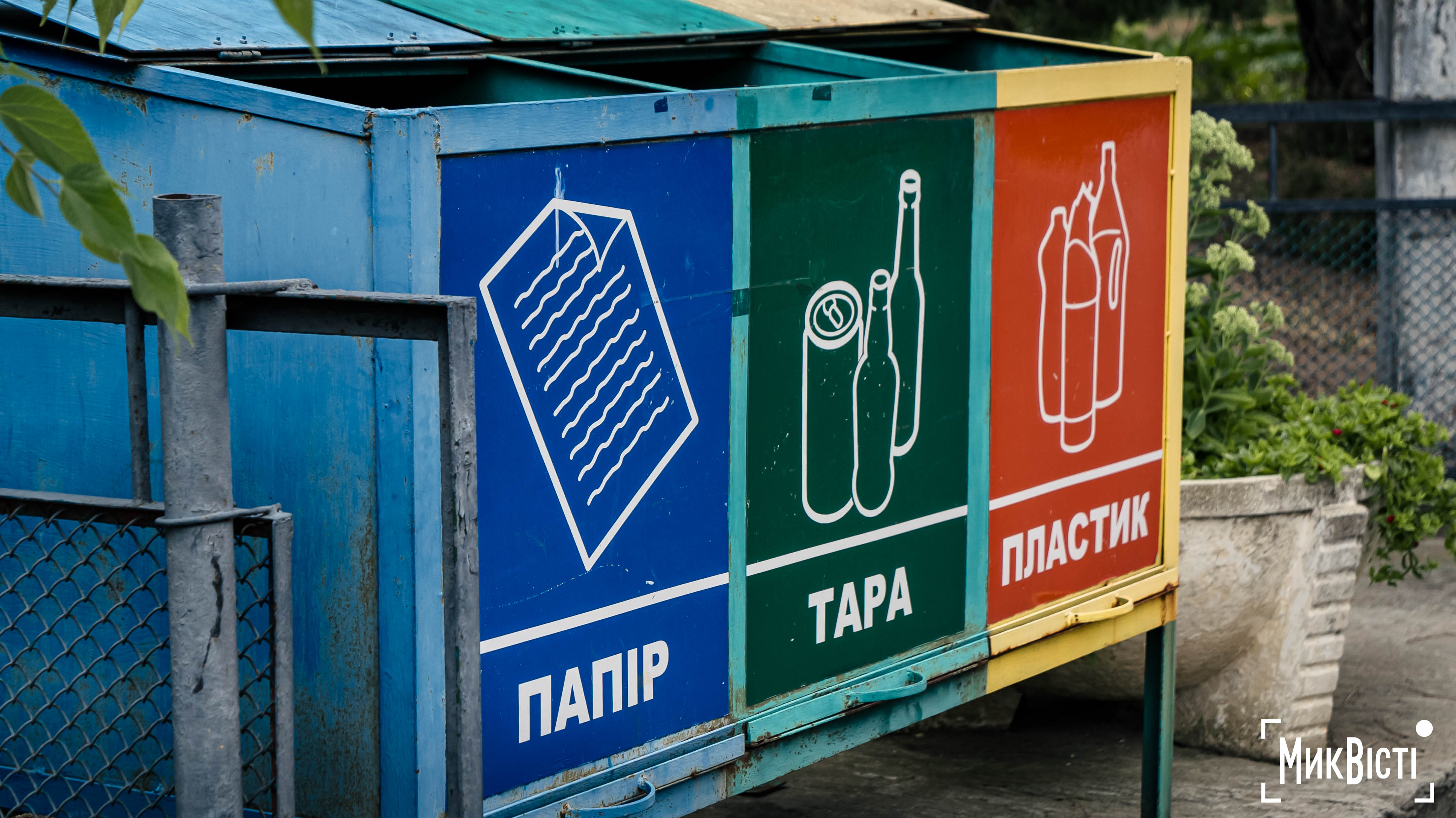
Here you can find some «interesting features», such as a composting area, a bin for collecting plastic bottle caps, a rubbish bin and bags so that dog owners can clean up after their pets, as well as a pumpkin patch.
 Lisky Park. Photo: NikVesti
 Lisky Park. Photo: NikVesti
 Lisky Park. Photo: NikVesti
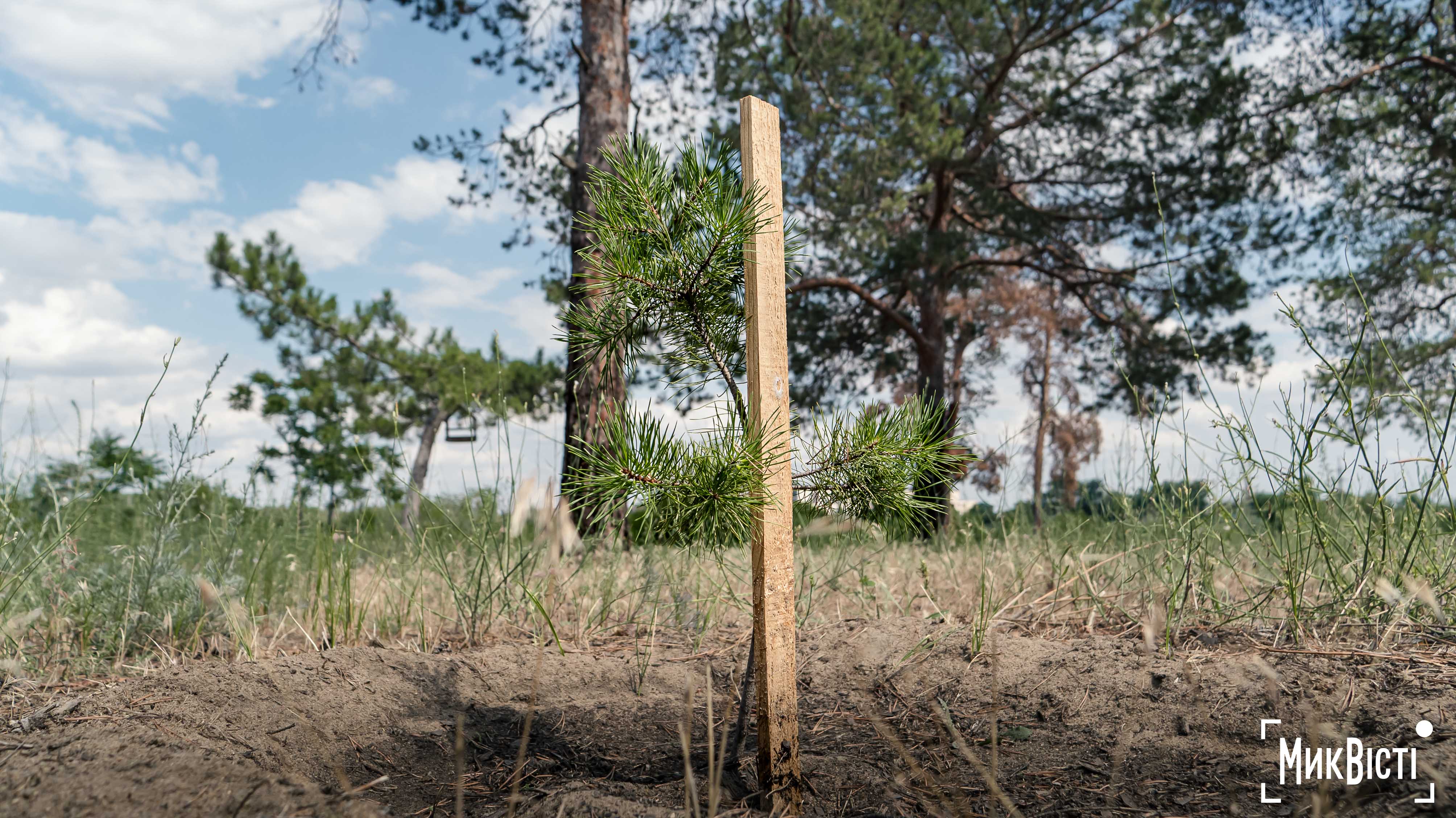
Lisky is one of the few places in Mykolaiv where pine trees grow. They are even trying to grow young saplings here. There is plenty of other greenery here too. However, in summer, it is particularly noticeable how much they lack water.
 Lisky Park. Photo: NikVesti
 Lisky Park. Photo: NikVesti
 Lisky Park. Photo: NikVesti
«Mykolaiv Parks» has reported that between 2025 and 2026, they repaired the chess pavilion and the kerbs in the flowerbeds, and restored the main water supply network for irrigation. They repaired and painted litter bins, benches and children’s play areas, mowed the grass, tended the flowerbeds, cleared rubbish and removed dangerous trees.
Regarding the work near the lake, the company reported that the lake basin itself had not been cleaned. However, they installed benches, shelters and litter bins, cleared the shoreline of tyres, rubber tyres and construction rubble, mowed the grass within a 5-metre radius to create a firebreak, and planted wisteria to provide shade.
«Regular measures are being carried out to maintain the proper sanitary and environmental condition of the lake and the surrounding area, in accordance with the schedule,» «Mykolaiv Parks» reported.
The organisation did not specify how much money was spent on all this, citing the overall budget for the maintenance of all public amenities in Mykolaiv.
At present, the benches installed by the lake have no canopies. Consequently, it is not possible to shelter from the rain or the scorching sun by the lake. In fact, the lake itself currently resembles a swamp.
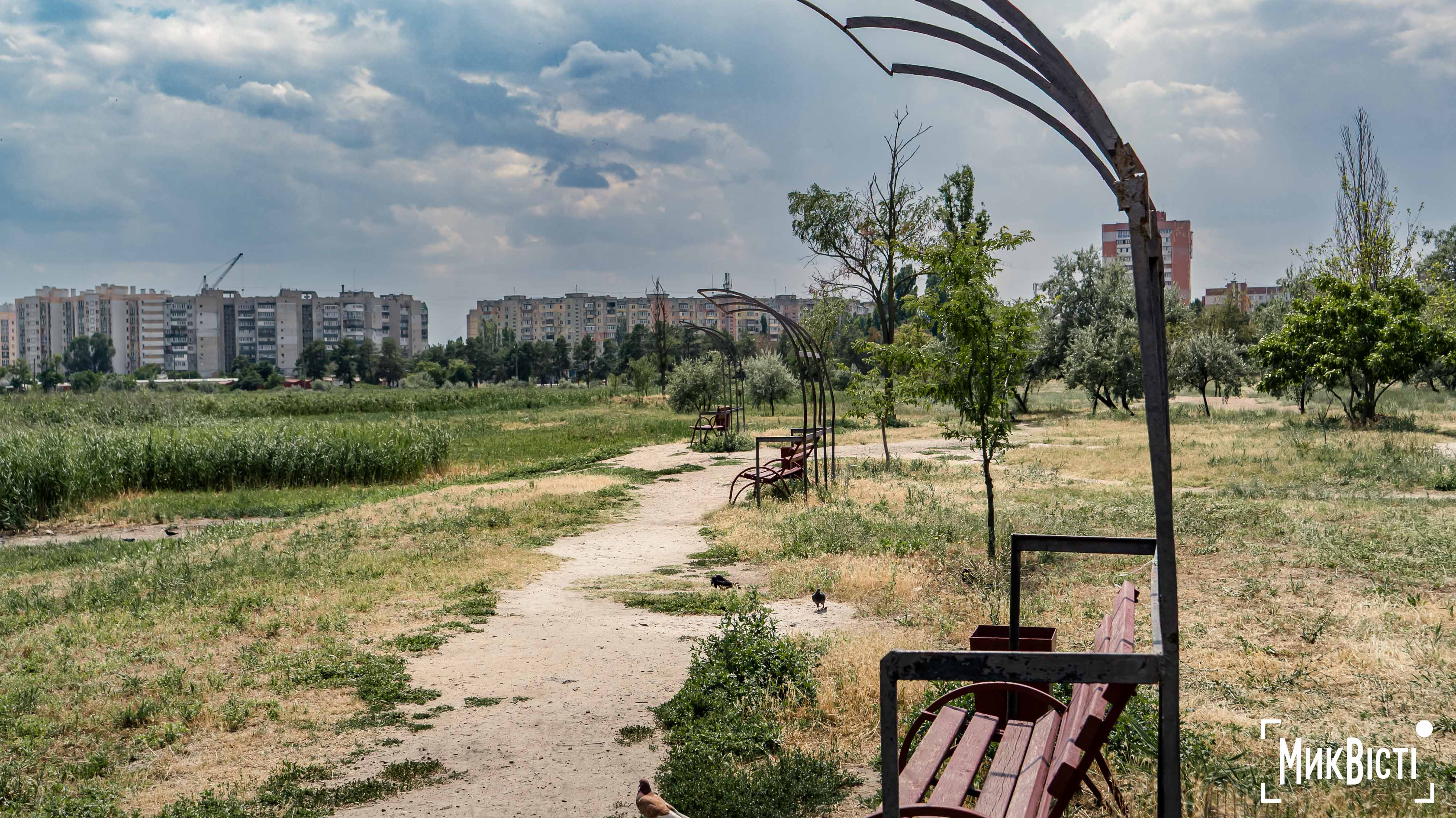 Benches without canopies by the lake in ‘Liski’ Park. Photo: NikVesti
 Benches without canopies by the lake in Liski Park. Photo: NikVesti
The park’s development and lack of funding
Yevhen Poliakov, Director of the Department of Architecture and Urban Planning and Chief Architect of Mykolaiv, believes that Lisky Park is valuable not only for the neighbourhood but for the whole city. In particular, the lake needs to be preserved and the issues with its water levels resolved. However, there is currently insufficient funding in the budget for this.
«The condition of the park has changed due to certain factors that environmentalists are highlighting and which people in our city can see for themselves. And the lake needs not only to be cleaned but also to be replenished with water: either artificially or naturally. This really does require funding. I even discussed this with the municipal utility company («Mykolaiv Parks», — note) at the end of last year, when the financial year was being planned. But, as we know, Mykolaiv’s local budget is currently going through not just difficult times, but arguably some of the worst,» remarked Yevhen Poliakov.
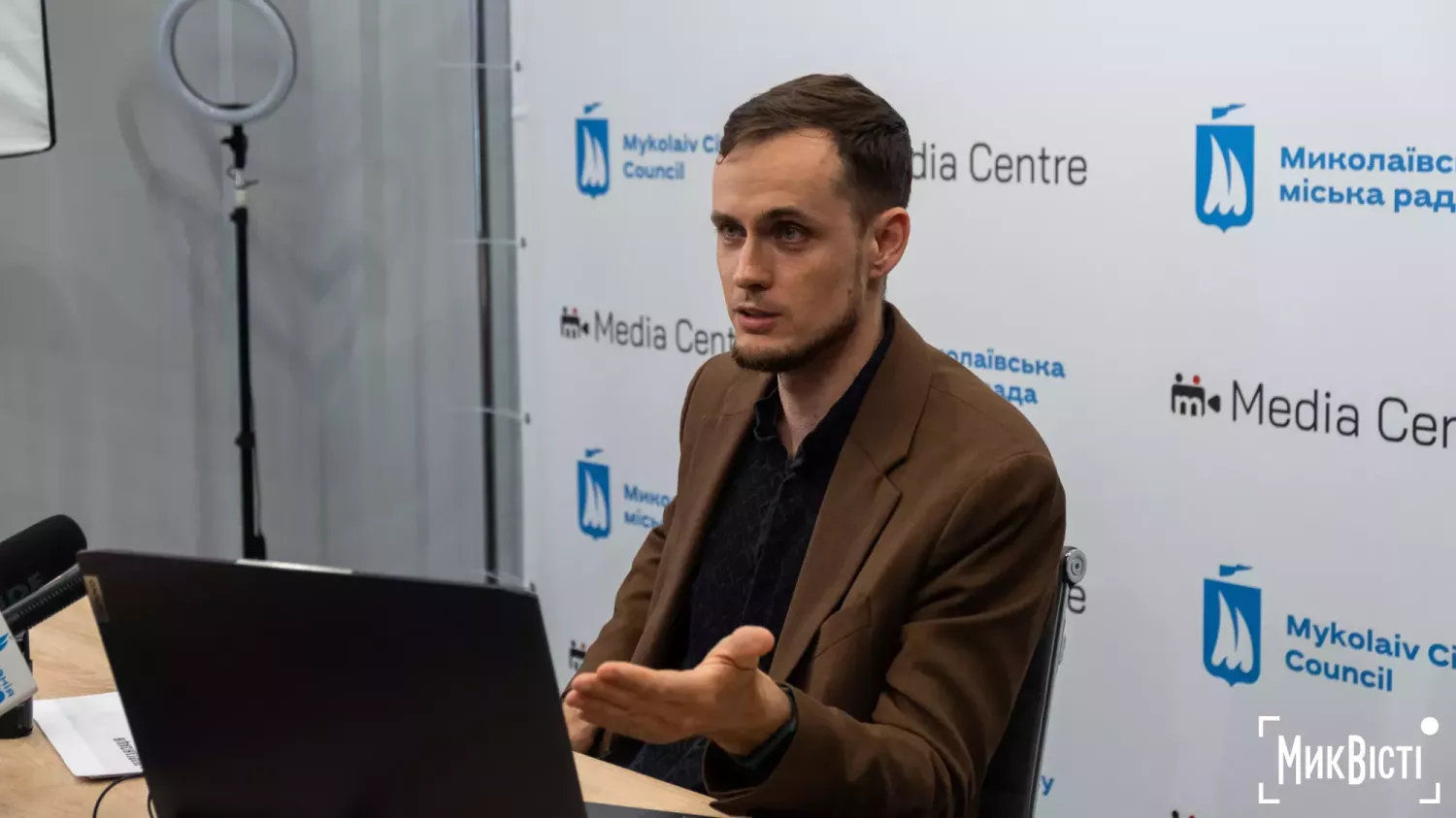 Mykolaiv’s chief architect, Yevhen Poliakov. Photo: NikVesti
In his view, the development of green spaces should be discussed publicly in order to draw the attention of both politicians and councillors. However, we need to look at the realities and budgetary constraints.
«We must be realistic and understand that, at present, Mykolaiv’s budget is focused on ensuring the supply of heating, water, road maintenance and waste collection. These are the basic services a city must provide. What we want most is for these projects to be implemented. The projects we are working on, including those aimed at tackling climate change, greening the city and creating public green spaces — all of them require resources. Without resources, it is impossible to implement them,» said Mykolaiv’s chief architect.
He explained that donors are currently interested in large-scale infrastructure projects, but not in the development of green spaces. Therefore, for the time being, the city is working on specific projects with the municipalities of Montpellier and Aalborg, as well as with various foundations, to install sports facilities that are accessible to people with reduced mobility.
Developments
There are several developments near, and within, Lisky Park itself. On the side facing Industrialna Street, there is a garage co-operative. The chief architect noted that when the sewer on Industrialna Street was cleared , this also helped to resolve the issue of drainage near Lisky.
The garages themselves, as Yevhen Poliakov explained, are situated behind the park grounds.
«The garages are set aside in a separate section. They are still included in the 2007 master plan, which the city is currently following. This is a general issue. Garage cooperatives have allocated plots of land. They operate in accordance with their own statutes and are responsible for their own activities. If they breach environmental legislation, then the environmental authorities must hold them to account and put a stop to any illegal activities, should such activities exist,» said Yevhen Poliakov.
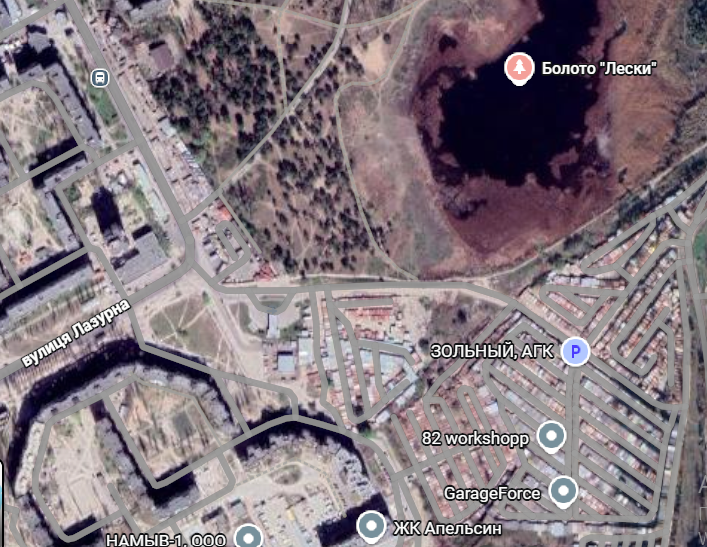 Garages near the park. Screenshot from Google Maps
At the same time, councillor Alla Riazhskykh drew attention specifically to the co-operative’s operations: the issue of sewage discharge was not limited to businesses near the park.
«People are digging small trenches from their garages and discharging their sewage into them,» noted the councillor.
However, this issue has not yet been officially resolved. The Zavodskyi District Administration commented that the Sanitary Inspection Department had carried out an inspection of the buildings near the park.
«In accordance with our powers, reports were drawn up against the offenders under Article 152 of the Code of Ukraine on Administrative Offences. Inspections are also being carried out to assess the sanitary condition of the area in question following the leaks and the restoration of the well,» the administration stated, though they did not specify who the offenders were.
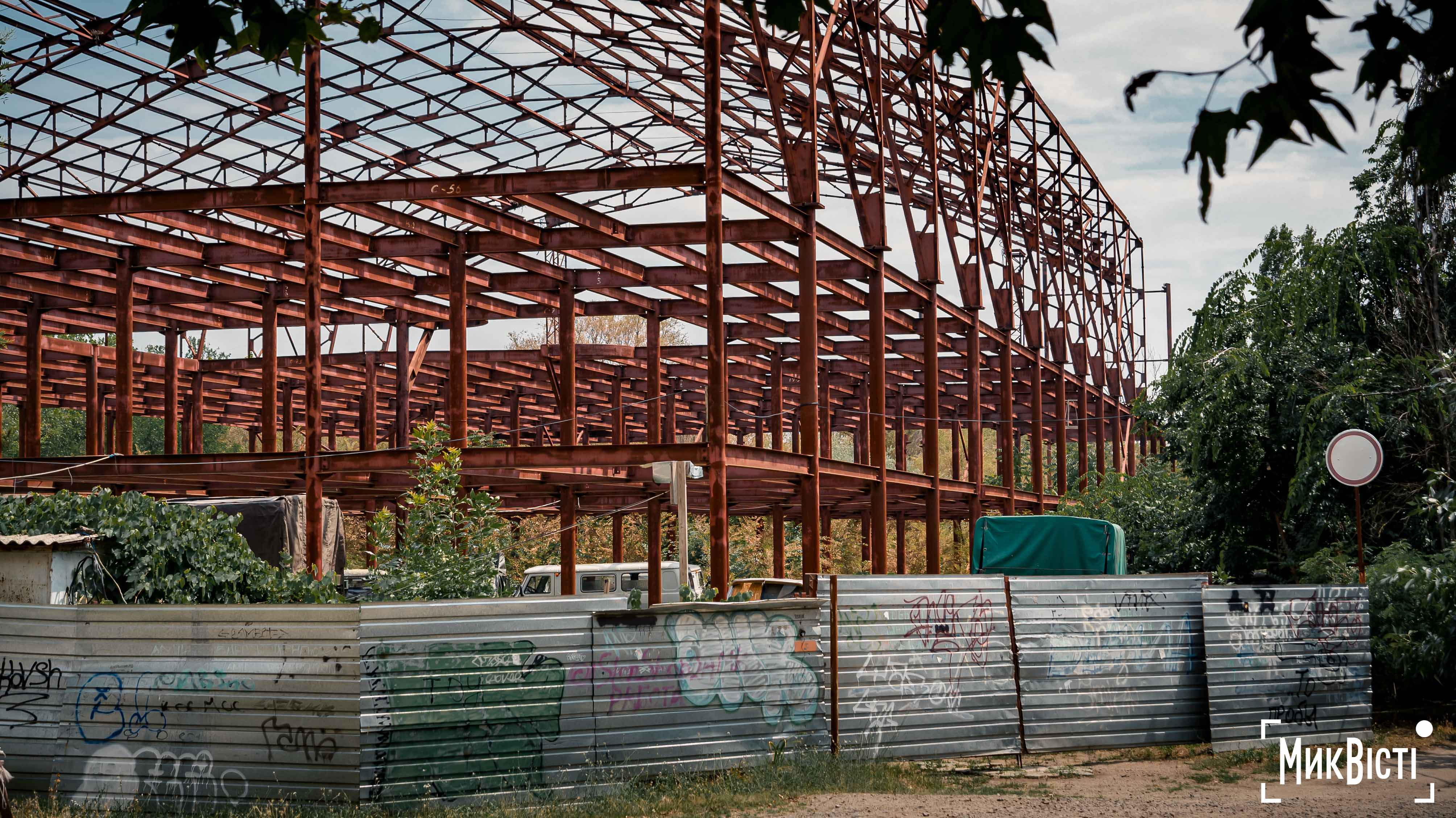 An unfinished building that has stood near the park for many years. Photo: NikVesti
Another issue is the metal structure that has stood in the park for many years. It has never been turned into the youth centre for which the land was allocated to a private developer.
« And there is the problem of a structure that became private property some time ago. It is a gigantic metal structure. It is a privately developed public-purpose building that has not been completed; its current state is: lots of metal, little architecture. And it is situated within part of this park’s grounds. The land is municipally owned. The plot of land was allocated to a private developer for the construction of a youth centre. This project was never realised, and this is a problem because the structure occupies part of the park,» noted Mykolaiv’s chief architect.
But the main problem is the former «Iskra» cinema. It is owned by the regional authorities. Its condition has been deteriorating over the years, but the question of what to do with it remains unresolved.
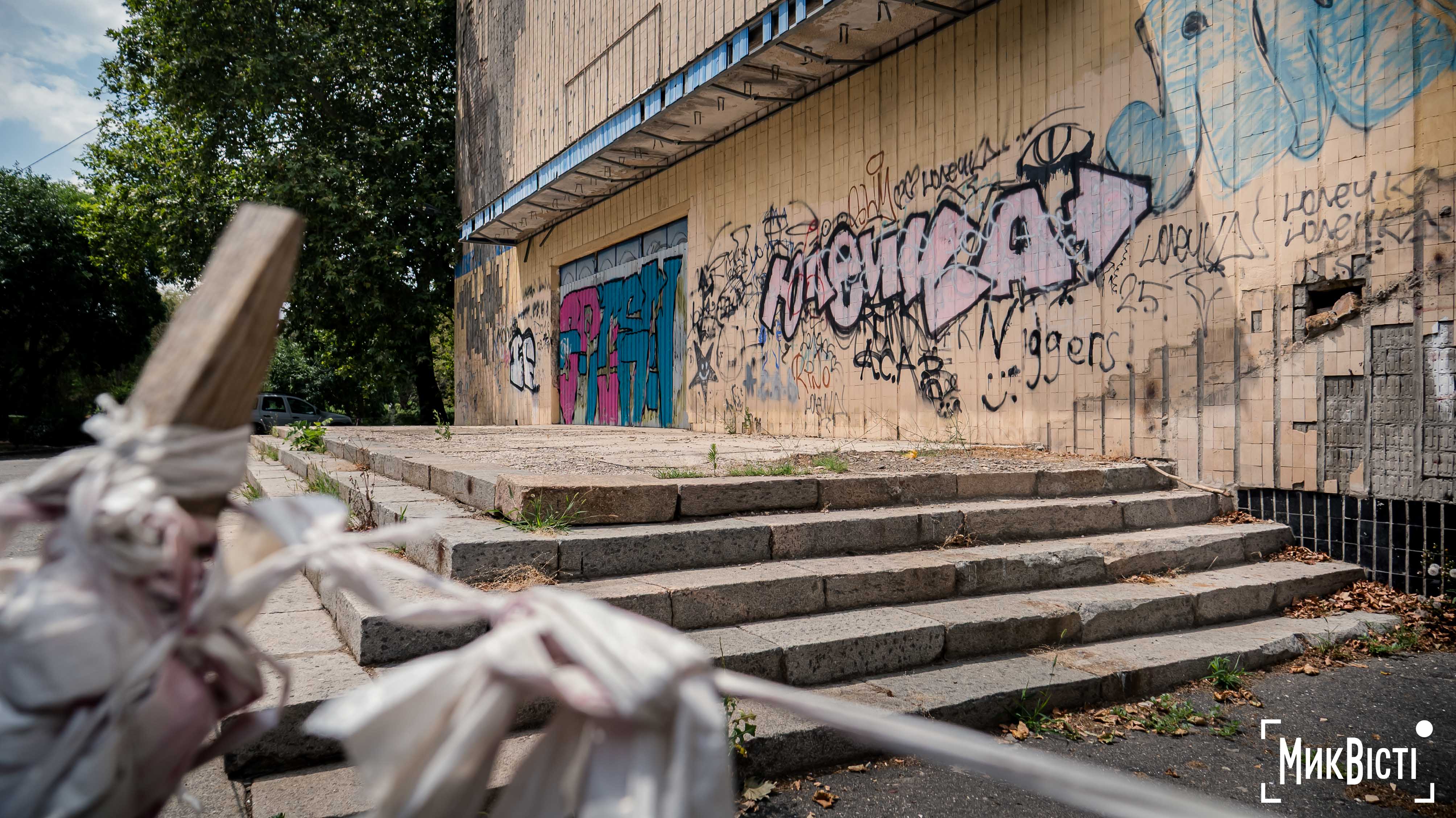 The former ‘Iskra’ cinema. Photo: NikVesti
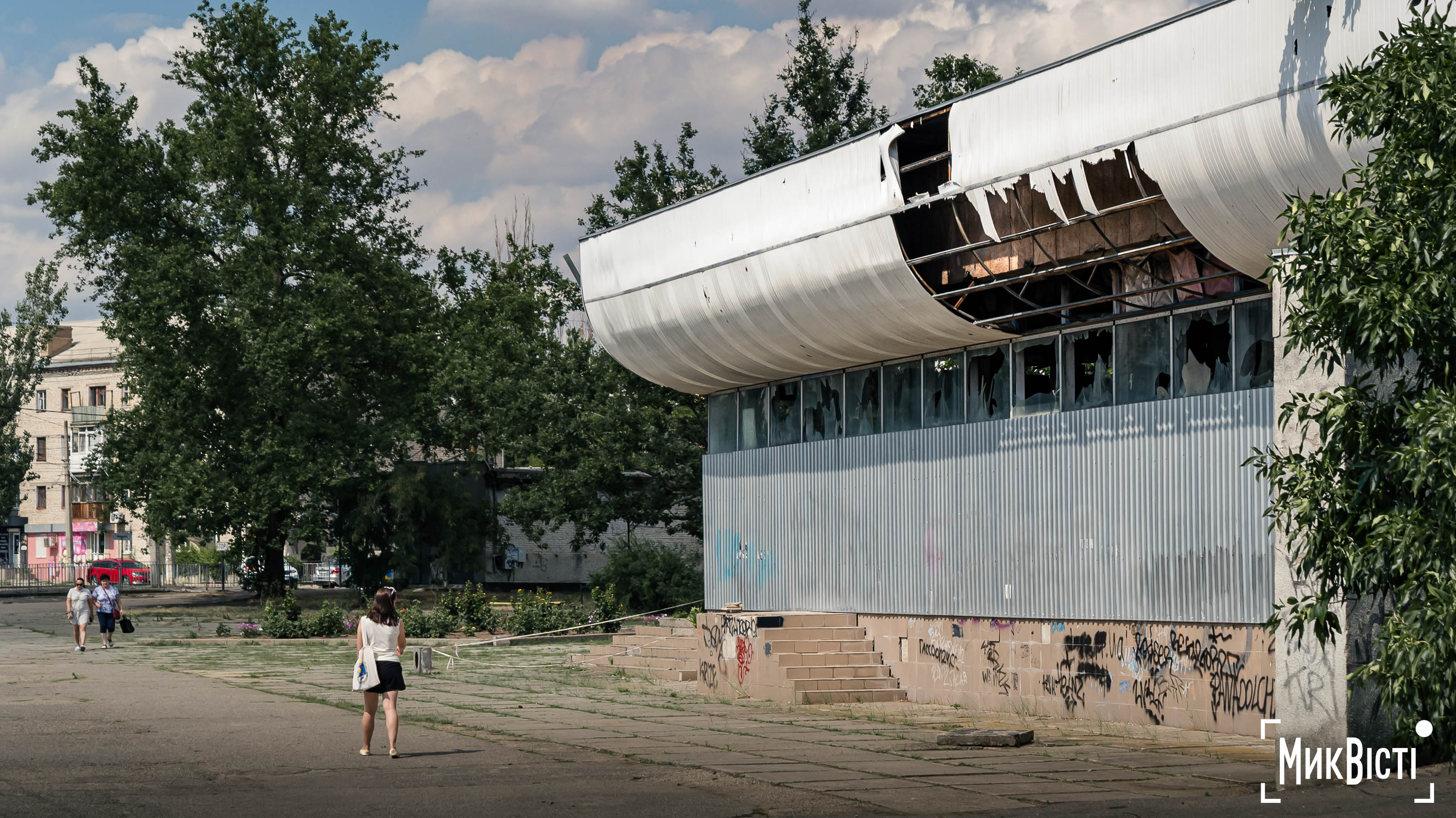 The former ‘Iskra’ cinema. Photo: NikVesti
The Director of the Department of Architecture and Urban Planning believes that a decision needs to be made regarding «Iskra» and options identified: whether to proceed using budget funds, private investment or a public-private partnership. But this requires public dialogue.
«And the main focus is on the «Iskra» cinema, regarding which a decision must be made, at the very least, on what will become of it. If it is not possible to reach a decision, then no changes will take place. I’ve looked at the geological survey for this site and the planning documents; in principle, it could accommodate any public-purpose facility. There was even a brief discussion at one point about a science museum proposed by a private company to be housed there. We drew up plans and assessed whether it met the criteria. There’s plenty of space there. In other words, it’s possible to develop and create interesting spaces,» noted Yevhen Poliakov.
Sports and children’s play areas
There is currently a sports ground with a surface within the park. Overall, it is in a reasonable condition, although some elements have already broken.
Regarding the damaged elements, Mykolaiv’s chief architect noted that the defects are linked to the materials used to manufacture the equipment. The plastic has cracked due to exposure to the sun and frost, so the equipment needs to be replaced with new, high-quality materials.
«We have been looking into this and, together with Yurii Stepanets (a member of Mykolaiv City Council, — note), have drawn up a layout to refurbish this sports ground. Firstly, it is more cost-effective to do this because there is already a hard surface in place. All that is needed is to carry out technical repairs to the surface itself when replacing elements or installing new ones. And, in principle, it could be a modern playground,» commented Yevhen Poliakov.
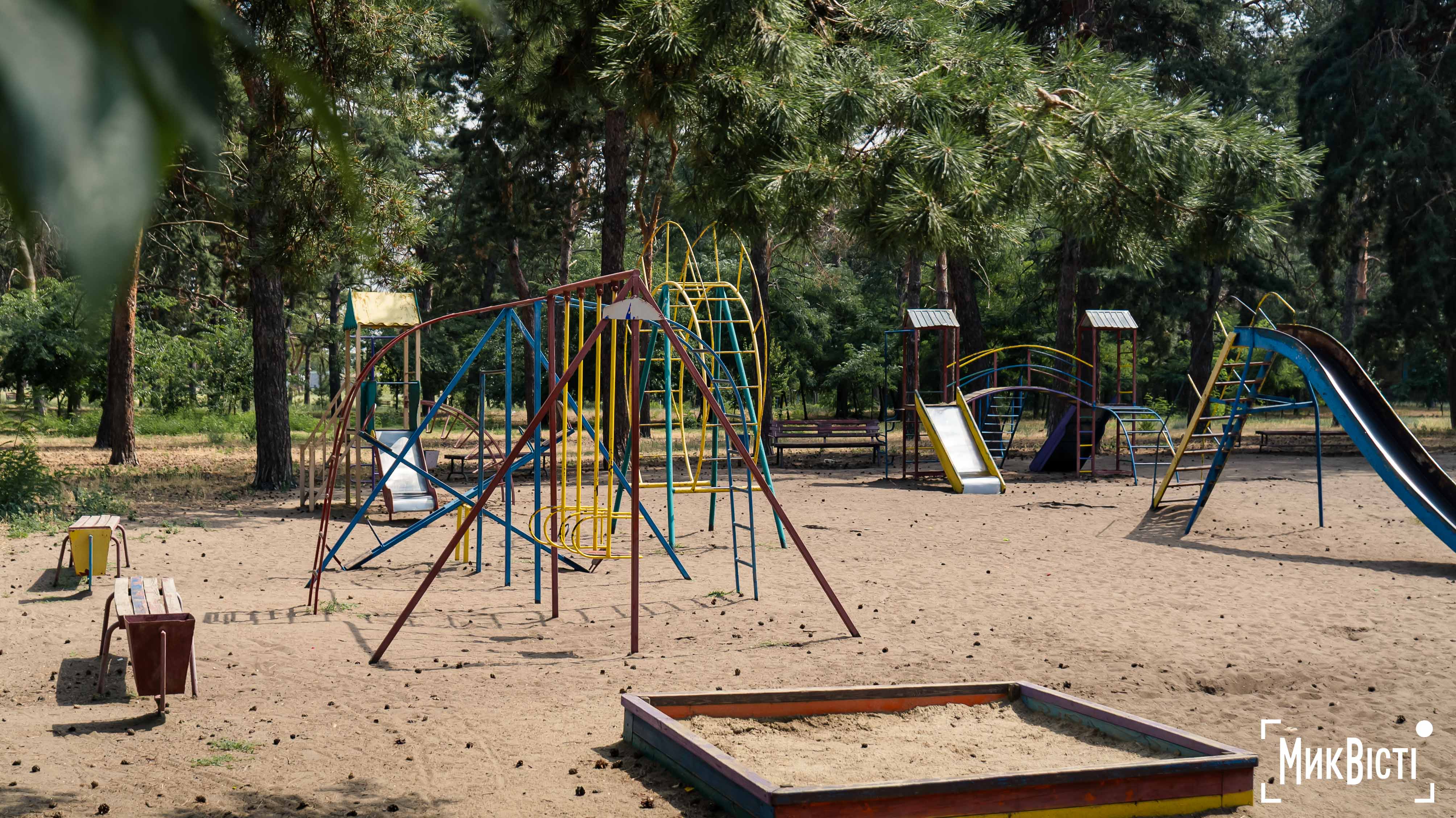 Children’s playground in Lisky Park. Photo: NikVesti
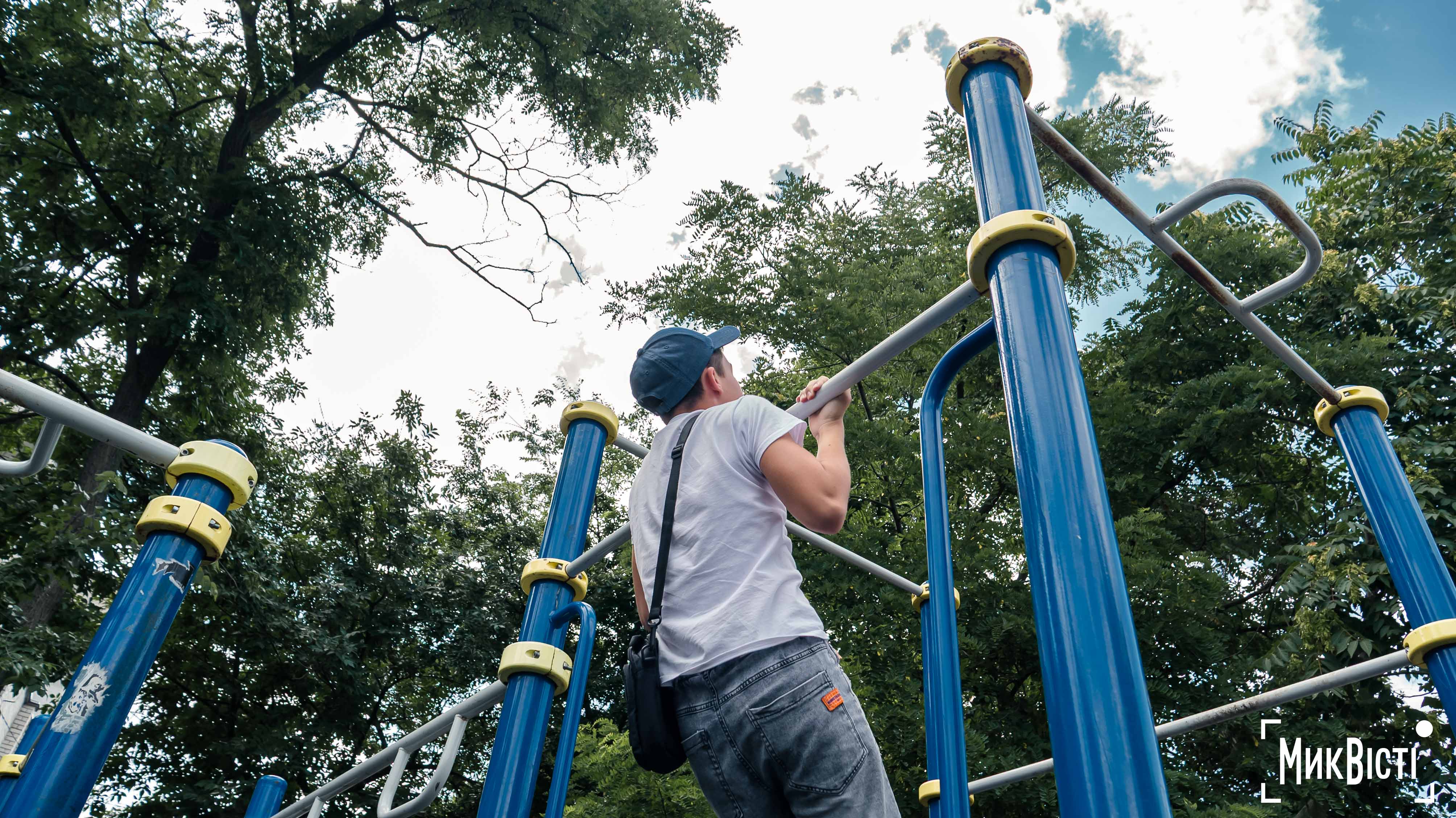 Sports ground in Lisky Park. Photo: NikVesti
There are several children’s playgrounds in the park. Some appear to have been repainted and partially refurbished. But on the whole, like most playgrounds in Mykolaiv, they are outdated and combine elements from several different eras.
«There is a children’s playground located closer to the «Iskra» bus stop. It needs all its equipment replaced, as it is outdated both in terms of design and technical condition. Children deserve a better one. But it’s interesting that the playground is built on a sand base. In principle, this is a good thing, as it’s safe: there’s less risk of injury to children. And the sand just needs to be replaced to reduce dust, so that it resembles a modern children’s playground,» said Yevhen Poliakov.
The situation is similar with other playgrounds in the park.
«Should new playgrounds be built in green spaces? No, we must first bring the existing playgrounds up to a proper standard — not so much in terms of appearance as in terms of practicality,» noted the chief architect.
Public toilets
An important feature in recreational areas is public toilets, of which Mykolaiv currently lacks. Lisky Park currently has composting toilets. One of them is accessible.
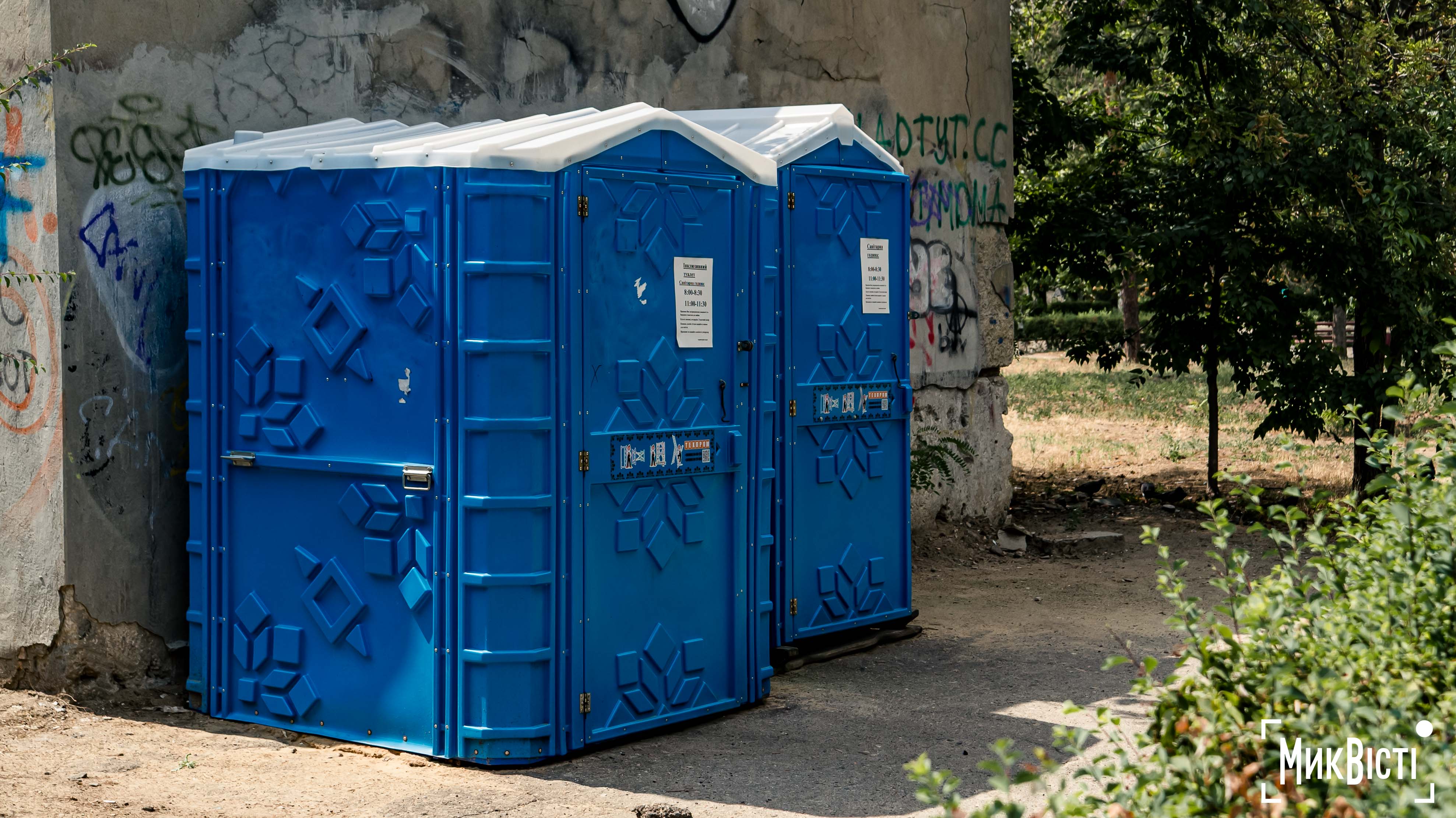 Toilets in Liski Park. Photo: NikVesti
In 2023, the Housing and Utilities Commission discussed the demolition of the old toilet block in the park, which was commissioned in 1973 and had fallen into disrepair.
The Director of the Department of Architecture and Urban Planning believes that the park should have a public toilet — not composting toilets.
«First and foremost, there should be a public toilet there, which needs to be planned and built. There are modular solutions available. These are not composting toilets, but essentially modern toilets that simply need to be monitored and maintained. If the city cannot do this at present using its own funds, then this could be a solution for the private sector,» says Yevhen Poliakov.
Green space indicator
On the subject of greening, environmentalist Inna Tymchenko noted that Lisky is one of the few places in Mykolaiv where pine trees grow. Attempts are being made here to grow similar young conifers.
«But we don’t know how well they’ll thrive into adulthood, because conditions are already very poor for them, both in Lisky Park and across much of Mykolaiv. Why? Because there’s no fresh water. The soil is salinated, the water is salinated, and there is no access to fresh water. Furthermore, there is no rainfall, which is, again, the only source of fresh water. And pine trees prefer acidic soil; they do not like salt. They are very hardy and can even grow on rocky ground. But if the soil is too acidic, they will struggle. And in any case, they need fresh water,» the ecologist pointed out.
Inna Tymchenko also noted that in Mykolaiv, we need to start taking into account the overall conditions for growing greenery.
«In my view, we need to move away from the senseless practice of planting trees without taking all the conditions into account: soil, watering, and the species that thrive here in our city. We’re not talking about some exotic foreign species. Pine trees don’t thrive here, although there are places where they do grow. In other words, we need to take a comprehensive approach to resolving this issue,» commented the environmentalist.
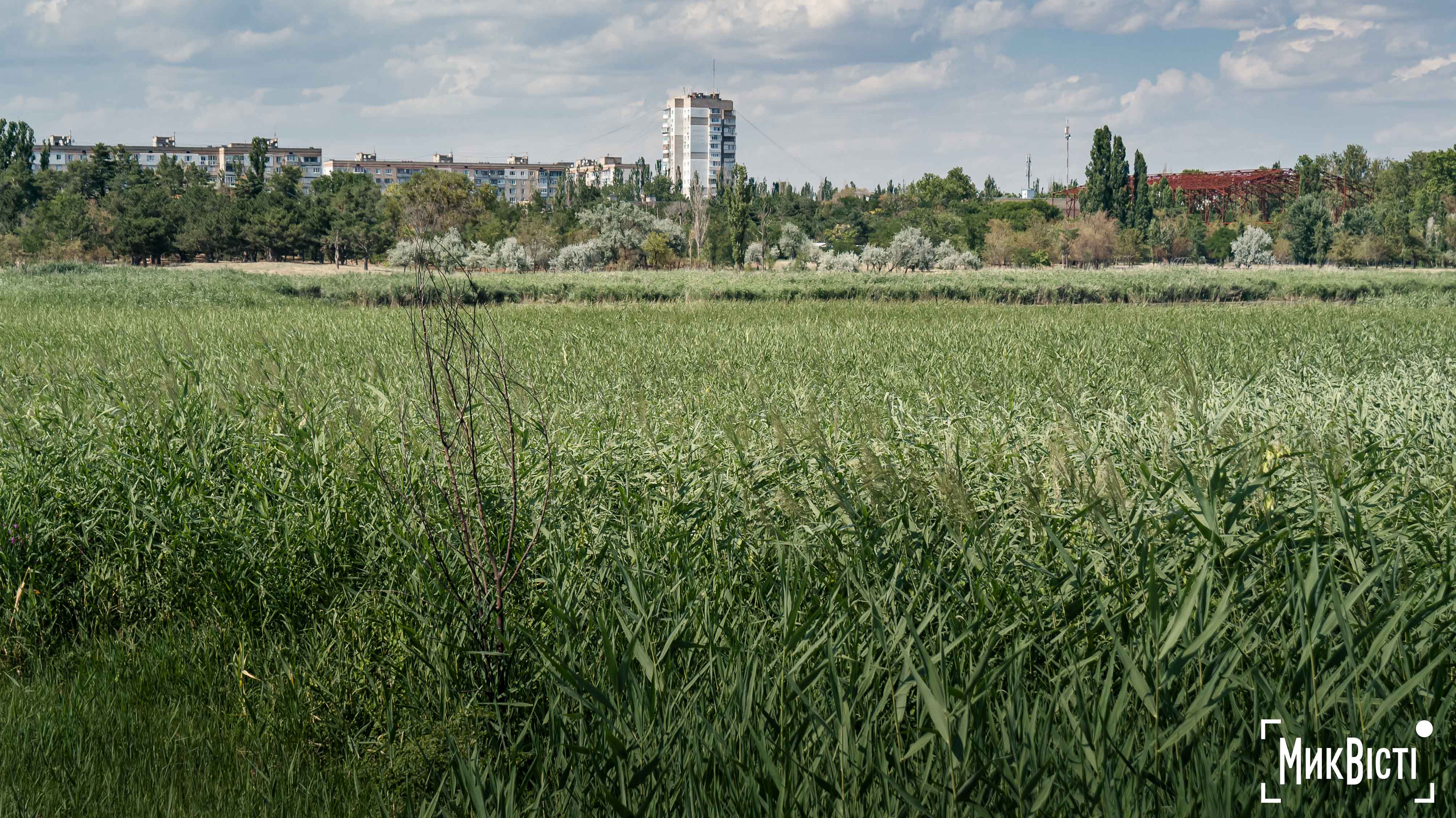 Lisky Park. Photo: NikVesti
Overall, she considers Lisky Park to be an indicator of Mykolaiv’s green spaces.
«For me personally, based on my observations of our city, its green spaces, and how climate change is affecting our city, Lisky Park serves as an indicator that things are actually in a very bad state. I mean, we’re drawing up plans — that’s good. But there are simple solutions that should have been implemented yesterday: how we can adapt to this, what data we need for our city so that we can preserve such unique spots as Lisky Park and the lake,» noted Inna Tymchenko.
As she pointed out, comprehensive solutions are needed for the park and green spaces: this requires bringing in specialists.
«I know that there are people working in Lisky Park who love this park and are ready to help it. And, of course, we need to take a very comprehensive approach here. We have experts who studied this park back in the 1990s, and perhaps even earlier, and who know a great deal about it. They need to be brought in to develop measures to preserve this and other parks, including deciding which trees to plant and studying the groundwater. As far as I’m concerned, this is a challenge for the whole of Mykolaiv, not just for Lisky Park,» said the environmentalist.
Whilst environmentalists believe that the issue of urban greening needs to be tackled comprehensively, the chief architect believes we should start with a pilot project to test various aspects, and then scale it up to other green spaces. Overall, Yevhen Poliakov noted that research is needed into why some trees are dying in the park.
«We need to carry out research and take soil samples, and then obtain recommendations and implement them. This requires funding,» said Yevhen Poliakov.
However, the director of the Department of Architecture and Urban Planning believes that, overall, the park needs a watering system.
«In fact, everything will grow if there is a proper irrigation system. This is the problem that needs to be addressed for Mykolaiv’s green spaces. When there is irrigation, everything grows. We need to install water supply meters and set up networks. Otherwise, the green spaces will remain dry. And when planting, we must ensure not only the planting of greenery in Lisky Park and others, but also proper maintenance and irrigation,» noted Yevhen Poliakov.
Furthermore, according to Mykolaiv’s chief architect, the park’s landscaping requires the restoration of footpaths, but the park must not be «paved over» with asphalt.
«We need to identify where hard surfaces require renewal and where to create natural landscapes and footpaths, but without using asphalt or paving slabs. There’s no need to pave the entire park with asphalt or paving slabs. There must be infrastructure for people, and there must be natural landscapes with minimal human intervention,» noted Yevhen Poliakov.
So, whilst the development of Lisky Park remains at the stage of discussion and planning, the priority is to maintain it in a decent condition. This includes checking that no sewage is leaking into the lake and tidying up the area behind the lake where a well has been built.
The Zavodskyi District Administration has reported that, pursuant to a decision by the Executive Committee, the municipal enterprise «Mykolaiv Parks» is responsible for the sanitation of the area not covered by homeowners’ associations, as well as enterprises, institutions and organisations of all forms of ownership.
«In order to ensure the proper sanitary condition of the aforementioned area, the Zavodskyi District Administration has sent a letter to the municipal enterprise «Mykolaiv Parks» requesting that measures be taken in accordance with the powers granted,» the administration stated.
 NikVesti
· post about this story
Sewage discharges into the lake and a climate change indicator in Mykolaiv: what is the state of the Lisky park.
Mykolaiv is a city bordered by two rivers. It…
NikVesti
· post about this story
Sewage discharges into the lake and a climate change indicator in Mykolaiv: what is the state of the Lisky park.
Mykolaiv is a city bordered by two rivers. It…


The work on this material became possible thanks to the Fight for Facts project, which is implemented with the financial support of the Federal Ministry of Economic Cooperation and Development of Germany.

