Sienkevych criticised the CHPP, which is forcing Mykolaiv residents to wait two weeks for heating
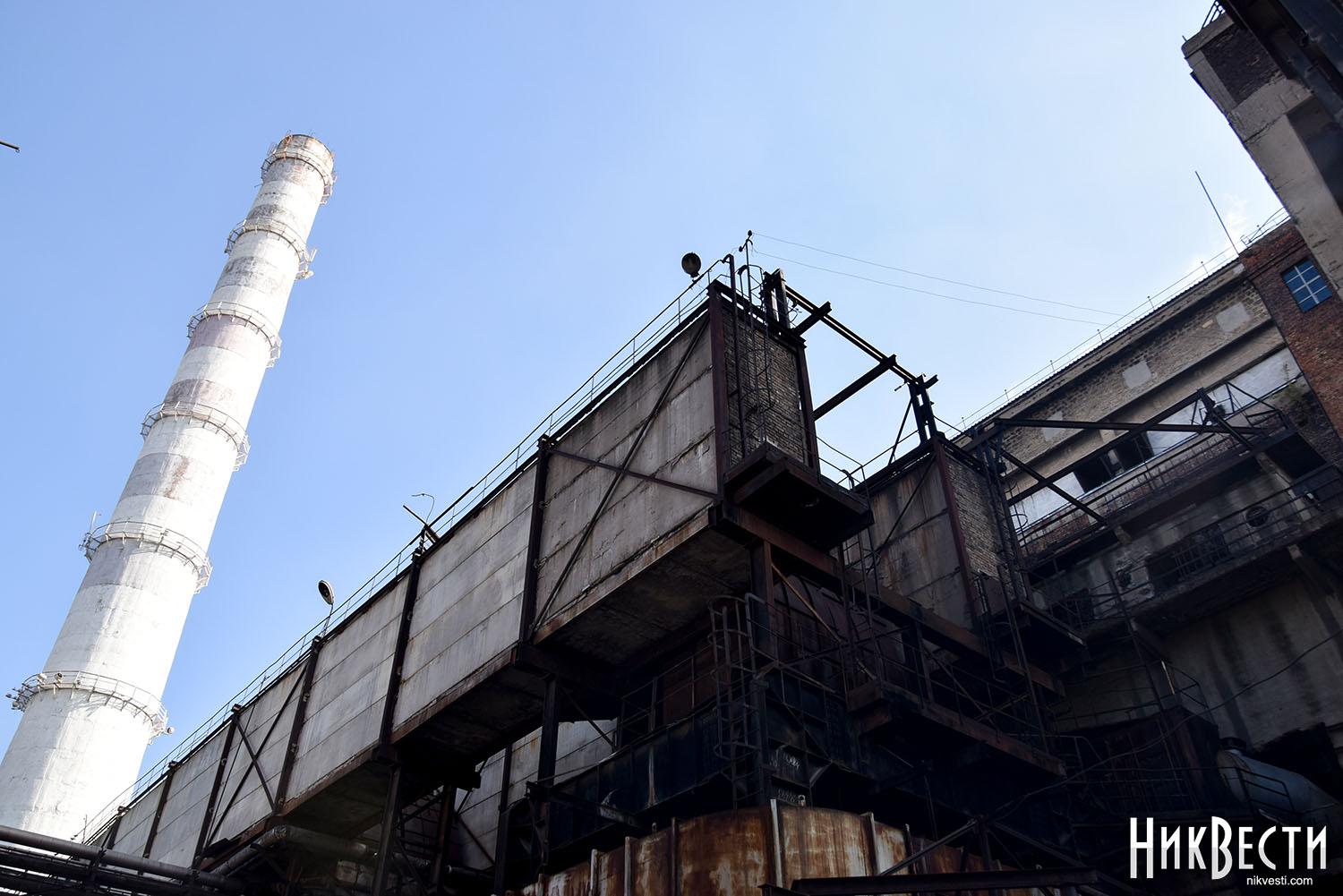 Mykolaiv Thermal Power Station. Archive photo: NikVesti
Mykolaiv Mayor Oleksandr Sienkevych has criticised the procedure for starting up the heating system at the Mykolaiv Central Heating and Power Plant (CHPP), under which the company is given 10 working days after the start of the heating season has been announced to connect consumers. He questioned the wisdom of such a timeframe, as city residents are left without heating during this period.
This was discussed during a staff meeting of the Mykolaiv City Council on Monday, 9 November, according to NikVesti.
During the meeting, Serhii Morhachov, technical director of the Mykolaiv CHPP, spoke about the company’s current operations, technical issues and risks to the smooth running of the heating season. According to him, the biggest problems with the station’s operation arise due to power cuts.
«The problem was that the plant had already been shut down several times due to a lack of electricity. It takes around 8–10 hours to restart the plant. Furthermore, this leads to water hammer and the failure of various pieces of equipment, which complicates the smooth start to the heating season. At present, the heating has been switched off on Bohoiavlenskyi Avenue. The faults will be rectified by 16:00. This is also linked to Saturday’s blackout. Therefore, the biggest problem for us is the lack of electricity,» noted Serhii Morhachov.
He added that the company is working round the clock to reconnect customers. The mayor asked whether they planned to restore heating to residents of Bohoiavlenskyi Avenue by 16:00 and whether heating was working in other parts of the city.
In response, the chief engineer explained that, following the shutdown of the plant, it is necessary to restore and stabilise the heating system. According to him, this will take around 10 hours.
After this, Oleksandr Sienkevych asked when the CHPP’s customers would be able to receive a stable supply of heating. Serhii Morhachov replied that, as previously reported, this might take around 10 days.
The mayor also questioned the need for such a timeframe and asked for an explanation as to where the figure of 10 working days for restarting the heating system after the start of the heating season had come from.
«Listen, I’m curious. What on earth are these 10 working days? Where did that figure come from? How did it end up in the executive committee’s decision regarding 10 working days for the system to get up to speed? You had half a year to get the system up to speed,» asked the mayor.
«No, it’s necessary to get the heating up and running for all consumers,» replied Serhii Morhachov.
«Ten days. How do you explain that? Is it down to the water pressure in the pipes, or what? How exactly? This needs to be explained,» said Oleksandr Sienkevych.
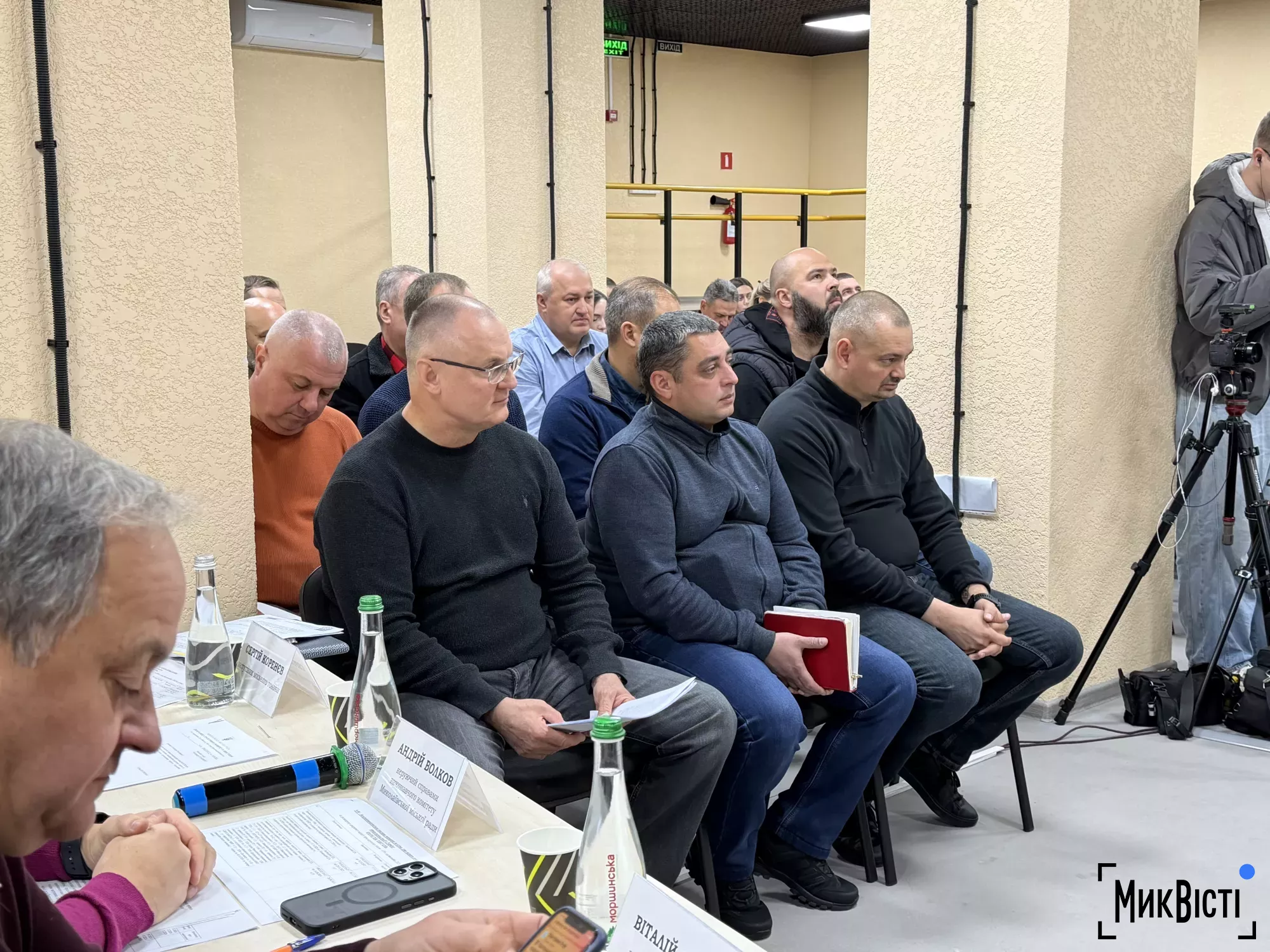 Serhiy Morgachov, Technical Director of the Mykolaiv Thermal Power Station. Photo: NikVesti
Serhii Morhachov explained that ten days are needed to open the valves at consumers’ premises and to monitor the thermal regime. When the mayor asked for clarification on exactly which valves needed to be opened, the chief engineer explained that during hydraulic tests, the main valves are checked and the system is filled, whilst after the start of the heating season, the valves at the consumers’ premises are opened.
«These are the main valves that have been opened. And now the valves at the consumers’ premises are being opened. The consumer is then connected to the supply. And once the consumer is connected, the system needs to be stabilised,» explained Serhii Morhachov.
Thus, according to the CHPP representative, the ten-day period is not required to fill the entire system, but to connect individual consumers and establish a stable heat supply.
Oleksandr Sienkevych stated that he considers this procedure for starting up the heating system to be problematic. He said that the city is effectively forced to wait ten days after the start of the heating season has been announced, whilst the plant reaches its operational parameters. He also instructed the mayor’s department to analyse the executive committee’s decision regarding the start of the heating season and the ten-day period it stipulates.
«In all my years of service, this is actually the first year that these 10 days have caused such a stir. I’ll simply ask the Mayor’s Department to analyse the Executive Committee’s decision on the start of the heating season with regard to the implementation of these 10 days. This means that next year we’ll have to start up the Mykolaiv Thermal Power Station 10 days before the start of the heating season. This is how I see it. Because then we’ll have to treat children and the elderly, as during those 10 days we’ll be leaving people in the cold whilst the plant reaches its operating parameters, as they say, gets up to speed. And then we’ll have power cuts; there’ll be no heating from 9.00 am to 4.00 pm, and after that we’ll spend another 10 days getting back up to operating parameters,» said the mayor.
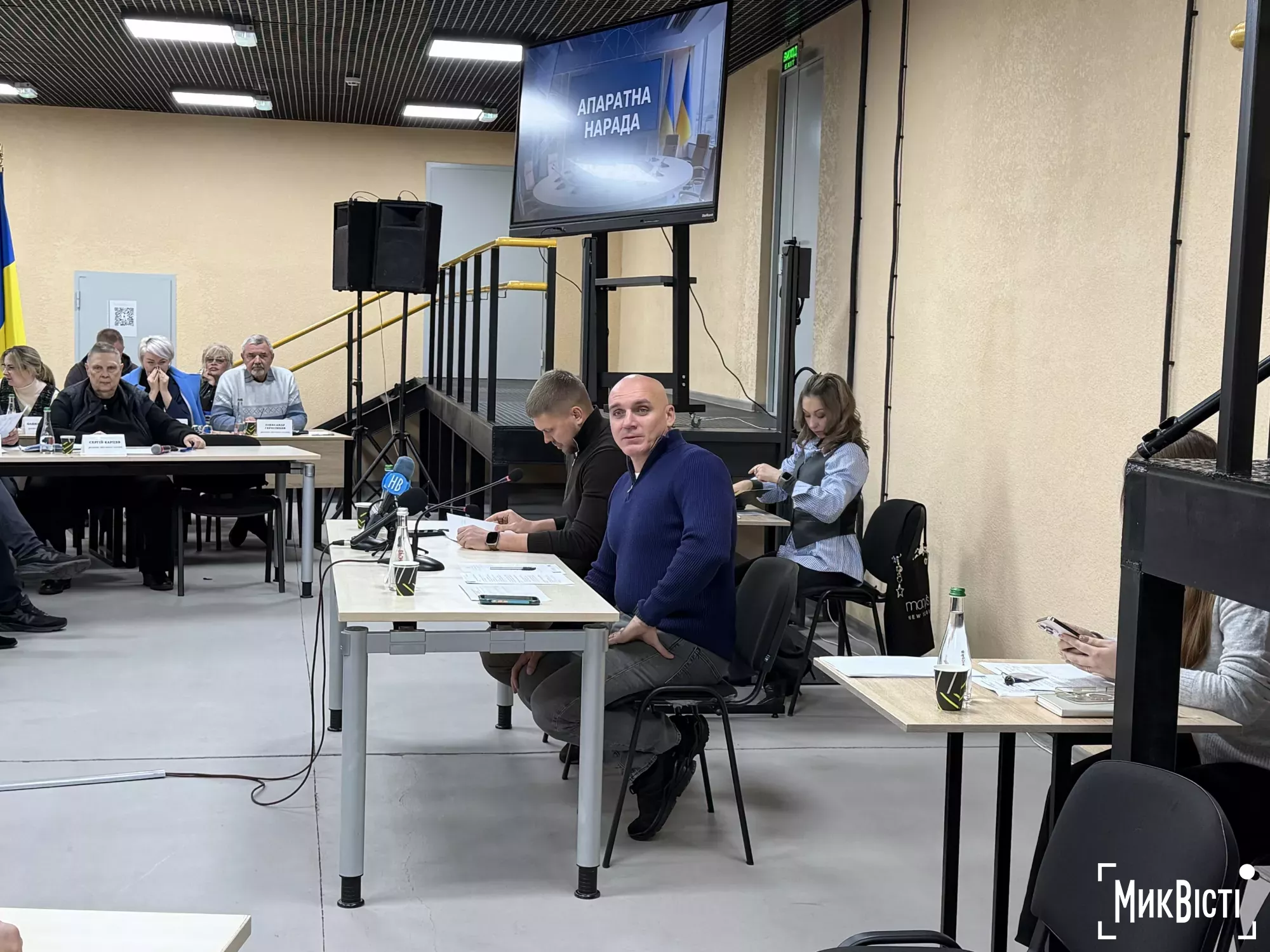 Oleksandr Sienkevych, Mayor of Mykolaiv. Photo: NikVesti
Separately, Oleksandr Sienkevych asked the Mykolaiv Thermal Power Station to report publicly every day on the number of connected consumers. He also proposed publishing a list of buildings that are not yet connected to the heating system or are not receiving heat.
It should be noted that residents in Mykolaiv are reporting problems with heating in their flats. Some are left without heat due to power cuts, whilst others are without it even when their neighbours’ radiators are already warm.
As a reminder, «Mykolaivoblteploenergo» has received six generators from partners in Poland and Germany. The equipment will enable modular boiler houses to operate autonomously during power cuts and continue to supply heat to residential buildings and critical infrastructure facilities.

You read this text for free. To keep it that way, the newsroom's work is supported by members of the NikVesti Club.
Cancel any time