“Free economic zones where it makes sense to invest”: in Brussels, Sienkevych urged that the needs of frontline regions be taken into account during Ukraine’s EU accession
At the first meeting of the Joint Consultative Committee between the European Committee of the Regions and Ukraine in Brussels, Mykolaiv’s mayor, Oleksandr Sienkevych, called for the needs of frontline communities to be taken into account as Ukraine aligns its legislation with EU law. He proposed establishing free economic zones now for the areas most devastated by the war, so that it would make sense to invest there once the war is over.
Oleksandr Sienkevych wrote about this on his Telegram channel, and the recording of the meeting was published by the European Committee of the Regions, according to «NikVesti».
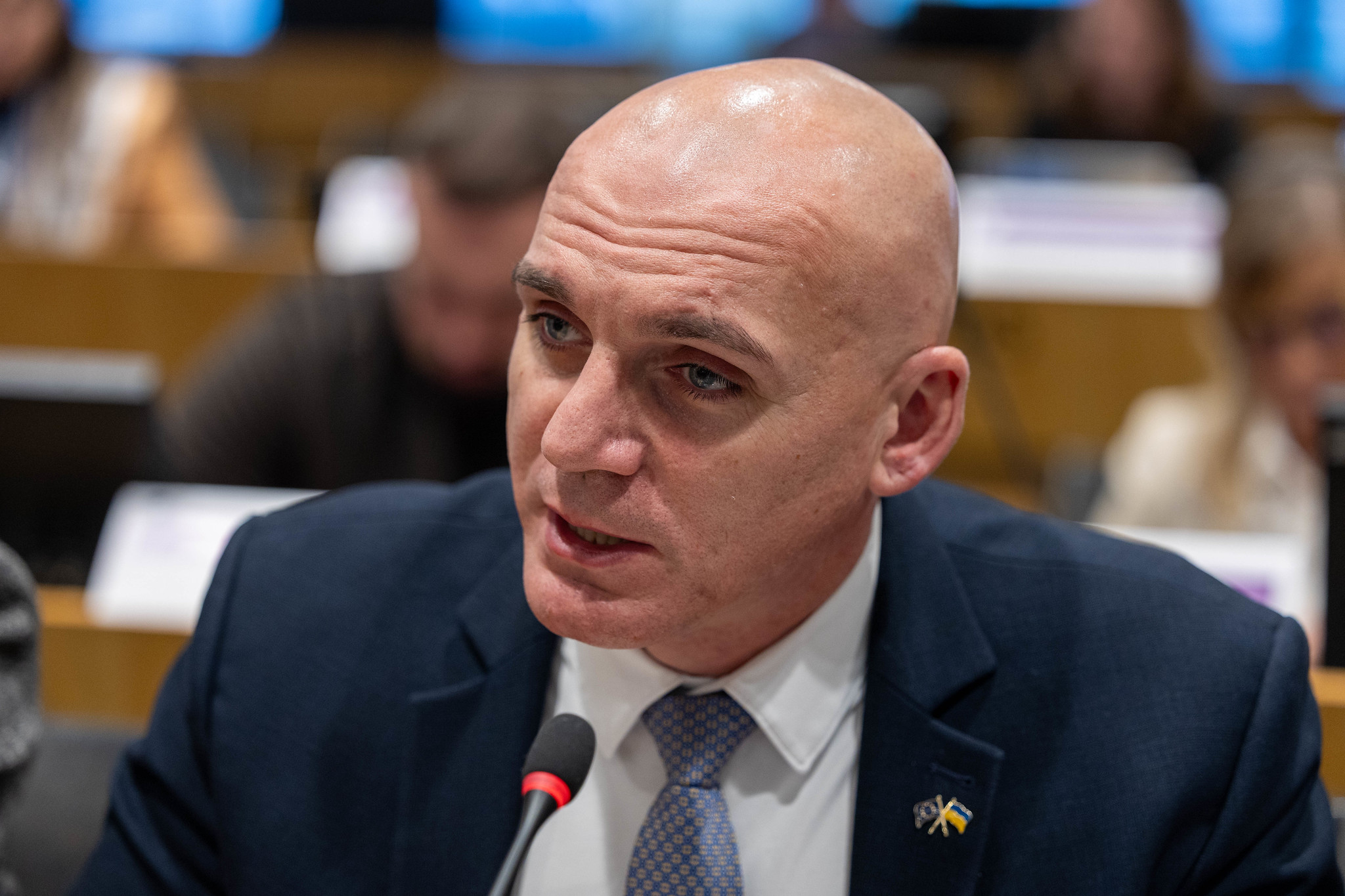 Oleksandr Sienkevych at the first meeting of the Joint Consultative Committee between the European Committee of the Regions and Ukraine, Brussels, 20 November 2026. Photo: ©European Union / Sabela Novoa Gómez
The meeting took place on 20 November. Oleksandr Sienkevych emphasised that the war had devastated Ukraine unevenly: areas near the front line had suffered far more than those closer to the border with the EU. However, their reconstruction will be governed by the same legislation that Ukraine is currently harmonising with European standards.
«That is why we need to consider how to establish free economic zones so that, once the war is over, it makes sense to invest in the most devastated areas. And we need to think about this now, before our communities join the European community,» said Oleksandr Sienkevych.
Once the war is over, according to the mayor, it will be difficult to agree on such zones. On Telegram, he added that for Mykolaiv, this will determine how quickly the city can revive its economy, bring back businesses and create jobs.
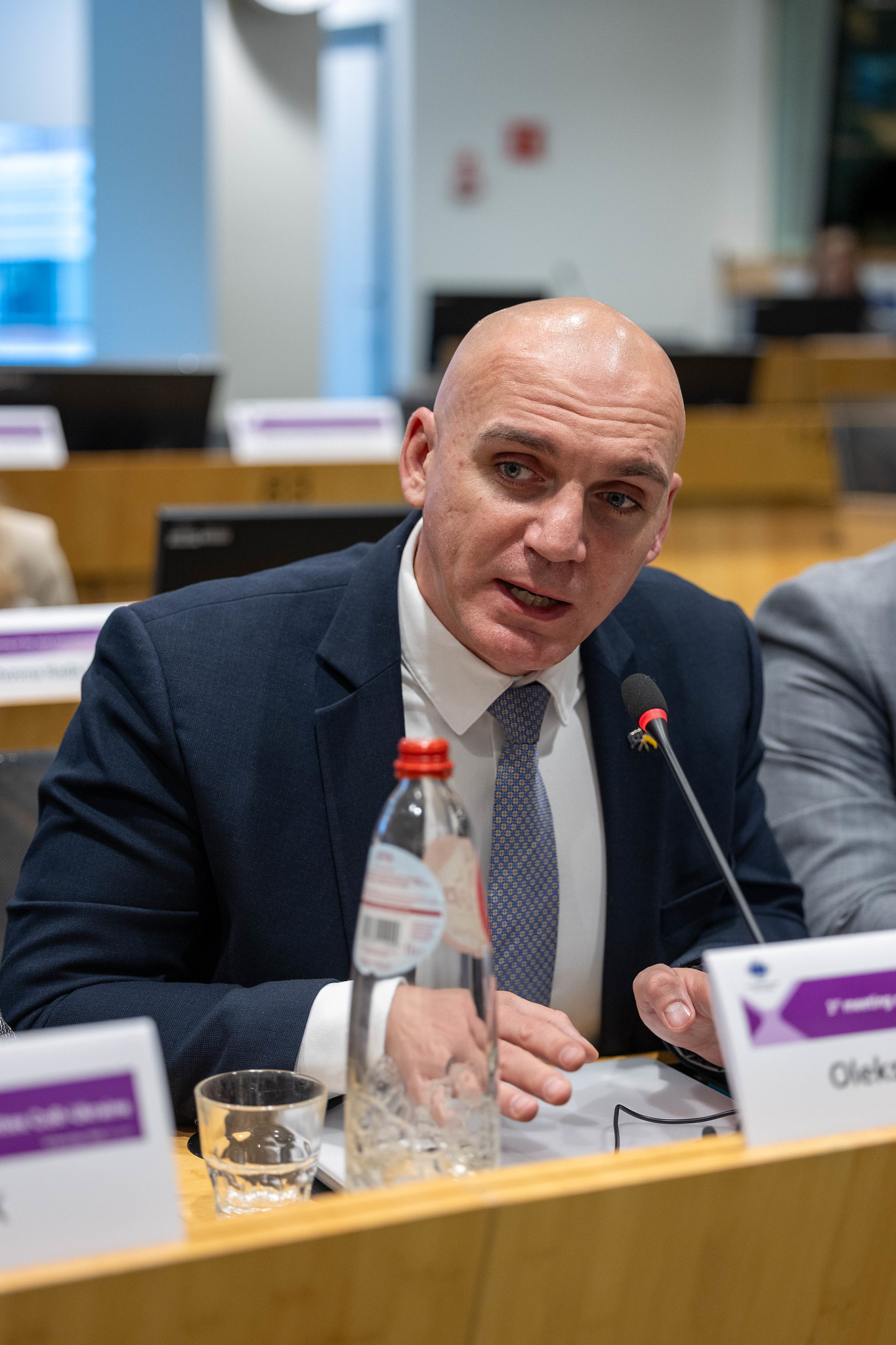 Oleksandr Sienkevych speaking at a committee meeting in Brussels. Photo: ©European Union / Sabela Novoa Gómez
This is not the first time the topic of a free economic zone for the Mykolaiv region has been discussed. In the autumn of 2025, Vitaliy Kim, head of the Mykolaiv Regional Military Administration, warned that a traditional free economic zone could create a tax «loophole» for the region. At the same time, «NikVesti» examined whether a special economic zone would help stem the outflow of businesses from Mykolaiv.
The Verkhovna Rada is currently considering Bill No. 16200, which proposes reducing corporation tax to 9 per cent for businesses in areas of active or potential hostilities. The initiative was drawn up at the suggestion of Kharkiv’s mayor, Ihor Terekhov, who heads the Association of Frontline Cities and Communities. The draft bill has not yet become law.
What EU rules say about free zones
Under EU law, the terms «free» or «special» economic zones may refer to two different instruments. The first is customs-related: free zones under the Union’s Customs Code. The second relates to tax and other incentives for investors, which are regarded as state aid within the EU and must comply with the rules on regional aid.
| Instrument | What are the benefits? | Restrictions |
|---|---|---|
| A free (customs) zone under the Union Customs Code (EU Regulation No 952/2013) | Goods from outside the EU can be imported without customs duties, other charges or trade policy measures, and can be stored and processed | Only customs concessions; the zone must be fenced off and under customs supervision, and the country must notify the European Commission of its existence |
| Regional state aid (Article 107(3)(a) and (c) of the Treaty on the Functioning of the EU) | Income tax exemptions, grants or other forms of investment support in less developed regions | Only in regions included on the regional aid map, which is approved by the European Commission, and within the maximum aid ceiling |
Special economic zones in Poland, for example, operate precisely as a form of regional aid. Investors there receive an exemption from corporation tax, but the maximum rate is determined by the regional aid map for 2022–2027, which has been approved by the European Commission. For Poland’s least developed regions (the so-called «A» zones), this ranges from 30 per cent to 50 per cent of the investment value for large companies.
This means that, following accession to the EU, incentives for investors in Ukraine’s frontline regions will have to be brought into line with European state aid rules, and the level of aid for each region will have to be agreed with the European Commission.
Where does this issue fit into the accession negotiations?
Free economic zones relate to several chapters of the negotiations on Ukraine’s accession to the EU:
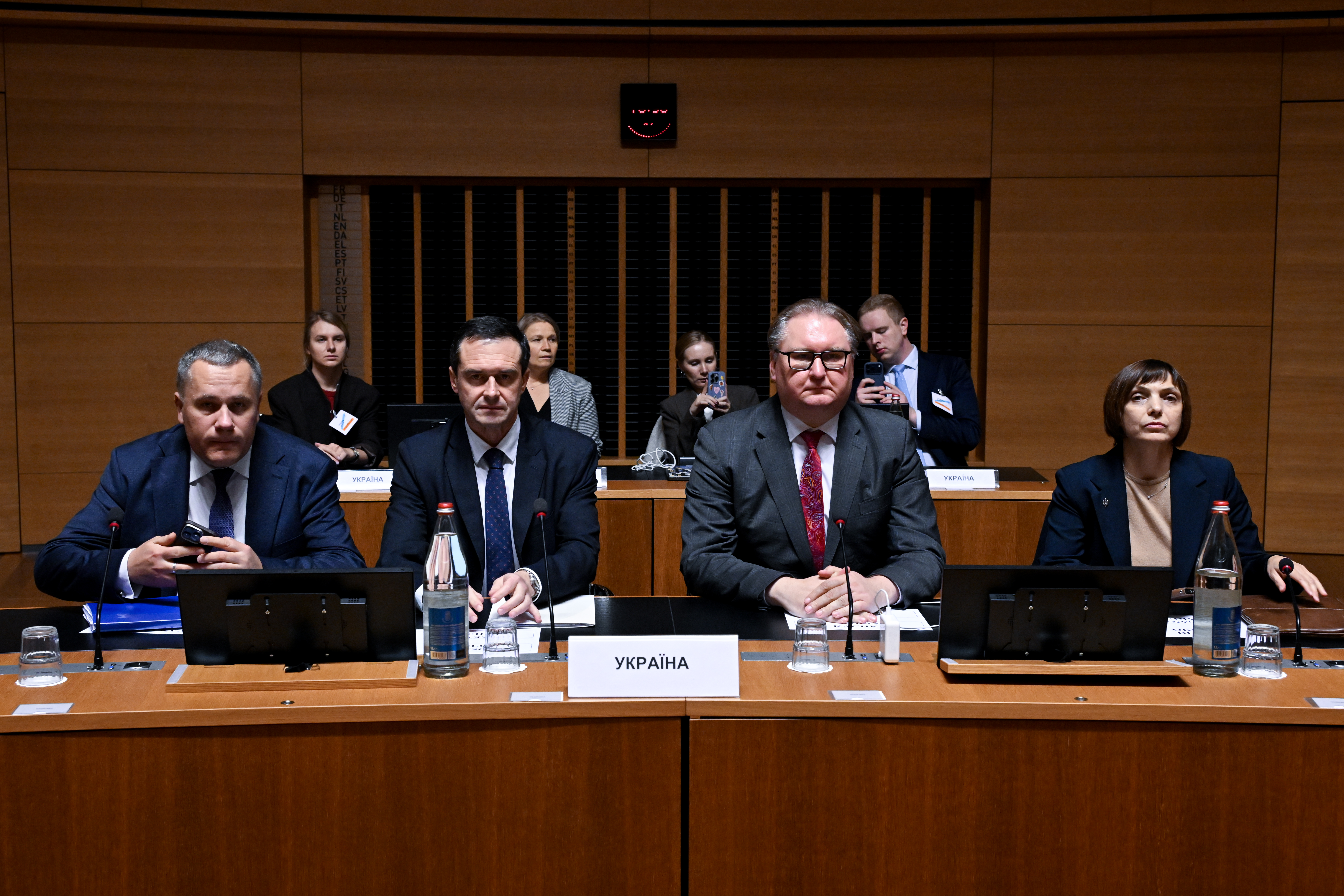 Vsevolod Chentsov, Deputy Prime Minister for European and Euro-Atlantic Integration of Ukraine, at the Ukraine–EU intergovernmental conference, Luxembourg, 13 October 2026. Photo: ©European Union
- «Taxation» (Chapter 16) and «Customs Union» (Chapter 29) — Cluster 3 «Competitiveness and Inclusive Growth», which was opened for Ukraine on 13 October 2026;
- «Competition Policy» (Chapter 8), which includes state aid rules, — Cluster 2 «Internal Market», opened on the same day;
- «Regional Policy and Coordination of Structural Instruments» (Chapter 22) — Cluster 5 «Resources, Agriculture and Cohesion», which has not yet been opened.
Hungary had long blocked the opening of Clusters 4 and 5. On 20 November, EU ambassadors approved the screening results for these clusters and invited Ukraine to submit its negotiating positions. They could be officially opened on 15 December at an intergovernmental conference on the sidelines of the EU General Affairs Council, but the date has not yet been finalised. On the Ukrainian side, the negotiations are being coordinated by Vsevolod Chentsov, Deputy Prime Minister for European and Euro-Atlantic Integration.
Russian assets and a parking fine
Oleksandr Sienkevych began his speech in English by responding to MEP Serhiy Lagodynskyi, who had previously spoken of his admiration for the ability of Ukrainian communities to rebuild what had been destroyed just one day after shelling. The mayor emphasised that this requires resources, thanked European countries and communities for their assistance, and moved on to the topic of the seizure of Russian assets.
— Would you agree if I asked you to pay a fine for my car, which I parked incorrectly here on the streets of Brussels? You would say no. Why? Yet at the same time, you are footing the bills that we have to pay for the reconstruction of Ukraine because of Russia,» said Oleksandr Sienkevych.
He asked his European colleagues to raise this issue in political and diplomatic forums, in particular during the Conference on the Reconstruction of Ukraine, and to ensure that Russian assets in Europe are seized and channelled towards the reconstruction of Ukraine.
— We can talk a lot about reconstruction, but it all comes down to resources. And these resources must come from those who are destroying Ukraine, — stated the mayor.
Oleksandr Sienkevych published his speech on Telegram.
What is the Joint Consultative Committee?
The Joint Consultative Committee (JCC) is a new body comprising 14 members of the European Committee of the Regions and 14 representatives of Ukrainian local government. It was established on 4 November on the basis of the Working Group on Ukraine, which had been in operation since 2020. The Ukrainian section of the committee was formed in accordance with Cabinet of Ministers Resolution No. 1338 of 28 October 2026.
The committee is co-chaired by Antje Groter, President of the Parliament of the Federal State of Bremen, and Tetiana Yegorova-Lutsenko, Chair of the Kharkiv Regional Council. At the first meeting, discussions centred on the reforms Ukraine needs to undertake to join the EU, Ukrainian children abducted by Russia, and the participation of local communities in the Conference on the Reconstruction of Ukraine, which is due to take place in January 2027 in Tallinn.
According to Oleksandr Sienkevych, Ukraine was represented at the meeting by three community leaders: himself, Serhiy Morgunov, Mayor of Vinnytsia, and Tetiana Zaychenko, Head of the Adzhamskyi Village Council. In total, the Association of Ukrainian Cities delegated six community representatives to the committee, including the mayors of Chuhuiv, Nizhyn and Hadyach.
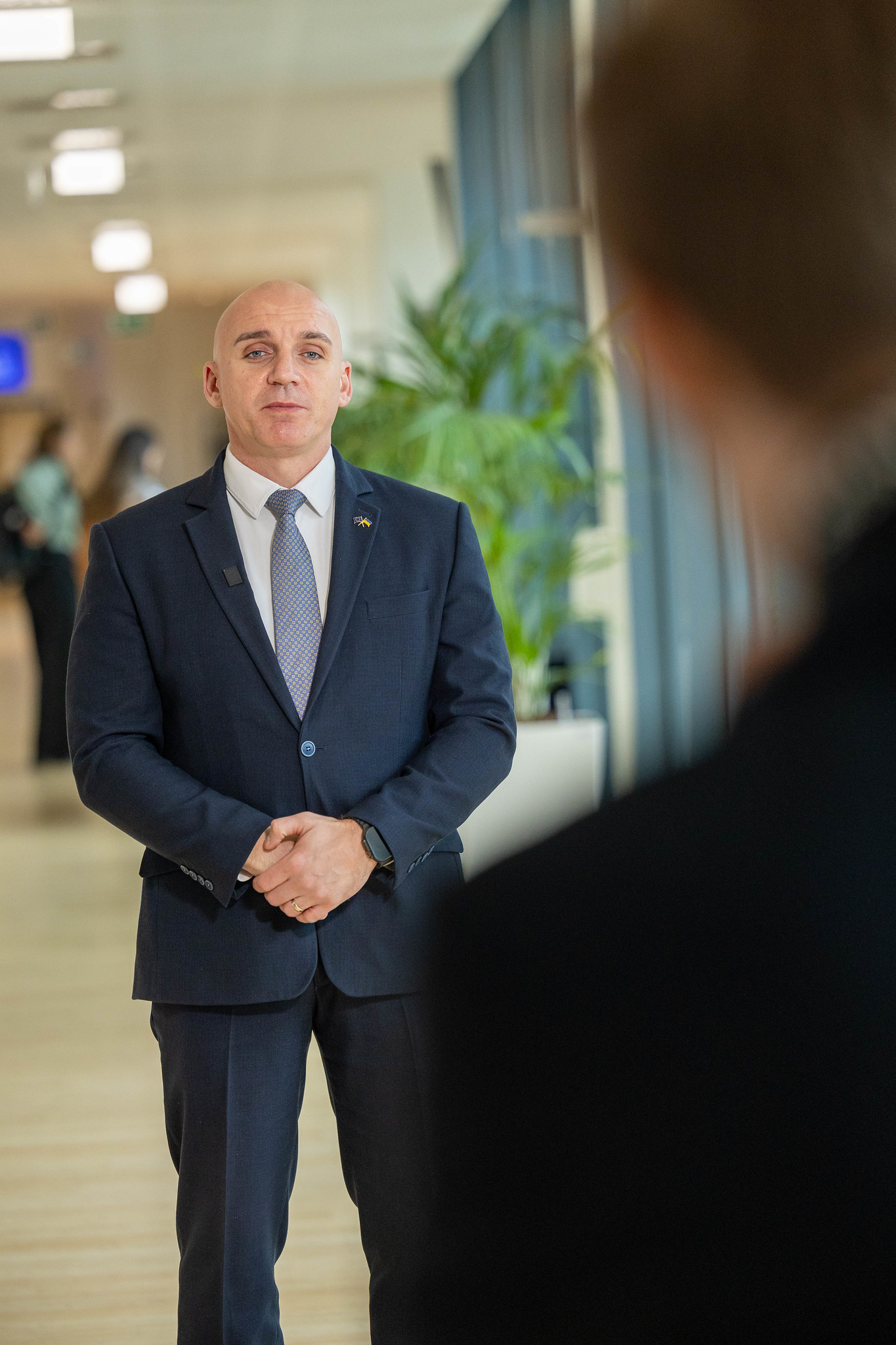 Oleksandr Sienkevych at the European Committee of the Regions building, Brussels, 20 November 2026. Photo: ©European Union / Sabela Novoa Gómez
Following the meeting, the participants adopted two declarations. In the first, they called for local authorities to be regarded as strategic partners in the reconstruction of Ukraine and for partnerships between Ukrainian and European communities to be encouraged. The second was dedicated to Universal Children’s Day: it condemned Russia’s abduction of Ukrainian children and called for their immediate and unconditional return. The meeting was addressed by Marta Kos, European Commissioner for Enlargement, and Vitalii Bezgin, Minister for Communities, Territories and Internally Displaced Persons, whilst the Mayor of Kyiv, Vitalii Klitschko, joined online.
It should be recalled that Oleksandr Sienkevych had previously stated that the state should help to establish technology and industrial parks in war-torn areas, particularly in the Domanivska community, where preparations are under way for the «Diaway» industrial park.
This text was machine-translated and has not yet been reviewed by our editors. The original is in Ukrainian. Learn more

You read this text for free. To keep it that way, the newsroom's work is supported by members of the NikVesti Club.
Cancel any time