
The international nature conservation project BLISS for the preservation of sturgeon was presented in Mykolaiv
-

- Iryna OlekhnovychCorrespondent
-
 Alina Kvitko
Reporter
Alina Kvitko
Reporter

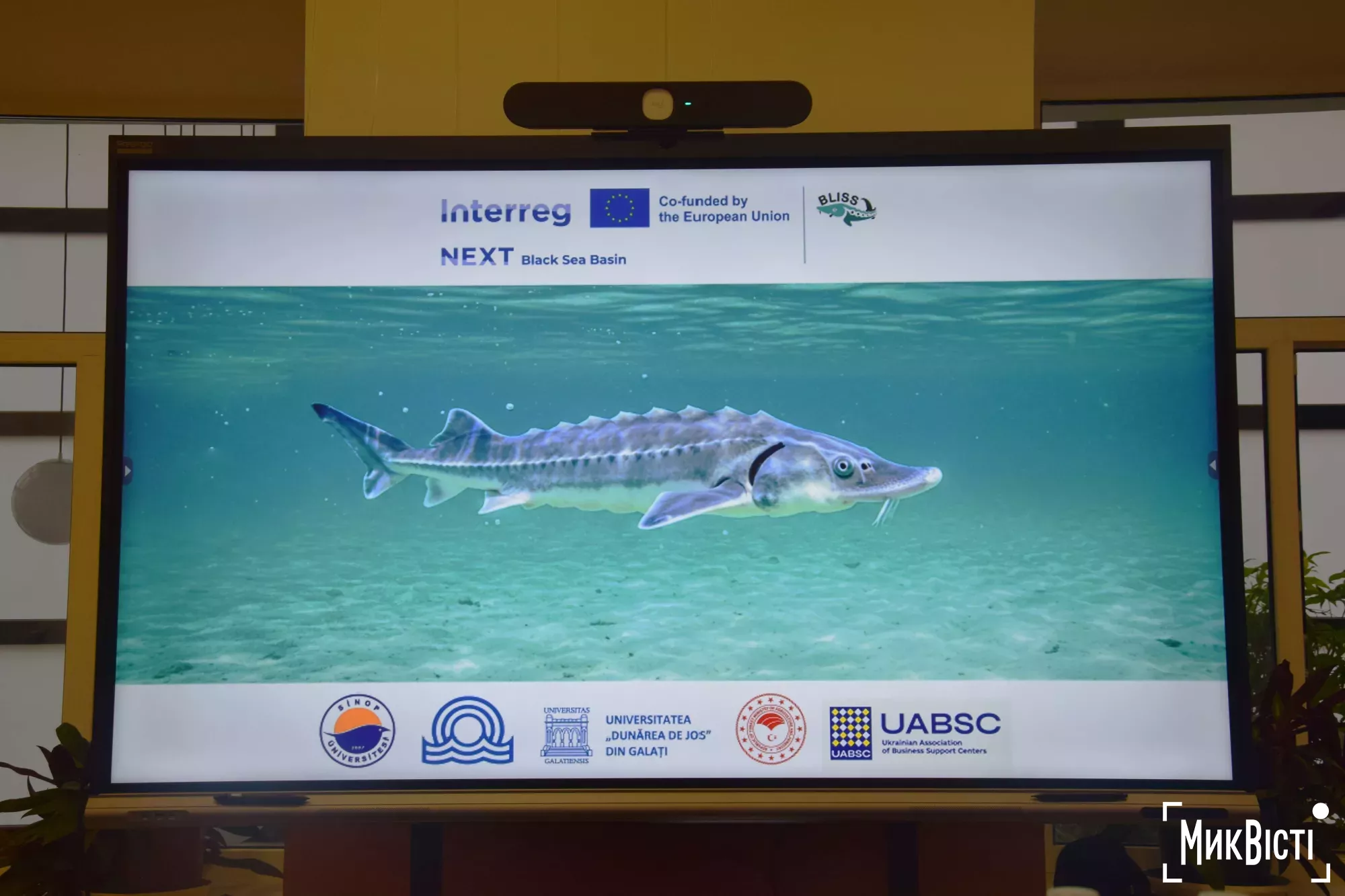 The BLISS nature conservation project for sturgeon preservation was presented in Mykolaiv. Photo: NikVesti
On Friday, 28 November, the launch of the international nature conservation project BLISS (Black Sea Initiative for Sturgeon Sustainability) was announced in Mykolaiv. The project aims to preserve and restore populations of red-listed sturgeon in the Black Sea region.
A correspondent from NikVesti attended the event.
The organisation implementing the project is the Ukrainian Association of Business Support Centres, which works in particular on the development of the «blue economy» and the introduction of sustainable approaches to the use of natural resources in the region. The BLISS initiative is being implemented as part of the Interreg NEXT Black Sea Basin Programme, which supports environmental initiatives to create a clean and sustainable Black Sea region.
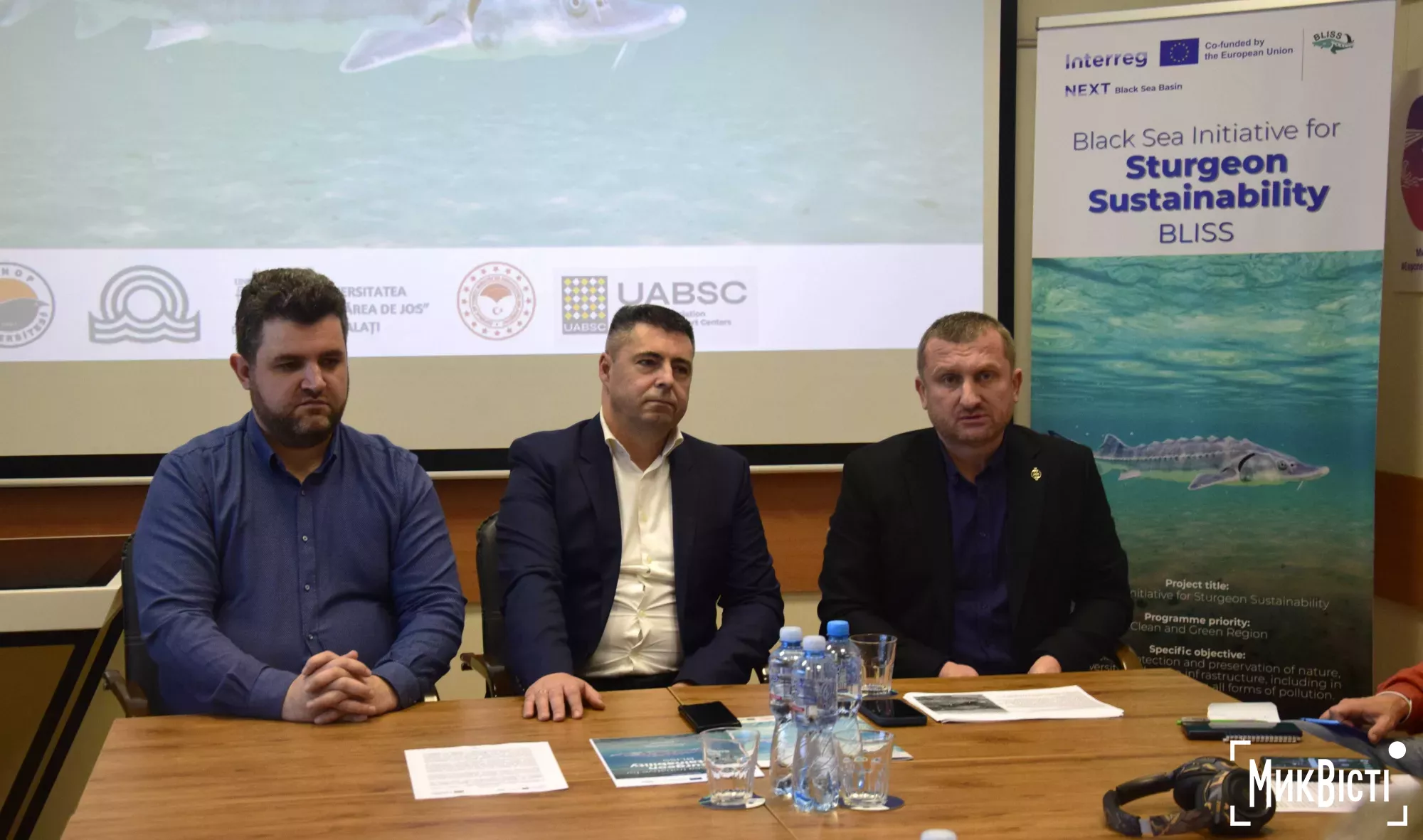 The BLISS nature conservation project for sturgeon preservation was presented in Mykolaiv. Photo: NikVesti
According to the organisers, the BLISS project is in line with the «Clean and Green Region» priority. It is also a clear example of cross-border cooperation between the countries of the Black Sea basin. That is why partners from Turkey, Bulgaria and Romania have joined the initiative. According to Artem Vashchylenko, head of the Ukrainian Association of Business Support Centres, participation in this international initiative will open up new opportunities for Ukraine in terms of scientific cooperation and the integration of its own experience with the environmental protection practices and programmes of its European partners.
«We are developing tools to protect sturgeon in equal partnership with our colleagues from the European Union and other Black Sea countries... This is our homework, in fact. Because European integration is not just powerful documents signed by high-ranking officials somewhere. In reality, it is everyday work in many dimensions,» he noted.
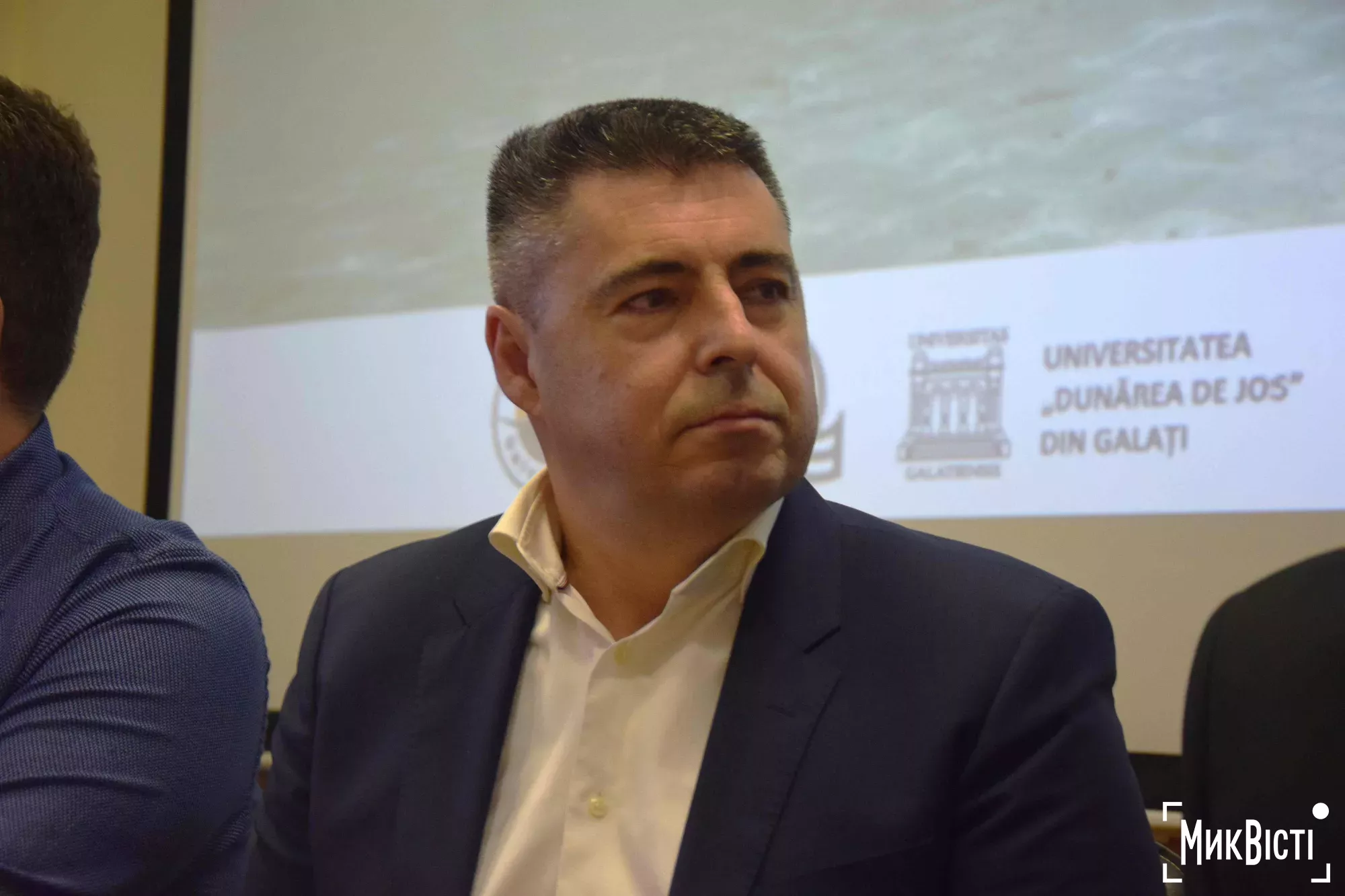 The BLISS nature conservation project for sturgeon preservation was presented in Mykolaiv. Photo: NikVesti
The research team will use satellite and acoustic tagging of fish, as well as genetic marking. This will allow them to track the migration and behaviour of sturgeon and the factors that affect their survival. Experts will also study the state of aquatic ecosystems, in particular the Yeshylmak and Danube rivers. It is noted that sturgeons are most vulnerable when they are in fresh water.
An important component of the project will be the technical support of Ukrainian scientists. Within the framework of BLISS, there are plans to create a mobile laboratory for specialists to work during field research on rivers and estuaries.
The total budget for the initiative for all countries is approximately €1.6 million.
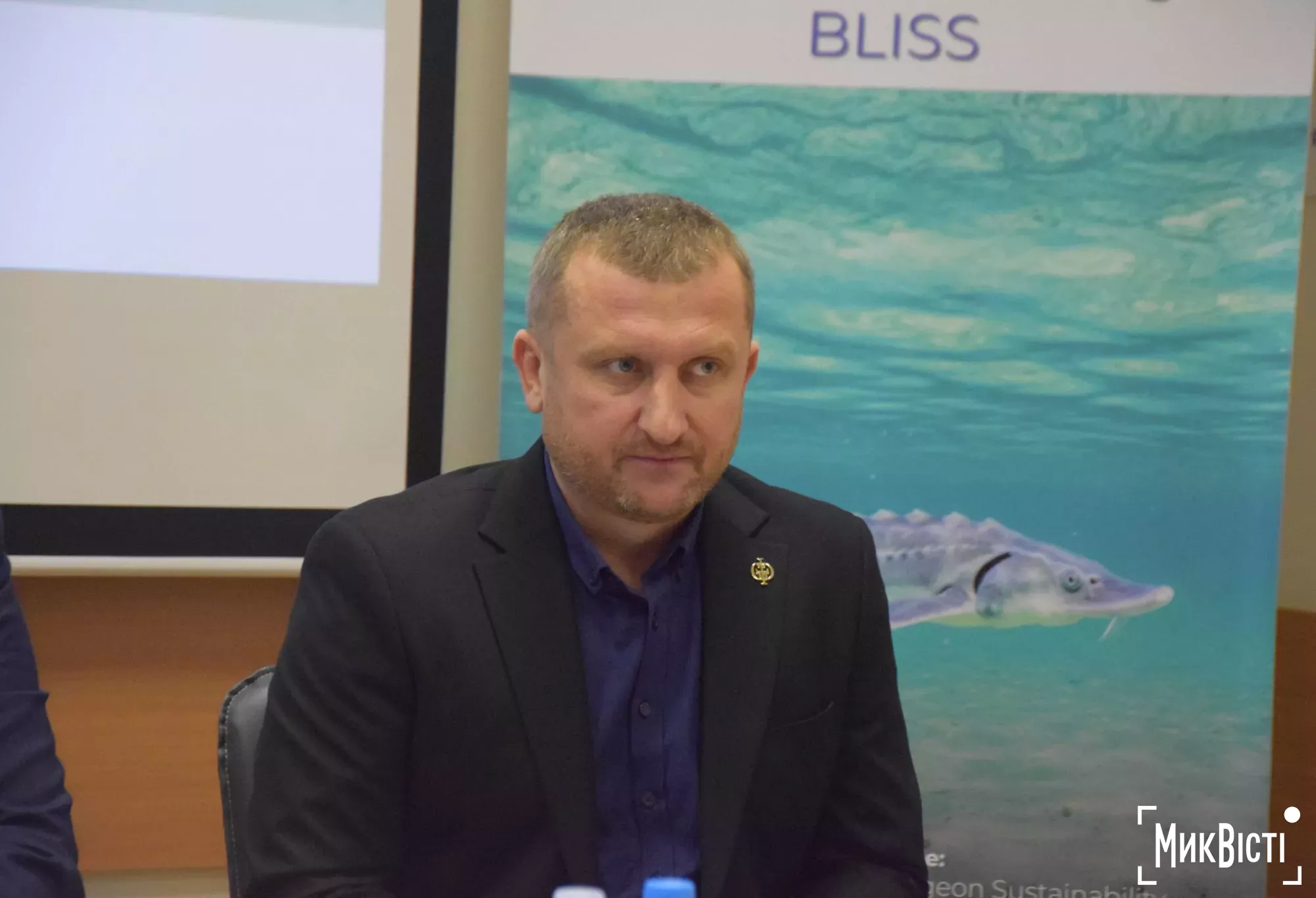 The BLISS nature conservation project for sturgeon preservation was presented in Mykolaiv. Photo: NikVesti
The problem of declining sturgeon populations in Ukraine has been going on for several decades, says Pavlo Kutishchev, acting head of the Black Sea Department of the State Scientific Institution «Institute of Fisheries, Marine Ecology and Oceanography». Sturgeons were added to the Red Book back in 1978, and since then the situation has only worsened. For almost thirty years, no modern comprehensive research has been conducted in Ukraine.
«The population began to decline sharply, which was the reason for adding sturgeon to the Red Book back in 1978, and later — in the 1980s and 1994 — to the expanded lists of rare and endangered species. Historical overfishing, particularly during the tsarist era and the post-war years, further undermined the numbers of these species. After that, no systematic research or modern monitoring was conducted for a long time, as biochipping and acoustic echolocation technologies were not yet available at that time,» the expert explained.
According to him, the war has had a particular impact on the population of this fish species. The construction of the Kerch Bridge, the destruction of the Kakhovka Hydroelectric Power Plant, the fighting in Kinburn — a key sturgeon spawning area — and the disruption of the work of fish stocking facilities have all caused significant damage to the ecosystems of southern Ukraine.
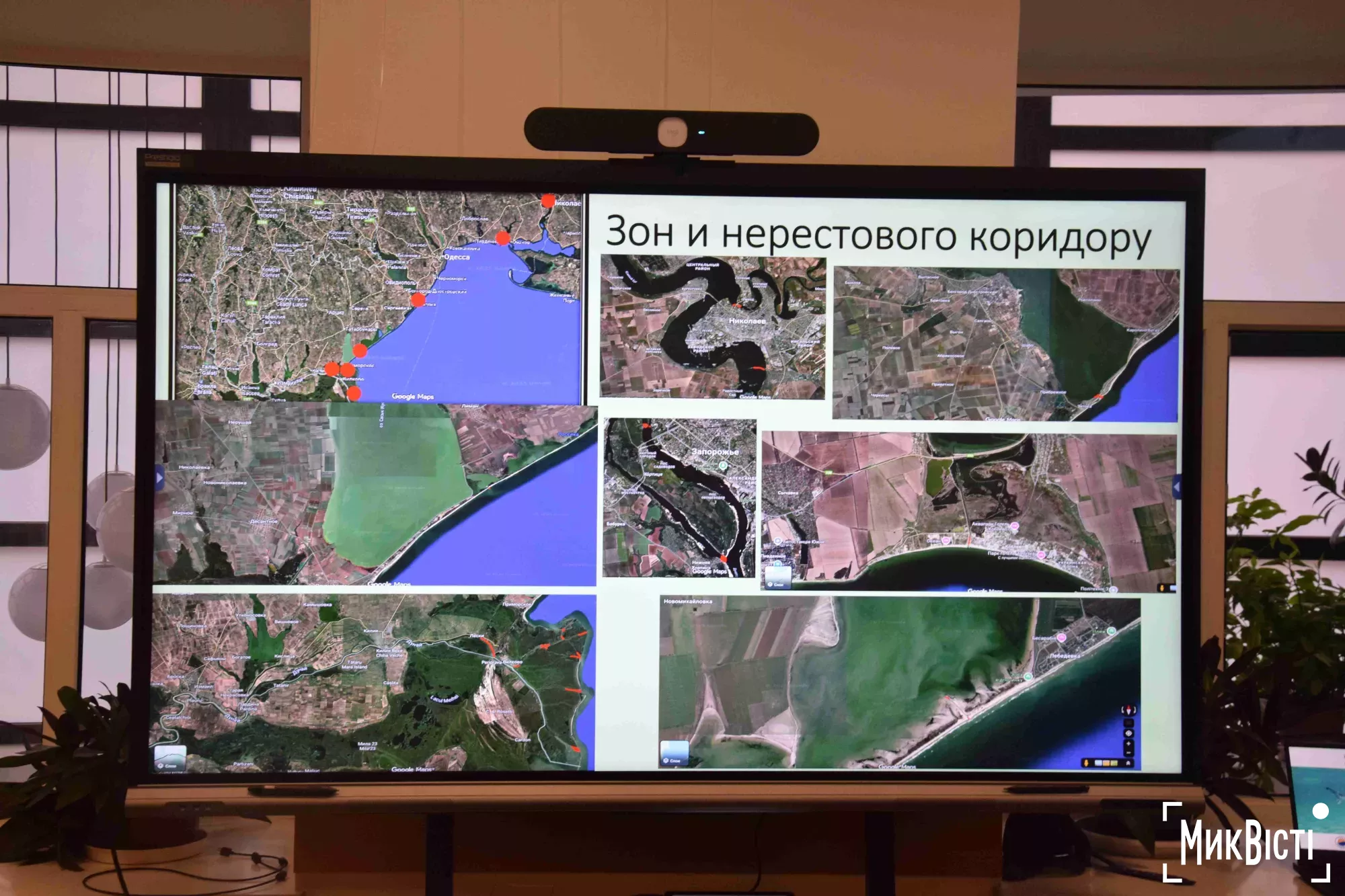 The BLISS nature conservation project for the preservation of sturgeon was presented in Mykolaiv. Photo: NikVesti
 The BLISS nature conservation project for sturgeon preservation was presented in Mykolaiv. Photo: NikVesti
At the same time, according to Pavlo Kutishchev, the most destructive factor remains widespread poaching. Markets and social networks are still overflowing with offers of illegally caught sturgeon. Therefore, as Artem Vashchylenko emphasises, the project will focus not only on developing a scientific basis, but also on practical work with communities, fishermen and local authorities. In particular, during the implementation of BLISS, the Business Support Centre plans to conduct large-scale information campaigns, seminars and training sessions. In Mykolaiv, special attention will be paid to involving young people in environmental protection activities.
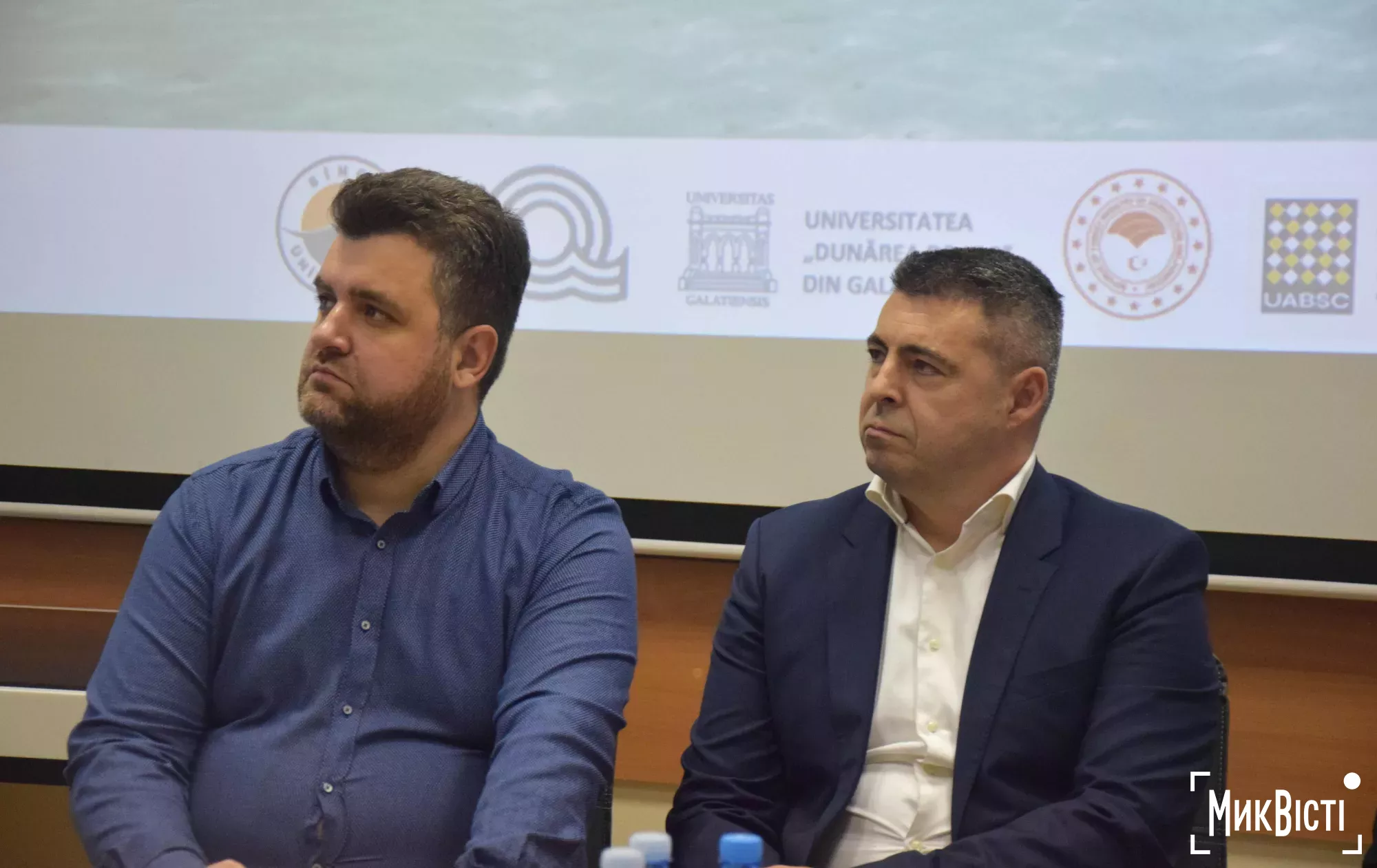 The BLISS environmental project for the conservation of sturgeon was presented in Mykolaiv. Photo: NikVesti
Project manager Oleksandr Popov emphasised that his team is currently working to fully equip scientists with equipment, transport and technical resources. He also noted that Ukraine already has enough of its own experience to share with colleagues for whom similar projects are new.
Earlier, discussions intensified in the Mykolaiv region regarding the project to expand the Tashlyk pumped storage power plant and raise the level of the Oleksandrivka reservoir. Environmentalists warn that such changes could cause significant damage to the ecosystem of the Southern Bug, affect water quality and destroy rare plant species.

This material was produced within the REACH – Media Partnerships for Accountability and Trust project, implemented by International Media Support (IMS) and supported by the Ministry of Foreign Affairs of Denmark. The content reflects the views of the authors and not necessarily those of the Danish government. Denmark’s support strengthens civil society and independent media in Ukraine, including in Mykolaiv.