Sienkevych warns of reduced projects in Mykolaiv amid fuel cost increase
- Anna Hakman
-
•
-
12:35, 02 April, 2026
The Mayor of Mykolaiv, Oleksandr Sienkevych, has stated that due to rising fuel prices, the city will be unable to carry out all the work planned in the budget in full.
He made these remarks in a comment to NikVesti following the city council session held on 26 March.
As is known, city councillors approved amendments to the city budget and allocated the remaining funds. Oleksandr Sienkevych believes that due to rising fuel and bitumen prices, projects will have to be reviewed even before tenders are announced.
«There is very little money; there is never enough, not even for implementing plans, and now not even for basic needs. That is why we have tried to allocate it as effectively as possible. There are no hidden projects: today, all expenditure, both capital and current, is clearly itemised for each project. This is exactly what the councillors asked for, and now they can monitor and see it. At the same time, as we have already heard, despite the approved changes, we will have to consider reducing the number of approved projects. After all, fuel and bitumen prices have changed, and all project proposals effectively need to be revised. They will have to be adjusted before the tenders are announced,» said Oleksandr Sienkevych.
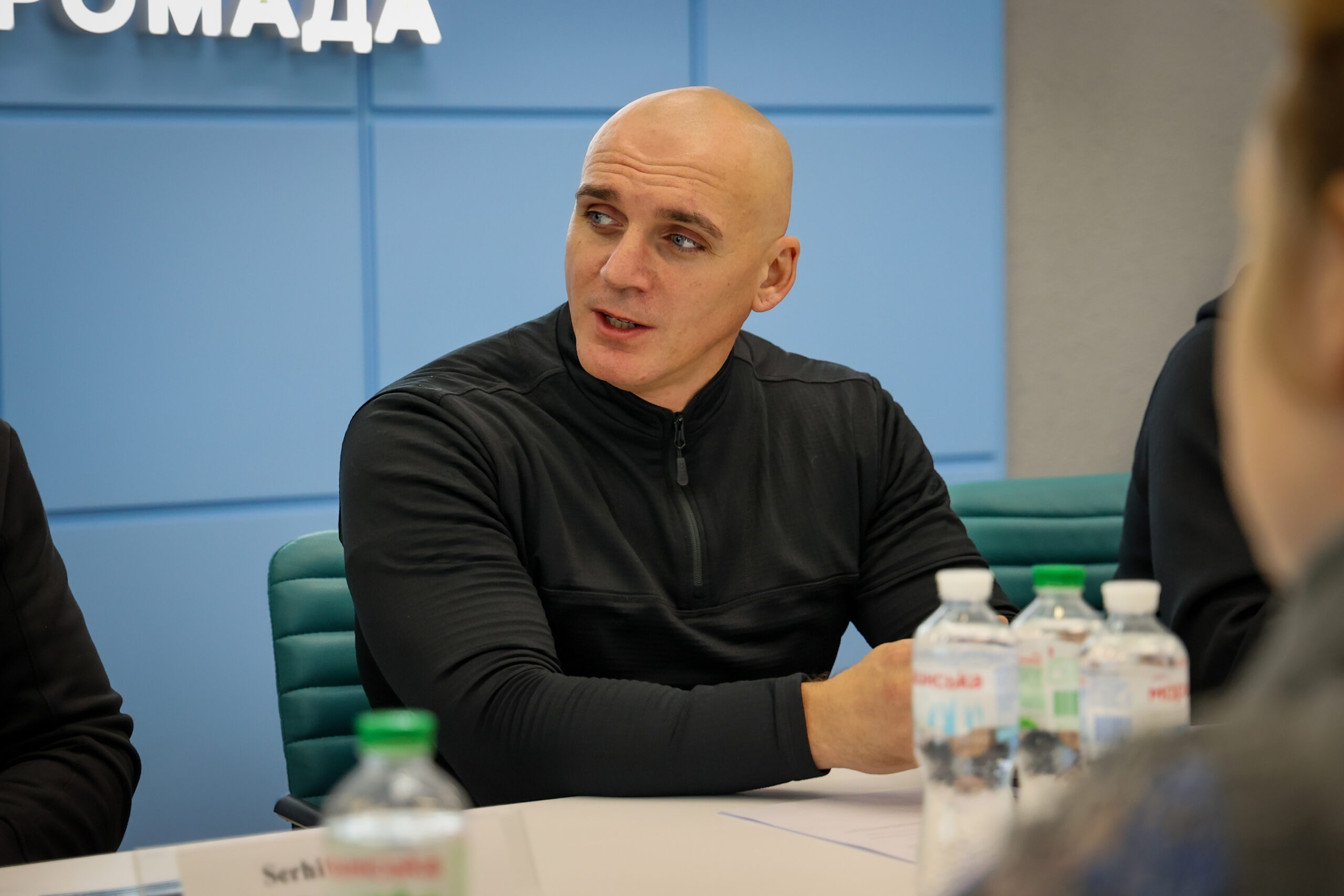 Mayor of Mykolaiv Oleksandr Sienkevych. Photo: Mykolaiv Development Agency
He added that councillors have differing views on the allocation of budget funds, but what concerns Mykolaiv residents most is the city’s infrastructure.
«We don’t have a full understanding. Some councillors say: «We don’t need pedestrian zones; we need to raise everyone’s salaries». Others say: «How can we raise salaries if we can’t live properly in the city and have to navigate broken pavements?» Moreover, I’m not speculating; you can simply visit the contact centre at Mykolaiv City Council and see what issues people are raising. These include the asphalting of internal neighbourhood roads, dirt, water, and the state of pedestrian zones. Of course, there are fewer questions about salaries. But in reality, the council session and the work of the councillors are precisely aimed at balancing all these opinions and needs as much as possible,» added Oleksandr Sienkevych.
Mykolaiv City Council has reallocated ₴735 million from the budget
City councillors approved amendments to the city budget and allocated surplus funds. The decision was considered and adopted at the session on 26 March.
According to the city council, expenditure has been increased by ₴735.6 million through subsidies and surplus funds from 2025 (₴317 million), as well as public investment (₴300 million).
The changes will affect almost all areas of the city:
- education (+201.3 million hryvnias) — additional payments to teachers (state subvention) — 125.3 million hryvnias: meals for primary school pupils and refurbishment of school canteens, support for children with special educational needs;
- housing and communal services (+220.3 million hryvnias);
- support for utility companies (water and heating supply) — 260.2 million hryvnias (taking into account internal reallocations);
- implementation of the HOPE project — 139.7 million hryvnias;
- transport and infrastructure: a loan from the EIB to improve public transport — 135.4 million hryvnias;
- security and civil protection (+22.1 million hryvnias): measures to prevent and respond to emergencies.
District administrations received additional funding for the implementation of local projects:
- Central District: +43.2 million hryvnias;
- Zavodskyi District: +38.1 million hryvnias;
- Korabelnyi District: +35.1 million hryvnias;
- Inhulskyi District: +34.5 million hryvnias.
Councillor Iryna Boichenko highlighted a critical funding situation in Mykolaiv’s cultural sector. She stated that there are currently insufficient funds to pay salaries and utility bills for libraries, music and art schools, cultural centres and the zoo.
«We find ourselves in a situation where the law requires us to pay more, but our budget provides a third less… We can find 1.5 million hryvnias a month if we set our priorities correctly,» she noted.
Iryna Boichenko proposed reallocating budget funds — specifically, cutting funding from certain items, such as pavement repairs, and channelling this money towards supporting the cultural sector.
Yurii Liubarov, head of the culture department, also spoke about the problems with funding salaries. According to him, there is a shortfall of almost 60 million hryvnias a year just for wages and benefits for cultural institutions — art schools, libraries, cultural centres and the zoo.
«Within those limits, we are trying to manage and provide cultural services by reducing hours at music and art schools. And for libraries and cultural centres — through staff taking unpaid leave,» explained Yurii Liubarov.
In addition, the mayor proposed redirecting part of the funds from vocational school scholarships to support the Niko-Basket basketball club and the Mykolaiv Region Boxing Federation, and then returning the funds to their original purpose.
At the same time, he noted that it was not currently possible to approve all the proposed adjustments at the session. The mayor proposed that all issues be considered at next week’s meeting of the budget committee.
As a result, Mykolaiv Mayor Oleksandr Sienkevych put a draft resolution with an amendment to the vote: to reduce the education department’s expenditure by 3.6 million hryvnias and, accordingly, increase funding for the sports department. The document was supported by 33 councillors.
There is a shortfall in Mykolaiv’s budget. What is known?
The Mykolaiv City Council has appealed to the government and parliament to provide an additional grant from the state budget. According to the city’s calculations, its own budget revenue for 2026 covers only 82.5% of actual needs, and the financial shortfall exceeds 1.14 billion hryvnias.
In total, budget revenue for 2026 amounts to 5 billion 546 million hryvnias, whilst total budget expenditure stands at 5 billion 275 million 353 thousand 815 hryvnias.
Mykolaiv Mayor Oleksandr Sienkevych emphasised that the 2026 budget is effectively a survival budget and does not cover all the community’s needs. In particular, the Mykolaiv budget lacks funds for the pay rise for teachers initiated by the state.
Councillors also appealed to the Verkhovna Rada of Ukraine and the Cabinet of Ministers, demanding a pay rise for cultural workers. The document highlights the critically low level of pay in the cultural sector.
Instead, the government has raised the basic salary for cultural workers to 3,470 hryvnias. The Mykolaiv authorities have said they will look for funds in the budget to pay the supplements.
Apart from paying salaries, the city budget also lacks funds for routine and major road repairs, as stated by Mayor Oleksandr Senkevych. For example, the municipal enterprise ELU Avtodorig has received around 80 million hryvnias less than allocated in the budget.
Meanwhile, during a staff meeting on 2 March, Oleksii Savchuk, Director of the City Council’s Capital Construction Department, reported that there is currently no funding for repairs to the admissions ward of City Hospital №3.
«At present, no funding has been allocated for the admissions department of Hospital №3,» he noted.
Meanwhile, during the staff meeting on 2 March, Hennadii Iziumov, director of the municipal enterprise Mykolaivvodokanal, reported that the enterprise requires additional funds for road resurfacing work following the repair of potholes.
«We have over 560 orders for asphalting that have been pending since 2023. I wanted to discuss with you separately the possibility of additional funding to resolve these outstanding issues,» said Hennadii Iziumov.
Subsequently, Mykolaiv Mayor Oleksandr Sienkevych stated that the Ministry of Finance would spend up to four months reviewing the state of the city budget to justify the need for additional funding from the state budget. The mayor noted that the city authorities had submitted updated revenue and expenditure estimates to the Ministry of Finance. According to him, budget revenues have increased slightly, in particular thanks to tax payments by residents and the mobilisation of extra-budgetary funds. However, this is not enough to cover rising expenditure.