
Grants for starting a business and «all-inclusive» support at the veterans’ support centre: how Mykolaiv is helping military personnel
-

- Julia LukyanenkoReporter
-
 20000 +
Incredible! This content has reached a new level — 20,000+ views!
20000 +
Incredible! This content has reached a new level — 20,000+ views!
-
 Prefer on Google
-
20K
Incredible! This content has reached a new level — 20,000+ views!
-
Prefer on Google
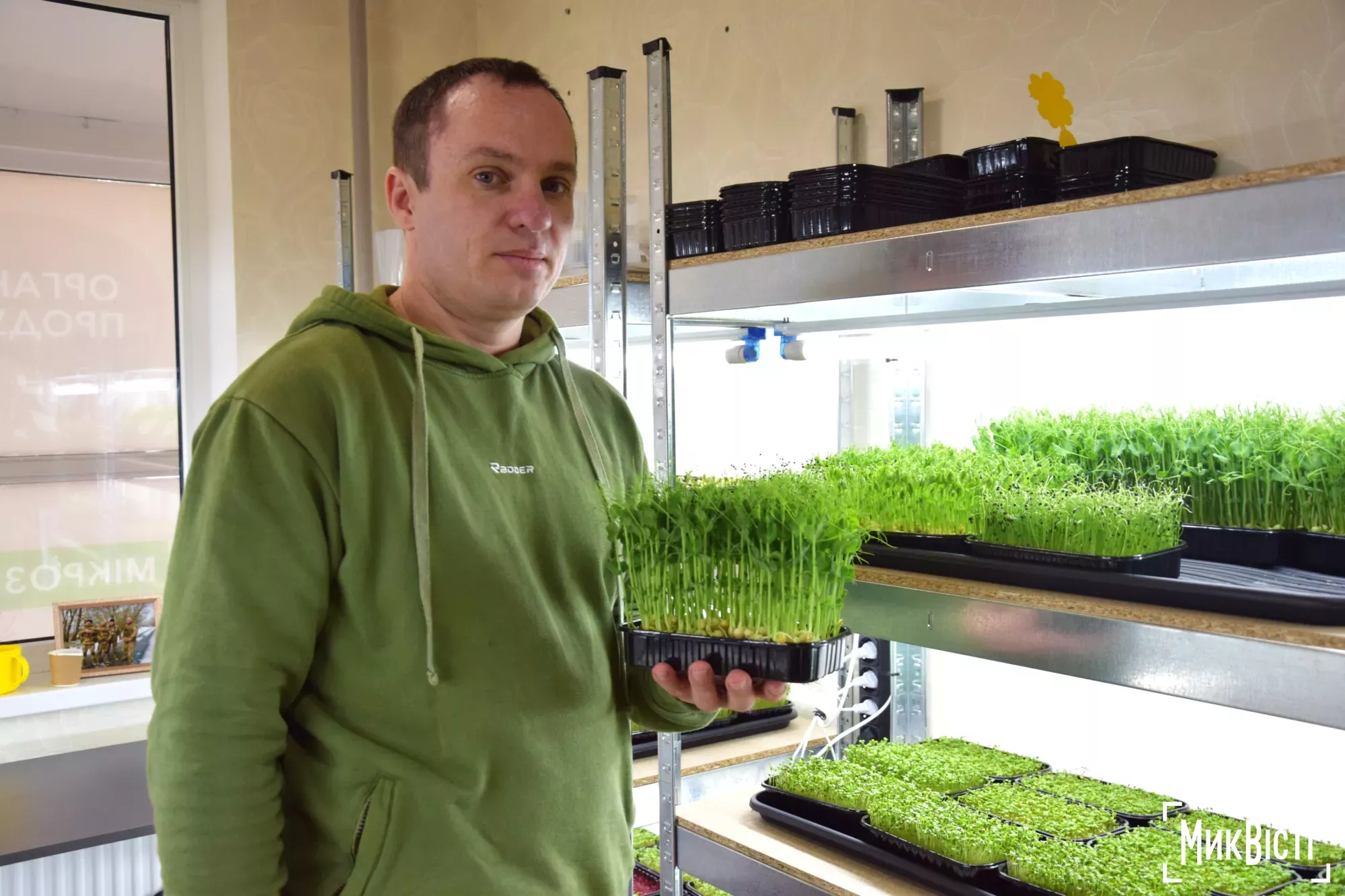 Veteran Serhii Davydenko has opened an eco-space in Mykolaiv. Photo: NikVesti
Serhii Davydenko, a veteran from Mykolaiv, spent a year and a half recovering and undergoing rehabilitation after being wounded. During that time, he developed a passion for growing microgreens. This hobby eventually turned into a business: at the end of March 2026, Serhii opened Rist — an eco-space with a café where he grows and sells microgreens.
NikVesti will explain how the veteran managed to turn his hobby into a business, as well as what support is available for servicemen and their families in Mykolaiv.
A grant to start a business
Serhii Davydenko served as an infantryman in the First Rifle Battalion of the 56th Motorised Infantry Brigade. After being wounded, he was discharged. He spent about a year and a half at home undergoing rehabilitation. It was then that Serhii began growing greens, whilst also working whenever his health permitted.
«That’s how the hobby started. At home, I grew microgreens on the windowsill for my salads,» said the veteran.
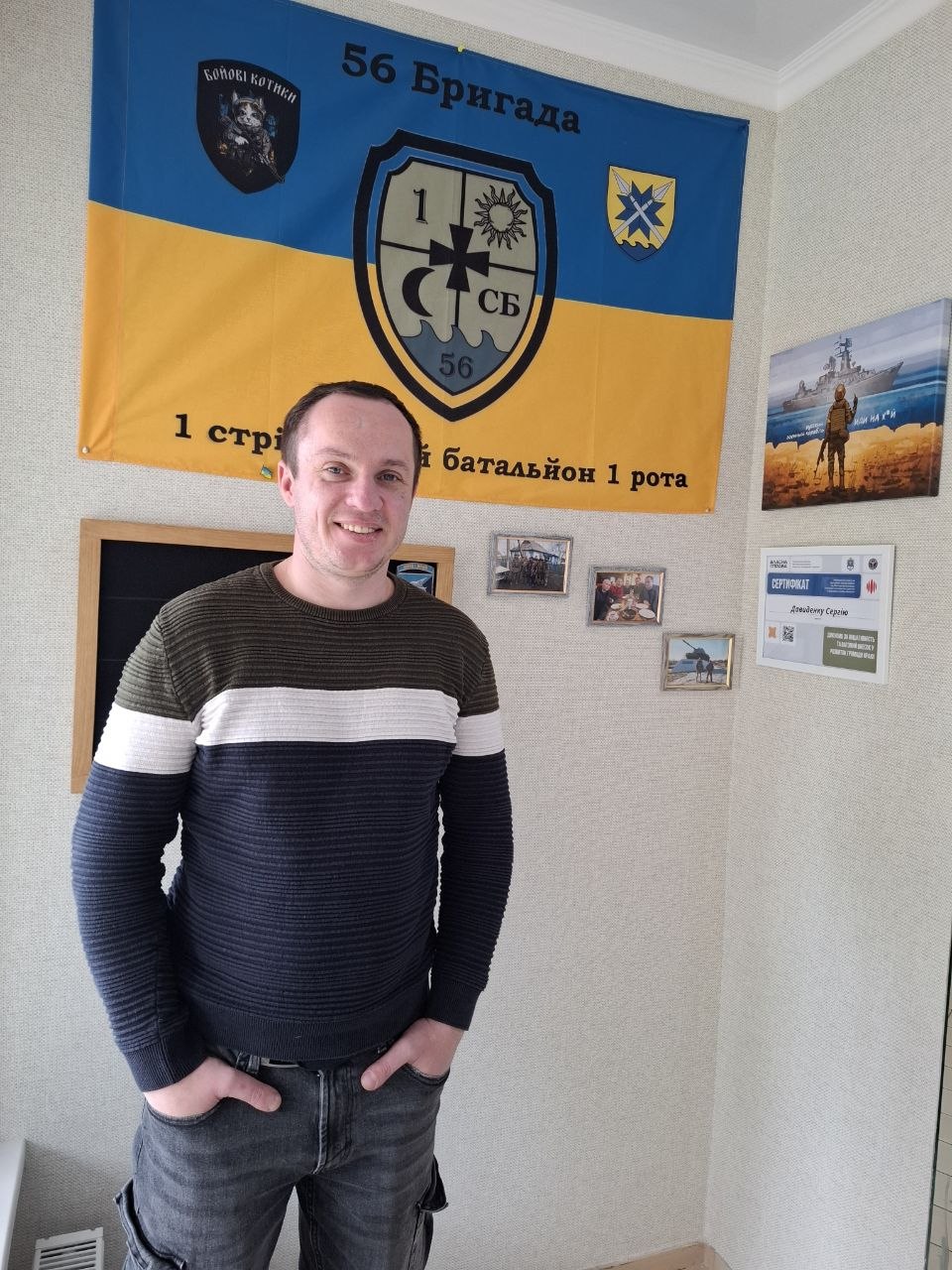 Serhii’s comrades-in-arms presented him with the brigade’s flag. Photo: Serhii Davydenko
However, his family persuaded Serhii to try starting his own business: growing, selling and promoting microgreens.
«In Mykolaiv, I didn’t see any establishments selling greens in cafés at all. I decided to combine the two businesses into one by adding a café, and in this way try to promote microgreens, because they’re incredibly healthy. In Europe, this is very widespread and popular,» shared Serhii.
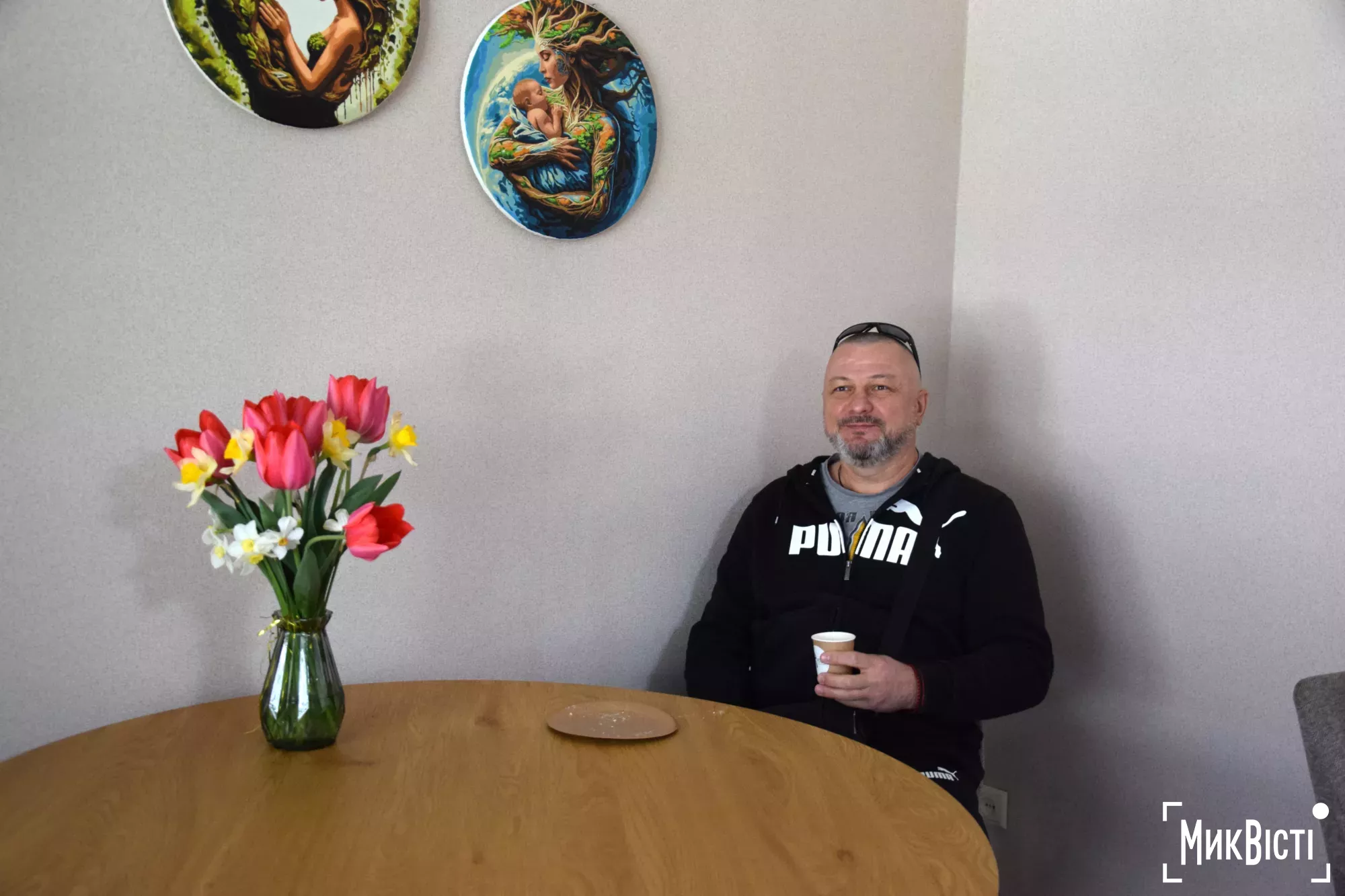 A guest at the eco-space. Photo: NikVesti
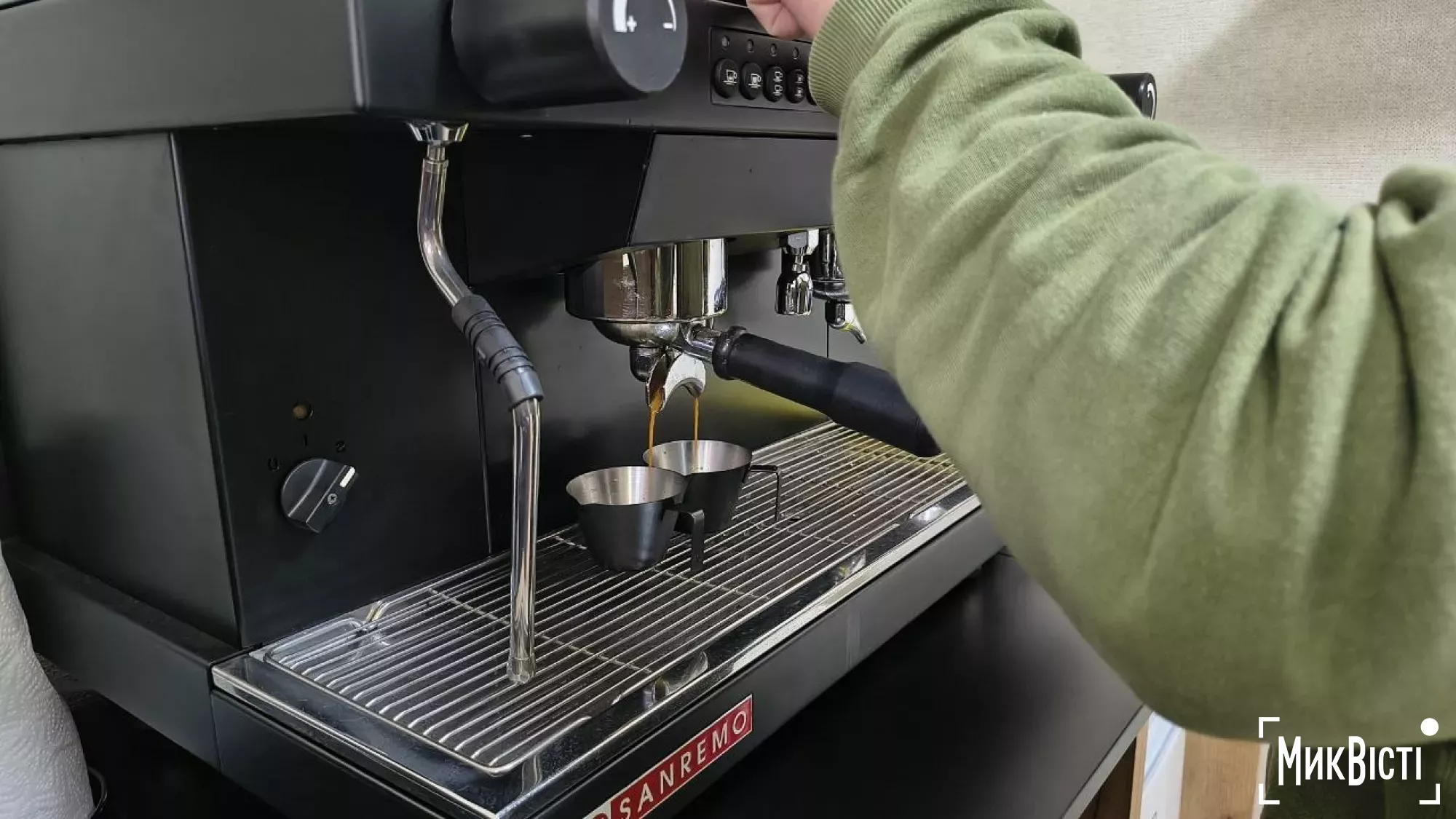 In the veteran’s eco-space. Photo: NikVesti
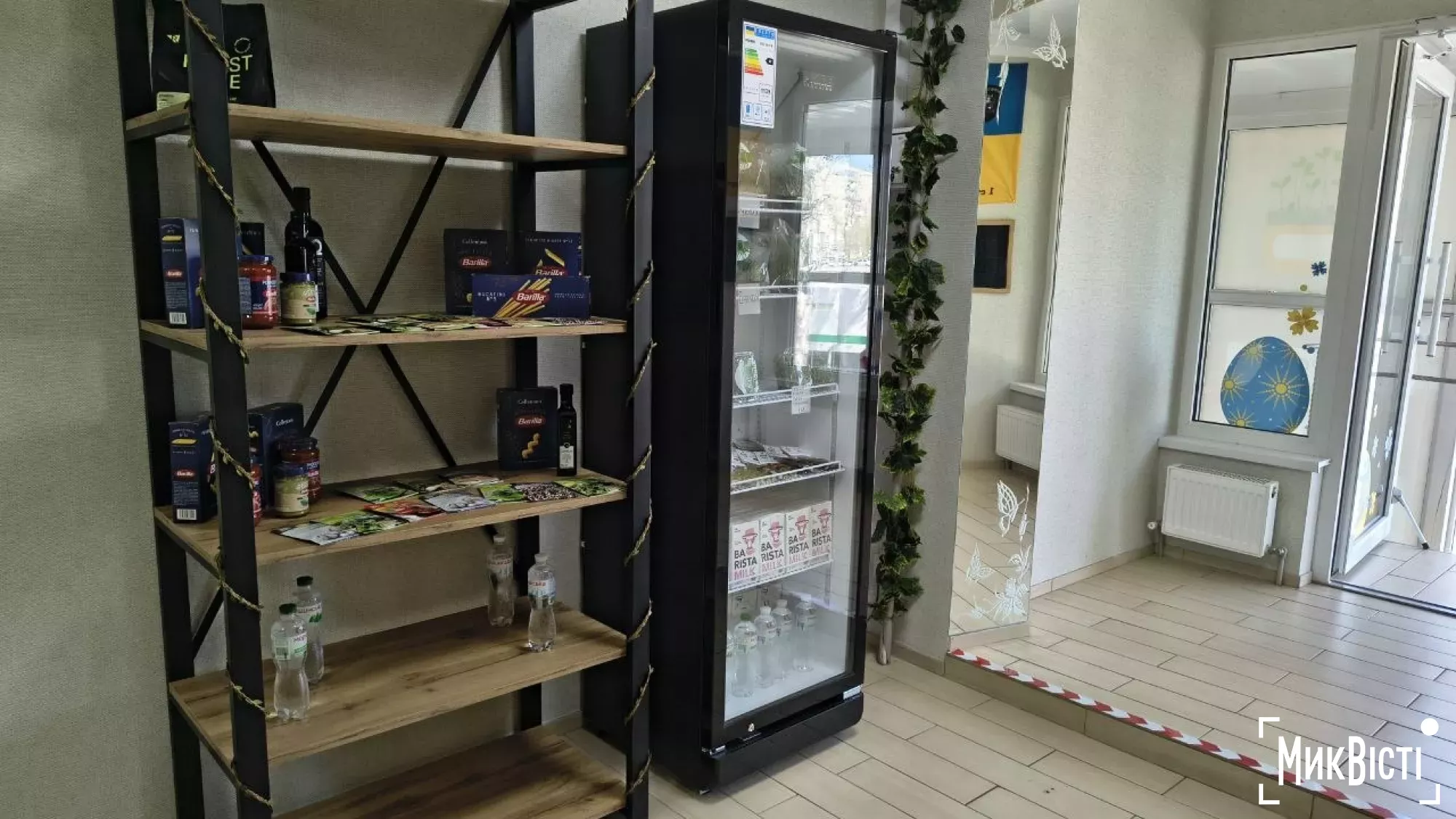 Café with an eco-space. Photo: NikVesti
He wrote a business plan, which he submitted to the employment centre. They helped him correct some mistakes, then Serhii went for an interview and, as a result, received a grant — 500,000 hryvnias to start his own business.
«A grant is like a helping hand to start a business. It doesn’t cover all your expenses completely. Of course, I contributed my own funds as well, but the grant covered more than half,» said the veteran.
Serhii noted that there are grants available for both civilians and veterans to cover expenses. For example, for purchasing equipment.
«I don’t know what support was available before the war, but now it’s entirely feasible. Any veteran can take the plunge and give it a go. If you have some savings of your own, and you have a clear idea of what you’ll be doing and what you need for it, you sit down and work out exactly what you need. For example, when it comes to equipment or furniture: a grant can cover 100% of the cost, and it can cover the rent too,» explained Serhii.
Microgreens instead of crisps
The Rist eco-space only opened on 24 March. The premises combine a small farm for growing greens with a café. Serhii noted that he was looking for premises where people could not only buy microgreens but also see how they grow.
He is currently growing peas, sunflowers, radishes, rocket, broccoli, watercress and onions. The café uses these to make smoothies, which, as Serhii says, make for a proper snack. You can also have a coffee, order desserts and buy the microgreens themselves at the café.
«I want to tell you that starting your own business will be the easiest part. It will be very difficult to keep it going. To get people interested so that they buy from you specifically. I mean, the standard of living in our city could certainly be better. People have to choose between buying microgreens or just something for a salad, because cucumbers and tomatoes are expensive. But it’s still better to choose microgreens as a supplement, for example. We all buy seeds, hot dogs or crisps. I think it’s better to buy and eat a punnet of peas — which are as healthy as can be — than a packet of crisps,» said Serhii.
He also shared his own life hack on how to replace unhealthy treats:
«For example, at home I sit down at the computer in the evening and watch work-related videos. But instead of seeds, I eat a punnet of microgreens without harming my health».
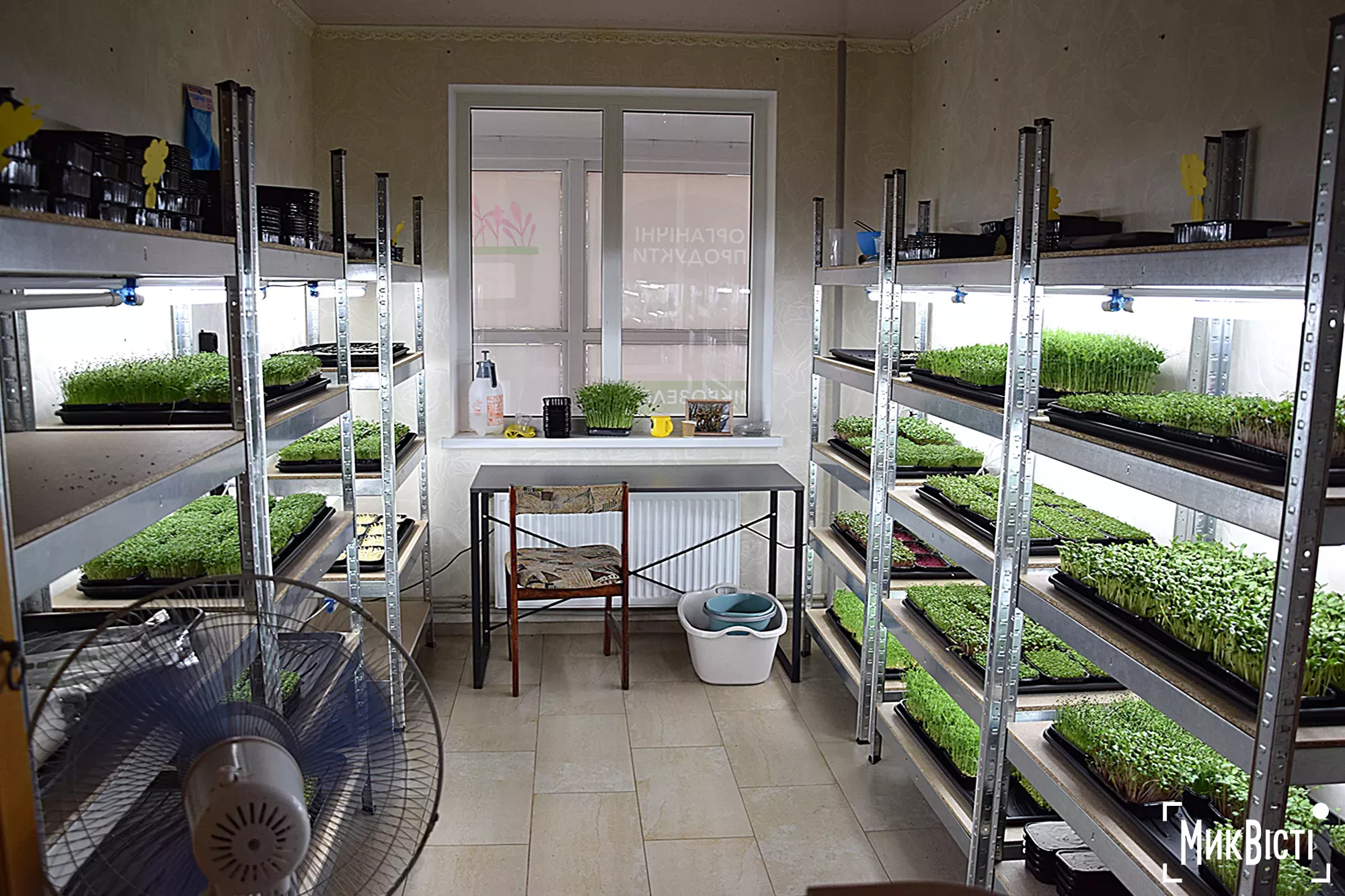 Eco-space for growing microgreens. Photo: NikVesti
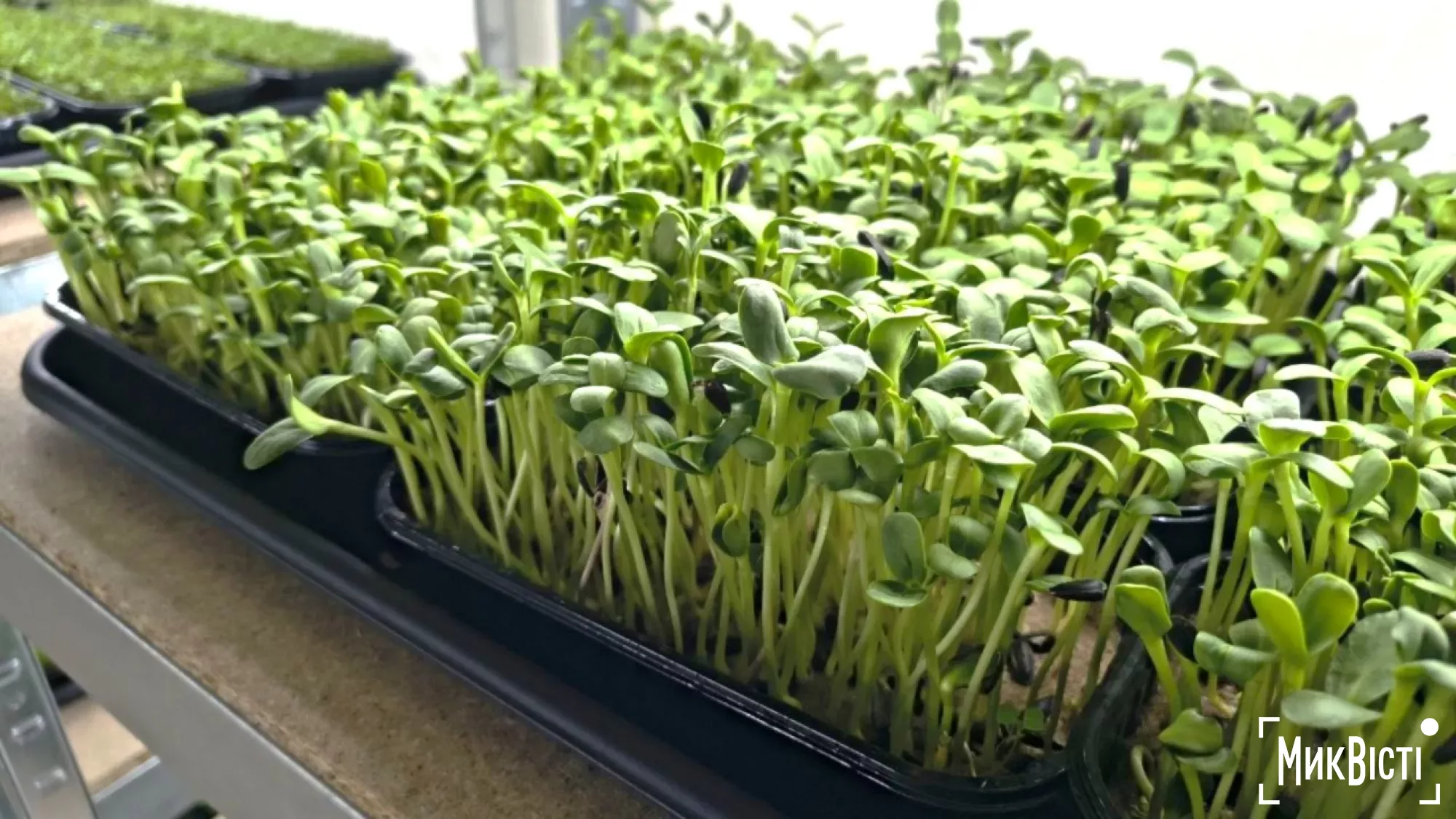 Eco-space for growing microgreens. Photo: NikVesti
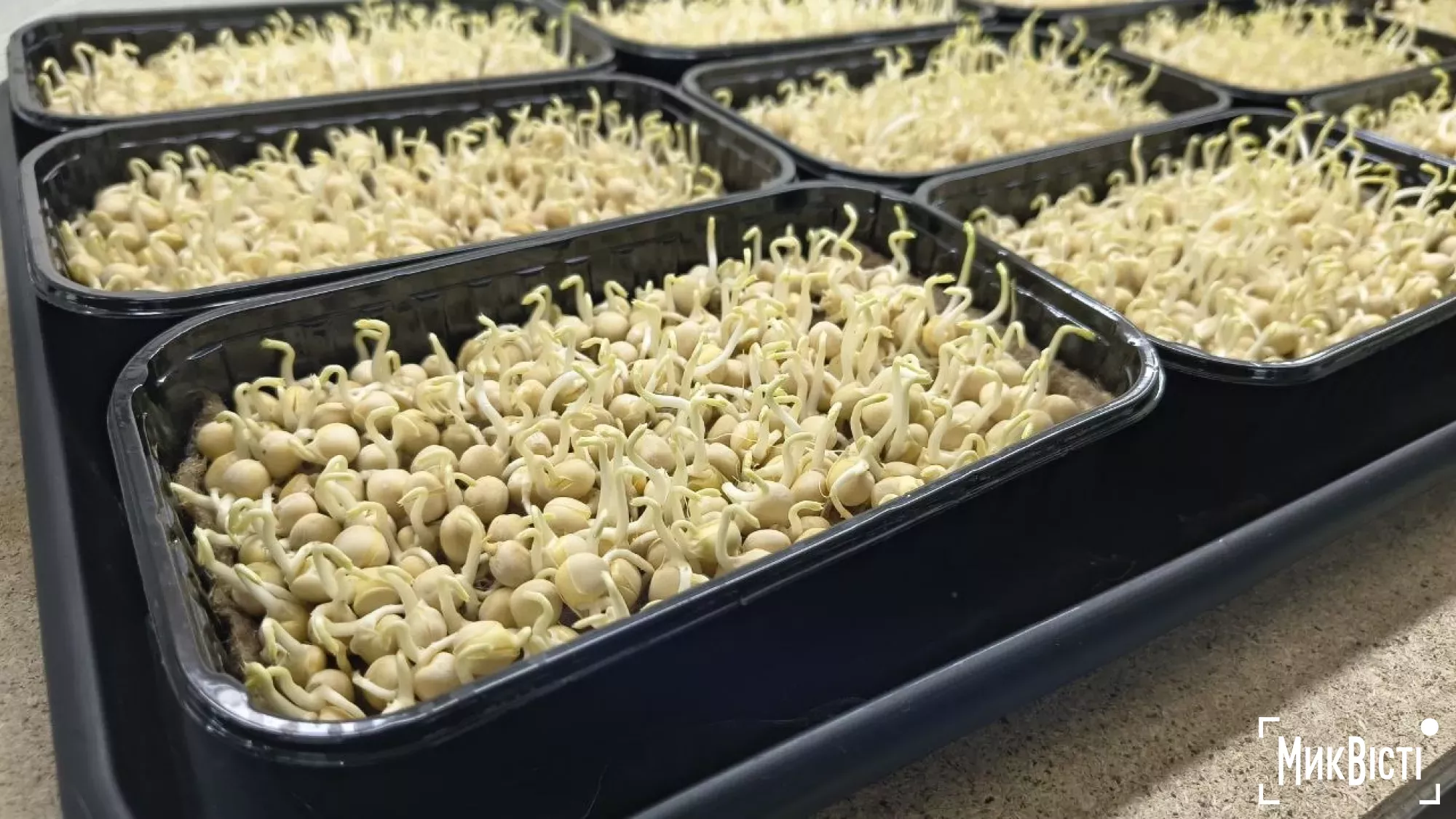 Eco-space for growing microgreens. Photo: NikVesti
Going forward, as Serhii explains, he plans to develop the cultivation and promotion of microgreens.
«I’m currently planning to develop sales strategies to get the message across to people about microgreens and a healthy lifestyle. Microgreens are all about health. All these sprouts are packed with 10 times more vitamins than mature plants. You can make smoothies, add them to salads and meat dishes. Not only do they go perfectly with everything, but they’re also a completely organic product packed with vitamins,» said the veteran.
Serhii continues to learn the finer points of growing microgreens and says he is always happy to share his experience on how to start a business.
As for support for veterans in the city, Serhii noted that he had been referred to a rehabilitation centre. However, whether to go through with it depends entirely on the individuals themselves.
«When I received my combatant’s certificate, I was given a referral to a rehabilitation centre. Of course, no one is going to ring you, and no one is going to take an interest in your health, so to speak. They give you the contact details and you find out for yourself, take an interest, ask questions. In other words, anyone who wants rehabilitation or treatment will always find a place here in our city,» said the veteran.
All-inclusive at the veterans’ support centre
A full range of primary care is provided not only to serving servicemen and women, but also to veterans, their families, and the families of those killed in action, captured or missing in action at the Mykolaiv City War Veterans Support Centre. The centre has been operating since 2018: all services there are free of charge.
Director Viktor Moiseev describes the centre as a kind of all-inclusive facility: it has legal, psychological and social departments, as well as departments for physical rehabilitation and veteran support. The latter has only been operating in the city for a year.
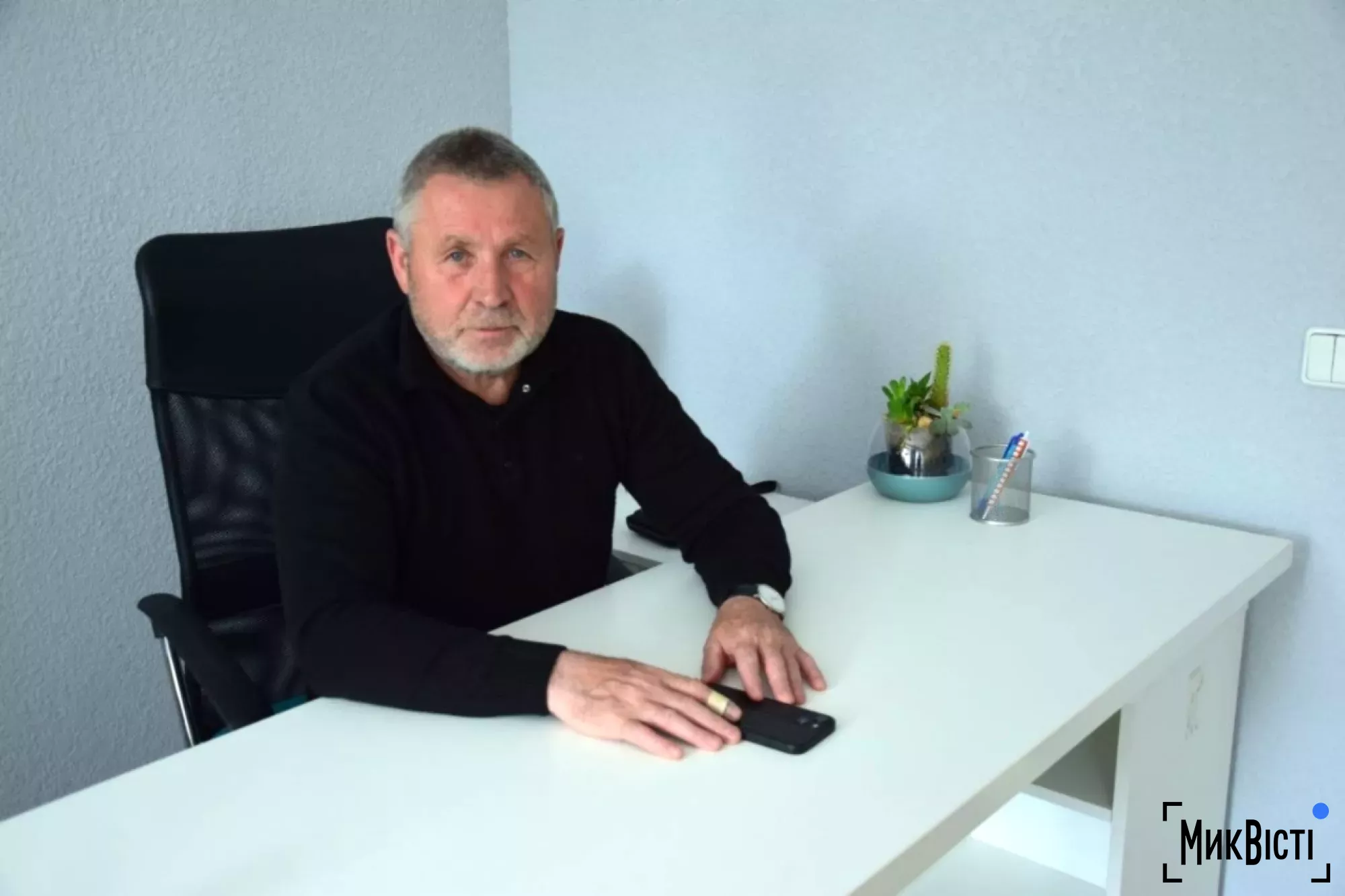 Viktor Moiseev, Director of the Mykolaiv City Centre for War Veterans. Photo: NikVesti
The first time a veteran or a member of their family needs to visit in person and submit documents to the centre. After that, it’s simpler: everyone is booked via an electronic database, with specific times allocated to avoid queues and unnecessary «running around».
There are now enough specialists working with service personnel and their families, as well as sufficient rehabilitation equipment. Viktor Moiseev noted that both the Veterans Support Centre and the city’s hospitals have physical rehabilitation departments. Partners, including those from Denmark, are also helping with this. They plan to learn about mentoring, where veterans themselves help other veterans with social integration.
Support for veterans
There are currently nine veteran support specialists in the city, but, as the centre’s director noted, there will be 12 from July. They work across the city: in the Administrative Service Centres, at the war veterans’ hospital, and in social welfare departments.
«Why is this organised in this way? So that the support specialist is closer to the person. Yes, it’s more convenient. If someone simply wants to ask a question, they don’t need to travel to the centre (the city’s veterans’ support centre, — note). They can pop into the Korabelnyi district and ask. The specialist can resolve the issue on the spot. Secondly, if it’s, say, a question for the lawyers, the person can ring, book an appointment or ask directly. This simplifies things for the person, so there are no unnecessary detours in their life,» said Viktor Moiseev.
Alina and Tetiana — support specialists — explained that people usually contact them regarding land plots, the housing waiting list, or rehabilitation and other medical matters. Many issues can be resolved over the phone, which is convenient for veterans. Communication between various institutions and veteran support specialists is well-established.
«For example, a soldier has several issues. He has been wounded, needs to undergo rehabilitation, apply for a disability certificate, arrange for subsidised utilities, and join the housing waiting list. It’s handy that, first of all, we can sort everything out over the phone; there’s no need to go anywhere. For example, if someone has had a limb amputated, it’s not very convenient for them to come in,» explained Alina.
She added that defenders or their families do not need to visit numerous institutions to ask questions, then submit documents and queue up again. However, as the support specialists noted, they cannot influence the resolution of issues or the queues for veterans, for example, at the same Administrative Service Centres.
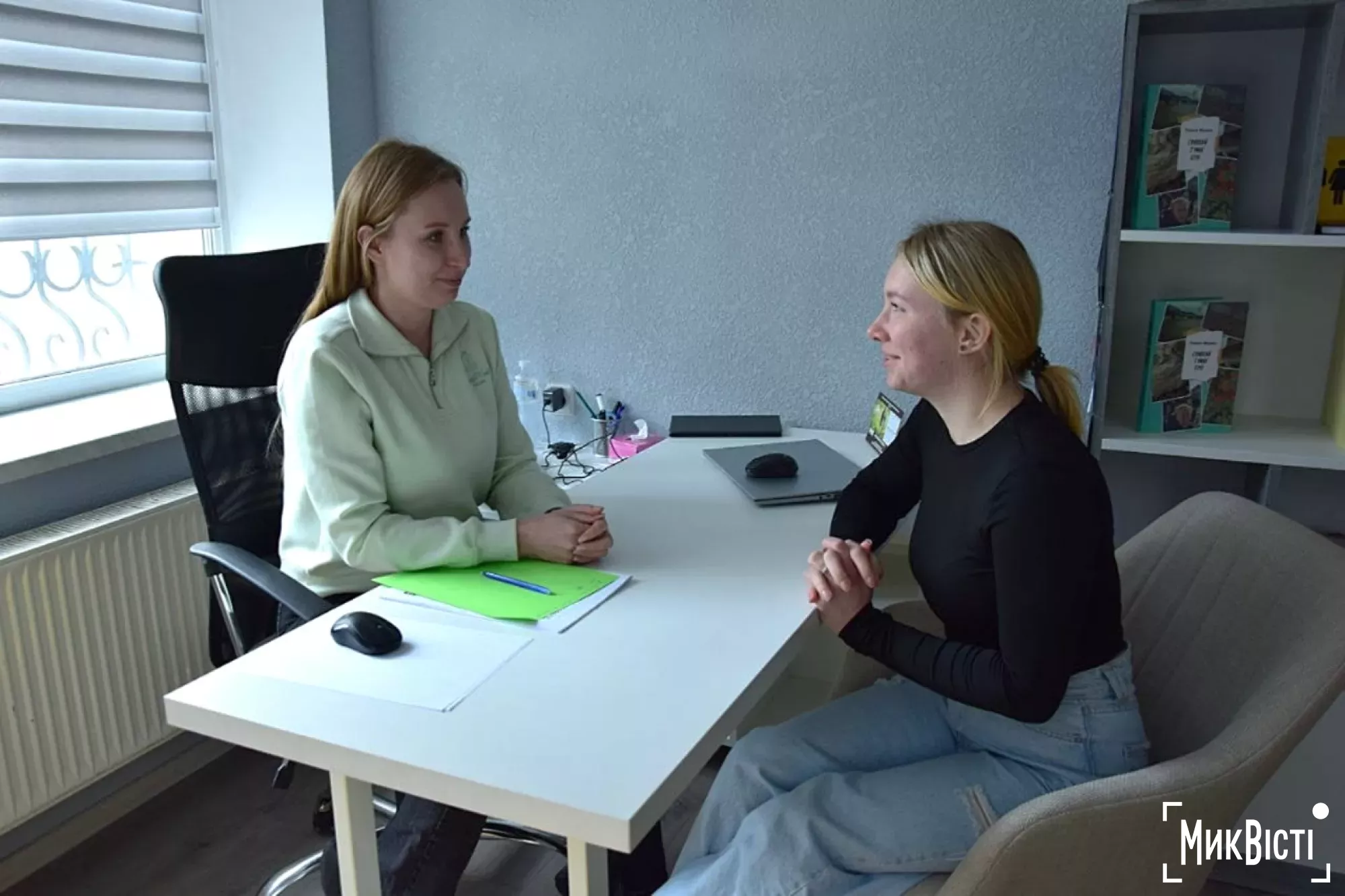 Veteran support specialists Tetiana and Alina. Photo: NikVesti
Tetiana explained that veterans have also started approaching them regarding career matters and retraining. However, the courses tend to be geared towards more ‘female’ professions, such as dressmaking.
«We’ve even had a few lads come in for retraining: they’re looking for some sort of course. But it can be a bit tricky with the courses. There was a community organisation that talked about 3D modelling. One lad said: «What do I need 3D modelling for? I’m a grown man». Something like that,» noted Tetiana.
Probation
The Veterans Support Centre also works in the field of probation (a system of support for offenders without imprisonment, — note).
«Our specialists and all probation specialists are currently communicating and working closely together. They then refer people to our psychologist to check on these individuals and assess their condition,» noted the head of the Veterans Support Centre.
They are also considering providing assistance to servicemen who find themselves in pre-trial detention centres. Viktor Moiseev notes that the Veterans Support Centre does not intend to judge defenders who have found themselves in difficult circumstances, but wishes to help them if necessary.
«The management of the remand centre came to see us. We are not a remand centre; we are not judges. We do not know how a person ended up there. We do not know what tomorrow will bring. That is why we signed a memorandum and are awaiting feedback; when they say they are ready, we will cooperate. There are specific circumstances there. But if he is a veteran, if he is a defender, we must help in any situation. We will help anyone who wishes to try,» said Viktor Moiseev.
Not everyone needs to be active
Viktor Moiseev noted that the veterans’ community in Mykolaiv is indeed large.
«Yes, the community has always been there, even after the ATO. It’s large because ours is a military town. That’s why there are so many consequences. But if we look at the veterans themselves, most of the defenders are currently at the front. Those who have been discharged are either due to age, injuries or family circumstances. This represents a certain percentage of the total number,» shared the head of the veterans’ support centre.
However, as he pointed out, not everyone needs to be publicly active, as it all depends on people’s wishes. There are plenty of veterans’ associations in the city.
«And I’ll add this: not everyone is very active. Let me explain why, using my own example. I served in the defence of my homeland from 2014 to 2016. And when I returned, I thanked God that I was simply alive. And I didn’t need anything. That’s why I understand many of the lads who came back, found work, got jobs, or are living with their families and are happy. Because to say that everyone must unite and march through the city with flags — that’s not the case. There are veterans’ associations with which we cooperate. We recently set up a large association, a veterans’ assembly, a civil society organisation, to represent our policies in the city council,» explained Viktor Moiseev.
From legal services to restoring financial stability
The head of the veterans’ support centre noted that it is mainly the families of servicemen who approach them, as the soldiers are currently at the front. But legal services are also the most popular among the servicemen themselves.
«Many of those who have returned are coming to us with legal questions. There is a massive legal mess. Legislation and regulations are changing, and people can’t keep up. One thing contradicts another. That’s why they turn to us, and our legal department helps them sort things out, prepare the legal framework, documents, reports, appeals and matters relating to payments,» said the centre’s director.
However, he added that once people have resolved their legal issues — which are often everyday matters — and see the other services available, they make use of those too.
«Once a legal issue has been resolved, when people come here, they see that we offer an «All Inclusive» service. They know that we also have a gym, a physiotherapist and psychologists. And so they can turn to them as well. It is mainly these everyday issues that draw people to us,» explained Viktor Moiseev.
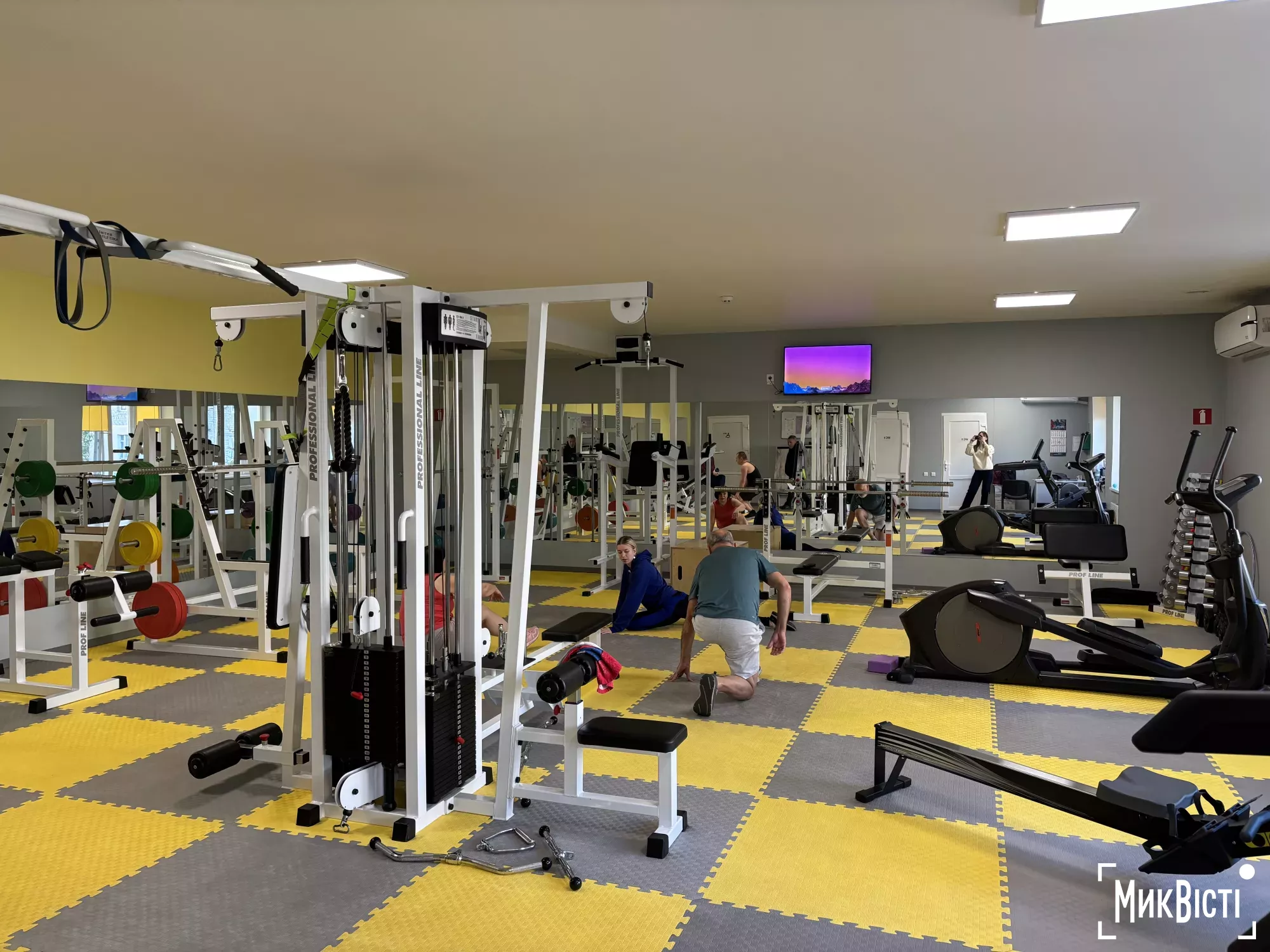 Mykolaiv City Centre for War Veterans Support. Illustrative photo: NikVesti
Among the families of military personnel — including serving personnel, veterans, prisoners of war, those missing in action, and the deceased — there is also a need for psychological services. But on this matter, the centre’s director refers to these as family gatherings.
«How our psychologists work. For three years now, women have been gathering here every Saturday. It’s a family. A big family. Once a month, they have art therapy — painting on canvas. There was even an exhibition at the City Centre. The girls ‘pour out’ their inner feelings. That’s the work with the psychologists. Zumba has been added too. In one branch, there’s also English lessons,» said Viktor Moiseev.
He noted that the main aim of these meetings is to maintain their resilience.
«This is the only group of its kind, bringing together women with different issues, but all affected by this war. And the main goal is to maintain their resilience. There are no triggering topics there. They’re like a family. It’s really great,» added the centre’s director.
Psychological support: help should not be forced
The head of the veterans’ support centre noted that they are also approached by the families of released prisoners of war and those still in captivity. Social worker Liliia Pershyna heads the non-governmental organisation ‘Association of Mothers and Wives of Ukraine’s Defenders’ and organises weekly events in support of servicemen in captivity, as well as motorcades. There is also a council attached to the city council that represents the families of prisoners of war.
Viktor Moiseev notes that upon returning from captivity, many turn to the centre with legal queries. They also go to the gym with their wives: both for rehabilitation and to maintain their fitness.
However, the centre’s director emphasised that it is not advisable to impose assistance on servicemen — whether after discharge from service or after captivity. After all, first and foremost, a person needs time to come to terms with what has happened.
«Look, someone who has been released, whether from military service or from captivity, needs time to recover. I speak from personal experience: they need to recover so that no one disturbs them. Practical matters are sorted out, but delving into a person’s soul — no. Help to ‘do good’ isn’t needed. Such help is needed and will be useful only when the person wants it themselves. If a wife or mother brings them in, it simply won’t work. Only if there is a desire,» explained Viktor Moiseev.
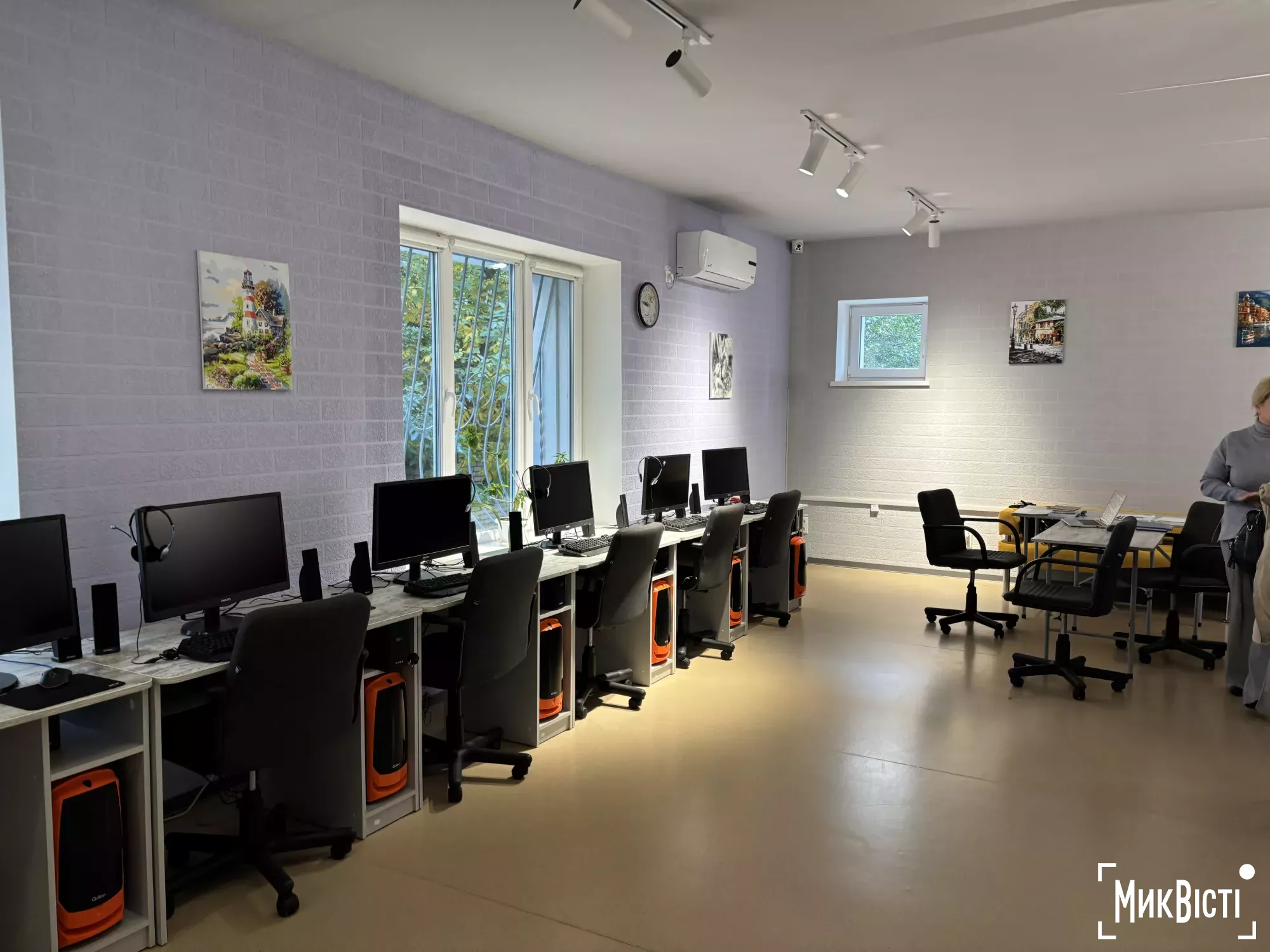 Mykolaiv City Centre for War Veterans Support. Illustrative photo: NikVesti
As Viktor Moiseev explained, the city’s veterans’ support centre employs a family psychologist and a psychologist specialising in post-traumatic stress disorder (PTSD) and cognitive behavioural therapy (CBT).
«Anna trained under the American Johns Hopkins programme in CBT. CBT deals with suicide, addictions and drug abuse. She works with such serious issues. If a person comes in and understands the problem, there is a huge chance of success. If someone is brought in, it won’t do any good,» noted the centre’s director.
He pointed out that the same applies to the family lives of servicemen, where families may not yet understand how to deal with them. According to Viktor Moiseev, defenders need to be given time and understanding.
«Right now, the war has left such a huge mark on family life. We will be dealing with the consequences for a very, very long time, because there are many different objective and subjective reasons why family life has changed. Because people come back changed,» noted the centre’s director.
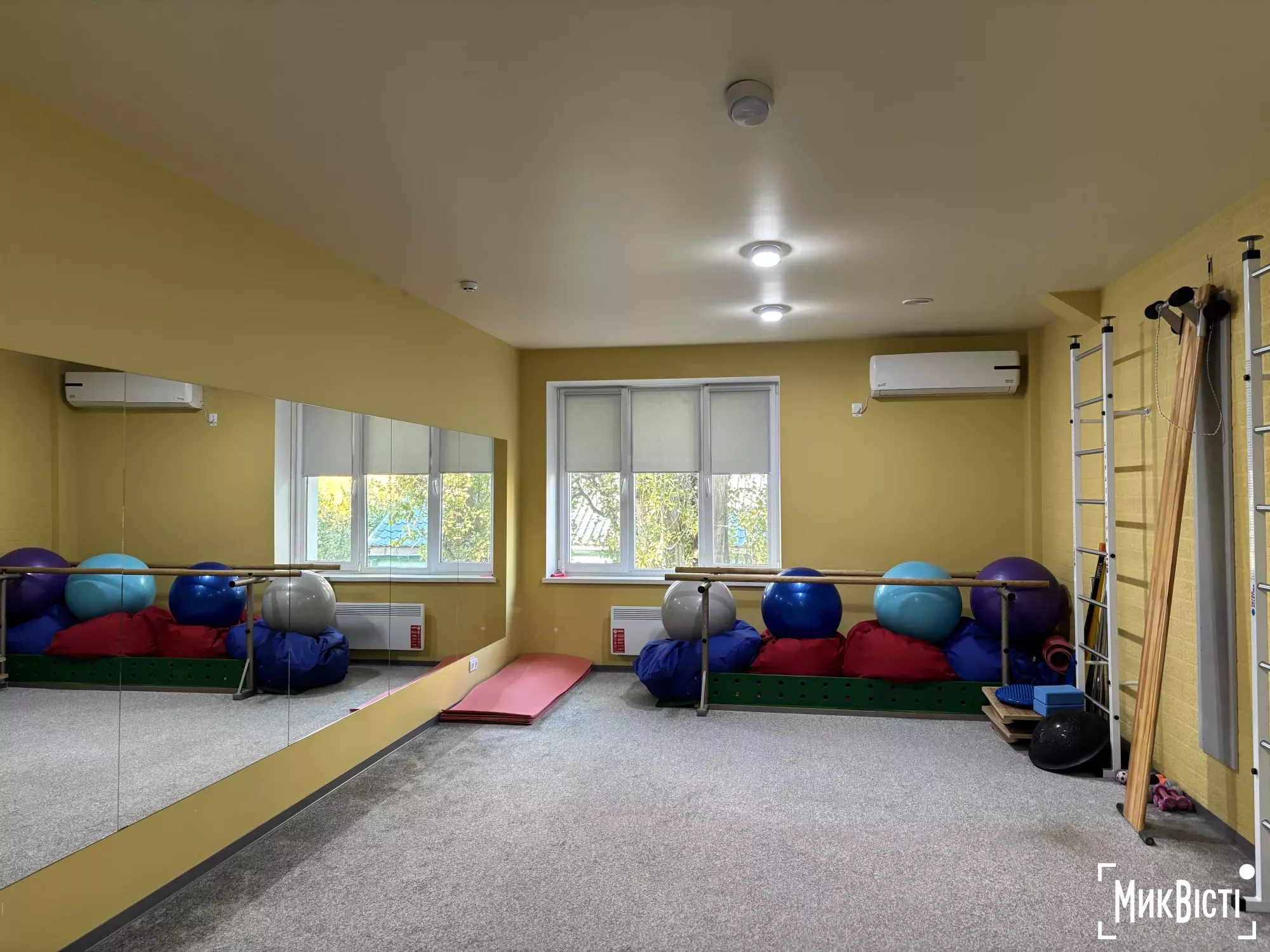 Mykolaiv City Centre for War Veterans Support. Illustrative photo: NikVesti
The same applies to situations in other areas. That is why the centre’s psychologists work with various institutions, such as the Pension Fund, teaching them the finer points of dealing with military personnel so that interactions do not have negative consequences.
«Yes, and it takes time for a person to realise where they are now. A person needs to come to terms with themselves, to understand: «Oh, I’m not there anymore, I’m not at war anymore, I’m not in captivity anymore», in order to adapt in some way. Only then will there be any benefit,» noted the head of the veterans’ support centre.
Society must prepare for the return of servicemen
An important issue, according to Viktor Moiseev, is now preparing society — not just Mykolaiv – for the return and reintegration of the military.
«It is not the veterans, nor the defenders, but society that must prepare for a grand welcome. We simply cannot gloss over this. Because in any case, everyone who has been through the war, whether we like it or not, no matter how resilient a person may be, has undergone changes in this regard. And to bring about this change, we mustn’t trigger reactions here along the lines of «we didn’t send you there and you were getting paid there». Instead, we must behave with greater tolerance and understanding towards the fact that these are the consequences now,» emphasised the director of the veterans’ support centre.
He added that there are attempts at change in society, but they are not widespread.
«When I went to war in 2022, we spent the first three weeks here in Mykolaiv, and I saw how the people who stayed behind came together. I saw how the police helped pour Molotov cocktails, how grandfathers, grandmothers and young people pitched in. I often went out with a group to work at night. We’d set off, there was nothing at the crossroads, but then we’d drive along and see piles of tyres and people. And I was glad to be in Ukraine. This problem had united us. Now something a bit different is beginning. I can’t say what kind of phenomenon this is, that we’re starting to divide again. Whether they’re starting to divide us, or whether these political games are beginning to divide veterans,» shared Viktor Moiseev.
He said that the question arises as to what will happen after the war, as a large part of society will consist of military personnel. And we need to prepare for that too.
«I am certain there will be a victory. There is no doubt about that; the price is very high. But I fear what will happen after it is over. What will the consequences be? What kind of reckoning will there be here? You see, we are not yet fully prepared for this. And the return has not even begun. We have time now to prepare, to build a model and get ready for the great return, and it will happen. So that we are ready, in this small way, for a model of communication. A third of our working-age population will be veterans. That is a huge number. And we need to start preparing for this somehow,» emphasised the head of the veterans’ support centre.


The work on this material became possible thanks to the Fight for Facts project, which is implemented with the financial support of the Federal Ministry of Economic Cooperation and Development of Germany.