«Ukrainian and foreign firms are interested in the plant». Ukraine’s State Property Fund head on the future of Mykolaiv Alumina Plant
-

- Kateryna SeredaEditor-in-chief

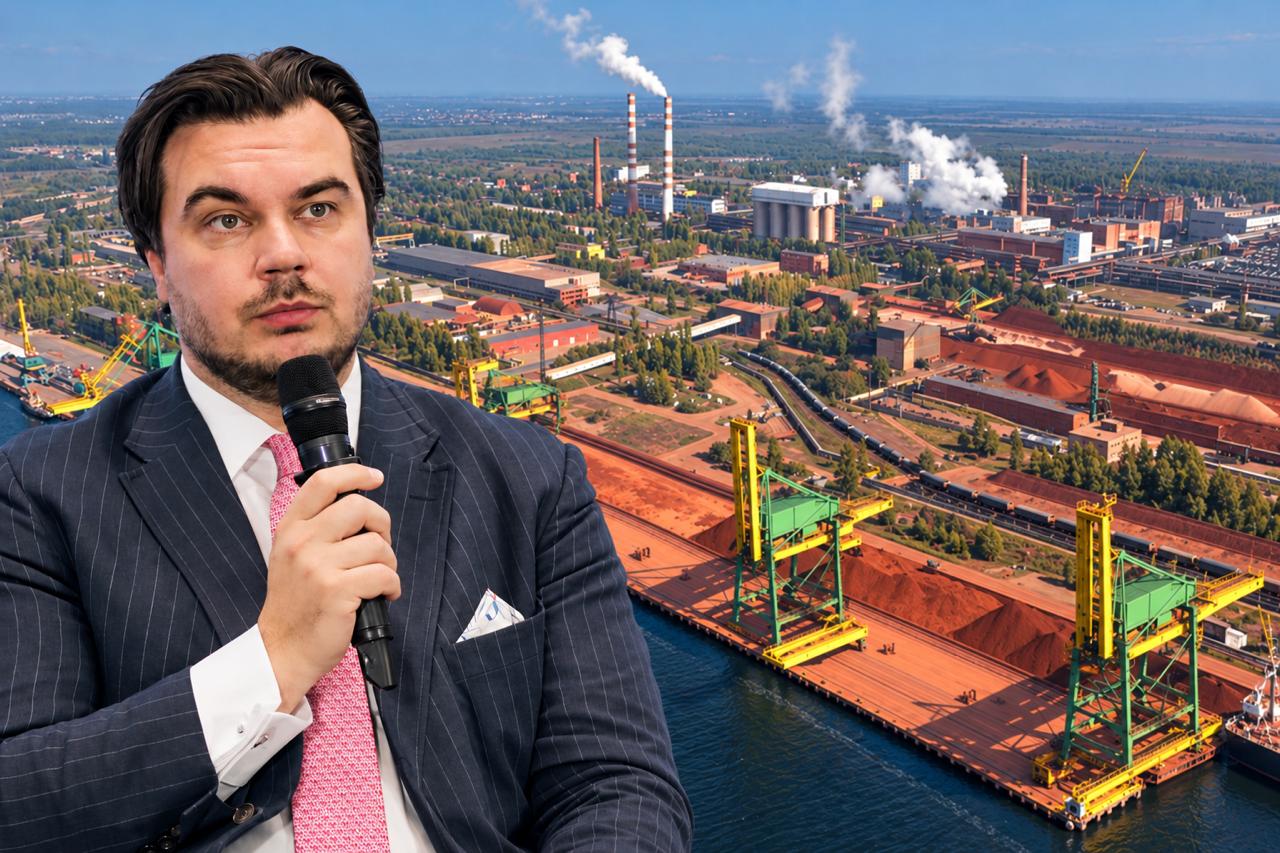 Dmytro Natalukha, head of the State Property Fund, spoke about the privatisation of the Mykolaiv Alumina Plant, investors and sludge storage facilities; collage: NikVesti
The Mykolaiv Alumina Plant, which the state confiscated from Russian oligarch Oleg Deripaska three years ago, is scheduled to be put up for privatisation in the first quarter of 2027. Despite halted production and war-related logistical problems, the State Property Fund reports significant interest in the enterprise from both Ukrainian and foreign investors. At the same time, the final terms of the sale have not yet been finalised; in particular, the future of the tailings ponds, where tens of millions of tonnes of production waste have accumulated, remains unresolved.
Dmytro Natalukha, head of the State Property Fund of Ukraine, who visited the plant on 8 October, spoke about this in an interview with «NikVesti».
The Mykolaiv Alumina Plant halted production in 2022 following the start of the full-scale Russian invasion. One of the main obstacles to resuming operations was the disruption of traditional maritime logistics, which are essential for the supply of raw materials and the shipment of products. In 2023, the High Anti-Corruption Court ruled that Oleg Deripaska’s assets should be forfeited to the state, and the plant was subsequently transferred to the management of the State Property Fund.
Since then, the state has repeatedly changed the privatisation timetable. In particular, in June 2026, the State Property Fund published a plan under which the auction was to take place at the end of the year, with an indicative starting price for MGZ of 6.3 billion hryvnias. Related assets, in particular bauxite and alumina reserves, were valued separately.
However, the timetable has now been revised once again.
«NikVesti» spoke to Dmytro Natalukha about why the privatisation is being delayed, who might acquire the company during the war, whether the new owner will necessarily resume alumina production, and who will be responsible for maintaining the hazardous sludge storage facilities.
 Dmytro Natalukha stated that both Ukrainian and foreign companies are interested in purchasing the Mykolaiv Alumina Plant; photo: State Property Fund of Ukraine
«We expect to put the plant up for auction in winter or spring 2027»
— You visited the Mykolaiv Alumina Plant today (8 October – ed.). What was the purpose of the visit, and what condition is the plant currently in?
— The purpose of the visit was to carry out an inspection. We are actively preparing the plant for privatisation; there is demand for it, and both Ukrainian and foreign companies are showing great interest. That is why my colleagues and I decided to see for ourselves that it is in a safe condition.
It’s a hive of activity there; people are there and working. In other words, the plant is waiting for an investor and for the conditions to be in place to resume operations as soon as they arise.
The main aim of our trip was to show that, despite the full-scale war, it is possible to travel there, to stay there and, in principle, there is no particular threat to life or safety in the area.
The plant is, of course, currently shut down, but it could resume operations within literally three months of a decision being made to restart it.
It was the largest producer of alumina in the Soviet Union. One of only three such producers on the European mainland. Unfortunately, it is currently idle, but it has enormous potential.
We expect to know the auction date by the end of this month. Most likely, it will be in the first quarter of next year. In other words, we expect to put it up for auction in the winter or spring of 2027.
Hello! I am Kateryna Sereda, the author of this article.
Thank you for your attention to our texts — it means a lot to the NikVesti team.
We regularly publish in-depth materials for those who want to understand the topic and get to the heart of the matter.
We have dozens of examples when our journalism, together with our readers, has influenced situations and changed them.
Join the NikVesti Readers’ Club — support independent journalism that matters.
Support us by joining the NikVesti Club
— Why is the privatisation date constantly being postponed? Initially, the talk was of early 2026, then July, and later the end of the year. Now you’re mentioning early 2027. What is the reason for this?
— Since my appointment in January 2026, I had hoped that we would be able to put the plant up for auction by the end of the year.
Why is the date being pushed back? Because we are not selling just one plant, or even a single enterprise. We are selling a specific pool of assets.
These are sanctioned assets that were seized following a ruling by the High Anti-Corruption Court. This involves several companies: the Mykolaiv Alumina Plant, the «Metallurg» service centre, the accounting centre and a security company. In addition, raw materials — bauxite, alumina — as well as various vehicles were seized.
The law requires the Fund to assess, describe and inspect every item of property specified in the High Anti-Corruption Court’s ruling and include it in the pool.
Therefore, the postponement is solely due to the process of forming this pool.
It has now been finalised. We are awaiting a meeting of the Fund’s auction commission, after which the documents will be forwarded to the Cabinet of Ministers. The government will then decide on the final auction date and starting price.
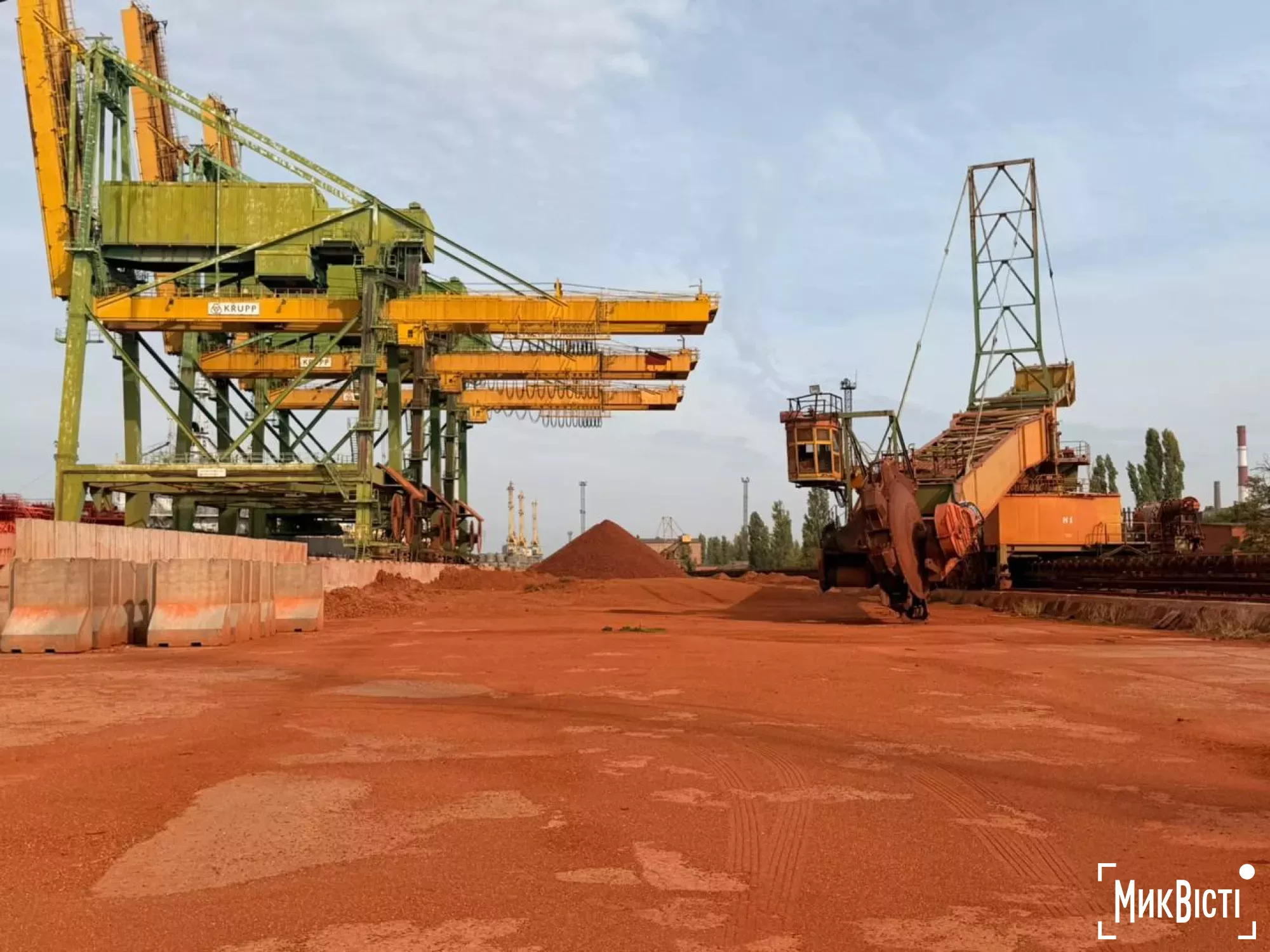 The decision on the auction for the sale of the Mykolaiv Alumina Plant is to be taken by the Cabinet of Ministers; photo NikVesti provided by the State Property Fund of Ukraine
There are investors willing to take a risk and buy the plant during the war
One of the main questions regarding the privatisation of the Mykolaiv Alumina Plant is whether a buyer can be found for a company that has not been operational for over four years and is unable to make full use of traditional maritime logistics.
Dmytro Natalukha previously spoke of the need to find a foreign investor willing to take on the risks associated with the war. Among the possible countries of origin for such capital, he mentioned the US and India.
Now, the head of the Fund claims that potential buyers are regularly showing interest in the enterprise, although he has not yet named any specific companies.
— How do you assess the prospects of a successful auction under the current circumstances? After all, the plant is located in a region under Russian attack, and the resumption of production is being hampered by blocked shipping lanes. Can you name any specific Ukrainian or foreign companies that are interested in it?
— I do not wish to speculate on high-profile names at this stage. But it seems to me that the prospects, despite the current situation we find ourselves in, are quite good.
It is one of the few enterprises on our balance sheet that attracts regular and persistent interest. In other words, it’s not just a one-off mention. We consistently hear from various players every few weeks: «What about Mykolaiv? Are you preparing it or not? When will it be put up for sale? What starting price are you planning?»
There’s a great deal of interest in it.
And it seems to me that it is precisely the fact that we are selling it under these circumstances that attracts a particular type of investor. They are prepared to take a risk, but to acquire such an asset at a discount, as it is being sold during a full-scale invasion.
— But the alumina production market is quite narrow. There aren’t many companies in the world that operate a full aluminium production cycle. Who else, apart from them, might be interested in the plant?
— And why does it have to be the full cycle? For example, it is one of the country’s largest gas consumers. Why might gas producers or traders not be interested in this enterprise?
That’s the first scenario. The second involves companies that know how to manage complex industrial assets. They acquire such assets in specific jurisdictions, invest in them, modernise them, bring them up to a certain level of production, and then resell them to specialised companies with a significantly lower risk tolerance.
Full-cycle companies are, as a rule, public companies whose shares are traded on stock exchanges. Their boards of directors often either do not permit investment under such conditions, or the investment approval process takes far too long.
In contrast, there are companies that understand these processes, invest their own capital at their own risk, carry out optimisation, modernisation and basic adjustments, wait for conditions to improve, and only then sell the enterprise to large public companies that can offer a higher price.
There are also steelworks that could process the sludge accumulated at the plant into iron ore pellets.
In other words, there may be far more potential buyers than just aluminium producers. All the more so as a Dutch auction may be used for sanctioned assets, where the price not only rises but may also fall.
What is a Dutch auction? It is a type of auction in which the starting price is gradually reduced until one of the bidders agrees to purchase the property. This format makes it possible to find a buyer if there are no takers at a higher price.
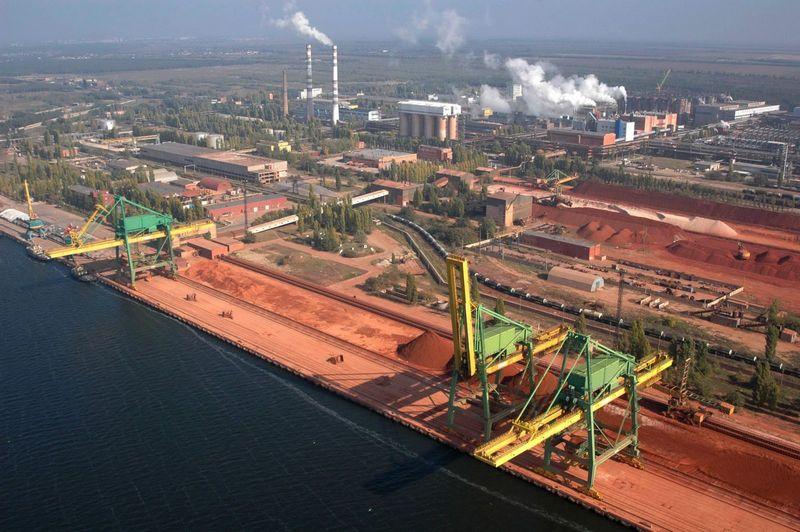 After the sale, MGZ may not operate in its core business sector; archive photo
— So, after privatisation, can the company operate outside its core business?
— Absolutely. But it will be most profitable if it operates within its core business.
For example, it could organise cargo transhipment, as the Odesa Port Plant once did, to cover its own running costs.
This would generate some revenue, but in terms of production costs, one day’s production of alumina could be equivalent to a month or even several months of transhipment operations.
Therefore, I believe the focus will be precisely on maintaining the production profile. That is the plant’s core value.
The Mykolaiv Alumina Plant is one of Europe’s largest alumina producers. Its core business is the processing of bauxite into raw material, which is then used by other plants to produce aluminium. According to the State Property Fund, the plant’s production capacity allows it to produce up to 1.7 million tonnes of alumina per year.
— But to resume production, the problem of raw material supply and product shipment needs to be resolved. If maritime logistics are not functioning, and the railways cannot fully replace them, how will the plant be able to resume operations?
— Why don’t you think that someone might be ready right now to seize the moment, take a financial risk and buy the plant, mothballing it until conditions change?
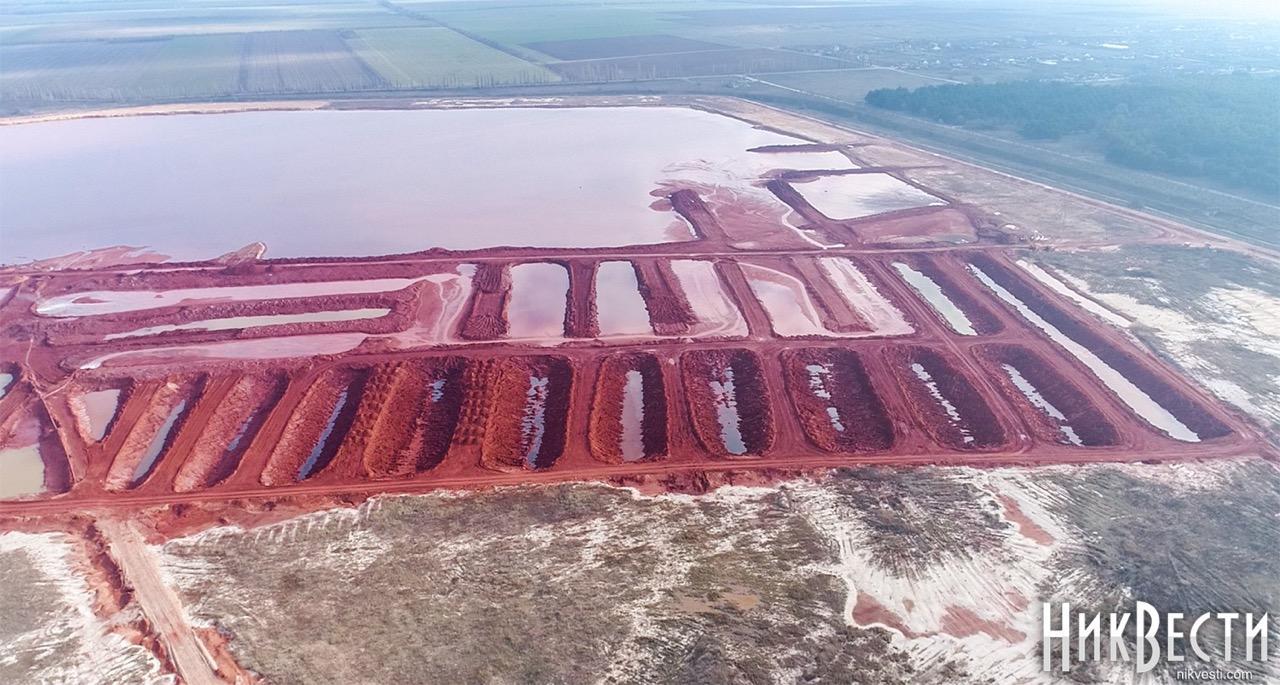 The sludge ponds at the Mykolaiv Alumina Plant require constant maintenance to prevent dust formation, archive photo NikVesti
A decision on the sludge ponds is expected by the end of October
The MGZ’s sludge ponds remain a separate issue in the forthcoming privatisation. They contain over 48 million tonnes of red sludge — waste produced during alumina production.
For the Mykolaiv region, the issue of their management is particularly important. Following the plant’s shutdown, problems arose with the maintenance of dust suppression systems, and due to equipment damage, a lack of funds and shelling, the risks of sludge dust spreading have increased.
Over recent years, «NikVesti» has repeatedly reported on incidents of dust from the sludge, particularly during strong winds. In 2026, the State Environmental Inspectorate also reported that the dust suppression system was operating at only 70 per cent capacity.
In March this year, the State Property Fund, in response to an enquiry from «NikVesti», stated that the two sludge storage facilities form part of a single property complex belonging to MGZ and are planned to be sold together with the plant.
However, Dmytro Natalukha now says that this issue is still being discussed at the level of the Fund and the Ministry of Economy.
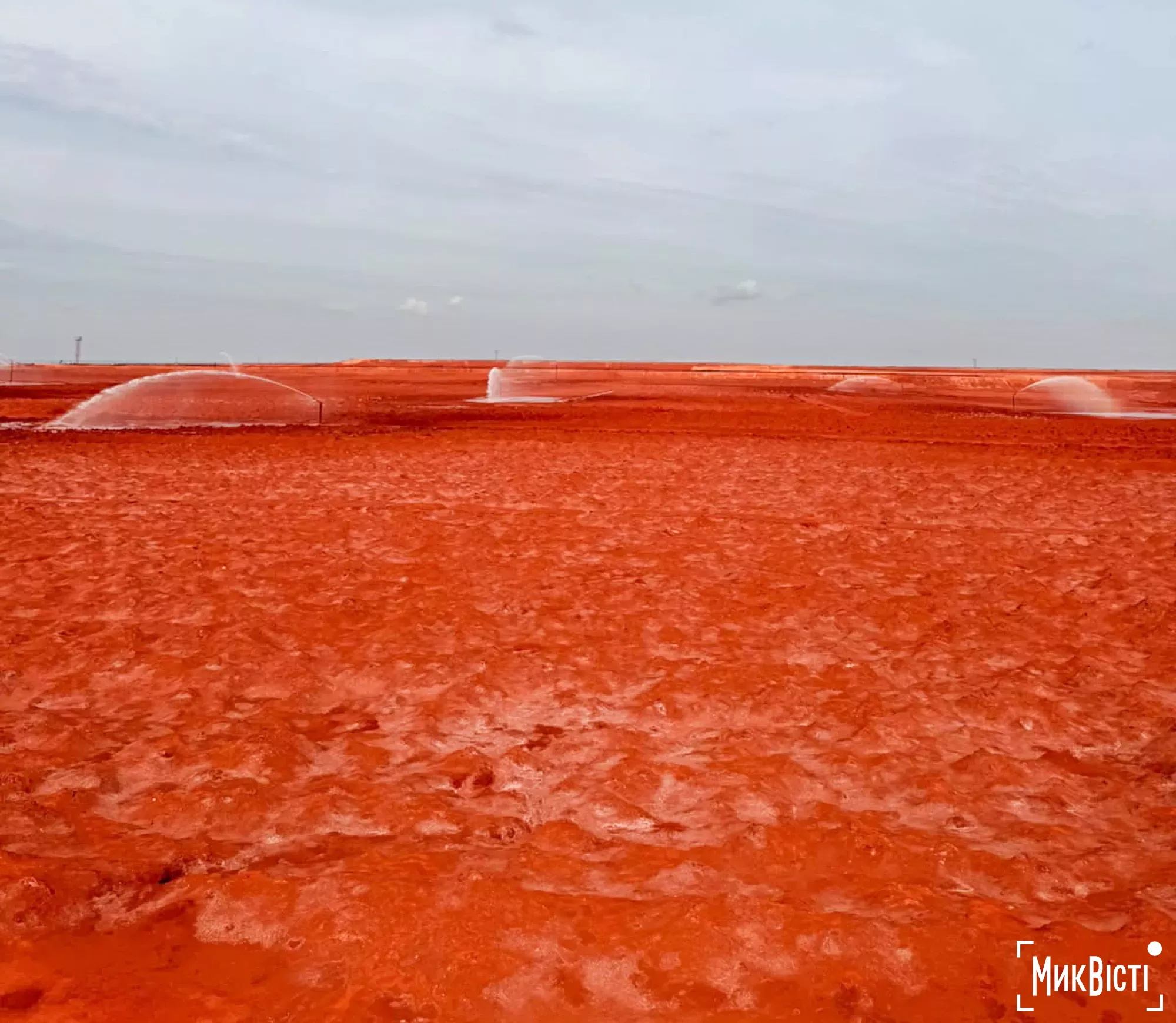 A decision on whether to include the sludge fields in the MGZ asset package for sale has not yet been taken; photo NikVesti provided by the State Property Fund
— Previously, there were differing views on whether the sludge fields would be included in the privatisation package. What was ultimately decided? Will they be sold together with the plant or separately?
— We are currently in discussions with the Ministry of Economy, which is set to be one of the key players in the government’s decision on the auction terms.
— So, as things stand, the issue has not yet been resolved?
— It’s still being worked on. I think we’ll have a clear answer by the end of October.
— And what condition are the slurry storage facilities in at the moment? There used to be problems with dust and the operation of the irrigation system. What did you see during your visit?
— From what we saw today, the irrigation system is working, the fields are being irrigated, and there is no dust.
I can’t say for certain how things are on a day-to-day basis. But today we walked around the site, and we didn’t even really need to clean our shoes.
«The plant’s own funds will last until around summer 2027»
Since production was halted, the Mykolaiv Alumina Plant has continued to maintain its production facilities and slurry ponds, although it receives no income from its core business. Before the full-scale war, around five thousand people worked at the plant. Since production ceased, around 400 employees have remained at the plant, looking after the equipment, safeguarding the property and maintaining the two sludge storage facilities. The plant’s manager, Oleksii Medvid, previously spoke about this in a comment to «NikVesti»
Previously, regional authorities had highlighted the lack of funding for equipment repairs and ensuring environmental safety.
According to Dmytro Natalukha, the plant is currently not receiving any state financial assistance and is being run on its own funds. However, these resources may only last for a few months after the planned privatisation date.
For more details on the situation at the Mykolaiv Alumina Plant, read the article «Trapped in stagnation: what are the prospects for the Mykolaiv Alumina Plant following nationalisation?».
— Is the Mykolaiv Alumina Plant currently operating on its own reserves, or is it receiving state financial support?
— It is operating on its own funds. At present, there is no state support.
— How long will these reserves last?
— According to various estimates, I think until around next summer.
— So if privatisation does not go ahead, will the company need state support?
— Yes. For now, we’re hoping for a successful auction. But I think that as the date approaches, we’ll be working out a contingency plan in case it doesn’t go ahead.
We’ll then look into budgetary support. For now, however, we’re preparing for the optimistic scenario.
«Sludge fields could become a source of profit»
One of the concerns surrounding the privatisation of MGZ relates to future responsibility for the sludge storage sites. If these sites are not included in the sale package or if the new owner fails to ensure their proper maintenance, the environmental problem will remain unresolved.
At the same time, the head of the State Property Fund believes that the accumulated red sludge may have commercial value. According to him, the waste could potentially be used in the metallurgical industry and processed to extract useful components.
Earlier, Daria Marchak, Ukraine’s Deputy Minister of Economy, had expressed the view that the sludge was attractive to investors as a «separate asset». However, the State Property Fund has taken the view that the sludge storage sites should be put up for auction as part of a package including other assets of the Mykolaiv Alumina Plant.
— Some local councillors fear that, following privatisation, the sludge storage sites may remain the responsibility of local or regional authorities. In that case, their maintenance would become a financial burden on local budgets. Is there such a risk?
— To be honest, I don’t know if there is such a risk. I need to check exactly what VAKS has transferred to us and whether these sludge fields are included in the list of assets within the property complex.
But following today’s visit, I would view the sludge fields as a source of potential profit.
Due to logistical problems, it appears that no one is currently removing the sludge. But we have sought advice and discussed this with the company’s management today. The sludge can be utilised and processed, in particular into iron ore pellets, thanks to its high iron content. Using certain technologies, other valuable components can also be extracted, including rare-earth metals.
So it’s a mystery to me why, all this time, the slag has simply been piling up rather than being sold to generate revenue.
— Is there even a market in Ukraine for processing this kind of sludge?
— There used to be such a market in Ukraine. For example, the Azovstal Metallurgical Plant was able to process this sludge into pellets.
According to the plant’s director, a delegation from the Mykolaiv Alumina Plant visited «Azovstal» at the end of 2021, and certain agreements had even been reached. But the war put an end to everything.
This does not mean that it is impossible to find steelworks in neighbouring countries.
It seems to me that this is one way in which we can begin to tackle the environmental problem: by exporting the sludge for sale and thereby gradually reducing the area of the sludge fields.
Consequently, the final decision on the auction date, the starting price and the composition of the privatisation package must be taken by the Cabinet of Ministers. According to the forecast by the head of the State Property Fund, the sale of the MGZ could take place in the first quarter of 2027.
At the same time, even a successful privatisation will not automatically mean the resumption of production. As Dmytro Natalukha has indicated, a future investor may acquire the enterprise and mothball it until the security situation improves and the necessary logistics are restored.
A separate unresolved issue remains the future of the tailings ponds, which require constant maintenance regardless of whether the plant is operational.


This material was made possible with the support of the “Voices of Ukraine” / SAFE programme, coordinated by the European Centre for Press and Media Freedom in partnership with the Public Interest Journalism Lab. “Voices of Ukraine” / SAFE is implemented within the framework of the Hannah Arendt Initiative with the support of the German Federal Foreign Office. The programme does not influence editorial policy, and this material contains solely the views and information obtained by the editorial team.