«A slightly excessive dose» without specific figures: what is known and what has not been explained regarding the chlorination of the water supply in Mykolaiv
From 2 November, «Mykolaivvodokanal» is commencing additional chlorination of the city’s water supply networks. Drinking tap water and using it for cooking is currently prohibited, and the procedure may last up to three months. None of the responsible authorities have yet specified how much chlorine will be in the water.
NikVesti discovered this by analysing statements from officials, health standards, the water utility’s contracts on Prozorro and the experience of other cities. The editorial team also sent information requests to six organisations.
Why the water becomes contaminated on its way to the taps
Following the launch of the new water pipeline from the Southern Bug and the new treatment works, the water leaving the water utility meets drinking water standards, except for one indicator: the permanganate oxidisability remains at 5.2–5.4, whilst the standard is 5. The company’s director, Hennadii Iziumov, reported this at a staff meeting at the city council on 5 October.
The quality deteriorates on its way to the consumer. According to the mayor, Oleksandr Sienkevych, in 46 per cent of tests carried out at monitoring points across the city, the water quality deteriorates and bacteriological indicators appear. The water utility attributes this to the length of the network: over 1,200 km of pipes that have been carrying salt water for three years.
The decision on chlorination and hyperchlorination was taken by the regional commission on technogenic and environmental safety and emergencies. This was announced on 2 October by Heorhii Reshetilov, who heads the Mykolaiv Regional Military Administration. He estimated the process would take around three months and asked the city authorities to launch a wide-ranging information campaign.
«The water leaving the treatment plants is of drinking quality. However, by the time it reaches the end user, it is not always of drinking quality,» noted Heorhii Reshetilov.
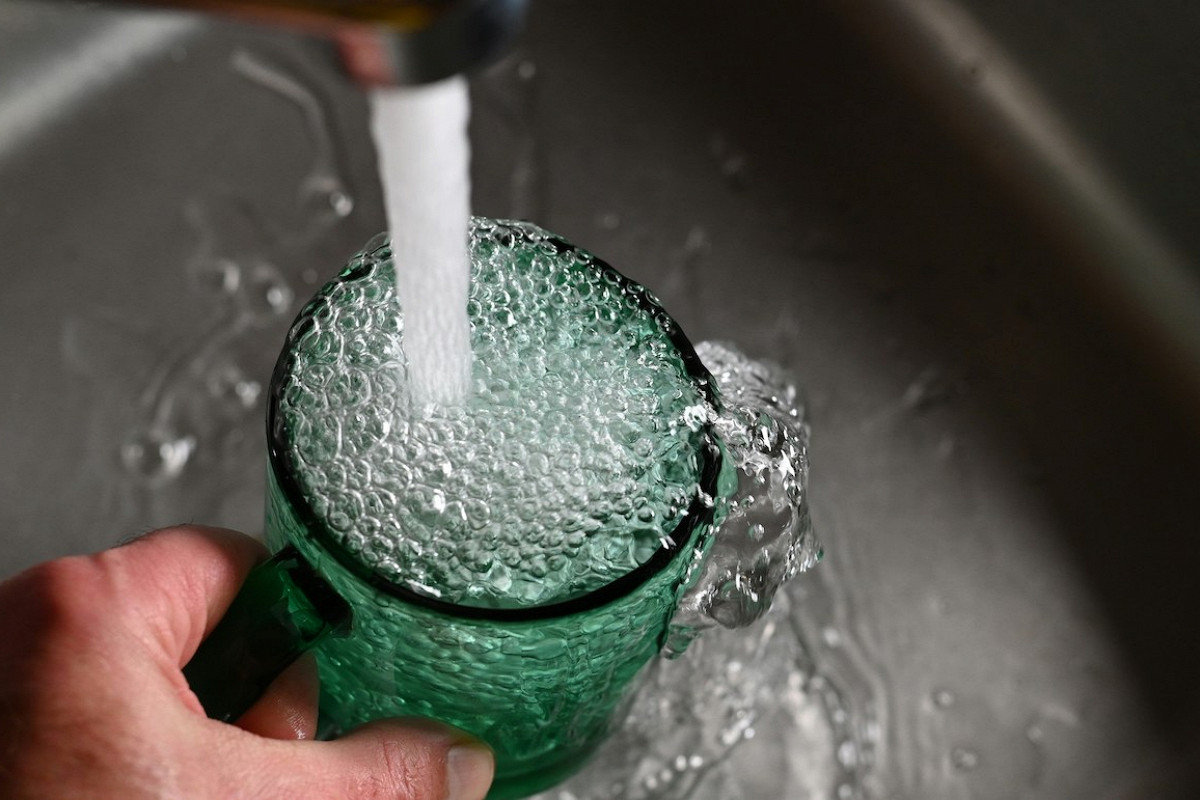 Hyperchlorination of water in Mykolaiv’s water supply networks will begin on 2 November; illustrative photo
How the networks will be chlorinated and when the procedure will be completed
The water utility provided the following details to «Suspilne. Mykolaiv»:
Reagent. Sodium hypochlorite is diluted and fed into the system via dosing pumps upstream of the clean water reservoirs; the operator takes samples every hour, explained Tymofii Prokopenko, head of the pumping stations department.
Monitoring. The laboratory takes 10–12 samples daily at monitoring points, says its head, Valentyna Andreieva. The samples will be retaken in about a week’s time, and sections where the treatment is insufficient will be flushed again.
Duration. Chief Engineer Vitalii Tkachenko says this could take anywhere from two weeks to a month, with the maximum recommended duration being three months. The decision to conclude the process will be made based on the results from two accredited laboratories.
«It won’t be some sort of extremely high dose that will affect people, animals and so on. No, it will be a slightly higher dose than usual,» said Vitalii Tkachenko.
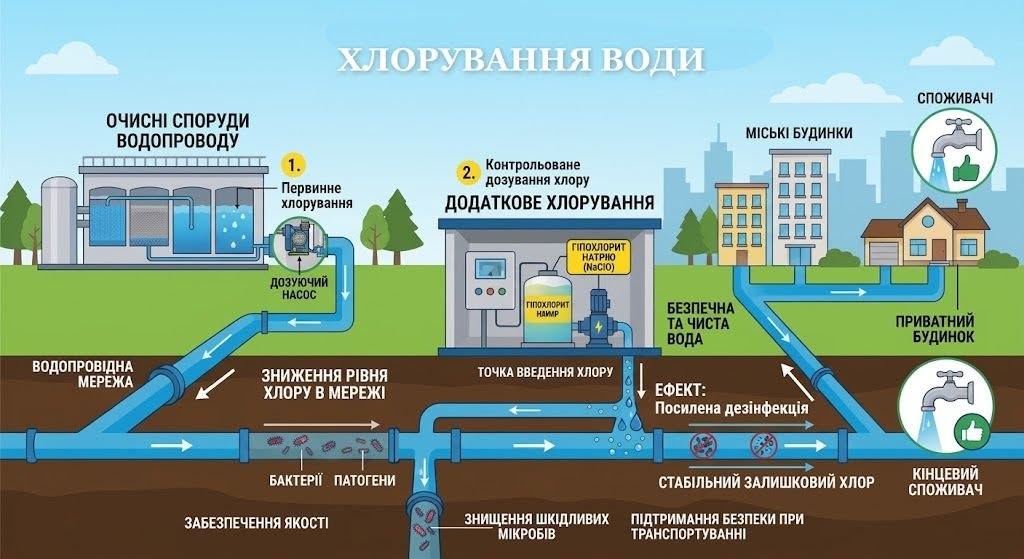 The water chlorination process in an infographic from Mykolaivvodokanal
The amount of chlorine in the water has not yet been disclosed
No statement — neither from the water utility, nor the Regional Military Administration, nor the Regional Centre for Disease Control and Prevention — mentions the concentration of free chlorine in tap water.
Everything else depends on this figure. Sanitary Rules 2.2.4-171-10 permit no more than 0.5 mg/dm³ of free chlorine in tap water. It is precisely this limit that Tymofii Prokopenko refers to. But if the chlorine level in the tap is within the permitted range, it is unclear why people are being told not to drink the water for up to three months. Furthermore, the water utility warns that the water will «smell strongly of chlorine».
If the chlorine level exceeds 0.5 mg/dm³, the water falls outside the sanitary standard. Higher levels, ranging from 5 to 20 mg/dm³, are permitted by health regulations only at the treatment plant and provided that the excess chlorine is removed before the water is fed into the mains (clause 3.14 of the State Sanitary and Epidemiological Rules).
A new Article 27-1 of the Law «On Drinking Water and Drinking Water Supply» has been in force since 4 October. Temporary deviations from drinking water quality standards may only be authorised by the Ministry of Health, and only where a health risk assessment and an action plan are in place, and provided that the deviation does not pose a potential danger. The public must be informed of such authorisation without delay. It is not known whether the authorities in Mykolaiv have approached the Ministry of Health. NikVesti asked the Ministry about this.
The term «hyperchlorination» does not appear in the sanitary standards. In Mykolaiv, it was already used in 2017, during a cholera outbreak. At that time, according to the minutes of the city’s Commission on Technological and Environmental Safety and Emergency Situations, this was the term used to describe a regime in which residual chlorine levels of 0.3–0.5 mg/l were maintained at the network’s end points, whilst the water remained safe to drink.
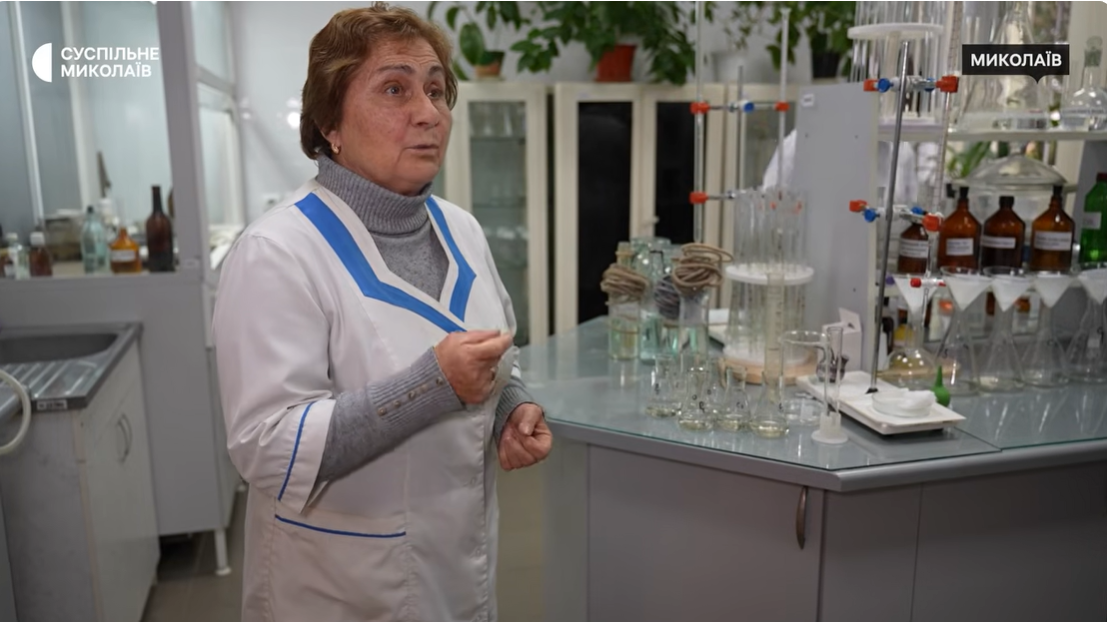 Valentina Andreeva, head of the Mykolaivvodokanal laboratory. Screenshot from a Suspilne video. Mykolaiv
How officials’ explanations differ from the advice given to residents
Terminology. The Regional Military Administration and the City Council refer to «hyperchlorination», whilst the water utility speaks of «preventative disinfection» and a «slightly elevated dose».
Duration. The Regional Military Administration mentions three months, whilst the water utility refers to «two weeks, perhaps a month».
Chlorine stocks. On 5 October, Hennadii Iziumov said that almost 28 tonnes of chlorine, costing 1.6 million hryvnias, were still needed for flushing; consumption would increase almost threefold, and existing stocks might only last until November, so the company would launch a tender. On 29 October, Vitalii Tkachenko said that there were currently sufficient stocks of the company’s own reagents.
Settling. The water utility advises letting the water stand for 3–4 hours «to allow the chlorine to evaporate completely». The Regional Centre for Disease Control and Prevention advises 3–4 hours, or preferably a full day, and warns that this is not sufficient to make the water safe to drink.
«Settling does not guarantee the removal of all possible contaminants and does not automatically make the water safe to drink,» the centre’s recommendations state.
What chemicals does the water utility purchase, and what is the significance of 28 tonnes of chlorine?
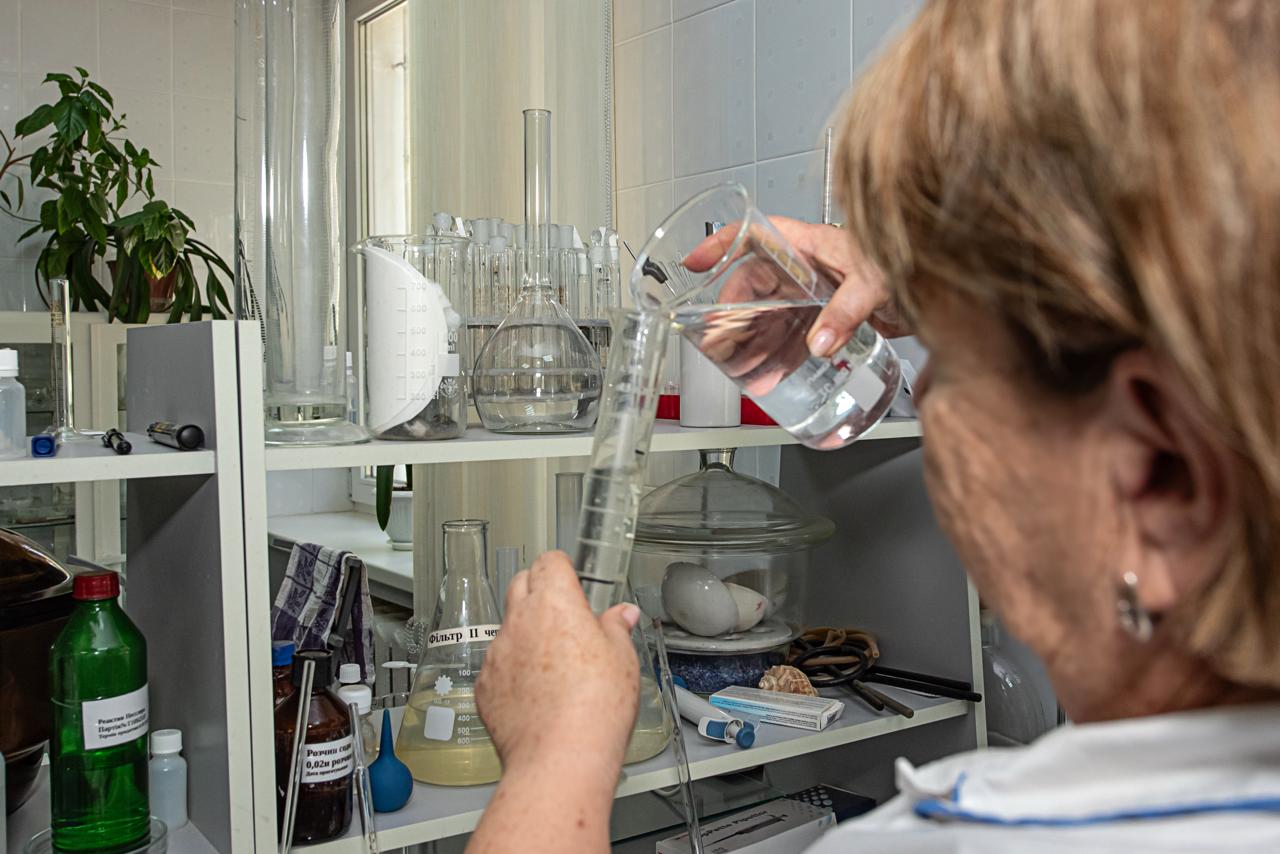 The water utility says that 28 tonnes of chlorine are needed for flushing; photo: Mykolaivvodokanal
According to Prozorro, in 2026 the water utility is purchasing both chemicals:
Liquid chlorine: 186.9 tonnes for 11.1 million hryvnias, to be delivered by 30 June, and 155 tonnes for 8.76 million hryvnias, to be delivered by the end of the year.
Grade A sodium hypochlorite: 430 tonnes for 10.3 million hryvnias and 50 tonnes for 1.34 million hryvnias.
A tonne of liquid chlorine under the August contract costs around 56,500 hryvnias, so 28 tonnes would have cost approximately 1.58 million hryvnias. This matches the figure quoted by the director. A tonne of hypochlorite costs 24,000–27,000 hryvnias, and 28 tonnes would cost 0.7–0.75 million hryvnias. As of 30 October, there is no separate procurement for these 28 tonnes listed on Prozorro. The chlorine may be sourced under the existing contract.
From one day to several months: how water is chlorinated in other cities
Chlorination of the water networks using higher doses is carried out regularly in Ukraine, but only for short periods. In Kropyvnytskyi, it is carried out every year before summer: the water supply network is filled with chlorine at a concentration of 80–120 mg/l for approximately 90 hours; during this time, the water is suitable only for domestic use. In Smila this year, chlorination took place over three days; in Zhytomyr in 2023, it lasted about a day.
Building regulations describe pipeline disinfection as work carried out on a specific section: 75–100 mg/dm³ of active chlorine for 5–6 hours or 40–50 mg/dm³ per day, after which the section is flushed down to 0.3–0.5 mg/dm³.
There are also longer-term regimes. In the US, networks are switched to elevated levels of free chlorine for weeks or months, usually several milligrams per litre. For example, in Lake Jackson, Texas, a level of at least 1 mg/l was maintained at all points in the network for 60 days. The water remains safe to drink during this period.
The Mykolaiv plan combines a duration typical of long-term regimes with a ban on drinking the water, which is usually imposed for a few days of shock chlorination.
What is known about the risks of chlorination and what is lacking in their assessment
 It is recommended to use bottled water for cooking; illustrative photo from the NikVesti archive
This depends on the concentration, which no one has yet specified. The guidelines are as follows. The World Health Organisation considers a free chlorine content of up to 5 mg/l to be safe for drinking throughout one’s lifetime, and at this level most people can already taste the chlorine. Swimming pools are usually maintained at 1–3 mg/l.
At concentrations of a few milligrams per litre, the main issues for most people are the smell and taste. Sensitive individuals, particularly those with asthma or atopic dermatitis, may experience irritation, especially in a hot, unventilated shower, as warned by the Regional Centre for Disease Control and Prevention. Haemodialysis patients constitute a separate risk group: chlorine in dialysis water is dangerous, so departments must be informed in advance about chlorination and step up monitoring of filters.
Claims are circulating on social media that vapours from buckets of standing water in an enclosed room can be fatal. Toxicological data do not support this: in tap water, chlorine is predominantly present in the form of hypochlorous acid, which evaporates only slightly. The real domestic risk of chlorine poisoning lies elsewhere: mixing bleach with acidic or ammonia-based cleaning products.
There is also a question that the water utility needs to address. The water’s oxidisability is higher than normal, meaning it contains more organic matter, and chlorination of such water results in the formation of more chloroform. Health standards limit chloroform to 60 µg/dm³ and require it to be measured after each chlorination in the network. The editorial team asked whether such measurements would be carried out and whether the results would be made public.
How to use water during chlorination
Use bottled water for drinking and cooking. Boiling removes free chlorine.
For domestic use, leave water to stand in a wide, open container; the regional centre for disease control and prevention recommends leaving it for 24 hours. Do not drink water that has been left to stand.
When taking a hot shower or bath, ventilate the room and do not stay in there for too long; use a moisturising cream after bathing. Bathe children briefly and ensure they do not swallow any water.
It is best to remove carbon filters whilst chlorination is taking place, and to replace the cartridge once it is complete.
A dechlorinator is required for aquariums.
Rusty water may occur whilst the mains are being flushed: let it run until it runs clear and do not wash white items in it.
If you or your loved ones are on haemodialysis, check with your clinic to see if they are aware of the chlorination.
What was explained to Mykolaiv residents before the start of chlorination
On the eve of the start, we see a statement from the water utility dated 27 October and a video from «Suspilne», which the water utility shared on 30 October. There is no separate announcement regarding chlorination in the news section of the city council’s website for 29–30 October. These announcements do not provide answers to key questions, such as what the chlorine concentration is, how to bathe children, and where to obtain drinking water for the next three months.
What answers is NikVesti seeking from six organisations?
The editorial team sent information requests to six organisations and asked for a response within 48 hours, as required by law for information concerning public safety:
«Mykolaivvodokanal»: what is the target chlorine concentration; which reagent is being used and what is the purpose of the 28 tonnes; on which analyses is the figure of 46 per cent based; will chloroform be measured; how will the networks be flushed; and according to what criteria will the chlorination be concluded.
Mykolaiv City Council: the minutes of the executive meeting, the plan for informing residents, arrangements for supplying drinking water during the chlorination period, and notifications to hospitals.
Mykolaiv Regional Military Administration: minutes of the Commission on Technological and Environmental Safety and Emergency Situations, results of laboratory tests in Odesa and Chornomorsk, approval from the Ministry of Health.
Regional Centre for Disease Control and Prevention: risk assessment discussed by the operations centre, laboratory monitoring programme, test results.
Main Directorate of the State Service for Food Safety and Consumer Protection: whether it approved the chlorination and what water quality checks it carried out.
Ministry of Health: whether any requests were received regarding a temporary deviation from drinking water quality standards.
NikVesti will publish the responses.
Why is drinking the water still not recommended following the launch of the new treatment works?
The new water treatment facilities for Mykolaiv were built using public funds saved from the construction of the water pipeline. At the end of May, the water utility reported that, following their commissioning, the water failed to meet one parameter: oxidisability.
In June, the mayor, Oleksandr Sienkevych, stated that despite the improvement in quality, it is not yet advisable to drink tap water because the city’s water networks are worn out. According to him, 70 km of water mains were flushed in May, whilst the owners of the properties are responsible for the pipes inside their homes.
The water utility has replaced around 20 per cent of the pipes damaged by salt water and is upgrading around 2 km of the network every month. NikVesti examined how the condition of the Southern Bug River affects the water supplied to the city in a separate article.
How Mykolaiv switched from salt water to a new water supply
In the spring of 2022, Russian troops damaged the Dnipro — Mykolaiv water pipeline, leaving the city of nearly half a million people without a centralised supply of clean water. For over three years, the people of Mykolaiv received water from a backup source, and the salt water damaged 1,200 km of the city’s water supply network. The water utility acknowledged that it was impossible to replace the entire network.
It was decided to lay a new water pipeline from Nova Odesa using state budget funds. The client was the Infrastructure Restoration and Development Service in the Dnipropetrovsk region, and the contractor was the «Avtostrada» group of companies. The water main was connected to the water utility’s network on 7 October 2025.
 NikVesti
· post about this story
«A slightly excessive dose» without specific figures: what is known and what has not been explained regarding the chlorination of the water supply in Mykolaiv.
From 2 November, «Mykolaivvodokanal» will begin additional chlorination of…

You read this text for free. To keep it that way, the newsroom's work is supported by members of the NikVesti Club.
Cancel any time

This material was made possible with the support of the “Voices of Ukraine” / SAFE programme, coordinated by the European Centre for Press and Media Freedom in partnership with the Public Interest Journalism Lab. “Voices of Ukraine” / SAFE is implemented within the framework of the Hannah Arendt Initiative with the support of the German Federal Foreign Office. The programme does not influence editorial policy, and this material contains solely the views and information obtained by the editorial team.