
A 5-kilometre barrier-free route has been developed for Mykolaiv — implementation will cost over ₴300 million
-

- Julia LukyanenkoReporter

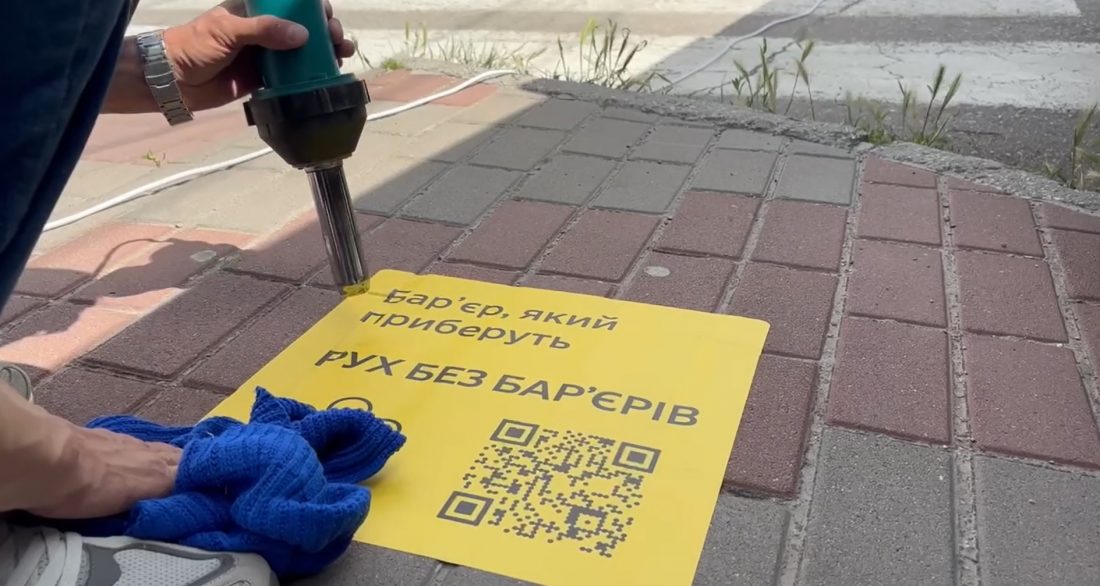 A concept for an accessible route was presented in Mykolaiv. Photo: Kirovohrad Regional Military Administration
The concept for an accessible route was presented in Mykolaiv. The route covers a 5-kilometre stretch from the Administrative Services Centre in the Zavodskyi district to the Namyv neighbourhood. Implementation will cost over 300 million hryvnias. However, the developers emphasised that they understand the realities of funding and that the proposals are merely recommendations.
This was discussed during the presentation of the barrier-free route on 7 October, according to NikVesti.
The concept for the route was developed by the public association «Centre for Economic Recovery» in collaboration with Big City Lab. The project is being implemented with the support of the «Partnership for a Resilient Ukraine» (PFRU) Programme, which is funded by the governments of the United Kingdom, Estonia, Canada, Norway, Finland, Switzerland and Sweden. This is a donor programme under which international partners provide grants. In particular, a concept for barrier-free routes has been developed for Mykolaiv and Kryvyi Rih.
At the start of the presentation, Yevhen Poliakov, Director of the Department of Architecture and Urban Planning at Mykolaiv City Council and Chief Architect, noted that the issue of accessibility is a complex one: it involves not only equipping buildings with lifts and ramps, but also the reconstruction of streets and the accessibility of transport. The main problem is a lack of funding.
«We know how to do this. We understand what needs to be done. There is no funding for this. Why? Reconstructing a street from one building to the next involves replacing Inzhenerne networks, the road surface and building new pavements. This requires a huge budget,» said Yevhen Poliakov.
One option is to co-fund part of the route, within the framework of the developed concept, from regional and national budgets or through partnerships. Overall, Yevhen Poliakov noted that such a route is important for all residents.
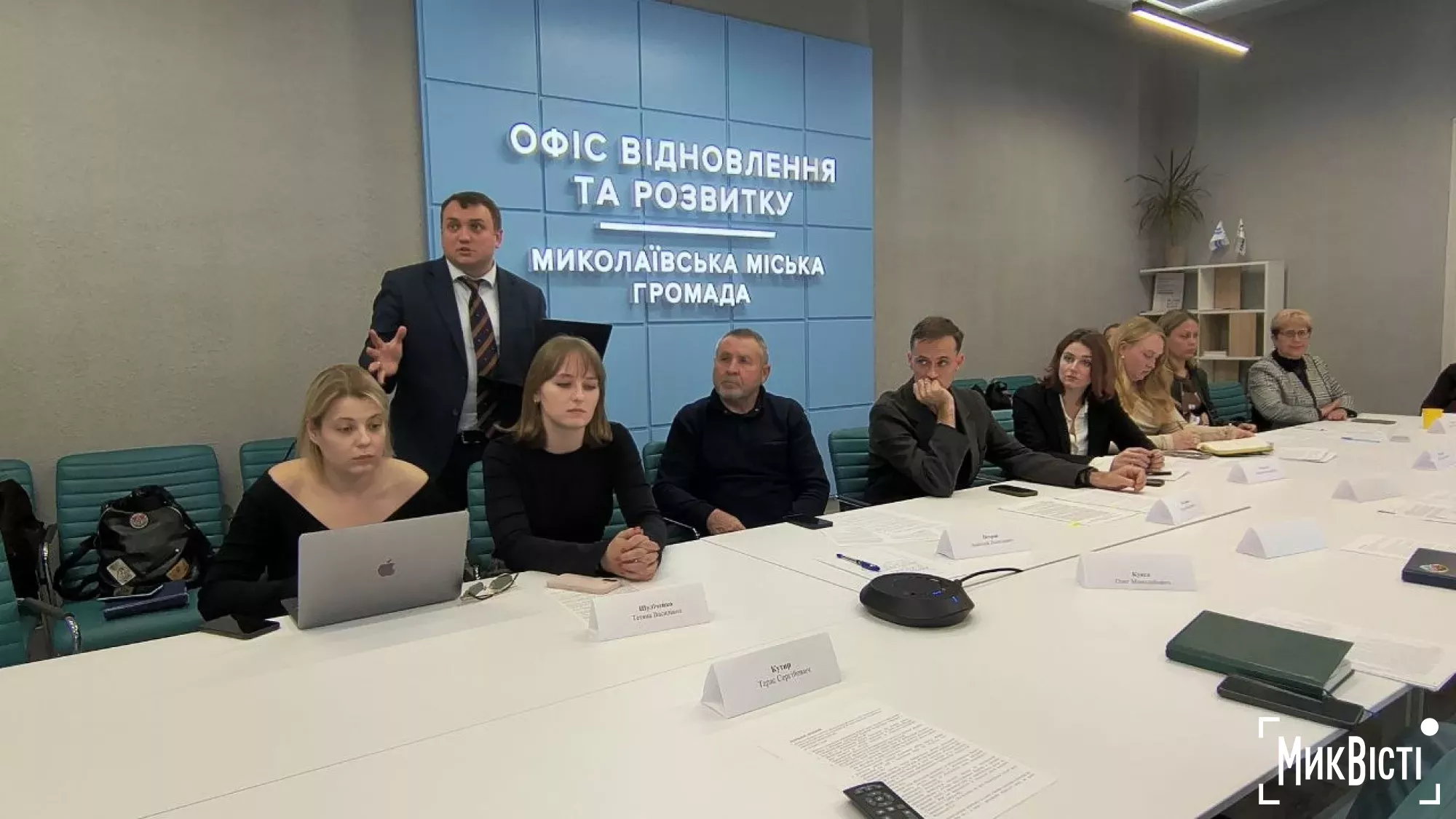 A concept for an accessible route was presented in Mykolaiv. Photo: NikVesti
In April, representatives of the organisation assessed the city’s needs: they held a public consultation, surveyed the route and took the necessary measurements. Ivan Khomenko, project manager at the Centre for Economic Recovery (CER), explained that when developing the concept, they tried to focus as much as possible on the needs of Mykolaiv’s residents, in order to make not only social services but also everyday amenities more accessible.
«This route is quite long — 5 kilometres. It covers key points of everyday life: a large cluster of medical facilities (hospitals in the Namyv neighbourhood, — note), the Centre for Administrative Services, and a number of establishments between these two points. This will ensure maximum access for people to most of the services, products and goods they need throughout their lives,» said Ivan Khomenko.
According to him, Mykolaiv ranks in the middle of the accessibility index. Nevertheless, solutions are needed for the comprehensive development of pedestrian infrastructure, from pavements to bus stops and building entrances.
«A needs analysis has revealed a significant proportion of the population with an immediate need for improved mobility solutions. We are talking about more than 20,000 people in the city, a significant proportion of whom have disabilities as a result of the war. We are talking about more than 100 residents aged over 60. Despite Mykolaiv’s fairly good result in the community accessibility index — 14th place out of 24 — there is a great need to improve pedestrian infrastructure,» noted Ivan Khomenko.
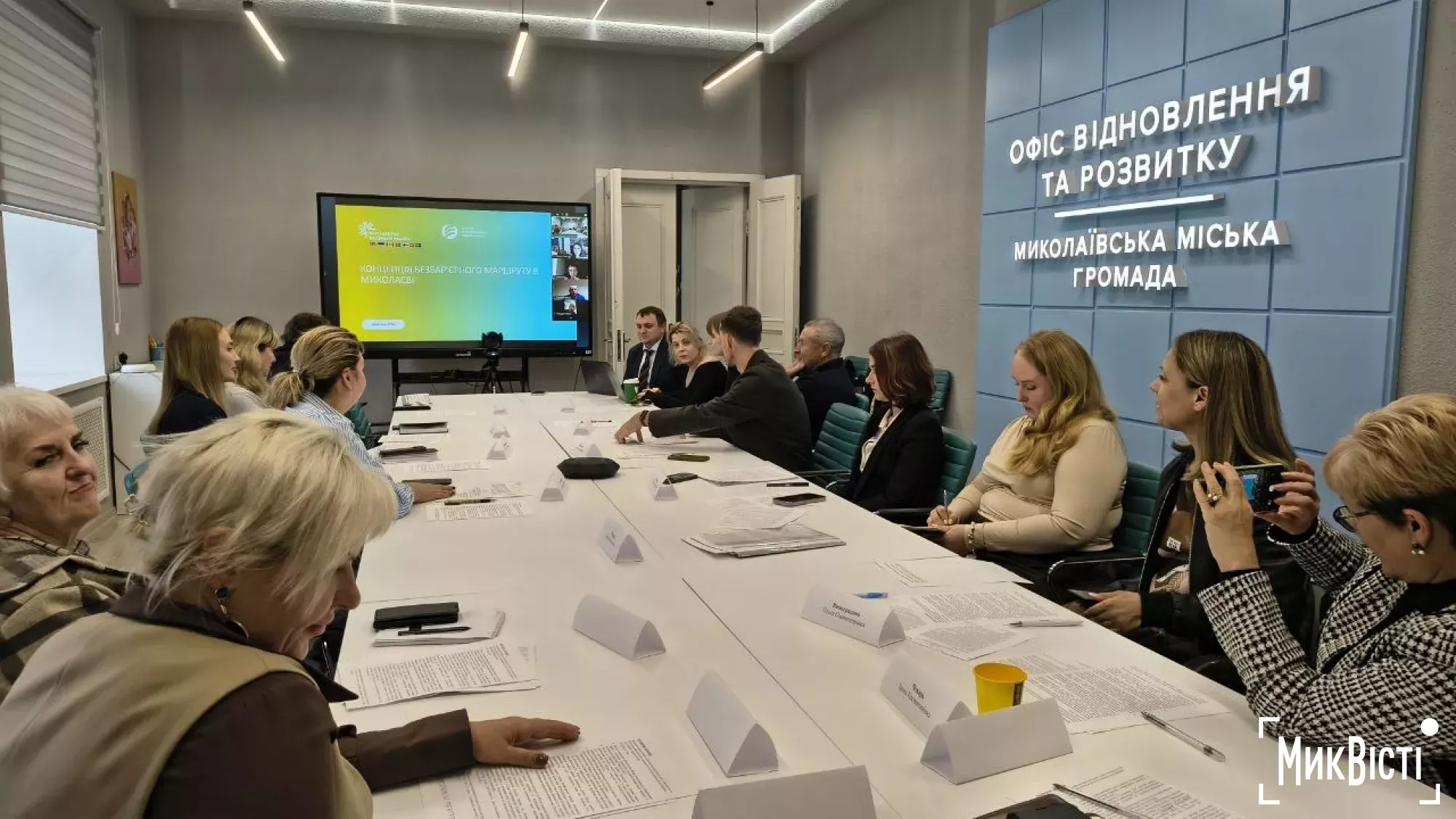 A concept for an accessible route was presented in Mykolaiv. Photo: NikVesti
 A concept for an accessible route was presented in Mykolaiv. Photo: NikVesti
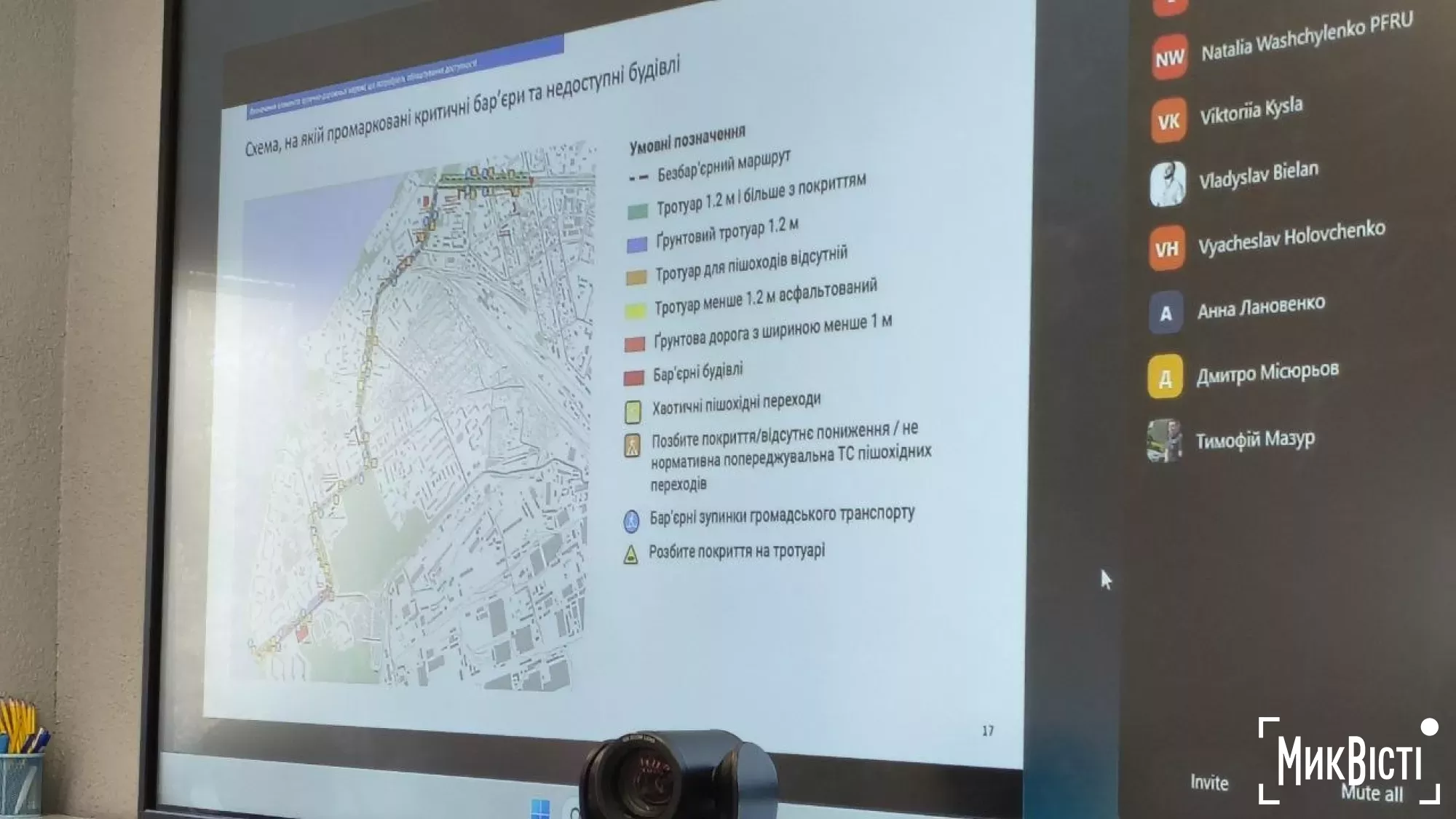
The route runs along Tsentralnyi Avenue, starting from the Administrative Services Centre in the Zavodskyi district, then continuing alongside the «Nadiia» sports complex, along General Oleksa Almazov (Karpenko) Street, past the hospitals on Namyv (including the War Veterans’ Hospital and the Regional Clinical Hospital, — note), through «Lisky» Park, and ends by the river on Lazurna Street.
«Initially, the route was in a completely different district, but following discussions with city authorities, we realised that this route would serve a larger number of people, whilst also logically connecting communities in need of medical services. It would also make sense for them to be able to move without barriers to places that provide social and administrative services. In other words, there is no single «correct» or «ideal» route. In an ideal world, the whole city should be barrier-free,» said Ivan Khomenko.
Amina Kravets, an architect and accessibility expert at Big City Lab, explained that one of the reasons for choosing this particular route is that the gradient is less than 5 per cent. This was deemed the most suitable for an accessible route.
The route takes into account residential buildings, public facilities and park areas. As Amina Kravets pointed out, there is a lack of shade along the route. Therefore, one of the recommendations is to plant trees with wide canopies, install awnings, pergolas and benches in the shade, and use light-coloured paving so that it heats up less. Priority is being given to the busiest sections of the route.
 A concept for an accessible route was presented in Mykolaiv. Photo: NikVesti
 A concept for an accessible route was presented in Mykolaiv. Photo: NikVesti
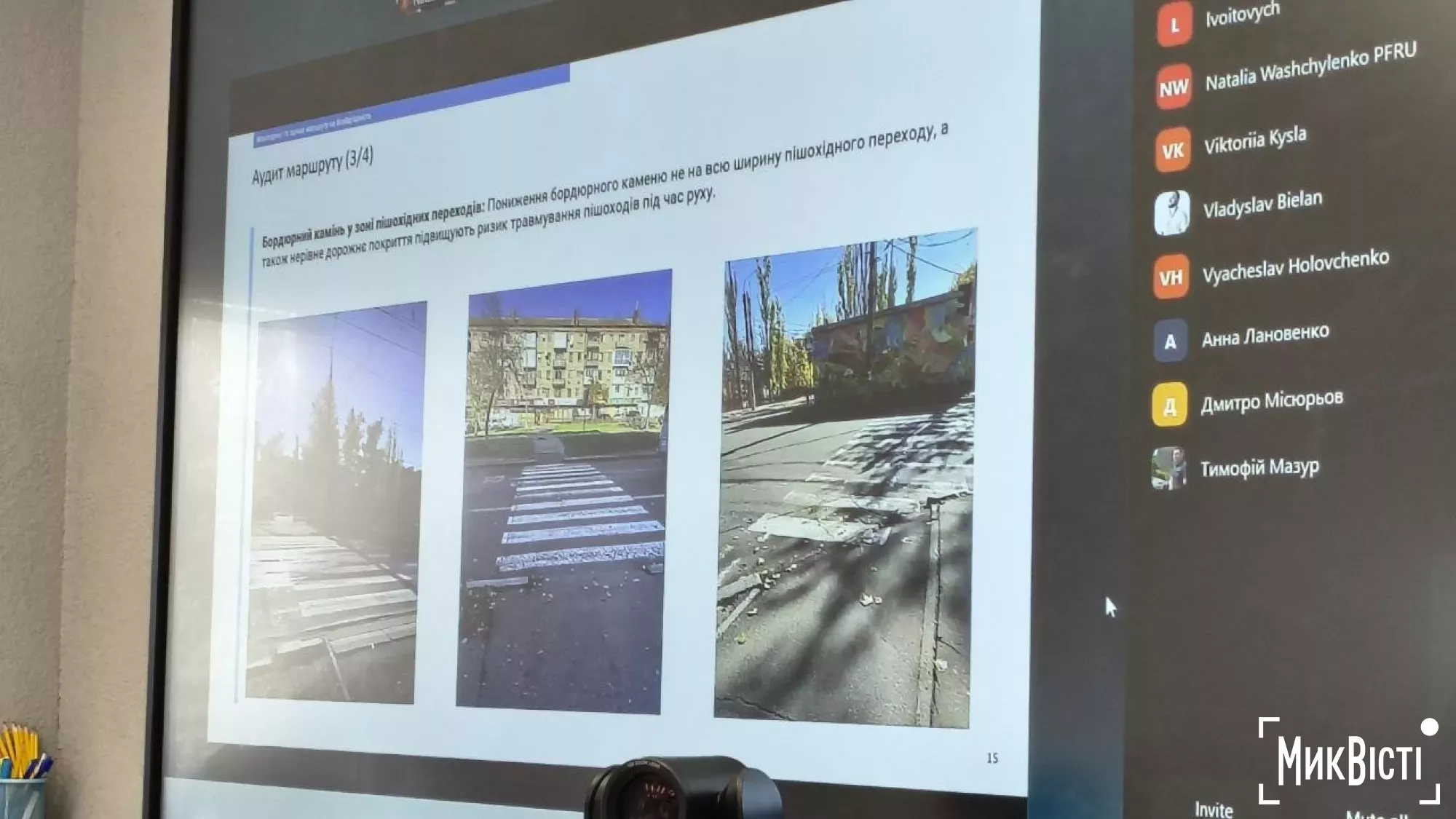
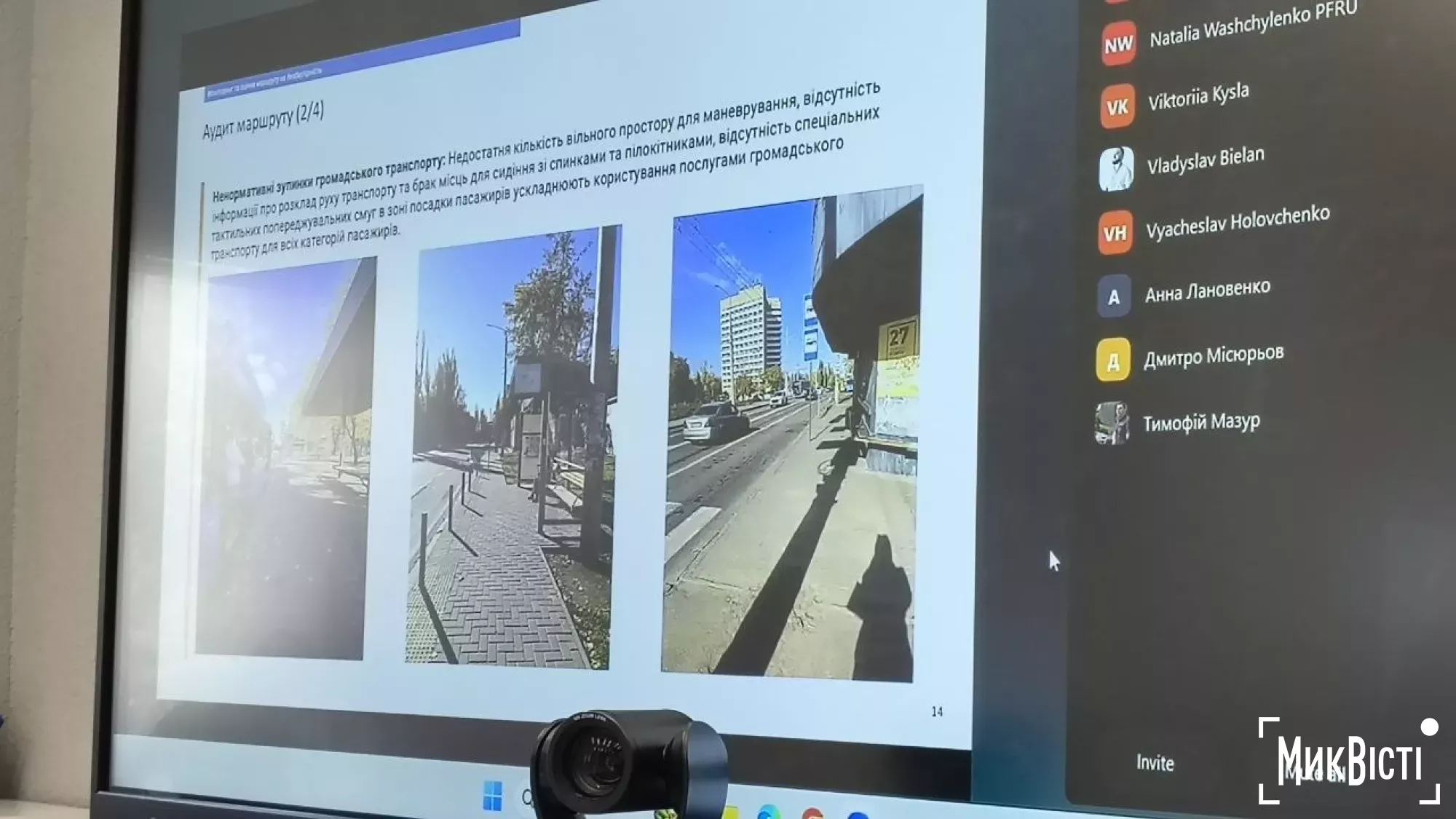
There are many stops along the route. However, the problem lies in sections with unregulated pedestrian crossings that are not accessible. The developers also highlighted non-compliant changes in level and damaged pavement on the pavements, uneven kerbs, haphazardly placed tactile strips, and buildings that act as barriers.
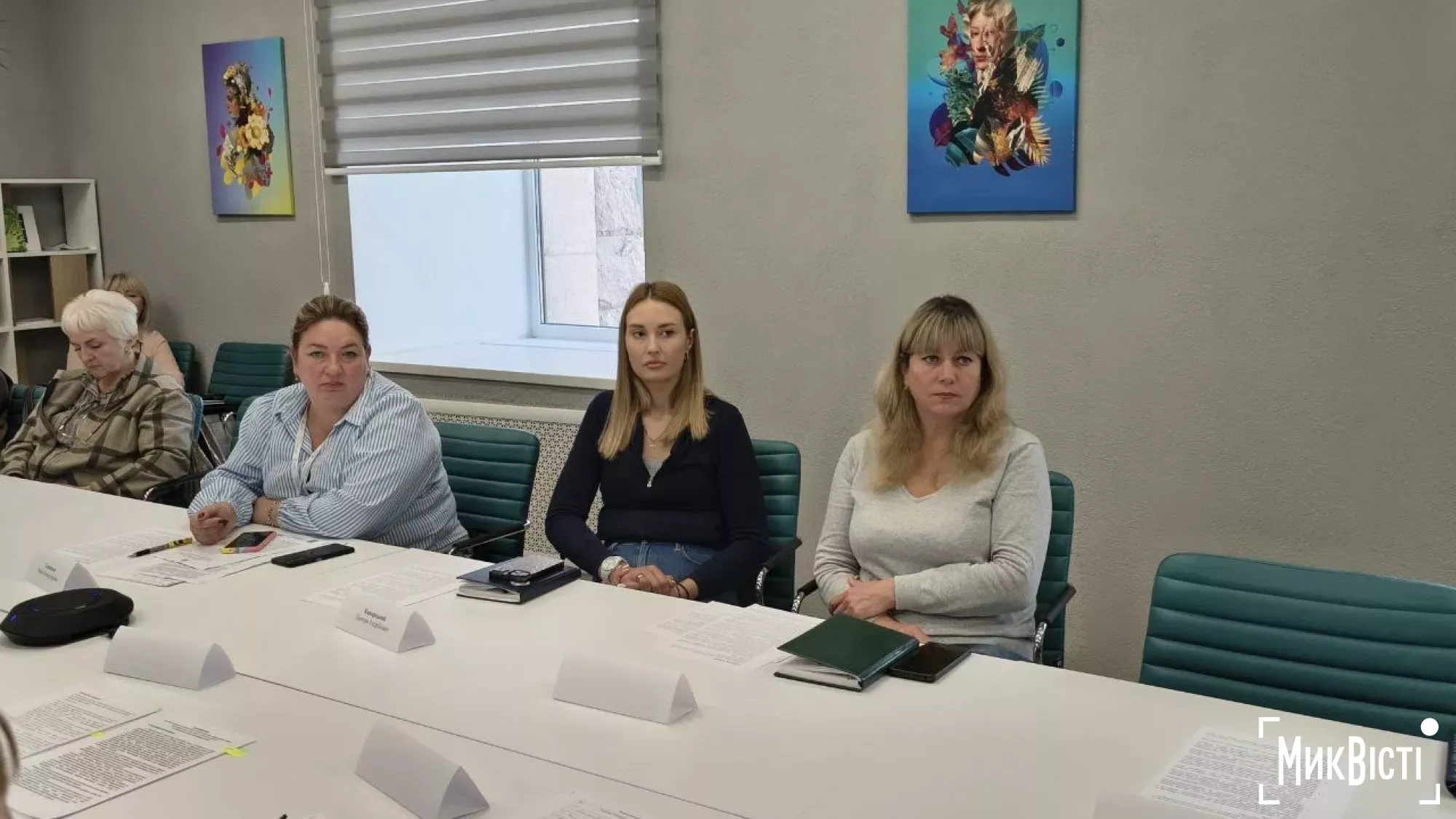
The developers have divided the route’s implementation into phases and specified what is included in each one. For example, although it is possible to access the Administrative Services Centre in the Zavodskyi district, the handrails do not have the required rounded edges, and the steps vary in size and shape. In other words, there is room for improvement.
Other barriers identified include the ATB and Trash supermarkets, where there are issues with ramps, handrails, steps and their markings.
Overall, the route planners proposed installing standardised pedestrian crossings, visually separate pedestrian and vehicle routes—either through visual cues or landscaping—green the route and provide shade, and ensure barrier-free access to building entrances and crossings.
 A concept for an accessible route was presented in Mykolaiv. Photo: NikVesti
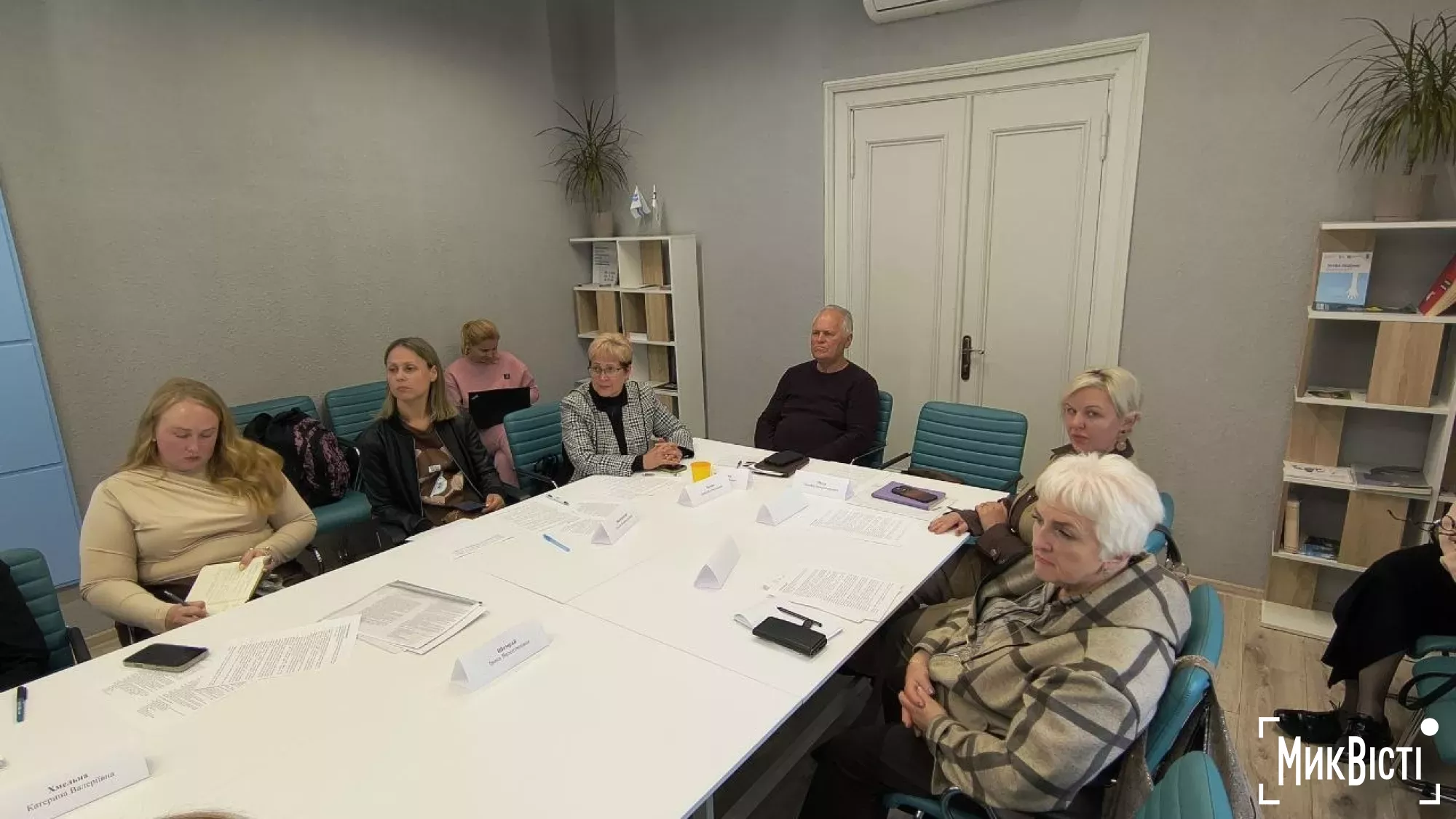 A concept for an accessible route was presented in Mykolaiv. Photo: NikVesti
The main issue is funding. Dariia Nesteruk, an accessibility expert at Big City Lab, noted that the figures are indicative. Specifically, the figure is 339.5 million hryvnias.
±These are very tentative figures. We drew on the experience of colleagues from other local authorities over the past year. We calculated the costs for all municipal and state-owned properties, and also divided the work along the route into capital and routine maintenance. We must also bear in mind that all projects involving major repairs require design and cost estimates, as well as architectural plans. Minor repairs can be carried out without producing architectural drawings. And the figures are quite approximate. We know what is happening at the moment, and costs are rising,» noted Dariia Nesteruk.
As she explained, last year the Ministry of Regional Development provided co-funding.
«This year, too, several local authorities were included in this programme without any barriers and also received co-funding. I don’t know how relevant this is in the current situation, but the estimated cost of implementation is approximate,» said Dariia Nesteruk.
Ivan Khomenko added that when they began developing the route concept for Mykolaiv, there had not yet been a freeze on all capital and critical expenditure from the state and local budgets.
«Therefore, the situation looked somewhat different in terms of potential support within the framework of the ministry’s state programmes, specifically for the coming year. At present, of course, the situation is very fluid, and the trend is not yet moving in the best direction. But in any case, the realisation that such a concept exists and that the route can be secured within its framework is what will, at the very least, allow you to use this vision in negotiations with future donors or with the state,» emphasised the project manager of the «Centre for Economic Recovery».
Viktor Moiseiev, head of the Mykolaiv City Centre for Veteran Support, pointed out that such a route is sensible and could serve as a basis for seeking funding. According to Yevhen Poliakov, chief architect of Mykolaiv, the route needs to prioritise the first phase for implementation and specify the co-financing percentages to ensure the plan appears realistic.
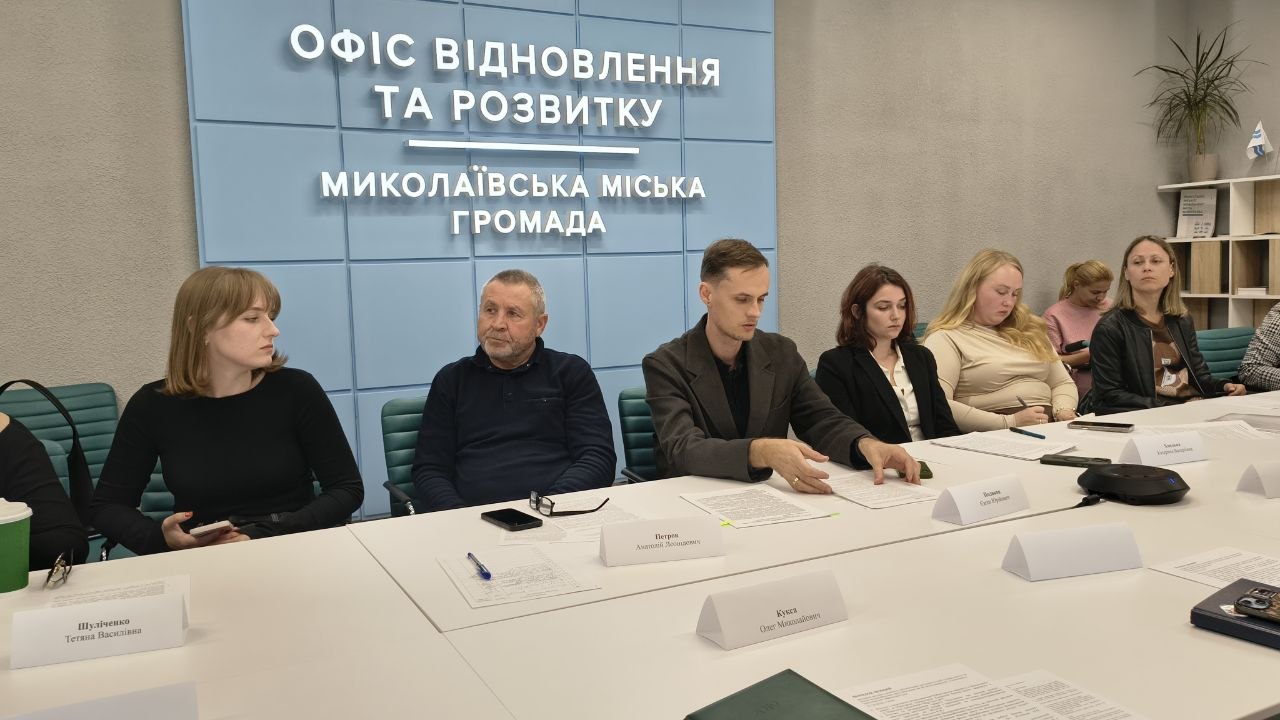
Olha Vynohradova, an expert on accessibility and a freelance adviser to the mayor on matters relating to people with disabilities, emphasised that there were concerns as to whether parking facilities near the hospital and the regional hospital had been taken into account. This was a point raised by military personnel who visit the hospital and are unable to park. The planners clarified that this aspect had not been included in the diagram but would be added. Other comments will also be taken on board to refine the route.
Yevhen Poliakov summarised that the City Accessibility Committee cannot approve a concept costing 300 million hryvnias, as implementation cannot be planned 20 years in advance. However, they can approve the route in phases. The developers were therefore advised to set priorities so that the project’s implementation could be considered and co-funding discussed.
It was previously reported that an accessible route had been established in Voznesensk, which will run from the third microdistrict through the market to the City Council’s Social Protection Department. It is planned to be developed in accordance with accessibility requirements. The route will be approximately 1,080 metres long in one direction.
City Hall noted that during the first meeting, business owners were reluctant to accept the proposals regarding accessibility improvements. Following a second meeting, certain agreements were reached, although the details have not yet been disclosed.


This material was produced within the REACH – Media Partnerships for Accountability and Trust project, implemented by International Media Support (IMS) and supported by the Ministry of Foreign Affairs of Denmark. The content reflects the views of the authors and not necessarily those of the Danish government. Denmark’s support strengthens civil society and independent media in Ukraine, including in Mykolaiv.

