
Water supply during power cuts: what will the new project with Switzerland bring to Mykolaiv?
-

- Yuliia BoichenkoReporter
-
 10000 +
Right on target! Over 10,000 visitors are interested in this content!
10000 +
Right on target! Over 10,000 visitors are interested in this content!
-
 Prefer on Google
-
10K
Right on target! Over 10,000 visitors are interested in this content!
-
Prefer on Google
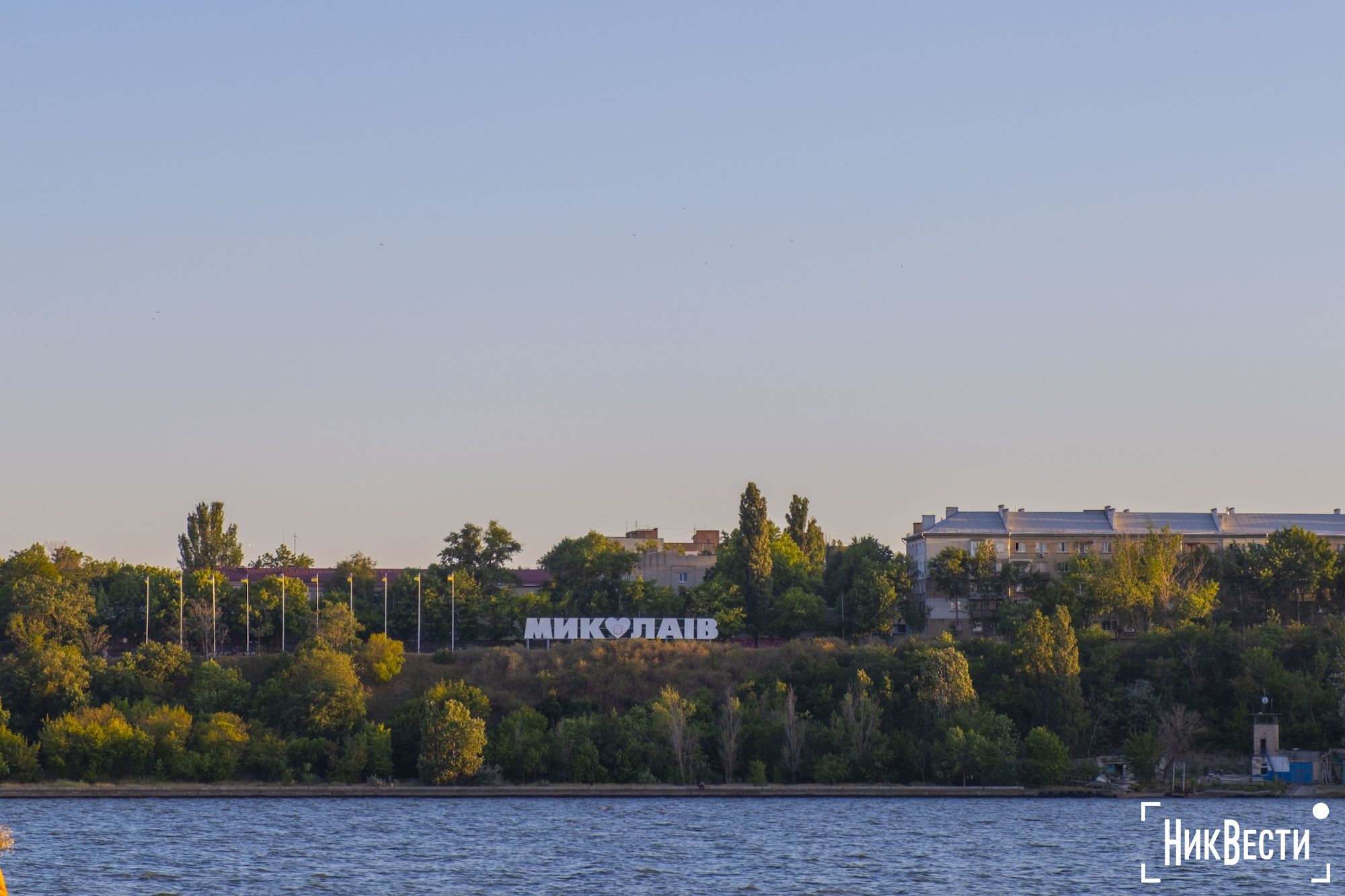 Mykolaiv, archive photo from NikVesti
During power cuts, the water utility in Mykolaiv operates on backup power: it switches on generators and redistributes the load to keep the system running. As a result, residents know that even during a blackout, they will still have water in their homes.
But this means that every power cut places an additional strain on the infrastructure and increases the costs of maintaining it. In such circumstances, the city needs solutions that will make the water supply less dependent on electricity.
One such solution is a project supported by Switzerland: there are plans to install solar panels with batteries at water utility facilities. The authorities speak of «more reliable services», but what exactly will change for residents — and whether this will affect water supply stability and tariffs — was investigated by NikVesti.
How does the water utility currently operate during power cuts?
Even during power cuts, the centralised water supply in Mykolaiv does not stop, according to a comment provided to NikVesti by the municipal utility Mykolaivvodokanal. They explain that during such periods, the main pumping stations switch to backup power, with their operation ensured by generators. This is precisely what allows the water supply to be maintained even without electricity.
The company states that in 2024–2025 there were no instances of a complete cessation of water supply due to blackouts. However, the water utility did not specify exactly how long the system can operate on backup power.
«No instances of a complete cessation of water supply have been recorded, nor could there be,» the water utility noted.
Operating in this mode entails additional costs. In particular, a significant portion of the tariff is accounted for by electricity: according to the water utility, this currently stands at around 21%. However, the company explains that this proportion is lower than that included in the current tariff.
«This is because the tariff was calculated based on water abstraction from the Dnipro River, whereas in 2025, Mykolaivvodokanal actually used purchased water from the Inhulets irrigation system,» said Mykolaivvodokanal.
Currently, residents of Mykolaiv pay around 34 hryvnias per cubic metre for water supply and drainage, the company reported. However, they did not answer the question of what an economically justified tariff should be under current conditions, nor whether a review of the tariff is to be expected. They merely noted that the tariff for the public has not changed since 2021 and «there is currently no talk of a tariff increase».
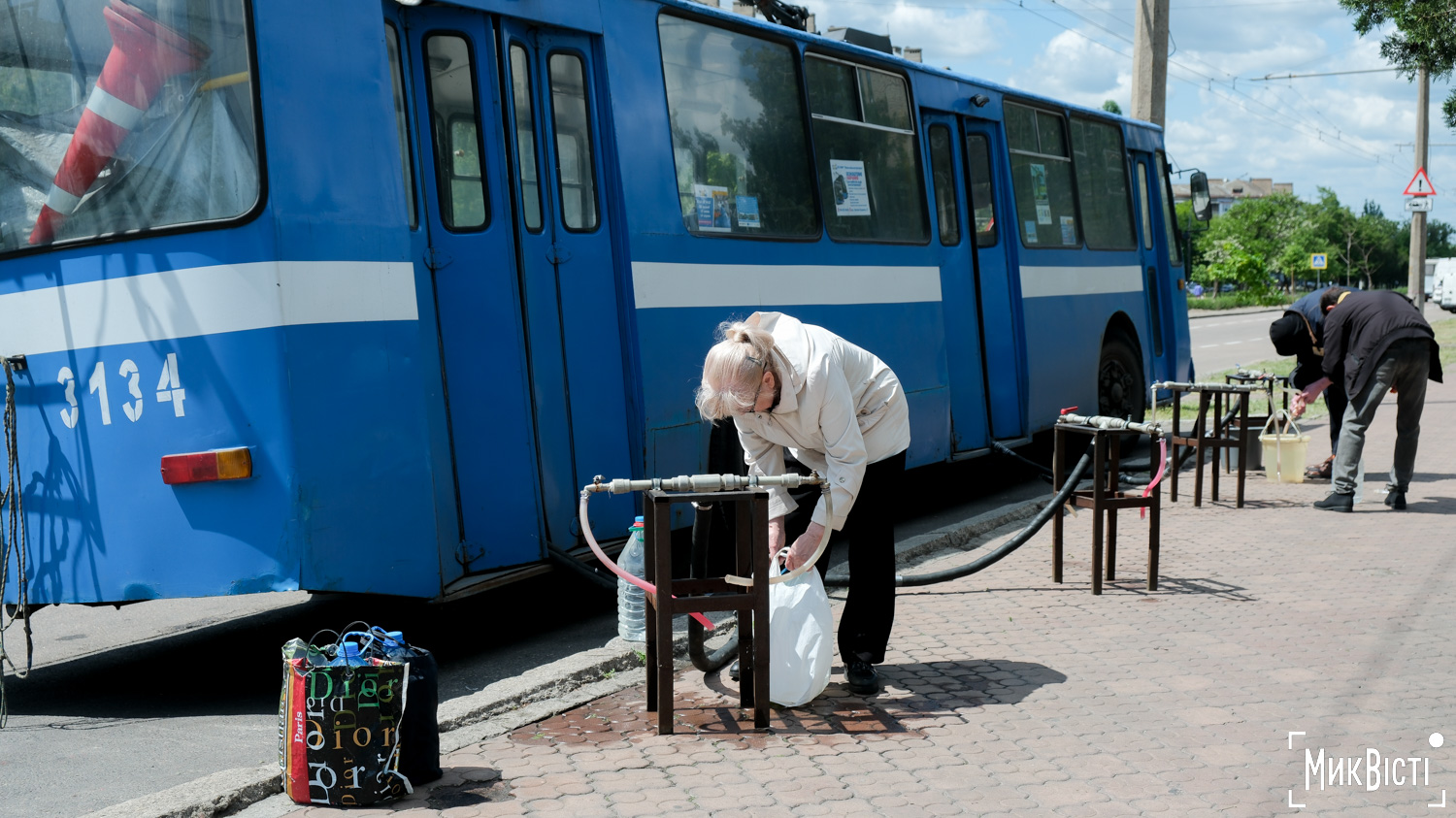 A woman collects water from a trolleybus serving as a water distribution point, May 2025. Photo: NikVesti
However, earlier, the head of the Mykolaiv Regional Military Administration, Vitalii Kim, noted that an economically justified tariff could be significantly higher than the current one — at around 90 hryvnias per cubic metre.
«The NCREPU (National Commission for State Regulation of Energy and Public Utilities, — note) has stated that the justified tariff is 90 hryvnias, but we are still operating at 34 hryvnias. And it will be a bad situation if the price is raised for people,» said Vitalii Kim in early 2026.
The cost of water itself accounts for around 7 hryvnias of the tariff, whilst the rest covers the costs of treatment, transport, network losses and the company’s operations, explained the head of the Regional State Administration.
Power cuts are also leading to an increase in the number of incidents on the water supply network, as Oleksii Ababilov, technical manager of the water supply service at Mykolaivvodokanal, previously explained to NikVesti. When the networks are switched over to generators, varying water pressure builds up in the pipes and can cause bursts in different parts of the city.
«As soon as the hourly power cut schedule was introduced, we immediately felt the effects of water hammer. In other words, the power comes back on instantly, the pumps stop, and there is a huge volume of water. If we take into account that we were forced to bring the network to a terrible state with salt water, then this is what we have now,» said Oleksii Ababilov.
As of March 2026, between 8 and 15 leaks are recorded in the city every day, according to the water utility.
«The number of leaks fluctuates, but overall it is not decreasing yet. Reducing the number of leaks will only be possible after the city’s pipelines have been upgraded. And they stretch for 1,200 kilometres,» they said.
Solar panels as a solution
To make the water supply less dependent on electricity, Mykolaiv plans to install photovoltaic systems with battery storage at the water utility’s facilities. In effect, this involves installing solar panels and batteries at 11 Mykolaivvodokanal facilities, explained Deputy Mayor Serhii Korenev in a comment to NikVesti.
«For the people of Mykolaiv, this means there will be water in the taps even when the power is out. During shelling and power cuts, it is these facilities that suffer the most. Now they will have their own independent power supply from the sun,» he explained.
The way solar panels work is quite simple. During the day, they generate electricity: some of it can be used immediately to power pumps and water supply stations, whilst the rest is stored in batteries. When a power cut occurs, the system should automatically switch to this reserve — and the equipment continues to operate.
This should ensure a more stable water supply for the city. During blackouts, the system does not shut down suddenly, the pressure in the network does not drop, and the risk of interruptions is reduced.
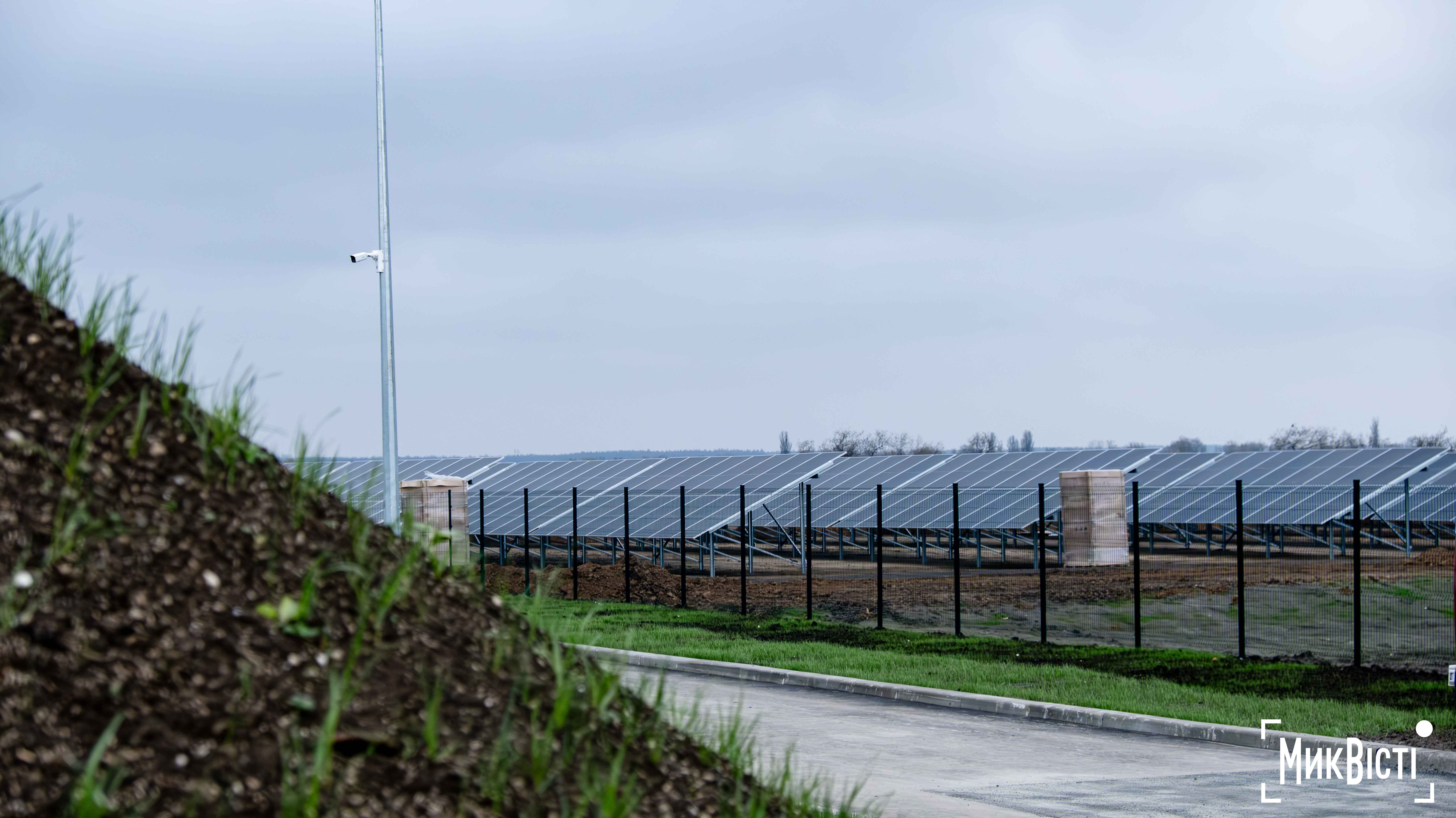 Solar panels, illustrative photo by NikVesti
However, such systems do not make the water utility completely independent of the electricity grid. Solar panels cover only part of the demand, and batteries can only sustain operations for a limited time. In other words, this is not about complete autonomy, but about a backup that helps avoid critical failures and makes the system more reliable for the city.
Such systems are planned to be installed to power 7 sewage pumping stations and 4 water supply stations in the city, Deputy Mayor Serhii Korenev told NikVesti.
NikVesti attempted to obtain a comment from Mykolaivvodokanal and find out exactly how the installation of these solar panels will improve the company’s operations and affect the lives of residents, but received no response.
This is likely to help avoid situations similar to the one that arose in early 2026 in the Matviivka neighbourhood. In February, a sewage leak occurred there. The sewage pumping station did not have a generator and stopped working due to a power cut.
«This concerns a sewage pumping station located in Matviivka amongst the high-rise blocks. The pump stopped on 7 February. The sewage leak was caused by a blockage. On the same day, our staff cleared the blockage and the leak from the sewage manhole stopped. An inspection on 8 February confirmed that there was no leak. And on 9 February at 7 am, there was indeed a power cut in Matviivka, but there is no leak from the manhole,» said Oleksandr Zubov, technical manager of the water utility’s drainage service, to NikVesti.
The company added at the time that they planned to approach international partners for help in purchasing a generator for the pumping station.
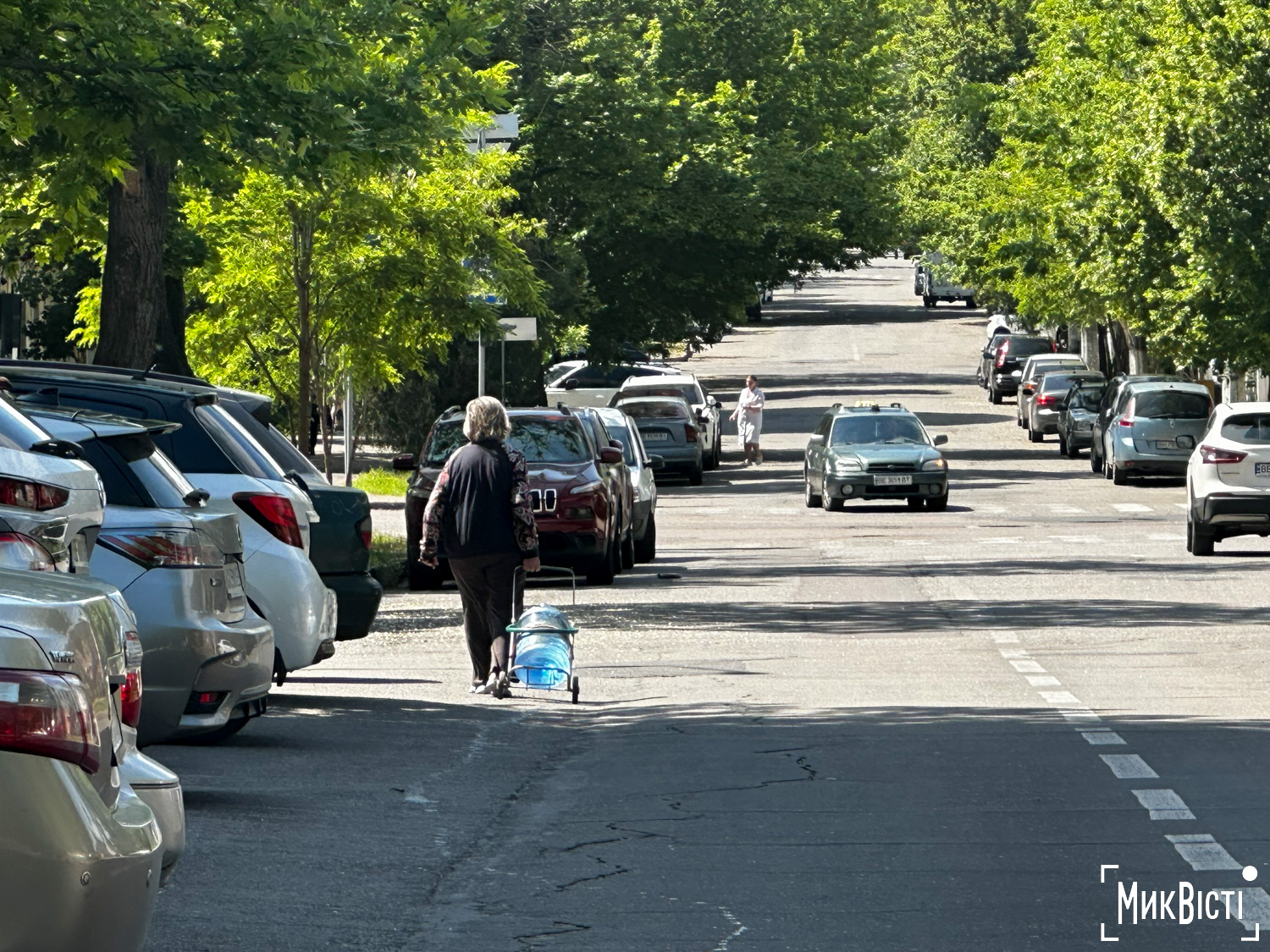 A woman drags an 18-litre water container on a trolley in the centre of Mykolaiv, May 2025. Photo: NikVesti
Solar panels to be purchased with funding from Switzerland and Mykolaiv
Solar panels with batteries for the Mykolaivvodocanal are to be purchased partly with funding from Switzerland, the city council told NikVesti. The Swiss State Secretariat for Economic Affairs will provide 1.7 million Swiss francs, and the Swiss company Elektrobedarf Troller will provide 190,000 Swiss francs. Together, this amounts to approximately 105.8 million hryvnias.
A further 300,000 Swiss francs is to be provided by the municipal enterprise Mykolaivvodokanal. This amounts to approximately 16.8 million hryvnias.
This project for Mykolaiv will be implemented following the results of the «Competition for Projects on the Economic Recovery and Reconstruction of Ukraine in Cooperation with Swiss Companies», which was held by Switzerland in 2025, the city council told NikVesti.
In total, Switzerland has earmarked 1.5 billion Swiss francs for the implementation of projects to rebuild Ukraine over the next three years. Of this amount, 500 million Swiss francs are earmarked for reconstruction projects in partnership with the Swiss private sector.
«Drawing on their experience and specialist knowledge, Swiss companies can make a significant contribution to Ukraine’s recovery and reconstruction process, including through innovative and high-quality products,» said the Swiss State Secretariat for Economic Affairs.
Plans to allocate funds to Mykolaiv for the purchase and supply of solar panels and batteries have now been confirmed in a memorandum signed by the city council, the water utility, the Swiss State Secretariat for Economic Affairs and the Swiss company Elektrobedarf Troller.
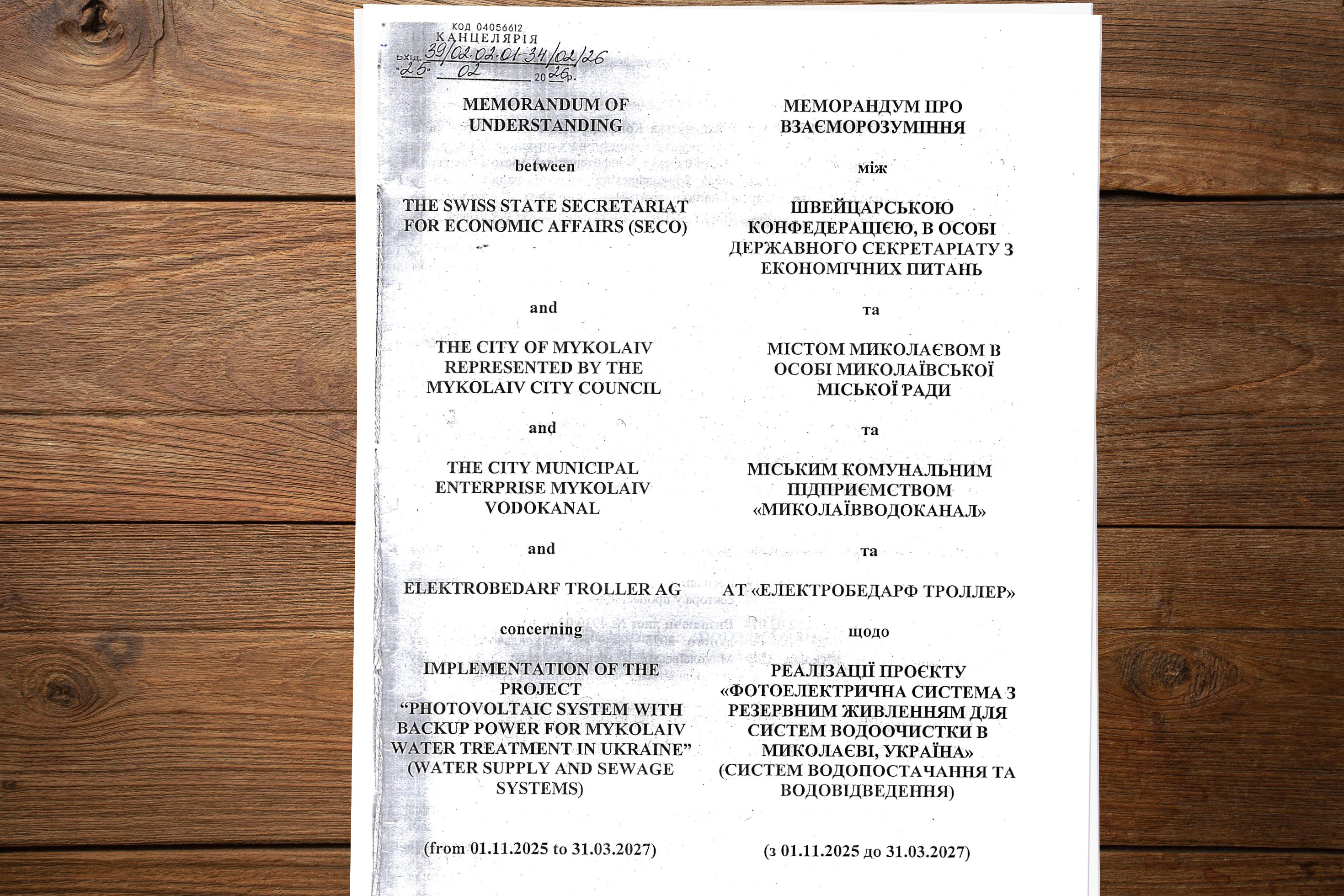 The first page of the Memorandum, which is in the possession of the editorial team at NikVesti
The project for Mykolaiv involves several stages: the design and planning of the installation of solar panels with batteries at 11 water utility sites, their procurement, installation and connection to the electricity grid.
The Mykolaivvodokanal is expected to receive the solar panels and batteries in a year’s time, the city council said.
«The project will run until spring 2027,» they noted.
Is this really effective?
Solar panels with batteries can make the water supply more stable, but they do not completely replace the electricity grid. They store energy and can keep the facility running even during blackouts, explained energy expert and director of Solar Service, Dmytro Kolosovskyi.
How long such a system can keep the facility running depends on the specific facility, he notes.
«It all depends on the capacity of the batteries, the power output, and how much power the water utility’s equipment actually consumes. For example, there might be an old pump, say with a power rating of 50 kW, which consumes 50 kW. Or there might be a new pump with a variable-speed drive, which in principle can do exactly the same job but with a load of 20 kW,» explained the expert.
On average, such systems can provide between one and seven hours of uninterrupted operation for the facility, suggests Dmytro Kolosovskyi.
«The minimum that can be installed is a one-hour supply. If the water utility has more efficient equipment, this could be one, two or three hours, depending on how it is used.
But the batteries can be scaled up. For example, we might have a 50 kW inverter and a 200 kWh battery. In other words, we understand that even at peak load, this would provide four hours of operation. But since peak load is not constant but occurs intermittently, this translates to six or seven hours in practice. And that’s just taking the battery into account,» the expert explained.
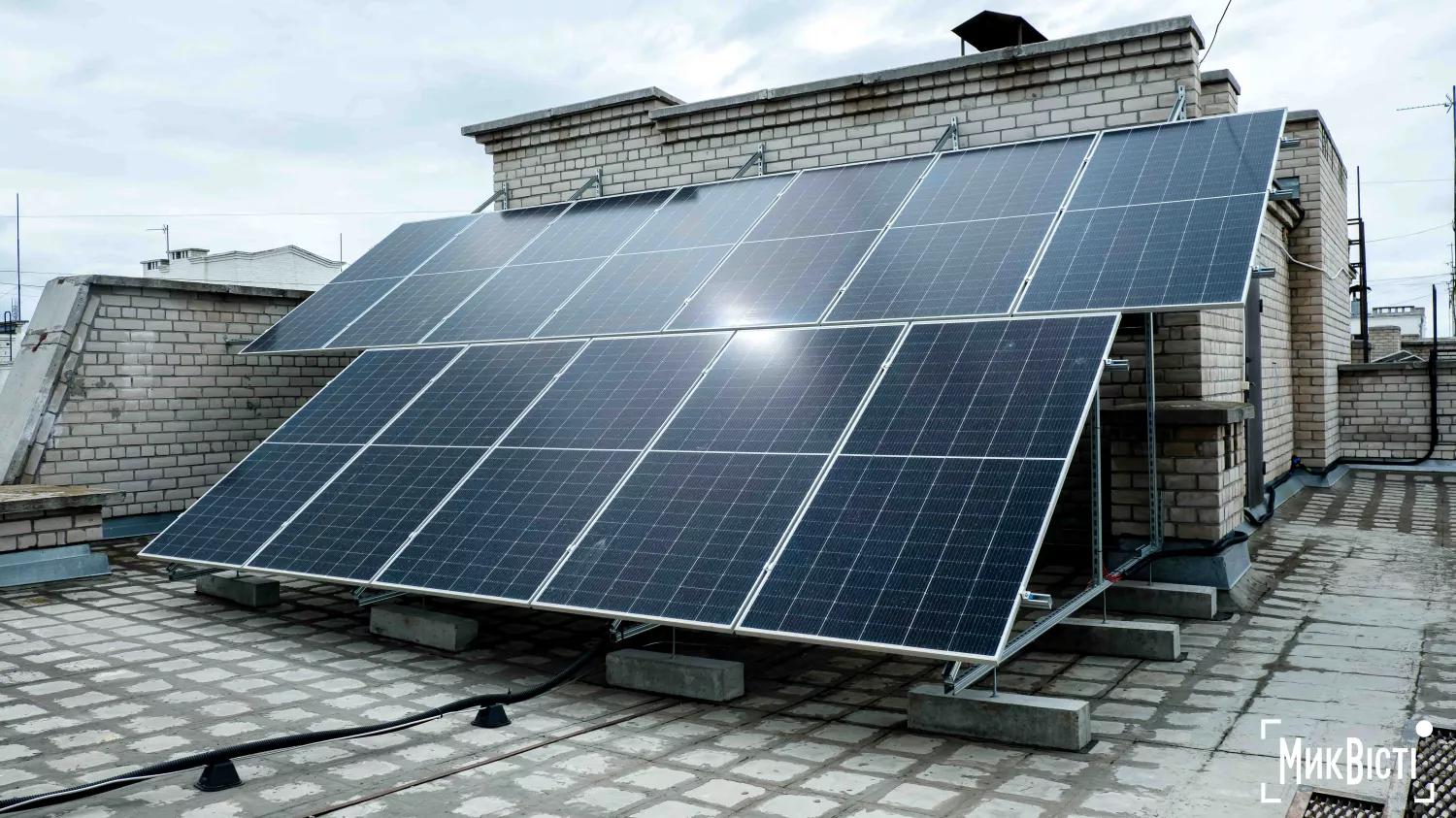 Solar power stations on the roof of a building in Mykolaiv. Illustrative photo by NikVesti
In sunny weather, the system can operate for longer. If the panels generate enough energy, they can simultaneously power the equipment and charge the batteries.
«In other words, they may even manage to charge the system faster than the equipment consumes energy. So, potentially, at some point in the summer, we could reach a situation where, during the day, even if there is no electricity on the grid, the station will fully power the equipment. And the battery will last for another 4–6 hours at night,» said Dmytro Kolosovskyi.
However, this does not mean complete autonomy. In the event of prolonged power cuts or bad weather, the system will still require the connection of generators or a return to the mains supply.
But, says the expert, this can be considered an effective solution for the Mykolaivvodokanal.
«Overall, it can be said that for water supply companies, especially at facilities where pumping equipment operates for 12 hours or more, and sometimes even round the clock, this is a very effective solution. Firstly, it enables an uninterrupted power supply with minimal use of generator fuel. And secondly, it allows electricity to be drawn from the solar power station instead of the grid, which is currently expensive,» noted Dmytro Kolosovskyi.
According to the expert’s estimates, such projects can pay for themselves in approximately 3–4 years. At the same time, they cover only part of the demand. On average, this accounts for around 30–35% of electricity consumption, although this figure may be either lower or higher, depending on the capacity of the equipment and the station itself. In other words, this is not a complete solution to the problem, but a tool that reduces dependence on the grid and makes the system more resilient to outages.
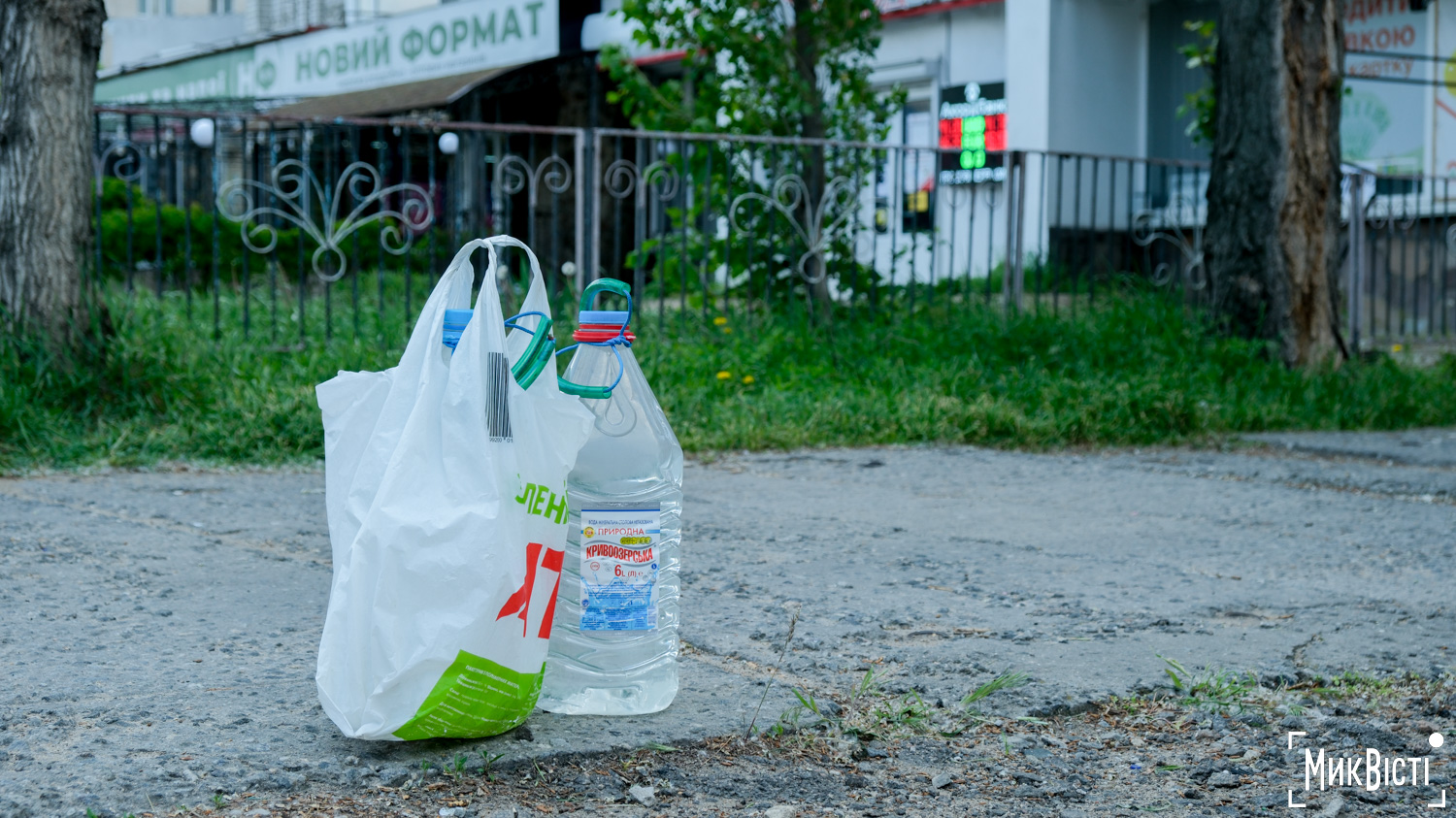 Water containers that a 73-year-old resident of Mykolaiv carried home in several trips from a trolleybus serving as a water distribution point, May 2025. Photo by NikVesti
Ultimately, this project does not solve all water supply problems, but it can make the system more resilient. Above all, during shelling and power cuts. It is not about complete energy independence, but about a simple thing: ensuring water is available even in difficult conditions.
Will this affect the tariff? The water utility did not tell us whether changes are possible. But calculations show that there will most likely be no impact on the tariff.
Electricity accounts for about a fifth of the tariff, and solar power stations can cover only part of this consumption. As a result, the savings amount to a few per cent. And the tariff is calculated based on a much wider range of costs — including network repairs, water losses and the company’s operating expenses.
Therefore, such projects are not about cheaper water. They are more about other things: less dependence on cut-offs, fewer risks, and a more stable water supply and drainage system.
Yuliia Boichenko, NikVesti


This publication was prepared by the editorial team within the project “Supporting Local Media for Transparent Reconstruction Reporting”, implemented by the Institute for Regional Media and Information (IRMI) with the support of the European Union programme together with Denmark, Germany, France and Lithuania “EU4Reconstruction”. The content of the publication is the sole responsibility of the editorial team and does not necessarily reflect the position of the European Union, IRMI or other partners of the initiative.
