
Two more buildings damaged by shelling are being partially demolished in Mykolaiv
-

- Yuliia BoichenkoReporter
-
 Mariia Khamitsevych
Correspondent
Mariia Khamitsevych
Correspondent
-
 3000 +
Wow! Over 3,000 visitors have viewed this content!
3000 +
Wow! Over 3,000 visitors have viewed this content!
-
 Prefer on Google
-
3K
Wow! Over 3,000 visitors have viewed this content!
-
Prefer on Google
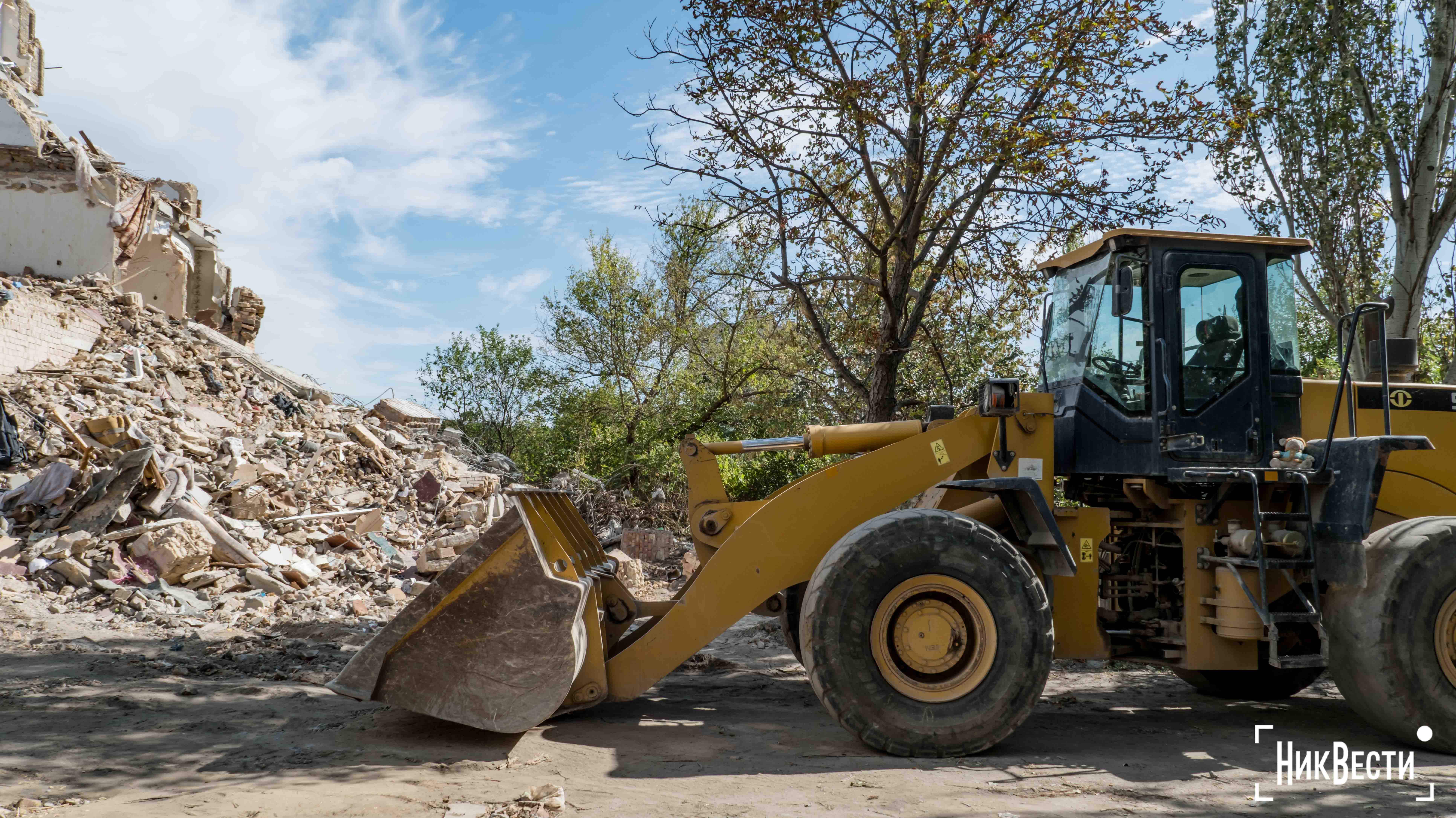 Builders have begun demolishing the building at 43 Pohranychna Street in Mykolaiv; photo: NikVesti
In Mykolaiv, there are plans to partially demolish two more buildings damaged by Russian shelling. These are a residential block and an administrative building, which have been deemed potentially hazardous.
The relevant draft decision has been published on the website of the Mykolaiv City Council’s executive committee, NikVesti repotrs. It is due to be adopted at the next meeting, scheduled for 13 May.
According to the document, six flats in the residential building at 31 Oleksii Vadaturskyi Street are to be demolished and cleared: №1, №2, №3, №4, №5 and №14. This building was damaged during the shelling of central Mykolaiv on the night of 22 January 2025.

At the same time, plans are in place to dismantle potentially hazardous sections of block №2 of the administrative building at 24 Vadym Blahovisnyi Street. It is located near the shell-damaged building of the Vasyl Sukhomlynskyi Mykolaiv National University.
The draft decision states that the work is necessary due to damage to the buildings caused by the military aggression of the Russian Federation.
Read also the articles by NikVesti:
- «Three months for a five-storey building: how destroyed houses are being demolished in Mykolaiv»;
- «Waste of war: is the plant in Mykolaiv keeping up with the scale of the destruction?»
Processing of demolition waste in Mykolaiv
The construction waste recycling plant in Mykolaiv began operations in the spring of 2025. The project was implemented with the support of the Japan International Cooperation Agency (JICA), which provided specialised equipment, whilst the site for the plant was developed using the city’s budget.
The plant’s capacity allows it to process around 12,000 tonnes of such waste per month, and the resulting material is intended for use in road repairs.
By the end of 2024 alone, around 120,000 tonnes of construction waste had accumulated in Mykolaiv. As of January 2025, the plant had processed 4,500 tonnes of demolition waste into building materials.
In a comment to NikVesti, Deputy Mayor Serhii Korenev stated that the construction waste recycling plant in Mykolaiv is planned to be used to serve the needs of two further regions: Kherson Oblast and part of Kirovohrad region.
At the same time, communities wishing to use the services of the construction waste recycling plant following the destruction are being offered two options for cooperation. Under the first, they can hand over all waste for recycling at a lower cost; under the second, they can receive the recycled material back, though this option will be more expensive.
As of February 2026, 4.6 million tonnes of waste from the destruction had already accumulated in the Mykolaiv region.



This material was produced within the REACH – Media Partnerships for Accountability and Trust project, implemented by International Media Support (IMS) and supported by the Ministry of Foreign Affairs of Denmark. The content reflects the views of the authors and not necessarily those of the Danish government. Denmark’s support strengthens civil society and independent media in Ukraine, including in Mykolaiv.

