Liubarov on the work of the Department of Culture following the structural reform promoted by the mayor
-

- Kateryna SeredaEditor-in-chief

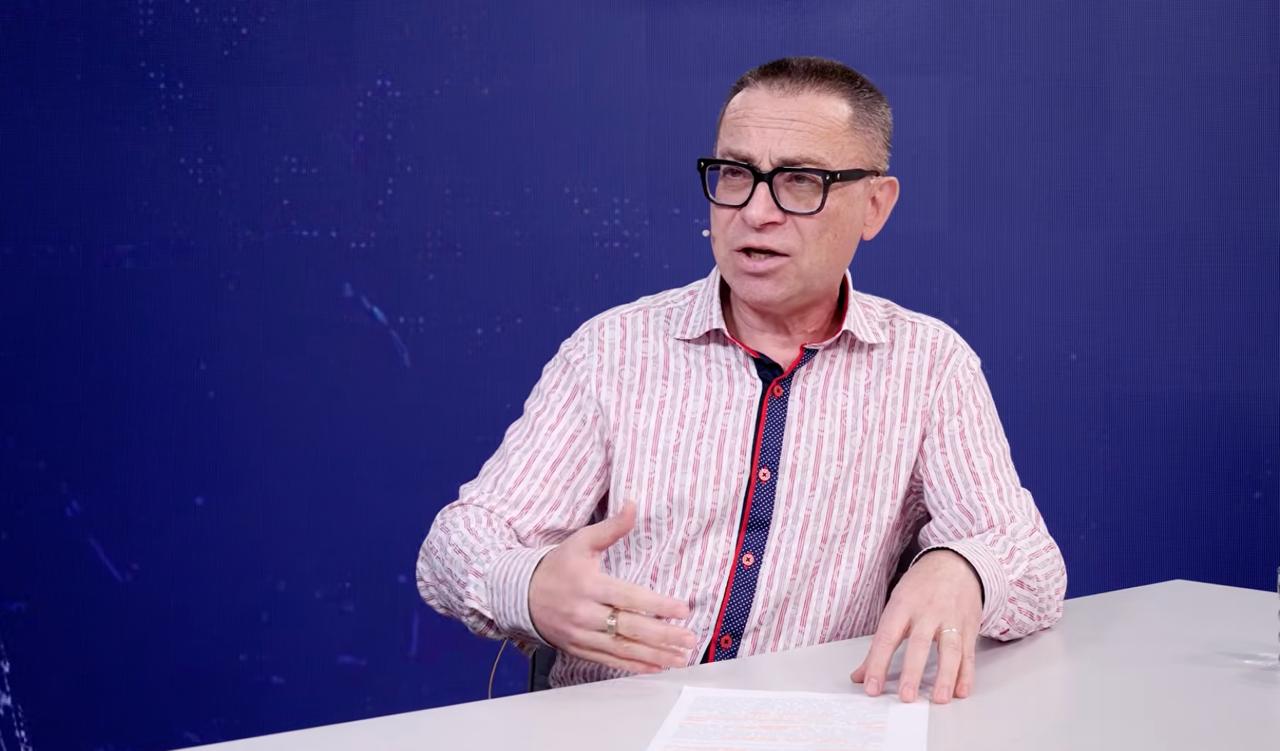 Yuriy Lyubarov explained what powers the Mykolaiv Department of Culture retained following the reform; screenshot from TRK MART’s YouTube channel
Yurii Liubarov, head of the Mykolaiv City Council’s Department of Culture, stated that he was not in favour of separating the powers relating to the protection of cultural heritage from his department. This separation took place as part of the reform of the executive bodies’ structure promoted by the mayor, Oleksandr Sienkevych.
Yurii Liubarov spoke about this in an interview with the municipal television channel «MART», according to NikVesti.
Oleksandr Sienkevych presented the draft of the new city council structure in April 2025. It was developed in accordance with the recommendations of an audit by Ernst & Young. The reform involved the abolition and consolidation of departments, as well as a reduction in the number of chief administrators of budgetary funds.
One of the changes was the separation of cultural heritage protection from the Department of Culture. These powers were transferred to an independent sector within the Executive Committee, whilst matters relating to intangible heritage remained with the Department.
«A decision has now been taken to separate this department and create an independent sector within the Executive Committee. That sector will deal with those matters. Meanwhile, our department has retained responsibility for matters of intangible cultural heritage: toasts, rituals, borscht recipes and songs. So, it’s been split up a bit. Because the law on the protection of cultural heritage covers everything. It’s been split up a bit. We’ll see how it works out. I hope it’s for the best,» said Yurii Liubarov.
He recalled that until 2007, the cultural heritage protection department operated independently, but was subsequently merged into the Department of Culture. According to the official, this unit carries out supervisory functions regarding the preservation of monuments and their use by the entities responsible for them.
«It is a supervisory body; it is not creative work at all. It is architectural and spatial in nature. At the time, it was merged with the Department of Culture because it was part of the same ministry. And to this day, cultural heritage protection remains part of the Ministry of Culture’s structure,» he explained.
Yurii Liubarov does not rule out further structural adjustments. He also pointed out that the mayor, Oleksandr Sienkevych, had previously spoken of the possibility of changes as part of the reform process.
The official explained that his position is not linked to any reluctance to hand over powers. According to him, he is still approached with questions regarding the protection of cultural heritage, even though these matters now fall within the remit of another department.
«I wasn’t an advocate of this issue, not because I didn’t want to hand over powers or anything like that. But given that this is a single structure — we are part of a single ministry — and today I am being asked, from above and from the side, about cultural heritage, and I say: «Friends, this is not within my remit; go there.» They sometimes look at me like that, in surprise,» he said.
It should be recalled that, initially, as part of the reform, it was planned to transfer powers relating to the protection of cultural heritage to the Department of Architecture and Urban Planning. However, the Culture Department of the Mykolaiv Regional Military Administration warned that this could lead to a conflict of interest. Following this, Oleksandr Sienkevych announced that this option had been rejected and it had been decided to create a separate sector.
On 30 April 2026, the city council approved changes to the structure of the executive bodies, which provide for a cultural heritage protection unit with a staff of three. During the discussion of the matter, Sienkevych urged councillors to support the decision and noted that the structure could be amended in the future.
The new structure came into effect on 10 September. The city council is currently seeking a head of the cultural heritage protection sector.
 NikVesti
· post about this story
Liubarov on the work of the Department of Culture following the structural reform promoted by the mayor.
Yurii Liubarov, Head of the Department of Culture at…
NikVesti
· post about this story
Liubarov on the work of the Department of Culture following the structural reform promoted by the mayor.
Yurii Liubarov, Head of the Department of Culture at…

This material was made possible with the support of the “Voices of Ukraine” / SAFE programme, coordinated by the European Centre for Press and Media Freedom in partnership with the Public Interest Journalism Lab. “Voices of Ukraine” / SAFE is implemented within the framework of the Hannah Arendt Initiative with the support of the German Federal Foreign Office. The programme does not influence editorial policy, and this material contains solely the views and information obtained by the editorial team.