
“It was a game of Russian roulette. I didn’t know if I’d make it out alive.” Stories from Snihurivka residents who survived torture under occupation.
-

- Alisa MelikadamianContributing Editor, Reporter
-
 5000 +
Impressive! This content has been viewed by more than 5,000 visitors!
5000 +
Impressive! This content has been viewed by more than 5,000 visitors!
-
 Prefer on Google
-
5K
Impressive! This content has been viewed by more than 5,000 visitors!
-
Prefer on Google
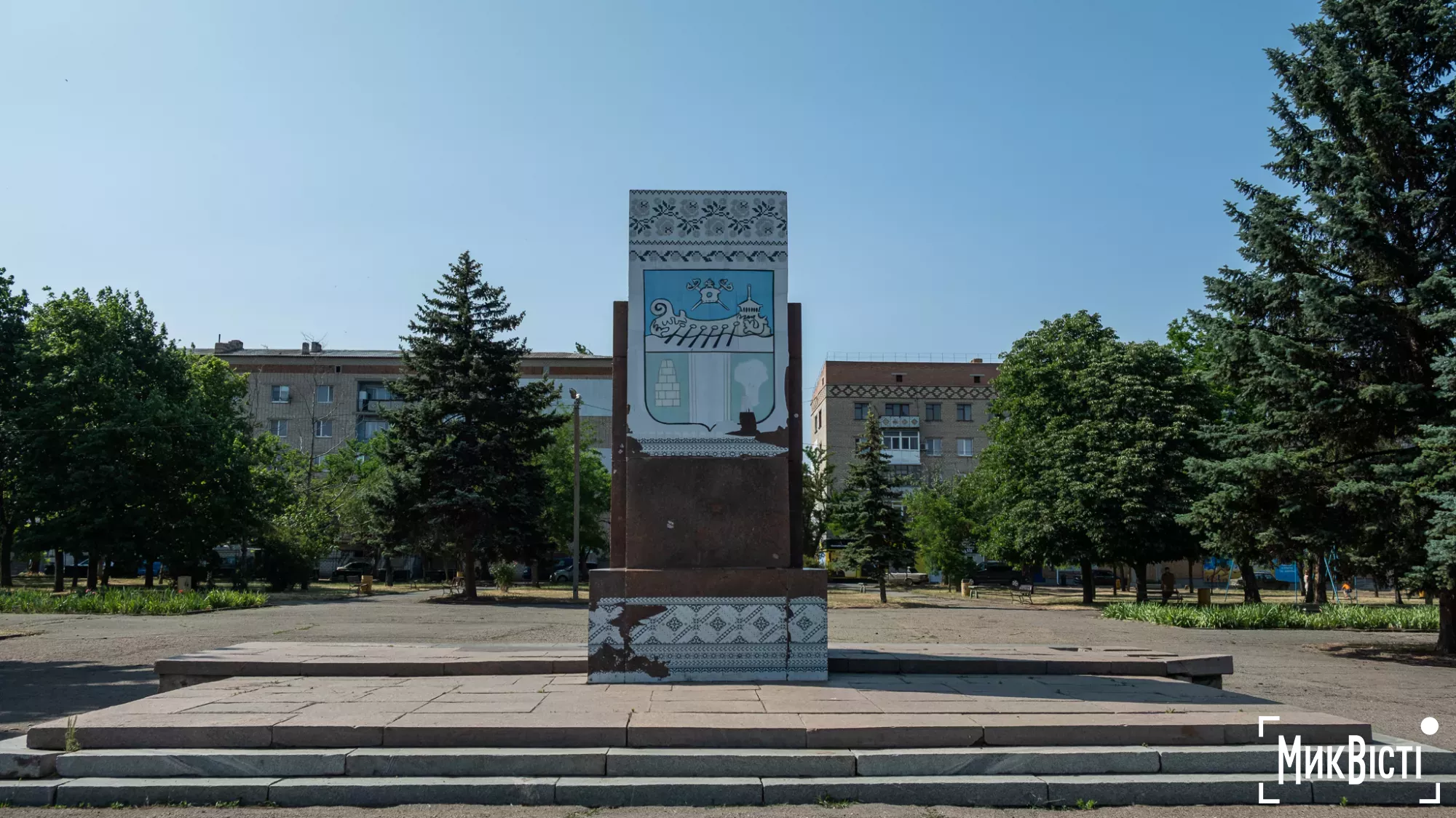 The town of Snigurivka, 2025. Photo: ‘NikVesti’
Three years ago, Ukrainian troops managed to drive the Russian army out of the small town of Snigurivka in the Mykolaiv region. People here rarely speak of the occupation. The consequences of the Russians’ presence here are a painful subject for the residents of Snigurivka themselves. And the crimes committed by the Russian army are a highly sensitive issue. People do not wish to recall their captivity, the threats, or the places where they were held. Not everyone returned from those places. But they prefer to remain silent about it. And their silence is part of this story.
A correspondent from ‘NikVesti’ spoke to those who agreed to talk about their experiences in Snigurivka, which was under the control of the Russian army.
“Speak on camera to journalists? My husband would never agree to that in a million years; don’t even ask,” replied Kateryna (name changed), a resident of Snigurivka, in response to our request. “Yes, he was under occupation; they came for him and took him away several times. But he certainly won’t be talking to you about it.”
We met the wife of one of the men featured in this report by chance. She hesitated for a long time, unsure whether her husband would want to talk about what he’d been through. But after half an hour of deliberation, she relented and handed over a piece of paper with a number: “Give him a call; I’ve warned him.”
“They came for me four times”: Vladimir’s story
When the Russians were stationed in Snigurivka, people were taken ‘to the pit’ or ‘to the cellar’ for having links with the Ukrainian Armed Forces, for being relatives of soldiers serving in the ATO, for their political views, and often for no reason at all. Simply “because they didn’t like something”, says Kateryna’s husband. Volodymyr (name changed) shared that it is difficult and painful for him to recall that time, but he agreed to speak.
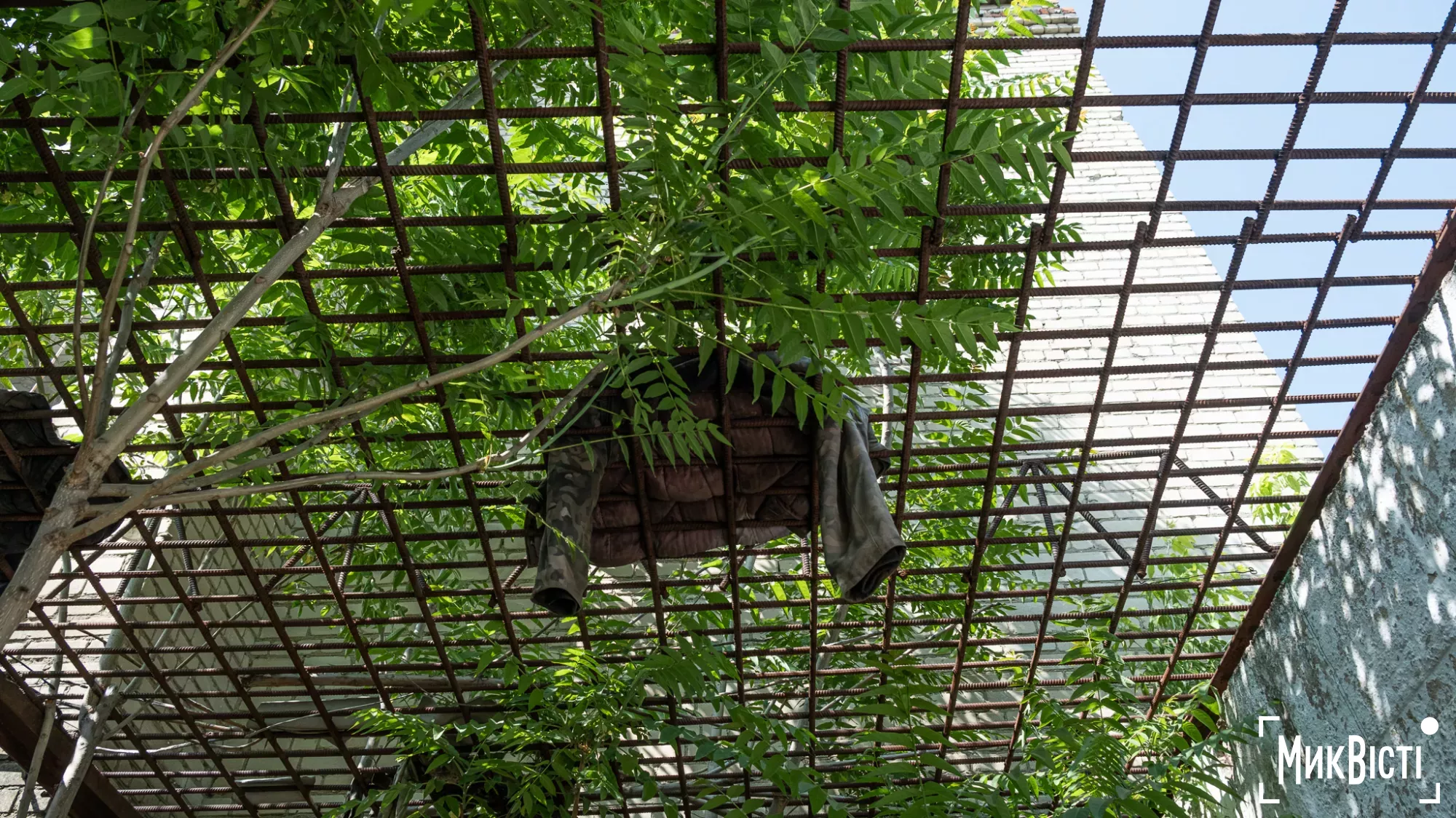 Belongings left behind by Russian soldiers. Photo: ‘NikVesti’
“They came for me four times in total. The last time, they sent me all the way to Hola Prystan. That was during the counter-offensive, I think it was September. Our forces were starting to take Kherson, and I was sitting in a cell there, and they transported me there along with everyone else; I wasn’t supposed to be there. There were some partisans and soldiers in that cell, but I’m a civilian. We ended up in some sort of guesthouse. Around 200 people were being held captive,” the man recalls.
The man says that townspeople were often taken away because the Russians were rotating their forces. The FSB was replaced by counter-intelligence, new soldiers arrived, and that meant they would come for those on the lists again.
“Russian roulette. Every time, wondering, ‘What now? Will they let me go or not?’ After each time I came back, it took me a week or two to recover. Of course, I still feel the effects of that now. I was beaten badly in the stomach area; now I have kidney problems. I’m getting treatment—where else can I go…,” says Volodymyr with a smile. “But I wasn’t afraid for myself, just for my wife — of course. While I was away, she and her friends and acquaintances were moving weapons from one place to another, hiding things, helping people. And the Russians didn’t even ask about it. In other words, they didn’t even mention the fact that I actually knew and had information.”
Volodymyr recalls that, having found himself in occupied Kherson Oblast, it seemed as though he had already been transported either to Donetsk or to Crimea. Having established his identity, the Russians themselves did not understand how he had ended up among the prisoners.
“They asked me, ‘What are you doing here?’, and I didn’t know what to say. Specifically there, I wasn’t of any interest to them. They took me out onto the motorway, tied up, and threw me out of the KAMAZ on the ring road. The lads were driving to Snigurivka from Kopanya; they recognised me by my T-shirt and picked me up. Now it’s my lucky T-shirt.”
“There have been 20 searches of my home in 8 months”
Only Vitaliy Lyashchenko agreed to speak to us without a mask. His son joined the territorial defence at the start of the military aggression, a fact known to the Russian military, who had the relevant ‘lists’.
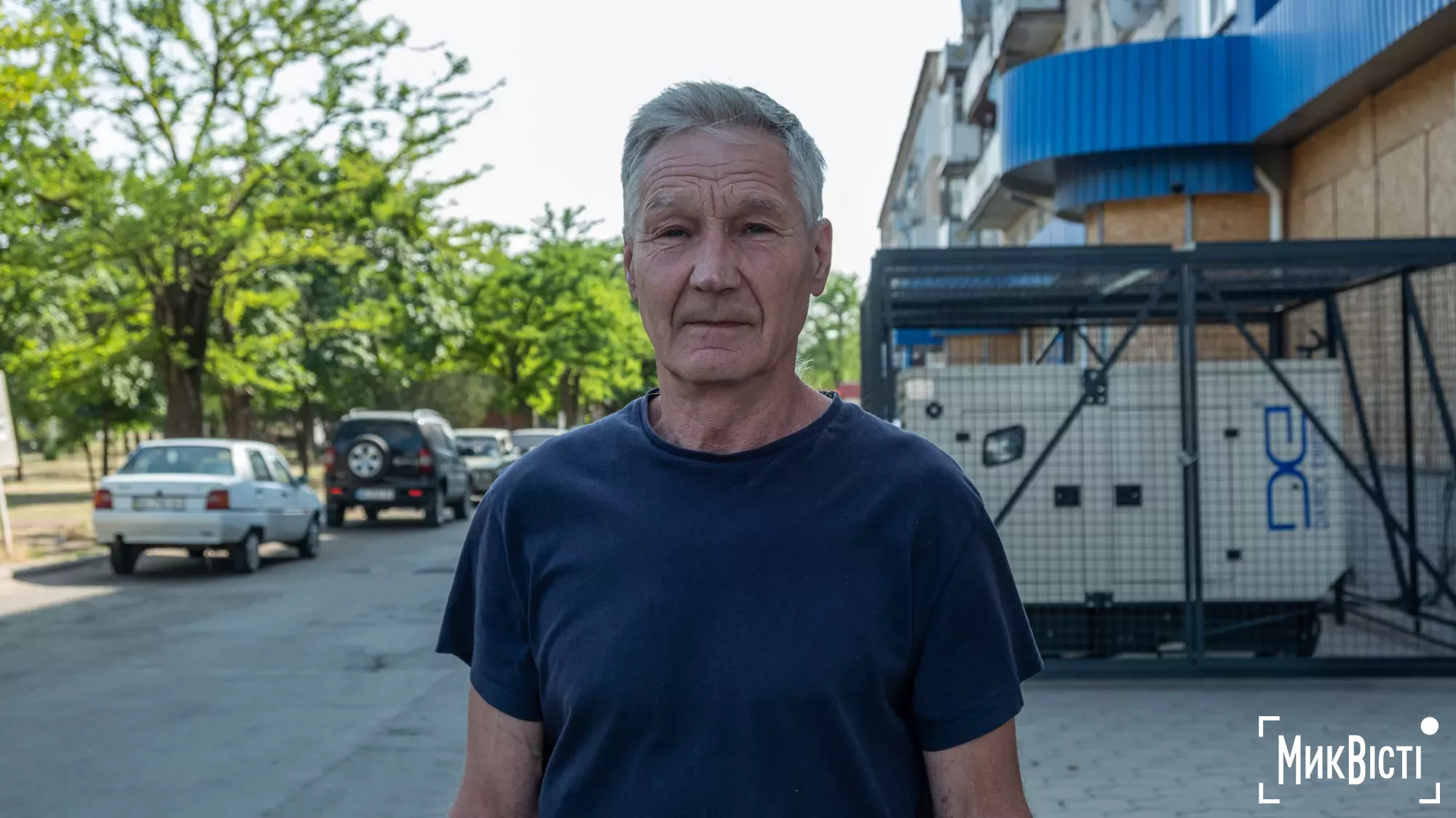 Vitaliy Lyashchenko, a local resident who helped with the evacuation of locals. Photo: “NikVesti”
“I used to bring our lads both diesel and barbed wire; I helped however I could. That’s why they came. It was some FSB colonel; I don’t know his call sign or anything. He was the only one showing his face; everyone else was a ‘Ninja Turtle’, all wearing masks. And so they came to me loads of times, but only took me away once.”
The man recalls that they detained him after the third search of his house and took him to the ‘basement’ — a torture chamber set up in the local police station. At the time, they were looking for his son Vitaliy.
“They took me away, put a hood over my head, stationed a soldier next to me so I wouldn’t escape, and took me to the district police station. They asked where my son was, gathering all the information about who his friends were. Well, typical FSB stuff,” he recalls.
The Russians released him after four hours. When he returned, he found out that his son had been planning to turn himself in so that his father would be released:
“He wanted to go and surrender to them. But his mother wouldn’t let him. And when I came back and found out about it, I said: ‘Are you mad? They’re looking for you, not me. They’ll just give me a beating and that’s it, but they’ll kill you straight away.’
It was only at the end of March 2022 that Vitalii Lyashchenko collected his son and a few other lads who had been helping the TRO, drove them towards Novyi Buh, and returned to the city.
Throughout his time in Snigurivka, Russian soldiers would stop him at checkpoints, search his car and ask each other, “Is this Lyashchenko’s father? Do we need him, or should we let him go?” It wasn’t until October 2022, when there were neither the Russian National Guard nor the FSB in the city, that this came to an end.
These stories are just two of the many involving victims of the Russian military, says Dmytro Shalaboda, head of the department for combating crimes committed in the context of armed conflict at the Mykolaiv Regional Prosecutor’s Office.
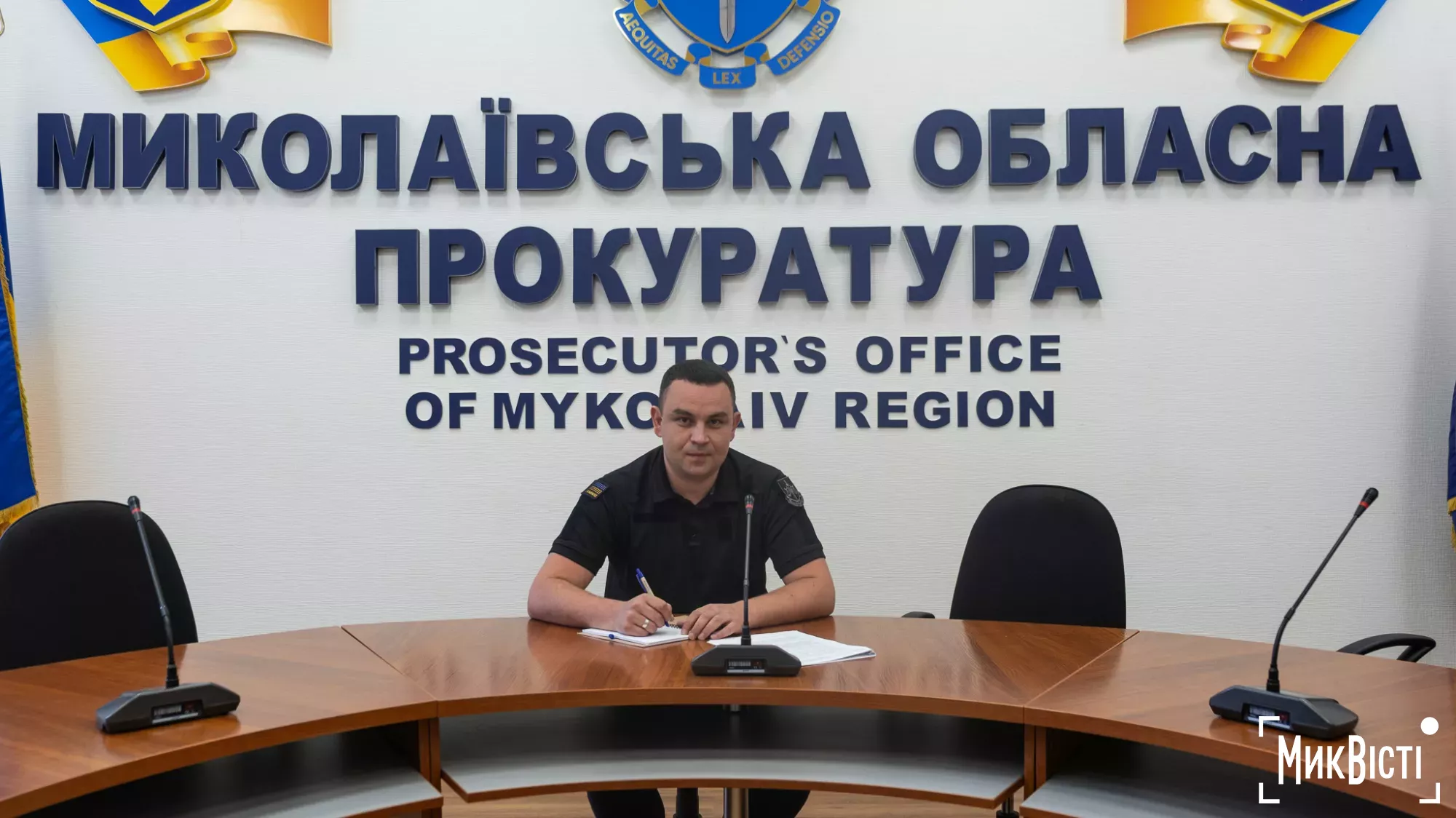 Dmytro Shalaboda, head of the department for combating crimes committed in the context of armed conflict at the Mykolaiv Regional Prosecutor’s Office. Photo: ‘NikVesti’
At the time of the liberation of the Snigurivka district in November 2022, law enforcement officers discovered at least two detention sites. However, the exact number of those who endured torture remains difficult to establish — not everyone has the strength or the desire to speak about what they have been through. The prosecutor adds: sometimes the victims’ accounts only come to light many months later, or never at all.
“Today, every witness or victim who dares to speak out is not just telling their story to us. Above all, they are documenting a crime. Most of those subjected to torture during the occupation were people who took part in the anti-terrorist operation in eastern Ukraine, civil society activists who were not afraid to express their pro-Ukrainian stance, law enforcement officers (including former ones) who, due to various circumstances, were unable to evacuate in time to territory controlled by Ukraine, and so on. “Currently, over 30 criminal proceedings relating to such incidents are registered in the Unified Register of Pre-trial Investigations,” says Dmytro Shalaboda.
The torture chamber in Snigurivka: what the detention site looks like now
We managed to visit the site of one of the torture chambers in Snigurivka. It is a former, bombed-out district police station where the Russians were stationed. Inside the building, which was used to detain and torture civilians, there is absolute silence.
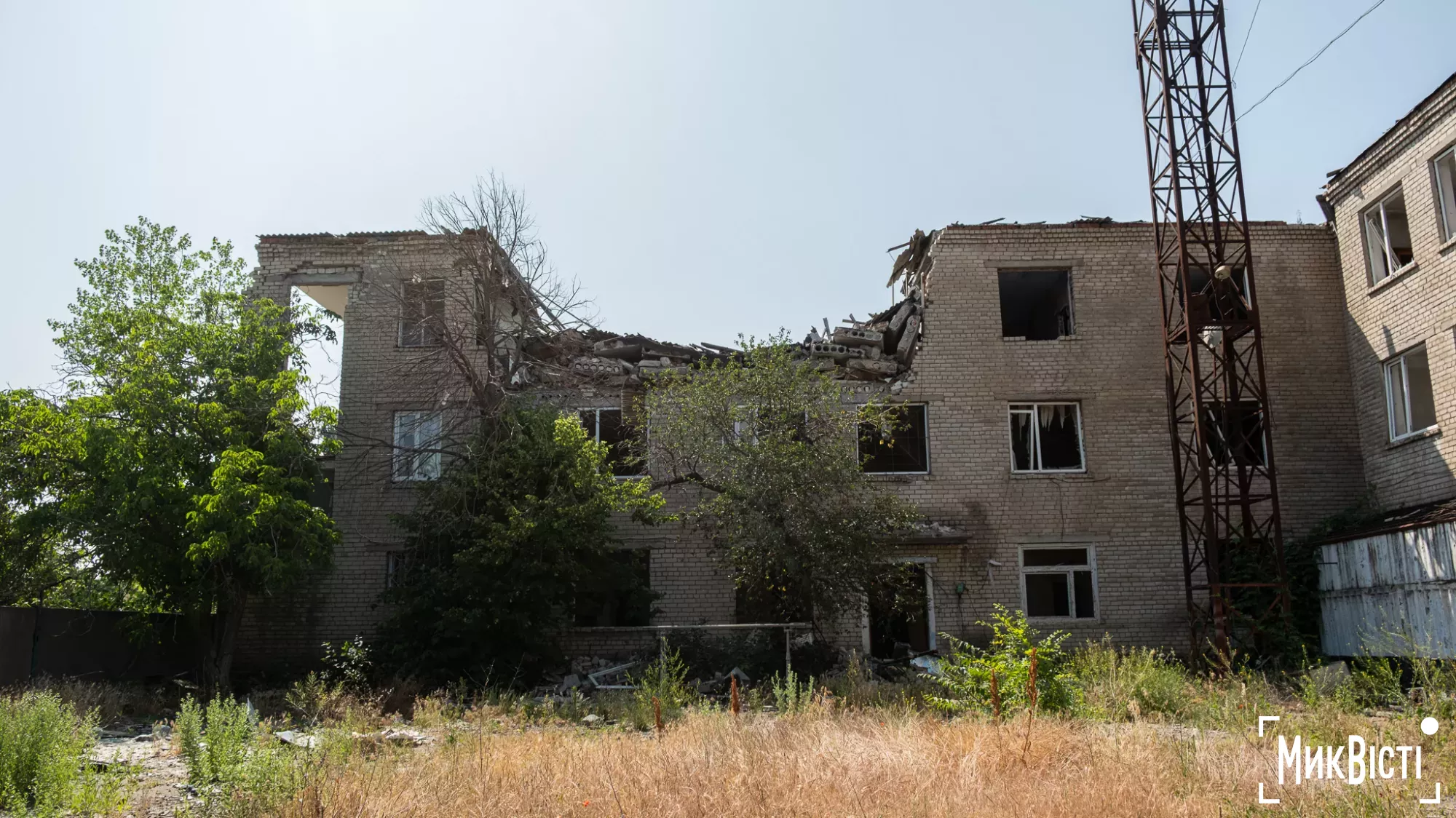 The district police station building, where the Russians were stationed, destroyed by military attacks. Photo: “NikVesti”
Buildings with stripped walls, on which the Russian-style ‘Z’, ‘For Victory’ and ‘1941–1945’ are still visible in paint. Inside, everything is smashed, the windows are broken, and in the corners lie bottles, buckets and fragments of furniture. The building has been in this state since 2022, and the authorities have yet to say what will become of it.
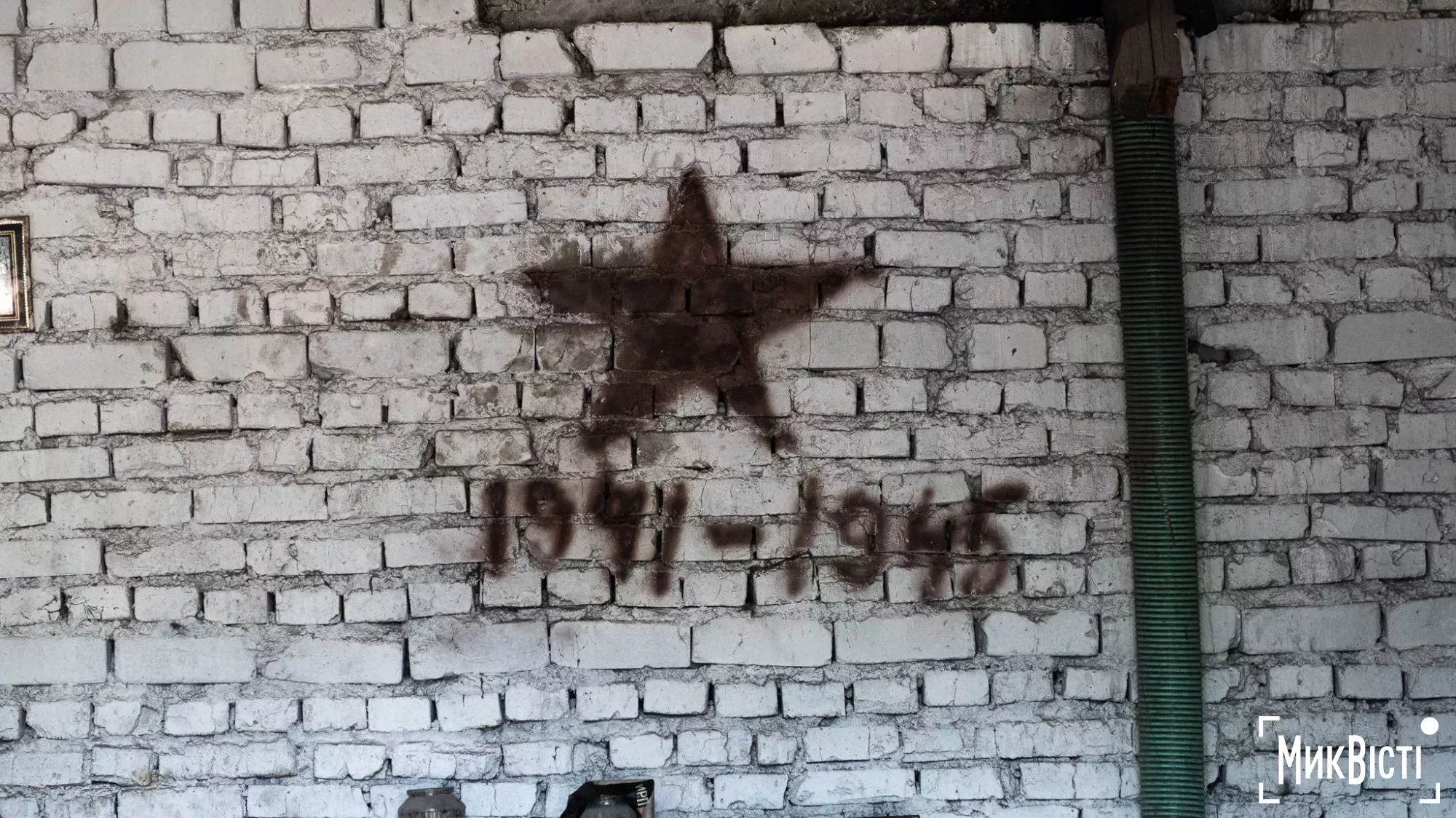 Graffiti inside the building left behind by the Russian occupiers. Photo: ‘NikVesti’
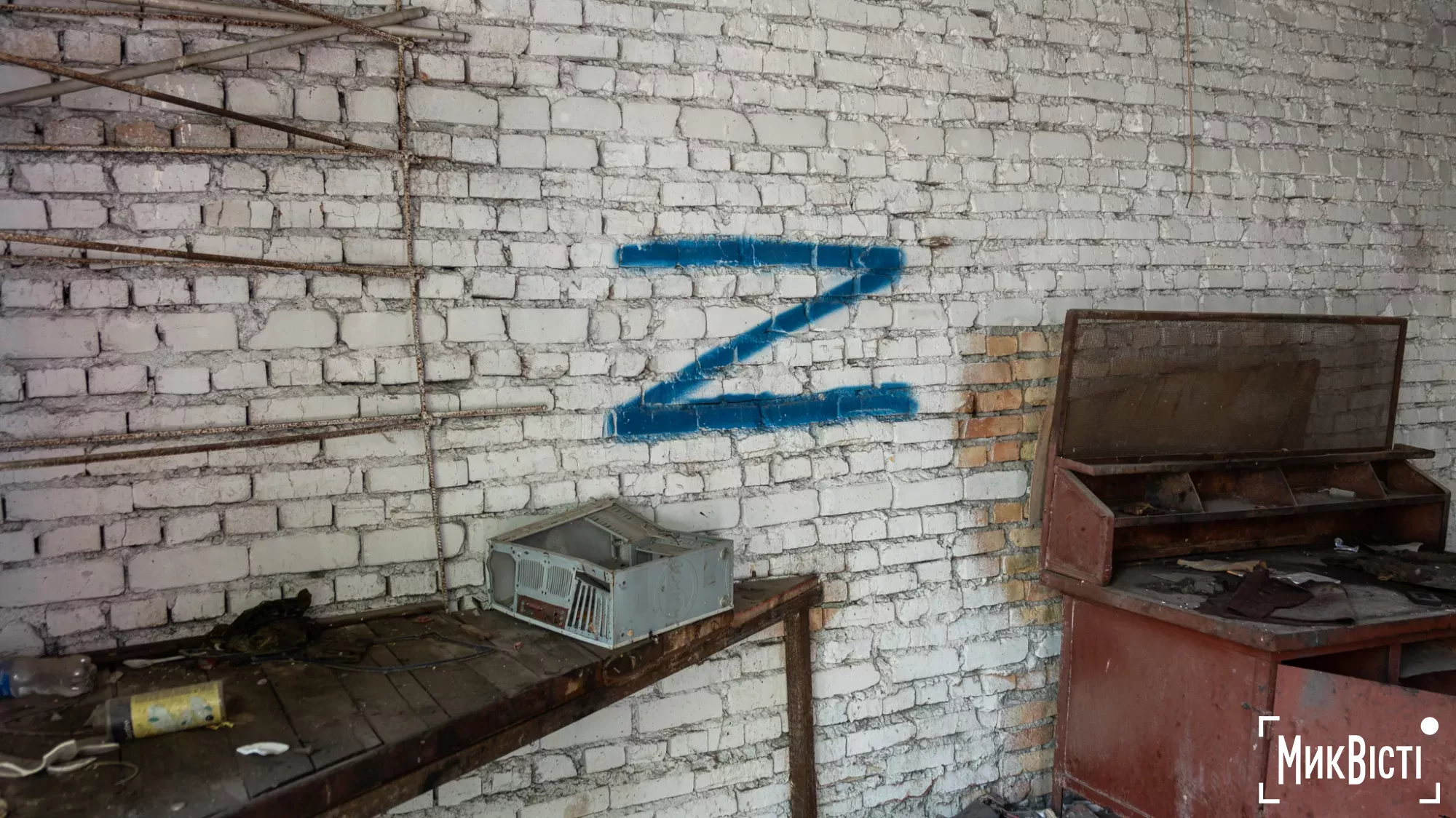 Graffiti inside the building left behind by the Russian occupiers. Photo: “NikVesti”
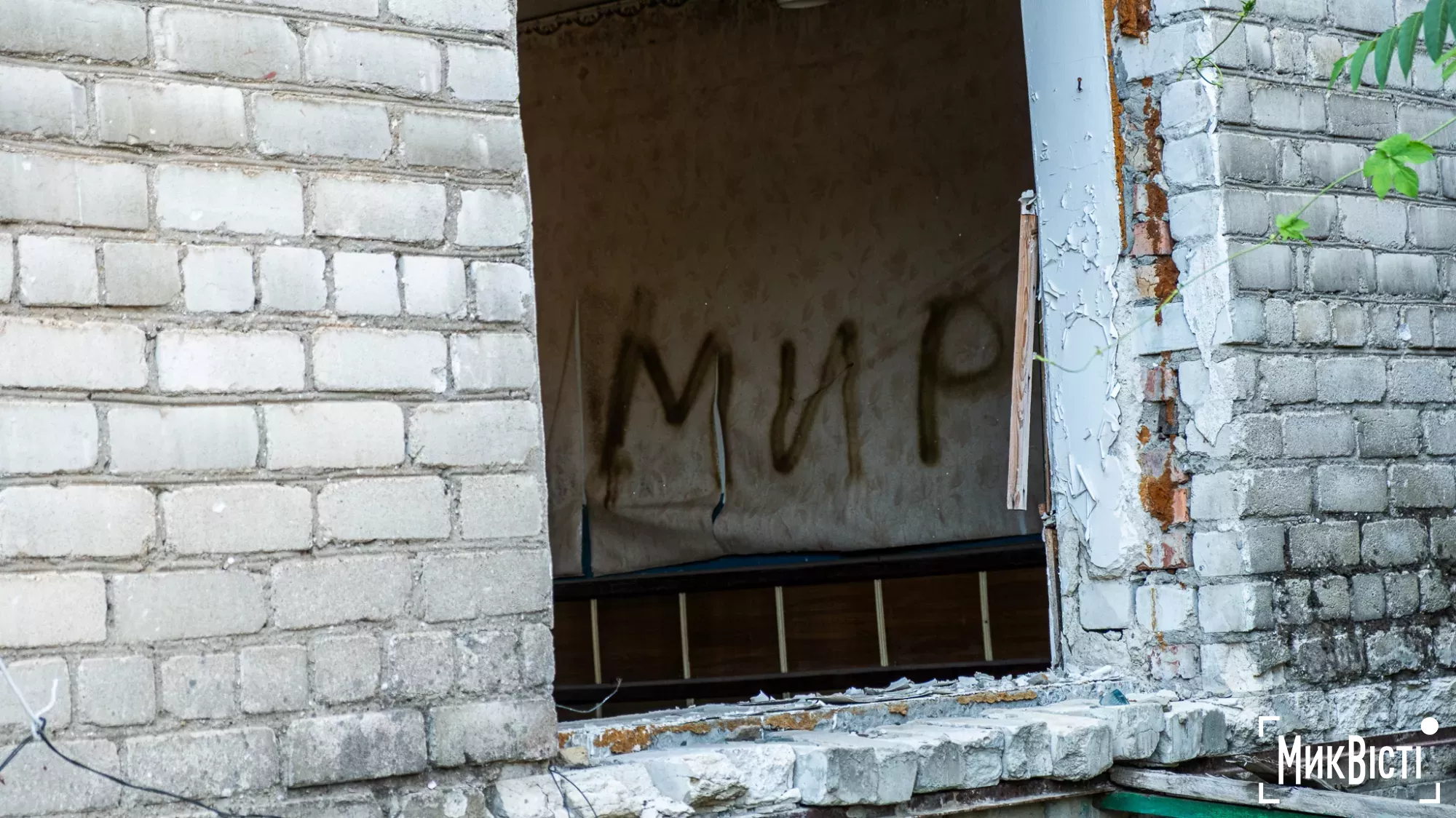 Graffiti inside the building left behind by the Russian occupiers. Photo: ‘NikVesti’
To this day, the prosecutor’s office continues to work actively to bring those responsible to justice, though it is often difficult even to identify the perpetrator, adds prosecutor Dmytro Shalaboda.
To this end, the Mykolaiv Regional Prosecutor’s Office is actively cooperating with international organisations – investigators of Russian war crimes – who, in addition to providing consultations, use donor funds to acquire satellite imagery of the area necessary to prove the case in specific criminal proceedings, showing the relevant equipment of the Russian Armed Forces at launch sites at specific times. In addition, experts who have served on tribunals investigating war crimes in other countries are being engaged; they provide relevant conclusions and recommendations, and share the practices of international courts and the experience of law enforcement agencies in this field.
In particular, prosecutors from the regional prosecutor’s office are working closely with representatives of Global Rights Compliance’s mobile justice teams. This was discussed in an interview with ‘NikVesti’ by Queen’s Counsel and Foundation President Wayne Jordash. The specialists assist with advice on international humanitarian law and human rights law, the use of open-source intelligence (OSINT) to strengthen evidence-gathering, and the provision of specialist expertise to bolster local efforts to build cases against those guilty of crimes, particularly at the level of political and military leadership.
 Law enforcement officers in Snigurivka document the consequences of military aggression. Photo: Mykolaiv Regional Prosecutor’s Office
As of 2025, thanks to this joint effort, 22 individuals have been notified of suspicion in 19 cases, and 15 indictments against 22 individuals have been referred to court. Courts in the Mykolaiv region have handed down 5 convictions against 6 individuals.
But despite the efforts of law enforcement, bringing the guilty to justice is a long and extremely difficult process. It is physically impossible to apprehend many of the Russian military personnel involved in torture. Those who have endured it themselves are left with their trauma inside. People have ‘patched themselves up’ on their own: through silence, work, and daily life.
Vladimir, Vitaliy, and countless other Ukrainians who found themselves face to face with the Russian world continue to live lives stolen by the war. But the past is close at hand. It remains in memories, in ruined buildings, in a body still being treated by a doctor, or in a T-shirt they cannot bring themselves to throw away. The stories these people have lived through bear witness not only to the brutality of the occupiers, but also to the strength of those who survived. And to their silence, which must be given a voice.
Alisa Melik-Adamyan, ‘NikVesti’


This material was produced as part of the "Improving Ukrainian Media Resilience" project, implemented by the Fondation Hirondelle (Switzerland) and IRMI, the Institute for Regional Media and Information (Ukraine). The project is funded by Swiss Solidarity.