
Displaced persons living in modular housing estates in the Mykolaiv region are unable to access a reduced-rate tariff for heating
-

- Julia LukyanenkoReporter
-
 2000 +
This content has already been viewed by over 2,000 visitors
2000 +
This content has already been viewed by over 2,000 visitors
-
 Prefer on Google
-
2K
This content has already been viewed by over 2,000 visitors
-
Prefer on Google
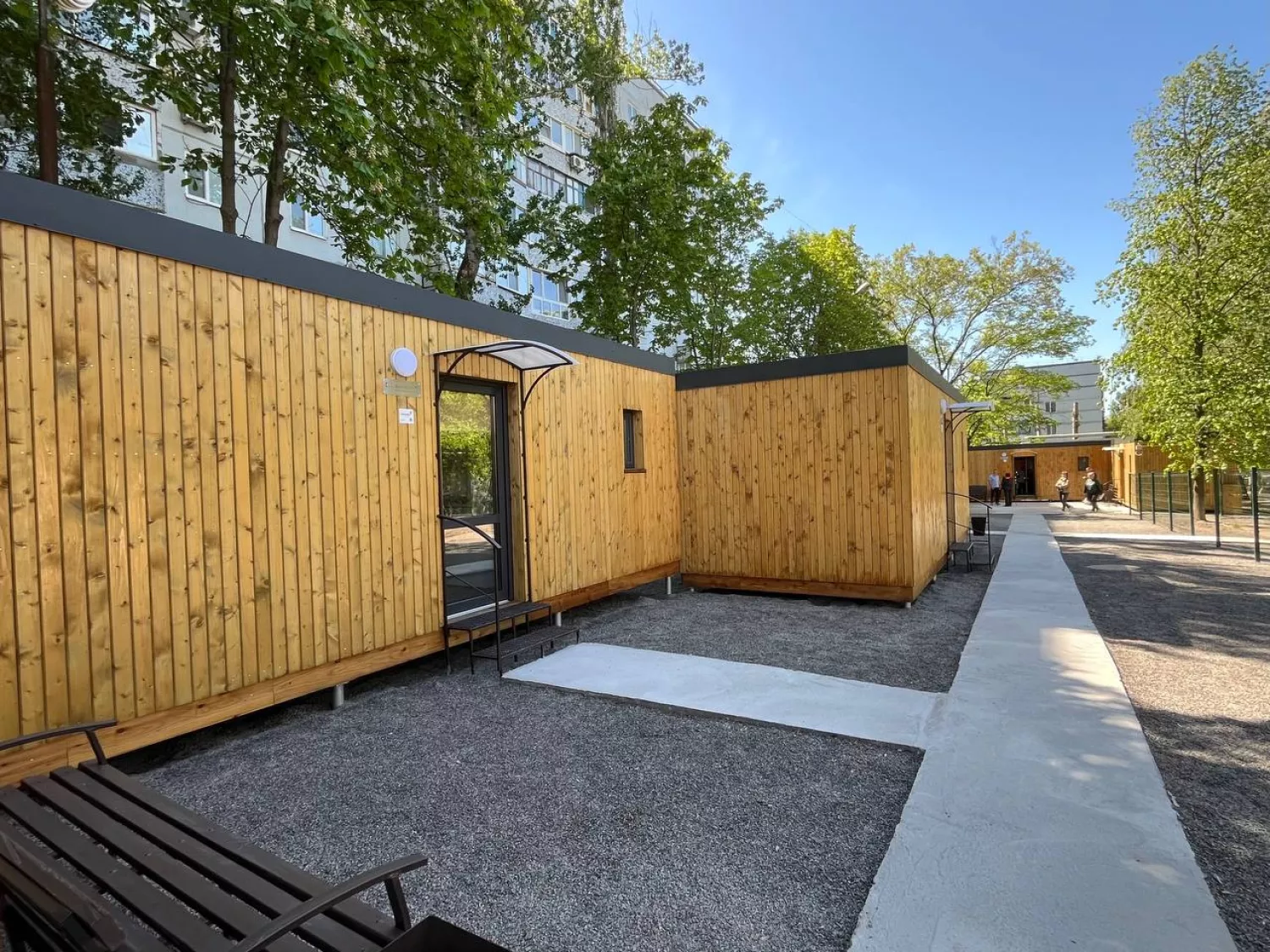 Modular homes in Pivdennoukrainsk. Photo: Yuzhbud
In the Mykolaiv region, modular housing estates for internally displaced persons have been set up in eight communities. There is no central heating there, so residents use electricity in winter. However, they are unable to obtain the preferential tariff for heating costs, which is available for apartment blocks, due to conflicting legislation.
This was discussed at a meeting of the Mykolaiv Regional Council’s committee on communal property, housing and communal services, capital construction and architecture on 6 April, NikVesti reports.
The discussion centred on Pivdennoukrainsk, where two modular settlements for internally displaced persons are located — comprising 20 modular houses. Committee members considered an appeal from the Pivdennoukrainsk City Council, but noted that the issue also affects other communities. It has emerged that the modular homes lack central heating. However, as they are effectively temporary structures, residents cannot claim reimbursement for electricity costs or receive heating subsidies during the heating season.
The committee chair, Oleksandr Mosin, noted that the issue is important, as there are modular settlements in eight communities in the Mykolaiv region alone: 75 houses housing 191 people. There are resolutions from the Ministry of Social Policy, clarifications from the NEURC and the Ministry of Energy, but there is no clear guidance on how IDPs living in modular homes can obtain benefits during the heating season.
Councillor Valerii Pohadaev noted that IDPs are entitled to pay for utility services — for electricity, gas and heating consumed — including in modular housing complexes, at the residential tariff. However, the legal entity managing the facilities where displaced persons live must install metering points for each building, and the design and cost estimate documentation must be approved by the distribution system operator. Furthermore, agreements must be concluded for the distribution and supply of electricity. And this requires a considerable amount of money.
«It turns out that the entire burden of a full-scale — from scratch, so to speak — connection to the distribution system operator’s networks falls on these legal entities. We are talking about technical specifications, design documentation, and the installation of a commercial metering unit. In my view, given that this procedure is costly and time-consuming, it would be advisable to approach our colleagues, the Verkhovna Rada and the ministry to ensure reimbursement for the resources that this legal entity will spend on meeting the needs of IDPs,» noted Valerii Pohadaev.
Tetiana Marchuk, Deputy Head of the Housing and Utilities Department of the Mykolaiv Regional State Administration, reported that as the modular settlement is considered a temporary structure, residents cannot receive the 2.64 hryvnia tariff, as is the case in buildings without central heating.
«An agreement has been concluded with the Mykolaiv Electricity Supply Company, which provides for the supply of electricity at a fixed price of 4.32 hryvnias. A Cabinet of Ministers resolution has established fixed electricity prices for domestic consumers and the possibility of applying the 2.64 hryvnia tariff. However, this applies only to domestic consumers living in multi-apartment buildings that are not connected to the gas network and lack central heating,» said Tetiana Marchuk.
She added that it would be desirable to initiate an appeal to the Ministry of Energy of Ukraine so that changes could be made to the legislation and residents of modular towns could receive a preferential tariff.
Pension Fund representative Olena Sechuhova confirmed that the fund compensates for utility and energy costs for businesses, as well as for sole traders who have accommodated displaced persons free of charge. However, the Pension Fund has not been approached regarding the situation with the modular town in Pivdennoukrainsk.
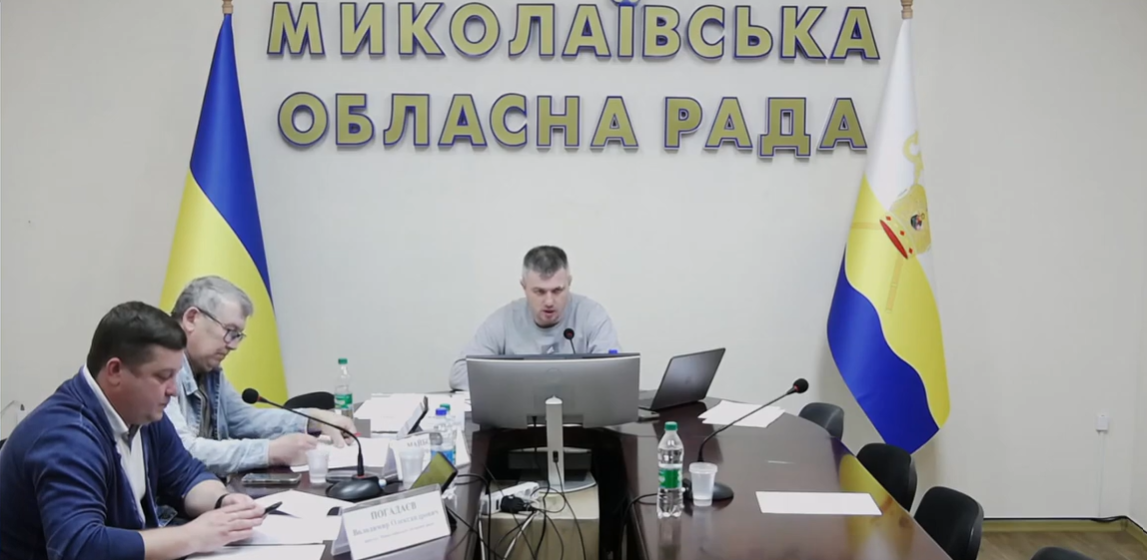 Meeting of the Mykolaiv Regional Council’s Housing and Utilities Committee. Screenshot from the broadcast
Oksana Yelchiieva, Director of the Department of Social Protection of the Population at the Mykolaiv Regional State Administration, also noted that modular homes are social housing and are on the local authority’s balance sheet, rather than belonging to individuals. In her view, it is necessary either to submit documents for compensation or to amend the Cabinet of Ministers’ resolutions.
«In fact, this issue has not yet been resolved because it is, so to speak, a new one, and modular homes are only just beginning to be installed on such a large scale. Therefore, I do indeed believe that the current legislation requires further clarification and that such an appeal is appropriate,» noted the director of the Department of Social Protection.
The committee chair, Oleksandr Mosin, concluded that the issue is important not only for the Mykolaiv region but also for other regions.
«The issue is pressing not only in the Mykolaiv region, but also, most likely, in other regions, so it requires more detailed consideration and certain amendments to the current legal provisions,» noted Oleksandr Mosin.
The committee voted in favour of the recommendations. In particular, Anton Tabunschyk, Chairman of the Mykolaiv Regional Council, was advised to submit an appeal to the Cabinet of Ministers for consideration at the session, with a view to improving the mechanism for compensating IDPs’ electricity costs.
«In effect, the legal framework equates a modular settlement with permanent housing with central heating, limiting the amount of compensation to a maximum of 130–160 kWh per person, which does not reflect the reality of heating during the winter using electric heating systems. This legal conflict ignores the energy independence of modular structures, leading to severe underfunding of local authorities, which are forced to cover the significant gap between outdated standards and actual consumption during the heating season at the expense of local budgets, as stated in the draft appeal,» the appeal reads.
The Cabinet of Ministers will be asked to amend the resolutions and establish economically justified regulatory compensation to account for the use of electricity for heating in modular settlements.
As a reminder, at the end of October 2024, work began in Pivdennoukrainsk on the construction of modular homes for displaced persons. It later emerged that the city would need at least 2 million hryvnias to implement this project.
Each of the houses is equipped with centralised water supply and drainage systems, electricity supply, and electric convector heating, the city council reported. Inside: essential furniture, sanitary ware and household appliances, ensuring displaced persons a comfortable stay immediately upon moving in.
In April 2025, nine families of internally displaced persons moved into such homes. They were housed in homes installed with financial support from the Swiss Association for Aid to Ukrainians «Help Ukraine».
Meanwhile, Pivdennoukrainsk continues to receive modular homes, the last two of which were donated by Swiss benefactors. The cost of such homes is 2.2 million hryvnias.
Furthermore, Pivdennoukrainsk expects to receive 34 million hryvnias from international partners for the construction of a modular settlement for the temporary accommodation of displaced persons.
Read also the article by NikVesti «Shelter for displaced persons and resilience centres: how modular homes from the EU are being used in the Mykolaiv region».


The NGO “Mykolaiv Media Hub” (online media outlet NikVesti) wishes to acknowledge the financial assistance of the European Union through its project “Frontline and Investigative Reporting Media in Ukraine” (FAIR Media Ukraine), implemented by Internews International in partnership with the Media Development Foundation (MDF). The NGO “Mykolaiv Media Hub” (online media outlet NikVesti) retains full editorial independence, and the information presented here does not necessarily reflect the views of the European Union, Internews International, or MDF.