
Arakhamiia is preparing to defend his thesis on how to manage parliament and a single-party majority in the Rada
-

- Alisa MelikadamianContributing Editor, Reporter
-
 10000 +
Right on target! Over 10,000 visitors are interested in this content!
10000 +
Right on target! Over 10,000 visitors are interested in this content!
-
 Prefer on Google
-
10K
Right on target! Over 10,000 visitors are interested in this content!
-
Prefer on Google
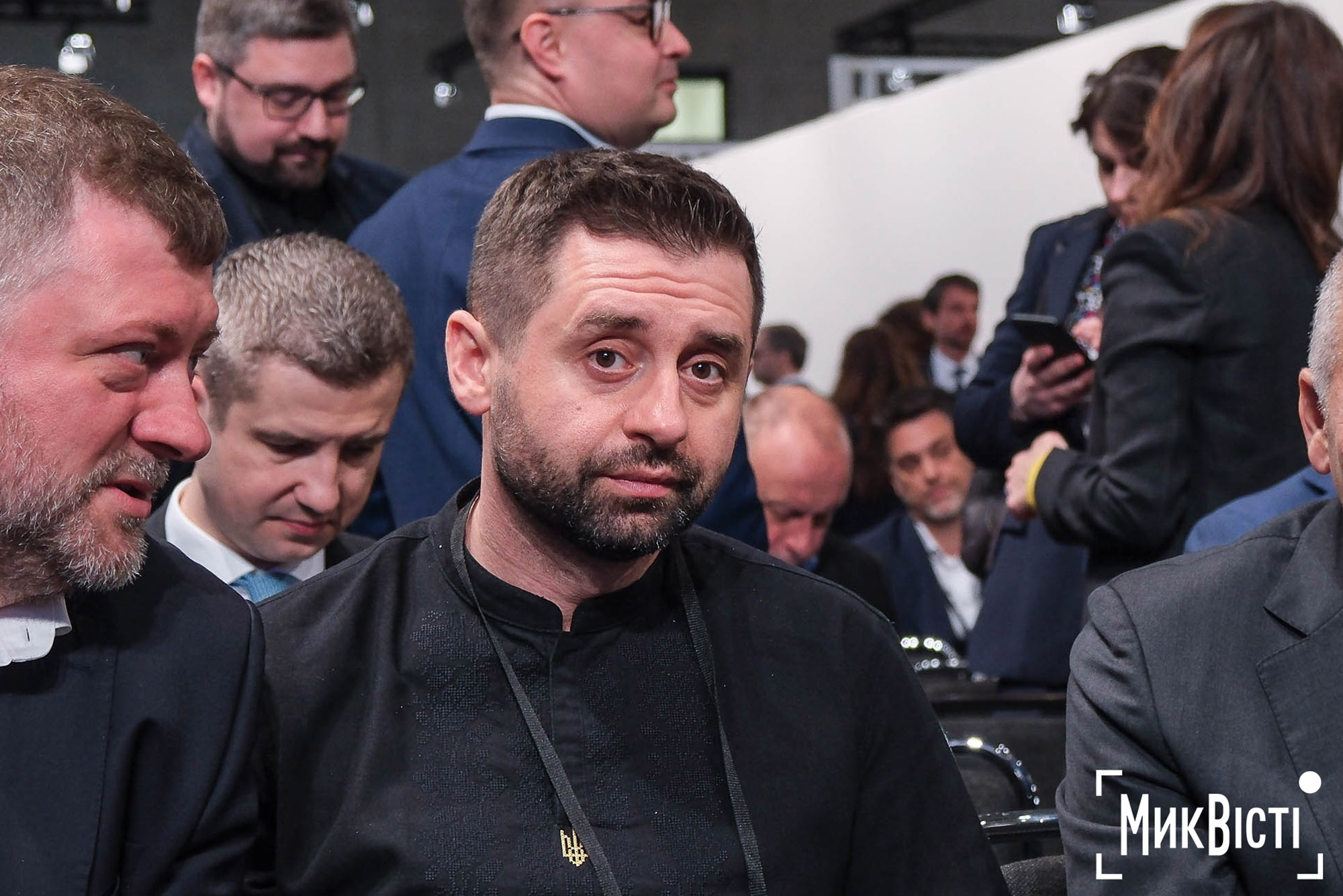 Davyd Arakhamiia. Archive photo NikVesti
Davyd Arakhamiia, leader of the «Servant of the People» parliamentary faction, is preparing to defend his PhD thesis in the field of public management and administration.
His thesis focuses on the activities of the parliamentary faction, which holds coalition powers in the Verkhovna Rada, and the specifics of governing a single-party majority, particularly under martial law, according to NikVesti.
Davyd Arakhamiia prepared his thesis at Taras Shevchenko National University of Kyiv under the academic supervision of Professor Valentyna Hoshovska. The thesis defence is scheduled for 8 September 2026.
In his thesis, he examines the experience of the 9th convocation of the Verkhovna Rada, where ‘Servant of the People’ secured a single-party majority and assumed the functions of a coalition. The author notes that this model is new to Ukraine and creates a number of problems regarding the manageability of a parliamentary group comprising more than 226 MPs. To address this, Arakhamia proposes formally institutionalising a ‘small faction’ within the single-party majority — a core operational group comprising the faction leadership, deputies and committee chairs.
The head of the single-party majority effectively acknowledges the actual distribution of influence within the Rada:
-
according to him, meetings of the entire parliamentary group have become «a body for the final legitimisation of decisions that have already been worked out in advance».
-
Under a single-party majority, the Parliament’s Conciliation Board often becomes a mere formality, as the agenda and texts are agreed in advance within the «small faction».
At the same time, he warns that without clearly defined powers, the «small faction» risks becoming a decision-making centre detached from ordinary MPs.
A separate chapter of the thesis is devoted to how the full-scale invasion changed the workings of parliament. Davyd Arakhamiia explicitly notes a number of systemic shifts:
-
during the war, the executive «effectively began to dominate the setting of the legislative agenda»,
-
opposition criticism in wartime was often perceived as destabilising, whilst the scope for parliamentary scrutiny and alternative bills was curtailed.
-
Fast-track procedures allowed for a swift response to crises, but this created the risk of parliament operating in a «reactive manner» and reduced the time available for debate and public consultation.
At the same time, Davyd Arakhamiia emphasises that in the post-war period, the Rada must move away from excessive centralisation and restore a full cycle of legislative work, debate and parliamentary oversight.
In addition to this analysis, Arakhamiia proposes legally enshrining broader levers of influence over the government for the majority bloc. In particular, he proposes granting the parliamentary group the right to participate in forming the composition of the Cabinet, to agree on the government’s programme and to set requirements for extraordinary reports.
Furthermore, it is proposed that the parliamentary group leader be granted the right to initiate the dismissal of an individual minister through a formal motion, to which the Prime Minister would be obliged to respond officially.
Alongside his academic work, he has also included a draft bill amending the Law of Ukraine «On the Cabinet of Ministers of Ukraine», which provides for a corresponding expansion and clarification of the powers of a parliamentary parliamentary group holding coalition rights.
In the post-war period, according to the author, parliament should gradually move away from an overly centralised and accelerated model of operation. Davyd Arakhamiia recommends restoring the full cycle of legislative work, expanding expert analysis and public consultations, reinstating full-scale parliamentary hearings and strengthening parliamentary oversight.
It should be recalled that, following Yuliia Svyrydenko’s resignation as Prime Minister, Davyd Arakhamiia stated that, in its work with partners, Ukraine needs to retain certain areas of activity, whilst others require a new framework, which entails the need for change. The Verkhovna Rada of Ukraine must therefore provide the regulatory framework for this.
 NikVesti
· post about this story
Arakhamiia is preparing to defend his thesis on how to manage parliament and a single-party majority in the Rada.
Davyd Arakhamiia, leader of the parliamentary group «Servant of…
NikVesti
· post about this story
Arakhamiia is preparing to defend his thesis on how to manage parliament and a single-party majority in the Rada.
Davyd Arakhamiia, leader of the parliamentary group «Servant of…


